Wante Cosmetics--Scent from YesteryearChang Shih-lun/photos by Chuang Kung-ju/tr. by Christopher J. Findler
September 2005


A traditional cosmetics brand once on the brink of going out of business has recently experience a revival, with sales peaking after the brand became a hot topic on the Internet. It is now a favorite with many young people. What makes this old brand name so special? Why has it been able to find new life despite a total lack of advertising and very little in the way of sales channels?
Wante Cosmetics is inconspicuously located beside an underground passage in the vicinity of the Hsinchu train station. This shop, which serves both as a home and a packing facility, has only one narrow, little wooden display counter, spilling over with all kinds of products. It is attended by Cheng Yun-chiao (a.k.a., Grandma Wante) who is responsible for sales and is the daughter-in-law of Wante Cosmetics founder Liu Chin-yuan.
The store seems to be nothing out of the ordinary, but a closer look reveals the company's logo intricately cast in the iron bars spanning the shop's windows-a testimony to Wante's former glory. Grandma Wante proudly explains, "Our shop has been around since the period of Japanese rule. Many stores in Hsinchu used to produce face powder. They all did well, but now, we're the only one left."
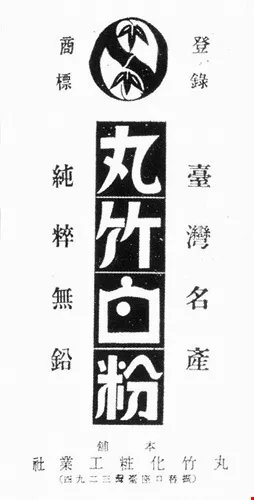
Hsinchu's face powder industry
When local Hsinchu specialties are mentioned, people today automatically think of pork balls and rice noodles, but 50 to 60 years ago, Hsinchu and the surrounding area was the center of Taiwan's face powder industry.
In former times, face powder was essential for women when removing facial hair and when putting on makeup. When removing hair using an ancient beauty technique called "wan mian," face powder was applied and string rolled across the face to remove fine hair to make skin smooth and lustrous.
The major ingredient in Hsinchu's face powder was marble from Su-ao and Hualien. After the stone was pulverized, the powder was made into a paste which was placed in vats and allowed to settle. It was later removed from the containers, had fragrances added, then was allowed to dry in the sun for about a week, packaged, and sold. The manufacturing of Hsinchu face powder, which began during the Guangxu Reign (1875-1895 in Taiwan) of the Qing Dynasty, thrived during the period of Japanese rule. At its peak, 28 companies produced approximately 2.5 million boxes annually-over 70% of Taiwan's total production output, large amounts of which were exported to Japan and Southeast Asia.
Face powder production was concentrated around Chulien Street near the train station. The elderly say that when you were taking the train, "If you smelled face powder, you knew you had arrived in Hsinchu." This gives some idea of how Hsinchu's face powder industry thrived.
Wante face powder was established in 1923. The founder, Liu Chin-yuan, had some very progressive ideas. He improved the production technology and packaging. He made the face powder finer, added plant fragrances, and advertised. Wante very quickly pulled out in front of the pack. It would later join with other companies in the area to set up a cosmetics company to help export Hsinchu face powder to Japan.
Following Taiwan's return to Chinese rule, in the 1950s, the Nationalist government levied commodity taxes. The tax rate imposed on cosmetics, considered luxury items, was 100%. Tax declarations had to be purchased before products could be shipped. This surge in costs was a millstone around the necks of businesses which were also faced with massive imports of foreign cosmetics. The Hsinchu face powder industry went into a spiral. Today, Wante is the only traditional cosmetics manufacturer remaining in all of Hsinchu left to testify to the industry's former glory.
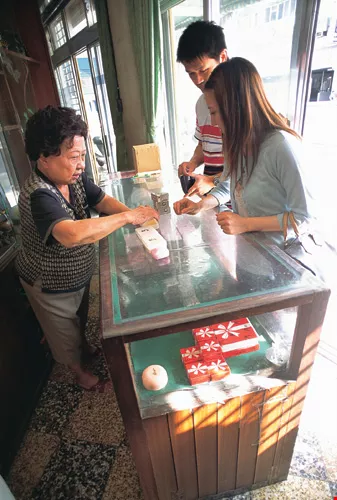
A narrow counter, simple packaging, old-fashioned instructions, and streams of young clientele are what make up the "Wante phenomenon."
Granny meets the Internet
A few years back, rumors that Wante was on the verge of folding unexpectedly stirred up lively discussion on the Internet among students in Hsinchu's universities, and young people began eagerly snapping up Wante products. With sales up 20%, Wante decided to keep its doors open.
Grandma Wante, who didn't have the faintest idea what the Internet was, was tickled pink when her "sunset industry" received a new lease on life because of it. "Almost everyone who comes to buy our products is young and the majority of those are university students. Many come by train from out of town just to buy our face powder. We are seeing less and less of our old clientele, though."
"We don't publicize widely and we haven't got a clue about marketing techniques, but with the word-of-mouth advertising that we have been getting from young people in recent years, our business has been nothing to sneeze at. It has been very stable." Wante is frequently the subject of lively discussion in the beauty and cosmetics chat rooms of Taiwan's online university bulletin boards. Originally a low-profile brand with only a limited number of sales channels and no marketing to speak of, Wante has unexpectedly sparked a buying frenzy among the young.
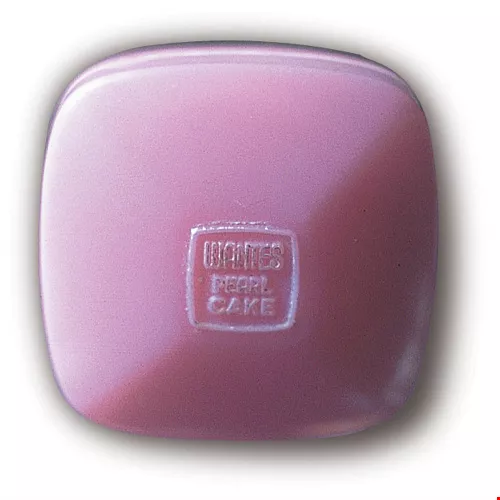
Its diverse line of products has kept Wante a la mode and competitive. the photo is Pearl Cake.
Old-time warmth
Don't be misled by the tiny, humble counter. Standing outside, you'll see a customer walk into Wante every 10-20 minutes or so. Interestingly enough, they all seem to come equipped with large shopping lists full of requests from friends and relatives. When you see Grandma Wante chatting warmly with these kids who are young enough to be her grandchildren, it's obvious that many of them are regulars.
Other than sales from its Hsinchu shop and through mail orders, Wante currently has no sales channels to speak of. Wante's products are popular but lack sales outlets, so many Hsinchu students sell them over the Internet on auction sites and mail them all over Taiwan, forming a special person-to-person sales network.
A Tsing Hua University student surnamed Chen explains, "Whenever I have free time, I come to stock up on merchandise and shoot the breeze with Grandma Wante. She's a fountain of information when it comes to traditional cosmetology and the people here are very neighborly. It's nothing like the feeling you get from women manning those department store cosmetic counters. Their only thought is to unload a bunch of stuff on you."
Wante's traditional cosmetics boast quality at low prices. In addition to traditional face powder used in the removal of fine facial hair and in certain religious rites, they sell loose powder for NT$150 a container compared to department store boutiques which sell them at NT$700 and up. Quality at affordable prices-that's why it is so popular with the young crowd.
On a business trip to Hsinchu from Taipei, a Miss Luo points out, "Wante is a hot topic on the Internet, but their products are completely unavailable outside of Hsinchu. Before this business trip to Hsinchu, a bunch of workmates gave me over NT$5,000 to purchase Wante products which are much cheaper than the stuff they sell in the department stores."
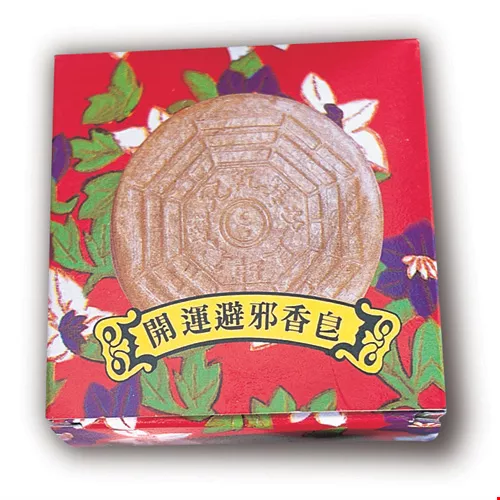
Its diverse line of products has kept Wante a la mode and competitive. the photo is Lucky Mugwort Soap.
Keeping the faith, keeping in step
Wante is a traditional old firm and as such, its management style tends to be conservative. On occasion, however, it shows some innovation as it tries to stay in step with the times.
Face powder used in the removal of facial hair was a key product when the firm was first founded, but today, it only makes up about 10% of income. It has been replaced by a variety of other products developed by Wante in recent years.
Of these, the one most popular with the young is Wante's loose powder, a traditional face powder which Liu Jin-bang, Wante's second president, improved by adding such ingredients as starch, talcum powder, and rose scent. This face powder, a foundation that also keeps facial oils in check, works just as well as any import, and has given the traditional face powder industry a new lease on life.
Lucky Mugwort Soap is another product developed by Liu. Among its ingredients is mugwort, an herb that Taiwanese traditionally believed could repel and dispel evil and comfort frightened children. It also includes such natural ingredients as Job's tears and sugar beets. Following the earthquake of 21 September 1999, many people gave the soap as gifts to friends and relatives living in the disaster area to dispel bad luck. Mugwort soap, which has a unique refreshing fragrance, is one of Wante's best selling products and is frequently out of stock.
Wante products are based on traditional beauty treatment and improved to meet modern needs. Maintaining the flavor of yesteryear, while keeping abreast of today's trends is why Wante's products have stayed on the market.
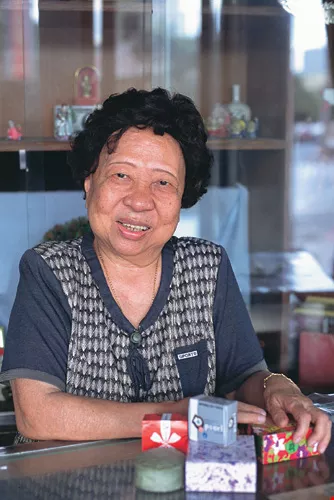
Cheng Yun-chiao, dubbed "Grandma Wante" by her online following, can be found at the counter every day managing Wante's sales.
Taste of yesteryear
Having seen her business bounce back from the edge of oblivion, Grandma Wante is frequently asked if the company has any plans for expansion, but she exclaims, "No. This is good enough the way it is. We can't keep up with things as it is." With her words still reverberating in the air, she scoots off again to greet a young couple that just walked in. "Steady as she goes" and "leaving well enough alone" seem to be the business philosophy of traditional stores like hers.
Perhaps "quality at low prices" and all that discussion on the Internet aren't enough to fully explain Wante's allure. That old wooden counter piled high with all sorts of articles is a time machine that takes us back to better days when a store owner could chitchat freely with customers half a century her junior.
Wante is not merely a shop. It is a place to experience the warmth and closeness that people shared in days gone by.
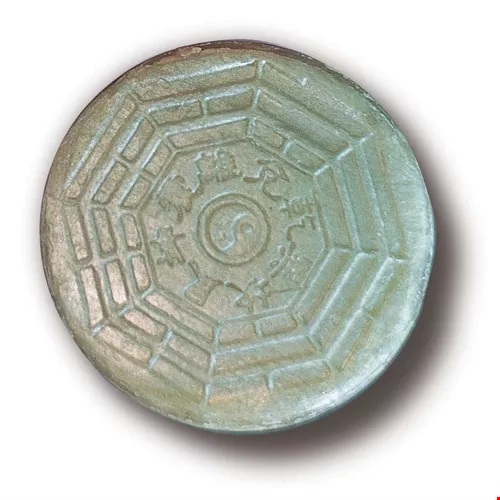
Its diverse line of products has kept Wante a la mode and competitive. the photo is face powder.
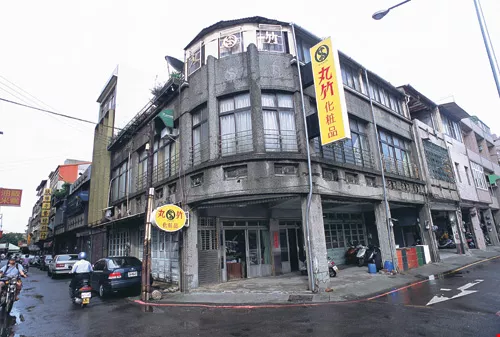
Located next to the Hsinchu Train Station, Wante Cosmetics has been around for over eight decades. On the lower right is a business card dating back to the period of Japanese rule.
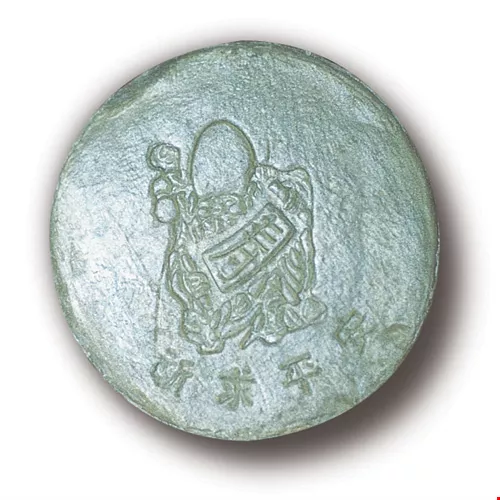
Its diverse line of products has kept Wante a la mode and competitive. the photo is Pearl Cake.
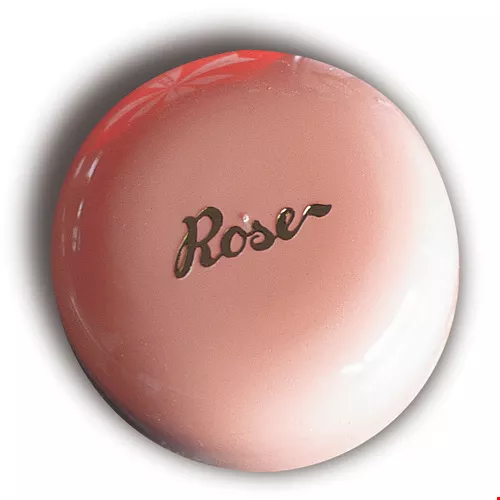
Its diverse line of products has kept Wante a la mode and competitive. the photo is face powder.


@List.jpg?w=522&h=410&mode=crop&format=webp&quality=80)
