Yen Yun-nien, Taiwan's Mining Magnate
Elaine Chen / photos courtesy of the Yen Family / tr. by Jonathan Barnard
March 1994


Though all gone now, the gold of Chiufen gave the locale a certain mystique. In recent years images of old Chiufen in the movie City of Sadness have stirred many to fantasize about life there in days past.
During the Japanese era, rich gold mines were being worked on these mountains. Who was responsible for them?
Yen Yun-nien is not a widely known hero, but a look at Taiwan's economy during the Japanese era will lead you to the Chiufen Gold Mines and this mining giant.
Born in what is today Juifang Township of Taipei County, as a young boy Yen left home to go to school and wanted to become a mandarin.When China ceded Taiwan to Japan, he returned home to pan for gold in the Keelung River. Then the Japanese Fujita group obtained the rights to the Chiufen gold fields, and Yen was hired as a security guard to prevent theft of gold and preserve public security in the surrounding area. Gradually earning Fujita's trust, he was put in charge of labor supply. Slowly he was able to obtain rights to some mines, until, with poor management on Fujita's part, he was able to buy all the rights to the Chiufen fields from them.
"In the Japanese era, he fought for a space for Taiwanese capital, so that Taiwanese could rise up to face the Japanese as equals!" says Tang Yu, a genealogist and historian of mines who wrote 700 Years of Gold Mining in Taiwan and is now being employed by the Yens to trace their family tree. "This was the meaning Yen had for his age."
For the 60th anniversary of the Taiyang Company, Lien Chen-tung, whose family has known the Yen for four generations, was invited to make a speech, and in it he noted that such major Japanese firms as Mitsui and Mitsubishi grew under the Japanese government's coddling. Though the government discriminated against Taiyang, it was still able to compete head to head against its Japanese rivals, which was quite an accomplishment.
Competing with the Japanese was no small feat,and in several respects Yen does stand in contrast to many of his contemporary Taiwanese capitalists.Lin He-tao, the former director of the Historical Research Commission of Taiwan Province, points out that the Taiwanese capitalists of the Japanese era can be split into three kinds: the first were feudal capitalists, such as the Lins of Wufeng and his own family, the Lins of Panchiao; the second were government enterprise capitalists, as exemplified by Koo Hsien-jung and Chen Chung-he; and the third were the nationalistic capitalists such as the Yens,Yen Yun-nien and his brother Yen Kuo-nien.
The feudal capitalists relied on renting out their land to make their fortunes. The government enterprise capitalists relied on trading favors to the Japanese for exclusive rights to deal in such restricted goods as opium, tobacco, salt and sugar. With no help from the governing Japanese, what did Yen, the representative nationalistic capitalist, rely upon to rise and prosper in northern Taiwan and bring his family on par with the Lin families of Panchiao and Wufeng, the Koo family of Lukang and the Chen family of Kaohsiung as one of the five richest families of Taiwan?
Wealthy families all have legends about how they struck it rich, and the Yens are no exception.The story goes that a Mucha Taoist god helped him turn stone to gold. "While the legend may be ridiculous," Lin says, "it shows the good impression the people of northern Taiwan had of him, thinking that even the gods were helping him."
"When the Ching court ceded Taiwan to Japan," Tang Yu points out. "Koo Hsien-jung welcomed the Japanese army to Taipei. Many people have criticized him in the fiercest of terms, calling him 'a traitor to China and Taiwan.' While this criticism may not be entirely fair, it is not one that has been levelled against Yen Yun-nien."
Lin holds that timing was an indispensable factor in Yen's success. The Japanese government had originally stipulated that "industry would be for Japan, agriculture for Taiwan" and wasn't encouraging the Taiwanese to develop industry.Taiwanese couldn't even get a permit to organize a company--let alone a bank loan to start one up. But after war broke out in Europe, the Japanese changed their tune, urging Taiwanese to mine for coal and gold.
The Japanese had the second largest navy in the world and it consumed a lot of coal, he explains, and gold was needed to import war supplies in an age when international trade was still conducted in gold. And so, with Japan encouraging Taiwanese to open up more gold mines, the Yen family broke free of government restrictions--a striking exception to the rule among Taiwanese industrialists of the era.
Most people believe that the Yens made their fortune with gold, but in truth "they used their gold to mine coal." Hsieh Ju-chuan, whose child married Yen Yun-nien's, once wrote that Yen was more obsessed by coal than by gold, assigning his younger brother Yen Kuo-nien to find coal fields. Kuo-nien got rights to 53 of various sizes, and when war broke out in Europe, the skyrocketing price of coal pushed the value of those rights to 10 million yen. "This was how the Yen fortune was made," wrote Hsieh, a friend of Yen for 17 years.
From the perspective of a modern historian,"Yen could be described as a big speculator," Tang Yu admits. He had the gumption to risk 300,000 yen on the rights to the Fujita gold fields without knowing if he would dig up an ounce of gold. "But he had an excellent grasp of human character. 'I am a big speculator,' he figured, 'others are small speculators.' When he split up the fields and leased out their rights in smaller portions, his return exceeded 300,000 yen."
For risk takers, what's the special joy in mining gold? In 1914, Yen himself wrote an article entitled "A View of Gold Mine Management" in which he declared that gold was nature's treasure, a legacy of the creator. Those like himself fortunate enough to have a chance at uncovering this legacy he likened to "that fellow of yore who loudly chewed on air standing at the door of the butcher's shop; while he may not be getting full, he's still enjoying himself."
But to hear him describe it, he wasn't in gold just for himself. The wounds inflicted by the change of rule were yet to heal and life was hard. Those concerned about the suffering of local people hoped that the Fujita group would turn over some of the mining rights so local people could eke out a living. "At that time I. . . called the poor people to come to work and directed them in how to dig. It was dangerous and hard work. . . I did it mostly for the people's benefit and not my own."
A modern reader may be skeptical, but those who could marry, have children and support their elderly parents thanks to striking gold in Chiufen were indeed grateful. In 1917 residents of the town erected a stone tablet in Yen's memory in what is still known as the Sungte (or memorial tablet) district. On one portion of the tablet, the following words are carved: "It is all thanks to Mr. Yen that we can support our wives, children and parents."
The Tanaka group had an even tighter grip over the gold mines of Chinkuashih than Fujita did in Chiufen. Tanaka never opened Chinkuashih up to prospecting, and the miners there were strictly hired hands with fixed salaries. In contrast people could come and test their luck in Chiufen; it was a risk taker's paradise. This set the tone for the place and gave it its mystique.
Tang Yu believes that Yen Yun-nien created many opportunities for the native Taiwanese to seek employment, absorbing migrant workers from the country villages and making significant contributions to stability and local prosperity. And the infighting between those who traced their ancestry from Chang-chou and those who traced it to Chuan-chou was rarely seen in Chiufen.
Koo Hsien-jung also had frequent contact with Yen Yun-nien. He wrote in an essay that he could see early on that Yen was steady and reliable, able to anticipate opportunities but not moving to action until he had a firm plan. Koo could tell that he would definitely make a success of himself. "And I was right in my assessment," he wrote. And so before long, as Yen soared in industry, many thousands of families were relying on him to make a living.
Westerners say that when the Chinese talk about giving something back to their country, they always restrict this to mean the government. Chinese should know that a person who can support many tens of thousands of workers or several thousasnd farmers is in fact making a great contribution to his nation.
One of Yen's contributions for the local people was the building of the Pinghsi Railroad. Pinghsi Rural Township also has a memorial tablet, on which it is written, "Pinghsi Rural Township was once a hard-to-reach mountain village with poorl and. Now, thanks to the building of the railroad and the completion of coal mines, we are a prosperous district."
Hung Chih-wen, the writer of The Legend of the Taiwan Railroads, believes that the topography along the Pinghsi line was the most hazardous of any of Taiwan's branch lines. It was particularly hard going on the 9.9 kilometer stretch from Santiaoling to Shihfen, where they had to build a total of six tunnels, many of which had to be cut directly out of the cliffs. It was extremely dangerous work.
When Yen Yun-nien pushed for this project against widespread opposition, insisting on a railroad instead of just a cable car, he did so thinking that a railroad would also provide the community with transportation. It took two years to build, and Yen invested more than 2.6 million silver dollars (the equivalent of over 60,000 ounces of gold), so you could say that the Pinghsi railroad was laid with gold. Later, because the perilous topography made maintenance expenses high, the Yens sold it to the Japanese government for less than half of what they put in.
Today it's one of the branch lines making the most in tourist dollars. The two-car train is packed with tourists on a holiday, whereas on a working day the passengers are mostly locals. You can see them at the Houtung station, where the Pinghsi line starts. Amid the passengers on the Taipei-Ilan Express, they're the ones carrying bicycles or packages of various sizes and goods while waiting for the Pinghsi train to arrive. Remarkably, the express doesn't immediately set off, waiting instead for those disembarking from Pinghsi Branch Line train to board. Rare is it that an express will wait for a local in Taiwan.
Yen's early success didn't keep him from running at full steam until the day he died. But it wasn't always smooth going. The Japanese authorities put pressure on him on several occasions.
On the 40th anniversary of the Taiyang Company, Chou Pi, the only living founder of the company, wrote a few words about the hardship of those early days. In 1918 the Taiyang Company wanted to understand the administration of the mining areas, he said, and so they commmissioned a technician in the Mining Department of the Governor General's Office to draw a diagram for them outlining the relationships among the northern mining authorities. Much to their surprise, this led to their being falsely accused of trying to steal national security secrets. Invoking "emergency measures," the Japanese military investigated. Many people were implicated in the case, and eventually it was moved to the courts, where Taiyang finally could employ a lawyer, a Japanese named Hanai, to plead their case. After two hearings, the court ruled that the diagram was not related to military bases, and the company was found not guilty.
Then in 1921 Yen Yun-nien wrote a poem that just missed bringing disaster on himself: "Don't slight me for my schooling, for my pen can describe the filth of our world, the strange, heartless men of armor wreaking havoc on the central plain." The Japanese military filed a report on the poem, noting that there were problems with Yen's thinking.
"The two characters 'chung yuan,' [or 'central plain,' a term akin to 'motherland' used by the Chinese to designate the central Han Chinese provinces] were what upset the Japanese," Tang Yusays. That year civil war had broken out on the mainland, and in the poem Yen unintentionally revealed his care and love for China. The Japanese did not find it attractive. "If he had written 'Chih Na' [the Chinese transliteration of 'China,' a disliked foreign term for the nation] there probably wouldn't have been any trouble."
Yen Yun-nien truly had deep feelings for China, and in this respect the Japanese did not falsely accuse him. As a youngster he studied Chinese with many teachers and was a diligent student, setting his sights on passing the Ching civil service examinations. When China severed relations with Taiwan, he had to put this ambition to rest. Yet deep down, Yen Yun-nien continued to feel that he was a scholar. Unlike most rich men, who didn't put a high value on the scholarly, Yen was always worried about their approval, Tang notes. He attended poetry conferences in Wufeng and advocated establishing a poetry society for all of Taiwan. And when literati passed through Keelung on the way to the mainland, they would invariably spend the night at Yen's "Lou Compound."
Yen went beyond indulging his fancy for literature and hobnobbing with the literati. In Chinese society, the spouses of one's children are thought ideally to come from families of equal status, and while most of the great families would arrange matches of corresponding wealth, Yens would often marry the offspring of scholars. Yen Yun-nien even had many of the hang-ups of the literati. Take the lake in the shape of a penchi (dust basket) at the foot of Mt. Ali. The locals just called it Penchi Lake, but Yen thought the name ungraceful and advised the local government to change it to Fenchi (rising force) lake.
Besides keeping true to the ways of a literary scholar, Yen's lifestyle differed from his wealthy Taiwanese contemporaries in other respects as well. A Short Biography of Yen Yun-nien describes his austere life. Every day he would arise at five, eat breakfast at seven, and by eight be at his office giving directions. He went through the same routine for 20 years. Since his grandfather's time, the whole family was forbidden to touch opium or tobacco. And he was loath to waste even the smallest of things. He researched a smelting method that made use of cyanide solution to squeeze gold out of the rubble the Japanese just threw away. Whereas other wealthy would proudly take their cars for joy rides,Yen refused to hire a private driver. His family didn't even employ any servants at home.
While he may have been frugal with himself,Yen needed to keep up appearances as a successful businessman. In order to maintain peace and stability, he had a lot of contacts with the Japanese, and Yen had three guest houses for distinguished Japanese visitors. Lin Heng-tao recalls that deep within a beautiful mountain canyon of Pinghsi's Chingtungkeng, Yen built a Japanese style guest house out of cypress wood. The Japanese called itthe "Cypress Palace." Guests staying the night would gaze out at the lanterns of the fishing boats.
The Chiufen guest house in which the crown prince of Japan once spent the night was also very comfortable. "Yen's son Yen Chin-hsien often took me to spend the night in the guest house," Lin recounts. "When we arrived we would first take a bath and then change into Japanese bath robes and relax. Behind every person there would be an electric fan. With a cool breeze at our backs, we'd drink cold soda pop. Then the feast would began. These are some of my happiest memories of youth."
Another of his houses was the Lou--or "humble"--Compound. The poet Hsieh Ju-chuan noted that the Lou Compound was a Japanese-style villa Yen bought from a Japanese named Kimura.Yen rebuilt the house and added to the flowers and plants in the garden, which was renowned for its ten spots of great beauty. What a site it made for heart-felt discussions with friends amid the rosy twilight mists! The Japanese Prince Fushima even lived there for a week when he came to Taiwan in 1929. But why call such surroundings "humble."
The answer is in Lien Ya-tang's description of his stay there: "Standing in the Lou Compound, I asked my host what was humble about it? His answer was that he didn't want to fail his ancestors. They lived simply and happily, and their descendants respected their ways."
So that's it. Yen thought himself a descendent of Confucius's student Yen Hui, who was described as "living in a shack in a back alley and no less happy for it."
Because Yen truly believed himself to be Yen Hui's descendent, the family motto he preached to his children and grandchildren was, "Generous to others, frugal ourselves." And it was a motto he lived by. In 1919 after a fierce typhoon hit Keelung and left many homeless, Yen founded the Keelung Charitable Association. He donated 200,000 yen (which was the equivalent of almost 5000 ounces of gold). Between what are now Aierhand Aisan Roads in Keelung, he constructed a Hall of Brotherly Love, which provided for some 280 poor families.
Tu Tsung-ming, the first Taiwanese doctorate of the Japanese era, noted in his eulogy of Yen Yun-nien that he went to the extreme of taking out a mortgage on his own house to raise money for these charitable endeavors.
Yen's son Yen Chin-hsien took the family teachings a step farther. After the retrocession of Taiwan, the land he donated for the Chaing Kai-shek Park, the Confucius Temple of Taichung, the Chin-hsien junior high school and roads totalled over 65 acres.
The Japanese also admired Yen greatly for his charity. In the short biography of him, Komatsu Yoshihisa wrote a preface in the literary style."Those rich men secluded in the lap of luxury," he wrote, "will die of shame upon hearing of your good deeds."
"The classical economist Alfred Marshall promoted the idea that capitalists should act as modern day knights," Lin Heng-tao says. "Having take nenormous profits from society, they ought to adopt the spirit of the knights of the middle ages and give some of their wealth back." Lin insists that the Yens must be Taiwan's only capitalist knights.
Yen died in middle age, and indeed early in life a fortune teller had said that he would die at age 42. Yet "when he was nearly fifty, he was still full of energy and hadn't taken any medicine for 20 years" wrote his contemporary Hung Yi-nan. And so nobody believed the fortune teller's words. When Yen had reached the age of 42, he invited his friend Pan Ping-chu to go to Japan with him, where Yen stayed in a hospital to avoid meeting his predicted fate. He left with a clean bill of health, and so it wasn't expected that he would die of acute typhusjust a few years later at age 49. Everyone said that those extra years were a just desert for his good works.
After Yun died, his brother took care of business matters for Yen's son Yen Chin-hsien who was studying in Japan. "Taiwanese wealthy have tremendous problems regarding inheritances, but in the Yen family all went smoothly," Lin says. Yen Kuo-nien cared for Chin-hsien like the Chou Dynasty's Duke of Chou treated his nephew Cheng Wang.Yen Kuo-nien only preserved the fortune his brother had built, but he was very loyal. Most people would have quickly transferred the wealth into their own names. And Chin-hsien maintained such depth of feeling for his uncle that he would help Kuo-nien's descendants when they encountered financial difficulties after retrocession, no matter how much money was involved.
It can not be denied that the Yen family fortunes declined considerably after retrocession. Besides the result of underground resources being exhausted to the point where the gold wasn't worth the cost of extracting it, the family's decline was also due to other, people-related factors, such as the younger Yens' unwillingness to curry favor with the powers that-be.
Perhaps the small and mid-sized companies Yen's grandchildren manage are not in the same league with some of the new financial consortiums. But Yen's descendants need just look back to the footsteps of their ancestors to raise their heads with pride. Just read this poem, written by Ying Society poets in Yen's memory:
Simple in manner but far from poor,
His charge of gold and coal enriched us all.
Without peer among poets,
A legend unmatched in trade,
His heart had longed for high office.
His soul now cuckoos in contentment,
Having met death free from regret,
And his humble home resounds in everlasting praise.
[Picture Caption]
P.82
Behind the Chiufen office of the Taiyang company, the entrance to the Pafankeng Mine has fallen into ruin, and is now the realm of ferns and the parched aerial roots of trees. From the gate speckled with rust, it's hard to imagine the prosperity during the Japanese era. (photo by Hsueh Chi-kuang)
P.83
This was Yen Yun-nien, once lord of Taiwan's mining industry.
P.84
Back then, Taiyang's gold miners ground the ore with foot presses before gradually extracting the gold within it.
P.84
Under the sun, the gold in the ore sparkles. (photo by Hsueh Chi-kuang)
P.85
Chiufen, high in the mountains overlooking the Pacific's Keelung Island, offers dramatic vistas. No wonder the Japanese crown prince paid it a visit. The Japanese villa in the lower left corner is Taiyang's guest house. (photo by Hsueh Chi-kuang)
P.86
Yen Yun-nien's brother Yen Kuo-nien (seated second from right) had great experience in finding coal deposits. With the help of a Japanese technician, he was able to obtain rights to 53 fields, which proved tremendously profitable when war broke out in Europe.
P.87
The Pinghsi branch railway was built to move coal, and it follows an extremely steep route. On the section from Tahua to Shihfen, there was no room for a public road in addition to the rails. And so when there's no train and your gas runs out, this is what you do. (photo by Vincent Chang)
P.88
The Lou Compound was once Keelung's most impressive Japanese-style residence, a fitting home for the Yens, owners of the Taiyang Company and one of the five wealthiest families in Taiwan.
P.88
In this family photo, kimono-clad Yen Yun-nien sits in the middle as the head of the family. The woman in a ch'i-p'ao to his right is his third wife. The youth to his left is his oldest son Yen Chin-hsien. The two framed up above are his first and second wives, and the remaining figures are children of his second and third wives.
P.89
Tang Yu, who has been invited to write the Yen family history,found someone to paint a scroll outlining the phases of their history, from their old family home in Juifang, to the Chiufen mines. . . . (photo by Hsueh Chi-kuang)
P.90
In building the Hall of Brotherly Love to house those displaced by a typhoon, Yen was living up to a line of Tu Fu's poetry, "Where to find the 10 million homes to turn the poor's sorrows into smiles?"
P.91
Though Yen is long deceased, a monument reflecting his contemporaries' gratitude stands forever on the mountain slopes of Chiufen. (photo by Hsueh Chi-kuang)
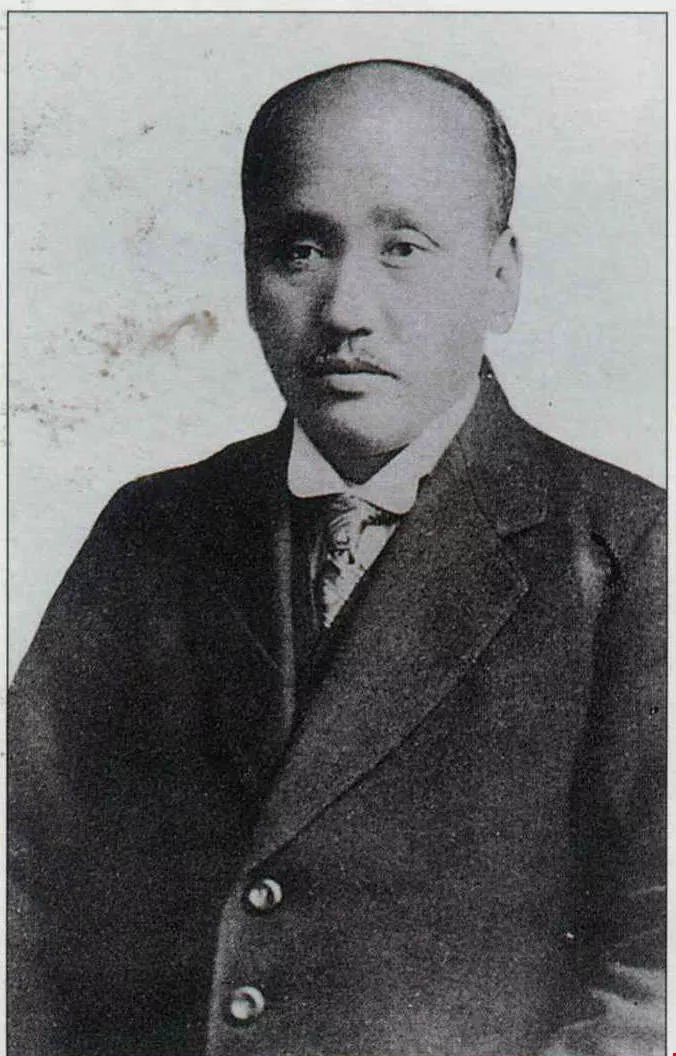
This was Yen Yun-nien, once lord of Taiwan's mining industry.

Back then, Taiyang's gold miners ground the ore with foot presses before gradually extracting the gold within it.

Under the sun, the gold in the ore sparkles. (photo by Hsueh Chi-kuang)
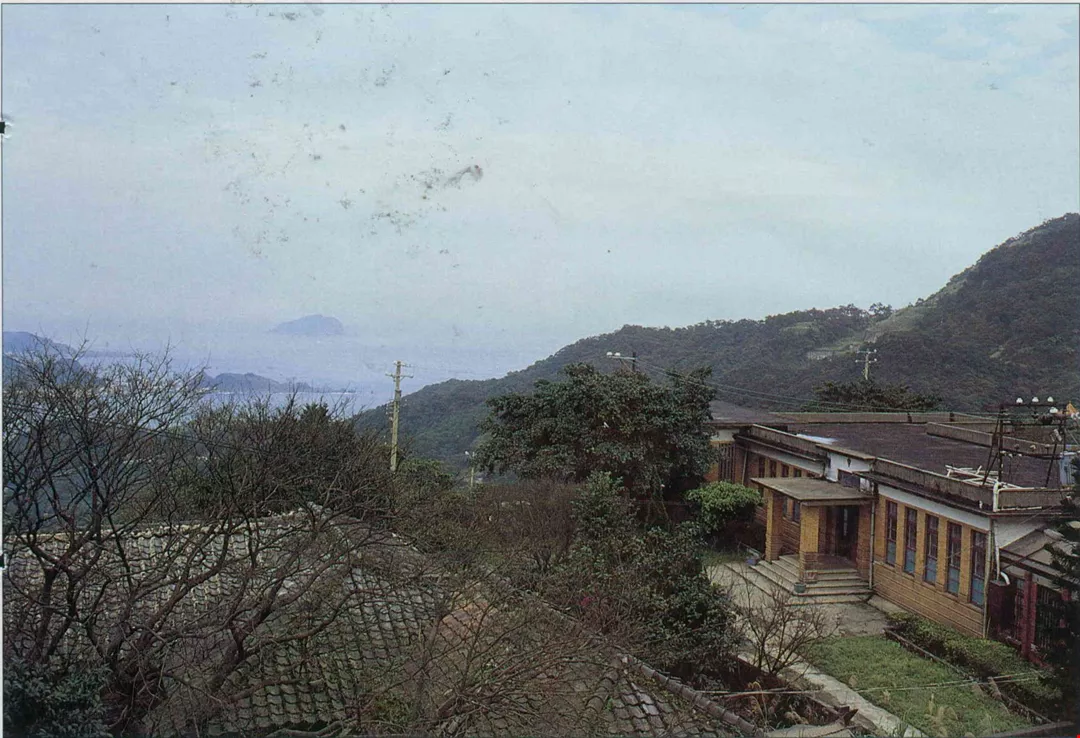
Chiufen, high in the mountains overlooking the Pacific's Keelung Island, offers dramatic vistas. No wonder the Japanese crown prince paid it a visit. The Japanese villa in the lower left corner is Taiyang's guest house. (photo by Hsueh Chi-kuang)
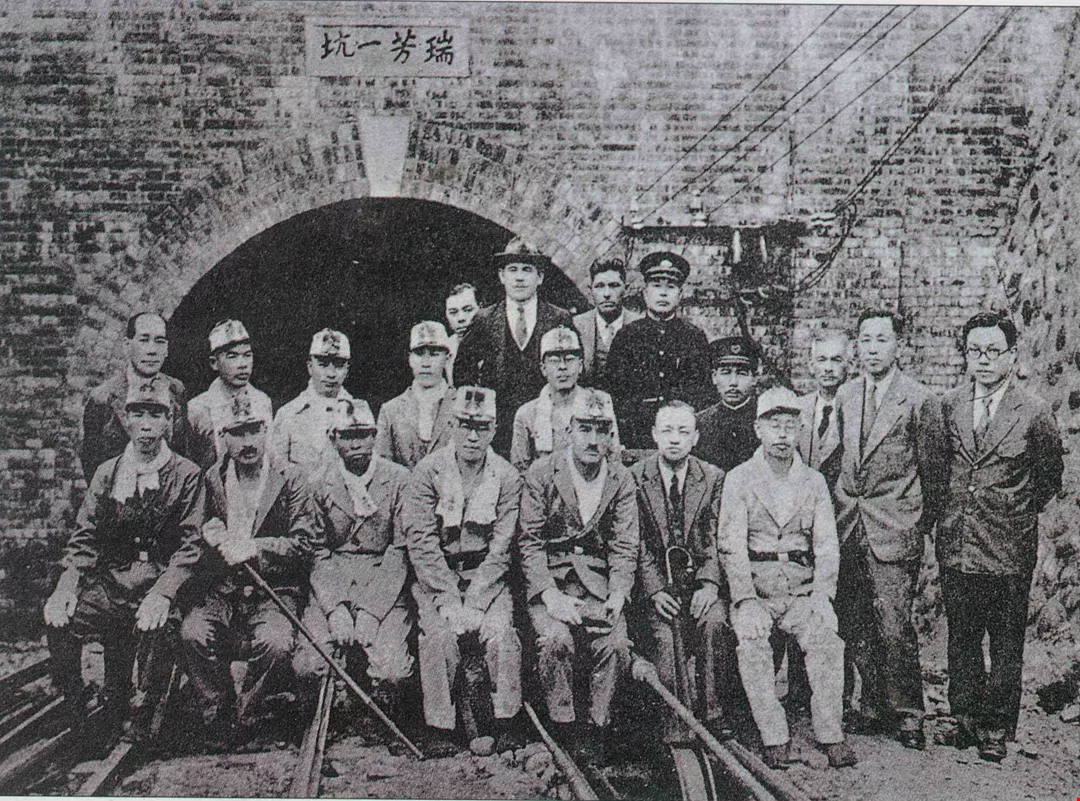
Yen Yun-nien's brother Yen Kuo-nien (seated second from right) had great experience in finding coal deposits. With the help of a Japanese technician, he was able to obtain rights to 53 fields, which proved tremendously profitable when war broke out in Europe.

The Pinghsi branch railway was built to move coal, and it follows an extremely steep route. On the section from Tahua to Shihfen, there was no room for a public road in addition to the rails. And so when there's no train and your gas runs out, this is what you do. (photo by Vincent Chang)
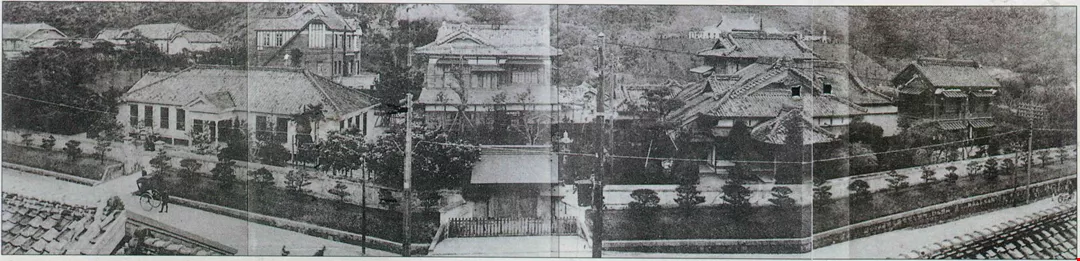
The Lou Compound was once Keelung's most impressive Japanese-style residence, a fitting home for the Yens, owners of the Taiyang Company and one of the five wealthiest families in Taiwan.
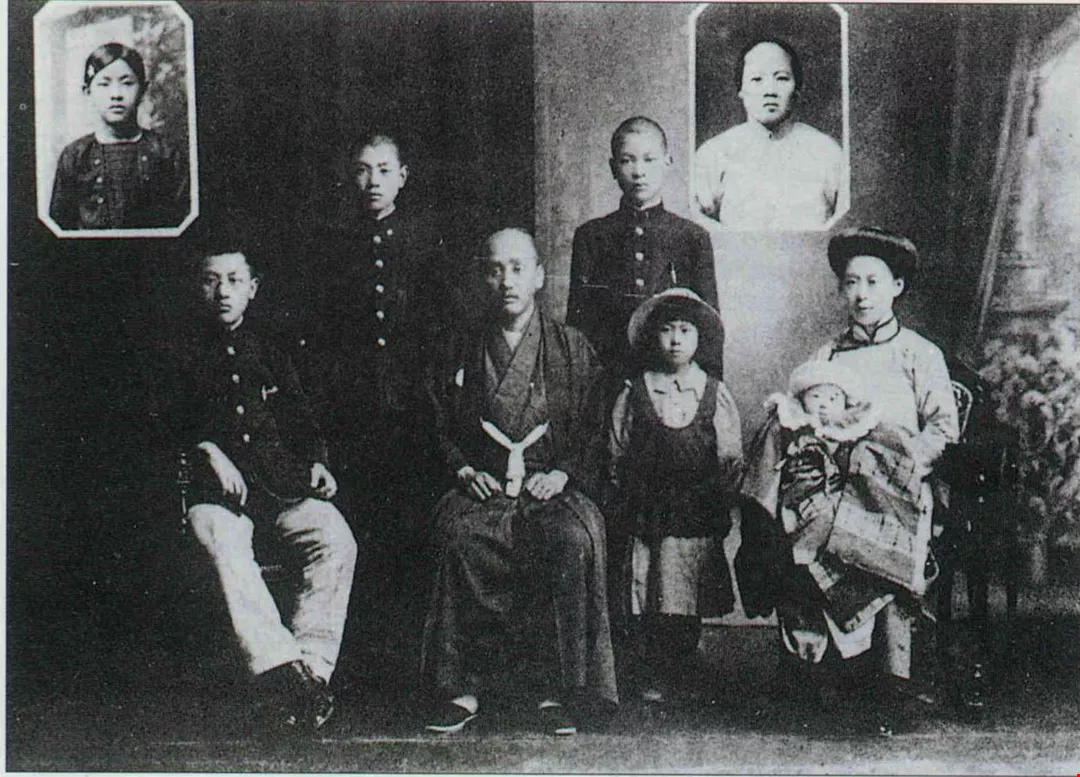
In this family photo, kimono-clad Yen Yun-nien sits in the middle as the head of the family. The woman in a ch'i-p'ao to his right is his third wife. The youth to his left is his oldest son Yen Chin-hsien. The two framed up above are his first and second wives, and the remaining figures are children of his second and third wives.
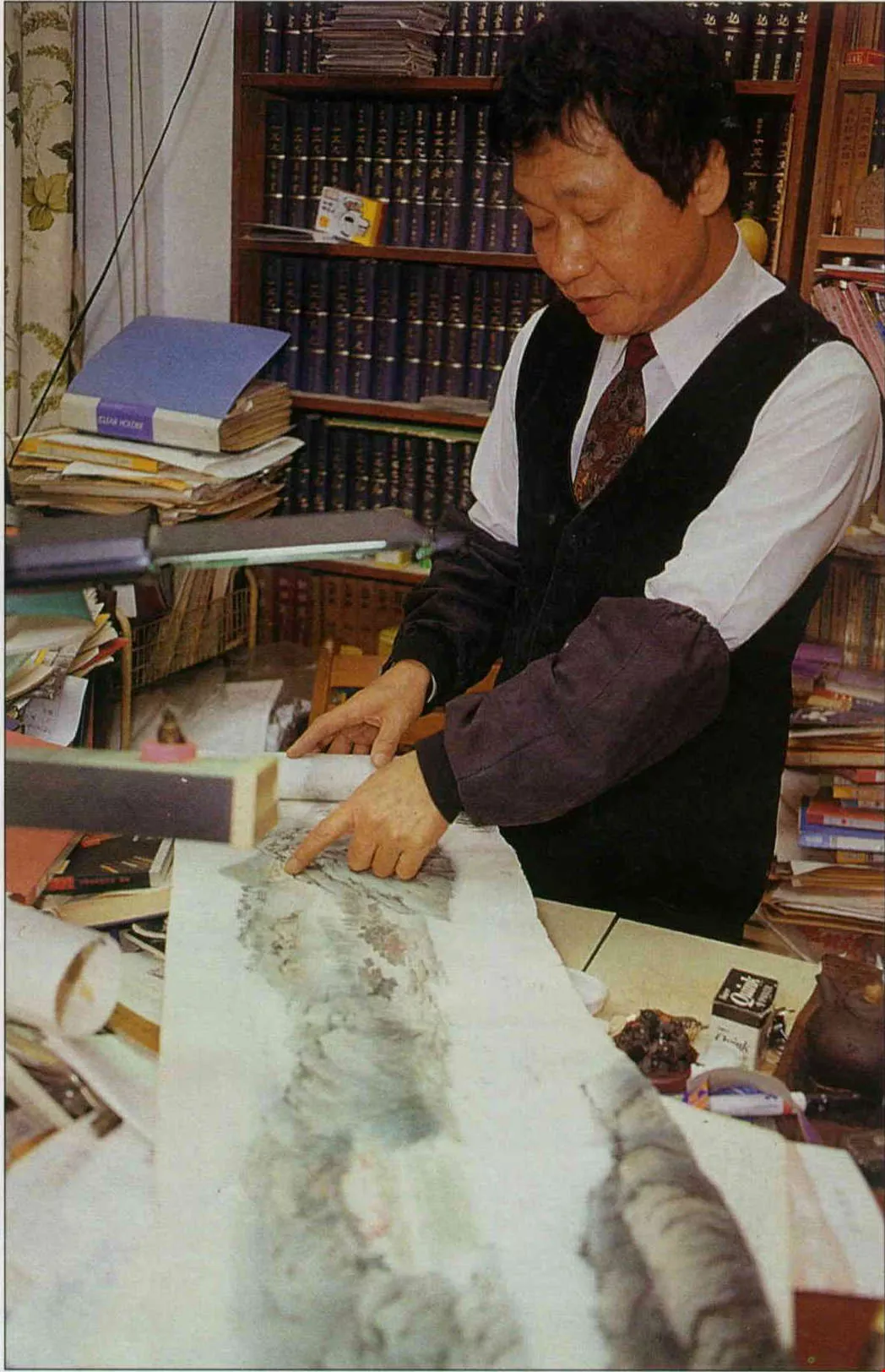
Tang Yu, who has been invited to write the Yen family history,found someone to paint a scroll outlining the phases of their history, from their old family home in Juifang, to the Chiufen mines. . . . (photo by Hsueh Chi-kuang)

In building the Hall of Brotherly Love to house those displaced by a typhoon, Yen was living up to a line of Tu Fu's poetry, "Where to find the 10 million homes to turn the poor's sorrows into smiles?".
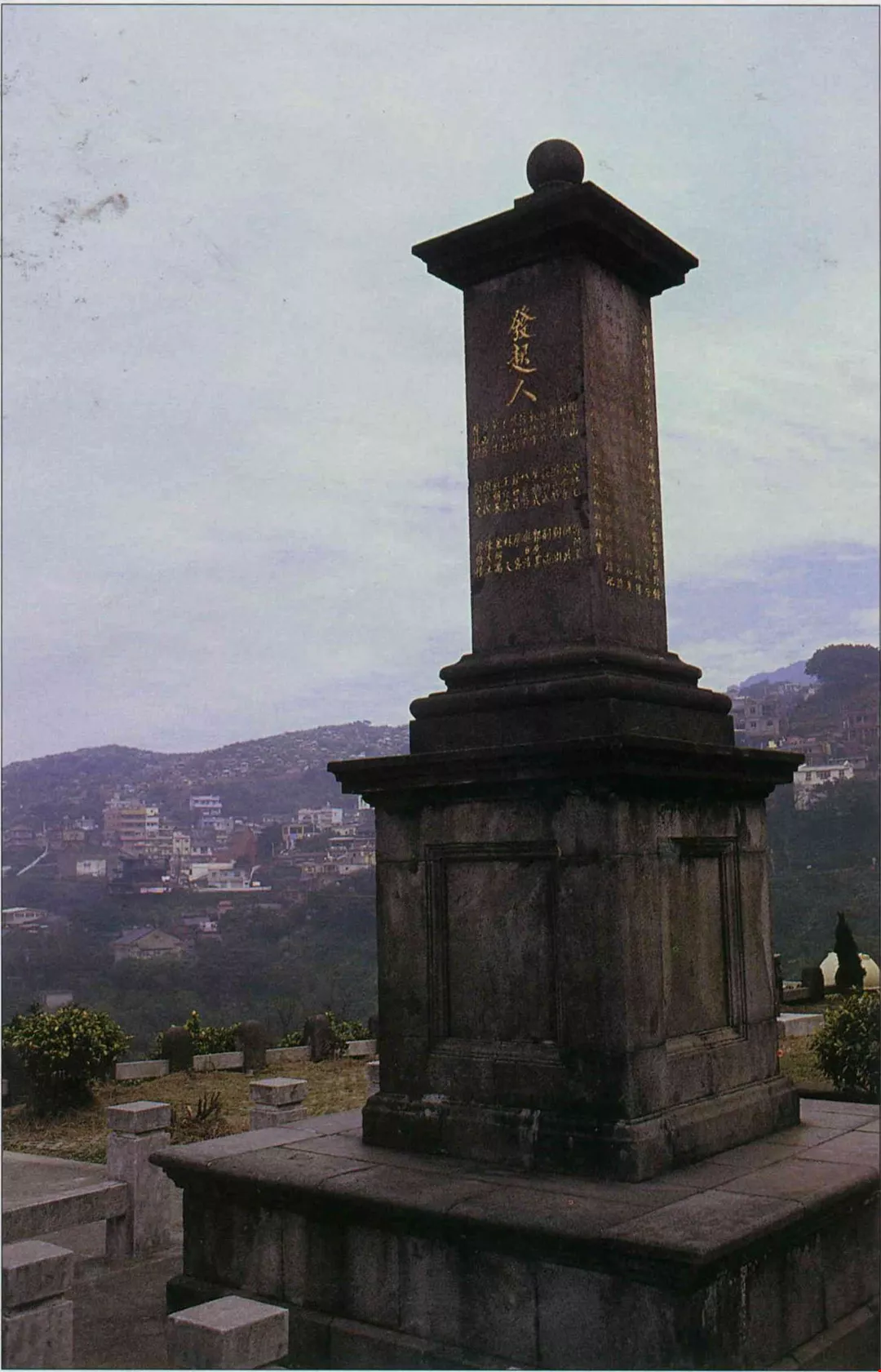
Though Yen is long deceased, a monument reflecting his contemporaries' gratitude stands forever on the mountain slopes of Chiufen. (photo by Hsueh Chi-kuang)


@List.jpg?w=522&h=410&mode=crop&format=webp&quality=80)


