The Dinosaur Craze and the Chinese Dragon
Jenny Hu / photos Hsueh Chinkuang / tr. by Jonathan Barnard
February 1994


Besides breaking records at the box office, the US film Jurassic Park has also stirred up interest in dinosaurs worldwide.
With a steady stream of dinosaur fossils being unearthed, China trails only North America as a "treasure trove" of their bones. For geologists and paleontologists, these finds are cause for celebration, and for Chinese generally, who have for millennia described themselves as descended from dragons and who have deep feelings of attachment to them even if they don't know why, these fossils have provided food for thought in idle moments around the dinner table. The burning question: Is there any connection between the dragons their ancestors worshipped and the extinct reptiles the dinosaurs?
"There's no connection between dragons and dinosaurs," stresses Dong Zhiming, a curator of dinosaurs at the Institute of Vertebrate Paleontology and Paleoanthropology at the Academia Sinica in Beijing, an expert on mainland China's dinosaurs." These two things have been mistakenly connected because the Chinese character for 'dragon' is one of the two characters in "dinosaur." Over the past few years, as Dong has accompanied a travelling exhibit of mainland dinosaurs around the world, he has often encountered this kind of question, and the answer, informed by his many years of scientific training, comes automatically.
"Kung lung," the Chinese characters for dinosaur which literally mean "fearsome dragon," came into Chinese via the Japanese translation of Greek "Dinosauria" or "fearsome lizard," Dong explains. And so in Chinese it is purely coincidental that dragon and dinosaur share a character. In the grand scope of time, the dinosaurs were a major group of reptile species that went extinct 65 million years ago. The Chinese dragon, on the other hand, only first became a cultural totem about 6000 years ago. With a gap of 60 million years, dragons and dinosaurs are surely two altogether different beasts.
Chang Wu-shun, a Taiwanese amateur researcher of dinosaurs, gets right to the point: "If 'dinosauria' had been translated as 'Kunghsi' (fearsome lizard), there probably never would have been this problem."
While most scientists likewise dismiss any connection, researchers Cheng Yen-nien and Chang Yu-teng, who work at the Taichung Provincial Science Museum, have recently been diligently investigating whether there is a connection other than the coincidence of a shared character.
Since 1902, when a Russian army colonel discovered some large dinosaur bones in the hands of fishermen, both Chinese and foreign scientists have carried out digs in the mainland. In the 90 years since that find in Heilongjiang of the Mand-schurosaurus amurensis, there have been major finds one after another in Shandong, Sichuan, Mongolia, Yunnan, the Talimu and Junggar Basins of Xinjiang, Chahaer, Ningxia and elsewhere--in fact in every Chinese province except Fujian and Taiwan. Take Sichuan, which is known as "the homeland of dinosaurs." More than 100 dinosaur skeletons have been unearthed just in Zigong's Wu-jia district.
In 1993, another dinosaur incident on the mainland startled people worldwide. When digging, country folk in Hunan's Xixia County accidentally came across "black stone eggs," which they then went on to sell as an ingredient for Chinese medicine. It was only after thousands had been dug up and sold that a Nanjing customs inspector discovered that these black "stone eggs" were in fact being viewed as priceless dinosaur eggs elsewhere in the world! Brought in to make an assessment, a team from Bejing's Academia Sinica determined that the 40-square-kilometer Xixia Basin held perhaps tens of thousands of dinosaur eggs. In comparison to the some 500 that had been discovered worldwide up to that point, it was a mind-boggling figure, making the region worthy of the title "dinosaur town."
The dinosaurs lived during the Mesozoic era,during which time China was particularly well suited for them. Here their fossils are numerous, as are the species of them found--already more than 100, or one sixth of those discovered worldwide. And the fossils span their entire realm, from when they first appeared on earth about 230 million years ago during the end of the Triassic period, to their twilight age 65 million years ago in the Cretaceous: a stretch of some 160 million years when they ruled the planet.
People, the lords of the planet in this day and age, have, like those giant reptiles of yesteryear, thrived and multiplied in this ancient land. But it is not known from which strange age people have inherited their totem of the dragon.
By now the dragon culture has already been passed along for several thousand years, and the image of the dragon as a noble beast with god-like powers has become the standard view. Look it up in Shuo Wen Chieh Tzu, an ancient etymological dictionary: "The dragon, the biggest of scaled animals, can be visible or invisible, thick or thin, short or long. In the spring it rises to heaven; in the fall it plummets to the oceans' depths." Giving testimony to the dragon's amazing ability of transforming itself into a myriad of incarnations, the Ku Chin T'u Shu Chi Ch'eng (Completed Collection of Graphs and Writings of Ancient and Modern Times) describes the dragon as a strange beast with "the antlers of a deer, head of a camel(or horse), eyes of a ghost (or shrimp), body of a snake, belly of a crab, scales of a carp, claws of an eagle, paws of a tiger, ears of a cow. . . ." Wu Rukang, a research professor at the Institute of Vertebrate Paleontology and Paleoanthropology of Beijing's Academia Sinica, puts it this way: "It combines the most horrible features found on creatures both on land and in water."
Possessing the ability to ascend to heaven or burrow into the earth and combining the spirit and most exalted postures of numerous beasts, it has for several thousand years symbolized emperors, who, like dragons, cannot be denied respect. But these characteristics ascribed to the dragon that are associated with the powerful and noble were not his by birthright. Back in the Shang and Chou dynasties, the dragon was really quite simple. Though its name was listed among the mythical "four spirits"--the dragon, the phoenix, the tortoise and the Chinese unicorn--among beasts it was nothing special. It wasn't until the mother of Liu Pang, the founder of the Han dynasty, dreamed that a dragon fathered her child that it became a totem of the emperor. As a result its stock went up a hundred times. Future generations continually added to its mythical powers and image. By the Sung Dynasty it was a symbol of those with power and prosperity and its look was close to the standard of today.
Thus for 2000 years the descendants of the dragon have not known its original appearance. For that you've got to search back before the Shang dynasty.
In 1971, in the Inner Mongolian village of Sanxingtala, archaeologists unearthed a 6000-year-old carved jade dragon--with a round body and long hair along its neck bone. Its overall appearance suggests a horse's head on a snake's body.
And in the writing on the fragments of oracle bones dug up in a Shang dynasty site in Henan and made 3000 years ago, 120 different ways of writing the character for dragon are clearly visible. "On oracle bones," says Chang Kuang-yuan, curator of the Department of Antiquities at the National Palace Museum, "the characters for every kind of animal were based on their shapes." For example, tiger, leopard, deer, elephant, cow, sheep, dog, pig, chicken, dove, eagle, phoenix, snake, scorpion and spider are all drawn as a unique individual images. "If there's the character, there's got to be the beast." And so "you ought to be able to conclude that those first people writing characters had actually seen the form of a real dragon." One can observe more than 20 different species of animals represented on the bronze vessels found in Shang and Chou sites, and each one is a depiction of an actual animal "to the point where we can be bold enough to say that the Chinese phoenix is a peacock." Chang Kuang-yuan believes that the dragon ought to be a real animal as well.
It's not only cultural researchers who are keeping their minds open on this issue. Dr. Cheng Yen-nien, a researcher for the Taichung National Science Museum agrees with Chang. "Our ancestors based their depictions of animals on observations of these animals in their natural habitats. Why should they have done differently for dragons?"
It is evident, then, that dragons go back to the beginnings of Chinese culture, but the key question is, what animal were the ancient Chinese basing the dragon on?
Besides the jade dragon from the Hongshan culture and the dragon characters on oracle bones, in a burial ground of the Yangshao culture in Puyang County of Henan, they have dug up a gold dragon made of stacked clam shells, and in the Taihu lake area they have even discovered a dragon on a 4000-year-old Liangzhu jade artifact. Seemingly without any connection to each other, forms of the dragon have been discovered all over what was ancient China. Even when there is a time difference of 3000 years and a distance of many hundred miles, though two dragons may differ in the shape of their heads or length of their legs and may be ornamented differently, they will share the same long shape.
"Dragons were our ancestors' next step up from worshipping snakes," avers Yuan Te-hsing, an expert on bronzes. Before recorded history, the Han Chinese lived along the mid and upper stretches of the Yellow River and came into contact with snakes every day. The danger posed by them far exceeded those of other wild animals, and so they adopted a policy of "conciliation," appeasing snakes through worship. People imaginatively ornamented the snake idols used in these ceremonies, adaptation which would lead in time to dragon totems.
Wang Tao-huan, an assistant researcher in the Institute of History and Philology of the Academia Sinica, takes an anthropological tack in pointing out that the stealthy and cunning snake has been man's arch enemy since ancient times. Snake worshipping ceremonies can be found in aboriginal cultures all over the world, and the dragon may be an extension of such worship.
Although those in the snake's camp are in the majority, there are dissenters. Some, pointing to the dragon's bending torso and its horse-like head, say it was originally modeled after a seahorse. The dragon's claws, giant head and open mouth make others see an alligator in its past, while still others, looking at the antlers on its head and its long body, behold an adaptation of the giraffe. What a hot topic of conversation this has been over the ages! One imaginative theory holds that dragons are bolts of lightning.
As large numbers of dinosaur bones have been unearthed this century in China, views from a proper perspective of the more complete skeletons have given many a startling and eerie sense of recognition. If the Chinese painted the dragon based on an awe-inspiring subject and artists creatively enhanced their rendering of it, dinosaurs skeletons might just be what excited the imaginations of the ancient Chinese to depict dragons.
In Chinese history there are indeed records of discovering dinosaur fossils. During the Western Tsin dynasty, Chang Chu wrote in Hua Yang Kuo Chih that a dragon skeleton was found in Wucheng County in Sichuan. He described the following story: "The dragon flew up above the mountains until he came to hit the gates of heaven. The gates were closed and he couldn't get in, so he fell to earth in the place where his bones were dug up."Wucheng is now in Sichuan's Santai County and its rock stratum is indeed from the Jurassic. Dong Zhiming agrees that in light of today's geological and pale ontological knowledge, the dragon bones mentioned were probably the fossilized skeleton of a dinosaur. It is easy to imagine how people without benefit of modern paleontology might have put together a dinosaur skeleton and made conjectures as to its basic shape. And it wouldn't have been too big a leap to connect it to their image of a dragon.
While Hua Yang Kuo Chih holds the oldest reference to a Chinese dinosaur fossil, in books about ancient medicine there are also often references made to "dragon bones." Although recent investigations have shown that most of these were the bones of large mammals (such as rhinos, elephants, deer, cows and horses), one needn't eliminate the possibility that some of these were dinosaur bones.
Because of the rising and falling of geological strata and the alluviation of rivers, most dinosaur skeletons exist only in fragments; very few are complete. But it is easy to imagine that the ancient Chinese were no less astonished by finding a"dragon skeleton" than their scientifically enlightened descendants are today when finding a dinosaur fossil. And they were sure to have drawn on all of their experience in making hypotheses about them.
When the water level falls during the dry season in Wan County, site of the Yangtze River's Three Gorges, it exposes 16 or 17 vertebrae of a skeleton. Unknowing their true origin, local people gave them the name Hsiang Yu the Conqueror's Whip, believing that this is where the last emperor of Chu cast down his whip and cut his neck, collapsing into the river. In the modern era, scientists have determined that these are tail bones of a sauropod. Dinosaur bones are not so deep that the odds are against any of them ever becoming exposed; it's just that the earliest residents of China had no written language to record their finds.
Na Chih-liang, who researches jade implements, believes that since the dragon was able to achieve the status of a totem among the early Chinese, it must have been based on something that really scared the daylights out of people. Seahorses, he reasons, are too small and alligators not fearsome enough looking. Only the fossilized skeletons of dinosaurs are close enough in spirit. Could it be that the totem of the dragon was derived from the skeletal remains of dinosaurs? "I just research scientific dinosaurs," Dong Zhiming answers evasively. "For humanity's dragon, you've got to ask people in the humanities."
The dinosaur and the dragon: one is in the realm of science, the other the humanities. So far no one has pursued rigorous scholarly research down these two paths at once. But the Provincial Science Museum in Taichung plans an exhibit in 1995 about the evolution of the world's species titled "The Great Evolutions and the Great Extinctions," which will try from a scientific perspective to seek out the roots and position of the dragon totem in Chinese society.
"Yet in the final analysis the lack of evidence makes any theory on the subject inconclusive," says Cheng Yen-nien, who is responsible for organizing the exhibit. He is already preparing himself for limited results so as to avoid disappointment. The odds of success are low.
A gulf of 60 million years separates man from the dinosaur. Is it possible that the dragon the ancient Chinese knew was the reappearance in spirit of the dinosaurs? Is this another theory too fantastic to be true, or is it just awaiting a major anthropological discovery to gain wide acceptance?
[Picture Caption]
p.76
"Two dragons Playing with a pearl" has long been an auspicious motif on Chinese objects of all kinds. It evolved from the folk custom of "swinging dragon lanterns" to celebrate an abundant harvest or seek good fortune.
p.78
During the Ming and Ching dynasties, uses of the dragon totem were strictly regulated, with separate sets of rules for emperor, noblemen and commonfolk. A five-clawed dragon, as in this painting of the Ming Emperor Hsiao Tsung, could only be used by the emperor.(photo courtesy of the National Palace Museum)
p.79
The Chinese totem of the dragon has left a deep imprint on its people, and is found everywhere there are Chinese. You can often see dragons craning their necks skyward at the end of a temple's peaked roof.
p.80
The dragon has appeared on Chinese artifacts throughout the ages. This is the model of a fake Sung armillary sphere on display in the Taichung Natural Science Museum.
p.81
Things Chinese were all the rage in 18th century Europe. England's Brighton Pavilion has many examples of chinoiserie. This winged gold dragon has a distinctly Western flavor. (photo by Cheng Yuan-ching)
p.82
Known links between man and the dinosaurs are minuscule. Ancestors of today's Chinese created dragons and stood in awe of them. Could their imaginations have been stirred by dinosaur skeletons?
p.83
A traveling exhibition of dinosaurs from mainland China has been a hit all over the world these past couple of years. The photo shows its "Jurassic Fair"exhibit.
p.84
Jurassic Park has really stirred up interest in dinosaurs. Children are watching dinosaur movies, playing with dinosaur toys, and even imitating their strange roars.
p.85
Look at the expression of this colorful dragon pressed together out of flour dough!(photo by Vincent Chang)
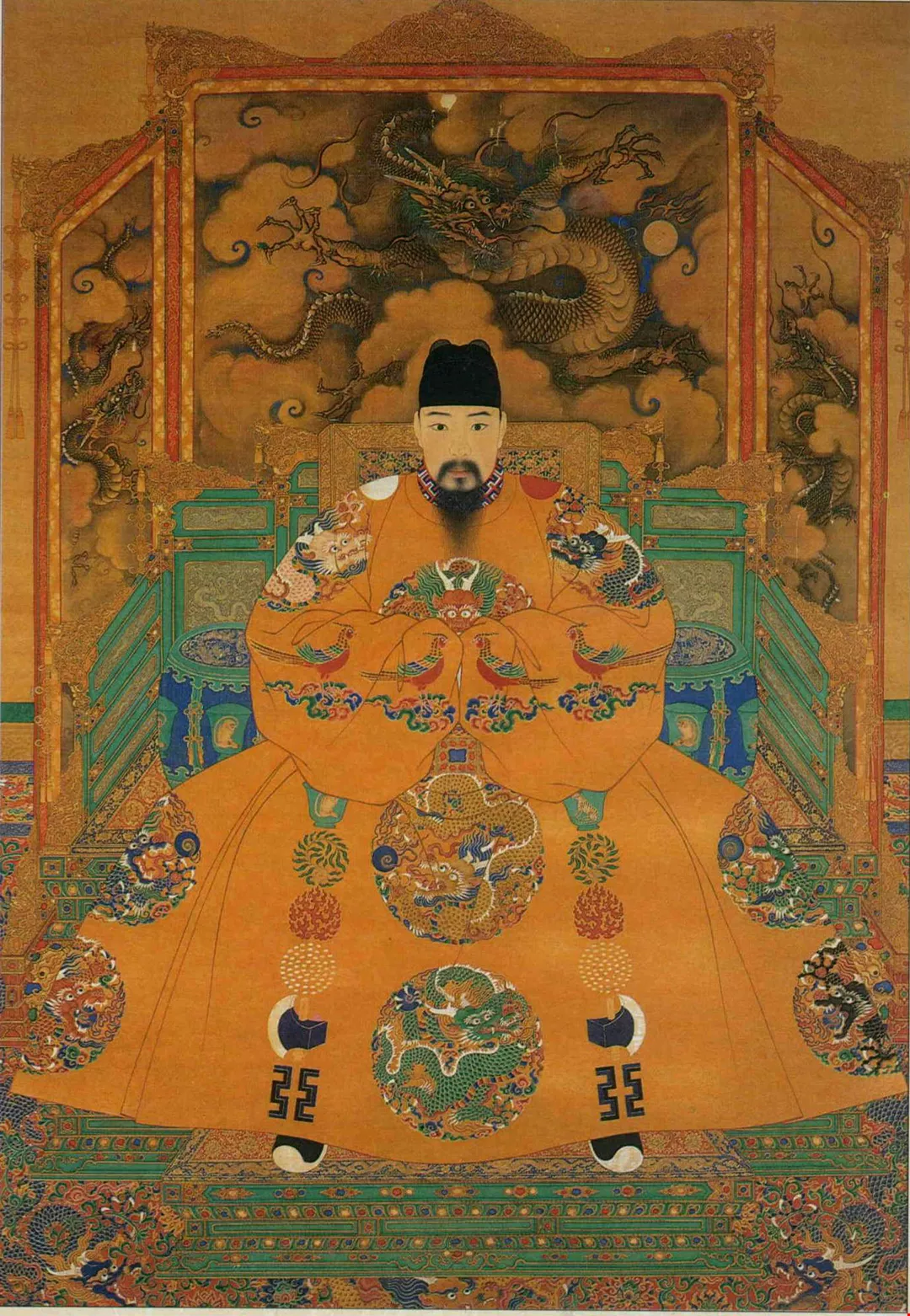
During the Ming and Ching dynasties, uses of the dragon totem were strictly regulated, with separate sets of rules for emperor, noblemen and common folk. A five-clawed dragon, as in this painting of the Ming Emperor Hsiao Tsung, could only be used by the emperor.(photo courtesy of the National Palace Museum)
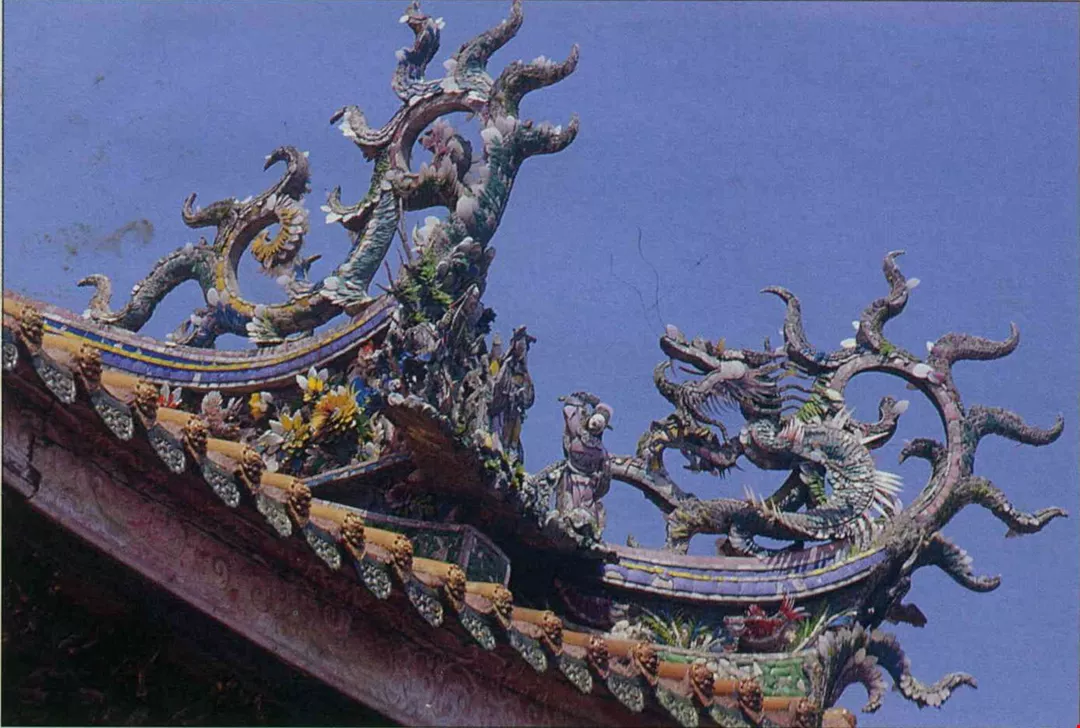
The Chinese totem of the dragon has left a deep imprint on its people, and is found everywhere there are Chinese. You can often see dragons craning their necks skyward at the end of a temple's peaked roof.
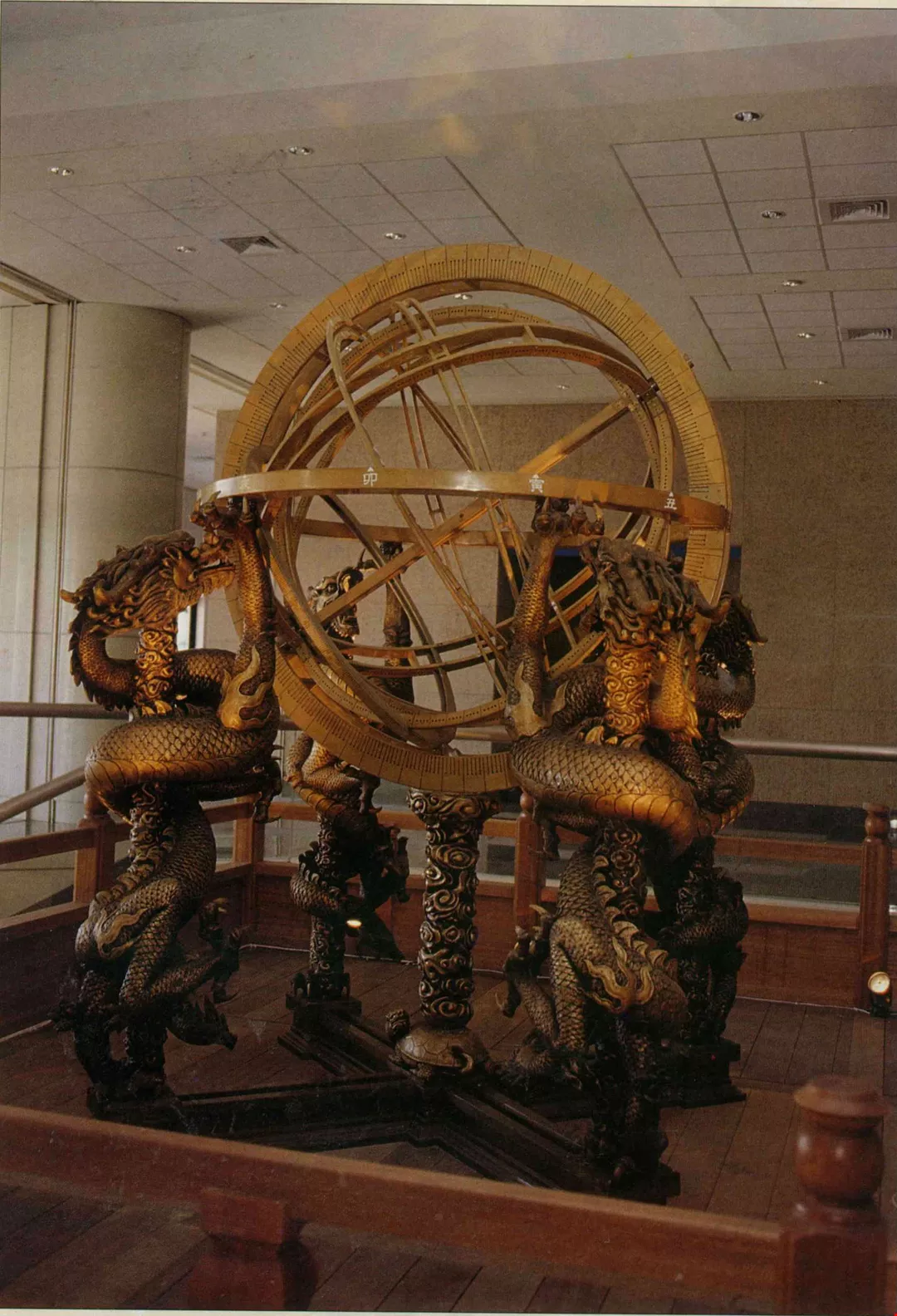
The dragon has appeared on Chinese artifacts throughout the ages. This is the model of a fake Sung armillary sphere on display in the Taichung Natural Science Museum.
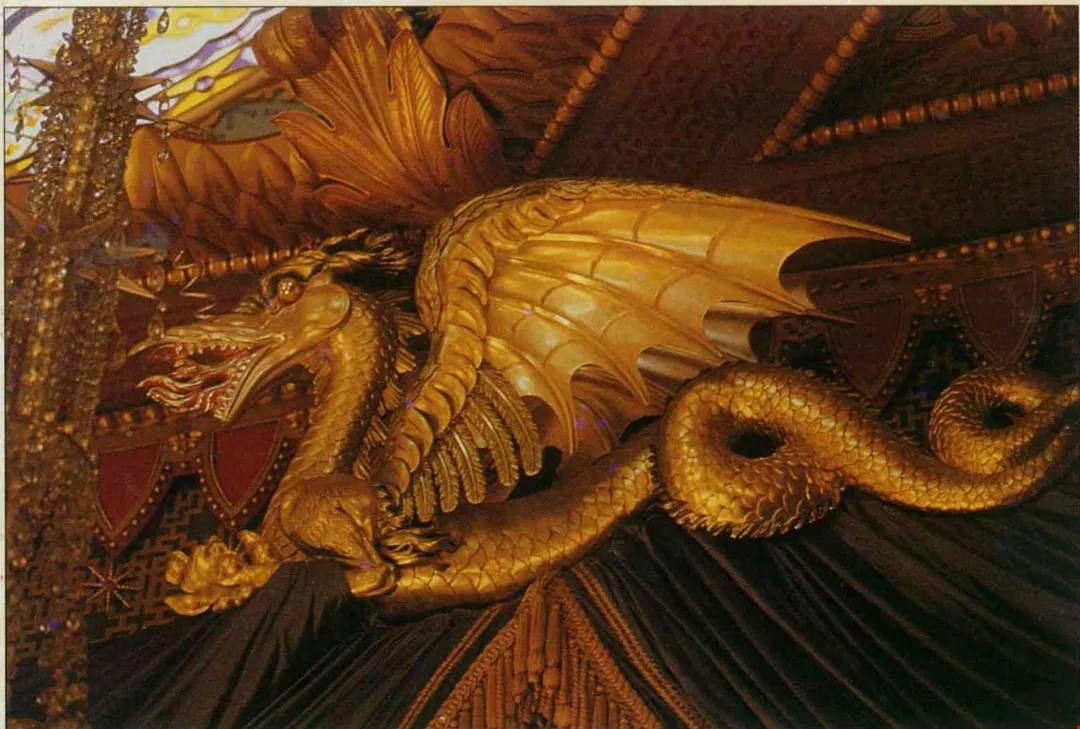
Things Chinese were all the rage in 18th century Europe. England's Brighton Pavilion has many examples of chinoiserie. This winged gold dragon has a distinctly Western flavor. (photo by Cheng Yuan-ching)
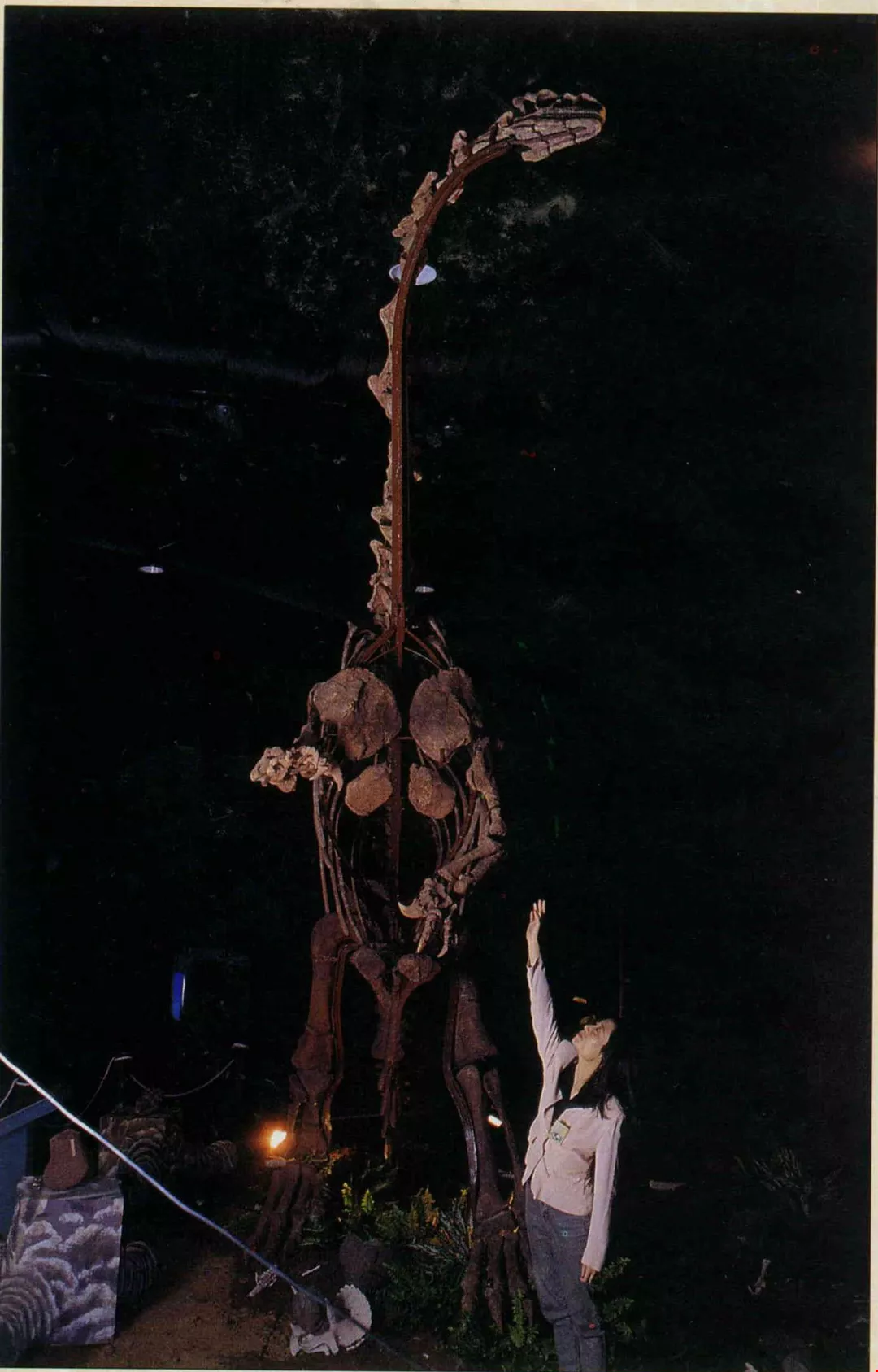
Known links between man and the dinosaurs are minuscule. Ancestors of today's Chinese created dragons and stood in awe of them. Could their imaginations have been stirred by dinosaur skeletons?
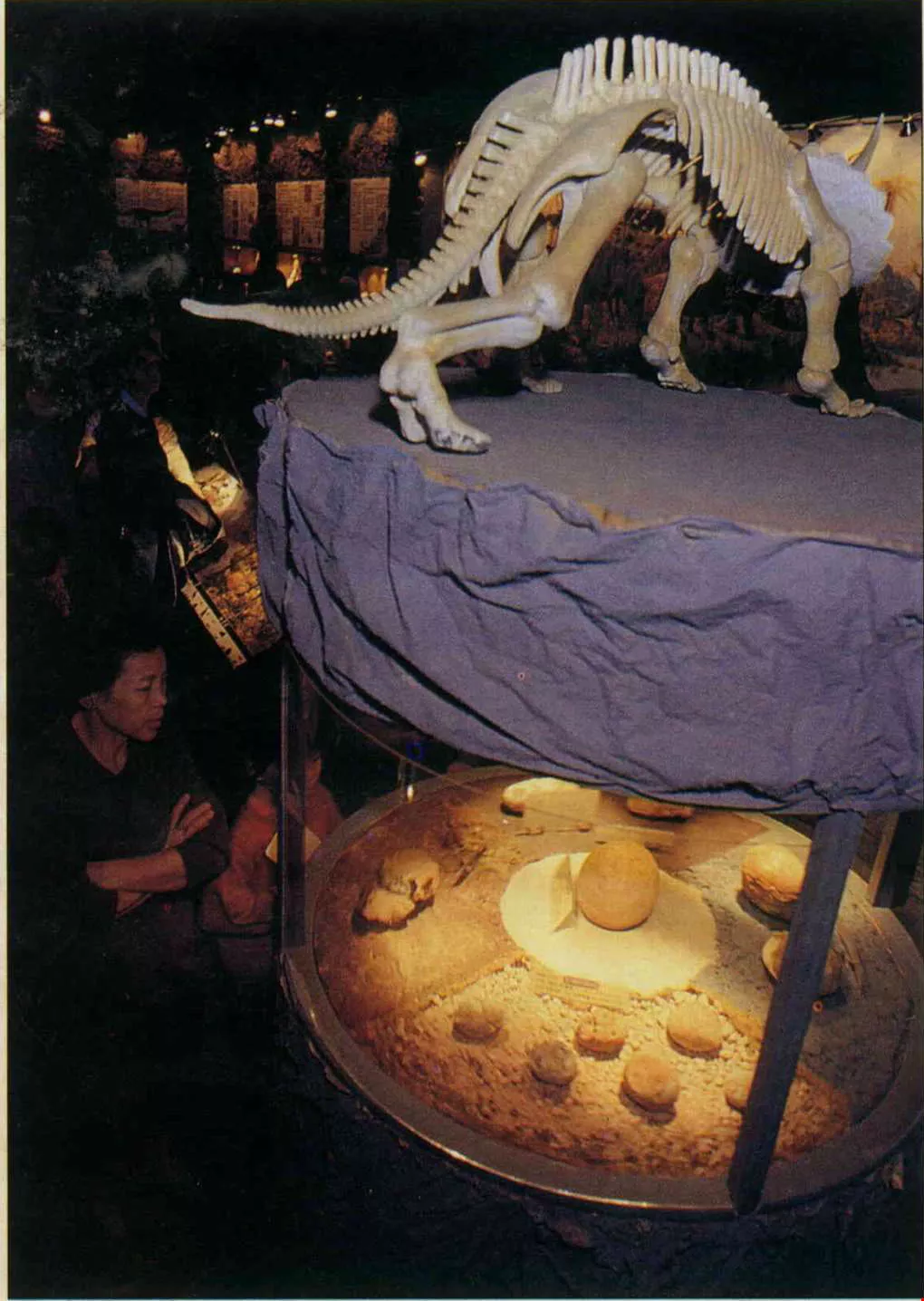
A traveling exhibition of dinosaurs from mainland China has been a hit all over the world these past couple of years. The photo shows its"Jurassic Fair"exhibit.
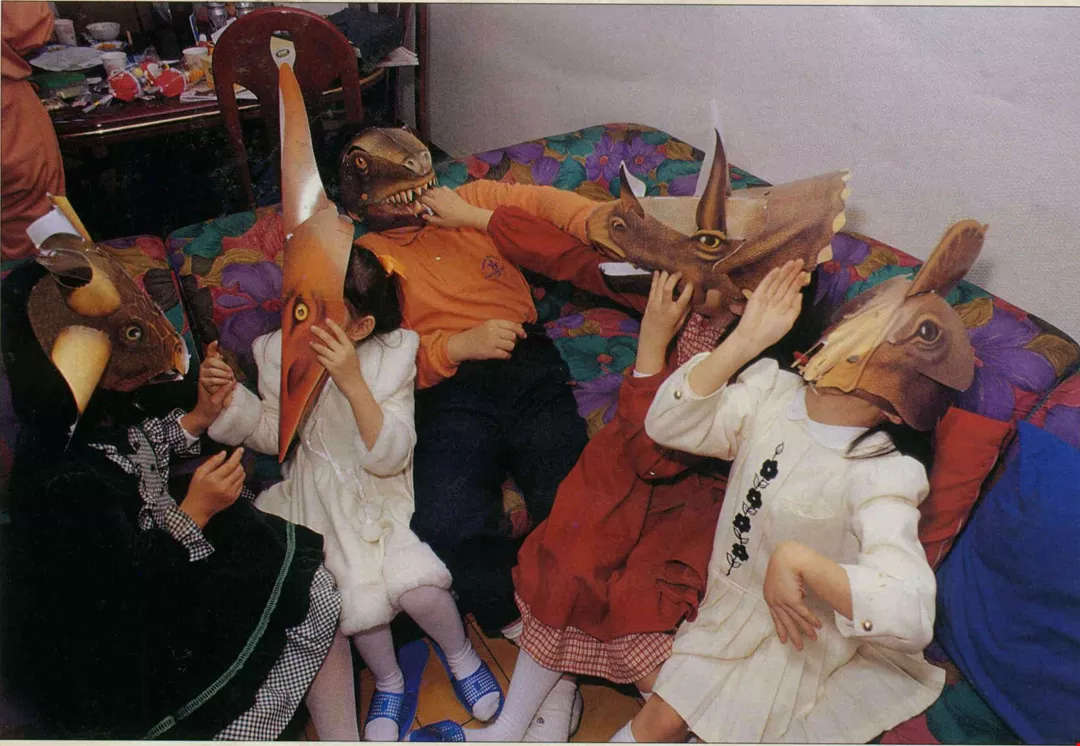
Jurassic Park has really stirred up interest in dinosaurs. Children are watching dinosaur movies, playing with dinosaur toys, and even imitating their strange roars.
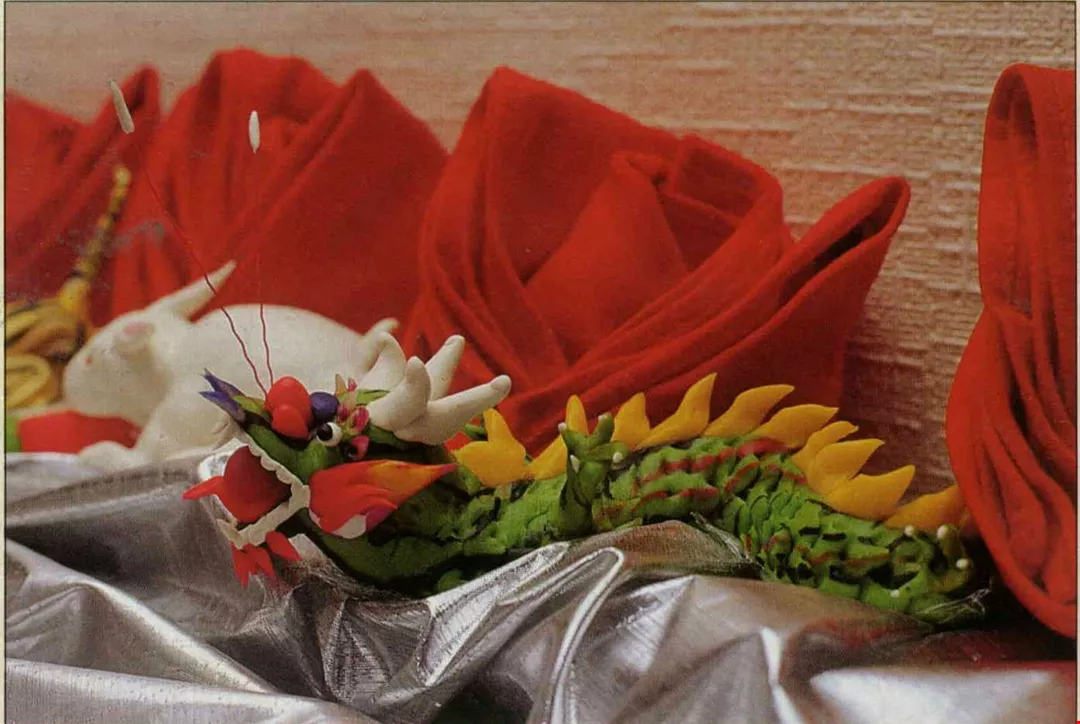
Look at the expression of this colorful dragon pressed together out of flour dough!(photo by Vincent Chang)


@List.jpg?w=522&h=410&mode=crop&format=webp&quality=80)


@List.jpg?w=522&h=410&mode=crop&format=webp&quality=80)
