Huang Tsung-han is a doctor of traditional Chinese medicine (TCM) at Chen Xin Hospital. With his babyfaced looks and specialization in gynecology, he's particularly appreciated by the female patients of the hospital, earning him the nickname "Ladykiller" from his workmates.
Huang earned his Shanghai license as a TCM doctor in 2002, after passing the Shanghai Municipal Bureau of Health's registration process. This, combined with his landing a job at Shanghai's home for Taiwanese specialists, Chen Xin Hospital, has seen him quickly become Shanghai's first practicing Taiwanese TCM doctor.
Since the visits to China by Taiwan's opposition leaders earlier this year, the Chinese authorities have made a number of changes helpful to Taiwanese looking for work in China. For example, from the start of October, Chinese businesses are allowed to directly hire Taiwanese staff, and these staff will now be covered by the social welfare system. Additionally, Taiwanese college graduates will also be able to directly seek employment in China.
But as far as Taiwanese TCM doctors are concerned, while Shanghai has opened up certification to them, they can still only get work in public hospitals and can't open their own practices.
Is Huang Tsung-han luckier than most?
After graduating from Taichung's Central Taiwan University of Science and Technology, Huang, now 38, started working in the radiology ward at Taipei Central Clinic. His family ran a TCM pharmacy, and he grew up around Chinese medicine ingredients and their pungent fragrances. But it wasn't until he started work and saw numerous patients with bone spurs and displaced vertebrae who wanted TCM treatment over surgery that he started to look at this ancient field anew.
In 1995 he traveled to China to study at Shanghai University of Traditional Chinese Medicine, and after five years of study he graduated top of his class and earned a scholarship for master's study. Before taking that up, he returned to Taiwan to check out the TCM situation there. Thinking about the preparations he'd need to undergo to practice in Taiwan--passing the Senior or the Special Examination for Doctors of Chinese Medicine, then an internship for more than a year--he wasn't sure if he should stay or not.
"My goal was to master TCM," says Huang, and considering the two years it would take him to become accredited in Taiwan, which would be enough for him to get his master's degree in China, with his parents' and his wife's blessing Huang decided to return to Shanghai rather than waste his scholarship. After completing his master's degree, he went on to doctoral study.
On the benefits of studying TCM in China, Huang says, "The clinical basis for TCM in China is at least ten years ahead of that in Taiwan. Plus academically it is taught in much more depth, including studies of metabolism and immunology, and Sino-Western combined treatment methods are widely used in hospitals, so the career opportunities are much broader."
But his decision to not first get accreditation in Taiwan was a risky one, because Taiwan's Special Examination for Doctors of Chinese Medicine is set to become history in 2011. In order to make Taiwan's TCM education system more professional, the government has incorporated a sunset clause into the regulations on TCM examinations, which has many Taiwanese students of the field who studied in China nervous. If they can't get Taiwanese accreditation in the next five years, then if they cannot find a hospital post in China their dreams of practicing TCM may end up dashed on both sides of the strait.
But perhaps their futures aren't as doomed as they may seem. With the Taiwanese medicine industry making inroads into the Chinese market, these Taiwanese expats may have a way out. But how much demand will there be at these cross-strait joint ventures for TCM? And how many opportunities will there be for Taiwanese graduates, when China has no shortage of TCM specialists? This remains to be seen.
For his part, Huang originally had no plans to stay in China. With his specialization, he believed, the world was his stage. In America and Canada, for example, there is a growing interest in acupuncture, and there are TCM schools in several countries in Europe, including Germany, Belgium, and the Netherlands. "Where East and West collide, sparks will fly," says Huang. After getting his degree and studying some German, Huang never expected that with the establishment of a TCM ward at Chen Xin Hospital, he'd drop his plans to travel to Europe.
Even though he's been able to practice in China, Huang still urges his fellow Taiwanese to be able to adapt, and to remember why they got into TCM in the first place, and why they decided to study it in China. Otherwise, finding out the pay's not as high in China as in Taiwan after studying so hard could lead to frustration. Having spent ten years living his dream of practicing TCM, Huang is just glad to have somewhere he can put his skills to their fullest use.
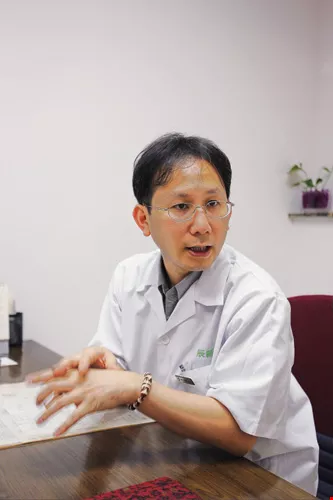
Huang Tsung-han, who is still studying for his PhD at Shanghai University of Traditional Chinese Medicine, received his license to practice TCM in Shanghai two years ago and began looking for his perfect job. At Chen Xin Hospital, which is run by a Taiwanese medical team, he single-handedly planned the TCM department, becoming the first Taiwanese doctor of TCM to practise in Shanghai.




@List.jpg?w=522&h=410&mode=crop&format=webp&quality=80)


@List.jpg?w=522&h=410&mode=crop&format=webp&quality=80)