

Who writes history? Who gets to in-terpret it? For Macao, first opened up to the outside world during the age of maritime colonialism and the first Chinese port to be seized by a foreign power, these are thorny issues.
In 1557 the Ming Dynasty government agreed to allow Portuguese settlement of Macao, and Macao was dragged into the tumult of modern Chinese history, left swinging between Chinese and Western cultures and power. In 1887, Emperor Guangxu ceded to Portugal "perpetual occupation and government of Macao," setting Macao completely apart from Chinese rule.
During World War II, as China fought bitterly, Hong Kong fell into the hands of the Japanese, and Taiwan--then a Japanese colony--dispatched troops into Southeast Asia, Macao sat peacefully on the sidelines thanks to Portugal's neutral status, once again illustrating its unique position in the region.
On December 20th, 1999, rule over Macao was handed back to China, marking the end of over 400 years of foreign settlement and administration. To Macanese, becoming residents of a new Special Administrative Region of China represented a new page being turned in their history, and presented an opportunity they would seize--the opportunity to finally write their history themselves.
Johnny Lam is a 33-year-old history teacher and fan of May Fourth Movement intellectual Hu Shih. Since 2000 he has taught at Pooi To Middle School in Macao, and in the past few years, has taken to leading his students on field trips to investigate the area's history at urban historical sites.
On this particular warm summer day, Lam is in charge of 20-something students on a visit to Seminario de Sao Jose--St. Joseph's Seminary.
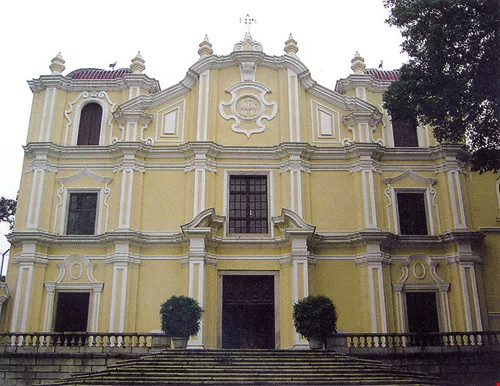
The seminary was founded by Jesuit priests in 1728. Its main building incorporates both the main hall of the seminary and a church. Its rich red domed roof is done in Roman style, and looking up from inside the church, you can see Jesuit imagery of a kind rarely found in East Asian churches. The church's altar is Baroque and projects from a wall, with Corinthian-style columns along the walls and representations of St. Joseph in the middle.
"Sam ba is a Cantonese rendering of 'Sao Paulo,' or St. Paul, and the old name for the Cathedral of St. Paul was Sam Ba Si, the Temple of Sao Paulo," says Lam, explaining the origins of the familiar place names to his students.
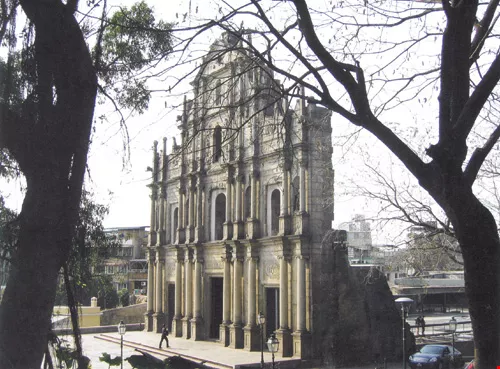
In 1576 Jesuit priests, who accompanied merchants and explorers during that time of maritime exploration, established the diocese of Macao and built the Cathedral of St. Paul. Over the following centuries the church fell victim to fires and was rebuilt, until in 1835 the last major fire destroyed all of Macao's oldest church bar its front facade, which has become a landmark and symbol of Macao. St. Joseph's Seminary has been preserved intact and provides an outstanding glimpse of the architecture of the time, making it every bit as valuable as St. Paul's.

At a small church next to Guia Lighthouse, a visitor inspects a stone tablet. In the past, all people saw of Macao was its casinos, but now people are gradually becoming more aware of the relics of the SAR's four centuries of East-West exchange.
Missing pages
Despite Macao being known more now for its casinos, some ordinary places overlooked by most tourists--even a simple stone table--have amazing stories to tell.
Twenty minutes on foot from St. Joseph's Seminary is Mong-ha Hill, known as Wangxia Shan in Mandarin. At the foot of the hill is the Kun Iam Temple, set in lushly wooded grounds. In the temple's garden sits a plain square stone table and four stone chairs, all of which have quite the tale to tell.
It was here that the Treaty of Wanghia (Wangxia) was signed between the United States and China in 1844, becoming one of the first of many "unequal treaties." "At the time, China's power was on the wane and the Qing rulers were clinging desperately to what remaining dignity they had. They felt that to let an American representative come to Beijing and sign such a treaty would be a huge loss of face, so they had the signing take place in the back garden of the Kun Iam Temple, far off in southeastern China. The whole event was of historic importance to Qing China's loss of consular jurisdiction," explains Johnny Lam solemnly as we stand in the temple grounds.
Macao's beauty owes much to its history, to its fusion of Chinese and European, and whether it's the beautiful churches or the solemn stone table, it seems like every corner of the territory has a story to tell. Now Johnny Lam leads his students, all carrying notepads and sketchbooks, unearthing these tales on the streets of Macao. With the growing emphasis on "localization," Lam has become an accidental figurehead at the forefront of the evolution of Macanese history education.
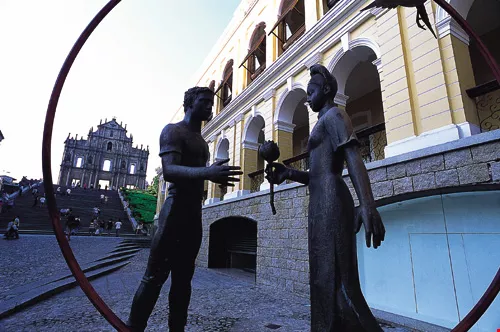
In front of the ruins of St. Paul's Cathedral stands a piece of public art, depicting a Chinese girl standing on the right and a Portuguese boy on the left, which could be seen as a symbol of Macao's own recent history.
What about Macao's perspective?
After graduating from university, Lam decided to return to his old high school, Pooi To Middle School, to teach history. Like many history teachers in Macao, Lam soon found himself frustrated by the lack of locally oriented teaching materials.
"Macao's history textbooks come from all over the place--Taiwan, Hong Kong, and China. When students here study history, they're seeing it through outsiders' eyes, which leads the younger generation to feel more confused about and distant from their own home."
As Lam points out, despite all being Chinese-speaking territories, these three sources all have dramatically different takes on modern Chinese history.
"Take the Boxer Rebellion, for example--Hong Kong texts take the British perspective, considering the Boxers violent criminals; the Chinese, however, view them as patriots and heroes of anti-imperialism. Another example is how Chiang Kai-shek's regime is called 'reactionary' in Chinese textbooks, while Taiwanese books refer to Communist China as 'communist bandits.'"
With Pooi To Middle School leaning more to the Chinese sources, as a student Lam became more familiar with the Chinese perspective on history. "I even, completely unawares, took to viewing Macao from the Chinese perspective, as an outlying region, forgetting I was Macanese born and raised," he admits.
While teaching a class on the First Opium War in 2001, Lam recalls that one student "stuck up his hand and asked, 'So what did Lin Zexu do here in Macao?'"
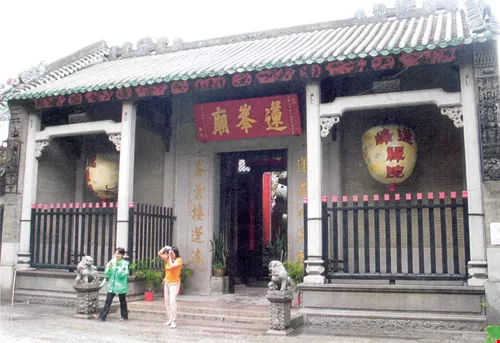
Lin Zexu's prohibition on opium was the catalyst for the First Opium War. At the time, Macao was a military mobilization center for the United Kingdom, and according to documents, after confiscating and destroying opium in the Guangdong town of Humen, in 1839 Lin traveled to Macao for an inspection, meeting with the Portuguese commissioner at Lin Fung Temple to communicate his anti-opium position and ordering the expulsion of British opium traders. "But the textbooks only discussed the positions of Lin and the British, with not so much as a mention of what Lin did in Macao."
Lam, driven by an awareness of the importance of history lessons being connected to students' lives, asked the principal to establish the "Pooi To History Association" to give a boost to more locally oriented history education. To that end, Lam began using his weekends and holidays to lead students on trips to various historical sites around Macao, helping them investigate the aspects of Macao's identity that had been overlooked by their textbooks.
As well as these field trips, "Mr. Lam has worked hard to gather together relevant books, such as Anecdotes from Macao, Records of Macao, and Ancient and Modern Macao, for use alongside the textbooks from China for contrast and reference," says one of Lam's colleagues and fellow Pooi To alumnus, Tam Hiu Wai.
"History is more than a simple academic exercise; it's a crucial means for creating a common societal consciousness. It's not just some step on the ladder up through the school system where just memorizing names, dates, and places by rote is good enough," says Lam.
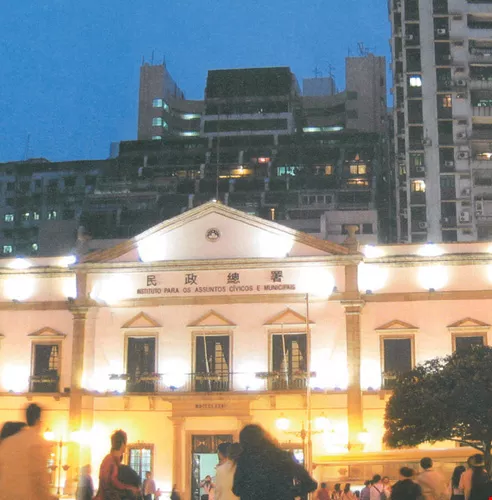
Lin Fung Temple
A heritage recognized
Meanwhile, as Johnny Lam teaches his students about Macao by showing them the territory's history, the Special Administrative Region government has taken a different approach to their historical sites.
"Even when the Portuguese were still running Macao, the local government was interested in getting Macao recognized by the United Nations as a World Heritage Site," says Macao Monthly editor-in-chief Wong Ting-cheong. "But such applications had to be made by a 'sovereign state,' which meant that as a colony Macao could do nothing but wait."
After Macao's handover in 1999 the Chinese pushed hard to preserve the territory's four centuries of cultural and historical heritage, and Macao's wait soon came to an end. In July 2005, the UNESCO World Heritage Committee formally recognized Macao's historic architecture as a World Heritage Site, and the appropriate area was renamed the "Historic Centre of Macao."
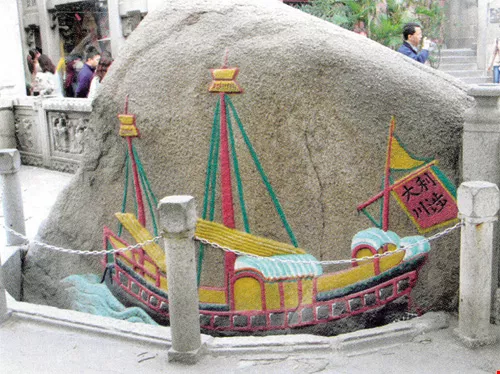
This area includes St. Joseph's Seminary and the A-Ma Temple--known in Cantonese as Maa Gok Miu, and the source of the name "Macao"--and covers the bulk of the old Portuguese settlement, a total of 22 sites. In the words of the Macanese Cultural Affairs Bureau, the Historic Centre is not only "solid testimony of the city's missionary role in the Far East while also reflecting the dissemination of Chinese folk beliefs to the Western world," but also "the oldest, the most complete and consolidated array of European architectural legacy standing intact on Chinese territory."
"Since the handover, the two biggest things to happen have been the relaxing of restrictions on gambling in 2003 and the 2005 World Heritage Committee decision," says Wong. "The first spurred the Macanese economy, helping it bring in twice the income it used to, bringing the per-capita GDP of the SAR to US$28,436 in 2006, even higher than that of Hong Kong."
The sudden explosion of casinos, however, has left many ordinary Macanese concerned. "But with the decision from the World Heritage Committee, we're assured some of the real Macao will stay for us to be proud of," says Wong. After Macao's being left in Hong Kong's shadow for so long as that territory's economy boomed, leaving Macanese with no way to set themselves apart, Macao's entry to the community of World Heritage Sites has now given Macanese a new confidence and the means to draw the envy of Hong Kong.
Lin Fung Temple
Building objectivityThe way Johnny Lam sees it, the Historic Center of Macao's recognition by the World Heritage Committee has helped Macanese become proud of the historical sites they have, which has in turn raised awareness of the importance of locally oriented education.
"I started taking my students out on field trips in late 2004, and began turning those field trips into books," he recalls. "Originally I just wanted something to serve as a souvenir, but with the growth in historical awareness, those two books have turned into the only books on Macao's history written by a Macanese, for Macanese."
Combining information from official history books and local stories, Lam's two books--The Story of Macao Streets and The Story of Macao's Historical Buildings--simultaneously made the local top-ten bestseller list in 2005, while also boosting the years of research by Lam and his 100-plus students to prominence. At the same time, the SAR government announced their plan to use a portion of the tax revenue collected from gambling to fund the establishment of the Macao Association for Historical Education, along with 18 proposed projects for the association and the Macao Foundation to publish books about Macao. This action was essentially the official response to Lam's calls for more locally oriented history education.
"To use a catchcry that's been popular in Taiwan lately, the available information on Macao's history 'lacked objectivity,'" says Ng Chi-leung, Macanese historian and foundation committee member. "Despite its position in contacts between East and West and its long history of colonial rule, Macao's history had been reduced to a tool for framing Sino-Portuguese relations."
"Thanks to this, both the governments and the peoples were used to fudging Macanese history, giving it little more than a cursory glance," explains Ng. "But more crucially, with the push for 'localization' having come so relatively late, most of the territory's historical information came from outside, and few Macanese really paid it any attention or offered their own takes on it."
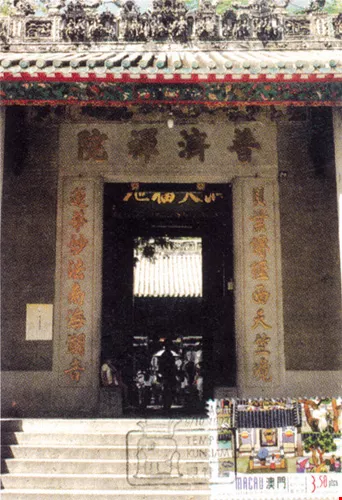
Lin Fung Temple
The legacy of December 3
To former colonies, the reinterpretation and "de-colonialization" of their history is of great importance. Now, 20 years after Taiwan's localization movement began in earnest, Macao--a colony for much longer than Taiwan ever was--has begun its own search for localization and objectivity, and faces a similar process as Taiwan.
Now that it has its leaders and the backing of the government, the reinterpretation of Macao's history has finally begun, but who should craft this history? Who constitutes the 'collective' that possesses the collective memory? What events have been overlooked, covered up, or spun, whether intentionally or otherwise? And how does one straighten them out? Amidst such calls and queries, the December 3 Incident has become the most prominent starting point.
In 1966, in the early days of the Cultural Revolution, a group of Chinese residents on Taipa, one of the two islands attached to Macao, applied for a permit to build a private school, and in November, after being frustrated by the bureaucratic red tape involved, they began work on the school regardless. Clashes soon erupted between the workers and the police were dispatched to stop them, resulting in a number of injuries.
Seeing an unmissable opportunity, leftist China sympathizers roused the injured to rebel against the colonial government, and on December 3 a riot broke out in front of the office of the governor-general. Police armed with batons and water cannons tried to disperse the crowd, but to no avail. Over the following days the clashes continued, resulting in a total of 11 people being killed and 212 being injured, making the incident one of the most severe in Macao's history.
Not only did the December 3 Incident result in a massive loss of public confidence in the colonial administration, already disliked for its corruption and oppressive tactics, it also gave pro-Mao forces backed by forces in neighboring Guangdong Province the opportunity to demand that the colonial government officially forbid any and all "antagonistic" actions toward the People's Republic of China--something clearly aimed as a warning to the Republic of China government in Taiwan; after this, the Kuomintang finally lost the last of its support and influence in Macao.
On the other hand, notes Lam, "Seeing the usually easygoing people of Macao suddenly stand up to the colonial government proved inspirational to the people of Hong Kong, who had for so long looked down on the Macanese. The following year, spurred in part by a price hike for the Star Ferry, a similar riot broke out in Hong Kong, the now-infamous Hong Kong 1967 Leftist Riots."
"When the December 3 riots broke out, Hong Kong, Taiwan, Macao, and Portugal quickly moved to clamp down on any and all information on them," recalls Wong Ting-cheong. "After the incident, everyone kept dead silent about it, and the history books skip right past it with nary a word. This is something that has to be rectified quickly, so we can bring back some truth and accuracy to our history."
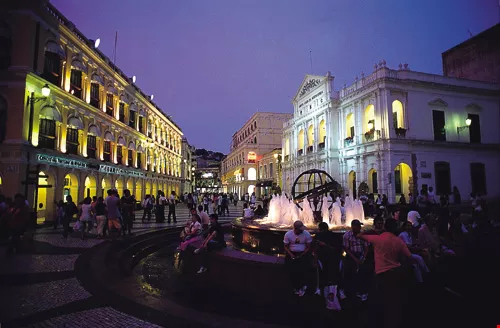
Senado Square is surrounded by arcade-style buildings, and is one of the most loved public spaces in Macao. Sitting around the central water fountain in the square, Portuguese visitors to Macao are reminded of their forefathers' former glory.
The Hong Kong-Macao relationship
Even now that administration of both Hong Kong and Macao has been returned to China, the two are still subjected to the old comparisons by outsiders, with Hong Kong seen as the thriving international metropolis and Macao the quaint little village.
Take for instance the different attitudes of the colonial powers--Margaret Thatcher wanted to delay the handover of Hong Kong, while the Portuguese, their former maritime power rapidly declining, had long since expressed their willingness to hand Macao back to China.
"Compared with Hong Kong, the 'pearl of the orient,' Macao's gone unnoticed and unheard," says noted Hong Kong and Macao political commentator Jin Guoping. Since their handovers, though, "while both Hong Kong and Macao have had to rely on links with the mainland for economic growth, such as through the Closer Economic Partnership Agreements and more relaxed tourism links with the mainland, they've also both begun to develop a stronger self-identification movement."
While people in Hong Kong, reminded by writer Lung Ying-tai of the importance of historical sites, have made a fuss over the proposed demolition of Queen's Pier, Macao's oldest lighthouse--Guia Lighthouse--has come under threat as well.
Guia Lighthouse, built in 1864, is the oldest modern lighthouse in China and part of Macao's World Heritage Site.
However, in 2006 the SAR government approved a building permit that would see buildings constructed that are taller than the top of the lighthouse, destroying the view. The "League of Guia Lighthouse Protectors," a group of people dedicated to protecting the lighthouse, have staged several protests and have threatened to petition UNESCO regarding the government's negligence in protecting the site.
In the face of the opposition from the league, both the construction company and the SAR government have stepped back and put the project on hold, which is being touted as a major victory in the fight to protect Macao's historical sites.
Similarly, "Whether it's Queen's Pier or Guia Lighthouse, the protection of cultural and historical sites is a sign of rising civic consciousness, and for both Hong Kong and Macao--both still struggling to establish a civil society--these protection movements are particularly valuable," says Jin.
Unfortunately, however, "So far, outside perceptions of Macao are still just of gambling and nothing more," says Wong. Tourism in Macao has grown rapidly, but while as many as 22 million people visit the SAR annually, it's the casinos that see the crowds, while places like St. Joseph's Seminary get fewer than 100 people visiting them each day.
"As the World Heritage Site process illustrates, Macanese have no confidence in themselves and are always after recognition from others," says Lam, "so if tourists started demanding to see places like St. Joseph's, Macanese would do all they possibly could to protect them, and we'd never have to be concerned about them again."
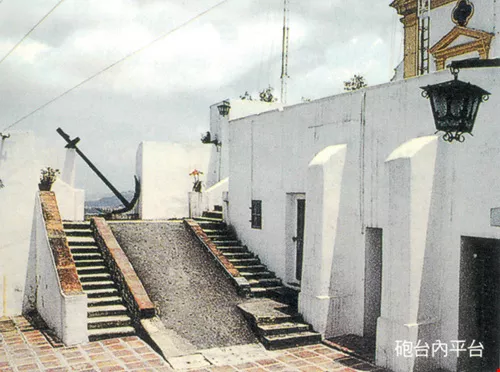
Lin Fung Temple
A history of one's own
Back during the Ming Dynasty, China, confronted by the Western maritime powers, implemented a policy of isolationism. As a result, before getting permission to preach in China, priests like Matteo Ricci and Miguel Ruggieri chose to bide their time in Macao, waiting for the chance to start their activities in Guangdong.
In the four centuries that followed, Macao has been linked to such celebrated figures as Lin Zexu and Sun Yat-sen, setting this small city at the forefront of Chinese history. Today, "Post-handover Macao has its first opportunity to look at itself anew and readdress its history," says Lam, history books from China, Hong Kong, and Taiwan spread out across his desk in his office at Mong-ha. Last year, the SAR government announced their "Outline of Basic Academic Requirements for History," with Lam the chair of the relevant committee.
"Once I've completed my work on this, the schools will follow, and with any luck Macao will soon have history textbooks of its own."
Where once it had just a thin few pages, Macao and its history is turning a new page and set to become an epic.
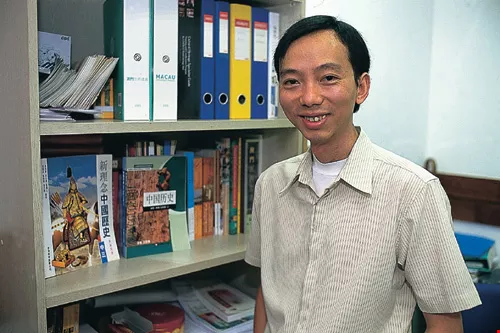
Johnny Lam, who has a passion for Chinese history and considers influential May Fourth Movement intellectual Hu Shih his idol, has used his position as a middle-school teacher to take the lead in a movement to inspire Macanese to reevaluate their homeland's
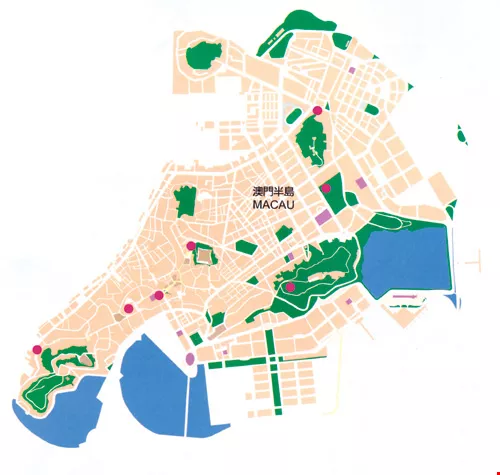
Macao at a GlancePopulation: 520,000
Area: 29 square kilometers
Official name: Macao Special Administrative Region of the People's Republic of China
In 1887, the governments of Portugal and Qing China signed the Sino-Portuguese Draft and the Treaty of Beijing, making Macao an official Portuguese colony.
On December 20, 1999, Portuguese administration of Macao came to an end as sovereignty was handed over to the PRC. Today, Macao joins Hong Kong as one of the only two special administrative regions of China, both of which operate under the principle of "one country, two systems."
Economy: Gambling is Macao's primary source of income. In 2006 Macao's 22 casinos brought in approximately US$7.2 billion, more than Las Vegas, making Macao the new leader in global gambling.
GDP per capita: US$28,436
source: Macao SAR Government website, 2006 statistics。
Lin Fung Temple
Lin Fung Temple
On Guia Hill sits the oldest modern lighthouse in China, Guia Lighthouse, a symbol of the great changes Macao has seen over its 400-year history.
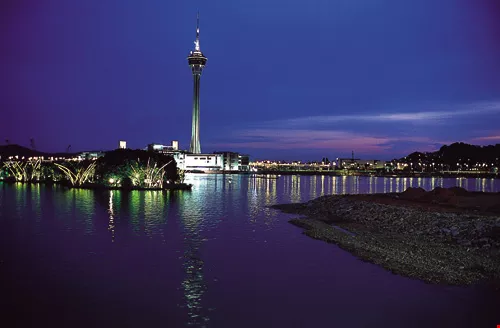
Macao Tower, completed after the handover, is 338 meters tall and the tenth tallest tower in the world. It has become a major draw for bungee jumping and skyjumping enthusiasts from around the world, and is one of Macao's newest landmarks.
Lin Fung Temple
Lin Fung Temple


