We're One Family--Songwriter Kao Tzu-yang
Kuo Li-chuan / photos Chuang Kung-ju / tr. by Scott Williams
July 2006


Your hometown's in Naruwan,
My hometown's in Naruwan,
Once we were one family,
We're still all one family,
Hand in hand, arm in arm,
Singing from the heart,
Coming together, loving each other,
Because we are one family,
We're still one family.
More than 30 years ago, the ideals underpinning the song "We're One Family" led to the framing and jailing of its composer as a "public enemy." While members of the China Youth Corps were enjoying the song and sharing it with other college students, its composer, Kao Tzu-yang, was toiling shackled in the scorching heat of the fields of Orchid Island. Yet, in spite of his cruel fate, Kao retained his sunny disposition and continued to pursue his art.
Kao Tzu-yang was born in Chihpen, Taitung County, in 1952 to a Puyuma mother and a part-Han father. In keeping with the customs of the matriarchal Puyuma, he took the name Kao Fei-lung after his mother, though he later changed it to Kao Tzu-yang.
His family was relatively well off when he was young, and lived in a village that was home to Minnanese, Hakka, and mainlanders, as well as Aborigines. As one of eastern Taiwan's transportation hubs, Chihpen had three theaters, and was frequently visited by Taiwanese-Opera troupes, glove puppeteers, and singing patent medicine peddlers. These traveling companies exposed Kao Tzu-yang to a variety of languages and styles of music from an early age, feeding an interest that led him to begin teaching himself to play instruments such as the guitar and erhu.
"Aboriginal music is my soul," says Kao, "Chinese music is my heart. When I was little, I loved to watch glove puppetry and Taiwanese Opera, and would cry as the tragic female leads sang their heartwrenching tunes. Sometimes I'd get so lost in the performances I'd forget to go home, and end up being scolded by my family."
Kao Tzu-yang not only sang the melodies, he sang them well--his village had been so long integrated that he was able to sing the classics of Taiwanese Opera in pitch-perfect Taiwanese.
Kao Tzu-yang's work holds a mirror to our times. His solo albums aren't fashionable but sell well, and he has many devoted fans.
Taiwan's "gypsies"
But though his pronunciation was perfect, his deepset features betrayed his Aboriginal heritage, and he was bullied at school.
Kao Tzu-yang is a small dynamo of a man whose feelings are stirred when he recalls those early years. "Actually," he says, "when I was a kid, we didn't have any idea about 'racial discrimination.' But some Han classmates regularly called us Aborigines 'savages' or 'barbarians.' I didn't realize that these were derogatory terms until my parents told me. I went on to attend Provincial Taitung Secondary School, where there weren't many Aboriginal students. The weak and the "good kids" among us were regularly bullied." Kao Tzu-yang found fighting to be the only way to win respect and keep the bullies at bay.
In 1967, aged 15, he ran away from school to Yungho, Taipei County, where he worked as a painter. There, missing his family, he wrote his first song, "Mt. Liang Love Song." His family soon fetched him back to Taitung, and he continued his education. Unfortunately, his father was diagnosed with stomach cancer the following year, and the medical bills drove his family into poverty. These circumstances, together with some trouble over a fight at school, prompted him to abandon his education and take a job with the Forestry Bureau at its Shuangliu Station in Pingtung.
At the forestry station, he reflected on the bullying of Aborigines he had seen at school, and the day-labor work so many were stuck with as adults. His feelings ultimately found expression in a song, "Bottoms up, Friend" (later renamed "Drinking Buddies"), the lyrics to which ran: "We're Taiwan's gypsies, / With little money and little work, / The old days are a dream, / That lives only in memory, / A dream that's still painful, / Bottoms up, friend, / And when you've downed your drink, remember, / Get in touch if you find work."
Kao Tzu-yang may have jokingly referred to himself as a "Taiwanese gypsy," but he was already undergoing an "ethnic awakening." At the age of 18, he was already singing in well known Taipei taverns like Hua Wang and the Apricot Pavilion. He was also meeting many other Aborigines who had left their villages to search for work in the city. He saw how unfairly Han society treated them, and the grinding poverty in which they lived, the kind of poverty that left no money even for baby formula. His experiences rekindled his youthful desire to fight for justice, but also made him realize that the only way his people were going to improve their lives was by helping one another.
Kao Tzu-yang's work holds a mirror to our times. His solo albums aren't fashionable but sell well, and he has many devoted fans.
A dream turns sour
During his military service, Kao Tzu-yang was assigned to an airbase in Hsinchu where he worked in a warehouse and began thinking about how to help his people. In 1973, he and some friends formed a mutual aid society to which each contributed NT$100 per month. The money was lent at no interest to Aborigines who wanted to start their own businesses, or who had encountered some kind of trouble in their lives. While on duty that Christmas, he finished writing "We're One Family," "Naruwan Youth" and "Come Together." He debuted the songs on New Year's Day 1974 during a celebration of the formal establishment of the Aboriginal Benevolent Assistance Society on the plaza of Chihpen's Catholic church. The songs were even entered into the society's charter.
But in those days, martial law forbade the formation of clubs or groups of any type, as well as public events. Soon after the society was formed, Kao Tzu-yang, who was still in the military, came under suspicion. People from the Garrison Command arrived at his base in a jeep, and took him away to Taipei. There he was confined for weeks in a nameless location that looked like a Japanese villa on the outside, but was actually a prison.
"It was like a dog cage," he recalls. "You could only squat; there was no way to stand. And you couldn't stretch out on your back, only on your side. People were interrogating me day and night, asking about the motivation behind my mutual aid society." But like most Aboriginal youth of his day, his understanding of politics didn't extend beyond a few slogans: "Retake the mainland!" "Liberate our compatriots!" "Respect Uncle Chiang and his benevolent government!" What could he "confess" to?
Though he was released without charge, his troubles were not over. He was placed on a watch list, his every action and get-together monitored. After his discharge from the military, he went to Kaohsiung to earn his living loading and unloading trucks. Soon thereafter, police from his hometown notified him that his mother had had a stroke. Arriving at a Taitung police station feeling very grateful to the police for having gotten in touch with him, he learned that the story was false and was arrested on charges of being a local gangster. He was soon sentenced to two years and ten months in prison. Sent first to the nearby Yanwan Prison for "correction," he was later transferred to Orchid Island.
Kao Tzu-yang stresses that he has never hurt anyone, but was incarcerated as a gangster. "My intentions were pure: I felt that there was so much chaos in society that people's hearts and values were becoming twisted, and that disadvantaged ethnicities therefore had to give voice to their aspirations. But in an era when suspicions and conspiracies were rampant, an act of selflessness could bring disaster."
Kao Tzu-yang's work holds a mirror to our times. His solo albums aren't fashionable but sell well, and he has many devoted fans.
Hard times
Fate often toys with us. While Kao Tzu-yang was undergoing his personal tragedy, his songs were enjoying great popularity. After its release, "We're One Family" made its way from one village to the next. Picked up by college students and members of the China Youth Corps who were working in the Aboriginal villages, it soon found its way to their campuses. Kao even heard college students singing it while he was incarcerated at the Orchid Island prison farm. Ironically, it was the ideals that had given rise to the song that put him in shackles, doing hard labor on the Orchid Island Airport and the highway around the island.
But his release turned out to be even more difficult to bear than his imprisonment. After nearly three years of suffering in prison, he came out to discover that his family had been shattered: his mother had died, his younger brother had given up school, his family had scattered and his girlfriend had married and gone to Japan.
After his release, he first became a fishmonger, then learned to cook and opened his own seafood restaurant. In 1979, he wrote "A Poor Man, Down on His Luck," and gave it to Chen Ming-jen, a fellow Puyuma who later founded the group the Northern Mountain Cats. The song became a smash hit, and a record company went on to release a dozen-odd Chen Ming-jen recordings of Kao Tzu-yang's tunes. Kao Tzu-yang then made his way to Taipei again to further his musical career, and ended up recording four solo records of his own--two folksy albums and two of old Taiwanese tunes.
But at the time, Taiwan was still under martial law, and songs that mixed Japanese, Taiwanese, and Aboriginal languages were not in keeping with the Nationalist government's 1953 "Mandarin Education" initiative. Moreover, the use of "dispiriting" terms such as "wander" and "old hometown" violated musical taboos against "blue moods," "vulgarity," and "degeneracy." The albums were consequently banned soon after their release. But people continued to sing the songs, especially "A Poor Man, Down on His Luck," which was used during every election cycle to deride opponents as political hacks: "You can string me along, / You can use me too, / Even though you don't love me anymore, / You should greet me when we meet, / I can string you along too, / Or turn my back on you, / Even if I don't call you anymore, / You should still greet me when we meet."
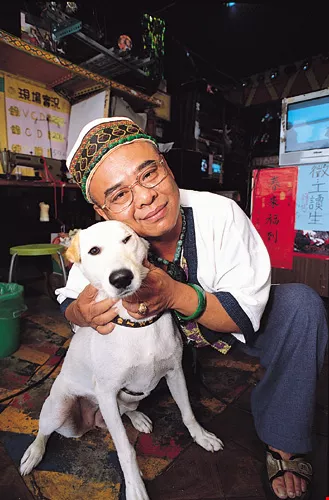
"Aboriginal music is my soul," says the warm and passionate Kao Tzu-yang, "Chinese music is my heart."
Stolen rights
Because Chen Ming-jen sang Kao Tzu-yang's songs for so long, many people mistakenly believed that Chen had written them, which has given rise to frequent copyright issues. Take "We're One Family," for example. Kao was in the military when it was released, and was imprisoned shortly after his discharge. As a result, many people thought that the song, the lyrics of which are in the Puyuma language, had been written by another Puyuma composer, Baliwakes, who was known for having written "Pasalao Bulay." But this was far from Kao Tzu-yang's only copyright problem. His work was also pirated by a certain record company, one that regularly sought new music in Aboriginal villages, then sold the rights for its own profit.
It wasn't until 1997, when singer Chu Yueh-hsin (who performs as Joy Topper Jr.) went looking for the original songwriter and then signed a rights agreement with Kao Tzu-yang, that Kao finally received a long-delayed modicum of justice. But when, as a songwriter, he began fighting for control of his songs and for reasonable compensation for their use by others, he found himself involved in complex lawsuits and facing huge legal expenses. The situation inspired him to cut a CD on his own and transform himself from a simple songwriter into a self-supporting busker, performing his music and selling his CDs in the area around Tanshui.
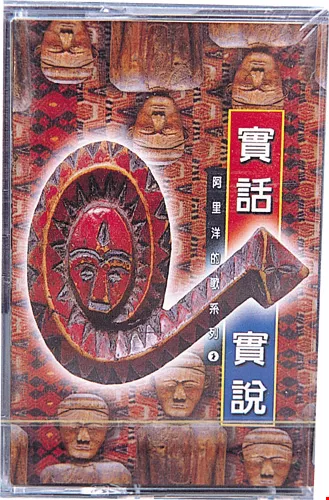
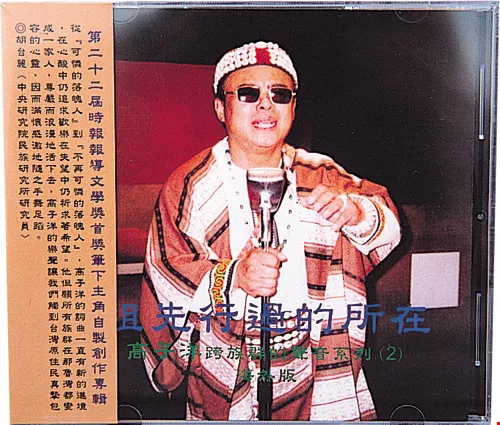
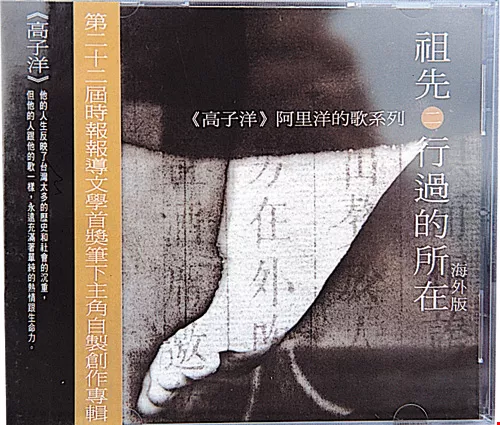
In 1998, he released the first of his Aliyang (Puyuma for "good friends") series of albums, The Honest Truth. On these Aliyang albums, Kao Tzu-yang has, with the help of music-loving collaborators from different ethnic groups, realized his musical ideal--creating a melange of cultures and musical styles. He would therefore like to keep the series going indefinitely.
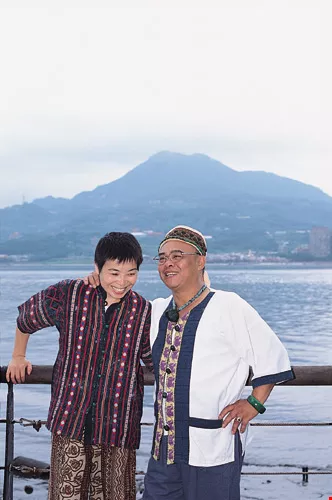
On the banks of the Tanshui River, in the shadow of Mt. Kuanyin, Kao Tzu-yang and his equally talented wife use their music to connect with visitors. Should you happen to be in the area, be sure to give them a listen.
In plain sight
The Honest Truth reveals a transformation in Kao Tzu-yang's outlook. When he was young, his songs were more emotionally driven--there were love songs, exhortations to himself, and descriptions of longing for a faraway home. But then he was imprisoned, saw his family broken apart, and lived through a horrible car accident. In 1985, at one of the lowest points in his life, he became a Buddhist. He even became a monk for a short time, seeking peace of mind in the sutras. But the music that so often leapt up in his heart finally led him back to the mundane world, where song-writing became his ritual practice.
This transformation has enabled him to be more openly critical of current events in his lyrics. Take "The Honest Truth," for example: "Other folk's representatives truly represent, / Our representatives buy votes, / Or con votes.... / Other folk's men are truly men, / Our men are formwork builders, / Sailors and miners.... / Other people's wealth is truly wealth, / Our wealth is flesh sold and votes sold...."
Kao Tzu-yang delivers these cutting lyrics humorously in his thin, raspy voice, arousing complex feelings in his listeners, who hear tears beneath the laughter. But, in spite of their playful mockery, his songs always reflect their composer's passionate and caring nature. Kao Tzu-yang hopes to one day leave the sadness behind, and to use humor to spread compassion to every corner of society.

Remember his name
The concept underlying 1999's Aliyang Songs 2--Where Our Ancestors Walked is a blending of tradition with contemporary criticism. This is evident in the track "Speak Clearly, Speak Plainly" from that album, which runs: "Speak clearly, speak plainly, / Who's on top? Who's underneath? / What's in the middle? What's on the sides? / You always say, "Love me." Why don't I? / (Chorus:) Think a little. Think a little. / One road got us here; nothing's ever changed. / Which road got us here? / One road got us here, rocking back and forth / Which dance was that? / (Chorus:) Take a guess. Take a guess...."
The lyrics borrow phrases used by presidential candidates and academics, and humorously criticize the 2000 presidential election. But it was only this year, after Chen Tzu-hsiang won the China Times 22nd annual prize for excellent reporting for a story about Kao Tzu-yang entitled "Listen to His Songs, Remember His Name," that the public at large began to be aware of him.
Though over 50, he remains in peak creative and physical form. He had a big year in 2002, releasing Aliyang Songs 3--The Wildness of Youth, establishing a foundation supporting cultural, economic and artistic exchanges among different ethnic groups, and designing an open stage near Tanshui's old ferry pier, where performances are recorded for tourists. He followed this with the release of Taiwan Aspirations in 2005, performances in mainland China, and numerous exchanges with minority peoples there.
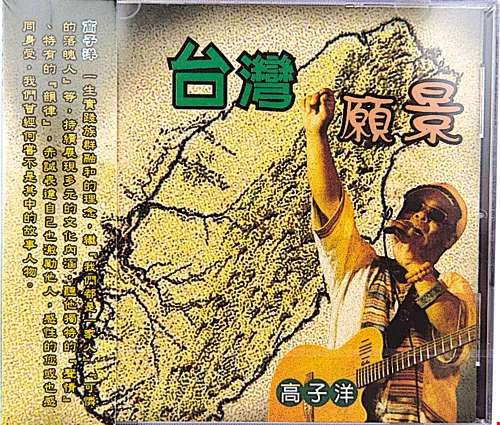
Kao Tzu-yang's work holds a mirror to our times. His solo albums aren't fashionable but sell well, and he has many devoted fans.
No regrets
Over the course of his career, Kao Tzu-yang has penned more than 300 ballads brimming with the joy and pain of a life lived at the bottom of the social ladder. His work ranges from the "Mt. Liang Love Song" he wrote at 15 to his more recent collaborations. And though "We're One Family" brought him enormous trouble at the age of 21, he retains an optimistic outlook and continues to give voice to the aspirations of the weak through his music.
As Kao Tzu-yang plays guitar and sings by the Tanshui River, he draws in travelers, who pause to listen. After all these years, his story is still unfolding. He's still fighting predatory record companies for songwriters' rights to their work, and for fair compensation for minority musicians. Regardless of how it all turns out, he has no regrets about using his musical palette to add color to his own life and that of others.
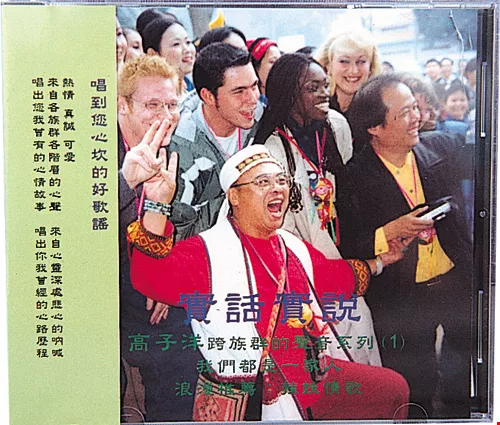
Kao Tzu-yang's work holds a mirror to our times. His solo albums aren't fashionable but sell well, and he has many devoted fans.
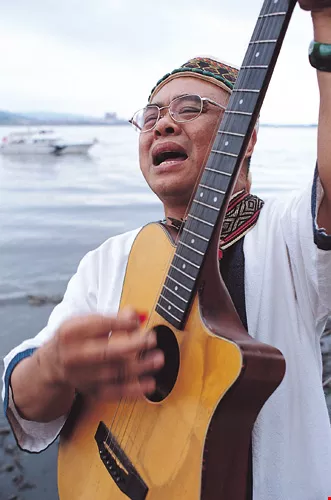
Kao Tzu-yang has remained a simple, straightforward man in spite of a life filled with troubles. Singing by the Tanshui pier, the good and bad of his past float away on the wind and the tide.
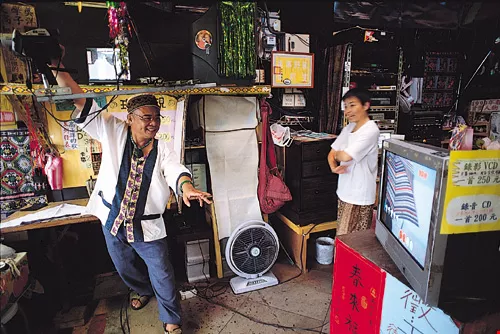
Kao Tzu-yang has chosen to sidestep the record companies, which so often exploit minorities, and instead produce his records on his own, selling them on the Internet and by word of mouth. He has also opened his own shop that makes live audio and video recordings for tourists.


@List.jpg?w=522&h=410&mode=crop&format=webp&quality=80)


