

Everyone loves gold, so why should the Chinese be any different? But as well as loving gold, the Chinese come first in something else: buying gold. According to statistics, private purchases of gold by the Chinese in Hong Kong and Taiwan have ranked first and second in the world for two years running. Do the Chinese really love gold "just that bit more" than other nations? And is there a tradition behind this?
In the film version of Chinese-American writer Amy Tan's novel The Joy Luck Club, a Chinese mother fleeing alone with her twin baby daughters before the advancing Japanese troops falls ill on the road to Chongqing, and has no choice but to leave her daughters, wrapped in swaddling clothes, lying under a large tree. Just before she leaves them, she pulls off her pair of gold bracelets and all her jewelry, and hides them in the girls' clothes as a reward for anyone kind enough to stretch out a helping hand.
Few people must live with the painful memory of being forced to abandon their own daughters in wartime, but a whole generation share the recollection of fleeing as refugees carrying their gold with them.
Beautiful, shimmering gold--never known to rot, rust or fade. Soft and highly ductile, it can be easily fashioned into artefacts and ornaments of every kind. In peaceful times it can be used for decoration, while in days of war and disorder, when paper money and base metal coinage may fall victim to inflation, gold holds its value much better and can be sold in an emergency.
In 1949, when the ROC government withdrew from the Chinese mainland, many people fled to Taiwan with only the gold, silver coins and black market US dollars they could carry sewn into the linings of their padded-cotton winter jackets. In the austere 1950s, when everything was scarce, this gold and silver helped many families to make ends meet.
China has spent half of the last hundred years in war and chaos. This leads many to believe that Chinese people's "special relationship" with gold stems from their fear of becoming refugees once again. Is there any truth in this?
People who sell and market gold agree with this view. "The historical factor keeps Chinese people's love of gold alive, for gold gives people a sense of security," says Chen Hsiao-chun, promotion manager at the World Gold Council. Economists, however, reject the idea that the Chinese predilection for the metal is indicative of a "refugee complex."
"In mainland China in the past, most ordinary people were very poor, and if they got a little money they would buy land or gold. Especially during the war with Japan, when there was roaring inflation and paper money lost its worth within days, there was no choice but to buy things of value," says economist Wang Tso-jung. Rice takes up a lot of space, while by comparison gold is portable and easy to store, so that many people preferred to buy gold. Gold is a form of savings which keeps its value, and the peoples of the Orient also like to use it for ornaments and jewelry, and so buying gold in those times would seem not to have been a bad idea at all.
The Chinese love of gold is not only due to a "refugee complex," and the refugee experience of fleeing with gold may be no more than a historical coincidence. But this accident of history may have given the Chinese an indefinable trust in the metal.
In the stormy 1950s, when Taiwan's economy was in tatters, one can say that it was saved by a boatload of gold.
The late president Chiang Ching-kuo recorded in his diary how on the eve of the retreat from the mainland, his father President Chiang Kai-shek specially instructed him to go to Shanghai to oversee the removal to Taiwan of the gold bullion stored there in the vaults of the Central Bank of China. Later, when the then acting president Li Tsung-jen tried to negotiate "conditions" with Chiang Kai-shek, he wanted to get his hands on this gold, which had already been shipped to Taiwan.
"If we hadn't had that gold in the first period after the government moved to Taiwan, what state our finances and the economy might have been in doesn't bear thinking about," Chiang Ching-kuo wrote in his diary.
The gold from the Central Bank of China arrived safely in Taiwan, and 800,000 taels (Chinese ounces) of it, along with US$10 million and over10 million silver dollars, formed the reserves with which the government backed the issue of the New Taiwan Dollar. Thanks to these reserves, the new currency was able to maintain its value. Paper money has no inherent value of its own, but can be used as a currency if it is backed up by a certain amount of precious metal. The system in which gold reserves are used as the basis on which currency is issued is known as the "gold standard."
At that time, countries all over the world operated on the gold standard, and gold was also required for international trade. It was partly thanks to this shipment of gold that Taiwan, which only had commodities such as tea and sugar to export and which relied on imports for all manufactured goods, was gradually able to transform itself from an agricultural to an industrial society, and to go from having a massive trade deficit to holding foreign exchange reserves which now rank among the world's largest.
Of course, the Chinese are not the only nation to love gold. All the ancient civilizations looked upon gold as a symbol of status and position. The goods buried with the Pharaohs in the pyramids of ancient Egypt included many gold artefacts.
But in Chinese society, it seems that the hallowed status of gold is expressed in many elaborate customs, and the metal touches on every stage of people's lives from the cradle to the grave.
When a baby reaches the age of one month, it has long been the custom for friends and relatives to have golden chains made to express prayers for the child's happiness. The 18th-Century novel The Dream of the Red Chamber describes how Chia Paoyu was born with a piece of lustrous jade in his mouth, while Hsueh Pao-chai wore around her neck a "golden chain of longevity." These should have fated them to be joined in a "blessed union of gold and jade." "Wearing gold and jade" became a symbol of wealth.
Just when the tradition started of making golden necklaces for new-born babies is not clear. "In bygone days, standards of hygiene were none too good, and infants would often die, and so people thought up the idea of using a golden chain to 'chain' the baby's life to its body," says Hsu Lun-hua, chairman of Taipei Jewelers' Association.
Wang Tso-jung remembers how when he was little, he wore a silver necklace around his neck and a pair of golden earrings in his pierced ears. Because several brothers born before him had all died young, "my parents thought that if they couldn't keep a boy alive, they would try bringing me up as a girl." And sure enough, he grew up safe and sound.
Wishing happiness and long life to a new-born child seems natural enough, but less obviously, gold also has a role to play in the Chinese way of death.Following a miscarriage, Second Sister You in The Dream of the Red Chamber is depressed and joyless,and finding that there is nothing left to bind her to the world, decides she might as well end it all. Opening her jewel case, she takes out a heavy piece of gold, and "placing it in her mouth, she clenched her teeth together with all her might, stretched out her neck, and swallowed it down." Second Sister You chooses to end her life by swallowing gold because she thinks it is a cleaner way to die than by hanging herself.
Medically speaking however, while committing suicide by swallowing gold may be less disfiguring, it would not necessarily be effective. It all depends on how large a piece is swallowed and which way it goes down. Under the Japanese occupation, it was strictly forbidden for miners in the Chiufen area to take gold out of the mines with them, and to escape inspection, some miners would swallow pieces of gold which they would retrieve at home when they relieved themselves. Doctors explain that if any piece of metal swallowed blocks the air passages, death is inevitable, but if it goes down into the stomach, it will pass through the gut and be expelled naturally.
Su Jui-ping, former director of Taipei Fine Arts Museum, who has studied the history of gold worldwide, believes that generally speaking, only women would choose this method of suicide, for gold jewelry is something that women wear about their person, and so it comes easily to hand.
If we carefully trace back the history of gold in China, we really can learn of enormous riches.
Historical records contain countless references to gold. Just in the book Chan Kuo Tse (written in the Warring States period, 475-221 BC), there are more than 30 passages which refer to gold in quantities of hundreds of pounds. For instance, when Lu Chung-lien of the state of Chi tricked the Chin army into retreating, "Prince Chao Sheng presented him with a birthday gift of 1000 yi of gold"; and when Ching Ke tried to stab the King of Chin, and the king's personal physician defleeted the blow with his medicine bag, the king rewarded the physician with 200 yi of gold. Shih Chi (Records of the Grand Historian) also mentions how before the rich merchant Lu Pu-wei of the state of Chin became chief minister, he assisted Prince Tsu Chu (later the first Chin emperor) with 1000 catties [pounds] of gold. Shih Chi's biography of King Hsiao of Liang tells how when the king died, "more than 400,000 catties of gold remained stored in his treasury." From all these examples we can see that in the Warring States period gold was widely used among the Chinese, and in no small quantity. Later, before the first Chin emperor united China in 221 BC, he spent 300,000 catties of gold on bribing powerful ministers in the various states in order to smooth the path for unification.
In ancient China, gold was measured in yi, which was either 20 or 24 taels--no-one can now say which. Under the Han dynasty (206 BC-220 AD) the unit used was changed to the catty, and the value of one catty of gold was legally fixed at 10,000 copper coins of 5 chu (one chu being 1/24 of a tael).
In 9 AD when Wang Mang usurped the Han throne and changed the dynastic title to Hsin, he declared all gold the property of the state. When he died, his treasuries held 700,000 catties of gold, or about 180,000 kilograms. This was the amount of gold in the Chinese state treasury in the 1st Century AD, and it was roughly equal to all the gold held by the Roman Empire at that time.
On reading historical accounts of how people in ancient times used gold in quantities of hundreds, thousands and even tens of thousands of catties, many people can only sigh at the ancients' "big spending" ways.
China is rich in gold, and Taiwan too was known to legend as an "island of gold and silver."
The book Taiwan and the Ocean describes how over the 200 years from the 17th to the 19th Century, Portuguese, Spanish, Dutch, British and Japanese adventurers came here, drawn not only by the primitive beauty of Formosa, but also to hunt for the gold which, according to the tales told by seafarers of every nation, lay beneath its soil.
Tang Yu, author of 700 Years of Gold Mining in Taiwan, makes the same point. He believes that one of the main reasons why Taiwan fell into the hands of foreign rulers for half a century of its modern history was that the island's rich mineral deposits had aroused the greed of other nations.
In the 17th Century, when the Dutch came to Hualien, they saw "a kind of red, glittering earth" at a blacksmith's forge, and they asked the local Ami people what it was used for. The Dutch took the earth away to be assayed, and found that it was gold. They came again bearing gifts to curry favor with the Ami, and even left behind young soldiers to learn their language. But despite all this, the Dutch were never able to get accurate information from the Ami about where the gold mines lay.
"The native peoples generally believed that the gold deposits were precious gifts of the spirits to their tribes, and that it was their responsibility to guard them. They could neither allow outsiders to get their hands on them, nor could they exploit them greedily themselves. Thus when the Dutch went about everywhere asking 'Where is the gold?' the aboriginals would point north, south, east or west, sometimes saying it was in Tuoluoman (Hualien), sometimes saying in Kavalan (Ilan), but never mentioning the name of Keelung," writes Yin Ping in her Taiwan and the Ocean.
So it was that the precious deposits under the soil of Keelung were left undisturbed for 200 years.In 1894, Taiwan was ceded to Japan under the Treaty of Shimonoseki. In the early years, the Japanese sealed off the mountain areas in order to weaken Taiwan's ability to resist their power, but after detailed exploration by the Japanese government, gold was mined in large quantities from 1897onwards. It is estimated that the main veins were all worked out within less than 20 years. All this gold was shipped back to Japan, where it became a major source of finance for the imperial army's purchases of military equipment from abroad.
After countries around the world abandoned the gold standard as the basis for their currencies, Westerners' passion for gold seems to have gradually cooled. But Chinese people's affection and desire for the metal do not appear to have diminished over several millennia, and as incomes have risen,they seem to be growing even stronger.
Since 1987, when the ROC government began to allow family visits to mainland China, many old soldiers have returned home taking with them a few gold rings as gifts for the friends and relatives from whom they had been parted for so many years.Taipei Jewelers' Association chairman Hsu Lun-hua says that as a conservative estimate, if each one took five taels of gold, then even if only, say, 100 per year have gone back, over five years the value of gold given to people on the mainland by the people of Taiwan would run into trillions of NT dollars.This means big business for jewelers, but Hsu Lun-hua says that in fact they are "not all that pleased to sell it, because as gold is no longer mined inTaiwan, it amounts to giving it away for nothing."
In recent years, gold and jewelry products all seem to have been big earners. Foreign gold dealers have taken a shine to the ROC's consumer market for gold, making medallions depicting the Bod-hisattva Kuanyin specially to suit the preferences of local people; and this year they have struck all kinds of gold coins and medallions bearing images of dogs, which have sold like hot cakes.
According to statistics from the World Gold Council, last year people in Hong Kong bought an average of 9.96 grams of gold per person, while people in Taiwan bought 9.56 grams, ranking them first and second in the world.
The Association also notes a gradual shift in gold consumption towards the younger generation. At St. Valentine's Day this year in Taiwan, gold rings were more popular than bunches of roses. Gold would seem to have gone from being a status symbol to being an ordinary consumer item.
It seems that Chinese people's affection for gold really is "a love to outlast the mountains"!
[Picture Caption]
P.74
Many foreign business people have been attracted to Taiwan by the ROC's consumer market for gold. Their stores have a different style from the traditional jewelers' shops.
P.75
Conservative estimates put the number of jewelers' shops in Taiwan at over 5000, and gold sales are booming.
P.76
In 1948, before the ROC government withdrew to Taiwan, it instituted a currency reform. For a limited period, the public could exchange gold, silver and foreign currency for the new money. The gold paid into the Bank of Taiwan at that time made an important contribution to the reserves which backed the later issue of the New Taiwan Dollar. (photo courtesy of Excellence magazine)
P.77
Chiufen, where some of Taiwan's main gold deposits lay. Their discovery in the late Ching dynasty sparked off a gold rush lasting almost a century. (photo by Vincent Chang)
P.78
Eastern countries where Buddhism is practiced all have the custom of showing respect for the Buddha by enveloping his statue in gold. (photo by Hsueh Chi-kuang)
P.78
With rising incomes in the ROC, gold's range of uses has expanded widely, with even gold taps making their appearance. (Sinorama file photo)
P.78
In Chinese medicine, metals are credited with a calming, sedative effect. But sprinkling a little gold dust onto coffee is nothing but a fashion.
P.80
The golden crowns and "phoenix coronets" of ancient Chinese empresses, unearthed in archeological excavations, show the great sophistication of the goldsmith's craft in the Ming dynasty. Phoenix coronets of gold set with precious stones were incomparably sumptuous. Pictured here is the empress Hsiao Ching, wife of the Ming of emperor Shen Tsung (ruled 1572-1620). (courtesy the National Palace Museum)
P.80
On their wedding day, brides often wear gold given by family friends.
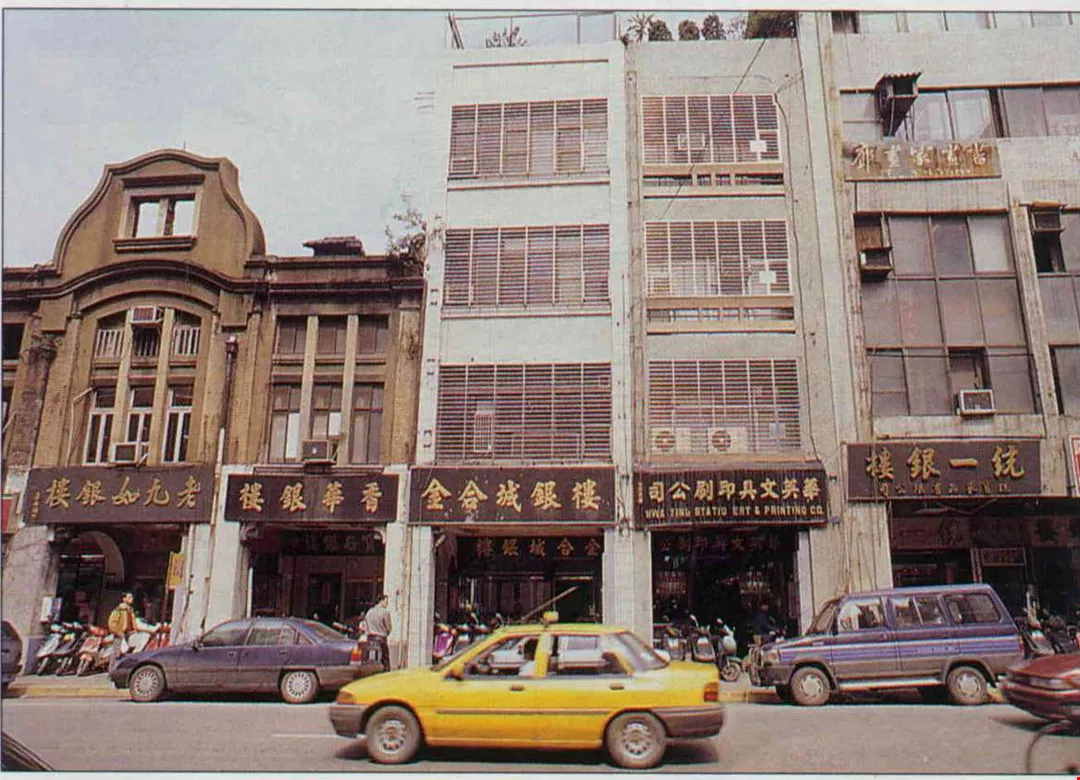
Conservative estimates put the number of jewelers' shops in Taiwan at over 5000, and gold sales are booming.
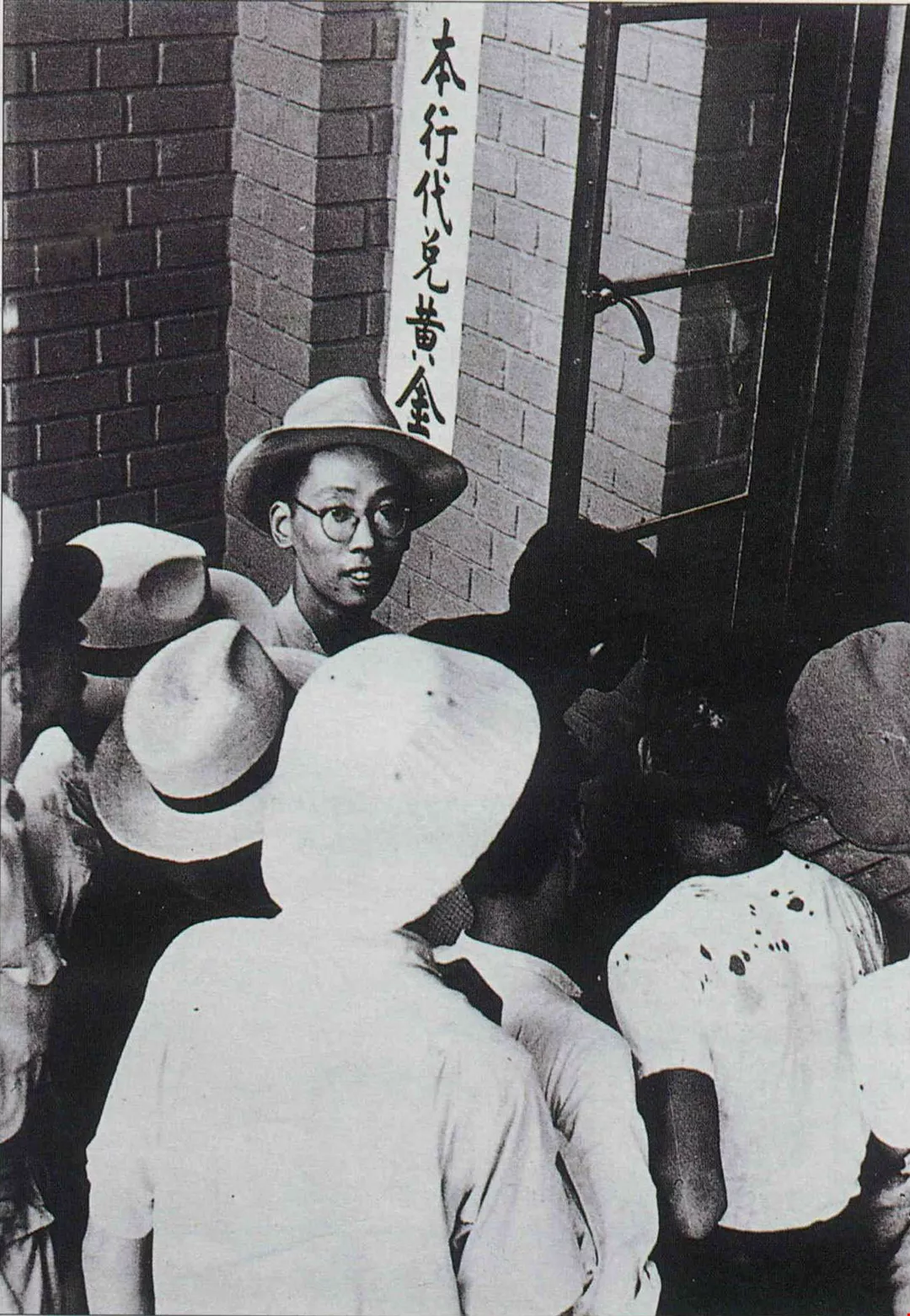
In 1948, before the ROC government withdrew to Taiwan, it instituted a currency reform. For a limited period, the public could exchange gold, silver and foreign currency for the new money. The gold paid into the Bank of Taiwan at that time made an important contribution to the reserves which backed the later issue of the New Taiwan Dollar. (photo courtesy of Excellence magazine)
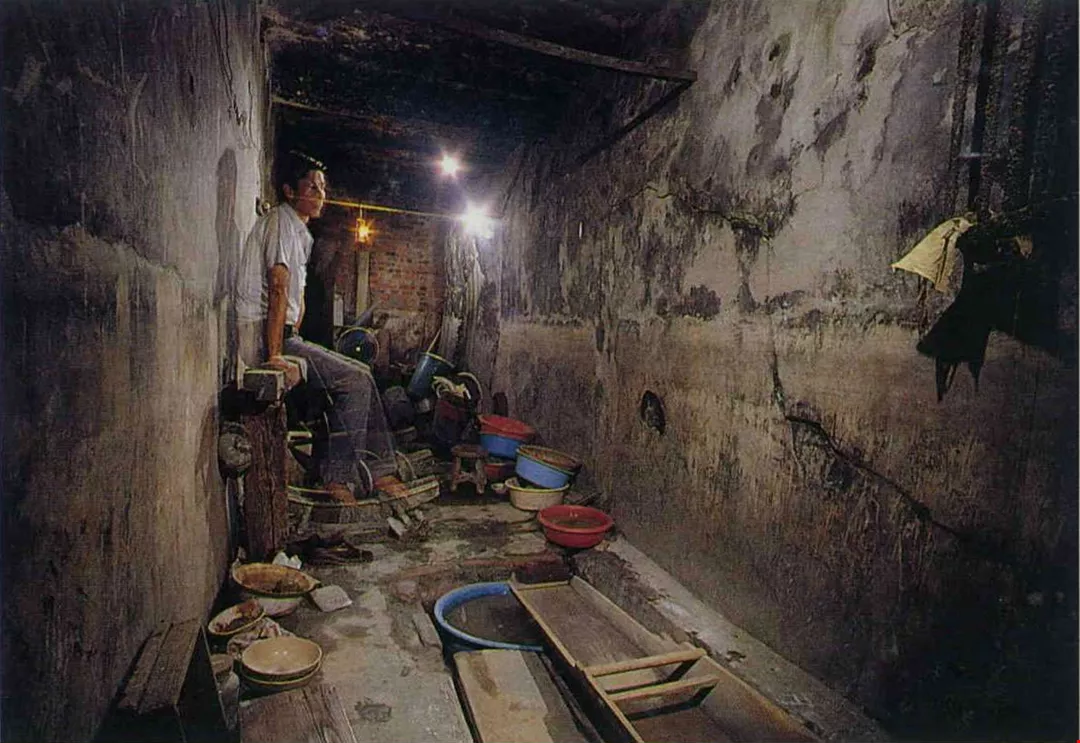
Chiufen, where some of Taiwan's main gold deposits lay. Their discovery in the late Ching dynasty sparked off a gold rush lasting almost a century. (photo by Vincent Chang)
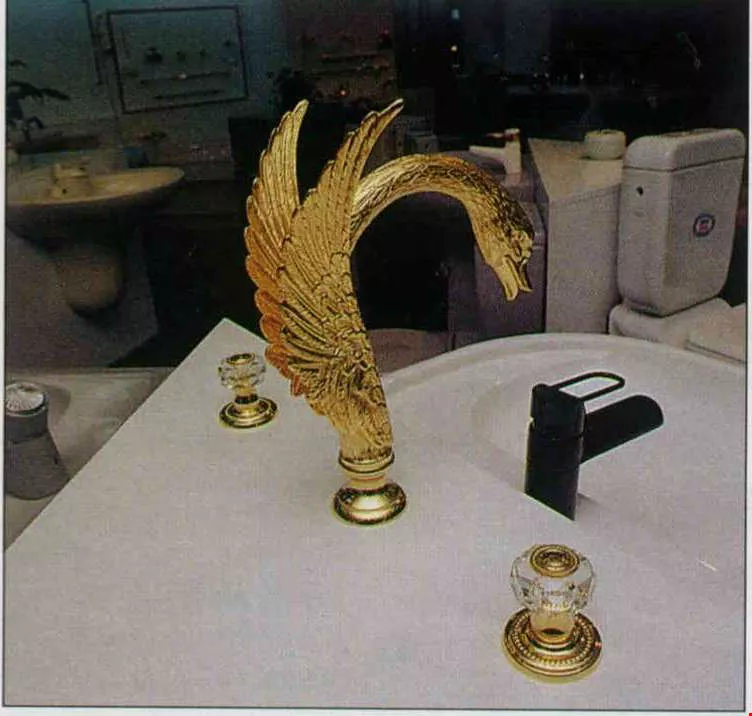
With rising incomes in the ROC, gold's range of uses has expanded widely, with even gold taps making their appearance. (Sinorama file photo)
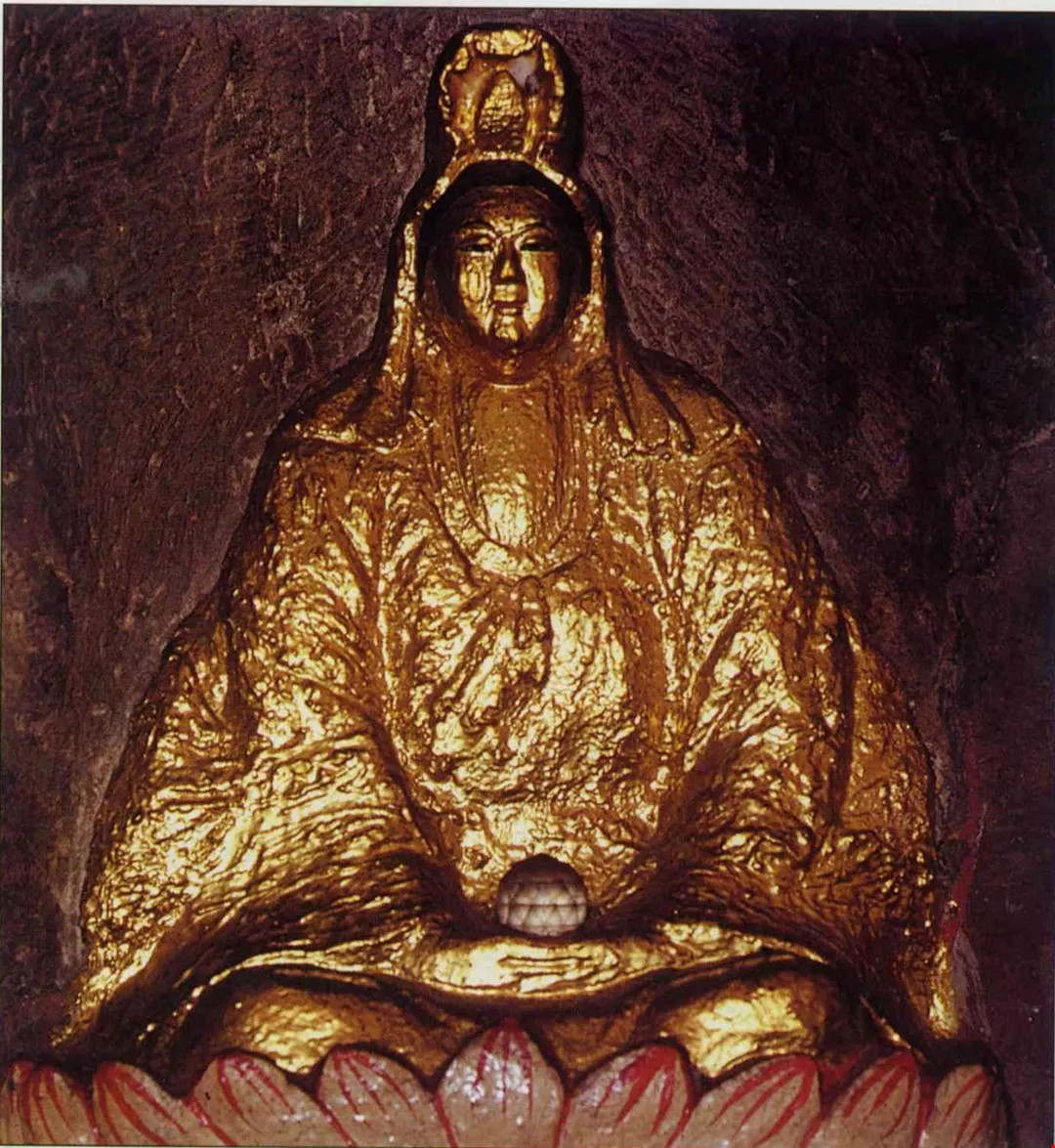
Eastern countries where Buddhism is practiced all have the custom of showing respect for the Buddha by enveloping his statue in gold. (photo by Hsueh Chi-kuang)
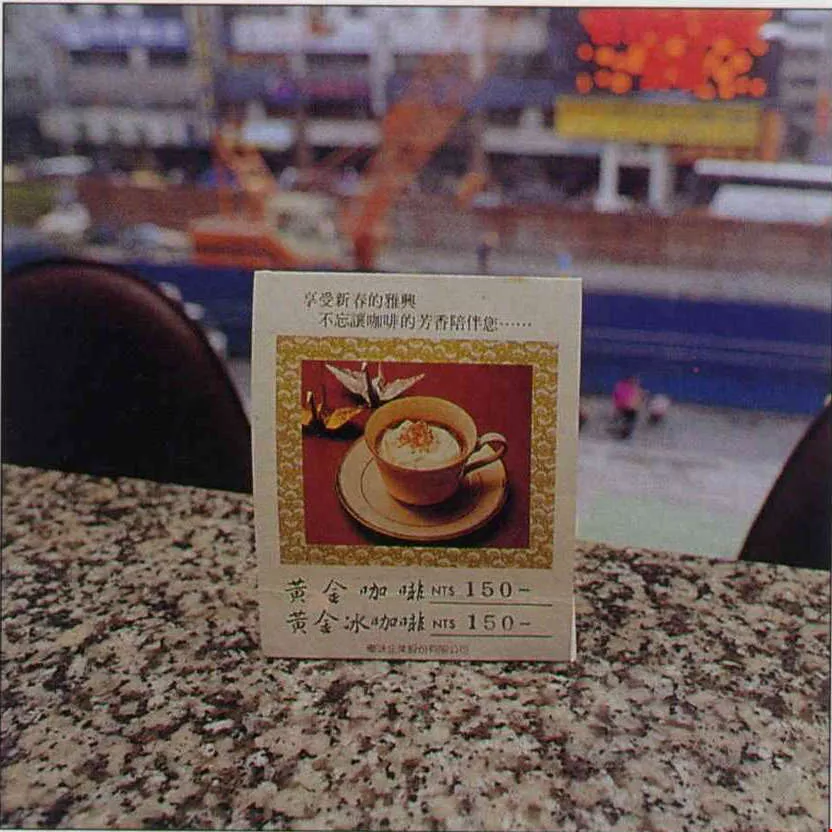
In Chinese medicine, metals are credited with a calming, sedative effect. But sprinkling a little gold dust onto coffee is nothing but a fashion.
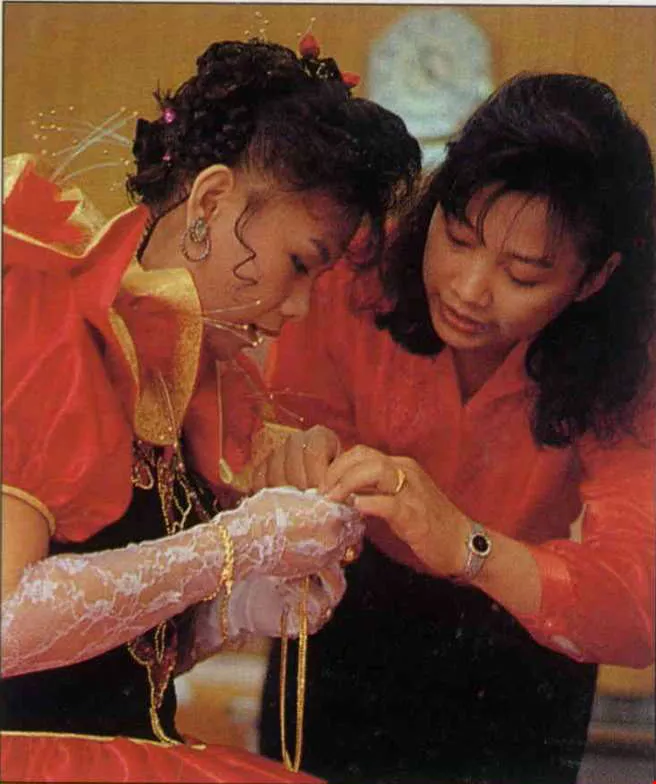
On their wedding day, brides often wear gold given by family friends.
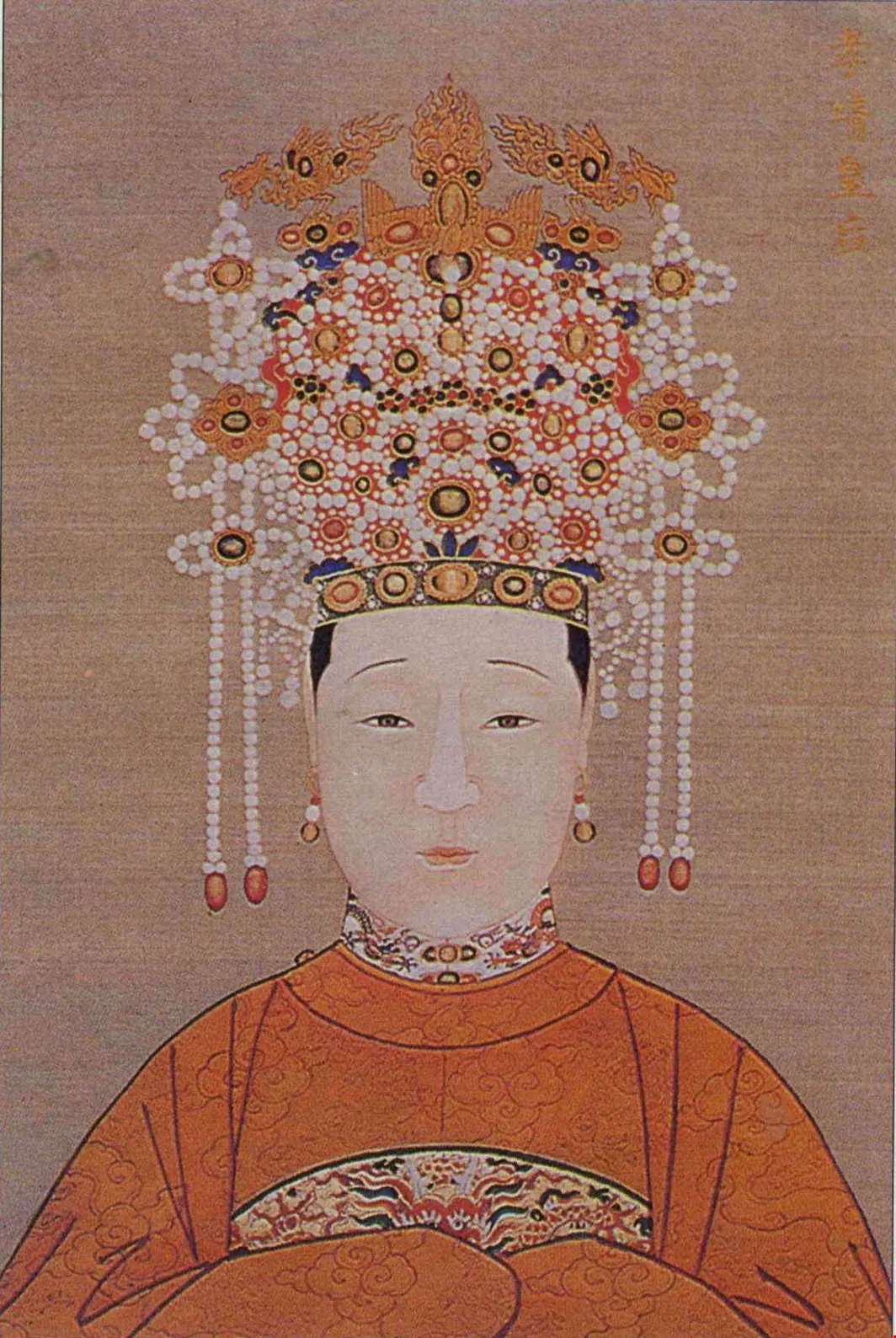
The golden crowns and "phoenix coronets" of ancient Chinese empresses, unearthed in archeological excavations, show the great sophistication of the goldsmith's craft in the Ming dynasty. Phoenix coronets of gold set with precious stones were incomparably sumptuous. Pictured here is the empress Hsiao Ching, wife of the Ming of emperor Shen Tsung (ruled 1572-1620). (courtesy the National Palace Museum)


@List.jpg?w=522&h=410&mode=crop&format=webp&quality=80)


