Youngian Psychology --Taipei's New New Youthon Life
Jenny Hu / photos Hsueh Chi-kuang / tr. by Phil Newell
October 1994


They aren't very particular about how bizarre their clothes are, so long as they are fashionable. They take risks, and want to try everything themselves. They don't listen much to what their elders have to say. They are hedonistic and think only of consumption. They want to make as much money as they can as quickly as they can. They don't feel especially emotionally attached to anything. They always make demands on others, yet give little thought to how much effort they should put forth. They are good at letting you know their moods, but not so good at giving reasoned opinions. They have no long-term plans, and don't think any more than a day ahead....
Try asking people "What is your opinion of the kids today?" Many who frequently meet young people at work or in their daily lives are quick to be critical. Amidst the transformation of society, is the nature of the new generation really changing?
Doris S.C. Wu. a professor in the Department of Sociology at Fu Jen Catholic University, has long been observing the changes in values among Taiwan's youth. In her research she found that she could divide young people in Taipei into four categories: rooted, cold, materialistic, and trend-following. According to her most recent survey, done in 1991, the number of "rooted" young people (who are relatively self-disciplined and adhere to the norms of adult society) is sharply declining.
Looking back to the survey she did in 1985, 58% of young people were classified as rooted. That figure had fallen to 43% in 1988 and to 31% by 1991. On the other hand, the percentage of pleasure-seeking "trend-following" youth steadily rose from 15% in 1985 to 36.7% in 1991, taking this group from third place to the mainstream in a brief six years.
Doris Wu further suggests that because the emphasis placed on consumption in society has continued to grow, the number of trend-following youth is likely to be even greater than it was three years ago. The observations of adults and the results of scholarly research seem to have reached the same conclusions about the nature of Taipei's young people in the 1990s.
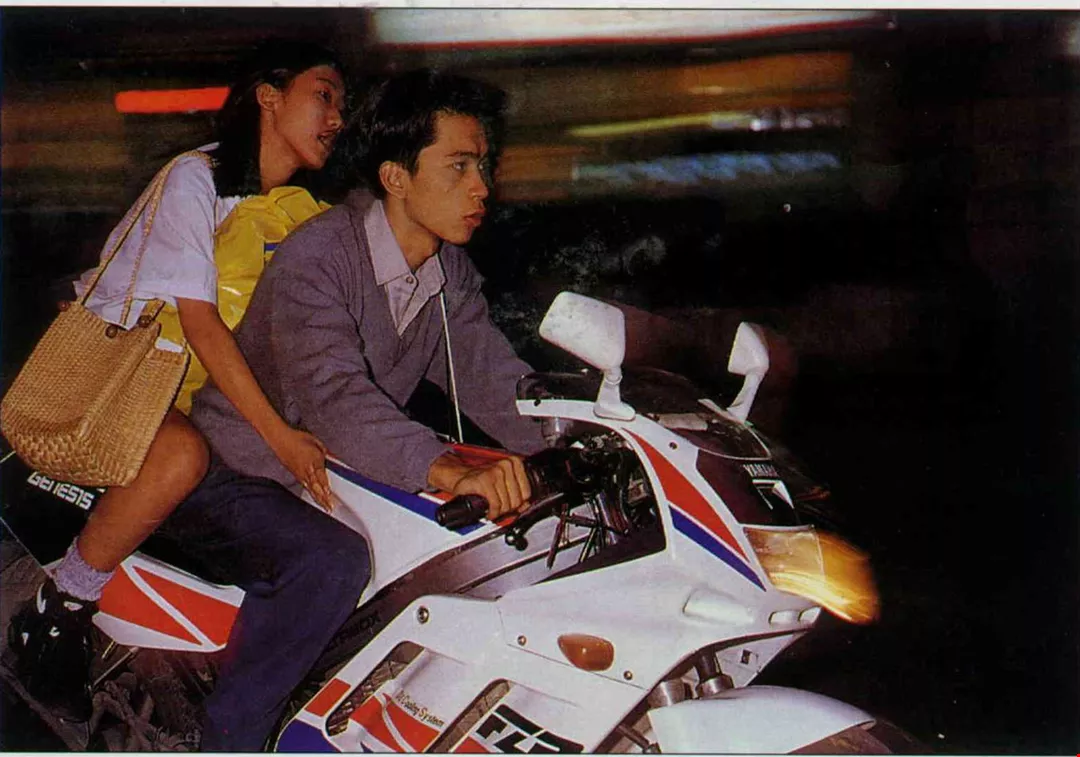
You can often see young people riding these NT$90,000 motorcycles in the streets of Taipei.
The new new youth vs. the cavemen
At night or on vacation days, in all of Taipei's major shopping districts--Chunghsiao East Road, Hsimenting, or Tienmu--trendy and incandescent young people look through shop windows at the latest fashions in clothes and consumer goods.
You can classify the new youth of the 1990s according to their outward appearance into several types. First there are those in their early teens, perhaps junior high school students, having their first taste of fashion. Some mimic American rap singer attire of oversized shorts and hi-top sneakers, while others wear the mix and match fashions, accessories, and carefully-applied make-up typical of young boys and girls in Tokyo. After junior high they become more selective about fashions, and start to seek out a personal style; trendy casual clothes are popular for this group. After the age of twenty they aim for famous label designer clothes to "express individual tastes and attain eternal glory," as one second-year university student puts it. Besides these, other markers differentiating the new youth include dyed hair, pagers, and "cool" and standoffish facial expressions.
They travel in packs on the streets. They copy each other's appearances and attitudes, and speak a language that only they understand. "Rebelliousness is already 'out of it.' These days you should appear to be a little rebellious against authority, but not too much. It's more important to show your personal style in order to be 'hip,'" says a young man currently studying at the top junior college in northern Taipei. And two high school co-eds, wearing heavy purple make-up and hip-hugging shorts, declare themselves to be "nasty girls."
This new generation of young people, under the influence of commercial advertising and peer interaction, has seized upon the idea that "image is an extension of personality." They keep up with aesthetic trends through the latest European, American,and Japanese fashion magazines, creating a cornucopia of styles on Taipei's streets. "We can't change the way the city is built, but we can improve the way it appears," says one young man whose hair is cut in the style of Hong Kong pop star Kuo Fu-cheng.They call those adults who cannot comprehend their slang or do not approve of their clothing "cavemen."
In fact, the outfits and slang expressions are merely symptomatic. It is the hearts and minds behind the packaging that most "cavemen" find hard to understand.
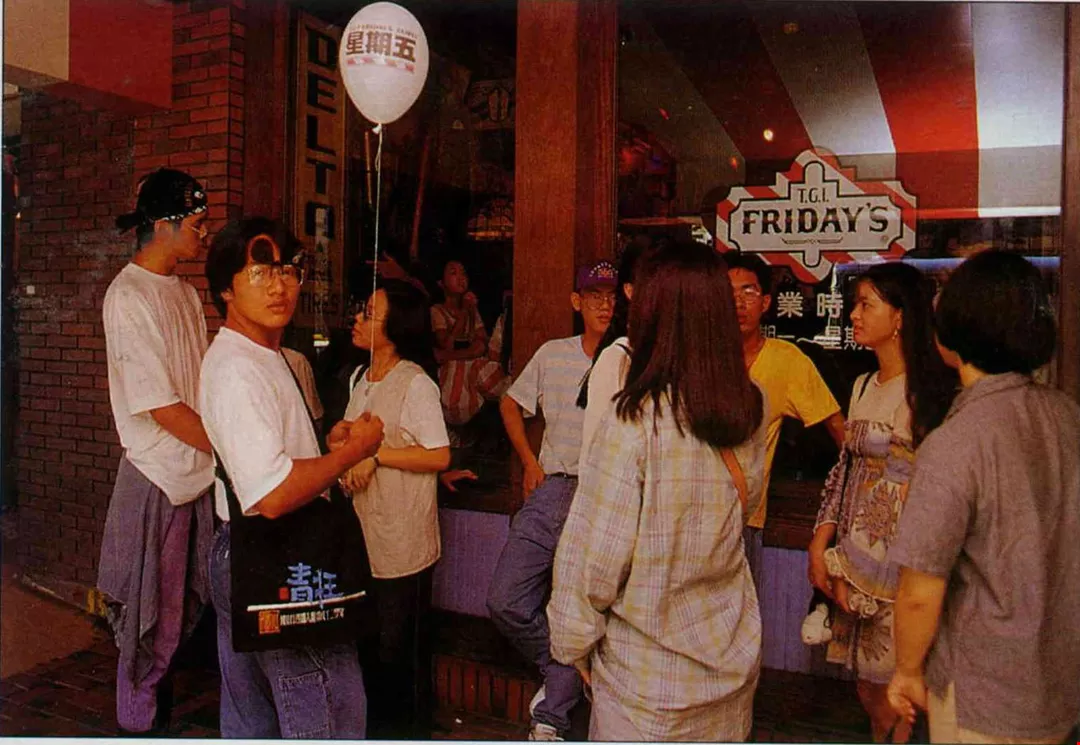
Frequent opportunities to make friends are tearing down the barriers between the sexes.
A breed apart?
Right now one of the most popular television programs on campuses is author Ku Ling's interview program on cable TV. In fact, uninhibited and no-holds-barred youth-oriented TV shows have been getting strong feedback, whether it be in the studio or by phone or letter. However, even if the producers of such shows meet often with today's young people and try to adopt an "identical point of view," it is still impossible to completely bridge the generation gap.
In the view of Cheng Hsiao-ching, an executive producer for Ku Ling's show, though many young people today are willing to fight to express their views, there is a problem: Besides giving their gut reactions to things by saying what they like or don't like, teens are rarely able to give the reasons for their feelings. The letters of many high school students are filled with incorrectly written characters, and they are not able to cogently get their point across. They "are only interested in asking cute, superficial questions that call for cute and superficial answers; very rarely do they invest great intellectual effort to think about issues."
Many observers of trends East and West noticed more than a decade ago that as information technology and electronic media develop at high speed, the new youth increasingly rely on sound and images to absorb information, while opportunities for reading and writing decline. "They are becoming the new illiterates," wrote Hong Kong social observer Ma Chia-hui five years ago. This trend is becoming increasingly evident in Taiwan as well.
According to unofficial statistics, the most popular reading material for the new youth (aside from required school textbooks) consists of fashion magazines, comic books, and best-selling escapist or humorous writings by authors like Chang Man-chuan and Hou Wen-yung. Their favorite pastimes at home are watching TV and playing video games. Even Chiu Fan-shan, a recent graduate of the elite Taipei First Girls' High School who has tested into the equally elite National Taiwan University, admits that she rarely does any reading outside of class; she'd rather spend her time dancing and having fun. "Most of the kids in my class read science fiction, romance, or martial arts novels. Maybe once in a while they'll pick up a famous foreign book. In fact, there are very few student reading stuff like Nietzsche like those two girls from the advanced class who committed suicide."
Are the new new youth so satisfied with life that they lack any interest in thinking about the nature of life? Could be. Despite the case of the two outstanding young women students at Taipei First Girls' High School who killed themselves because they felt that they did not belong in contemporary society, in fact the suicide rate among young people in Taiwan is much lower than in Europe, the US, and Japan.
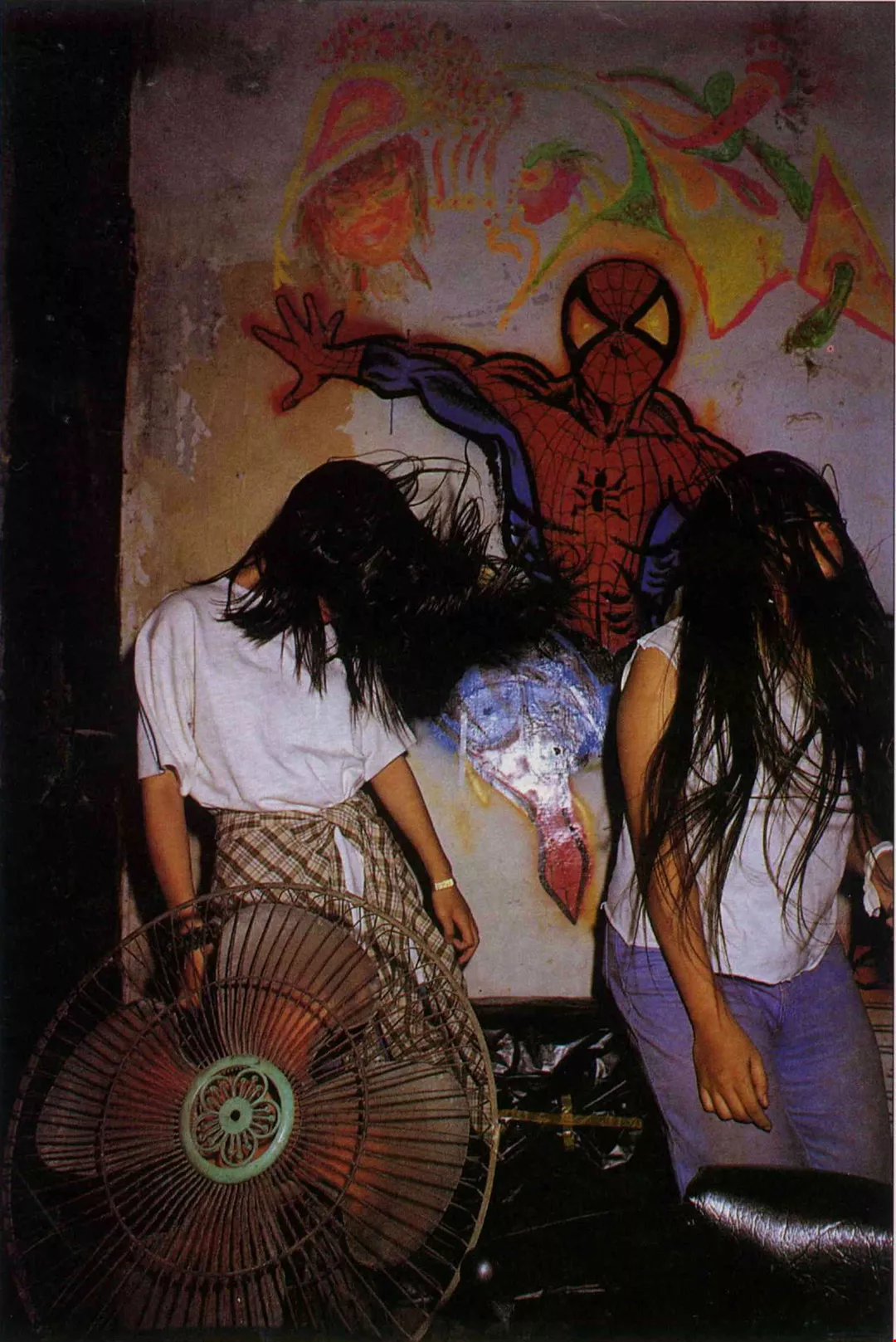
It's a great feeling hang out in the pub, rocking with the heavy metal band and going out of my mind!
Selfish and egotistical
Ku Ling, who mixes easily with young people and adopts the posture of a "spokesperson for youth" on TV, is actually privately concerned about the attitude new new youth have towards getting along in the world. In his view, teenagers today are marked by several characteristics: First, they are ungrateful, and take for granted services others provide for them. Second, they love leisure and hate to work hard. Brought up amidst wealth and plenty, they have little ability to adapt to setbacks. Third, they are blunt, even harsh, and don't hide what they think. For example, they may say right to his face, "Ku Ling, you are so ugly!" Yet they cannot necessarily accept such frankness from others. Fourth, they are selfish and calculating, only trying to figure out what's in it for themselves in their personal relationships; they give little thought to sacrifice or making a contribution of their own.
In junior and senior high schools, the Student Patrol used to symbolize a spirit of service; it was considered an honor. Today, many middle schools cannot find anyone willing to join. Many senior high kids turn their noses up at it: "You have to stand in the school door under a hot sun looking like a dweeb." Says one exasperated high school military instructor, "Today there are really few students willing to be dweebs."
Is selfishness really one of the defining characteristics of the new new youth? Many young people find it hard to deny. Lin En-hsiang, a high school student, points out that today families have few children, and parents today carry over the habit--started by the elite families of old--of spoiling their offspring. Under conditions in which children get whatever they want, and never develop the habit of sharing, naturally they are more selfish. Kuan Shao-ting, a student at the National Taipei Institute of Technology, confesses that "I take my beloved motorcycle to get washed as soon as it gets a little dirty, but I don't have the slightest interest in clean-up tasks at the school."
Last year the National Youth Commission of the Executive Yuan published a study of the values of students in junior colleges and in universities entitled White Paper on Youth. They discovered that the least honored values were "benefiting others,""reputation," and "control." The most emphasized values were ones related to personal gratification,like "a sense of accomplishment," "independence," and "a sense of security." Generally speaking, in the minds of young people today individualism far surpasses collectivism, and defending one's own rights is more important than giving the other guy a break. You can get a glimpse of these ideas in action by seeing how kids approach their part-time jobs.
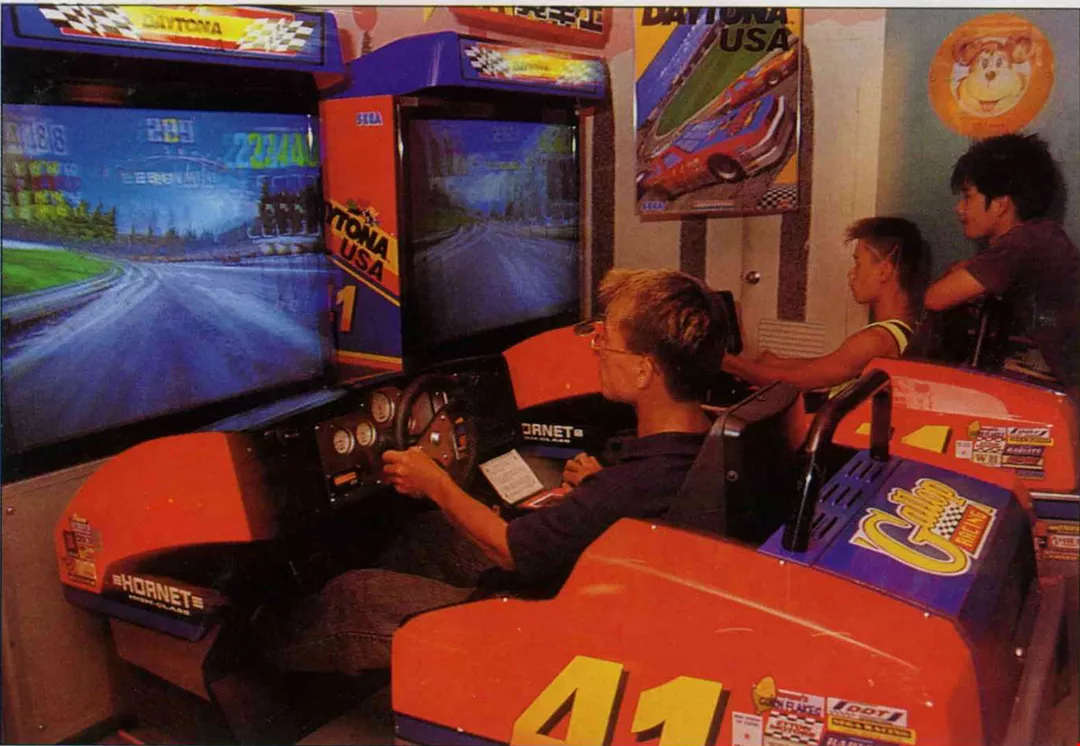
Nothing has ever fascinated me like racing. Constantly breaking through the obstacles ahead makes me feel like a hero.
Cash on the nail
Shih Hsiao-yun, a third year university student, went to work at a supplementary school over the summer vacation. Although it was her first job ever, she wasn't bashful: "You work to make money. During the interview, I made sure I got everything straight--the salary, the workload, and how bonuses are decided." After she started working the boss asked her to move some furniture and run other errands outside the main purview of her job, but she always refused. "If you want me to do more work, are you going to pay me more money?" Because she was very efficient at her job, however, the boss wanted to keep her on, so he didn't get angry.
Yue An-ni, a tenth grader, has worked in a tea shop and a KTV. She feels that employee-employer relations should be built on mutual respect. "The role of the staff is very important. If you only have a boss, but no staff, then forget about getting anything done." Yet her attitude is to put on a show of hard work when the boss is around and then goof off when the boss is out of sight.
For the sake of earning a little spending money, many of the new new youth will "do anything." One high school lass spent her summer vacation working in a girlie bar, making more than NT$100,000(US$4000) a month including tips. "When you are out with your friends, they only care how much money you've got, not what you did to get it." But is it really the case that the new new youth lack any moral distinction between right and wrong? Not necessarily. Kuan Shao-ting says that they won't exclude someone like this girl from their circle of friends, "but in their hearts people would look down on her, and guys wouldn't want her as a girlfriend."
According to statistics, since the implementation in the 1991-1992 school year of compulsory expulsion from school for failing grades in more than half of one's credits, as many as 2,500 students have been expelled in a single year. The main reason is that the students take outside jobs and neglect their studies. This causes many adults to wonder what the children need so much spending money for. But when you see young people driving NT$80,000 motorcycles down the street, or check out the prices in fancy restaurants or for a set of designer-label clothes, it's no mystery where the money goes. Ko Wan-hui, a student at National Chunghsing University, holds up her arm to show off her NT$16,000 Philippe Charriol watch and says with satisfaction, "I like it, because it glitters in the sunlight."
Besides working, it is also very popular to join in revolving credit associations, where students can quickly get their hands on more money faster than by traditional savings. The new new youth are very clear about the importance of hard cash. "It can satisfy your desires. You can use it to ingratiate yourself with someone, and in modern society you need to use your wallet as well as your heart with people. Only if you have money can you have a sense of security," says Shih Hsiao-yun, explaining the feelings of her peers.
Many adults are finding it hard to accept these changing values. "But in fact youth culture is an adjunct of the mainstream culture, and they are not innovating," says social scientist Doris Wu, hitting the nail on the head.
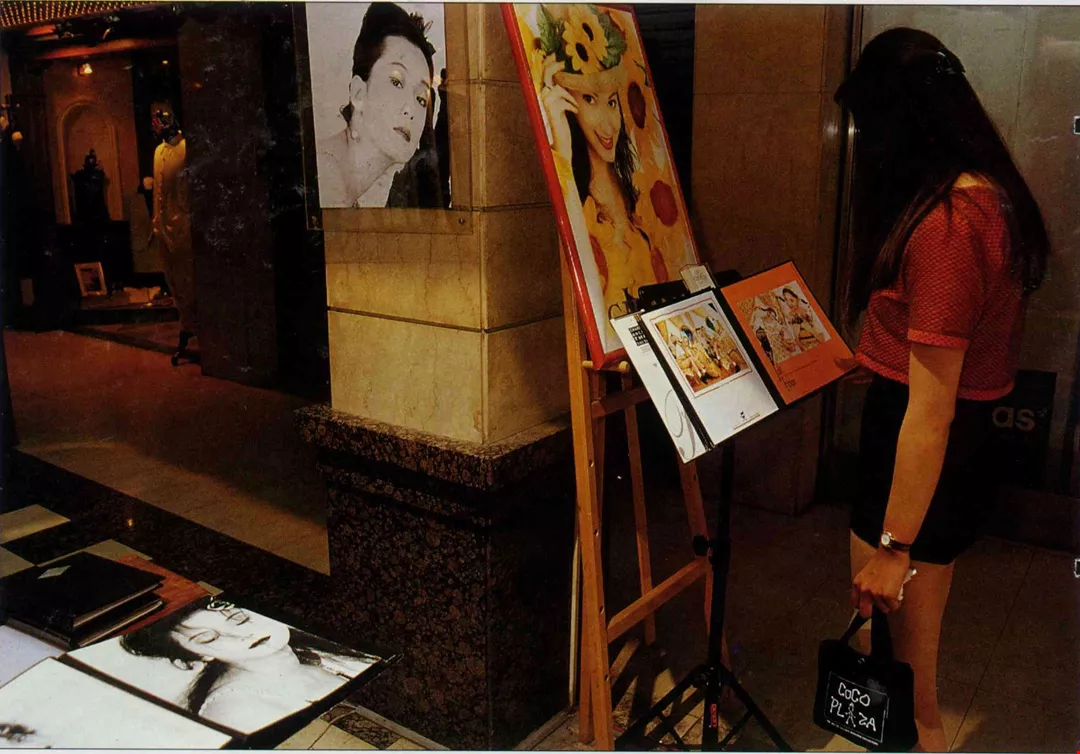
In this liberal era, the body is no longer taboo. It is said that young people account for 70% of the studio photography market, and many of these kids don't hesitate to "show all.".
Home alone
It is widely believed that changes in the family structure are driving changes in the attitudes of youth.
The number of single-parent or double-income households has been rising. Many parents are so busy making money that they have little time left to spend with their children. Many use cash to compensate for the lack of parental attention. Three young boys made up like the L.A. BOYZ walking through Hsimenting on their way to go skating told us: "There's nobody at home. Mom and Dad give me NT$10,000 a month in spending money. I don't know what they're doing, but anyway, they are usually not at home."
Lin Yi-chun, a first-year high school student dressed up like the girls in Tokyo's hip Harajuku district, relates that her parents are divorced and she lives with her father. "Dad is busy making money and can't watch everything I do. There's no one to talk to at home, so it's better if I hang out with my friends." To make staying in touch easier, everyone in her little group has their own pager, so they can call each other up to go out any time they want. "Although my parents are not with me very often, I understand that they want me to study and not become bad. I will do the best I can, but I also wish they would care for me a little more and give me some guidance when I need it."
The kids aren't the only ones obsessed with material goods. Many of the new new youth reveal that "Mom and Dad are even more intense about buying designer-label stuff than we are."
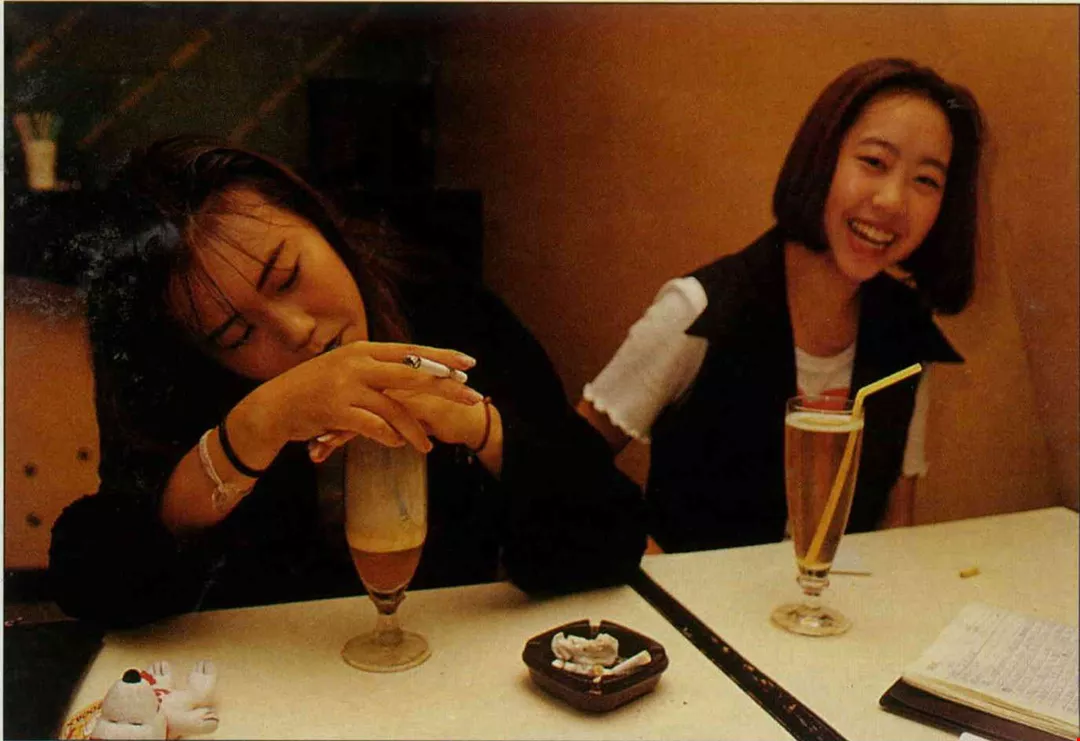
We aren't bad, we just wanna have fun, and to be a little different from everybody else. We can do that easily by dressing up.
Transient desires
Having grown up in the wealthy environment after Taiwan's economic development reached maturity, the new new youth are sophisticated about more than just material things. In recent years the problems of divorce and extramarital affairs have become increasingly serious, the schools have gone co-ed, boys and girls have manifold opportunities to meet, and there is information about sex everywhere one turns. Young people have come to grips with intersex relations earlier than previous generations. Sexual issues, long taboo, are no longer wreathed in mystery.
The segment in Ku Ling's TV show dealing with sexuality, entitled "My Thing," is widely popular. "They know more about sex than we do. The high school girls in the studio audience jump right in and participate when the discussion turns to condoms, and the boys know more about the rhythm method of contraception than I do," says executive producer Cheng Hsiao-ching.
No matter what the era, young people are always curious about their bodies and the opposite sex. The difference today is that there are countless sex publications, advertisements, videotapes, and sex education books available, so young people are exposed to it constantly. "People are not necessarily free-wheeling in their sexual behavior, but they don't see sex as taboo anymore," says one senior in high school. When she was in tenth grade one of her classmates brought a condom to school and filled it up with water like a balloon. Now the class goes so far as to have prurient joke contests, and many students like to go have a look around the shops that sell sex paraphernalia. "On campus, sex is the topic that will attract the most people to join in the conversation."
In fact, there are numerous open and private activities on campus where people can meet, and more and more junior high and high school students are finding boyfriends or girlfriends. Teachers haven't failed to notice. A teacher at one private girls' school says with resignation, "The idea of chastity is already out of date. These days kids will try anything, and you can't stop them. It would be better just to teach the girls contraception and how to correctly handle relations between the sexes."
Young people now have much experience in the romantic world of making partners and breaking up."What do you mean by that 'love lasts forever's tuff? That's just a lie spread in novels," says one11th grade girl who has seen her friends change boyfriends with regularity. "We are already prepared for romance to be short-lived, and if we lose our loves we won't end up pining away."
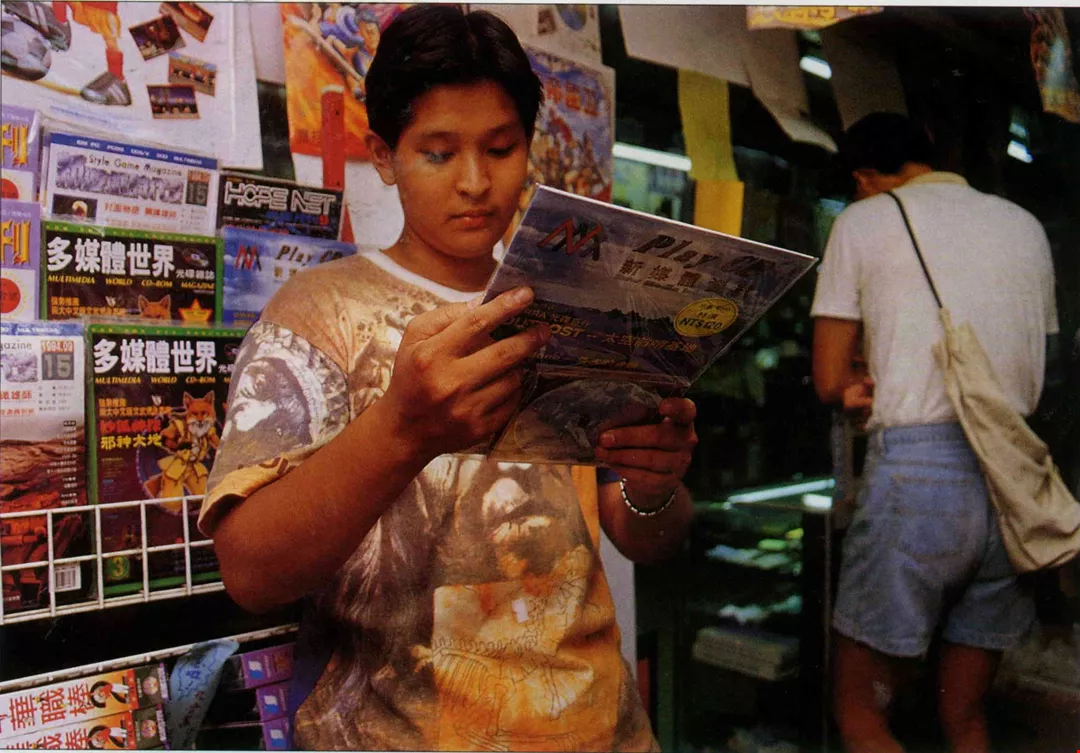
Given the rapidity with which information flows these days, some say that every four years constitutes a "generation.".
I can change teachers
Since the lifting of martial law in 1987, people have been increasingly assertive about claiming their "rights." This has been an important part of the social education of the new new youth. Just as authority structures at all levels of society have come under fire, teachers have begun to face the problem of a decline in their authority. In recent years, newspapers have reported several cases of students or parents attacking teachers on campus. Although this is still rare and deviant behavior, it is certain that the norms governing the student-teacher relationship are changing. Many of the new new youth no longer have faith in the traditional dogma of "respecting one's teacher and all that the teacher says."
Teng Ming-hui was very enthusiastic about going into teaching after graduating from college. Now he bemoans the fact that many students seem to have found very reasonable sounding (at least to themselves) arguments on behalf of things that are in fact very wrong-headed ideas. This has definitely deflated the morale of many educational professionals.
"The teacher should be given attention, but does not necessarily deserve real respect," argues TingYi-wen, a first-year student at Fu Jen Catholic University. Some teachers are not very dedicated, or devote their efforts to second jobs working at supplementary schools; others are not morally upstanding, or don't care about the students. Such teachers deserve to be the objects of skepticism, not respect. When she was in high school, there was one teacher who just spouted off his opinions on anything. "Nobody in the class could stand it, and we even went to the principal to demand a change of teachers."
Students not only protest, they are more and more willing to skip school altogether. "There was one student who didn't want the teacher to notice his empty chair, so when the teacher's back was turned the student moved out chair and all," says one military training instructor in a high school, laughing despite himself. "Now many parents educate their children in a democratic, liberal manner. They don't want their children to be oppressed in school. So the teachers can't be too overbearing. The students will only pay attention to you if you act like their buddy."
In these times students no longer fear authority. One student even says, "The teachers are working for a salary which comes out of the tuition we pay, so actually we are the bosses."
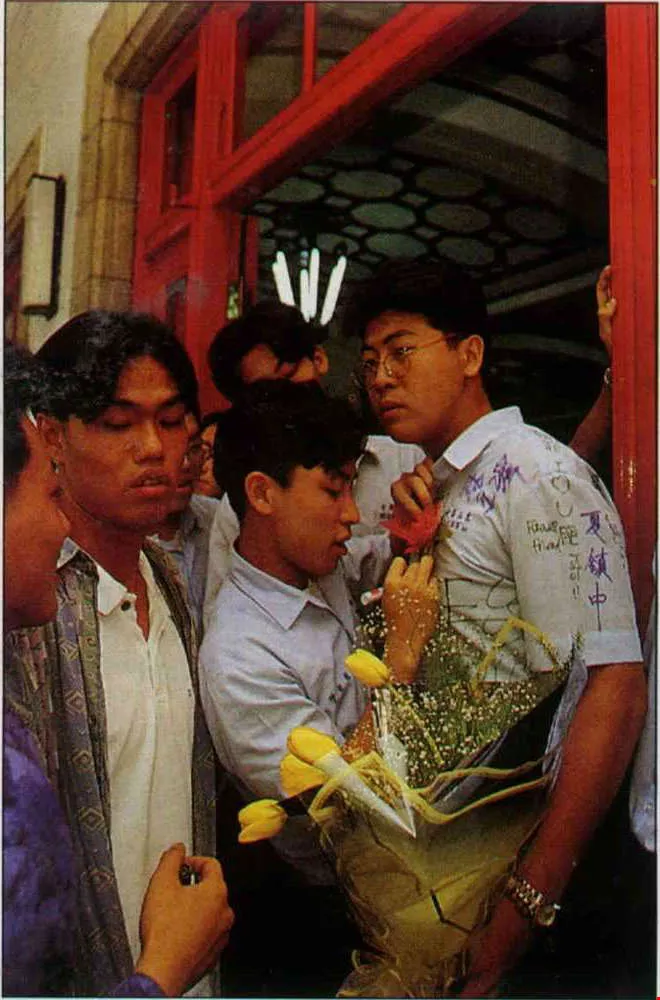
Some people say we're so cool that we're cold and unfeeling, but that's because we don't feel at ease in our complicated social environment and relationships; actually, we are very devoted to our own friends and family.
Who knows what tomorrow will bring?
The early sophistication of the new new youth is likewise reflected in their attitudes toward values like "success" and "the future." "If people can reach the goals they have set for themselves, then that's success," is how many of the new new youth put it. But the goals they mean are not the things people have traditionally identified as being important in life, like wealth, social status, reputation, or honors. Instead, their goals are focussed on the individual. Therefore, a successful life may be defined as being happy, opening a little shop, working nine-to-five with plenty of time for recreation, having summers off to travel by working as a teacher, or just finding a home of one's own.
In fact, the new new youth have little appetite for the future. "Young people today are more down-to-earth, and don't go off pursuing wild dreams," is how one junior college student explains himself. And how can these goals be reached? For many girls, marrying a wealthy guy with his own house and car is an effective shortcut.
Generally speaking, the new new youth all agree on a philosophy that says "play while you can.""Who knows? Maybe the communists will come and forcibly 'reunify' Taiwan tomorrow," says one 11th grade girl.
What about the big political questions of the last few years, like independence vs. reunification, or the question of Taiwanese vs. Chinese identity? Although they haven't thought very deeply about these problems, young people have strong ideas. "I would rather not reunify with China. If Taiwan's economic gains are divided up with China, wouldn't they just disappear like a drop of water in the ocean?" says Shih Hsiao-yun.
Having travelled abroad (often on their own) and absorbed a great deal of global information, the new generation has a much more internationalist perspective than the older generation. Liu Wen-yuan, a student at a commercial junior college, feels that the things that the Kuomintang and the Democratic Progressive Party fight over are all disputes out of the past, disputes that belong to the older generation. He is only worried about his own problems, and has no special feeling of attachment for this piece of land called Taiwan. "If Taiwan is bad, then I'll just emigrate. Most of us have the concept of the 'global village,' and won't necessarily keep our roots in Taiwan."
Taiwan: the next generation
Society is changing and trends are changing. The new generation in Taiwan finds itself in the midst of an era of unprecedented wealth and openness. Cheng Tien-chueh, a trader who often travels to Europe and North America on business, observes that the younger generation in all cities share the features of following trends and trying to stake out a unique position for themselves. But compared to the youth of Europe and North America, Taiwan's young people still lack the willingness to accept the responsibility for their own lives.
"But this isn't the fault of the young people. It is when people are in their teens that their value systems are most easily molded and when they learn to identify with things. But what kind of beliefs are our families and is our society giving them for reference?" Street painter Chen Nan-hui often ponders this question.
Sociologists argue that the type of society one has determines the type of young people one gets. So when Taiwan's adults criticize the new new youth for materialism, for pleasure-seeking, for callous selfishness, for lacking goals, or for abandoning social norms of the past, doesn't this say something about contemporary society as well?
[Picture Caption]
p.9
Hi, man! Check out my furrowed hair and eyebrows, just like my idol Vanilla Ice. My older brother's dark glasses and hair are in the same style as the kids on the streets of Japan.
p.10
You can often see young people riding these NT$90,000 motorcycles in the streets of Taipei.
p.11
Frequent opportunities to make friends are tearing down the barriers between the sexes.
p.12
It's a great feeling to hang out in the pub, rocking with the heavy metal band and going out of my mind!
p.13
Nothing has ever fascinated me like racing. Constantly breaking through the obstacles ahead makes me feel like a hero.
p.14
In this liberal era, the body is no longer taboo. It is said that young people account for 70% of the studio photography market, and many of these kids don't hesitate to "show all."
p.15
We aren't bad, we just wanna have fun, and to be a little different from everybody else. We can do that easily by dressing up.
p.16
Given the rapidity with which information flows these days, some say that every four years constitutes a "generation."
p.17
Some people say we're so cool that we're cold and unfeeling, but that's because we don't feel at ease in our complicated social environment and relationships; actually, we are very devoted to our own friends and family.


@List.jpg?w=522&h=410&mode=crop&format=webp&quality=80)


