What's the Alma Mater?--A School Reunion Without a School
Jane Wang / photos Vincent Chang / tr. by Brent Heinrich
February 1995


Although their alma mater has long since ceased to exist, year after year they organize a school reunion, and they have made an ambitious commitment: as long as there is a single alumnus, this organization will keep on going...
In 1983 a group of students who graduated from Keelung City High School invited their principal and teachers to hold the first alumni reunion, thirty years after they had graduated. At the reunion held at the original school site, now the home of Minteh Middle School, exclamations could be heard everywhere, such as, "Ah! Are you really 'Little Stone'? I can hardly recognize you!" Some even especially carried their graduation yearbook, cherished for many years, to help jog memories, but they still couldn't believe that the classmates in front of them with hoary hair and frosty whiskers were the same school chums they use to have fun with.
This scene isn't very different from ordinary school reunions. What's special is that this reunion isn't organized by a single class, but is co-sponsored by schoolmates spanning many years. By their outward appearance it is hard to differentiate the former teachers from their students. They speak with all manner of accents. And every year they select Teachers' Day to hold this annual event. Every time more than 100 people show up, one-fifth of the total number of graduates. The places to which they have scattered are unusual, as well. Some live high up at the Sun Yat-sen Hall atop Yangming Mountain, and some live down low near Keelung Harbor. Some can be found in tightly guarded army ammunition factories, and in nuclear power plants. Several generations of students and teachers meet to have fun together, and everybody feels as close as one big family.
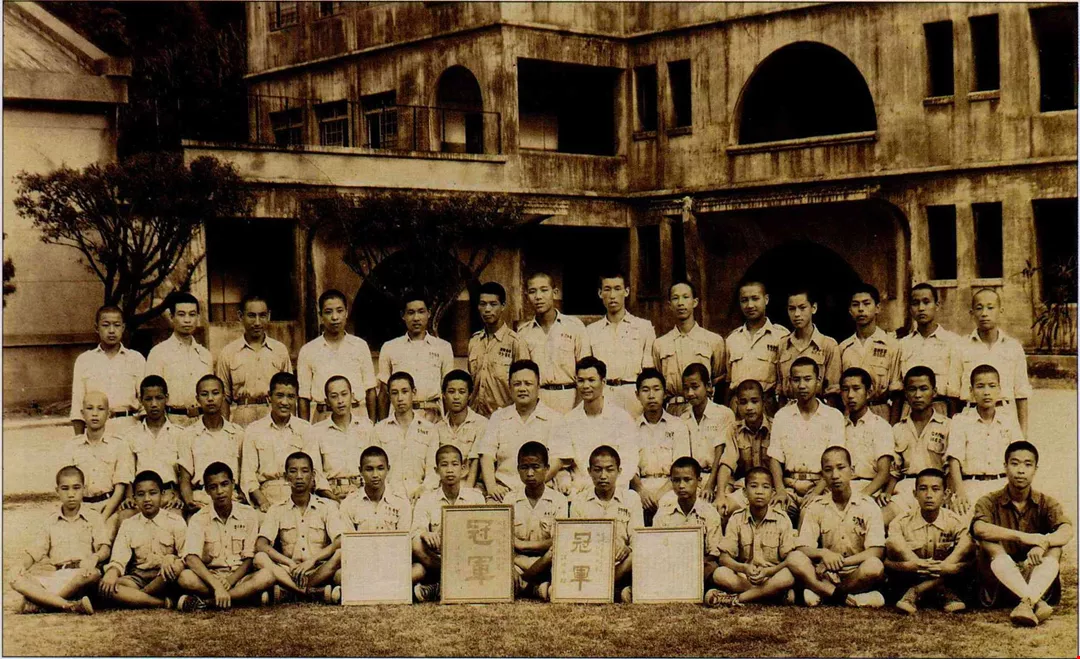
Keelung City High School's site at #1 Liu Ming-chuan Road, Sec.2, was an elite Japanese-only grade school during the occupationers. After the end of the Japanese occupation, it became a middle school, and most of the pupils and teachers were from the mainland. (courtesy of Wang Jui-nien)
Children of the sea
Their alma mater, Keelung City High School, actually only existed from 1951 to 1958. After that, according to government policy, the provincial government began to sponsor high schools; counties and cities could only establish junior high schools. So their alma mater was dissolved.
But don't belittle the school just because its life was short. In the 1950s it ranked tenth in a province-wide evaluation. Tunghai University especially accepted a quota of Keelung City High School graduates without the formality of an entrance exam. But the students were not merely a bunch of bookworms.
Liang Wei-hsiung, from the first graduating class, remembers fondly that in those days the morale of the school was very spirited. Their basketball team was famous throughout the province. Every year the championship would inevitably go to "City High." Extracurricular activities of every kind, such as chorus or drama club, were all very active and consistently outstanding, although their instructors didn't receive extra pay for helping out. There were only eight graduating classes in the whole history of the school, but during that time there appeared thirteen wall posters, displaying the school's burgeoning enthusiasm for the fine arts.
City High's school motto was "Honest, Respectful, Brave, Perseverant." Chang Pao-tai of the seventh graduating class felt that City High's spirit was the spirit of the seafaring; mutual cooperation and upright character were its expression.
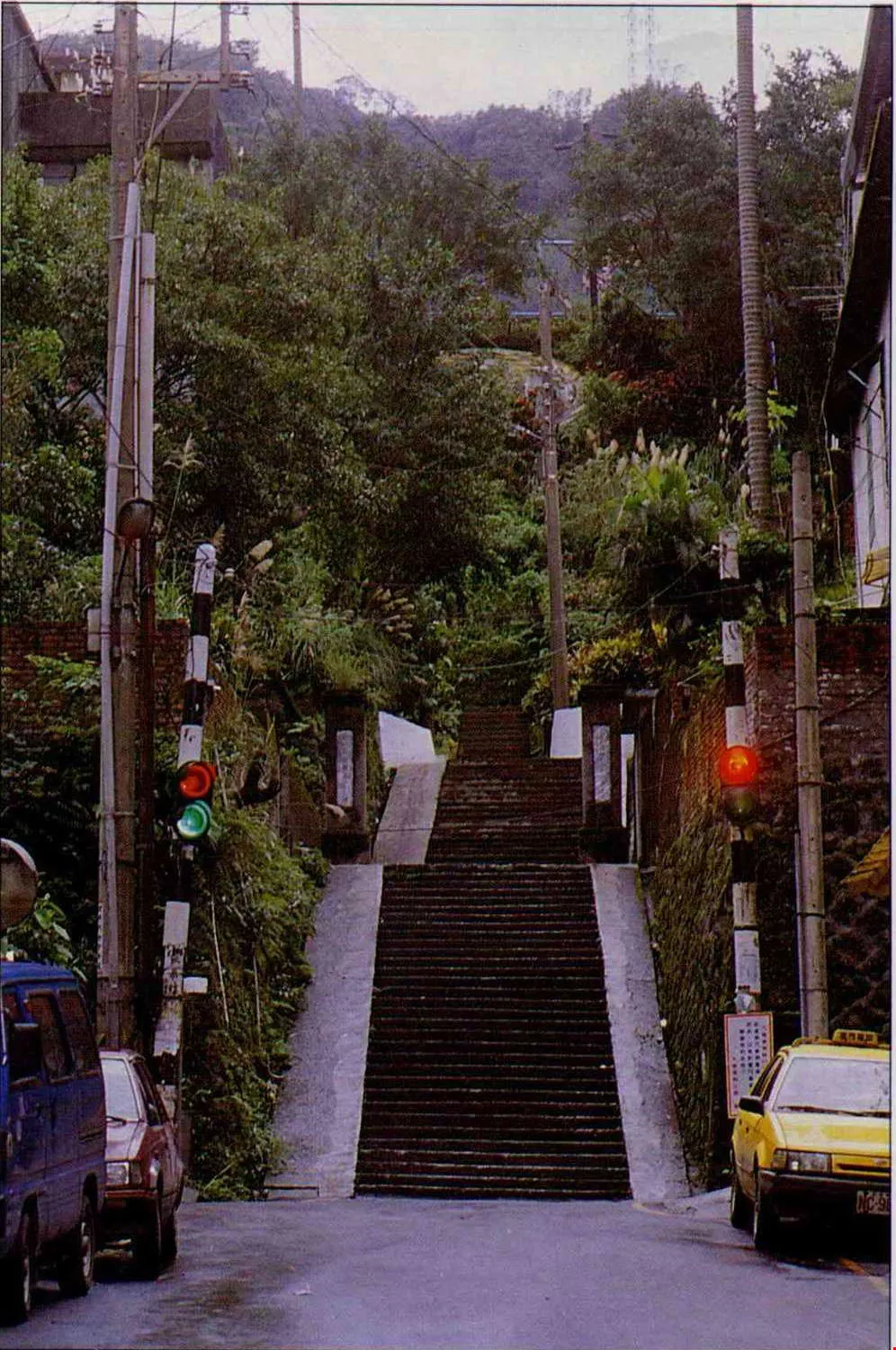
(left) This staircase has more than 140 steps, the only way leading to City High. Although it didn't have a formal name, it was a common memory of all the City High folks.
School as a big family
Why is this school which no longer exists so much missed by its teachers and students? Perhaps the daily realities of the time had a significant impact on them.
In 1948, among those who followed the Nationalist government to Taiwan, in addition to government officials and military officers, there was also a group of highly intelligent individuals and exiled students. They landed in Keelung port, and most of them simply stayed right there. Through the recommendation of friends, they entered Taiwan's education system.
At the time, locals still found it a matter of pride to attend Provincial Keelung Middle School (for boys) or Provincial Keelung Girls' School. In addition, a long line of City High principals came from the mainland and the teachers they recruited tended to be mainlanders too. So, it worked out that there was a high ratio of mainland teachers and students.
Many of the teachers had just graduated from noted universities on the mainland, and they were at most five or six years older than their students. Like their students, most of the teachers came to Taiwan alone. Tsao Yung-fa, from the third graduating class, remembers that there were a lot of classrooms in the school; therefore, some homeless teachers and students sought out a classroom and divided it into several dormitory compartments. Tsao often pushed together several desks to sleep on. When it was cold they huddled in the closets. Life was not easy. At the same time, because the environment was simple and more than a hundred students and teachers lived in the mountains day in and day out, the air was fresh and there were few distractions from the outside world. Naturally, they could devote all their hearts to their studies. And the emotional atmosphere went beyond the banal relation of teachers and students to become more like a family. The spirit of City High--mutual cooperation and upright character--naturally formed in daily interaction.
The general director of City High's school reunion, Wang You-ling, in Liang Wei-hsiung's words, "was everyone's spiritual advocate," because he stayed in the school for the longest time, and his teaching ability was excellent. Moreover, "he was a teacher in class and a friend after class."
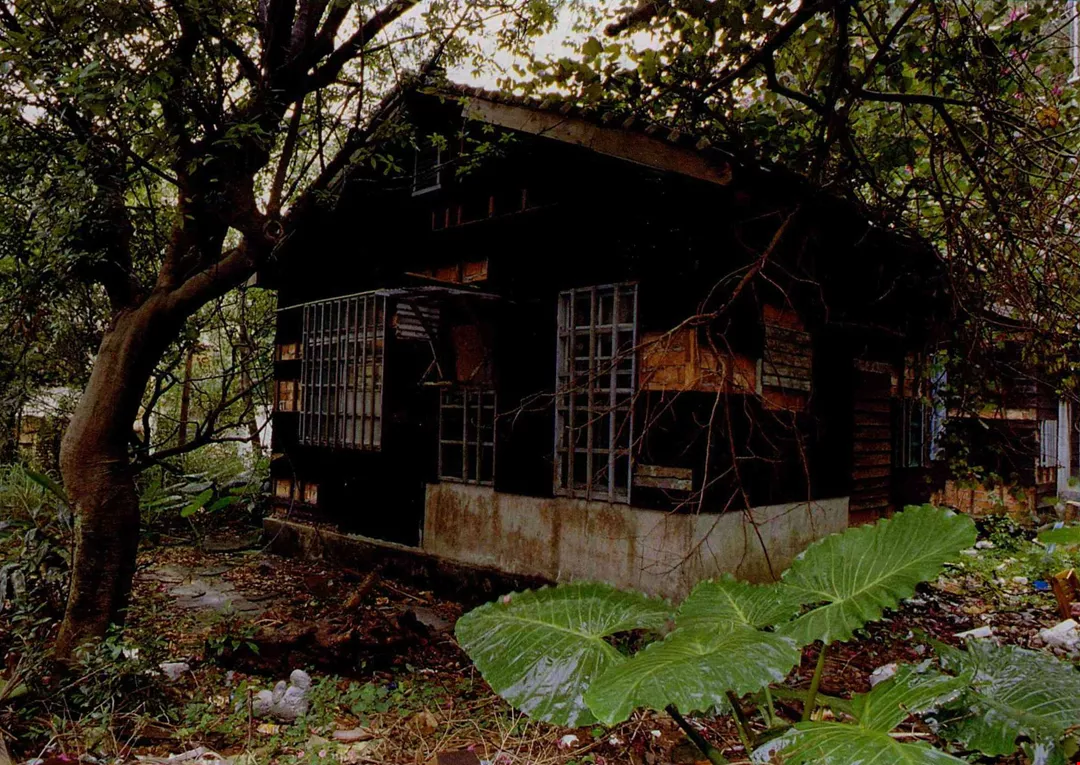
(right) This wooden building was the home of City High's first principal Wang Jui-nien. Its appearance has remained the same for 40 years. Only several years ago did the principal move away from here.
Chalk and human kindness
Students never had to memorize formulae in Wang You-ling's mathematics class. He would provide logical proofs and then give an oral explanation. Therefore, formula after unwieldy formula became easily accessible. He was also always ready to call on students to give impromptu answers, to deepen everybody's impression. If somebody dared to misbehave, he had better be prepared to duck flying chalk or go up on the platform to solve a problem. "So, we didn't dare to be distracted even for a nanosecond," said Wei Hsi-chung from the second graduating class.
But once class was over, Wang You-ling, who was hardly farther on in years than his students, became the "leader of the kids." He often took his students to play marbles or basketball. His theory was, "After a quiz, have a little fun. After a big test, have a lot of fun. When there is no test, have some fun anyway." When they had no tests, it was no problem to hand in your work a little early and then relax. When it was test time, it was even better, because the teacher didn't teach new material, and they didn't have to spend extra time on their homework. On holiday, he would take the students to travel and go camping. There was a group called the "thirteen rascals and rascalettes" who loved to start fights. Wang You-ling would stop them and say, "Okay, you want to fight! I will lead you in the fight!" And thus he squelched all their disputes.
The-history and geography teacher Wang Tung-ling always doubled as the school's chief guidance officer. He only taught there for two-and-a-half years, but he had a deep influence on many a student.
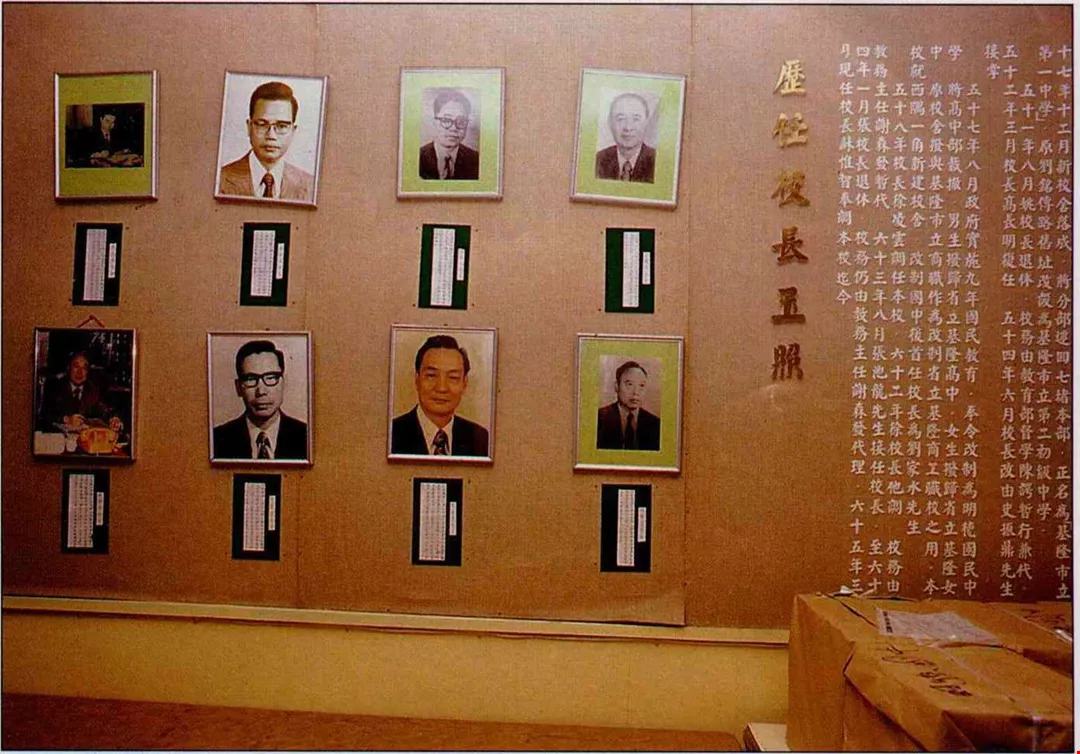
City High set up a branch school in Chitu in 1954. In 1958 they moved the main school here, as well. Later, it was changed to Mingteh Middle School. The picture was taken in the school's history room. Wang Jui-nien was the first principal.
Turning a bad kid into an officer
A Szechuanese boy named Kan Chung-kan was very mischievous. If he was not cutting girls' skirts, he would be deflating bicycle tires or tearing up classmates' notebooks. He was a real headache for everyone. Later on, Wang Tung-ling looked into the reasons, and found out that his mischief was a result of his feelings of inferiority because he could not speak Mandarin well.
So Wang Tung-ling took a two-pronged approach to the problem. On the one hand, he gave the boy the enviable position of student patrol officer. So naturally, he had to behave in an exemplary way. On the other hand, he talked to the Chinese teacher Kung Ching-hsiang to raise Kan Chung-kan's grades and let him take part in the school's speech competition. He even talked things over with all the teachers who served as judges to give first place to this "rascal" of the school to increase his sense of honor. Thus, he began to feel he was a good student and stopped playing tricks on his classmates.
It was not merely students who had language problems; teachers had similar difficulties too.
Wang Tung-ling, who came from Shandong, had graduated from the department of history at Beijing's Teachers' University. He thought his Mandarin was passable compared to some of his colleagues. But in the first exam he administered, he came across a blank test. That student wrote on the answer paper: "I am sorry, teacher. It's not that you are not a good teacher; it's just that I can't understand what you say. So I handed in a blank paper."
Later on, in his geography class Wang Tung-ling dispensed with books and lecturing; instead, he resorted to drawing maps on the blackboard, using different colors of chalk to represent the mountains, rivers, transportation networks and products of every province. Then he would wipe them off and ask his students to draw them again. Thus, he not only caught the students' attention but also increased the effectiveness of his teaching. As a result, everyone got 100s on their tests.
"Usually, teachers with distinct provincial accents would try their best to speak slowly and teach carefully. Sometimes they even relied on acting!" says Tsao Yung-fa. Sometimes at the school's reunions, he imitates some teachers' Cantonese accents and meets with a great wave of delighted applause.
The students' major activity during days off was watching movies. But they couldn't simply watch and forget, because probably the topic of the following week's composition would be their opinions on the film they had seen.
Behind these good teachers stood their supportive principal. Before City High's principal Wang Jui-nien came to Taiwan, he was a member of the national assembly, as well as curator of Guiyang's Public Education Center. He had considered an opening for secretary-general in the Keelung City government, but chose instead to commit himself to the cause of education.
Because many mainlander students came to Taiwan all alone, or had impoverished families to support, Wang Jui-nien ran his school in a manner not restricted to institutional conventions. He would try to accommodate everyone's needs. For example, Chi Hsi-chung's cousin Chi Tung-hsin had Wang You-ling as his homeroom teacher. Chi Tung-hsin was eager to look for a job to support his family, because of their dire situation. Two weeks after school began in his last year in high school, he asked to take three months off to attend a short course in telegraphy (after which he had the chance to go work on a fishing boat). Wang You-ling thought this to be a crucial undertaking for his student, so he asked the principal to make the decision. Wang Jui-nien answered casually, "It's okay. Tell him to come back to take part in the graduation exam." Later on, Chi Tung-hsin didn't come back in time for the graduation exam, so the school held a special make-up test for him.
Chiu Ching-yi, current director of the Taipei Representative Office in Singapore, was from the fourth graduating class of Keelung City High. While he was in school, he had to sell breakfast pastries to scrounge together tuition, because his family was very poor. Wang Jui-nien allowed him to stay at his home for half a year, and let him pay for his tuition on credit.
Many homeless students from the mainland did not go back to their dormitory after class, but would hang at the sides of their teachers, who were almost like older brothers to them. If they were not following Wang Tung-ling, who once won a medal at a martial arts competition in Qingdao, they would play basketball one-on-one with Wang You-ling. After they had a bite to eat together, they went free of charge to the supplementary school run by Kung Ching-hsiang (who taught English and mathematics there). Or perhaps they would develop photos in the darkroom which Wang Tung-ling had constructed himself. They wouldn't go back to their dormitories until very late. "At that time, the male teachers had to get students' 'permission' to get romantically involved with female teachers; otherwise, we would report on them," says Liang Wei-hsiung. Remembering the scene of that year, he can't help exuding an air of mischief.
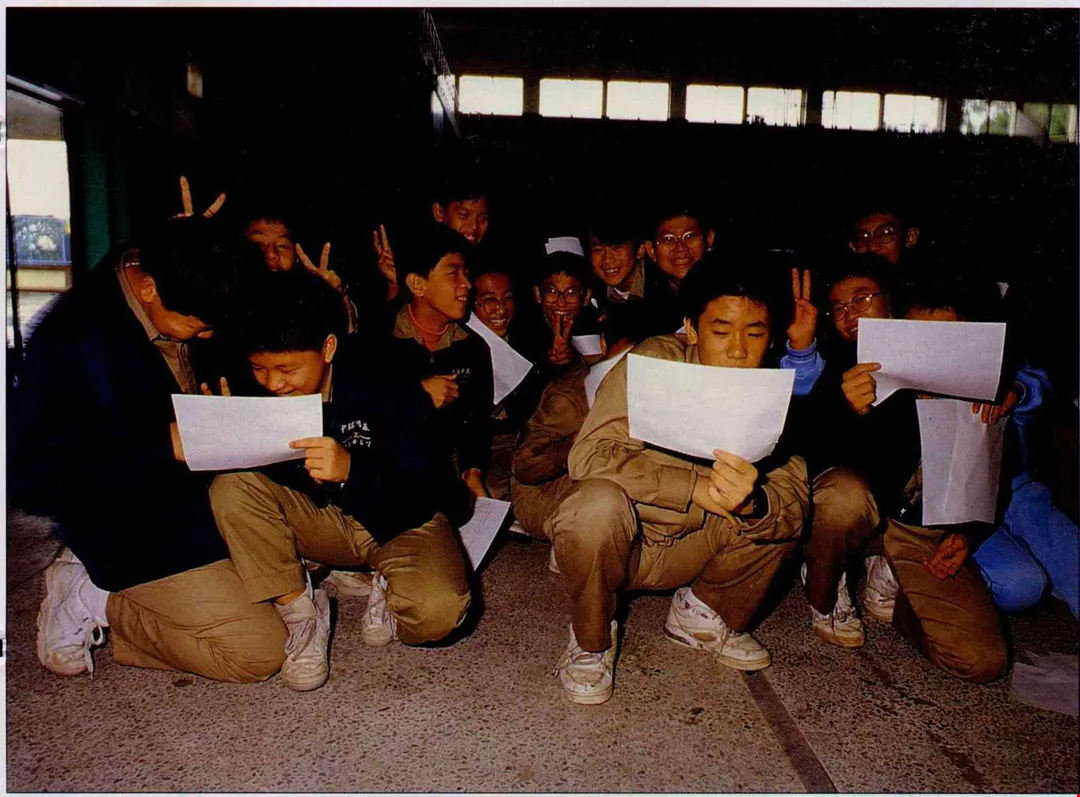
This group of Mingchuan Middle School students may become little School brothers of City High alumni in the future, because the government intends to revive the system in which counties and cities run high schools. Keelung City High will have a chance to be reborn.
Hard to repay teachers' good deeds
The deep relationships built up in school were not diluted by time or distance; instead, they have only become even closer. On every New Year, and at every major festival, the alumni abide by ancient etiquette and visit their teachers, no matter how much their present statuses may exceed that of their former instructors.
While Wang You-ling was teaching full-time in Ching-hsiu Girls' High School, he also moonlighted at the China Junior College of Marine Technology, which was located in a remote area. A graduate of City High took charge of delivering him to and from school. Wang You-ling didn't even have to bother with his own lunch boxes, because his students would always be prompt to give him one, filled with his favorite foods.
The physics and chemistry teacher Yeh Chiang-shu served at Taipei's First Girls' High School four years longer than he did at Keelung City High, but at his funeral, those who came to pay their last respects were almost entirely City High alumni. After leaving City High, Wang Tung-ling was so poor that he had trouble scraping together a living. It was his student Li Yi-kang who worked hard on his behalf and delivered rice to help him get through his predicament.
Several years ago, Wang Jui-nien and Wang You-ling both suffered from critical illnesses. They both relied on Ting Chih-fa, a general at the Ministry of Defense, as well as Ho Chun, the former vice commander of the army, to get them beds at the Tri Service General Hospital.
Wang Jui-nien, 88 years old this year, even designated Liang Wei-hsiung to arrange for his future funeral,and he requested all the alumni of City High to attend, to be models for the whole society of what a true teacher-student relationship is like.
Chinese people say "Respect the teacher and the teaching" and "Students must come to the aid of their teacher." The behavior of the students from Keelung City High School may provide the best definition of these two phrases.
[Picture Caption]
This lecture building is left over from the days of City High. Comparing this photo with the one on the right, the original appearance has been retained, although it has been renovated and faced with tiles.
Keelung City High School's site at #1 Liu Ming-chuan Road, Sec.2, was an elite Japanese-only grade school during the occupationers. After the end of the Japanese occupation, it became a middle school, and most of the pupils and teachers were from the mainland. (courtesy of Wang Jui-nien)
(left) This staircase has more than 140 steps, the only way leading to City High. Although it didn't have a formal name, it was a common memory of all the City High folks.
(right) This wooden building was the home of City High's first principal Wang Jui-nien. Its appearance has remained the same for 40 years. Only several years ago did the principal move away from here.
City High set up a branch school in Chitu in 1954. In 1958 they moved the main school here, as well. Later, it was changed to Mingteh Middle School. The picture was taken in the school's history room. Wang Jui-nien was the first principal.
This group of Mingchuan Middle School students may become little School brothers of City High alumni in the future, because the government intends to revive the system in which counties and cities run high schools. Keelung City High will have a chance to be reborn.
The alumni association, which gets together different graduating classes of the school. Every time they have a reunion, more than one fifth of the total number of graduates participate. This is a photo graph of the alumni association taken in 1992 at the United Daily News' Nanyuan garden. (photo by Liang Wei-hsiung)
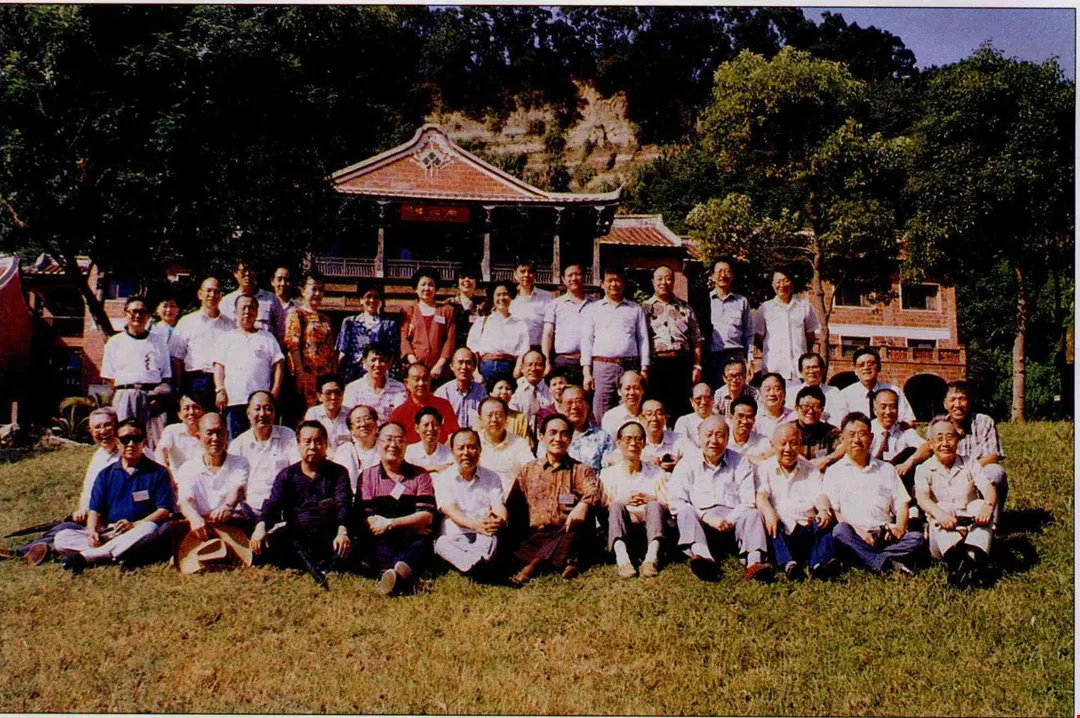
The alumni association, which gets together different graduating classes of the school. Every time they have a reunion, more than one fifth of the total number of graduates participate. This is a photo graph of the alumni association taken in 1992 at the United Daily News' Nanyuan garden. (photo by Liang Wei-hsiung)


@List.jpg?w=522&h=410&mode=crop&format=webp&quality=80)


