Sustainable Village Number One-Matsu's Tiehpan Village
Coral Lee / photos Jimmy Lin / tr. by Scott Gregory
October 2008


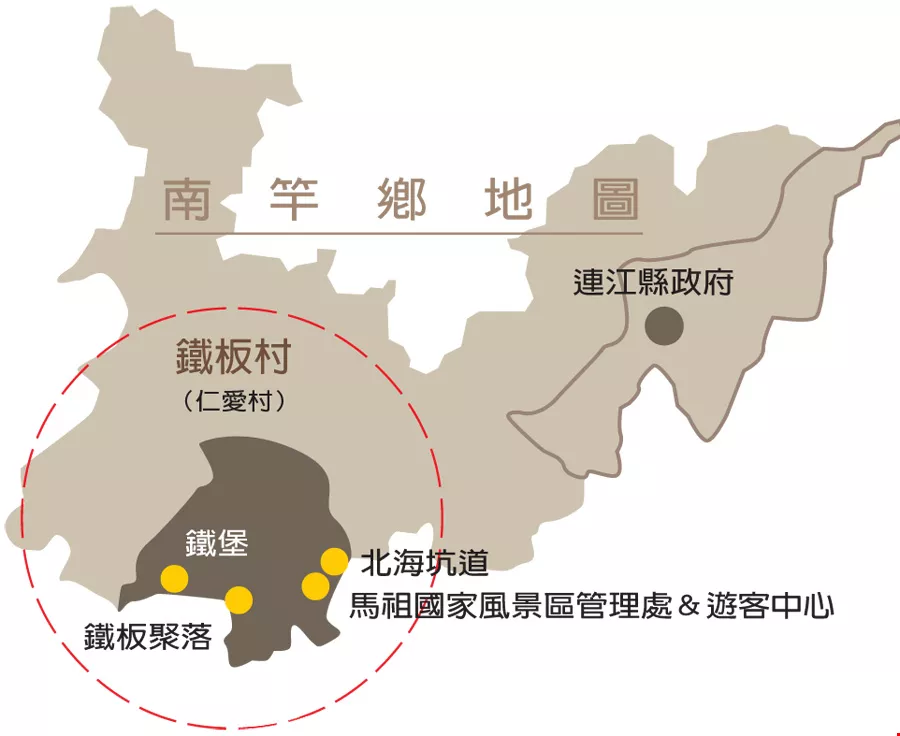
Sandwiched between two military landmarks-the deep and mysterious Peihai Tunnels and the granite "Iron Bunker" that looks out over the waves-Tiehpan Village (also known by its official name, Jen-ai Village) was always a place that tourists would speed right by.
Just seven years ago it was a lonely little mountain outpost full of crumbling walls. But when a group of residents rolled up their sleeves and pitched in to fix up their houses, they ignited a fire of community participation. Not only did they give the place a makeover, they also attracted a team from Chung Yuan Christian University's Department of Architecture to make the trip out to the island and provide long-term assistance. The awakened little dragon that is Tiehpan Village shows the unlimited potential of sustainable communities.
Entering Matsu's Tiehpan Village is like entering another time and space.
Scattered around the winding paths and quiet streets are stone buildings with roof tiles of varying shades of red. The atmosphere is reminiscent of the mountain town in the film A Borrowed Life. Among the high and low buildings built along the slope, you can occasionally see an abandoned structure filled with junk. Turn a corner and suddenly the sight of a vegetable garden or a patch of green lights up your eyes.
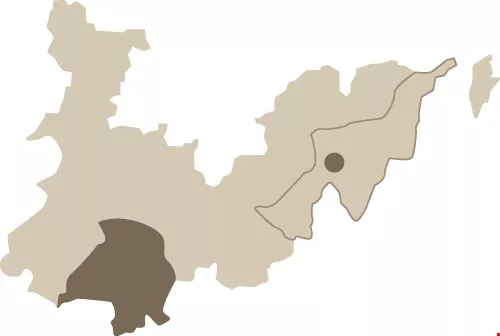
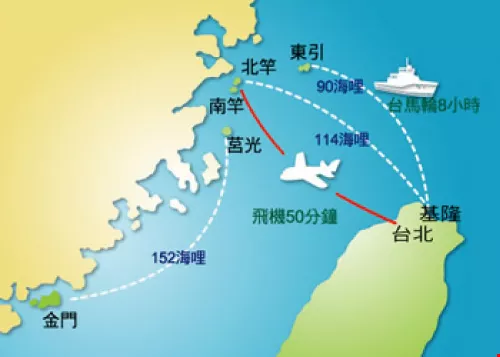
Tiehpan Village, surrounded by hills on three sides and the ocean on the other, is on the southwestern part of Nankan, Matsu's largest island. Once an old fishing settlement, it now has around 100 households and nearly 300 residents. It is called Tiehpan, which means "iron plate," because of a slab of sedimentary rock on the ocean floor. At low tide, the sun's reflection makes it look like a large sheet of iron.
Matsu has two ports and is strategically located, so beginning in the 1950s it was the frontline in the standoff with the communists in the mainland. Tiehpan was built up as a military base and a large number of troops were stationed there. Also, the county government was based there, so the village was Matsu's administrative and business center. Restaurants, entertainment, and shops took the place of the fishing industry that had previously dominated the local economy, and businesses catering to the needs of the soldiers flourished.
Changing times
"Every time the soldiers came out on leave, there were so many people out on the main street you could barely move," says Chen Chi-yun, head of the Tiehpan Community Development Association. Theaters, pool halls, seafood restaurants, and grocery stores were all booming. Even as families moved away from Matsu for textile jobs in Taoyuan and Chungli during the high-flying economy of the 1970s, someone would always snatch up their vacated store fronts in order to take advantage of the opportunities presented by the bustling main street. Only when the government demilitarized Matsu in 1992 and the soldiers began to be redeployed did the shops' business dry up. Like the Cold War, they too vanished into history.
Walking down this three-meter-wide main street that runs through Tiehpan Village and down to the seaside, you hardly see any sign of the shops and street stalls now. An old woman selling mouthwateringly plump oysters and rice noodles deep-fried in a soybean batter from a small stand gives the visitor a faint glimpse of what the street must have been like in the militarized era. The most eye-catching building on the street these days is a new two-story structure that combines old and new styles-the Tiehpan Lifestyle Center.
"This was originally two dilapidated old houses," says the development association's founder and director of the county's accounting office, Liu Yu-yin, with her heavy Eastern Fujianese accent. The association was founded in 2002 specifically to deal with such old houses.
"All of the old houses have wooden frames. When the owners moved away, they'd shut the windows and doors up tight. With no air circulation the wood would rot over time, then the tile roofs would cave in and leave a big mess," Liu explains. In the 1970s, residents began moving to Taiwan and the county government moved to Chiehshou Village, leaving 40 or 50 houses in such a state. Not only were they eyesores, but they gave the entire village a bleak, run-down atmosphere. That's when Liu and some other local public servants decided to use their vacation time to clean up the exteriors of their homes.
One big family
"People here of my generation are either classmates from Jen-ai Elementary or Chungcheng Junior High, or if not they were within a few years of each other in the same schools. This community of around 300 people is like a big family," says Liu. Her analysis of the situation in the community is that everyone living along the street in houses facing one another fosters personal relationships. Neighbors will help an old couple whose children have all moved away. What's more, everyone grew up here and has a special affinity with the place. When Liu raised the call, just about every family responded and more than 100 people joined the new association.
They say the Lord helps those who help themselves-just as the residents of Tiehpan began to organize, the government and the academic world began to take notice of the place as well.
In 2002, the Lienchiang County Government began its "Town New Style" project and placed National Taiwan University's Graduate Institute of Building and Planning in charge of working with Tiehpan. After two months of discussions with residents, the institute outlined a blueprint for the village's future development. Unlike so many such plans which are destined only to be filed away in a drawer, this one was followed out by the mobilized residents and the village's appearance improved by the year. The most talked-about feature was the plan for Mt. Kuanmao.
Located to the south of the village with an elevation of 60 meters and an area of 28 hectares, Mt. Kuanmao was the shared focus of the Tiehpan residents' lives before 1949. It was a place where people planted sweet potatoes or dried their fishing nets, children played, and women looked out to their husbands' fishing boats. When the army came it became off-limits, and by the time the forces left in the 1990s, it was a wasteland. With the initiative of the association, the residents got together and cleaned up the mountain. For them, following their collective memory and restoring the site was a pleasure.
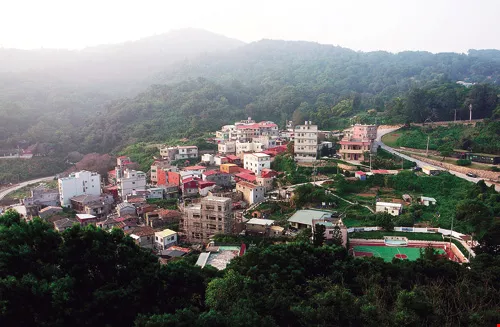
Near mountains and the sea, Tiehpan is endowed with a great natural setting. On an outlying island, it has not been overdeveloped, and the locals have a tradition of economizing. These give Tiehpan great potential for becoming a sustainable village. On the facing page is another view of the Iron Bunker from Tiehpan.
Call to action
"Just cleaning up the trash and other junk took over a month," Liu recalls. After filling several hundred garbage bags, they used spent artillery shells and rocks from the beach to make pathways with simple axes and shovels as their only tools. A report in the media about the "artillery shell road" even briefly raised concerns among the military.
"That was a really crazy time. Every weekend and holiday, ten or 20 people would be out there on the mountain," Liu says. They'd enjoy the day out and chat as they worked. Within a few years, they'd built seven or eight roads and hiking paths. While they were at it, the fever spread among the other residents and more and more people showed up. Liu says that what touched her most was the handful of women who closed up their shops and brought food up for the workers, and that when people from the association bought supplies at hardware and stationery shops, the store owners wouldn't take their money.
In the eyes of scholars, the traditional culture and initiative of Tiehpan's residents are not only examples of a community creating and renewing its own precious resources but also key steps toward sustainable living in an age of environmental crisis.
Professor Yu Chao-ching of Chung Yuan Christian University's Department of Architecture, who has long been interested in sustainability issues, says that one of the most important concepts in sustainable living is lessening reliance on specialization. Only if a community takes care of its needs through work and cooperation can it escape the strictures of business and consumerism and return to a harmonious relationship between humanity and nature.
"When I came to Matsu long ago with the Eastern Fujianese Village Preservation Project, I was deeply impressed with the uniqueness of the people of Tiehpan," says Yu. Thus, when in 2003 Lienchiang County began its "One New House Per Township" project and sought out universities' assistance, Chung Yuan jumped at the chance to work with Tiehpan.
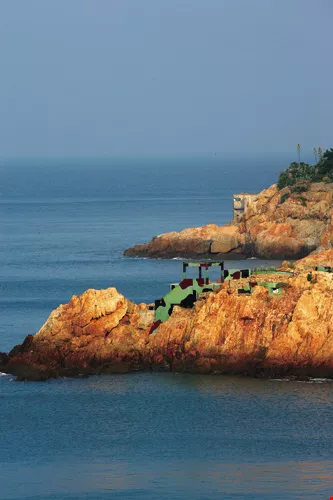
The "Iron Bunker" is about a ten-minute car ride away from Tiehpan. During the military tensions of the 1960s, many sentries were crept up on and killed by "water demons" from the mainland. But the communists never succeeded in taking this bunker, and so it earned this name.
It takes two
In Matsu's traditional marriage customs, the people of a village get together to build a house for the couple that will marry. It is the prelude to a three-day, three-night ceremony. The county government hoped its project to create a new bridal house for each township could get people to participate in the same way and think about what their communities might be in the demilitarized era.
When the professors and students from CYCU arrived in this tightly knit rustic community, you could say they found themselves in the ideal training ground. By day they conducted interviews and inspections, and by night they held meetings of all sizes with residents. They showed them models and large-scale maps, and came up with overall plans for new structures. In the end, however, the county government came under new leadership and the new director was not interested in the project, so nothing came of it. But the experience served as the foundation for future cooperation between Tiehpan and CYCU.
Then, with funding from the Ministry of Education's Creative Education Project and the National Science Council's Sustainable Village project, CYCU architecture graduate students came to the "big classroom" that was Tiehpan. On average, they come once a month in groups of two to 20 and stay for four or five days. They interact with locals and come up with design ideas. The program has been running for five years without stop.
In five years, CYCU students and professors have collaborated with residents in creating more than ten residences and public spaces on vacant lots. The spot of green around the corner from the association's office, Wish Park, for example, was a piece of land with just crumbling walls still standing on it and surrounded by an ugly makeshift fence. The visitors and the villagers decided to make a small outdoor theater there. They took some stone slabs left over from Mt. Kuanmao road projects to make a floor and used liquor pots of various sizes to make the walls of the stage. They took wood from an abandoned house by the shore to make the stage itself. Finally, they planted donated plants around the spot's perimeter. A dozen or so students and residents made this beautiful little neighborhood park in just one day. It was a great success.
Creating Mt. Kuanmao's "Southern Pavilion" was another fruitful collaboration between the residents and CYCU.
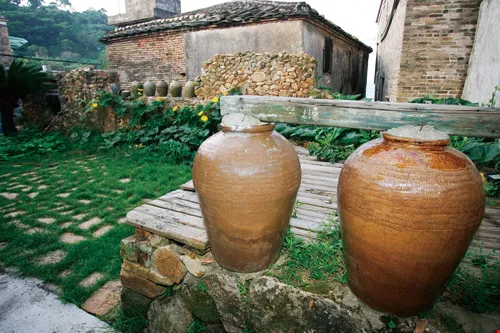
This corner was originally a vacant lot filled with trash and surrounded by an ugly makeshift fence. Through the creativity of the CYCU team, refuse was transformed into the verdant Wish Park.
Aesthetics of the masses
While cleaning up Mt. Kuanmao, the villagers expressed the wish to build a little teahouse in a scenic spot on the hillside.
"In the discussion, the residents weren't clear on the concept of a teahouse but strongly suggested that nothing too expensive should be built. They hoped they could participate fully and suggested using discarded cement electric poles as materials," says CYCU assistant professor of architecture Wu Chen-ting, whose MA thesis was entitled "Participatory Architecture-The Tiehpan Experience." Everyone on the CYCU team applauded the idea of building with recycled materials, but they had a hard time accepting that electric poles could be made aesthetically pleasing, and they disagreed with the locals on where the windows should be placed and how big the teahouse should be.
After finally getting a model together, the team returned to Taiwan. When they returned to Matsu a month later, the CYCU professors and students were amazed to discover the teahouse was already completed! The villagers had hired a local woodworker and worked in shifts. With just NT$50,000-plus they built a teahouse exactly like the model. The wooden structure was done reasonably well, and the electric poles fit in with the design. On the whole, it was simple and elegant.
"The thing you have to admire is that in the building process there was no design schematic. It was all done according to the model and the locals' collective wisdom," says Wu. He says that this made him realize there is an "aesthetics of the masses" in everyday life, and that architects should get away from the academy and respect this local wisdom.
In three years of collaboration, trust and understanding had grown, and the CYCU team moved a step forward with its visionary Sustainable Village Number One project.
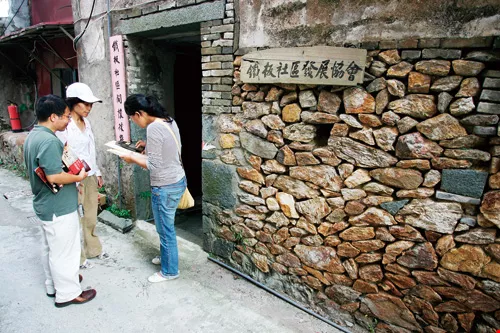
The Tiehpan Community Development Association originally formed to fix up dilapidated old houses, but ended up cooperating on the Sustainable Village Number One project.
Sustainable village
"In a sustainable community, people's lives are in tune with nature and inseparable from it," says Yu. In this sort of relationship, people's needs and natural resources are connected cyclically. By contrast, modern life depends too much on business and consumerism, so that not only have people become alienated from nature, they have also lost their abilities and creativity in life.
"The characteristics of Tiehpan actually make it naturally 'sustainable,'" says Yu. Tiehpan is replete with mountain, sea, flora and fauna, and outlying islands haven't been overly developed. Also, years of military tensions there created a culture of thrift and reuse of resources that made the locals naturals for the sustainability project.
Put into practice, a sustainable community has three components-ecology, economy, and society. The society aspect emphasizes cooperation and mutual assistance between people, and that was Tiehpan Village's natural strong point. The ecology aspect emphasizes resources, food production, waste management, and environmentally friendly "small systems." For example, dry toilets turn solid waste into fertilizer for the family vegetable garden and thus resources are used cyclically. Cyclical wastewater management methods can also be created in small systems that are tailored to local conditions and have short return paths.
"At this stage we are starting by working on the water system and the waste management system," says Yu.
Tiehpan's wastewater all used to flow directly into the ocean, but since 2006 the county has been planning to build treatment plants in each township. Tiehpan hasn't gotten one yet, but the sustainability-minded residents are already asking what the point is of building a 13-by-nine meter monster of a facility next to the ocean for the sake of just 300 people's wastewater.
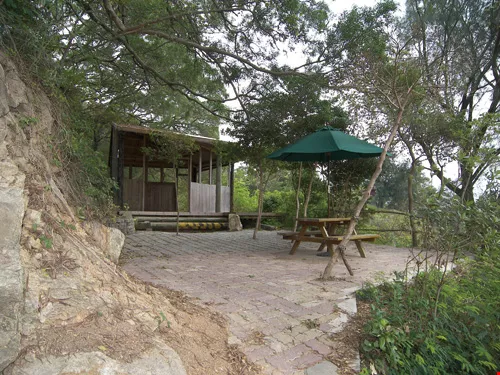
After villagers from Tiehpan cleaned up Mt. Kuanmao, they built a tea pavilion from a model made by the CYCU team.
Natural living
In view of this, the CYCU team arranged for some Tiehpan residents to go to Chia Nan University of Pharmacy and Science in Tainan to look into using aquatic plants for filtering wastewater. When they returned, they decided to take unused 50-gallon plastic barrels from the waterworks, pipe them together, and fill them with pebbles and aquatic plants in order to test a multi-stage filter system. If it is successful, they'll dig a trench and install the system in the ground. They will also share their experience with other villages.
Additionally, CYCU plans to install solar panels near the ocean to collect energy during the summer and provide heat and hot water in the winter.
"How long can thermal energy be stored? How efficient is the electricity it supplies? These are all waiting to be answered," says Wu Yu-chang, who is writing his MA thesis on Tiehpan. He says that the power created by the solar energy experiment will first be used for public electricity. If the results are good, then it can be expanded to providing electricity for all the homes in the village. And Matsu's water sources are limited, so the CYCU team plans to install rainwater capture systems on the roofs of all the homes. The water will be gathered in pools, purified, and used to water vegetable gardens.
The economy aspect also involves the question of how local businesses will develop in the future. In order to find a way forward, Liu Yu-yin of the preservation association is enrolled at Ming Chuan University's extended education school. She is studying the feasibility of community cooperative management. She says that most of the residents of Tiehpan are civil servants, teachers, or soldiers and that most families are comfortable, but they must develop amenities like guesthouses and restaurants in the villages if they want to be part of Matsu's growing tourism industry.
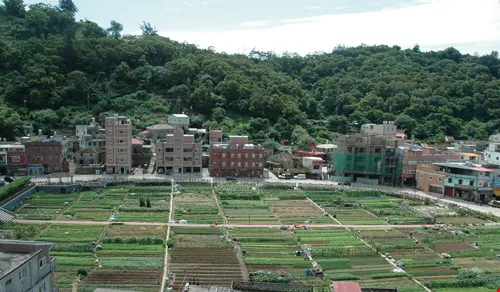
The "vegetable garden park" in front of the county government building on Nankan Island might be the first in all of Taiwan. Life on Matsu is simple, and many residents still grow their own vegetables.
Cooperation is key
"Our resources are limited, and we can't do everything on our own," says Liu. She uses her father's bookshop as an example. Such a small shop is harder and harder to run these days. Many of the shops in Tiehpan and the Jen-ai Market have similar problems. Perhaps in the future they will be able to form alliances to pool resources-one person provides a building, another supplies manpower, and a third supplies funding-and the residents could cooperate to avoid duplication. Profits could be shared reasonably with the goal not of making money but of caring for members of the community. Such an arrangement might be a new, long-term solution for them.
"We're already planning to turn four houses into guesthouses. We'll complete one this year and next year we'll get the funds for the other three. We have already had some retired people from the village express interest in running them," says Liu. In the future, no matter if it's to experience the environment or the local culture, the residents hope visitors will come stay with them for longer periods to get a good taste of Tiehpan to bring back to the main island of Taiwan.
The day this reporter was set to leave Tiehpan, a typhoon was approaching. Preservation association volunteers and CYCU students could already be seen on the beach working to finish their natural water filtering project before the typhoon hit. Association team leader Chen Hsueh-hsing was piling up soil buffers with a backhoe to keep waves from hitting the plastic barrels.
"I borrowed the backhoe from a contractor friend. That saved us the two days' rental fees of NT$12,000," he says. The strong Chen Chi-yun then climbed up to the water outlet on a jetty to hook up the completed project.
For the association's members, Saturday and Sunday are the busiest days of the week. They say the work is like a bottomless pit and they haven't stopped for years, but they feel gratified by the acknowledgement of outsiders and the joy from the sight of the improvements to their home. "Whether there are tourists or not, this is where we live," says volunteer Feng Ming-chang, speaking for the whole village.
Once Tiehpan makes sustainability a reality, it will no longer be just a place on the way to the Peihai Tunnels. It will draw visitors from all around Taiwan seeking to study the village's methods or just to experience the beauty of a sustainable lifestyle for themselves.
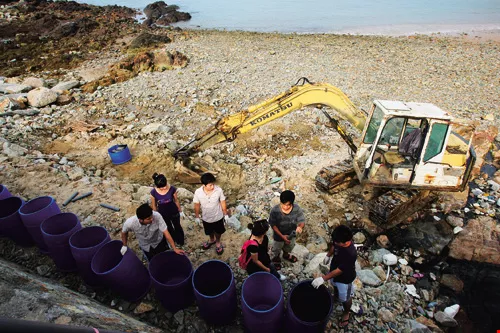
Tiehpan Village is currently experimenting with using discarded plastic barrels to naturally filter wastewater. Pictured here are locals and CYCU team members scrambling to protect the project from an oncoming typhoon.
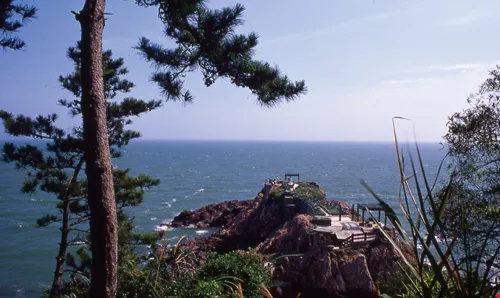
Near mountains and the sea, Tiehpan is endowed with a great natural setting. On an outlying island, it has not been overdeveloped, and the locals have a tradition of economizing. These give Tiehpan great potential for becoming a sustainable village. On the facing page is another view of the Iron Bunker from Tiehpan.


@List.jpg?w=522&h=410&mode=crop&format=webp&quality=80)


