

David Sen-lin Lee is the most successful businessman among the Chinese-Americans who are developing advanced technology in California's "Silicon Valley." In 1973 he founded Qume Corporation, which had a business volume of US$20,000 in its first year, and last year reached US$200 million, a 10,000-fold increase.
In August of last year Lee invested in a branch factory to be based in the Hsinchu Science Park along the west coast of Taiwan. Besides bringing capital and production techniques to Taiwan, Lee also wants to make a bridge between the science park and Silicon Valley, and serve as an example that will lead other international high-technology firms to invest in Taiwan, and enhance the Republic of China's industry.
At the beginning of October this year, he came to see the progress of the branch firm, and to conduct the new factory's opening ceremony. He had planned for the Taiwan branch to have a volume of US$30 million, but the result was US$40 million. "They did better than I ever expected," said Lee of his workers in Taiwan. "The ability of the engineers and skills of the technicians are first rate. I believe there's no other investment I could make that would be as successful."
In 1972, Lee invented the daisy wheel printer, and founded Qume Corporation. His corporation started small, but soon gained business from most major office equipment and computer firms. But he had to keep ahead of competition. Qume had to constantly improve quality and reduce overhead to stay in business. "We can't relax as soon as we get famous. We still have to keep going forward, and do better every time. We have to change our product line completely every three to five years, or else we'll end up behind the other guys, which is like the Chinese saying 'Not going ahead is being behind'."
Qume spends about 10 percent of gross sales each year on research, which last year was US$20 million. Lee says, "Advanced technology is a fast-changing industry; you have to be a little earlier at meeting the market's needs to retain a competitive edge." But how can one know the needs of the market in time? "The most important thing is to keep good communications with the customers; only the user knows the merits and demerits of a product. We have seventy marketing engineers keeping in touch with engineers from our client companies to hear their suggestions."
Lee himself has the most "free time" of anyone in the company, and he will go to any department that needs help and lend a hand. He spends most of his time studying and planning, in order to choose the right direction for the company's development.
Every two or three months Lee holds a production meeting, and he encourages lower echelons in the firm to have similar consultations in their departments. An engineer need only have a good suggestion to initiate communication with his superior and with other departments. The concerned personnel have a meeting, and afterwards new ideas are implemented.
"This kind of meeting has two strong points; first, it gathers together a lot of ideas, on the principle that two heads are better than one, and second, it lets everyone who participates in the meeting have a sense of responsibility for the new idea, and feel happy in bringing it about."
Lee says he doesn't go out of his way to set high salaries for his employees, since that would raise overhead, and in the long run, slow the company's growth. The emphasis at Qume is on making better products than the competitors, and on making the working environment pleasant. Each worker has his own workspace in the office, and Lee hopes even the way the office is decorated will be pleasing and conducive to production. "It doesn't really cost much money, but I hope the workers will be proud to say 'I work there.'"
In order to get the capital needed for continued rapid expansion, in 1978 Lee sold Qume to ITT. He is still the president of Qume, and chairman of the Taiwan branch firm.
What was behind Lee's decision to invest in Taiwan? "Labor is cheaper in the Philippines, Hong Kong has more convenient transportation, and Singapore has better incentives for industry, but since we hope to do research and develop new products, Taiwan is the best place, as the level of education is high, and the number of technically skilled people is great. In America, a lot of the people carrying on research in advanced technology are people who originally came from Taiwan; and Taiwan has a lot of resources for developing these industries."
"We hope to help the development of local industry, and especially to cultivate local talent in management and research. Qume provides an example of Taiwan's bright future in advanced technology."
[Picture Caption]
Left, David Sen-Lin Lee, president of America's Qume Corporation, returned to free China to invest, with a mind to strengthen the roots of sci-tech in Taiwan. Right, The work inside Qume's factory in Hsinchu Science Park.
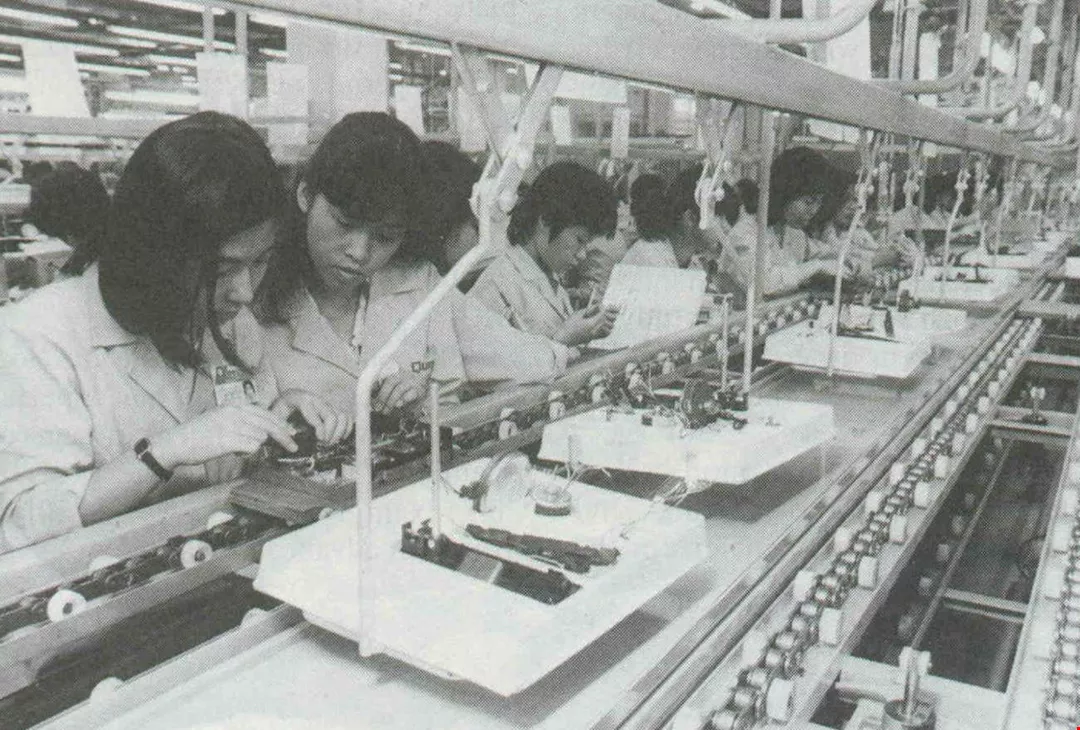
Right, The work inside Qume's factory in Hsinchu Science Park.


@List.jpg?w=522&h=410&mode=crop&format=webp&quality=80)


