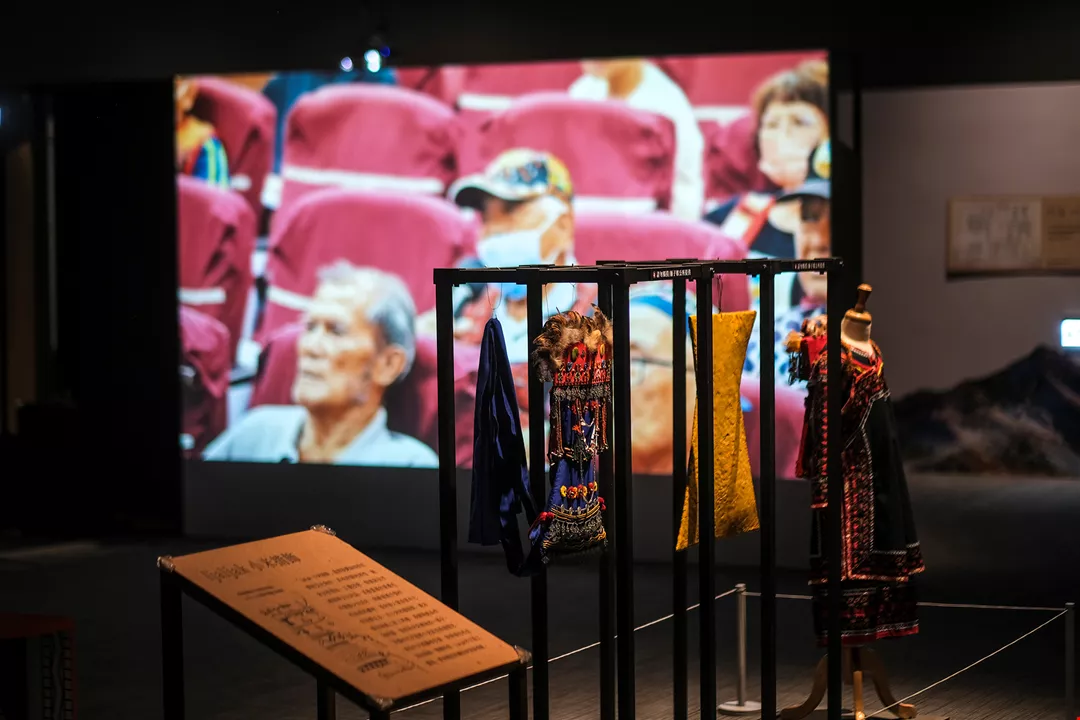
Torii documented and collected materials 130 to 115 years ago through the professional lens of an anthropologist. From the perspective of Indigenous peoples today, however, those records can yield very different readings. For instance, one photograph in the exhibition shows Torii’s arrangement of assorted objects, which appears to be a conventional ethnographic display. Tao Indigenous people from Orchid Island explained, however, that the objects shown—made for rituals, dispelling evil, and everyday use—should never be placed together; doing so violates a traditional community taboo. The exhibition turns the photograph into an interactive installation that introduces visitors to the objects’ proper categories. In the process, a century-old image takes on a new perspective across time—an apt expression of the exhibition’s Chinese subtitle: “The dialogue between Ryuzo Torii and contemporary Indigenous peoples of Taiwan.”
Although deciphering the manuscripts is difficult, the process has brought unexpected moments of emotion and discovery. In notes on the Paiwan Tjakuvukuvulj tribal group that is located in today’s Shizi Township, Pingtung County, an abstract pattern resembling the lines of a palm left the team stumped. Only when a community elder in their eighties recognized it did the researchers realize that it echoed a motif on a ceremonial “millet backpiece” traditionally used in girls’ coming-of-age rites, reawakening a cultural memory.

With help from elders, the Paiwan community of Tjakuvukuvulj revived memories of the “millet backpiece.” Traditionally, when a girl came of age, her mother cooked millet and used it to fill up a backpiece made with a woven bamboo frame and cloth covering. The girl carried it to the homes of relatives and friends, who added decorations as expressions of their good wishes.