Sexual Liberation Comes to Taiwan
Jenny Hu / photos Lin Meng-san / tr. by Jonathan Barnard
June 1995


The rise to dominance of the School of Laws in the Song and Ming dynasties caused 1000 years of Chinese sexual repression and silence. But with the opening up of Taiwanese society since the repeal of martial law, the old structures have been under attack, and now Taiwan is knocking on that forbidden door of sex.
Without yet having finished its "hundred flowers bloom" stage of political awakening, Taiwan is now, eight years after the repeal of martial law, engaged in a steamy probe of carnal desires.
In 1992 the Chinese edition of The Kinsey Report was published by Living Psychology Publishers (best known in Taiwan for its magazine Teacher Chang, which provides advice to youths on issues of popular psychology and is received in both homes and schools). Sex had moved from under the counter to the mainstream publications in the display racks.
In an age of scant information about sex in Taiwan, the booming sales of The Kinsey Report were like a bomb going off. Many people suddenly discovered that sex could be discussed in the glare of day, and it became fashionable among young people to give The Kinsey Report as a wedding present.
In 1993 The China Times Weekly published "A Survey on Love and Sex Across the Strait" and Teacher Chang published a series of articles on sex. Last year, the temperature just kept rising, as people took to the streets over sex. Women's groups shocked the public by shouting "orgasms, not sexual harassment." The book Bold Women, which urged women to shake off the shackles of sexual oppression and tune into their sexual desires, caused a storm of controversy that has still not subsided.
An exhibition on Chinese sexual life and culture announced itself on banners, billboards and on the sides of buses. And recently the prudish were prickled even more when the Women's Problems Research Society at Taiwan University began screening porno movies "to stir up discussion among women on campus about taking control over their own bodies."
Publishers predict that sex books will be one of the hottest industry trends for 1995. Sex is a popular topic on the television talk shows, and on cable there is even a lecturer on sex named Mrs. Yinsey (a play on the Chinese characters for Kinsey, in which "Yin," which means silver, has been substituted for "Kin," which means gold). Her explanations are interspersed with footage of men and women putting her theories into practice. Sexual experience discussion groups are being established one after another, and seminars about sex are standing room only. . . . This continuing exploration of carnal desire reflects the thirst that modern Taiwanese have for information about sex.
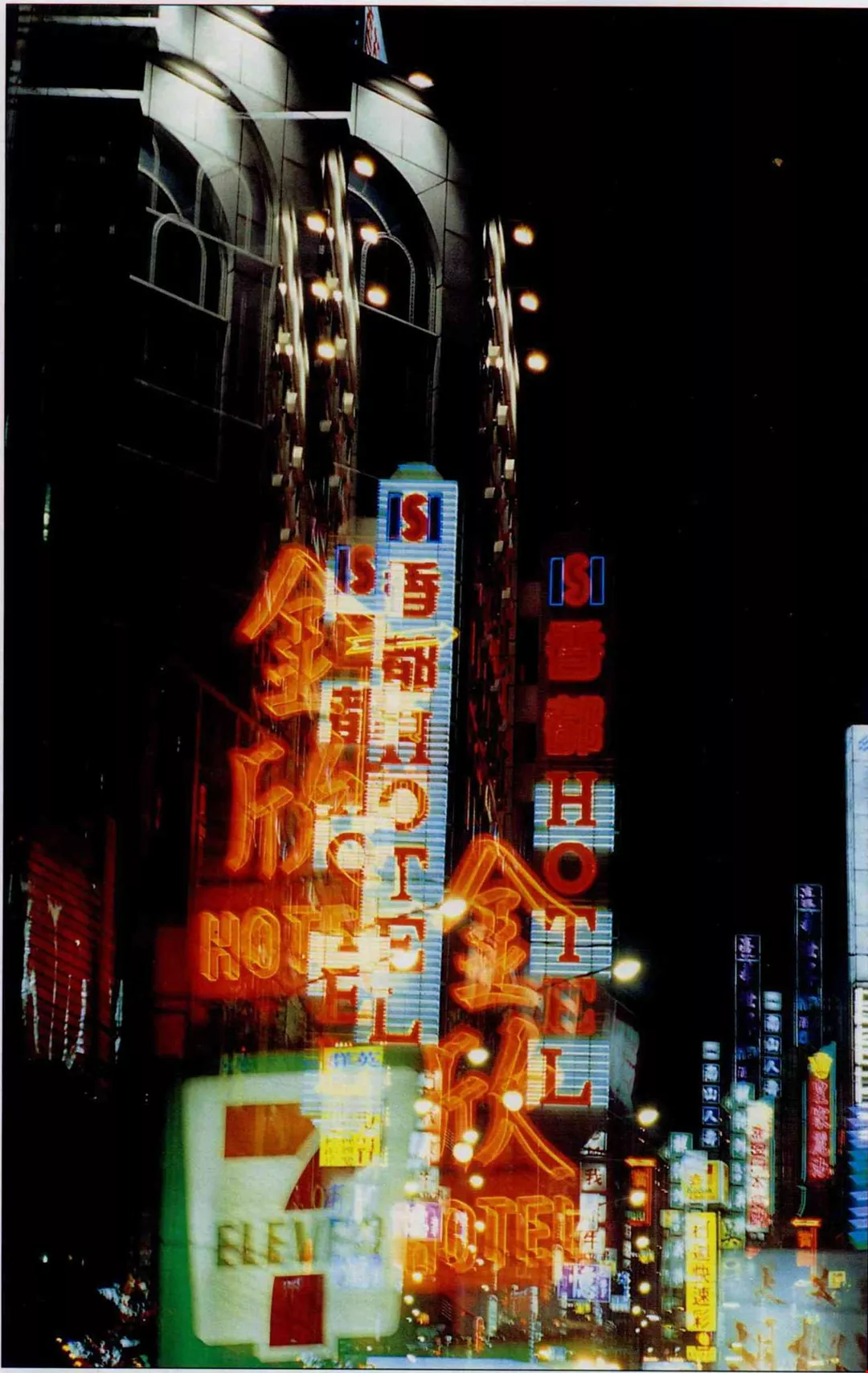
Under the flashing neon, "love hotels," hostess clubs and bars flourish all around us. Is the realm of extra-marital passion expanding?
The last taboo
What's going on here? Many members of the older generation just can't figure it out. Mrs. Hsu, a 52-year-old housewife, has seen her son in front of the television set watching Mrs. Yinsey direct two models into a variety of sexual positions. And she's heard that her daughter, who has joined a women's study group at the university, has watched pornographic movies on campus and has marched on the streets shouting "I want orgasms." Mrs. Hsu is simply dumbfounded.
"I know that society is changing, but this sort of thing is for a husband and wife to do behind their bedroom door. To put this on television and shout about it on the street! After all, we're not foreigners, and such conduct shows not a trace of Chinese propriety." She's protested to her children only to be called a square. Her daughter retorted with some big theory about "Chinese women being sexually oppressed for too long."
The fact is that pornographic movies from Europe, America and Japan have been popular for years in Taiwan, and in the late 1980s cable TV brought porno videos into many homes. The social observer Yang Chao says that it was no accident that The Kinsey Report sparked a wave of sexual studies. In fact, he argues that pornographic movies and magazines have long made sex a big issue in this seemingly conservative society of Taiwan. "Sex is no longer a just a personal matter for behind closed doors. The explicit scenes of sex in movies serve as a kind of model, giving people psychological burdens, making them want to think about sex, talk about it, and see how others do it."
And in society at large, there is an undercurrent of extra-marital sex affecting many people's lives.

Pornography on video and CD ROM may satisfy the curiosity that modern people have about sex, but it doesn't accurately depict relations between the sexes.
What goes on in the love hotels?
The motels and "love hotels," which have hourly rates and have been sprouting in cities and towns all over Taiwan for over a decade, are hard to ignore.
"Do you think that those places are patronized by married couples?" asks Bold Women author Ho Chun-juei, an associate professor of English and American literature at National Central University. "Think again. And as long as we're on the topic of spaces available for extramarital sex, don't forget the inside of a car."
A private detective who works in Ilan, says that he goes on assignment to catch people in the act of adultery at least once a month in a motel there that has been open for only half a year. His record is 13 in one month. At NT$80,000 per bust, he boasts, "It's damn good pay."
"Taiwan's affluence is the main factor driving this sexual explosion," holds Ho. College girls today worship money, and tales are often told of those willing to play mistress to some middle-aged tycoon. More and more of the under-age urban prostitutes have taken their jobs willingly. And as traditional values loosen while people have money to play with, the space for sex and the desire for multiple partners expands. ROC law may prohibit extra-marital sex, but such liaisons are more popular than ever.
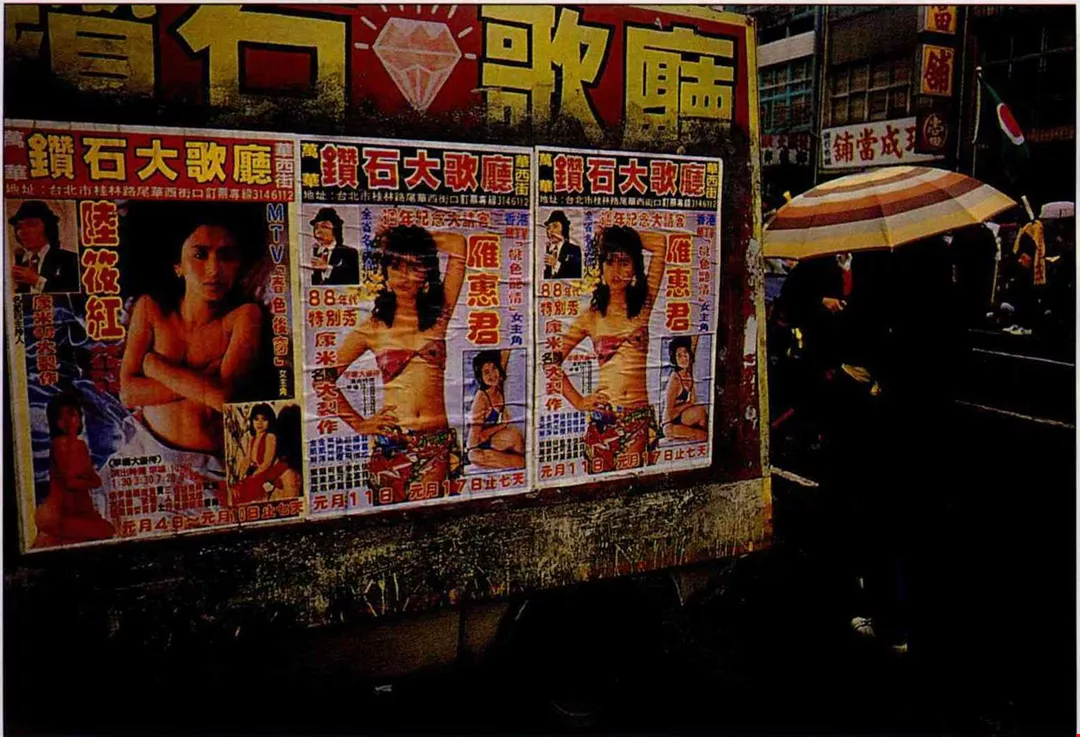
Striptease joints--or "beef markets" as they are known in Chinese--once boomed in towns and villages all across Taiwan. But the rise of pornographic video has spelled their demise. (photo by Chiu Sheng-wang)
Unable to escape the sun's glare?
But does this boom in sexual activity mean that Chinese sexual attitudes--restrained by confining ethical mores for so long--are finally moving toward openness? Not exactly.
Take Living Psychology Publishers, the company that puts out Teacher Chang. Ever since they've been putting out a steady stream of articles, books and commentary on sex, the editors have been under pressure like they've never felt before. Quite a few subscribers--parents and teachers chief among them--have raised a cry of angry protest:"Why are you putting out these sex books? What will happen if youths read them?" Some have even said that Teacher Chang might as well just go ahead and change its name to Dirty Teacher. Last August, to understand the sexual experiences of its Taiwanese readers, this magazine with a circulation of more than 20,000 distributed a sex questionnaire. It included questions about making love, masturbation, extramarital sex and orgasms. But they only got a response of some 200. "Most people aren't accustomed or willing to talk about it," says Chuang Hui-chiou, the magazine's senior editor, who wrote "The Taiwan Sex Report."
Little Fang, a 30-year-old reporter at another media company, says resentfully that her just taking part in a debate with colleagues about whether extra-marital sex was really a sin, prompted some of them to talk about her behind her back. "She must be very liberated sexually," they giggled, "or why else would she want to discuss it?" Among those laughing was one married male executive who often meets with "lady friends" at love hotels. "For him of all people to get his rocks off with this kind of gossip. Where does he, a philanderer, come off using moral standards to criticize others?"
With the long-prevailing conservatism of this society, even if "underground" sexual behavior is more unfettered by the day and sexual topics all the rage in the media, "Discussion of sex is still just the province of scholars, or of people who write anonymous letters in academic mumbo-jumbo, or of small groups of like-minded people having conversations with each other," argues Little Fang. "But if I really go out in the bright of day and talk about sex with the people around me, what will others think of me?" Take Ho Chun-juei. After Bold Women was published under her name, she got a stack of responses from men who said that "action was better than talk." Some of the anonymous letters she got were simply too filthy to read. And a bookstore owner notes that many women brought Bold Women to the check-out counter hidden in a pile of "decent" books.
Liu Dalin, known as "the Chinese Kinsey," interviewed over 20,000 people on the mainland for his survey on Chinese sexual culture. He says regretfully that sex is the realm of mainland Chinese society that is darkest and most distorted. "Everyone is doing it, but no one can talk about it." The situation is the same in Taiwan.
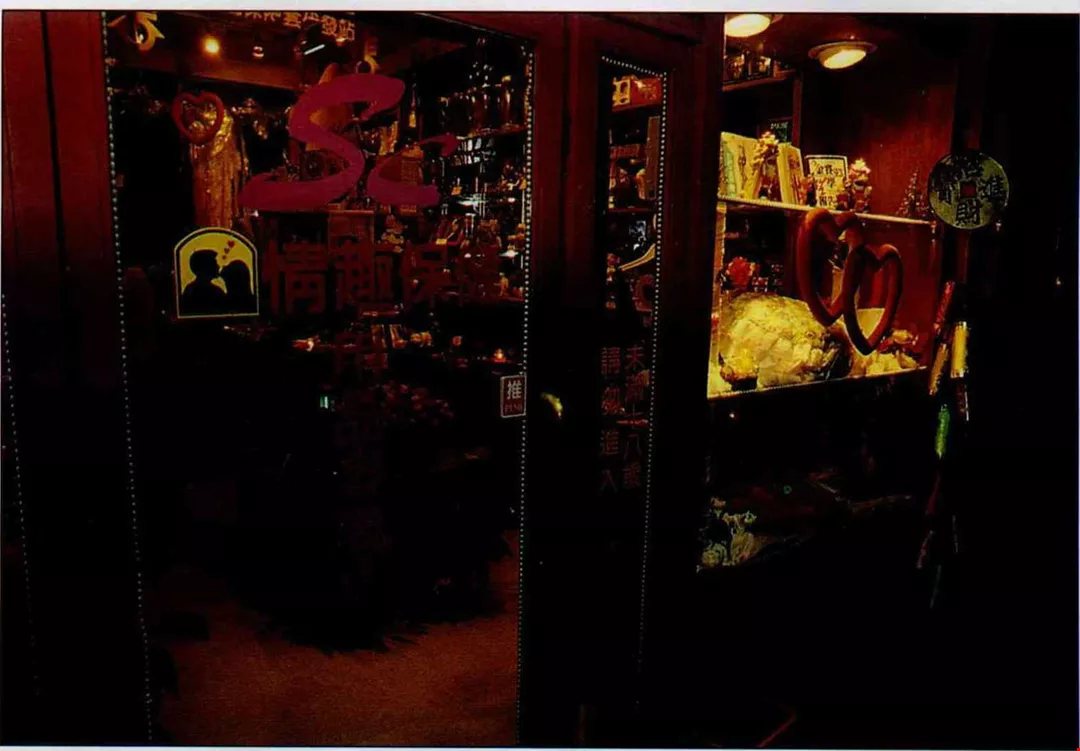
The humorously exaggerated goods on offer at sex paraphernalia shops reflect how modern folk are treating sex as a game.
Conservative attitudes, liberal behavior
Some people have described this age as a tug of war between conservative and liberal values. Although the model of marriage as the framework for relations between the sexes is under attack, those trying to hold off the Philistines are not without powers at their command.
According to long-term statistics kept about married women by the Taiwan Provincial Institute of Family Planning, the percentage of brides who are not virgins has risen from just 5 percent 20 years ago to over 30 percent last year. And so one out of three couples have "waited to buy their tickets until after boarding the train." Teenagers' sexual behavior is also more open. Department of Health statistics show that 1.6 percent of girls between the ages of 15 and 19 have babies. That's higher than in Japan, Korea or Singapore. Chao Hsiang-tai, an obstetrician at Veterans General Hospital, says that even 10 percent of Taipei's junior high students are sexually experienced.
But while behavior may be changing, the Formosa Trust's "Survey of General Trends among Taiwan Women in 1995" shows that over 70 percent of women still cannot accept sex before marriage or birth out of wedlock. While it may be ever more common for college kids to have sexual relations or even shack up together, 50 percent of college students still hope that their eventual marriage partner won't lose his or her virginity until the night of their wedding. And the number of men who want a virgin bride far exceeds the number of women who desire a virgin groom.
A decade ago, a student who had recently returned from study abroad killed his bride on their wedding night because she didn't bleed during intercourse. And recently Liu Hui-chin, an associate professor of psychology at Soochow University, carried out a study on how students behave when in love. He was surprised to find that the virginity complex still casts a strong spell. Many women, even those in bad relationships, refuse to break up because they think, "I'm no longer a virgin. Who else would want me?"
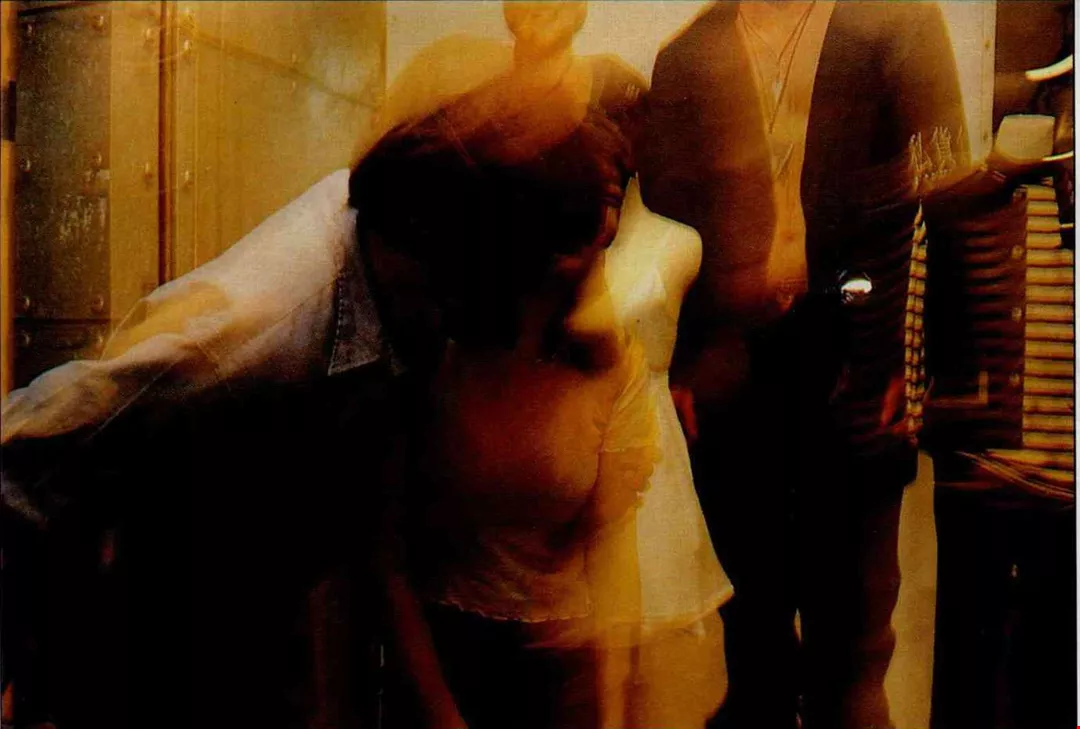
Teenagers have discarded their parents' shy ways. Seeing them kiss on th e street is nothing new. (photo by Hsueh Chi-kuang)
The first time
Many of the world's societies have virginity complexes. Research about sex on American college campuses during the seventies revealed that students held a double standard: They felt that women should hold onto their chastity, while men could play the field. After the women's movement, a 1986 survey revealed that attitudes had greatly changed. The "double standard" had been replaced with a "selfish standard." It no longer mattered how many previous sexual partners a prospective mate had "as long as I've had more." Liu says that compared to America, Taiwan is just taking its first steps toward such a transformation in attitudes. Although the belief "that sex means marriage" is on the way out, many women still try to avoid sex. And it is common for women who have already had sex to be racked by guilt. A 29-year-old computer programmer who has had sex with both her previous boyfriend and her current one says she feels she is "letting her parents down."
"In Chinese society, sexual mores are established within the context of marriage," Chuang Hui-chiou points out, "and so sex (especially for women) means love and marriage and is tied up with conceptions about family honor." Parents are also a major source of pressure in the realm of intimate relations between men and women. For Chinese, this isn't strange in the least. And it's such pressures that make many women think that they must choose between "good girl" and "deviant" behavior.
As far as the male of the species is concerned, "the first time" comes with overtones of "reaching manhood." According to Living Psychology's survey on sex, many men lose their virginity to a prostitute. "During military service," recalls photographer Lin Meng, "it's very common for guys to go hooting and hollering to a brothel together." He says that boys think of sexual experience as a rite of passage to manhood. It's something to show off about among one's peers. The fears for men are "Will she get pregnant?" and "Will I have to accept responsibility?"
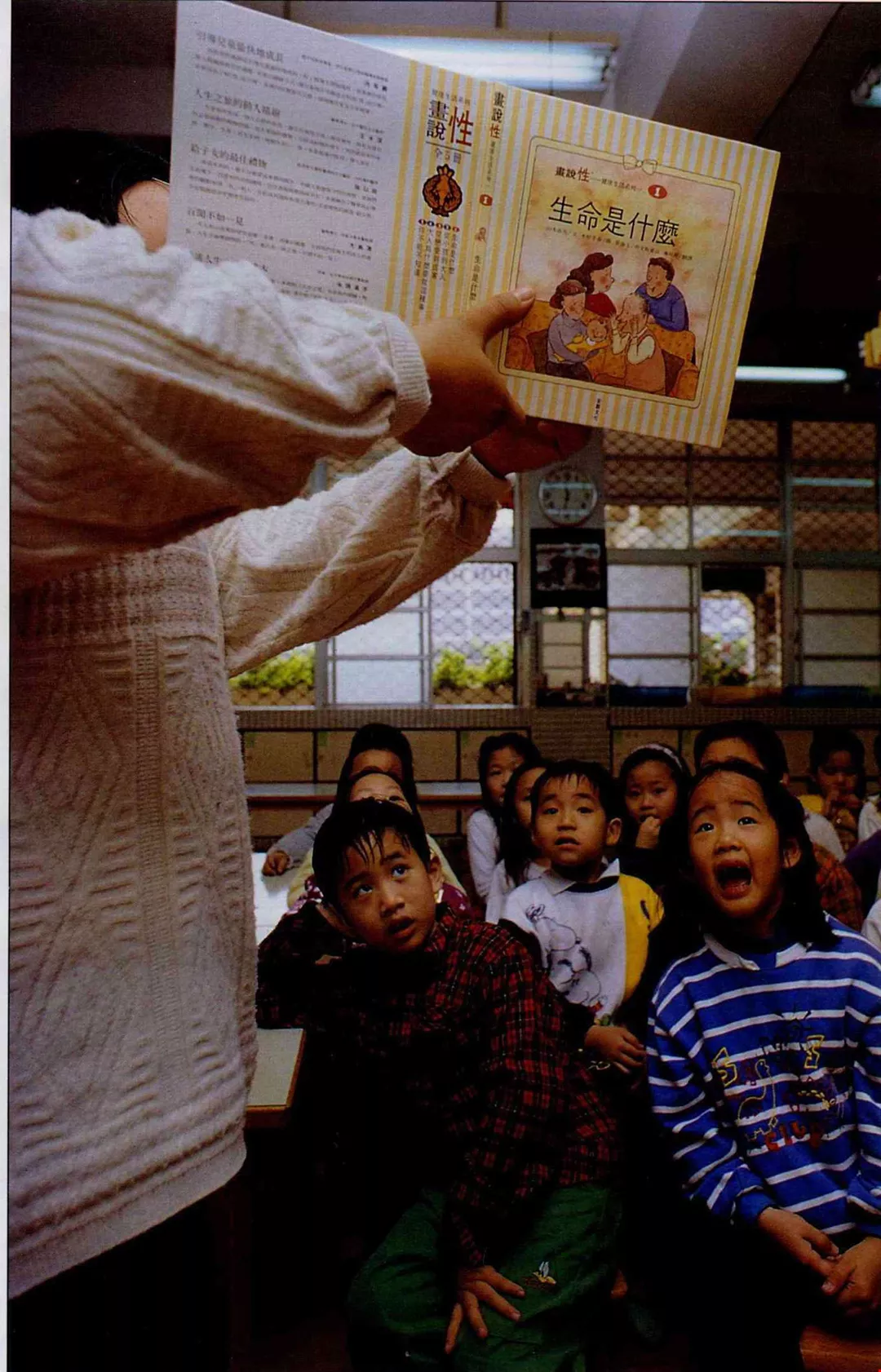
"Where do babies come from?" Sex is central to human life, but parents get headaches trying to figure out how to teach their children about it. (photo by Hsueh Chi-kuang)
Who's having the affairs?
After marriage, when there is no longer anything to be done about pre-marital chastity, remaining faithful to one's spouse is the sexual issue that provides the greatest moral challenges to modern Taiwanese men and women. In many big companies or government units, having an extra-marital affair is taboo, an offense that could cost someone their job. The Committee on the Discipline of Public Functionaries has indeed removed from office public officials who have been caught two-timing. And at the beginning of last year the Investigation Bureau clearly set out penalties for its employees found to be cheating on their spouses. Nonetheless, people are still fooling around all over the place.
Statistics show that adultery and bigamy are the most common reasons judges grant divorces in Taiwan. Women file for divorce more often than men, in a ratio of about seven to three. According to statistics complied by the "Warm Life Association" (a group that helps divorced women), husbands have had affairs in 70 percent of marriages that last 10 years or more (at least in the cases they deal with). And in a survey of Taiwanese families carried out by the "Chientai Foundation," more than 40 percent of respondents felt that their spouse "often" or "sometimes" has affairs.
But what exactly do these data say about the percentage of Taiwanese marriages with extra-marital sex? Because Chinese society traditionally believes that "husbands can be promiscuous, but women must remain chaste," the lopsidedness in male and female behavior is probably even greater than the above statistics suggest. A 65-year-old CEO, who has been married for 40 years all the while continuing to enjoy the company of young girlfriends, says that men out with the boys on a business night compete not over the relative size of their bank accounts but rather over the relative youth and voluptuousness of their girlfriends.
Yang Chao says that most men believe they can separate love and sex, marriage and affairs. The vast majority of men with mistresses have no intention of giving up their homes and wives.
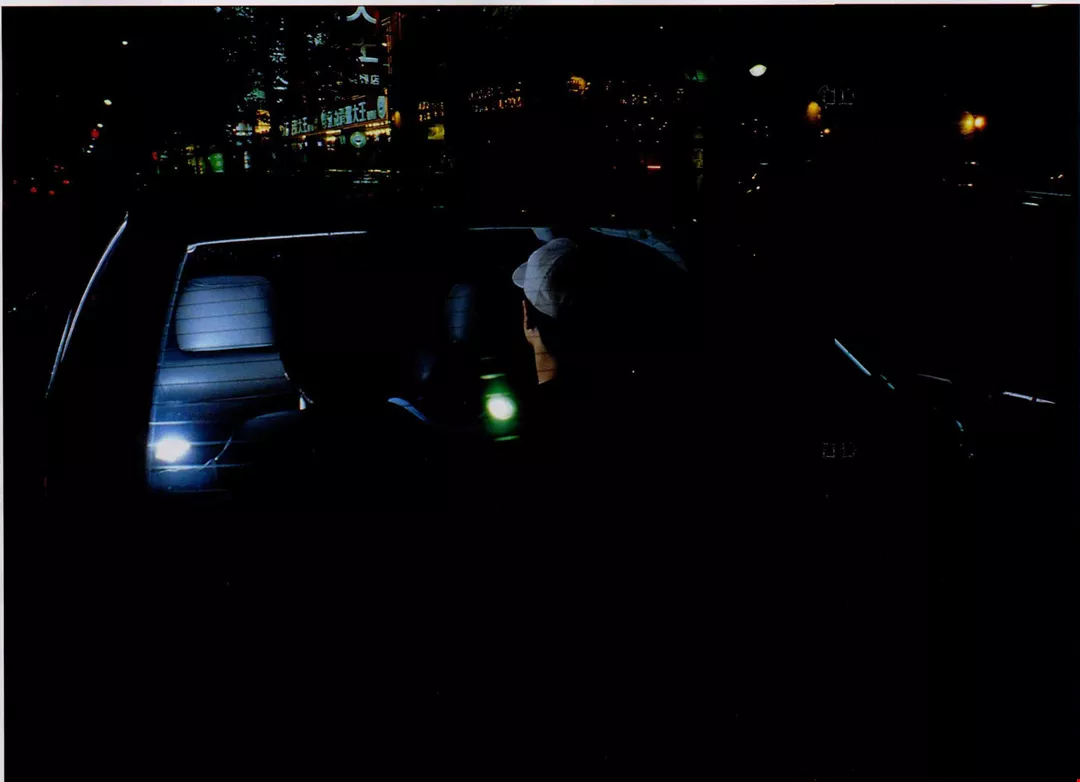
Traditional society's separation of the sexes is no longer practical for modern, open society. What new code of sexual ethics will be adopted? People on all sides of the debate agree that new trails must be blazed.
Women's struggles
And this is exactly what many women find difficult to understand. Many women psychologically can't accept having a less-than-perfect marriage. But in Taiwan's society, still traditional in many respects, where men's affairs are more accepted and divorce law still denies divorced women financial security and custody of their children, many women, for financial considerations or for the sake of the children, set about with mixed emotions to win back their husbands' hearts. They work out or take classes to cultivate some skill, or even try buying sexy underwear. "But it's difficult to say whether they can recapture their husbands' hearts. With no other channels for emotional release, women at this point will often finally realize the reality of their position," exclaims Liu Hui-chin, who has been focusing on women's problems for several years. This realization will bring many women to question whether being married presupposes maintaining faithfulness to one's spouse.
The changing sexual mores are providing temptations for women as well as men. A forty-something swimming instructor, who has consciously resolved not to marry, has many secret lady friends. All have already married but have husbands who are either absent, impotent, or having affairs. From right off the bat, the nature of their relationships is clear:"We are just having sex and don't want to endanger their marriages." Because this swimming instructor is well built and good-looking and provides "a tasty treat without any mess afterwards," wives even introduce him to their girl friends.
But wives who pursue extramarital sex in this society are still in the minority. Chuang Hui-chiou believes that because traditional Chinese precepts about faithfulness teach that a husband is "the sole man in his wife's life," many women believe that sex means sex with their husbands, and they can't even conceive of having an affair. They will even go to the extreme of denying their need for sex.
Male anxieties
But men have their own sexual hang-ups.
Porno movies, sexy lingerie, and all assortment of sexual paraphernalia help to get modern people sexually stimulated. But the advance of romance and proliferation of sexual techniques has brought a swelling of anxiety. Many men, comparing their own skills in bed to the god-like marathon sessions on screen, think that they have problems. Quite a few even go to the hospital for consultations.
But Chang Pin, a 30-year-old who works as a programmer for a computer company, thinks that modern men need not worry much about being "strong, bold and ferocious." Rather, in today's era of sexual equality, "money" tops the list of manly concerns. "If you have money," he says, "you'll have women."
Yang Chao, who once ran "The Men's Sexual Workshop" and is now writing Phenomena of the Taiwanese Male, has discovered that men are now most worried about their declining power and authority.
"Now that women are running neck and neck with men in schools and at the workplace, there is growing consciousness about sexual equality, and many men are aware of losing the authority that their fathers had," Yang Chao says. "They have, for instance, lost the right to have affairs openly and bark orders and lose their tempers in public." But the problem is that from a very young age Taiwanese boys and girls go to different schools or sit in different classrooms and are prohibited from having any interaction with the opposite sex. The result is that even down to the present day, when the stress is on equality and not power struggle, the biggest problem men face is "not understanding delicate female emotions and moods." This is a basic point of conflict in many relationships today.
Over the last year, such famous women as the actress Hu Yin-meng and the businesswoman Yin Chi have stood at society's cutting edge by having children out of wedlock and boldly building single-parent homes. Their actions have shaken traditional notions. Now men are wondering, "Does this mean that we are going to be reduced to being 'stud bulls'?"
Confusion about love and sex
In Taiwan, as the old order--be it political, economic or social--has been unraveling, value systems and the rules for playing the game have been in flux. Relations between the sexes are no exception. Sexual relationships have been growing more diverse and complicated, and women's groups and academics have been calling for people to stop and think.
Ho Chun-juei has been at the center of a storm of controversy for nearly a year now, and many consider her views on sexual liberation "social poison." But she defends her position, saying that she has been examining the problem of women's sexual oppression for a long time. She served as host of the "Sexual Mood Workshop"; held long, probing talks with eight women over 12 weeks; and thought deeply about women and sex before urging Taiwanese women to achieve sexual self-realization. "In Taiwan enjoyment of sex has already become quite open, but women are still ensnared in conflicts and contradictions," she says. "These are long-term social and psychological restraints."
In Bold Women, she breaks apart various traditional Taiwanese sexual conceptions, such as the virginity complex and the logic that says "the man wins and the woman loses" in sexual liaisons. She examines carnal pleasure and confusion over such issues as faithfulness in marriage. Her brazen call for sexual liberation really means "breaking the autocratic nature of sexual relations, allowing everybody (and every body) to hold their head up high." And she wants an end to people being universally condemned and discriminated against for being homosexual or having pre-marital sex, extra-marital affairs, multiple sexual partners or a child outside of wedlock.
In order to get rid of the "sacred face of marriage," women's groups have recently orchestrated a series of activities advocating revision of the laws. They want to remove the civil stipulation that says if adultery is the legal cause for divorce, then the offending party is forbidden from marrying his or her partner in sin, and they are working even harder at decriminalizing adultery. Their positions have led to many angry telephone calls from first wives. The Awakening Foundation holds that the basic quality of marriage ought to be "two independent beings deciding to spend their lives together." When modern women are stressing their independence and authority over their own bodies, it's time for people to reflect on the very nature of marriage and relations between the sexes.
As opposed to the various radical theories that women have brought forward, Yan Han-wen, the administrative director of the Hsingling Medical Foundation and a professor of public health at Taiwan Normal University, argues that deep down people are most worried about loneliness, not sex.
"The biggest sexual difference between people and animals is that for humans sex is built on a foundation of emotion and responsibility," says a woman senior executive who works in the media. Modern people's sexual lives look very messed up, but many a couple maintains a good emotional relationship over long stretches of time without any sex at all. Sometimes this is a result of physical problems, but more often than not it is because a couple must be separated for reasons of work or education. Many people so separated, out of a desire to keep a good relationship with their spouse or in consideration of their family responsibilities, show determination to stay sexually abstinent through the course of their spouse's absence. Whether for men or women, human sexual behavior cannot be purely weighed in biological terms.
Tolerating all kinds of possibilities
"In the 1970s, while America was being sexually liberated, it was fashionable to sleep around and swap husbands and wives," says Yan Han-wen. "But now, 20 years later, although the divorce rate remains high, the sexual unit of one husband and one wife is still the mainstream of American society." Yan holds that Americans' return to this norm after passing through sexual liberation proves that ultimately people look to their marriages to find a sense of belonging. Must Taiwan make its own mistakes and follow in America's footsteps?
Chuang notes that sexual liberation completely transformed American society. From one marriage per person, it became a society of multiple marriages, where those shacking up together or divorced endure less pressures and kids can live happily with a parent, a step parent, step-siblings and half-siblings. "It may be that the single husband and wife structure will still be the mainstream, but can society tolerate other possibilities?" Chuang asks. Sexual liberation is a strategy for social change, she believes. Its goal is to break traditional structures, to create more possibilities.
The age's big wheel of liberal diversity is turning. As sexual taboos are falling, where will the changes in the rules governing sexual relations lead? The debate about sexual liberation rages, but perhaps people will only be able to provide solutions to change after going through it.
[Picture Caption]
p.85
Women's groups, advocating that women exercise control over their own bodies, have taken to the streets to protest sexual harassment. (photo by Diago Chiu)
p.86
Under the flashing neon, "love hotels," hostess clubs and bars flourish all around us. Is the realm of extra-marital passion expanding?
p.87
Pornography on video and CD ROM may satisfy the curiosity that modern people have about sex, but it doesn't accurately depict relations between the sexes.
p.88
Striptease joints--or "beef markets" as they are known in Chinese--once boomed in towns and villages all across Taiwan. But the rise of pornographic video has spelled their demise. (photo by Chiu Sheng-wang)
p.89
The humorously exaggerated goods on offer at sex paraphernalia shops reflect how modern folk are treating sex as a game.
p.90
Teenagers have discarded their parents' shy ways. Seeing them kiss on the street is nothing new. (photo by Hsueh Chi-kuang)
p.91
"Where do babies come from?" Sex is central to human life, but parents get headaches trying to figure out how to teach their children about it. (photo by Hsueh Chi-kuang)
p.92
Traditional society's separation of the sexes is no longer practical for modern, open society. What new code of sexual ethics will be adopted? People on all sides of the debate agree that new trails must be blazed.


