Wager Mania-- The Chinese Love Affair with Chance
Jenny Hu / photos Vincent chang / tr. by Phil Newell
January 1995


The Encyclopedia Britannica says, "Undoubtedly those most passionate about gambling are the Chinese and Southeast Asians." However, that's not necessarily the case, at least according to research by Chiu Hei-yuan of the Academia Sinica. As the author Szu-ma Chung-yuan has said, there is no distinction between East and West, or between ancient and modern--" all people have the instinct for wagering."
Maybe the yen to gamble is not an exclusive trademark of the Chinese. But when you look at history, Chinese have in some ways taken gambling to extremes beyond the reach of other peoples.
In Hong Kong, there is a rather mystifying schedule for many weddings: "Show up at 4, and take your seats at 8." It turns out that "show up" means to come for mahjong games in which the friends and families of the bride and groom can spend some time together. It is not unusual, in fact, that people find it hard to tear themselves away from the games at 8:00, and it is 9:30 before they finally serve the banquet.
For Chinese people, gambling is a normal part of life.
The racetrack in Hong Kong is open from October to June, during which time it ordinarily attracts more than one million racegoers. There are people all over the place reading their racing forms, with their ears hooked up to headsets tuned to the race call. It is said that there was once a hairdresser at the Chinese University of Hong Kong who was so enamored of playing the ponies that students never got their hair cut on race days for fear the stylist would lose money and then vent his anger on their heads. The vast amounts staked on pari-mutuel betting allow the charitable associations who depend on horse racing for their incomes to accumulate quite a fund for social services.
In Auckland, New Zealand, a contractor built 33 housing units in the vicinity of a casino, and sold them all out within two days. It is said that the buyers were all Chinese, 17 of them households from Tahiti. Many Chinese in Tahiti are in the habit of spending their summers in Australia or New Zealand to escape the heat, and it is easy to speculate why so many bought their vacation homes next to a casino.
Gambling is against the law in Taiwan, yet can be found everywhere. In the mid-1980s, private operators used the winning results for the National Lottery to run their own numbers game, called tachiale, which drew in three million players. After the lottery was suspended, the operators brought in liuhetsai, another lottery, using numbers from the Hong Kong Horse Racing Association. It is estimated that NT$40-50 billion has been bet on liuhetsai in Taiwan. In addition, there are many parlors with electronic video games of chance, while dog racing and "fighting fish" operate underground. Lately the ROC Amateur Association has been making plans to do bicycle racing. So irresistible does the passion for gambling seem that many local governments have asked the central authorities to simply legalize it so that the former can get the tax revenues and centralize the sites. For example, the Taipei City Government had a plan to turn Shetzu Island into Taiwan's Las Vegas; a financial group had ambitions to build a horse track on the Kuantu Plain; and the islands of Penghu and Kinmen have floated plans to set up casinos (the latter even suggesting a "front line tunnel gambling hall").
Unlike nuclear power stations or garbage landfills, which nobody wants in their own back yard, casinos could very well be the most welcome "infrastructure" for local governments and citizens across the island. The Legislative Yuan cannot avoid the subject. Recently the "Draft Bill for Regulations Governing Tourist Gambling Locations" was formally tabled for discussion.
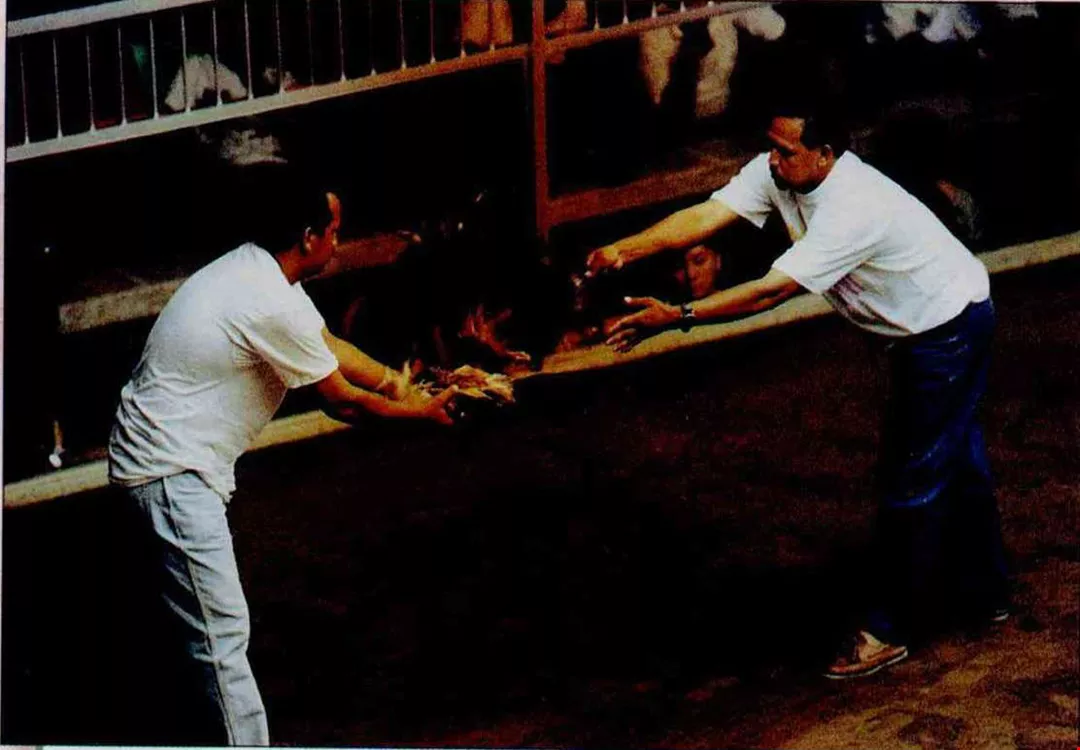
Cock-fighting is a popular focus of betting in the Philip pines. (photo by Li An-pang)
Are Chinese the kings of games of chance?
The Encyclopedia Britannica rates the enthusiasm for gambling among Chinese as right up there at the top of the world, alongside the Southeast Asians. One reason the latter are so renowned for punting is that before World War I many countries in Southeast Asia (for example, Thailand) got most of their revenues from taxing legalized betting. As for Chinese, it is said that before the Communists took power rural families in some provinces spent as much as a third of their money on gambling debts.
Yet Chiu Hei-yuan, a researcher in the Institute of Ethnology of the Academia Sinica, says that the encyclopedia's statement about Chinese is based on a misinterpretation of evidence. In 1930, the American author Pearl S. Buck did a survey of the spending patterns of 2,866 rural households, dividing expenses into the categories of food, clothing, rent, and so on. One item was "personal spending." It was discovered that 23% of personal spending in northern China and 40% in eastern China went for "gambling." Therefore the idea that one-third of expenditures went into games of chance only applies to the minor item of "personal spending," not to total household outlays. Yet, he adds prudently, "this is not to deny that Chinese have a real fondness for gambling."
Are Chinese really risk-takers? Szu-ma Chung-yuan, who call himself "a gambler," says that this is only an impression. "Gambling is a common ailment of all mankind."
The history of gambling goes back a very long way. Archaeologists have discovered something resembling dice in 40,000 year old ruins, and it is known that these were quite popular in games of chance for the ancient Greeks, Romans, Arabs, and Native Americans. Six-sided dice appeared in Iraq and India at least 5,000 years ago. Right now the most popular games of chance in the West are roulette, craps, slot machines, various types of card games, horse racing, and officially sponsored lotteries.
"Chinese love to gamble, and so do Americans," says Szu-ma, who recalls an experience related to him by one overseas student: An older American woman had her chips on six tables at once, and didn't even stop gambling when she urinated in her pants.
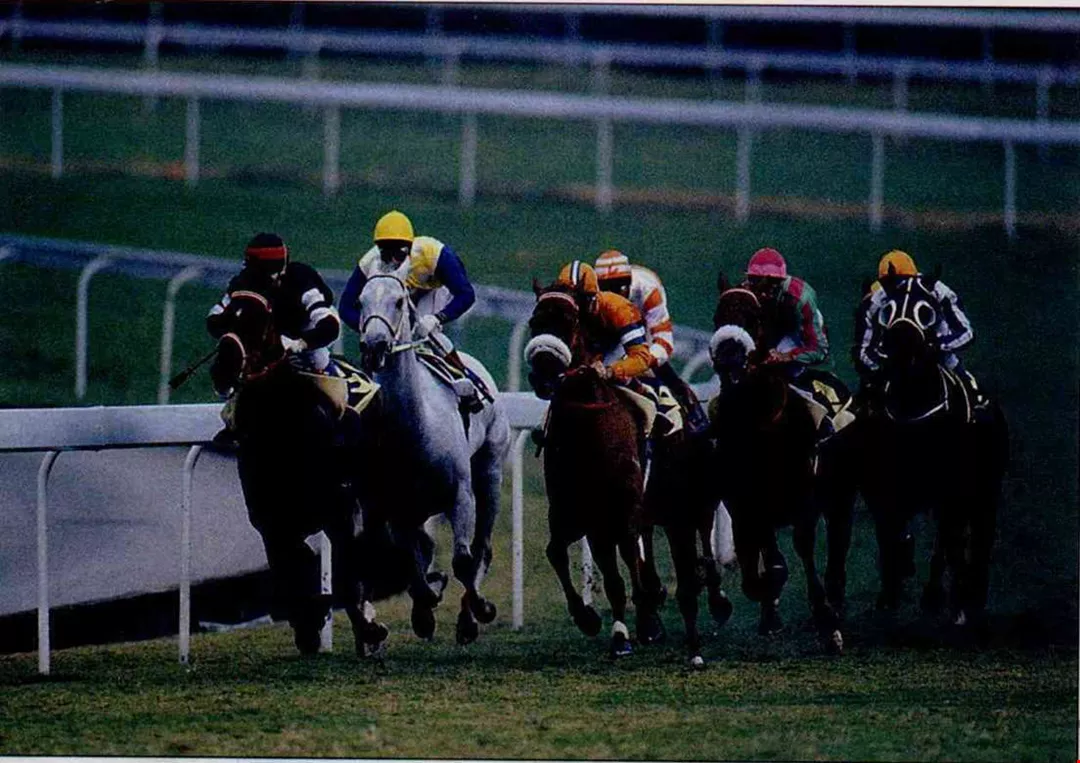
The Hong Kong racecourse draws one million visitors per year. (photo by Li An-pang)
National recognition through gambling
Though it may be that all human beings are inclined to gamble, it is a fact that Chinese get a lot of attention from gambling dens around the world. For example, it is almost impossible to find the flag of the Republic of China on display in the US. Yet, reports one overseas student, when you get to Las Vegas, the white sun against the blue background proudly stands in the display of the rankings of amounts gambled by citizens of various foreign countries. In addition, almost all of the people who sign up for the "gambling tours" sponsored by American casinos are Chinese Americans.
In the last decade, "money games" (especially stock and real estate speculation) have been rampant in Taiwan. This has led some to reinterpret the acronym ROC as standing for "Republic of Casino." And a number of foreign gambling centers like Las Vegas and Macao have set up offices in Taiwan to try to tap into the extravagance of Taiwan tourists who enjoy gambling.
Of course, the passion for punting is not a new thing in Taiwan. Local gazetteers from the Ching dynasty relate that one thing Taiwanese of all social classes had in common was a love of gambling. The losers ended up broke, and the winners kept gambling until they were busted as well. An old Taiwan County Gazetteer states that there were countless varieties of wagering, and that young and old alike knew the rules to all of them. It was a common sight in the marketplace to see ne'er-do-wells gaming in the street, with the losers reduced to thievery just to get the money to go home. Eventually the government had to ban gambling, and only then did the fad fade.
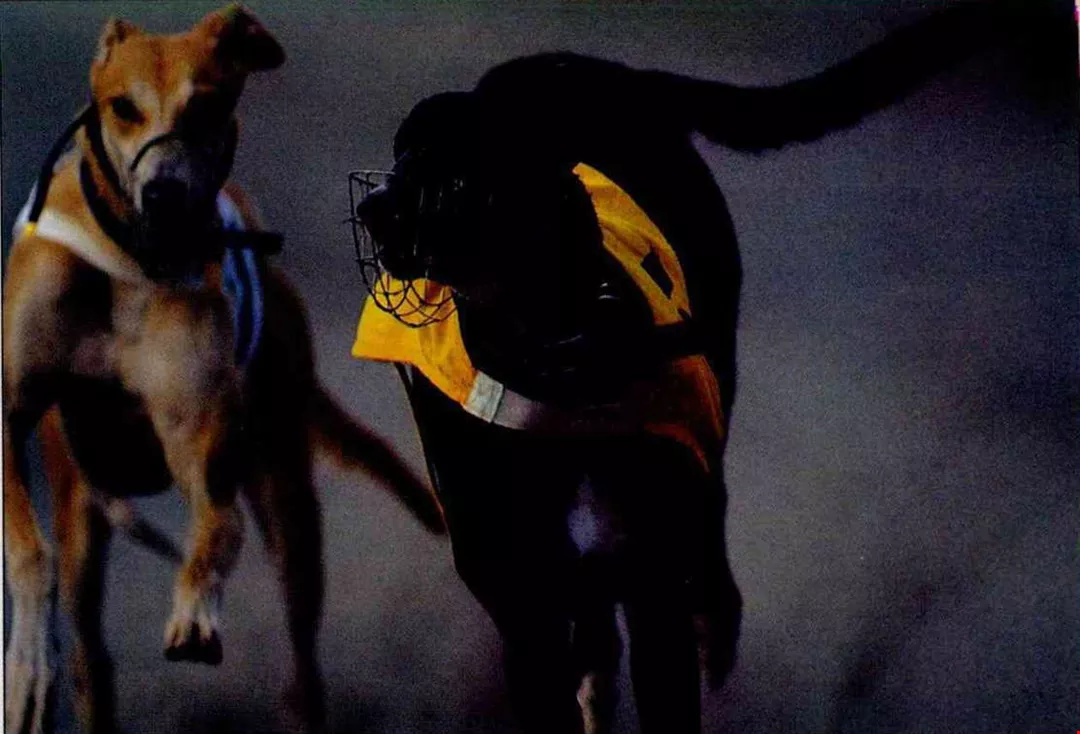
Dog racing is highly ferocious, and the people outside are no less ferocious about their wagering. (photo by Li An-pang)
Divine intervention
Just how strong is the inclination to gamble? In the West, pious folk would not call upon the Lord to work a miracle at the roulette wheel, but all Chinese think it a matter of course to seek divine guidance in games of chance.
When tachiale was at its peak, some temples gained a reputation for "revealing the right combination." No matter how remote and inaccessible the location, people would come from far and wide, at all hours of the night, to appeal to those temples' deities. And if the bettors really did hit the jackpot, they would hire a tour bus and a performance troupe and take the whole party up to the temple to make offerings, celebrate, and "thank the gods for their beneficence." The owner of a shop in Sanyi (a township in Miaoli renowned for sculpture) relates that popular demand for carvings was so great at the height of tachiale's popularity that all of Sanyi flourished.
It was not only deities that became objects of interest. It was said that the winning numbers would appear on strangely shaped rock formations, or that deceased family members would pass along numbers through the cracking of the family tombstones. There were even cases of witnesses to an auto accident crowding around to watch the direction of the flowing blood in the belief that it could provide some clue....
Hu Tai-li, a researcher at the Institute of Ethnology at the Academia Sinica, has looked into the relationship between religious belief and games of chance. She discovered that, although lotteries and numbers games exist in many other countries, in no cultures besides the Chinese have people developed the habit of appealing to otherworldly beings for assistance. For example, in Malaysia there is a game in which players must guess four letters, yet only the Chinese of that country resorted to seeking divine intervention. This seems to be a feature unique to Chinese punters.
In fact, the mixing of the worlds of men and of spirits for games of hazard existed in the Ching dynasty. They had one game, called huahui, which was just as popular as tachiale was in its heyday. A contemporary account, Ching Pailei Chao (Unofficial Historical Anecdotes from the Ching Dynasty), relates that the disease of gambling was so widespread that "gentry forgot their duties, farmers missed their seasons, and merchants lost their skills." The game became popular in the Huangyen area of Zhejiang in the Taokuang reign (1821-1851). The rules were as follows: First, the names of 34 famous people of old were written down. Then the game master would select one at random, and place it in a box. Then the players would bet which one it was, with the winner taking home 30 times the original wager. People could bet a few tens of dollars and take home hundreds. Because the wagers were small, and the winnings enormous, the game soon became a "movement of the entire people," sweeping across Shanghai, Guangdong, Fujian, and Taiwan. It eventually evolved into a game which required the correct guessing of 20 characters out of the Thousand Character Classic.
People of all classes and both sexes played huahui. There is a story of a woman in Chaozhou, in Fujian Province, who nearly bankrupted her family playing a 36-name version. For the whole year she always bet on the same name to come up, and lost every time. She took her last remaining money to the lottery operator and told him she wanted to place one sealed bet on each of the 36 names. Unfortunately, it turned out that she only brought 35 envelopes with her, so she had to leave one name uncovered. The operator arranged that the 36th name came up so the woman would lose everything. Yet when the sealed wagers were opened, she had the last laugh: All of the envelopes had their money riding on that 36th name!
During the Kuanghsu reign (1875-1908), the governor of Zhejiang and Fujian wrote a memorial to the throne. He said that the players' propensity to seek otherworldly assistance for gambling was leading to the mixing together of men and women, cheating and debauchery by the criminal element, and even murder and armed conflict, greatly harming social order.
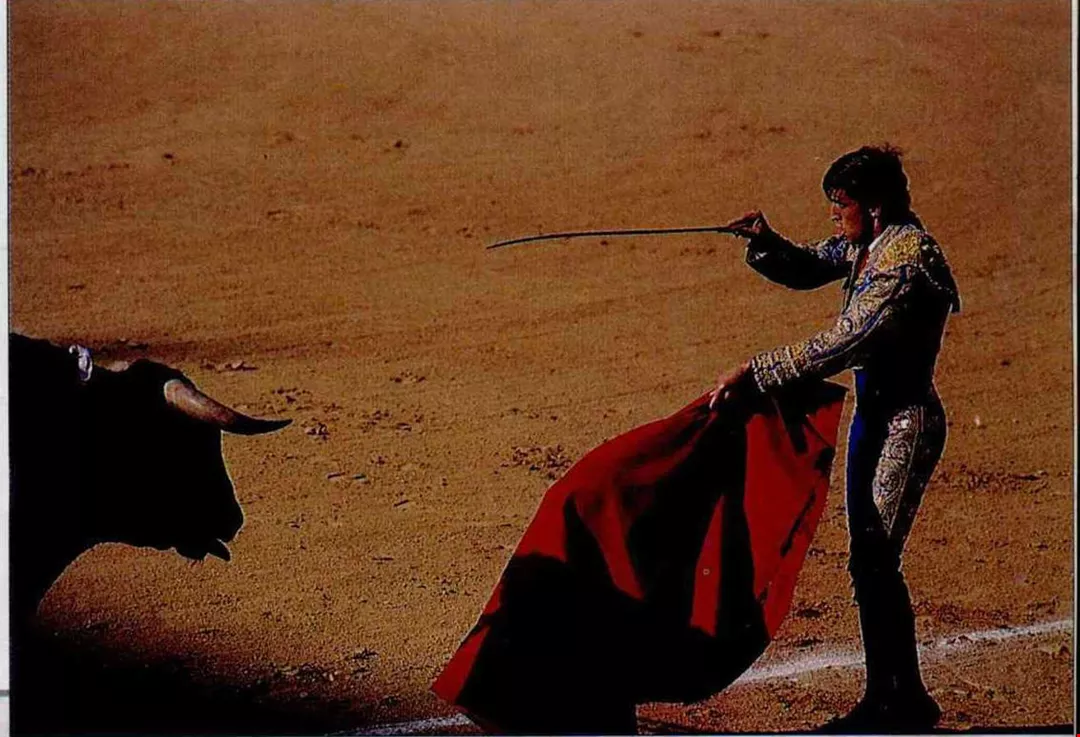
Wherever there is competition, there will be gambling, and the bullfighting ring is no exception. (photo by Cheng Yuan-ching)
Willingness to take big risks
The writer Chang Tsuo argues that Chinese have another special feature that foreigners cannot rival: the courage to take big risks in gaming.
When he was small, at his home in Hunan Province, the late poet Hu Chu-ching once saw a drifter cut off his little finger to lay down a wager. He then hit the jackpot, infuriating the boss of the gambling den. Not willing to be outdone, the boss cut off his finger as the "winnings" for the gambler. The two men then proceeded to cut off their ears and noses, until the table was covered with body parts and the two men collapsed to the ground.
There was another game in the Ching dynasty called niupai, specially for people without a penny to their names--and also without fear of death. If they won, they could take home large sums of cash. But if they lost, their families would have to ransom them; otherwise they would become slave labor. Many unfortunates were worked to death or sold off.
For those who lost all reason, not only would they lose all the family property, they would even wager their wives and children. Unthinkable as this might be to modern Westerners, with their emphasis on individual rights, it was not uncommon in traditional Chinese society. Even today, it is not considered astounding to see reports of wives forced into selling their bodies or daughters sold to child prostitution rings in order to repay gambling debts.
In fact, no matter what the type of gambling, except for cases of outright cheating, luck always predominates over skill. But luck is, after all, a matter of fate. Chinese gamble much, and lose much. Therefore, many Chinese have a subconscious desire to see a super-gambler of incredible abilities, able to manipulate the outcome of the game. Five years ago, the Hong Kong film "God of Gamblers" was released. Its hero, played by screen giant Chow Yun-fat, was a gambler of exceptional skill who could not be matched by anyone. Overnight the character became an idol for Hong Kong and Taiwan audiences. In Taiwan alone the film grossed NT$120 million, a record still unmatched. It was followed by a wave of imitators, all of whose heros fascinated and delighted ordinary gamblers.
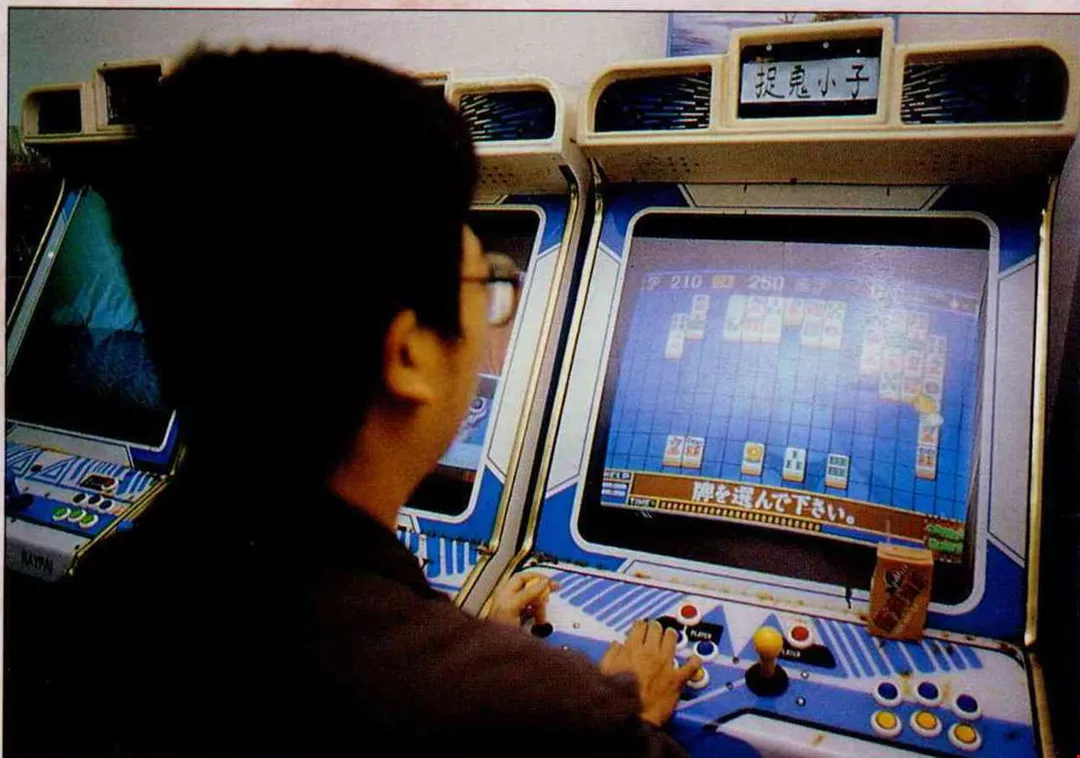
Mahjongg has already made its way into video games.
Why gamble?
Why do people gamble? Besides the thrill of seeing winning or losing decided in a fiash, there are also more pragmatic reasons. For most people, hitting the jackpot is the fastest road to riches.
Wealthy people, on the other hand, don't care much about the money. They love the sensations they get from the expectation, the tension, and the revelation of that final card. They also are in search of the thrill of "winning when all around them lose." Moreover, gambling is also a demonstration of their wealth and their social status. Nobility in the Tang dynasty enjoyed playing yehtsuhsi (a card game). One of the princesses was so addicted that her servants had to keep her room lit up like daytime round the clock so she could play.
In official circles, gambling was an essential part of making social contacts, so long as one knew when to win and when to lose. The Empress Dowager of the late Ching dynasty loved playing mahjongg, and often invited the consorts and princesses of the palace to join her. She most favored two daughters of a certain duke, for the two young women were also adept a "the politics of playing mahjongg." They arranged to have palace women stand next to the Empress Dowager and signal what tiles the Empress held so that the girls could deliberately allow the Empress to win. When she won, the two girls would hasten to congratulate her. When she then seemed too embarrassed to take the money of younger people, the girls would kneel down, kowtow, and beg the Empress to accept it from them. The Empress, easily moved by flattery, would then grant them some official favor, so that in the end they came away with profits far in excess of their losses at the mahjong table.
The gambling of literati was much more cultured. They competed in fine arts (like horticulture, chess, painting, and poetry), and ended by toasting one another. In the Sung dynasty, the married couple of Li Ching-chao and Chao Ming-cheng would make tea at home, then decide precedence in drinking the tea by pointing at books and betting on what was on a certain page in a certain volume. They wagered for fun, and for romance, taking gambling on to another plane.
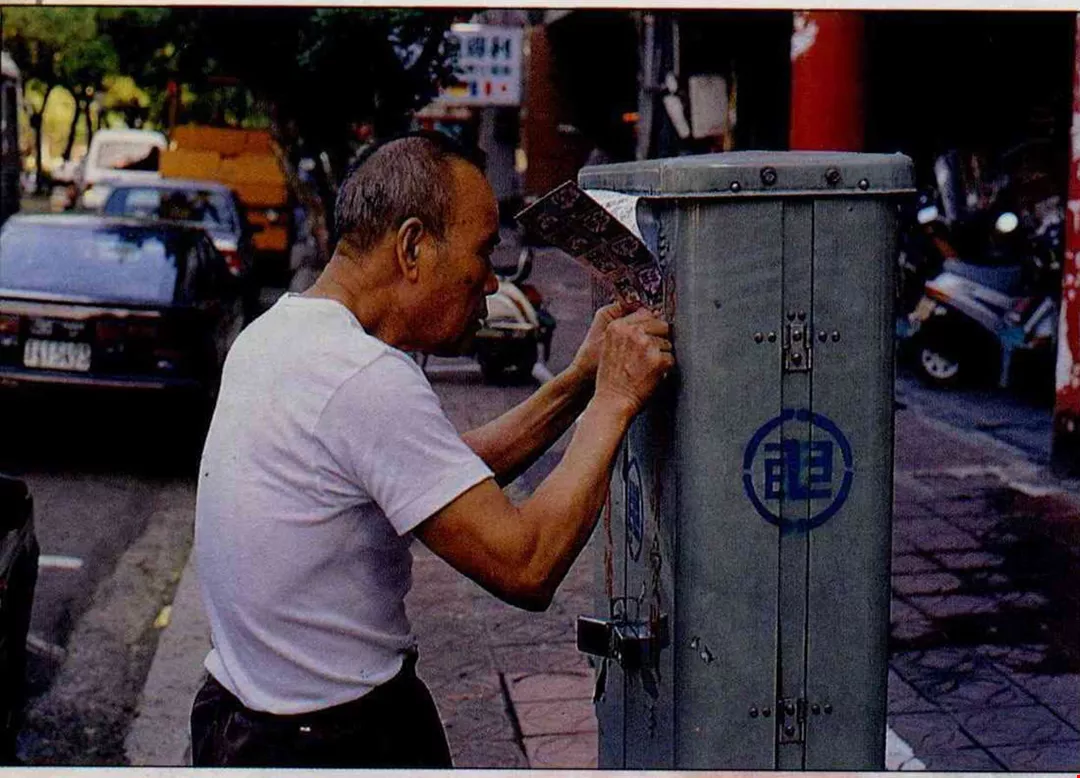
Five years ago the Taipei City government ran three rounds of a lottery using scratch-off tickets, and many people could be seen scratching away by the side of the road.
A test of character
The most impressive thing about the Chinese is their willingness to gamble on anything. If they lack the props for a game of chance, they wager on life itself. They can bet on the success of the ROC national baseball squad, on the dragon boat races, or on the winner of the next election; they will play dice with the street vendor for a sausage; or they can even bet on whether their next grandchild will be a boy or a girl. In ancient times the emperor had 3000 concubines, and they would bet on "who the emperor would take to bed tonight...."
Many Chinese have heard people arguing on the street using the expression: "I'll bet you--and if I lose I'll cut off my head and give it to you." It seems like the passion for gambling is part of the subconscious of the Chinese.
However much they love gambling, Chinese also emphasize the ethics of the game. It is said that "one should choose a son-in-law at the gambling table," because that is where one can see the true character of another in the face of sudden gains or losses.
"Low-class gamblers give the sport a bad name, they waste themselves on betting and lose their ambition for anything else, and they even gamble away their wives and children. Gamblers of character do not care much whether they win or lose, and they 'punish' themselves with a drink for their losses," says Szu-ma Chung-yuan. The nature of the game differs with the nature of the player. In the game of life--a game of chance if there ever was one--how will you choose to play?
[Picture Caption]
p.29
Is "love of gambling" a "trademark" of the Chinese? Not necessarily. But no one will dispute that you can see groups of Chinese at all the world's famous gambling casinos. (photo by Li An-pang)
p.30
Cock-fighting is a popular focus of betting in the Philip pines. (photo by Li An-pang)
p.30
The Hong Kong racecourse draws one million visitors per year. (photo by Li An-pang)
p.31
Dog racing is highly ferocious, and the people outside are no less ferocious about their wagering. (photo by Li An-pang)
p.31
Wherever there is competition, there will be gambling, and the bullfighting ring is no exception. (photo by Cheng Yuan-ching)
p.32
Mahjongg has already made its way into video games.
p.32
Five years ago the Taipei City government ran three rounds of a lottery using scratch-off tickets, and many people could be seen scratching away by the side of the road.
p.33
Games of chess often draw wagers.
p.33
When tachiale was popular, players often went to temples in the dead of night to dump bowls of sand, rice, or incense ash, asking the gods to reveal the winning combinations.
p.34
Gamblers often took revenge on statues of deities who failed to come up with right numbers. Workers at the landfill, unwilling to mistreat the gods yet again, set up an altar on which to arrange the statues.
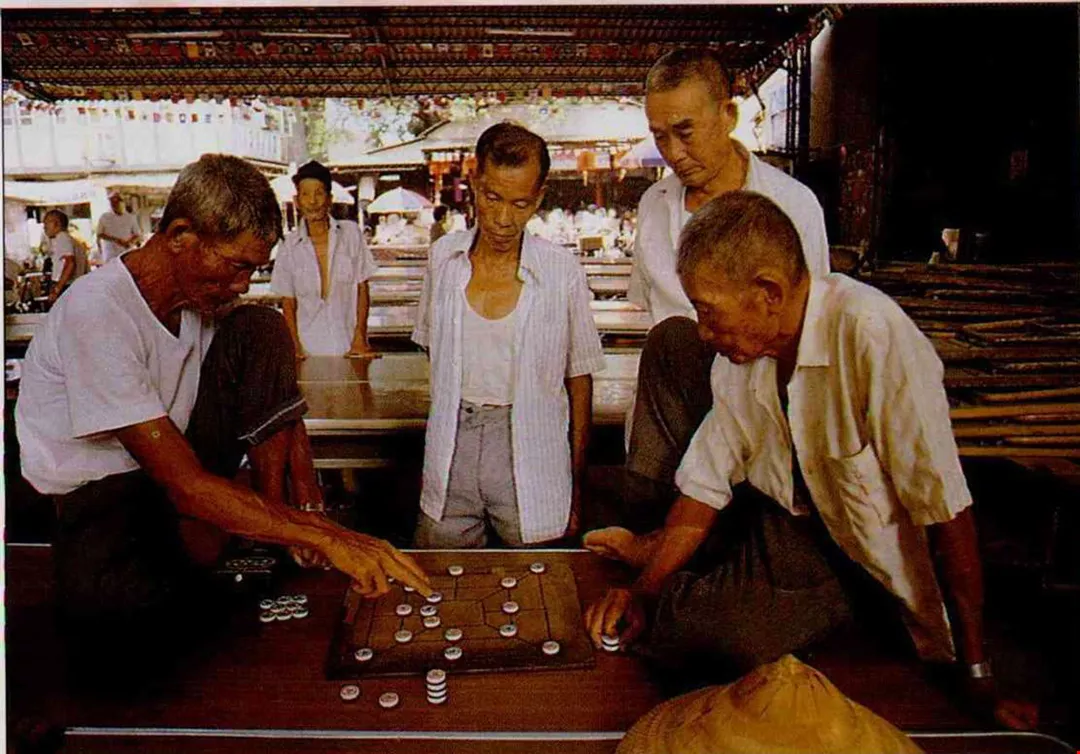
Games of chess often draw wagers.
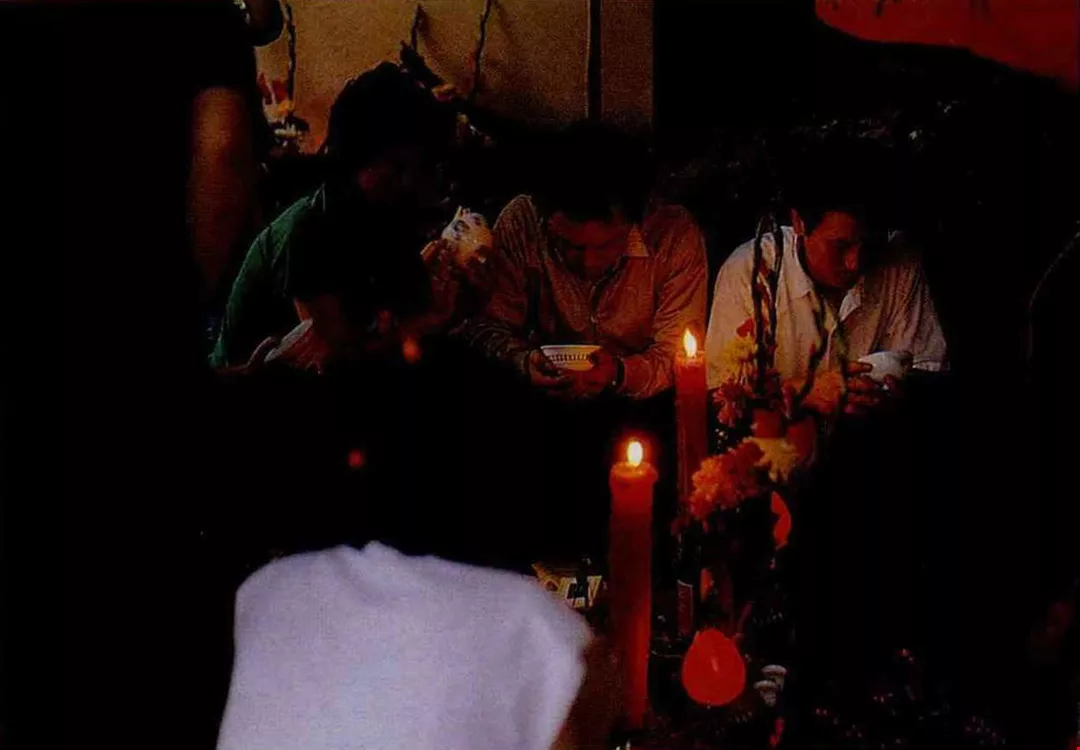
When tachiale was popular, players often went to temples in the dead of night to dump bowls of sand, rice, or incense ash, asking the gods to reveal the winning combinations.
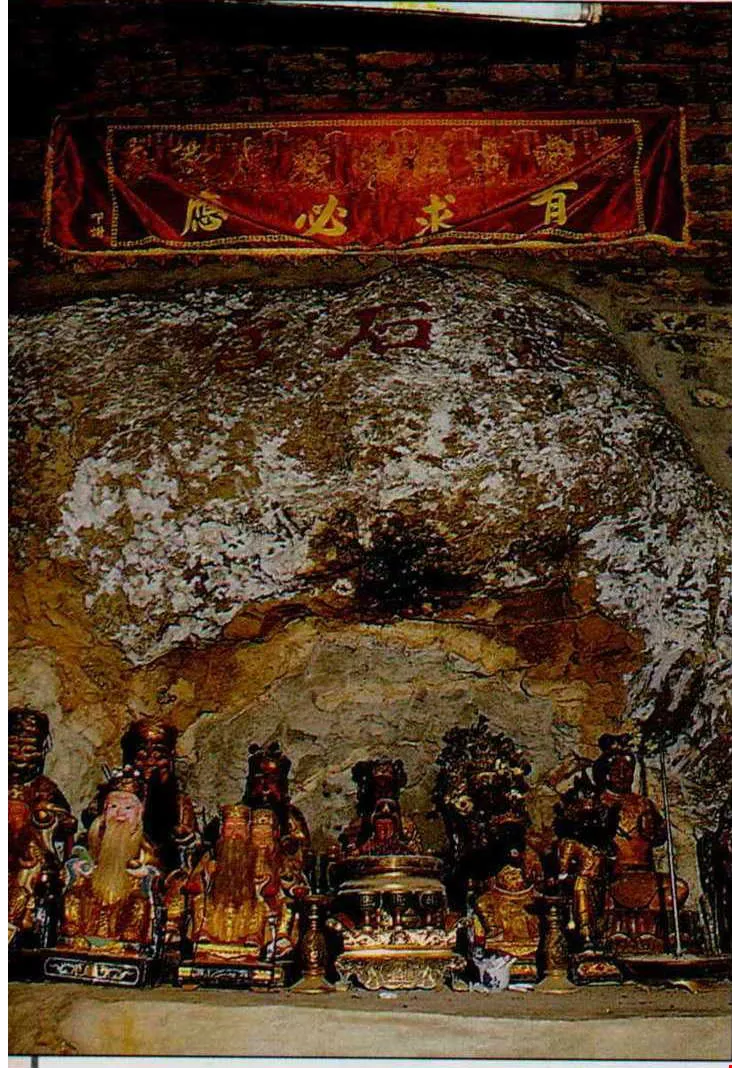
Gamblers often took revenge on statues of deities who failed to come up with right numbers. Workers at the landfill, unwilling to mistreat the gods yet again, set up an altar on which to arrange the statues.


@List.jpg?w=522&h=410&mode=crop&format=webp&quality=80)


