

It is more than six years since Anna Wang's operation for breast cancer, in September 1998. Four years ago, Anna left behind bustling Taipei and the unremitting demands of her job as editor-in-chief of a magazine, to return to the milder climes and more relaxed pace of life of her birthplace, Taichung. Now an executive secretary in the city government's Cultural Affairs Bureau, she is living life with the pleasure of one reborn.
Having had a close brush with death, Anna Wang has a deeper insight than most into the nature of life, and into how to manage the doctor-patient relationship.
Six years ago, even after Anna decided to go and see a doctor it took her several months to find time in her busy work schedule to make an appointment.
In fact, she had discovered a lump in her breast long before then. But at the time her mother had been ill in hospital, and she had been burning the candle at both ends keeping on top of her job and taking care of her mother. She had not had the time to concern herself with anything else, and for a long time she put the lump to the back of her mind. But when the tumor had grown to a frightening 8.5 centimeters in size, she could no longer avoid facing up to the situation.
It nevertheless came as a shock when the doctor said straight out that things were very serious, and sternly told her: "Nothing else matters now. You have to put everything aside, and as soon as a bed is free you must come in so that we can operate." On hearing these words Anna was terrified, yet she also felt they did not quite make sense. "If there really wasn't a moment to lose, then why did I have to sit around at home like an idiot, waiting for a bed?"
Thanks to an introduction from a friend, Anna finally went to the Koo Foundation Sun Yat-sen Cancer Center (SYSCC), which has an outstanding reputation for the treatment of breast cancer. There she sought out Dr. Chen Chi-ming.
"Dr. Chen was very reassuring," Anna recalls. He did not make her condition sound overly serious, yet his attitude was not cavalier either. At the same time, the center's team approach to care, with full cooperation between internists, surgeons and rehabilitation experts, and with each patient assigned an individual nurse to accompany her through all the procedures, made her feel she was in good hands.
Because Anna's tumor was so large, it could not simply be cut out. After evaluation, the medical team recommended that she first undergo three courses of chemotherapy to reduce the size of the tumor, and then have surgery to remove it and to reconstruct her breast.
After enduring three months of initial chemotherapy, with all the attendant nausea and hair loss, and then 12 hours of surgery, Anna went back to the SYSCC for a further six courses of chemotherapy. Throughout this treatment, she put her faith in her medical team and co-operated fully. But when facing the radiation therapy that was intended to prevent the spread of cancer cells, she began to have doubts.
"A doctor of traditional Chinese medicine told me that the seat of breast cancer is in front of the lungs, and radiation therapy could cause scarring of the lungs," she says, and information she had gathered for herself stated that the rate of recurrence for breast cancer within five years is 50% regardless of whether patients undergo radiation therapy. In view of this, Anna decided to go against Dr. Chen's advice and forego radiation therapy. But because she was afraid the doctor would "tell her off," she could not bring herself to inform him of her doubts openly, so she pretended she was going to the US for treatment.
From then on, Anna took care of her own health by using traditional Chinese herbal medicines and taking exercise, and studied various kinds of knowledge about physical, mental and spiritual health. Every six months, she went back to the hospital for a follow-up examination.
Two years later, she stopped going back for checkups, and thus her contacts with Dr. Chen ended. Although she had left the protection of her medical team, she did not change her old "fearless" attitude, and regarded the 50% risk of recurrence optimistically. Perhaps some of those close to her were worried by her "going it alone" in this way, but Anna says she was not trying to reclaim "autonomy" over her medical treatment; it was merely that she was willing to do whatever she was able to, but would not force herself to do things she really could not cope with.
"Some patients take their doctors' orders terribly seriously, and force themselves to comply however hard they find it. If they cannot manage it they are filled with guilt, or if their illness does recur they blame themselves. But there's really no need for that," she says.
Since her illness, Anna's outlook on life has changed dramatically. In particular, she has found that training herself to accept that her condition was probably brought on by her own lifestyle, and not to indulge in self-pity, has been a great help. "Cancer is a dangerous disease, but getting it is also a kind of warning. Once you've faced it and beaten it, your life may be all the more joyful, so why not face it with an attitude that 'you've only yourself to blame'?"
Anna Wang has some friendly advice for doctors too: "Doctors should impart a sense of authority, but they should also be gentle, and consider patients' psychology. They should give patients hope in the outcome of their illness. On no account should they pass a sentence of life or death. A doctor's knowledge is limited, and his ability to cure disease is also limited; but if something is beyond the power of medicine, it doesn't mean it's beyond the power of God!" A committed Christian, looking around her Anna sees many examples of people who are still living well many years after being pronounced incurable by a doctor; but also some who have been harmed by the "authority" of the doctor, and lost the will to survive. Standing as they do at the gates of life and death, doctors need to show more humility. And patients? They would do well to be "a bit tougher."
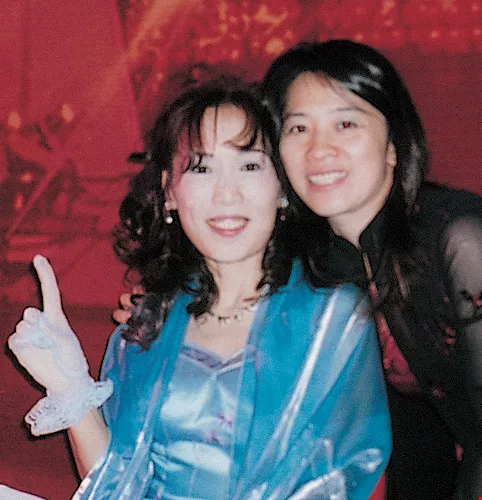
Whether while afterward, Anna Wang never lost her optimistic outlook. (courtesy of Anna Wang)


@List.jpg?w=522&h=410&mode=crop&format=webp&quality=80)


