Tarnished Dreams?Marriage and Career Losing Their Allure for Taiwan's Young
Lin Hsin-ching / photos Chuang Kung-ju / tr. by Scott Williams
July 2008


Cheng Li-chun, the former minister of the National Youth Commission, has said that a nation's greatest resource is its young people, and wonders how it is that our society now views a generation of young people as a "problem" and our youth policy has become oriented towards "resolving problems."
Cheng is concerned about the same issues that worry so many other Taiwanese-the unemployment rate among young people is stubbornly high; young people are marrying and having children later in life; and the birthrate is falling. Data from the Ministry of the Interior (MOI) show that in 2007 Taiwan's fertility rate fell to a record low of 1.1 children per woman of childbearing age, the lowest rate in the world.
We tend to think of today's young people-those in their 20s and 30s-as unmarried, without children, not actively seeking work, and unwilling to shoulder familial and social obligations. But is the reluctance to marry and settle into a career a personal choice, or is it driven by economic factors? How could the government encourage and assist young people in achieving their dreams? These questions may sound less weighty than issues like "revitalizing the economy," but our answers to them are crucial to the future of our nation.
"Everyone belongs to a generation.... Like it or not, when you were born dictates the culture you will experience.... The society that molds you when you are young stays with you the rest of your life."
So writes San Diego State University psychologist Jean Twenge in the preface to her book Generation Me: Why Today's Young Americans Are More Confident, Assertive, Entitled-and Miserable Than Ever Before. For the book, Twenge analyzed more than 1.3 million survey responses spanning 60 years to tease out differences between the young people of today and those of previous generations.

Today's young people show great diversity in their values. Some want a nine-to-six job in the civil service, while others prefer the freedom of creative work or self-employment, even if it means less stability. The photo shows a fashion market in Taipei's Hsimenting.
A tale of two generations
She discovered that Americans born between 1970 and 1990, i.e. those 15-35 years of age at the time she was writing, grew up in a time of few economic worries and have no understanding of the preceding generation's view that an individual's duties and family responsibilities were more important than personal entitlements. This generation is instead characterized by its focus on individualism, its generally high standard of education, and its optimism about the future even though university tuitions are high, jobs are hard to find, and homes are difficult for even double-income families to buy.
These differences between childhood and adult experiences, between expectations and reality, and this anxiety about having been born in bad times aren't unique to the United States. In fact, they can also be seen in young people of this generation in Europe, Japan, Korea, and Taiwan. In Taiwan, the parents of today's 20-35 year olds were generally born during the post-war baby boom of 1948-1962. Taiwan's Baby Boomers were born into hard times, but grew up in a period of reconstruction and hope. When Taiwan's economy took off in the 1970s, it provided people in their early 30s with stable work and enabled the more successful among them to rapidly move into middle-management positions. These Baby Boomers had no great difficulty achieving society's expectations that they become economically independent, marry, and have children by the age of 35. They didn't dither or doubt, and life just carried them along.

Making a lifelong commitment to the one you love sounds a lot like "the unbearable heaviness of being" to today's young people. As a result, the average age at which Taiwanese first marry has risen to a record high while the island's fertility rate has plummeted to 1.1, the lowest in the world.
Trials begin after graduation
Clearly, life has only gotten better for the Baby Boomers. But their children's lives are likely to run a very different course. Today's young people grew up sheltered by their parents, and several rounds of educational reforms gave them relatively easy access to universities and graduate schools. For this generation, life's trials began the moment they finished school.
Lee Ming-tsung, an assistant professor of sociology at National Taiwan University, mentions the children of the 1980s as an example. Lee notes that martial law was lifted before this generation even began primary school, and that they grew up in a much more relaxed social atmosphere. They never dealt with the martial law era's curfews and media restrictions, and never marched in street protests. When they reached voting age, they participated in Taiwan's first handover of political power to an opposition party and helped entrench democracy on the island. In other words, they grew up in an age of economic and political progress and liberalization. As a result, they have been free, diverse, and unconstrained by convention in their thinking and their lifestyle choices.
But over the last decade, a decade in which this generation has been making the transition from school to the workplace, Taiwan's economy has taken a turn for the worse. Manufacturers have moved production abroad, and local industries have begun transforming their operations, sharply limiting employment opportunities. The situation was worsened by the long-term cross-strait political standoff, which eroded foreign investors' confidence in Taiwan.
"This cohort of young people had no chance to enjoy the sweet fruits of social liberalization before having to swallow the bitter pill of an economic slowdown brought on by structural transformation," says Lee.
When they finished school, their age cohort faced an unemployment rate of more than 10%. Even the university graduates among them were making an average of only NT$26,000 per month, or about 60% of the national average. The last five years have been even more difficult. With prices for crude oil and other goods soaring internationally, rising inflation is making it tough for them to cover even basic living expenses. Real-estate prices have been skyrocketing as well. Young people who want to buy a home in Taipei City, for example, would need to save every penny for ten or 20 years to turn their dream into a reality.
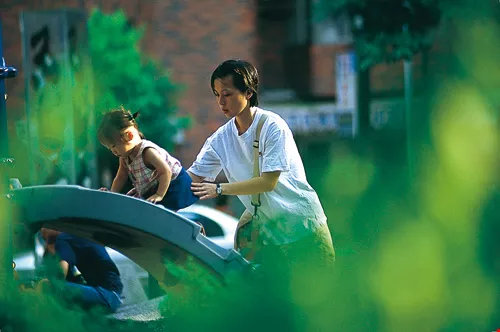
Human beings have an innate desire to bear and raise children. If the present generation chooses not to have children, it will have a huge impact on our nation's future.
A global phenomenon
Cheng says that if Taiwanese born in the 1960s are the "student activist generation" or the "democratization generation," then those born in the 1980s are the "globalization generation." Young people the world over are all contending with globalization's superheated competition for jobs.
Capital and technology flow across the entire world, and now so does competition for jobs. These days, if you want a job, you not only have to beat out competitors in your own country, but in China, Southeast Asia and even India as well. As a result, wages are tending to equalize downward. When businesses can hire cheap labor in Vietnam, they have little interest in hiring Taiwanese workers of roughly the same level of skill at much higher cost.
The globalization generation in the world's advanced countries must therefore upgrade their skills as rapidly as domestic industries upgrade their technologies and processes. Those at the top will still be able to quickly find high-paying jobs with good prospects for advancement. But those with less education and fewer skills are going to have to take poorly paid positions, temp work, or even multiple part-time jobs while they wait for better opportunities or change career tracks.
Globalization has also created inequities between generations. In Europe, the US, and Japan, Baby Boomers and their parents' generation have lived through prosperous times that offered them high levels of employment throughout their careers and will provide them generous pensions in retirement. Medical advances have even extended their life expectancies. However, the financial burden of caring for these aging generations will fall on the young, who earn less and who will have to support proportionately greater numbers of the elderly than did their parents.
In Taiwan, where retirement benefits are less generous, the sense that the older generations are despoiling the younger is less intense. However, the grim prospect of the labor insurance system or the national health insurance system someday going bankrupt adds still more uncertainty to the lives of young people just starting out in the world.
No marriage or kids
The public's impression of today's young people is not just that that they face stiff competition for jobs, but also that they are reluctant to marry and have children.
According to MOI statistics, the average age for a first marriage in Taiwan in 2007 was 31.0 for men and 28.1 for women. The figures also show that only some 131,000 couples married in 2007, 22% fewer than the 168,000 who married in 1997.
Taiwan's fertility rate has been declining and its childbearing age increasing at a startling pace. According to the MOI, the average age at which Taiwanese women had their first child rose from 26.3 years in 1997 to 28.5 years in 2007. The proportion of childbearing women having their first child after 30 rose from 26.2% to 42.6% over the same period. Meanwhile, the fertility rate fell from 1.77 in 1997 to 1.1 in 2007, and is now below even Japan's 1.32 figure. In fact, Taiwan's fertility rate is currently the lowest in the world.
Many adults are not only choosing not to marry, but are continuing to live with their parents, becoming what have been called "parasite singles." This phenomenon is further increasing the average age at which Taiwanese purchase their first home.
According to the MOI's Construction and Planning Agency, nationally the average age of a homebuyer was 37.7 years in the first quarter of this year. In Taipei City, it was 39.2 years-too old to qualify for government assistance to young homebuyers, which is limited to those under 39.
Strawberries? Durian?
Decisions to refrain from marrying, having children, or buying a home may be economic, but they are also frequently related to an individual's sense of personal entitlement. Taiwan's older generations sometimes can't help but find the situation both funny and infuriating, and wish that the younger generation would hurry up and grow up.
The term "strawberry tribe" is now synonymous with today's young people. It refers to their luster of both their appearance and their educational achievements, and to their low tolerance for difficulty and frustration. Like strawberries, they are thought to be easily crushed. A May survey by 1111 Job Bank revealed that as many as 42% of jobseekers with at least a university degree were targeting non-demanding administrative, secretarial, and receptionist positions. These jobseekers had no qualms about low salaries, low-level work, or low levels of achievement; their only desires were to be able to leave work on time and to be able to enjoy themselves.
Ryan Wu, vice general manager of 1111 Job Bank, calls them the "durian tribe." Wu observes that durian is highly nutritious, but has a spiny husk and a pungent odor. He sees today's young people as much the same-they are highly educated and highly capable, but always have an ugly look on their face in the workplace and "are only interested in hiding in their own shells and doing their own thing."
An outdated ideology
Reacting to the job market and the public's negative view of young people, NTU's Lee Tsung-ming, a 30-something himself, argues that this kind of generalizing from anecdotes isn't entirely fair.
Lee says that in recent years, Taiwan's society has transitioned towards an "aesthetics of consumption." People now define themselves less in terms of achieving success and having an impressive title on a business card, and more in terms of things like their style of dress, the kind of car they drive, the cool electronics they own, the places they eat, the identities of their friends, and the number of times per year they vacation abroad. These pleasure-oriented standards are integral to how they gauge their value as individuals.
"In this kind of environment, it's only natural that young people would want to live freer, more refined lives, and that they'd be satisfied as long as they had enough income to meet their needs," says Lee. Young people just aren't interested in spending their lives at work or climbing the corporate ladder. Lee argues that success in that world requires sacrificing personal time and space-precisely the things young people are most reluctant to do. Naturally, this means that the job market has few positions they'd consider ideal. Given that only the fewest of the few are going to achieve success, they wonder why they should try too hard.
"Young people have the right to dream," argues Lee. "We shouldn't restrict their imaginations." Society's expectation that people have families and be established in their careers by the age of 30 is outdated and reflects all our traditional biases about gender, class, and what makes one person a "winner" and another a "loser." "We should have shaken off those shackles long ago!" exclaims Lee.
A policy dilemma
Society, industry, government, academia, parents and young people all have very different takes on what lies ahead for young people. Their expectations and desires differ as well, reflecting the complexity of the issues at stake. Even a well-intentioned policy can trigger great controversy if it doesn't take social realities into careful consideration.
The "first employment contract" proposed by the French government in 2006 is a case in point. The law stated that companies hiring people under the age of 26 could fire those employees without cause within two years of their hire.
The law was intended to help alleviate France's intractable problem with unemployment among young people, which has run as high as 25%. The government hoped the law would encourage companies to give young people a shot at employment. It didn't anticipate the angry response from students and labor unions. Students and workers struck, and millions of demonstrators poured into the streets. Fed up with the protests, other members of the public also took to the streets to protest the demonstrations, resulting in the greatest social unrest seen in France since the student movement of 1968.
In Taiwan, plans to promulgate a policy that will provide women with reduced salaries for six months while on maternity leave have also sparked a major controversy. The policy is intended to increase the fertility rate among working women by providing them with financial support. But the business community is virulently opposed, and even women's groups have been critical. They note that unless other supporting measures are put into place, the job market is so competitive that women wouldn't dare to apply for even such a legally mandated benefit.
Respecting choices
A nation's young people are its greatest resource. It's hard to envision the impact on the survival of a nation or an ethnic group of a generation of young people who are unwilling to settle into jobs or have families.
Society should respect these young people's decision not to tie themselves down with work and family, but should also remind them to think about where they want to be in 30 years before making that decision. As a nation, we have a solemn obligation to provide sufficient aid to those who make the difficult decision to settle down, to enable them to realize their dreams without undue worry.
In the end, each of us has our own ideas about what we want to do with our lives and how we want to make those things happen. But we cannot daydream those objectives into reality. We must consciously plan and work towards their achievement if we want to look back on our lives without regret.
Marriage and childbearing in Taiwan, 1977-2007
| Year | Age at first marriage | Mother's mean age at first birth | Fertility rate | |
| Men | Women | |||
| 1977 | 27.4 | 23.6 | 23.1 | 2.70 |
| 1987 | 28.8 | 25.4 | 24.8 | 1.70 |
| 1997 | 30.4 | 28.1 | 26.3 | 1.77 |
| 2007 | 31.0 | 28.1 | 28.5 | 1.10 |


@List.jpg?w=522&h=410&mode=crop&format=webp&quality=80)


@List.jpg?w=522&h=410&mode=crop&format=webp&quality=80)
