Hey, Teacher! Leave those kids alone!
Teng Sue-feng / photos Hsueh Chi-kuang / tr. by Christopher MacDonald
April 2000


Every so often the papers report on another case of a schoolchild getting injured as a result of corporal punishment. Plenty of parents support the use of "appropriate" corporal punishment by teachers, and some English cram schools are popularly known for "beating a path to good results." There's even a locally-made teacher's rod on the market, a stick with a leather grip at one end, called "the loving little hand."
The Chinese have always held that "strict masters produce worthy students." The Ministry of Education no longer sanctions corporal punishment in schools, but much of the public still tacitly assents to the practice. After all, how else are teachers supposed to discipline their pupils?
Mrs. Chang of Taipei has been worried about her son's safety at school ever since last summer, when he entered the third grade under a strict new teacher.
On one occasion the boy got in trouble with his teacher merely for waving a pen around to drive a mosquito away from his head. The teacher snatched the pen, threw it in the bin, and warned the boy not to retrieve it after class. "The pen worked fine," mused the boy when he got home. "Why couldn't I get it back?"
Mrs. Chang found out that other parents were also concerned about this particular teacher. Several of them raised the problem at a PTA meeting, and asked the teacher to be less hard on the kids. But the teacher, who had been in the profession for four decades and was older than any of the parents, rejected their plea and warned them against spoiling their children.
What constitutes corporal punishment?
Some parents and teachers feel that teachers have sound educational reasons for applying strict discipline in class, and that corporal punishment is not worth making a fuss about. But in the view of Mrs. Chang: "Teachers today know that inflicting physical punishment on their pupils is absolutely wrong. And hurting children with sarcasm and mockery is terrible too."
But if teachers are able to injure with words as well as action, what exactly constitutes "corporal" punishment?
Last September the Humanistic Education Foundation published the results of a survey into the use of corporal punishment in primary and secondary schools in Taiwan. Teachers, parents and pupils were asked: "What forms of punishment count as corporal punishment?" A majority of respondents felt that corporal punishment included the following: striking pupils on the palm or around the ears to cause pain; forcing pupils to stand or kneel in one spot, causing fatigue; and humiliating pupils by such methods as putting marks on their face, criticizing them in front of the class, and imposing restrictions on them.
A more controversial question is: should penalties such as extra classwork, school chores and cash fines also be regarded as forms of corporal punishment?
It depends who you ask. According to the Foundation's survey, 11% of students view writing lines as corporal punishment, compared to around 6% of parents and teachers.
The issue of corporal punishment touches on the right of teachers to determine their own ways of keeping control in class, and the survey thus drew a public response from the National Union of Teachers, which pointed out that if the term "corporal punishment" is general enough to encompass "fatigue" and "extra classwork," then it can stretch to include any kind of disciplinary measure applied at school and in the home.
Kao Yung-yuan, a science teacher at Lanya Middle School in Taipei and policy director with the National Union of Teachers, says that although the Ministry of Education has repeatedly issued "verbal" injunctions against corporal punishment, it has yet to give teachers an explicit definition of the methods that can and can't be used to discipline pupils. The Regulations Governing the Counseling and Disciplining of Students by Teachers, issued in 1997, are ambiguous on the subject. According the Regulations, teachers can guide and discipline students through "persuasion, canceling extra-curricular activities, giving after-class counseling, deducting good-conduct credits . . . [and] other appropriate methods." That last item leaves many teachers uncertain as to what is permitted. The Ministry says that schools are empowered to establish an internal disciplinary code through consultation among teachers, parents and student representatives, but teachers wonder what degree of protection this affords them. "If a teacher should happen to injure a student, an administrative directive carries little weight against criminal law," says Kao. The union takes the view that teachers should observe the lowest common denominator and refrain from doing anything not expressly permitted under the law.
Parent-teacher tensions
The Humanistic Education Foundation has been much in the spotlight on the question of corporal punishment. Executive director Wu Li-fen acknowledges that the group has found itself at odds with schools and teachers on several occasions, but adds that corporal punishment remains one of the central issues within educational reform, as it concerns the fundamental human rights of pupils.
"Corporal punishment is not going to disappear in the foreseeable future," predicts Wu, "but it is on the decrease." Key to this process is the changing attitude of parents. A decade ago, parents may have had their doubts but kept quiet about them, whereas nowadays they tend to support educational reform issues.
Lin Wen-hu is chairman of the Joint Council of Taipei City Parent Associations, and has been involved in educational reform ever since volunteering as a school helper several years ago, when his son first started school. Lin says that education in Taiwan has undergone more changes in the past five years than during the whole of the previous fifty. "For parents to base their approach to their children's' upbringing on notions from the past simply doesn't work any more," says Lin.
"The teacher is responsible for maintaining class discipline," agrees Lin, "but there are at least 100 different ways of doing that. Lots of teachers think that with rod in hand they can deal with anything, and forget that there may be another 99 options open to them." Lin opposes corporal punishment for the reason that it hinders the teacher's own development, bringing negativity to the learning experience and creating tensions between parents and teachers.
Everyone seems to accept that, at the very minimum, you shouldn't strike children so violently that is enough to leave a mark. Nevertheless, there have been several cases during the past couple of years of children getting injured as a result of corporal punishment at school.
Last year a fifth grader at a school in Taipei was shoved to the ground by his teacher, who he had just disobeyed, and broke a bone in his hand. In Tainan, a primary school teacher was found to have made pupils who forgot their books kneel on the ground and do written exercises. Those that didn't finish the exercises were not allowed to stand up with the rest, and had to stay kneeling as they ate lunch.
Students at a middle school in Taichung were sentenced to squat-jumps after they flouted a rule that required them to wear knee-length socks, even in the heat of summer, by coming to school one day in short socks. And at a middle school in Changhwa County a third-year pupil was made to kneel and apologize to his principal, and was then expelled from school, for cursing and shoving the principal during morning assembly-after the principal had just struck him with a bamboo rod for being messily dressed.
Someone beaten every day
In 1991, two teachers at a primary school in Kaohsiung County were given a sentence of thirty days in prison, suspended for two years, for excessive use of corporal punishment, and in 1995 a Taipei primary school teacher was the target of a lawsuit from the parents of a child whose knees were damaged after he had been made to kneel in class twice a week for three semesters. In that case, the teacher was ordered to pay NT$440,000 in compensation for mental anguish.
One question to consider is whether the handful of corporal punishment cases that make the news are "one-off" incidents-in which teachers have simply lost control-or are indicative of a widespread phenomenon.
According to Kao Yung-yuan, "Teacher-pupil conflict is not sparked by an isolated incident-it is something that builds up over time. When a teacher gets mad at a particular child it's probably the result of mutual provocation." As Kao says, corporal punishment indicates that there is a problem in the interaction between the two. Maybe the student just doesn't like the way that the teacher teaches. Perhaps the teacher has told the kids over and over not to talk during class, and loses his temper one day when they are particularly noisy. Every instance is a one-off.
Wu Li-fen rejects the notion that the few cases that come to light are simply isolated incidents. "Each individual case has features of a more general nature that need to be examined. Although relatively few corporal punishment incidents end up in court, children are in fact being struck by teachers every single day."
Hsing Hsiao-ping, who has been teaching for 16 years and is the principal of Hoti Elementary School in Taipei, poses a question: "Does corporal punishment happen in every school? Probably. But does it happen in every class? Not necessarily."
Evidence suggests that teachers in Taiwan have softened their stance on corporal punishment during the last ten years.
In 1992 Lin Wen-ying, associate professor at Fu Jen Catholic University's department of applied psychology, recorded the opinions of 87 junior and senior high school teachers with ten or more years of teaching experience. Lin found that 95% of them had at some time subjected pupils to corporal punishment, and 88% were still in support of using it-among whom one third gave as their reason the fact that corporal punishment is an educational tool, which teachers, as educators, can choose to use if necessary.
Last September the Humanistic Education Foundation contacted over 470 primary and secondary school teachers for their views on the subject, and found that 60% felt corporal punishment was not a serious problem in schools today. Asked whether they believed in corporal punishment as a means of disciplining pupils, 33% responded yes, 38% no, and 27% gave no answer.
Examination pressures
So there has been a shift away from a situation in which most teachers support corporal punishment, to one in which those for and against are roughly equally divided. Differences remain, but everyone can agree that no-one actually enjoys hitting children, and teachers don't use violence on their pupils just for the sake of it.
Another survey by the Humanistic Education Foundation once asked teachers how they felt after administering corporal punishment. 22% of respondents answered "depressed/regretful/upset," while 28% said they felt "angry about the student's lack of progress," and 15% were "angry at themselves for losing control."
If resorting to the cane generally leaves teachers feeling down, then why do they do it?
The Foundation discovered that for most teachers, rule-breaking was the primary provocation for using corporal punishment, followed by pupils playing in class, not doing homework and fighting.
Corporal punishment was less likely to result from classwork-related problems, such as poor test scores, failure to memorize set texts, and giving wrong answers in class.
Can we infer from this that the traditional image of secondary school pupils getting thrashed for failing to make the grade in their monthly tests no longer applies, and that examination pressures are not now the chief cause of teacher-pupil antagonism?
According to Wu Li-fen's observations, there is a wide divergence between town and country in this respect. "Teachers in the [more rural] south and center of Taiwan tend to use the cane to punish misconduct, while those in urban areas do so on account of test results."
"School education shouldn't be exam-driven in the first place," states Wu. Advancing into good institutions is a matter for the children themselves. School can provide pupils and parents with suggestions, but it has other responsibilities too. Teachers can only do a proper job once they stop shouldering responsibility for getting their pupils into good schools.
Since 1995 the Ministry of Education has implemented a number of measures to promote alternative avenues for admission to senior high school and university, beyond the existing examination system. Have the new measures been effective in reducing exam-oriented pressures on school students?
According to Kao Yung-yuan, the introduction of alternative means of admission simply means that "lots of doors have opened but the room is still the same size. Everyone is still trying to squeeze in, and there's still the same pressure to succeed through examinations. What matters is making the room larger and adding more rooms, for example by setting up new senior high schools." But Kao agrees that teachers are now less likely to strike pupils on account of their grades. Kao, who has never inflicted corporal punishment on a pupil for poor scores in his 13 years as a teacher, says: "I do of course want my class to come top in the school, and I'm the first to applaud if they manage that, but this is not the norm against which I evaluate pupils."
Temporary pain?
It is worth noting that the advance from primary school to secondary school is not accompanied by the same sort of examination pressure, and that primary school teachers mainly lose their tempers because of the kids being noisy or naughty. There is evidently a widespread conception among grown-ups that "naughty children should be taught a lesson." But does corporal punishment actually work?
Last year in Taipei the city's education department handled five fairly serious complaints concerning corporal punishment. None of these cases involved disputes about poor test scores-they all stemmed from instances of disobedience and misconduct.
Hsing Hsiao-ping's daughter is in the second grade at a different school from the one where her mother is principal. Hsing once received a questionnaire from her daughter's teacher asking parents to declare whether they approved of corporal punishment or not, and to sign their names accordingly.
"The teacher actually wanted a signed document from parents as a form of self-protection, which goes to show how powerless this teacher was." Hsing signed herself as opposed to corporal punishment, but added a note: "If my child does something wrong, please tell her off and have her write lines or lose playtime privileges." As Hsing says, plenty of teachers and parents still regard corporal punishment as "a necessary evil."
In 1996, perhaps in recognition of the continuing reality of corporal punishment, the Ministry of Education conditionally approved of the practice of caning pupils on the palm of the hand, causing "temporary pain," in order to maintain effective discipline in class. This was largely based on the notion that so long as no physical injury results, a little pain-an "appropriate" level of punishment-is quite acceptable
But the move was reversed after it came under fierce attack from commentators, the public and educational reform groups, who asserted that giving the green light to corporal punishment in this way would be a setback for educational reform.
Says Wu Li-fen: "So-called 'appropriate' corporal punishment is a myth, because 'appropriate' can never be fully defined." With well-behaved pupils there is never any need for teachers to use violence-a stern look or word is more than enough to bring them into line. And on the other hand, hitting a persistent troublemaker may work the first time, but the teacher subsequently has to resort to harder and harder punishment unless the underlying cause of the pupil's misbehavior can be determined.
The other 99 forms of discipline
For many teachers, noisy and troublesome kids are part of the daily reality of class and have to be dealt with one way or another. But is corporal punishment really the best way of maintaining discipline?
When the Ministry of Education wanted to sanction the use of punishment causing "temporary pain," the Executive Yuan's Educational Reform Committee expressed opposition and proposed a number of disciplinary alternatives for teachers to consider.
One method, used in a number of schools, involves the use of special tokens. Teachers hand out "smiley tokens" to reward good performance, and "sad tokens" to those who are doing poorly. When pupils accumulate enough smiley tokens they can exchange them for prizes, and this helps to foster responsible behavior in class.
Says Hsing Hsiao-ping: "The teaching community has come up with plenty of methods for managing schoolchildren, but a lot of teachers want to carry on with the practices of their predecessors. They assume that caning is the only method that is instantly effective." This type of attitude is related to the personal development and professional background of the teachers themselves. Primary school teachers frequently impose restrictions-you can't do this, you can't do that-on their kids, rather than hitting them, but even this is a negative, rather than positive way of dealing with problems.
As Hsing points out, "classroom management" is a mandatory part of teacher training courses, and always includes discussion of techniques for getting silence and focusing pupil attention on the teacher-because "good classroom order can be created."
When Hsing was appointed principal last year, she encouraged her teachers to establish ground-rules with their pupils at the very start of the year. For example, the kids ought to know that they should raise their hands before speaking, and have their books and pens ready before class begins. In this way, the pupils can have a sense of participation and be more willing to observe the rules.
Hsing also advocates tackling problems with individual pupils on a one-to-one basis, rather than by reprimanding and embarrassing them in front of the whole class. Minor misdemeanors can be dealt with by a stern look from the teacher, followed later by a quiet word or two. More serious misbehavior earns a blue card, and any pupil with three blue cards in one week gets a half-hour detention and has his parents notified.
As Hsing says, teachers are people too, and they have normal feelings. If a teacher really does get in a rage, he or she should step out of the classroom for a few minutes to calm down, and ask the teacher in the neighboring room to keep an eye on things.
Might is right?
Disruptive behavior in the classroom is not unknown among secondary school pupils.
Science teacher Kao Yung-yuan admits that he has, on occasion, blasted uncooperative students, but mostly under particularly stressful conditions.
"Every year I tell the pupils that I'm obsessive about discipline in the laboratory." Says Kao. "I say: I'll have my eye on all of you, and you only touch what I say you can touch." Once he was teaching a class of third year pupils in the lab, guiding one group through an experiment, when bickering broke out in another group. He went across and saw the Bunsen burner lying on its side on the bench, with the pupils standing around blaming the culprit. Kao grabbed a wet rag and doused the burner, then shouted at the group: "You were all tested last year on how to put out a Bunsen burner! You can write the answer but in practice you don't do anything about it!"
"In fact school pupils are quite straightforward, and know which teachers are good to them and which are not. So long as the teacher is fair, they don't object to one or two raps on the palm if they really have done something wrong. But with an unfair teacher it makes no difference how many times you whack them-you could hand out candies and they still wouldn't like you," says Kao.
National Taiwan University associate professor of math Shih Ying, an executive director with the Humanistic Education Foundation, has written of corporal punishment in terms of the difference between civilization and barbarism. He feels that given the development of civilization to its current level-and despite the fact that humans still kill one another-violence can be totally eliminated from the relationship between adults and children. This is because small children pose no real threat to anyone: the worst they can do is undermine grown-ups' self-importance or disobey their commands.
Professor Shih certainly has a point. One of the reasons that corporal punishment is seldom used against students at senior and vocational high schools is that many of them are taller than their teachers, and might hit back.
But what can a little primary school child do against a big teacher? This is why people agree that if a primary school pupil is injured by a teacher, the fault lies entirely with the teacher.
Jungle law-the might is right world of real life-has no place in our schools. The 21st century should be one in which violence is cast aside, which is why we now need more creative ways of tackling the issue of classroom discipline!
p.83
Pupils get shouted at or even caned for scoring poorly in an exam, not doing as their told, and being too slow at class activities. But does growing up in such a negative learning environment create future problems for kids?
p.85
What could a pupil possibly have done to get the teacher so mad? The teacher might relieve his anger with each stroke of the cane, but he is also breaking the law. (photo by Li Ta-min)
p.87
Never mind the rain-here a whole class is being made to recite their books as punishment for some transgression. Where else but in Taiwan! (photo by Li Ta-min)
p.89
Speak out of turn in class and you make get a pacifier stuffed in your mouth. Punishment of this type can actually be more harmful than physical or verbal abuse, as teenagers are highly sensitive about their self-image.
p.90
On the ruler is written: He who wields the stick is king! Do we really want our children schooled in the belief that "might is right"? (photo by Li Ta-min)
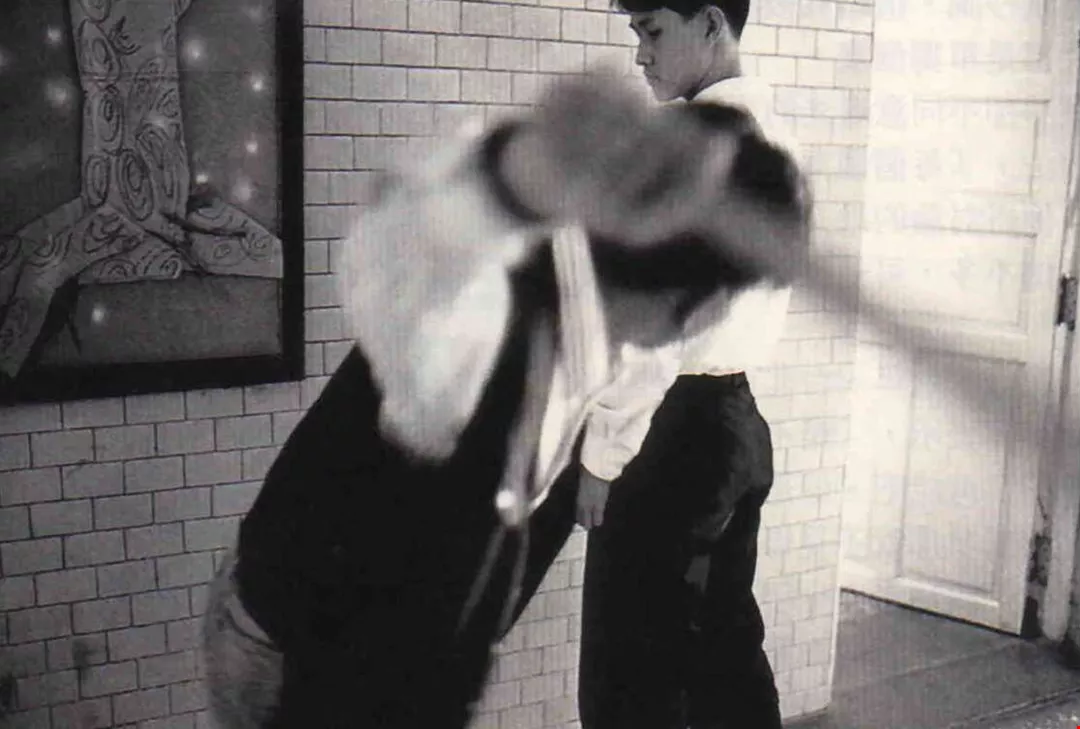
What could a pupil possibly have done to get the teacher so mad? The teacher might relieve his anger with each stroke of the cane, but he is also breaking the law. (photo by Li Ta-min)
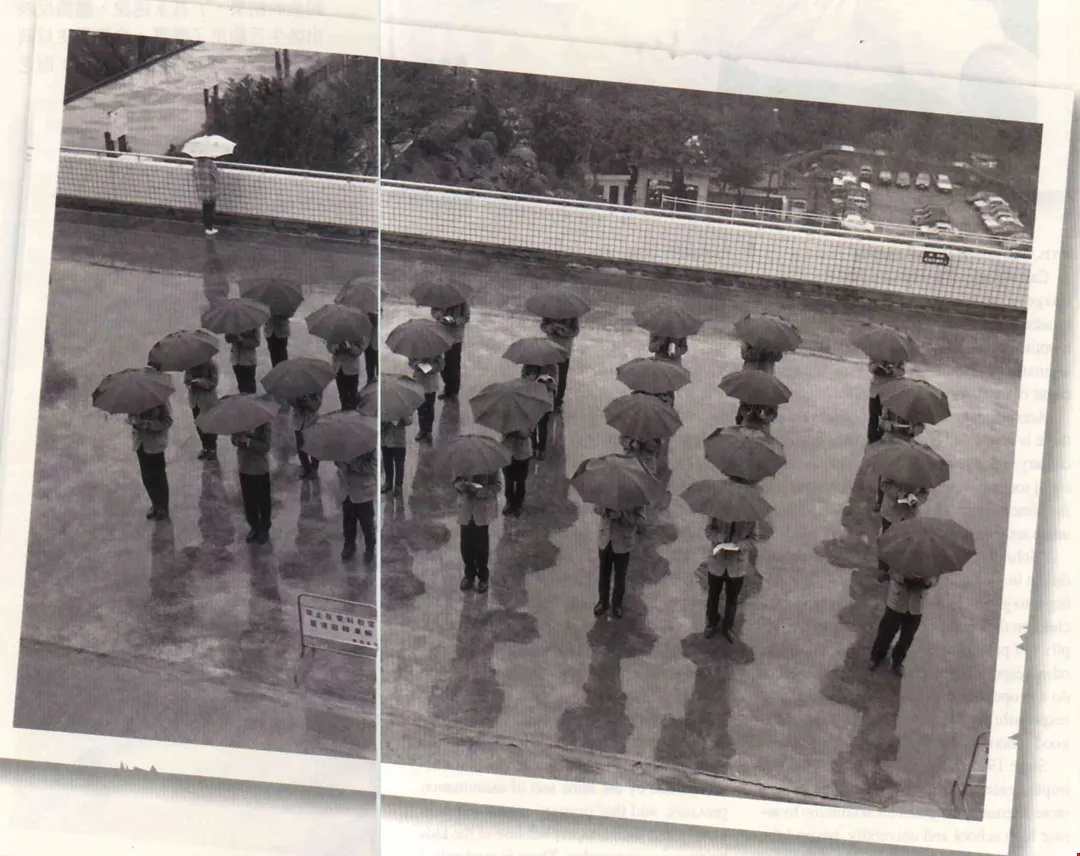
Never mind the rain-here a whole class is being made to recite their books as punishment for some transgression. Where else but in Taiwan! (photo by Li Ta-min)
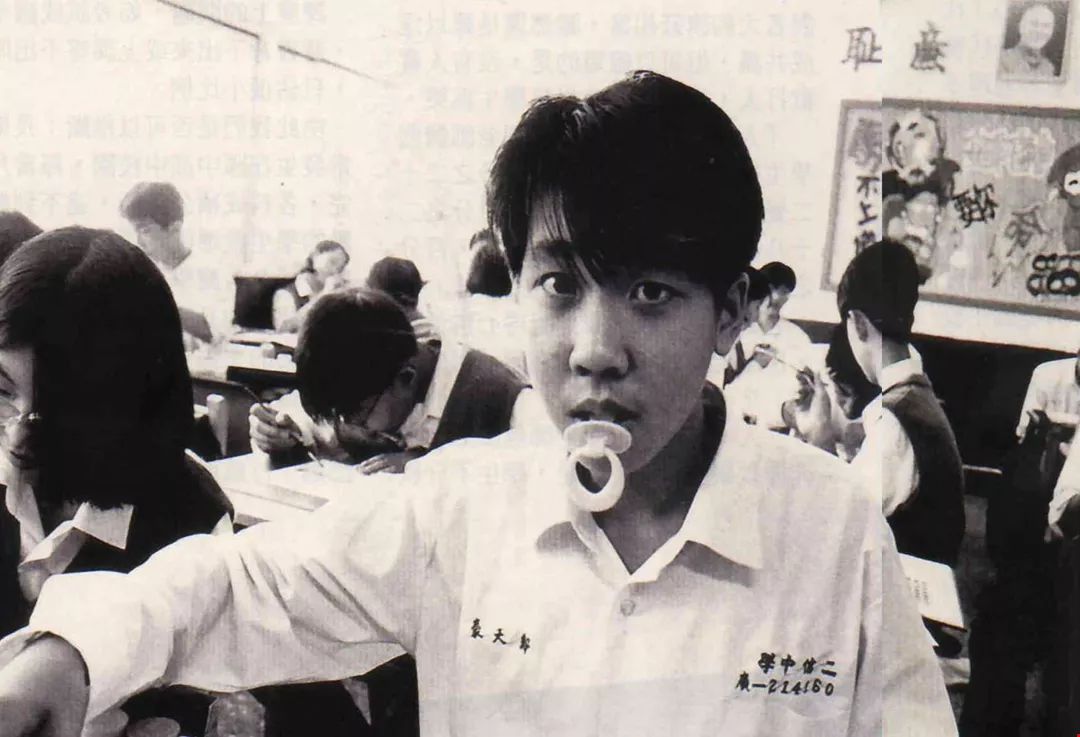
Speak out of turn in class and you make get a pacifier stuffed in your mouth. Punishment of this type can actually be more harmful than physical or verbal abuse, as teenagers are highly sensitive about their self-image.


@List.jpg?w=522&h=410&mode=crop&format=webp&quality=80)


@List.jpg?w=522&h=410&mode=crop&format=webp&quality=80)
