NPA Blues: The Problems of Policing Taiwan
Jackie Chen / photos Diago Chiu / tr. by Phil Newell
June 1999


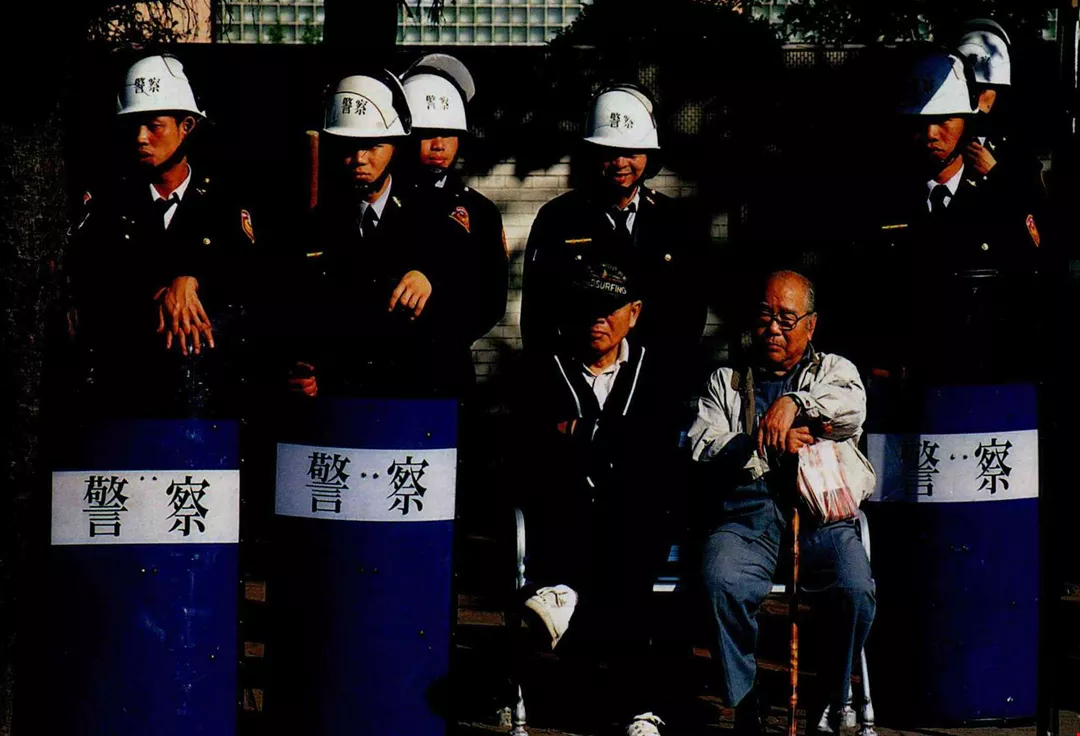
There were many street protests in the early days after the lifting of martial law. Scenes such as the one in this photo were a common sight. Taiwan's policemen are not only the "nursemaids" of the people, but also sometimes the "scapegoats" for the state.
Back in 1989, an American reporter watching one of the then-frequent street protests, in which citizens insulted the police and resisted arrest, wondered in amazement: "How is it that Taiwan police have so little authority? In the US, who would act like this toward the police?"
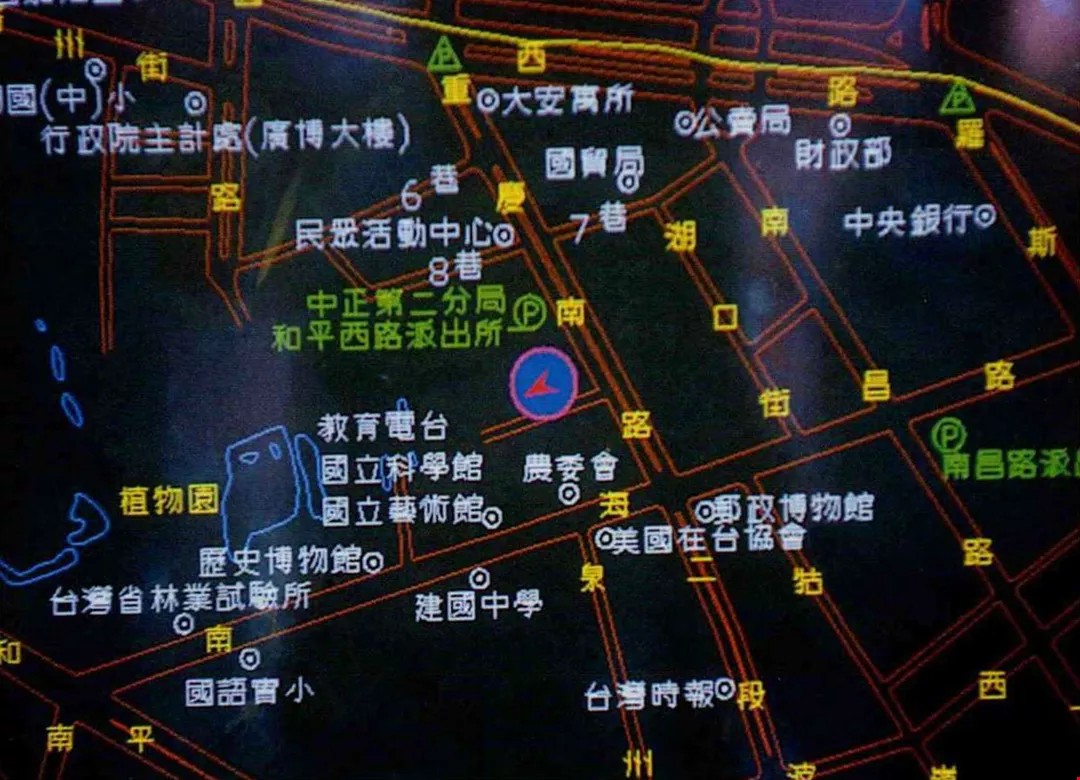
High-tech is widely used in police work today. This is a satellite positioning system in use in the Chungcheng district in Taipei. If something happens anywhere in the district, the nearest units can be immediately identified.
Many citizens believe that the police are poorly disciplined, with serious problems of corruption, dereliction of duty, and colluding with criminal syndicates.
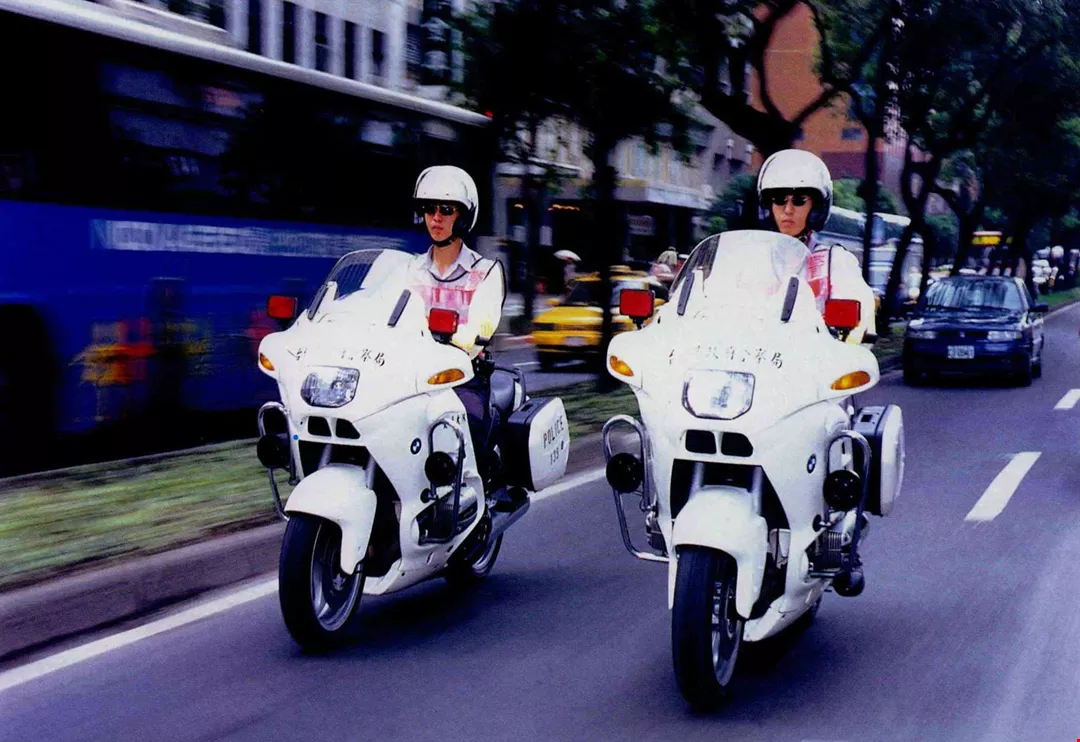
Upgraded equipment makes the police even more capable in the fight against crime. The photo shows a team on roving patrol.
The duties of the police in Taiwan are complex, covering everything from directing traffic to fighting crime. Weighed down by the heavy responsibility of maintaining public order, the nearly 80,000 police officers are under great stress. Their performance directly affects the peace of mind of individual citizens as well as the stability of society as a whole. What is the image of the police in Taiwan? How do they see themselves? How do their views differ from those of the general population? What can be done to make them the law-enforcement officers that the public wants?
Last June, on the eve of Policemen's Day, the Modern Women's Foundation conducted a survey on the image of the police. A full 63% of respondents still believed that the police were the main force in maintaining social order. With regard to particular tasks, 23% thought that the task police were performing best was "directing traffic," while 14% thought it was "serving the public." But less than 10% of the respondents thought the police were doing well on any of a variety of public order tasks including "eradicating vice," "cracking criminal cases," and "crime prevention." Indeed, 20% of respondents declared themselves "completely dissatisfied" with police performance.
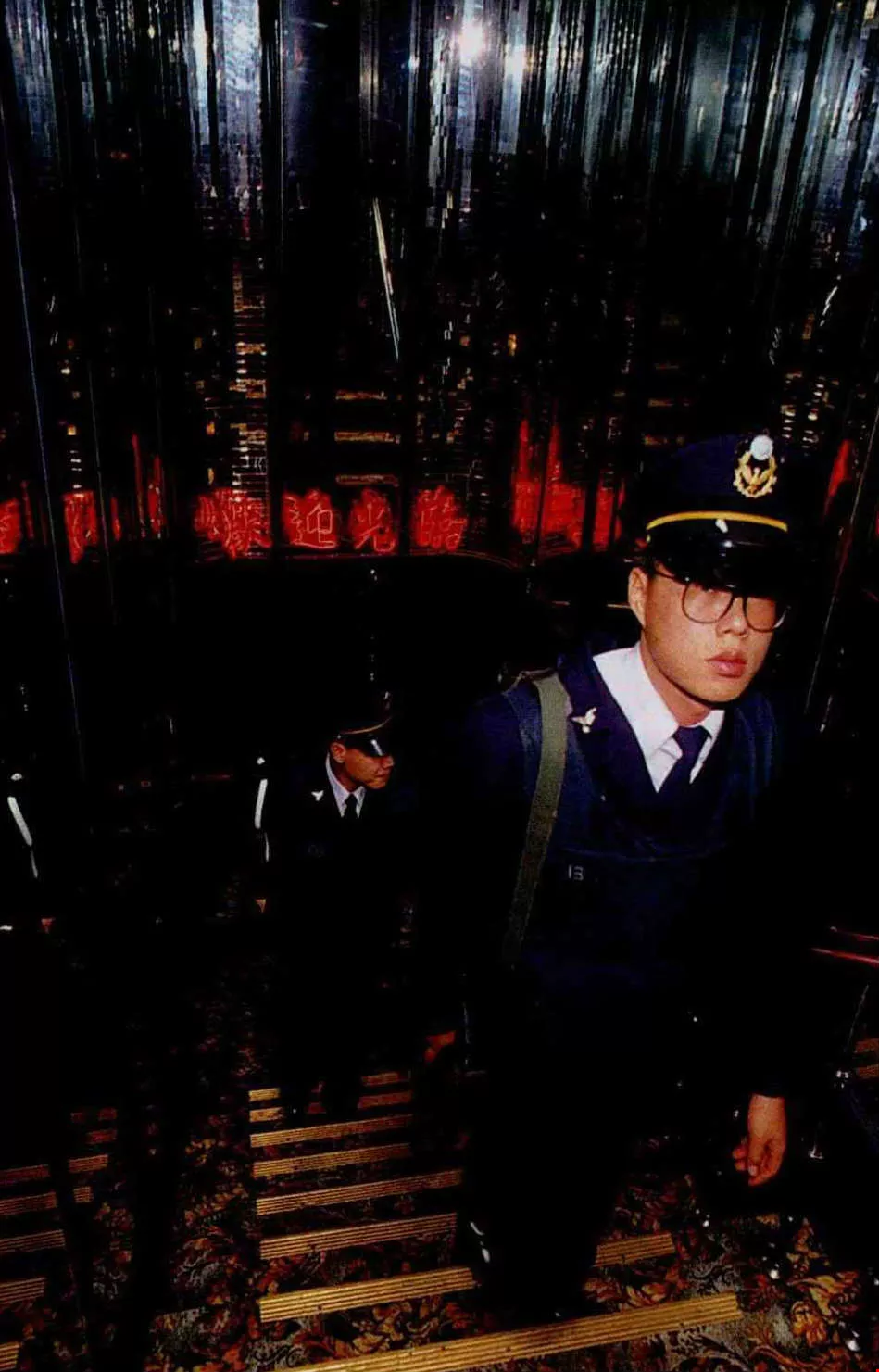
Police often investigate suspected sites of sex and gambling operations, but because of gray areas in the law they feel powerless to act.
Scapegoats
The large number of citizens who feel ambivalent about or negative toward the police reflects in part the uncomfortable role of the police force in a time of social transition.
Yen Shih-hsi, former director-general of the National Police Administration (NPA) notes that China's modern police system goes back only to the late Qing dynasty, when the idea was brought in from abroad. Under the old imperial system there was no police force per se, charged with maintaining social order. There were only various types of ruffians and lackeys, who frequently repressed the people and served as the cat's-paws of corrupt and powerful officials. People assumed the newly formed police were going to be much of the same.
Because the ROC then passed through the war with Japan and the Civil War, for a long time the police were heavily tainted by connection with the military. Moreover, Taiwanese have feared and hated the police for reasons particular to Taiwan's history. In the Japanese occupation era, policemen had to be addressed as "your excellency," and they were the tools of the colonial power. In the martial law era of the ROC, the police had broad powers over citizens. And following the lifting of martial law, when there were many social protests, the police were stuck maintaining social order by forming themselves into lines with shields and billy-clubs to surround protesters. The police were insulted, and even assaulted. But is this historical pattern unique to the Taiwan police?
In theory, the main tasks of the police in the government structure are to fight crime and direct traffic. However, since the ROC government moved to Taiwan in 1949, the police have played many roles outside the scope of their ordinary duties.
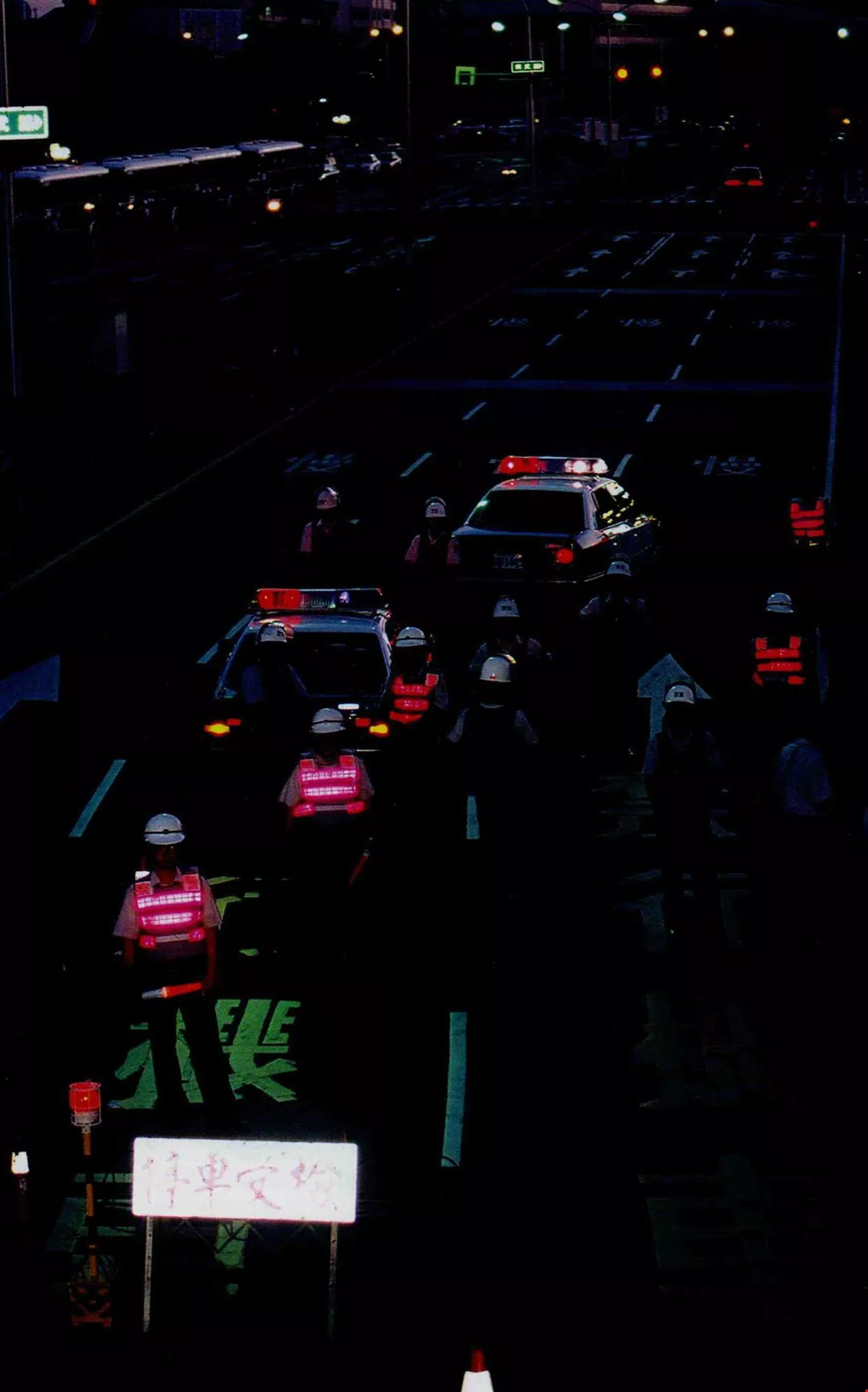
Recently, late night motorcycle racing has been popular among teens. Policemen have to work long and irregular hours.
Yen has written in an article that under martial law, police jurisdiction was over-extended by a series of executive orders. Police were instructed to get people to pay their taxes, pass out tax bills, investigate illicit production of alcohol and cigarettes, deal with illegal construction, and so on. Although the list of tasks which police are required to "assist" other government agencies in performing has been shortened, there are still 45 items, including such things as "delivering judicial documents." Edward S. Liu, vice president of the Central Police University (CPU), who says the police are in transition from being the servants of the state to being the servants of the people, wonders: "In this era of highly developed communication, should it still be the job of the police to deliver documents?" You can't go home
The police have long been stuck with tiring and unrewarding duties, such as clearing out illegal street vendors. "They pop up, then disappear, go away and then come back again," says Chiu Feng-kuang, head of the Sixth Investigation Corps of the Criminal Investigation Bureau (CIB). If the vendors are elderly or handicapped, the police are criticized for "not touching any of the serious criminals who fill the streets but only picking on the weak." When a cop makes a mistake, he is roundly criticized, but policemen are rarely praised for doing their jobs well.
Another problem that frustrates police officers is the promotion and transfer system. The current promotion system runs like this: Graduates of the CPU become patrolmen with the rank of two stripes and one star (2/1). Graduates of police vocational colleges, on the other hand, can become ordinary officers, with a rank of one stripe and three stars (1/3). Advancement is only possible through in-house promotion examinations, or performance reviews. Hsieh Ming-hui, a former police official and now a member of the National Assembly, says that academic background is still given too much weight in this system.
Even to the present, the police retain the military model. Aspects include the hierarchical command authority, and the system of giving officers only one day off a week and allowing them to sleep outside the station house only two days per week. Compared to other professions, says one officer, "police are still a relatively closed group."
Yang Tsu-ching, former director of the CIB, says that in the past people joked that the "corporate culture" of the police was "not going home." Some even said that "promotion is in inverse proportion to the number of times you go home." These jests express, wittingly or unwittingly, dissatisfaction with the police administration system.
Su Han-lin, who is with the maritime police, states that because his duties are irregular, he can't plan his leisure time very well, and has long been labeled an "absentee dad" by his children. One detective in a criminal investigation team adds that the tasks of a station officer include handling documents, recording data, filling in countless forms, implementing special plans, doing ID checks at dubious establishments, and doing sweeps for guns, burglary, and drugs. "We're already pushed to the limit just handling these routine duties," he says.
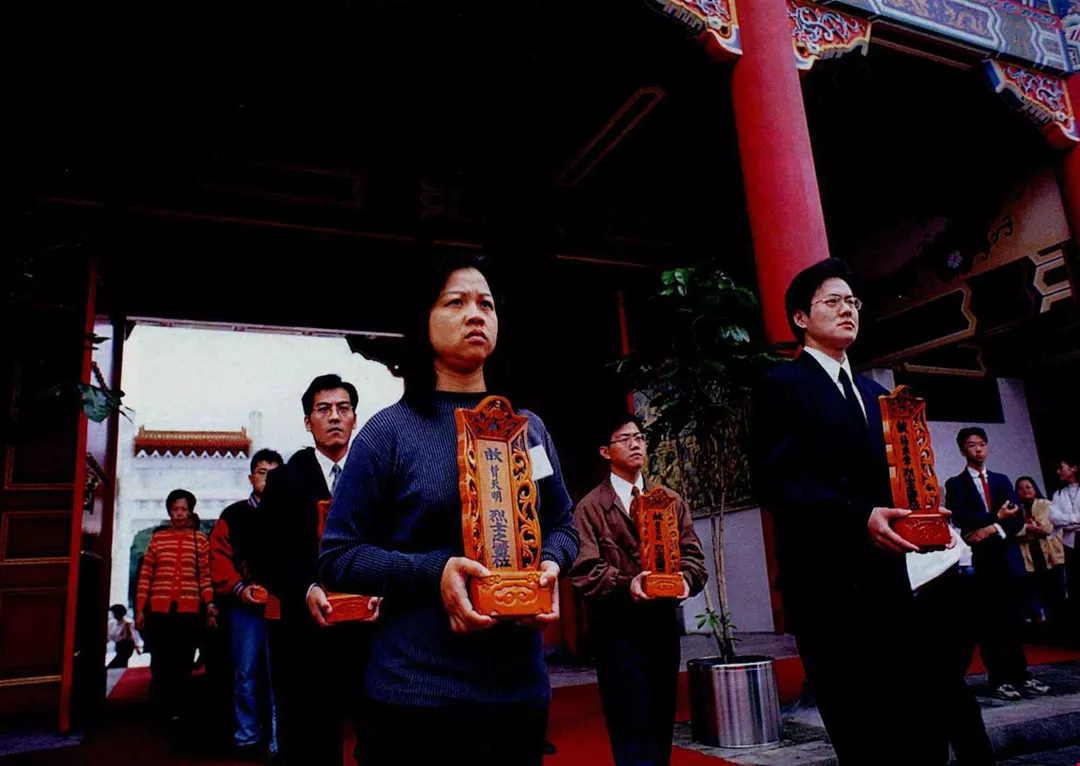
As of two years ago, policemen killed in the line of duty can be buried in the Martyrs' Shrine in Taipei. Police work is dangerous and stressful, and polls show that 78% of policemen would like to change careers. (photo by Pu Hua-chih)
Yang Tsu-ching says: "The police are part of society, and as society gets better, so should the lives of policemen." Back in the 1950s and 1960s, when he was a young officer, "even officers who were off-duty preferred to stay at the station, because it had air conditioning and fans, and was better equipped then their homes." Today the situation is the opposite. "In many station houses it's four to a room, and everybody shares one bathroom. Some people even have to share their bedding in turns. Police spend a lot more time at their place of work than most people. If police living conditions are lower than in society at large, why would anyone want to be a policeman?" asks Yang. A disadvantaged group
Hsieh Jui-chih, president of the CPU, points out that the police bear heavy responsibilities, but do not necessarily enjoy corresponding respect. "Taiwan has 77,000 policemen, everything from air police to maritime police. They comprise one of the largest groups in the government. But the head of the police-the director of the National Police Administration-is simply a subordinate in the Ministry of the Interior, just another civil servant. Though there are 77,000 police officers, in the police organization chart there are only 157 spots for so-called jianren officials (the highest civil service ranking), which is a tiny proportion compared to the figure of more than 5100 jianren posts for 190,000 total civil servants. Even the president of the CPU has a lower civil service rank than the president of a state-funded university," he says.
Hou Yu-i, deputy director of the Criminal Investigation Bureau, claims: "The police may be armed, but they are a disadvantaged group."
Yet, while the police do not have high status within the government bureaucracy, there are great demands made on them. Police are commonly evaluated using such indicators as "major cases solved," "percentage of total cases solved," and "lowering the number of cases." Such standards induce many policemen to distort the statistics by "burying cases," a practice which the public suspects is widespread.
Burying a case means that police do not follow up on a report by a citizen, but simply treat the report as never having existed. Or, a major case may be reported as a minor case.
Yeh Shu-lan, an associate professor at the CPU, points out that the root of the this problem is that the police bureaucracy has long used "rate of cases solved" as the main indicator to evaluate police units and to decide on promotions. An officer says with frustration: "If one of our cases is solved by another unit, not only is our grade affected, we may even be punished." This creates a lack of trust among police stations and between stations and their superior agencies.
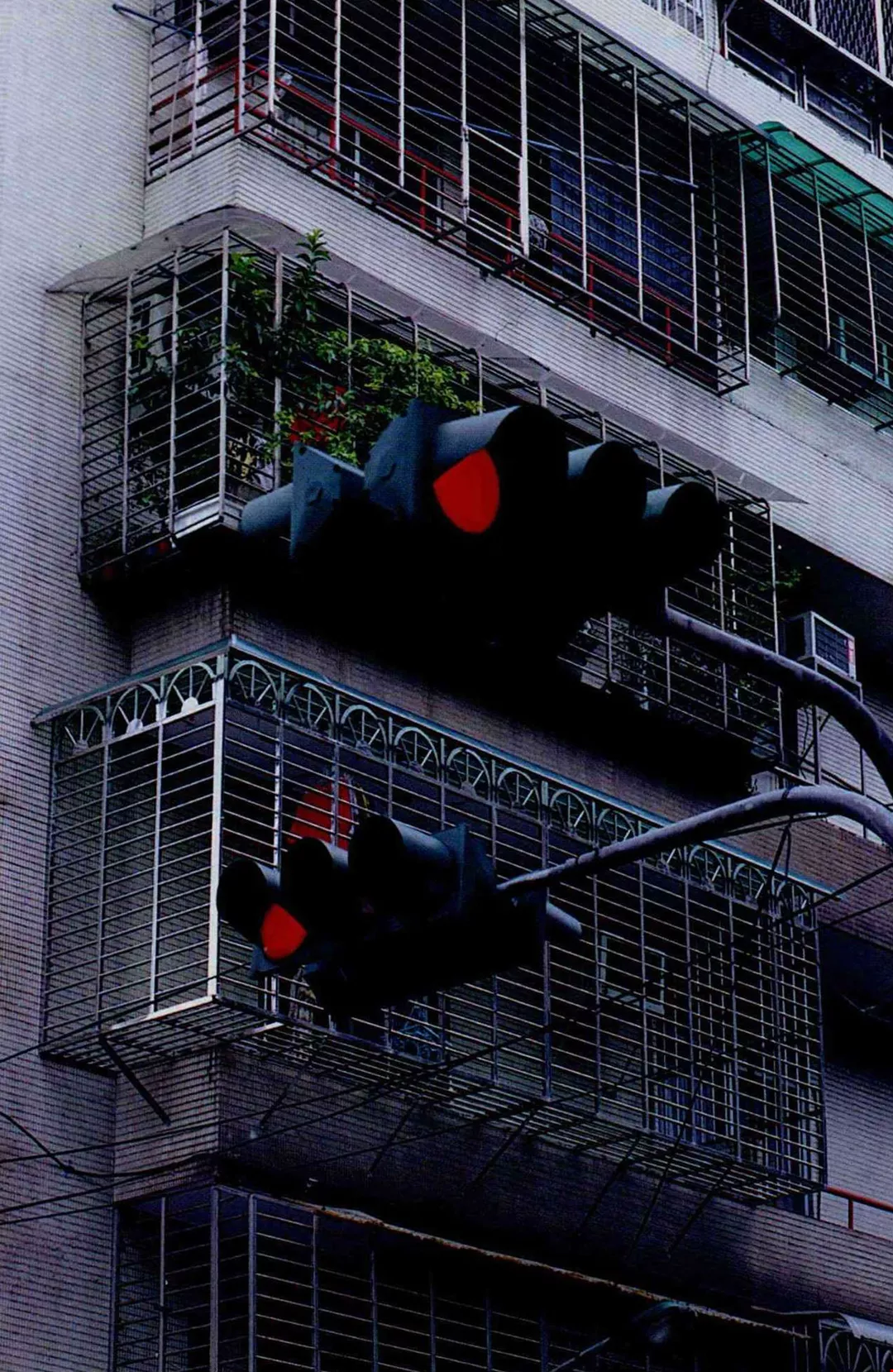
The steel windows which people install reflect their sense of insecurity about crime. The police have to find a way to relieve the public's fear.
Yeh Shu-lan suggests, "If high-ranking officers would make fewer promises to the public or to elected officials to 'improve within a short time,' solve a given case within an arbitrary time limit, or 'rapidly reduce the crime rate,' there would be far fewer cases of police coming up with false statistics because they are unable to meet these standards." Adds Yang Tsu-ching: "The crime rate should reflect the overall public order situation, and not be the basis on which police performance is judged." Getting their own house in order
Of course, unreasonable demands for better statistical performance do not excuse burying cases. Yang points out that police should have professional ethics. When a case occurs, it becomes the responsibility of the police, and they cannot evade this responsibility for any reason. "In Tokyo there are seven or eight cases every year of kidnapping for ransom. Police think that this is in itself a threat to social order. Each month agencies at every level run drills on handling kidnapping cases," says Yang. "In Tokyo, if there are just one or two cases in which the kidnap victim dies, high-ranking police officers themselves request punishment or resign."
"Compared to the Japanese police, the degree to which our police accept responsibility for criminal cases is definitely inadequate," states one high-ranking member of the police community. Ordinary street officers should not be afraid that a large number of cases will reflect badly on their precinct. If they fail to report cases, not only will this not "prevent any adverse side effects," it may on the contrary lead to "countless side effects."
When Yang served as the head of the police in Pingtung County, he found a case of lower levels reporting a major case as minor-reporting armed robbery as burglary. After discovering the truth, he immediately established a special task force and within three days cracked not only that case but also all the previous cases that particular criminal had committed. "If we had dealt with this as a case of simple burglary, not only would we not have solved the case itself, we would have had more and more cases later."
Burying cases is part of the overall problem of police corruption. According to the Modern Women's Foundation survey, among the items respondents could choose from for improving the image of the police, fighting corruption (38%) was far and away the first, well ahead of "solving criminal cases" (12%), "crime prevention" (25%), and "attitude toward the public" (20%). Clearly the public is most concerned with corruption, bribery, and police collusion in illegality.
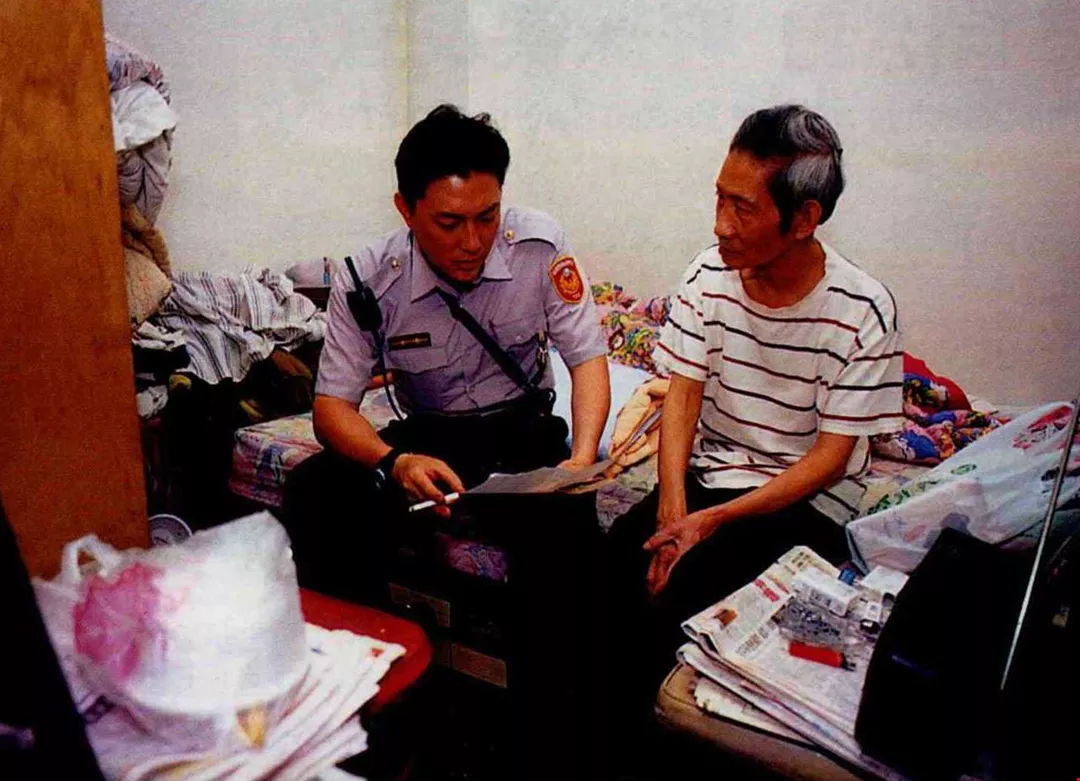
A visit by a police officer brightens up the day of this elderly man living alone. Improving relations with the public is the main task of police reform at the present.
Smokey is the bandit?
Police live on the line between honest society and the criminal world. Sometimes, to crack a case, they cross that line. In the authoritarian era, there was little concern for human rights or the rule of law, and dubious methods like entrapment were winked at. "But today the police have to change. The first principle is that they cannot break the law," says veteran investigator Ho Ming-chou, head of the Fourth Investigation Corps at the CIB, who has many years of police experience.
Ho notes that policemen often have to associate with informants from the criminal world. Many people, like operators of illegal gambling or sex businesses, try to get close to police by posing as legitimate businessmen or by getting in tight with local politicians. When it comes time to deal with these activities, policemen have to be especially careful. Or take the use of informants. Ho's attitude is: "Be honest, and don't join in with them. If you have to hang around with them, be more like a 'teacher' or 'guidance counselor' to them, not a friend. Don't fall into the same boat with them."
Most worrisome is when police break the law in order to try to get credit for themselves. In April the Taipei prosecutor indicted a police officer for falsifying documents. The officer used false documents to trap a wanted drug dealer on a trumped-up robbery charge. In the past, there were cases of police inducing gangsters to buy guns so they could "crack the case." It is such cases of the law enforcers being the criminals that most infuriate citizens.
But police have things to say in their own defense.
Li Yung-ching, chairman of the foreign affairs department at the CPU, explains that there is still no consensus in society on whether many non-violent crimes, such as gambling and prostitution, should be illegal. And there are many gray areas in the law (such as what defines a "gambling video game"). Such problems create opportunities for people to make profits and share them with the police, further compromising police integrity.
From the police point of view, it would be best to "decriminalize" these types of activities and bring them into the open where they could be regulated. Wu Hsueh-yen, a professor at the CPU, says that in some states in the US, the sex industry is allowed to operate within a clearly defined area, and those interested in such things can go to these areas to enjoy a somewhat more "reserved" show.
Another proposed method to reduce corruption is to increase police salaries and promotion opportunities so as to reduce the temptation to accept "bonuses" from outside parties. In fact, the starting salary of a police officer who has graduated from a two-year vocational police college is over NT$40,000, well above that of most college graduates just entering the job market. The problem is that after a certain number of years, bottlenecks in the police organization chart make it difficult to progress past a certain point. Looking for new jobs
It has been said that police work is the job in the world most likely to lead to explosions of dangerous emotions. But the pressure in police work comes not, in fact, from criminals, but from daily time pressures and the emotional appeals of citizens.
Two years ago, the Taipei police commissioned a study of stress to be conducted by the Taipei City Psychology Center. It found that there is a high rate of psychosomatic illness among officers under 30, while officers in their 40s and 50s are more likely to have chronic illnesses. More than half of the 710 respondents reported high blood pressure, while 20% reported ulcers and 10% heart trouble. Others, under the pressures of work, reported "frequent anxiety" and "regular use of tranquilizers."
Last June, Hsieh Ming-hui also conducted a survey of police officers. He found that 46% of respondents felt "a sense of honor" from their jobs, while 29% reported "no special feeling" and 25% reported that they didn't want other people to know they are cops. A full 78% of the entire police force, and 69% of high ranking officers (rank 1/4 and above) said they wanted to change careers. Similar surveys showing low morale frequently appear in the media.
Police suicide
How bad is morale in the lower levels? Last year alone 13 police officers committed suicide. Overnight, everyone was talking about the psychological condition of the police.
Compared to other professions, police work is definitely stressful. Cops work long hours and have irregular schedules. A dangerous situation can suddenly occur at any moment. "Maybe you are doing routine ID checks on the street, and a guy pulls a gun on you. Or you go into the home of a suspect to search for clues, and an armed guy jumps out of the closet," says veteran cop Hou Yu-i. These situations cannot be prevented by training, but are simply part of the job.
Police work is indeed dangerous. But, ironically, most of the policemen killed on duty have not been struck down by criminals, but have died by their own hand. This is a fact that the police authorities do not really want to face. According to CPU statistics, between 1991 and 1998, 72 officers killed themselves; over 60% of these were between 20 and 29 years old. The reasons for the suicides were emotional troubles (31%), family factors (22%), health factors (13%), and inability to adapt to the job (12%).
It may seem as if the two leading causes are personal, and not related to police work. But a report by the Research, Development, and Evaluation Commission of the Executive Yuan shows that more than 90% of police officers say that their jobs adversely affect their leisure time with friends or family. Thus "the problem of police suicide is not purely personal, but is related to the nature of police work," says Yeh Shu-lan.
From "Earth God" to 7-11
Chen Ming-chuan, commander of the cadet corps at the CPU, says that it is necessary to rethink the police role in society. How can police work be made more "humane" while also improving public safety? One possible answer is greater cooperation between police and ordinary citizens through "community policing."
Community policing has been implemented on a trial basis in various areas for the last three years. "The main idea," explains Li Cheng-kuang, a station commander in Taipei's Chungcheng district, "is nothing more complicated than getting police out walking a beat." He says that in 1997 the Chungcheng precinct began cooperating with neighborhood chiefs; through the contacts of the neighborhood chiefs, they tried to keep abreast of the comings and goings in the district. At summer and winter vacation, "residents who were going to go away for a while only had to call in at the precinct house and we would increase patrols in their area," says Li. Since the program began, the number of burglaries in the district has fallen from 133 in 1996 to 52 in 1998.
Li encourages all beat officers to do anything they can to help ordinary citizens. For example, if a single woman cannot find a trustworthy cab, she should be able to call the station house and the police can find one for her. Or, if there is a patrol car nearby, the police might even take her home themselves. Says Li: "In the past people thought of the police as being like the Earth God, to whom they would only turn when something bad happened. Now we hope citizens will treat the police more like a 7-11, as a 'good neighbor' right nearby."
Police training has long emphasized techniques of crime prevention and detection. But statistics show that no more than 20% of a policeman's activities are crime-related. And even in criminal cases, most are solved because of help provided by ordinary citizens. "If the police disregard public opinion, they won't have a leg to stand on," warns Hsieh Jui-chih. Cooperation with the public is the major target for the police administration entering the next century.
China has had a modern police system for nearly a century. Mei Ko-wang, former president of the CPU, describes society's attitudes toward the police as "expecting them to be saints, running them off like animals, treating them like criminals, and tossing them away like old shoes." Can closer cooperation with civilians change long-standing stereotypes of the police?


@List.jpg?w=522&h=410&mode=crop&format=webp&quality=80)
