How Not to Get Shanghaied in a Chinese Restaurant
Jackie Chen / photos Vincent Cheng / tr. by Brent Heinrich
March 1994


In September of last year, the American organization Food Marketing Institute released a report indicating that 52% of Americans consider the dishes they eat in Chinese restaurants to be "more healthful" than their usual diet.
According to research released in January of this year by the Journal of the American Dietetic Association, Chinese cuisine may be delicious, but it is not necessarily good for you. Some vegetables, such as eggplant, cauliflower, Chinese cabbage, spinach, onions or carrots, readily absorb oil. When stir-fried in oil containing 15 grams of fat, they soak up12 grams of fat or more. This amounts to 20% of the daily recommended amount of fat for a sedentary woman.
After this information was published, many Chinese restaurants in the United States felt an immediate impact. The Chinese restaurant business in the state of Ohio dropped by 20%.
When this news crossed the ocean and reached the ears of professionals in Taiwan, the reaction of many of them was, "How could that be?" Frank Lin, executive director of the Chinese Dietetic Culture Association, believes that Chinese food uses grain as its staple and often emphasizes greens and tofu. All of these are beneficial and healthy. He says, "I have heard that Chinese food can make people undernourished, but I've never heard it could be too rich!"
Is the nutritional value of Chinese food too little or too much? In actuality, both sides have a point; the question is too complex to be easily explained in a word.
Kung pao chicken, sweet-and-sour pork, moo shu pork, home-style noodles... how much fat, salt, calories and cholesterol do these common dishes contain?
According to the findings reported by the Food Marketing Institute, one serving of kung pao chicken contains 76 grams of fat, as much as four American hamburgers, 40% of a day's supply of calories. The saturated fat in a plate of moo shu pork amounts to 10% of total calories, and it has twice the cholesterol of a ham, egg and cheese sandwich. A bowl of home-style noodles contains 3460 mg of salt, as much as one finds in a Pizza Hut cheese pizza, exceeding the daily requirement.
Section Chief of the Department of Health's Bureau of Food Sanitation Tzeng Min-su observes that the American research institute that issued the report was very scientific in their procedure, precisely calculating the nutritional ingredients of Chinese food. Nevertheless, their sampling was unfairly arbitrary. Kung pao chicken, sweet-and-sour pork and even moo shu pork are all common entrees in overseas Chinese restaurants, but in a traditional Chinese diet they are considered dishes high in calories and fat. "Why didn't they use dishes that the Chinese most often eat, like steamed fish, fire pot, or boiled vegetables, for comparison?" Tzeng Min-su objects.
Just like Western cuisine, the Chinese culinary spectrum includes both high and low calorie dishes. "One helping of hamburger has 541 calories; a serving of whitebait herring and cabbage has 139. If you use these two dishes for a comparison, which one is healthier, which one is more appealing to weight-conscious modern people?" asks Chen Juen-ching, associate director of the Chinese Nutrition Association.
For that matter, the taste and eating methods of most Westerners are very different from those of their Chinese counterparts. Chang Hwa-chou, executive chef at Taipei's Lai Lai Sheraton Hotel, observes that, unless they have a sophisticated knowledge of things Chinese or the help of a Chinese friend, Westerners love to order sour, spicy entrees, such as sweet-and-sour pork. Or they may request chop suey, which is really a mix of various victuals like fried rice or noodles, or they eat selections with lots of gooey sauce and starch.
"If Chinese food is calculated as having more calories than Western food, it all has to do with the way it is eaten," says Tzeng Min-su, who has traveled in America. In Western countries people order food in Chinese restaurants the same way they order Western food. That is, every person selects their own entree and sometimes rice, and then each eats their own. The typical dining technique is to throw everything on top of the rice and swallow everything: oil, sauce and all.
Conversely, Chinese people like to sit at a round table, everyone ordering and sharing several dishes together. The dishes usually include a variety of meat, vegetables, tofu, and fish with rice. "Compared to eating a steak and a bowl of salad in a Western restaurant, the Chinese meal is perhaps more balanced. The most important question is not the structure of the food; it lies in the method of preparation and the discretion of the diner," says Chen Juen-ching.
Tzeng Min-su believes that traditional Chinese cookery customs pay close attention to health. For example, Chinese cuisine employs a large amount of vegetables, even in dishes that are centered around meat, such as chielan beef or red-cooked lion head (large meatballs with cabbage simmered in soy sauce). Other entrees, such as hungmen jelly and fish-flavored eggplant, are based upon the vegetable ingredient. Chinese people are also inclined to order side dishes of fried or boiled greens to accompany the main meal. "Veggie loving" habits like this are rarely seen in Western eateries.
Western chefs are very particular about their sauces, which hold the essence of a dish's flavor. This sensitivity is transferred to the Chinese restaurants in Western countries, which also emphasize the sauce. "The most important thing that a head chef can do in a hotel kitchen is prepare the sauce," says Chang Hwa-chou. The true purpose of these sauces is to harmonize the flavor, but as soon as Westerners see some on their plate, they dump it all over the food like dressing on a tossed salad and swallow the whole batch.
"Chinese people dine in a big group using chopsticks, eating lots of rice. All these habits are good, from the point of view of a balanced diet," says Tzeng Min-su. Westerners using Western style dining habits to eat Chinese food inadvertently consume large quantities of sauce with fat, salt and cholesterol and a goodly amount of oils left over from the cooking. For modern people who are wary of overeating, it really is not a clever procedure.
Tzeng Min-su suggests that Westerners have a "misunderstanding" about Chinese food, and the crux of the problem is "insufficient communication." She contends, "Overseas Chinese restaurants rarely inform their customers with appeals like 'How to eat Chinese food' or 'Chinese cuisine is health food." They have even made a lot of changes to their menus to accommodate the habits and taste of their local customers.
Chen Juen-ching believes that American Chinese restaurants and American Chinese food both have excessive oil, salt and sugar. "They use a lot of starch and oil and deep frying," she says. Copious volumes of cashews, peanuts and macadamia nuts, for instance, are added to kung pao chicken. When serving moo shu pork, they often add a pancake to the pork and egg; vegetable helpings are small. Some Chinese restaurants even follow the Western custom of serving aperitifs before the meal, together with fried crispy cookies made of won ton or potato skins. After the meal, ice cream or cake is served. This manner of dining is naturally high in calories.
The ancient Chinese perspective actually paid particular attention to balance and emphasized preserving one's health. The ancient medical classic Suwen enumerates "Five grains for nutrition, five fruits, five meats for benefit, five plants for fullness" as a means of maintaining energy. This accords rather closely with the rationale of food structure that most dieticians recommend.
The Chinese also speak of a food's harmonic balance of yin and yang. Nourishment and medicine are based upon the same principals. Those who have a "yin" state of health, such as anaemics, should eat food with a "yang" nature, such as liver, eggs and dates. Those with "yang" symptoms like high blood pressure should partake of foodstuffs with a "yin" nature, such as winter melon, duck or cucumber. Claiming that Chinese food is harmful to one's health is hardly convincing to those Chinese who even use food as a source of medicinal tonic.
Nonetheless, Chinese food is not without its "snares." In Taiwan, as in foreign lands, Chinese restaurants are being scrutinized for their generous helpings of fat, cholesterol, salt and so forth.
Between the years 1986 and 1987, the Executive Yuan's Department of Health undertook the "Taiwan Foodstuff Nutrition Status Survey." According to its results, the average per capita daily calorie intake for the Taiwan area was 2104. Compared to the period 1981 to 1986, the total calorie intake was down, but the consumption of meat and vegetable protein, as well as the percentage of fat, have all noticeably increased. (see chart)
The most telling data indicate that the average citizen's fat intake reached 84.6 grams, accounting for 35.6% of total calories. This was a four percent increase from the period 1981 to 1986. The percentage of calories accounted for by fat is 10 percentage points higher in Taiwan than Japan's 24.8%, despite a similar diet.
Some people explain the increase in fat absorption among the Chinese living on Taiwan by observing that cooking methods involving frying are on the rise. Furthermore, as living standards become more prosperous, many households no longer mete out oil with the frugality of the past. Chen Juenching believes, on the other hand, that the high intake of fat is related to the overall changes that are occurring in Taiwan's society, which have resulted in a greater number of people eating out. Restaurants fry food with a lot of grease to make it sell better. Cookies, nuts and other such artificial manufactured foodstuffs with a high fat content have also been widely accepted by modern people.
In order to avoid taking in too much fat, many dietary experts suggest cooking by methods that do not use oil, such as steaming, boiling, marinating, baking, stewing or mixing up cold. If you must use oil, try using olive oil or cotton seed oil. Research has discovered that because the Greeks process their foods with olive oil, their rate of cardiovascular diseases is relatively low.
Apart from fat, another problem Chinese people have in cooking is the tendency to use too many condiments. Besides salt, they also use considerable amounts of MSG, soy sauce, sweetened soybean paste, thick bean sauce, pepper, satay sauce and so forth to cook up their favorite dishes. It tastes delicious, but it also creates a sodium overload crisis.
"In order to effect a delicious flavor in Chinese food, cooks pay particular attention to the 'stove chi,' the dancing of the flame over the stove. Oil is therefore used greatly. Many recipes require frying over a high flame for a savory taste. Moreover, Chinese people highly value infusing the food with flavor. Even a good chef who can create the finest taste in the world still most fears cooking up something tasteless," admits Lai Lai Sheraton's Chang Hwa-chou. This point of view was very easy to understand in traditional agricultural society with its demands of hard labor, but today it could in truth stand some amendment.
Enjoy Food, Inc. published research which indicates the Chinese average daily consumption of salt is 12 to 15 grams. Although this is a far cry from the 26 grams consumed in Hokkaido, Japan, it is still far higher than the eight to ten grams in the United States. Likewise, the rate of high blood pressure among the Chinese is 12%, as compared to 9% in the US.
Medical research has ascertained that of the ten leading causes of death, heart disease, diabetes, cerebrovascular disease, high blood pressure, breast cancer, rectal cancer and liver cancer all are related to a high consumption of fat, cholesterol and salt. In fact, the real cause of these diseases "is probably due to the total change in society: so much of the work is now done by machines, and the time that people spend in labor has shrunk. It has to do with the fact that people don't get regular exercise," says Huang Po-chao, professor in the Department of Biochemistry at the National Taiwan University College of Medicine. Nevertheless, in this day of ever present convenience, spending a little time to eat right is certainly an activity at which no one can lose.
According to ancient Chinese legends, those people who drank common tea and ate plain rice, made their diet of vegetables and tofu and avoided meat and alcohol usually lived very long. Perhaps we should return to the teachings of our ancestors: "Return to nature, to the original food, the original flavor, for the real essence of the dish," quotes Chang Hwa-cho, who has prepared every sort of delicacy. In this way Chinese food can return to its original healthy source.
[Picture Caption]
p.26
"Stove chi" is the speciality of Chinese food. But the oil in fried dishes of generous portion may change in quality due to high temperature.
p.27
Kung pao chicken, a popular entree in overseas Chinese restaurants, is high in fat, calories and salt.
p.27
Steamed eggs in caviar with chicken soup, smoked salmon and hollandaise sauce is rather delicious, but its calorie count is questionable. (photo courtesy of Lai Lai Sheraton)
p.28
The dazzling array of Chinese seasonings are of primary importance in concocting the intricacies of Chinese cuisine, MSG, "the Old Master of Chinese seasonings," is commonly used to bring out a food's flavor, but many people suffer heart palpitations and headaches after eating it.
p.29
Cheese, appearing in many varieties in Western restaurants, is believed to be one of the food sources with the most calories. But whether it is healthy or not depends on what foods are eaten along with it.
p.30
Within the scope of Chinese food are many forms of deep fried munchies; modern people with a richer diet should not eat a lot of them.
p.31
From the point of view of nutrition, eating raw vegetables is good, but adding dressing with a high fat content is not necessarily healthful.
p.31
A comparison of daily total calorie and nutrient intake in Taiwan and Japan.
p.32
Chinese people like to eat at a round table, sharing various delicious dishes and enjoying the excitement of the noisy atmosphere.
p.32
Western restaurants pay particular attention to mood and ambience; this special style allows each person to individually enjoy their own delicacy.
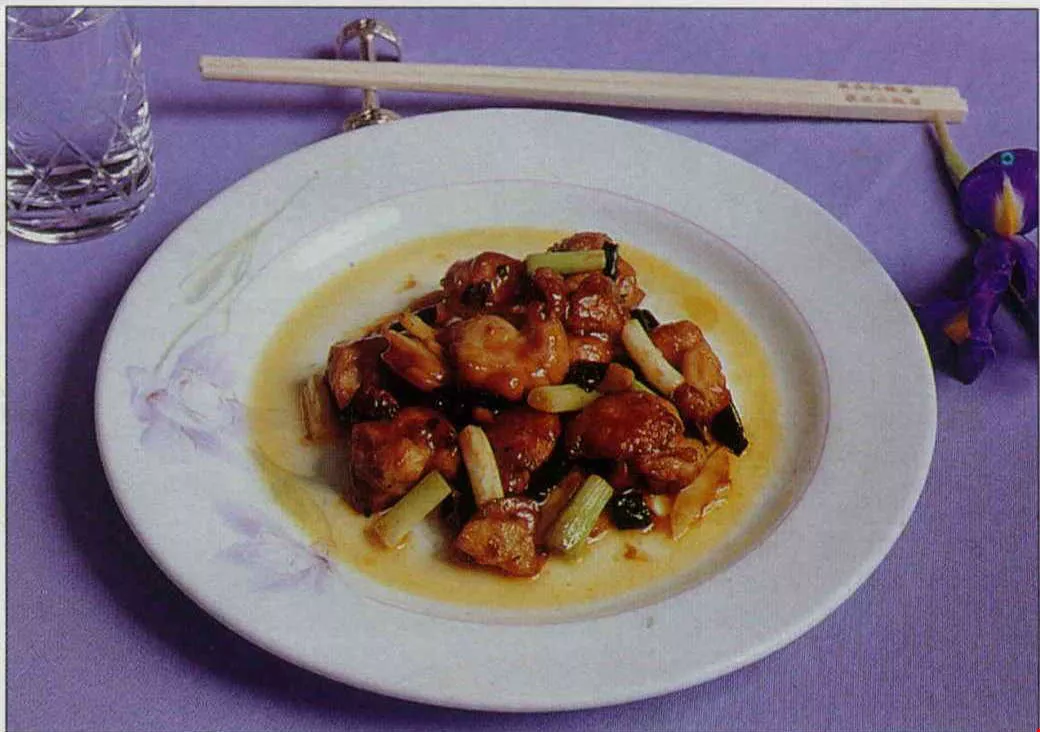
Kung pao chicken, a popular entree in overseas Chinese restaurants, is high in fat, calories and salt.
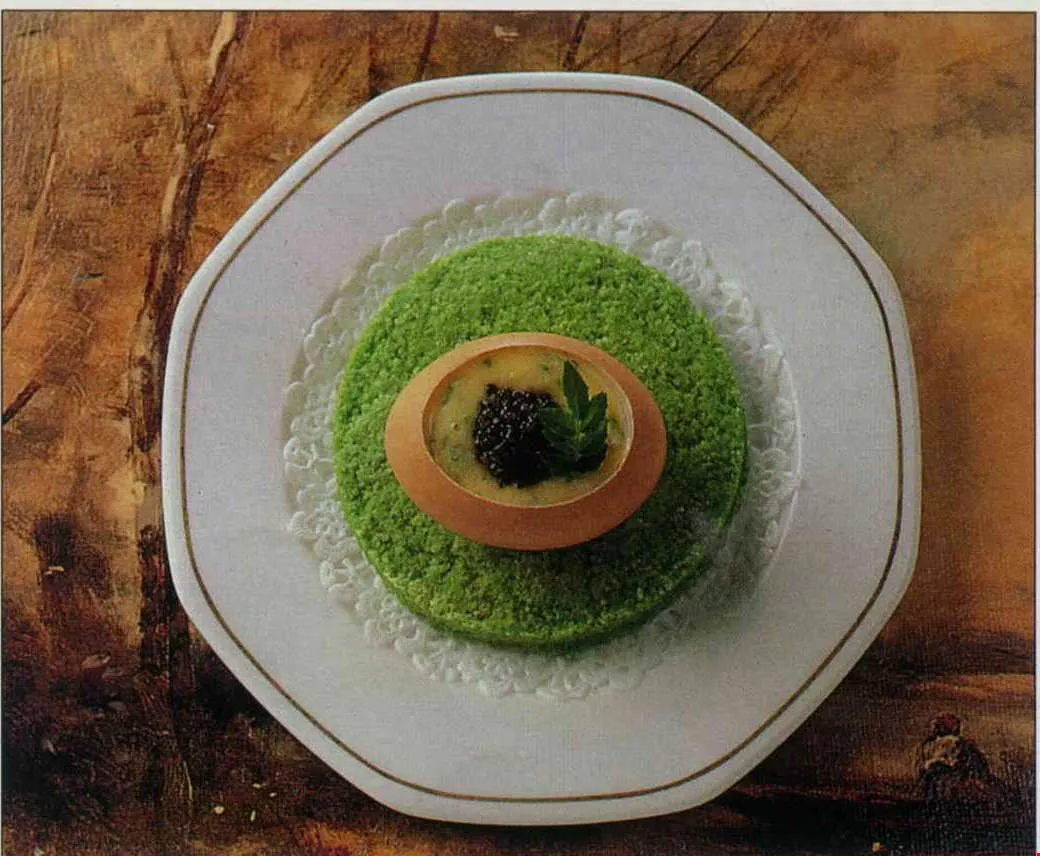
Steamed eggs in caviar with chicken soup, smoked salmon and hollandaise sauce is rather delicious, but its calorie count is questionable. (photo courtesy of Lai Lai Sheraton)
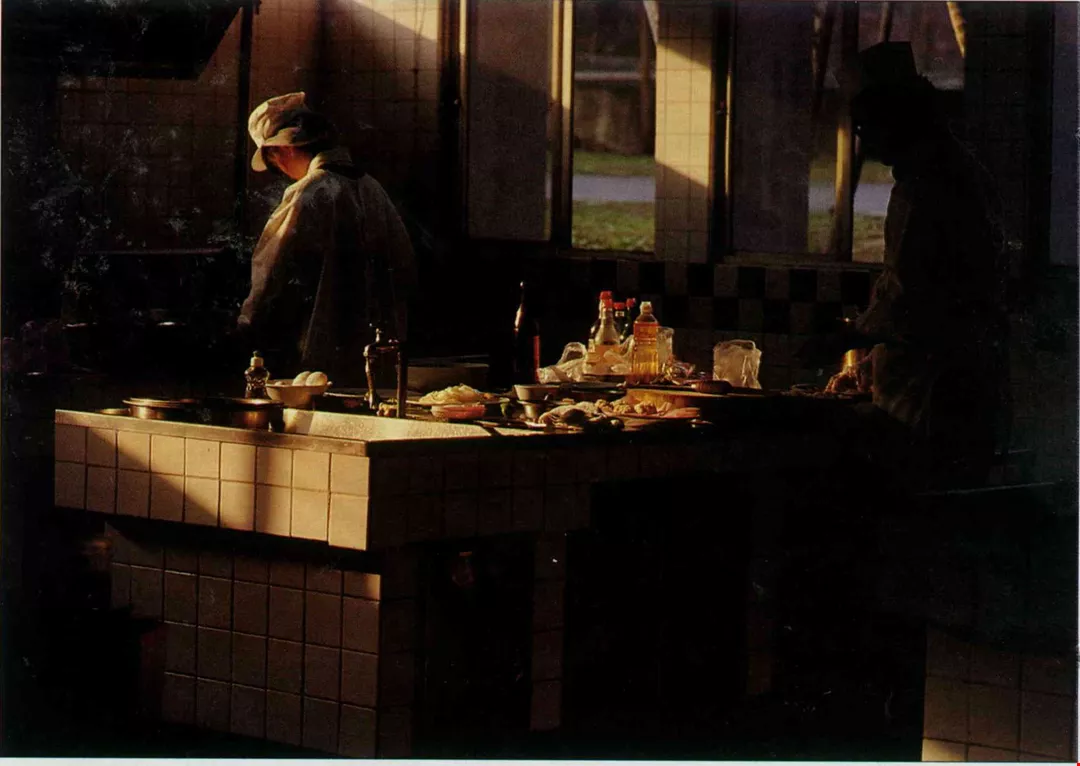
The dazzling array of Chinese seasonings are of primary importance in concocting the intricacies of Chinese cuisine, MSG, "the Old Master of Chinese seasonings," is commonly used to bring out a food's flavor, but many people suffer heart palpitations and headaches after eating it.
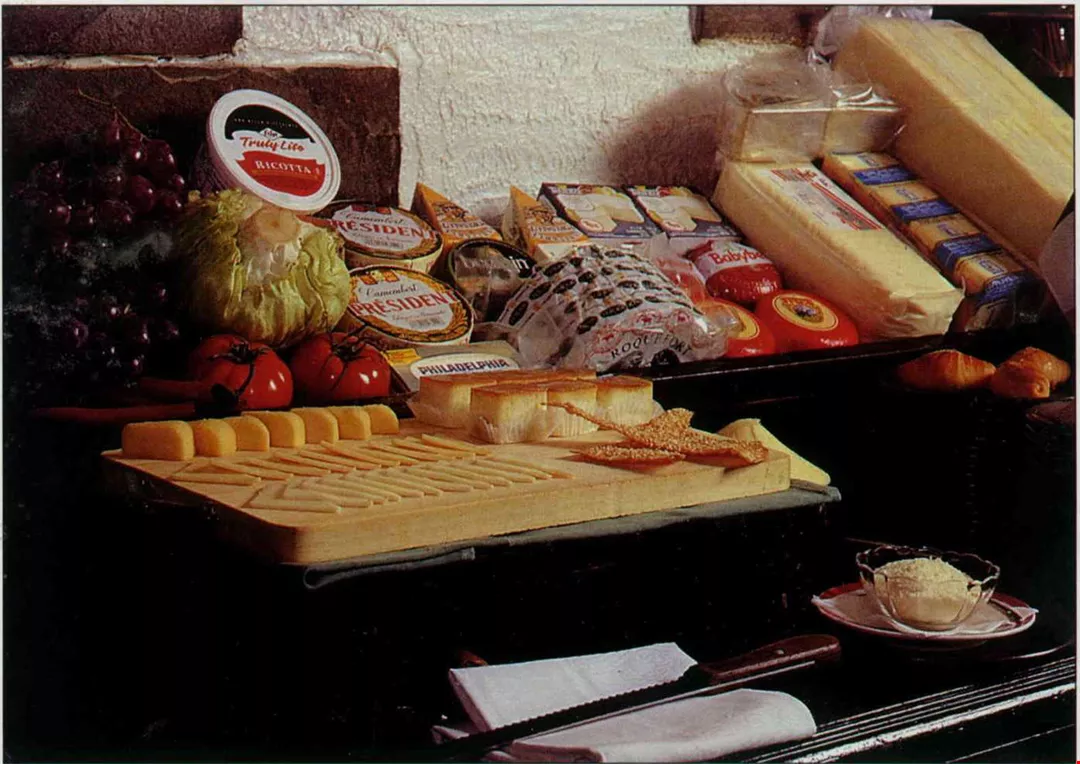
Cheese, appearing in many varieties in Western restaurants, is believed to be one of the food sources with the most calories. But whether it is healthy or not depends on what foods are eaten along with it.
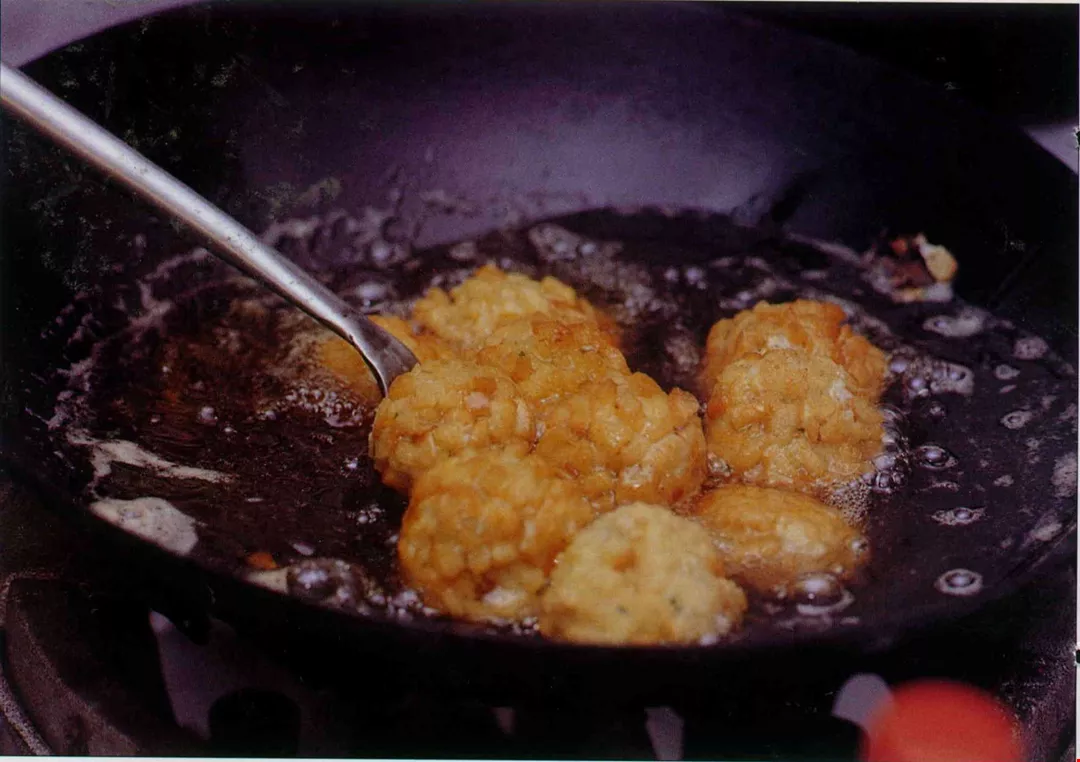
Within the scope of Chinese food are many forms of deep fried munchies; modern people with a richer diet should not eat a lot of them.
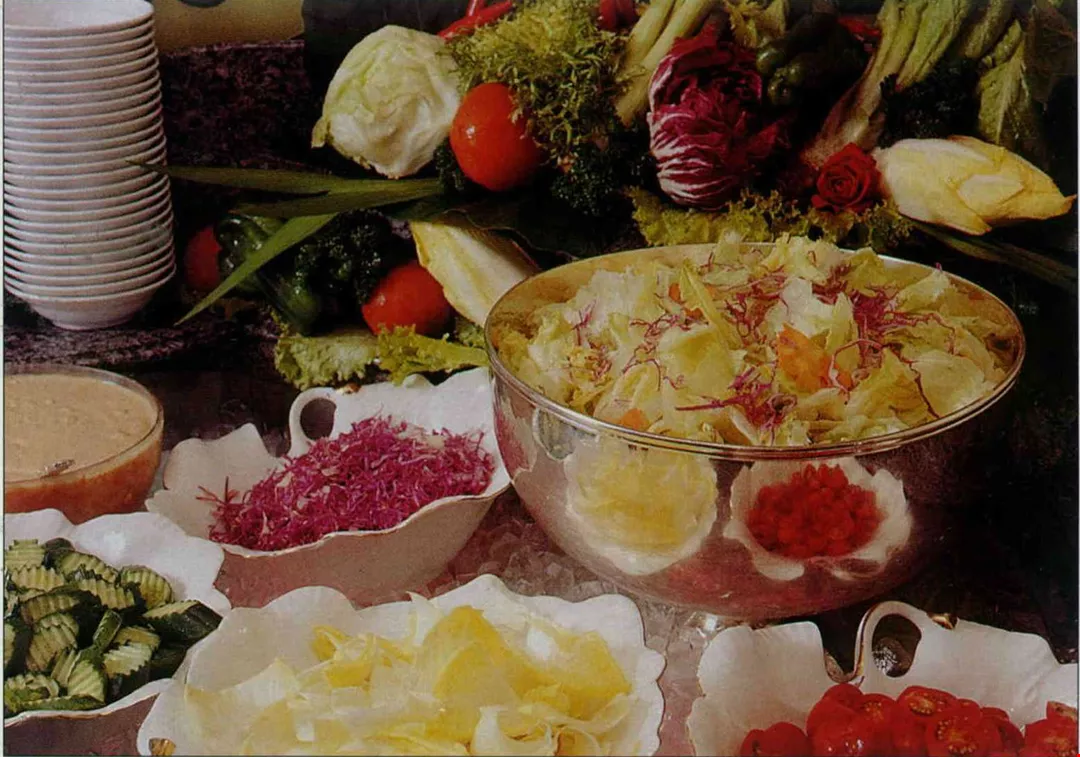
From the point of view of nutrition, eating raw vegetables is good, but adding dressing with a high fat content is not necessarily healthful.
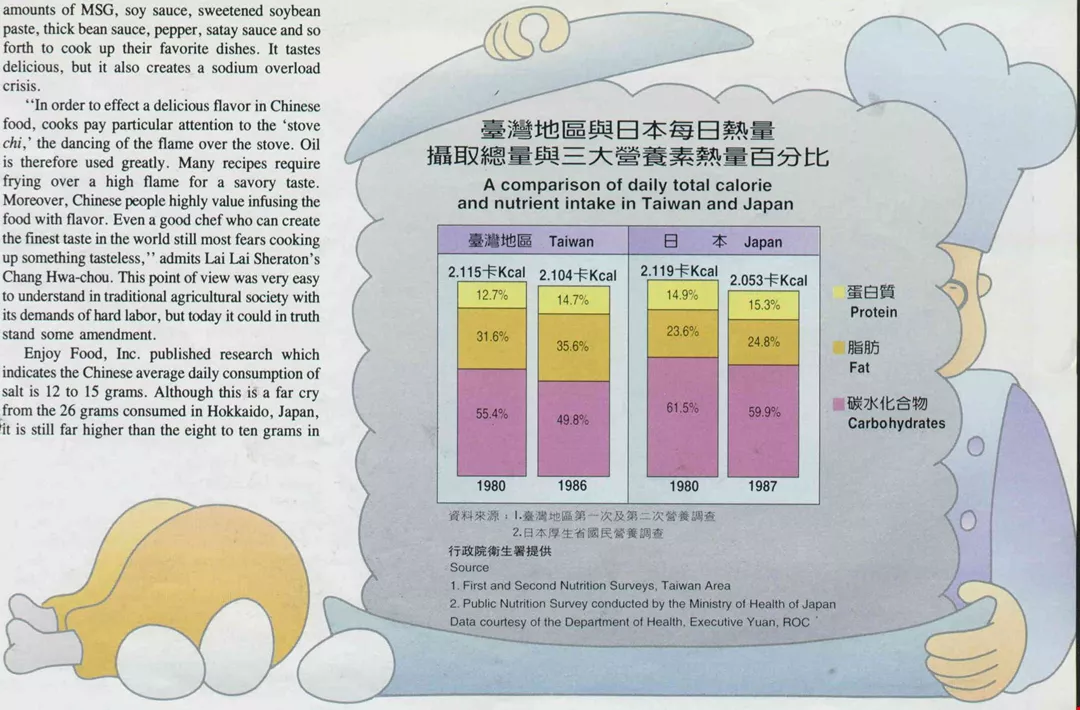
A comparison of daily total calorie and nutrient intake in Taiwan and Japan.
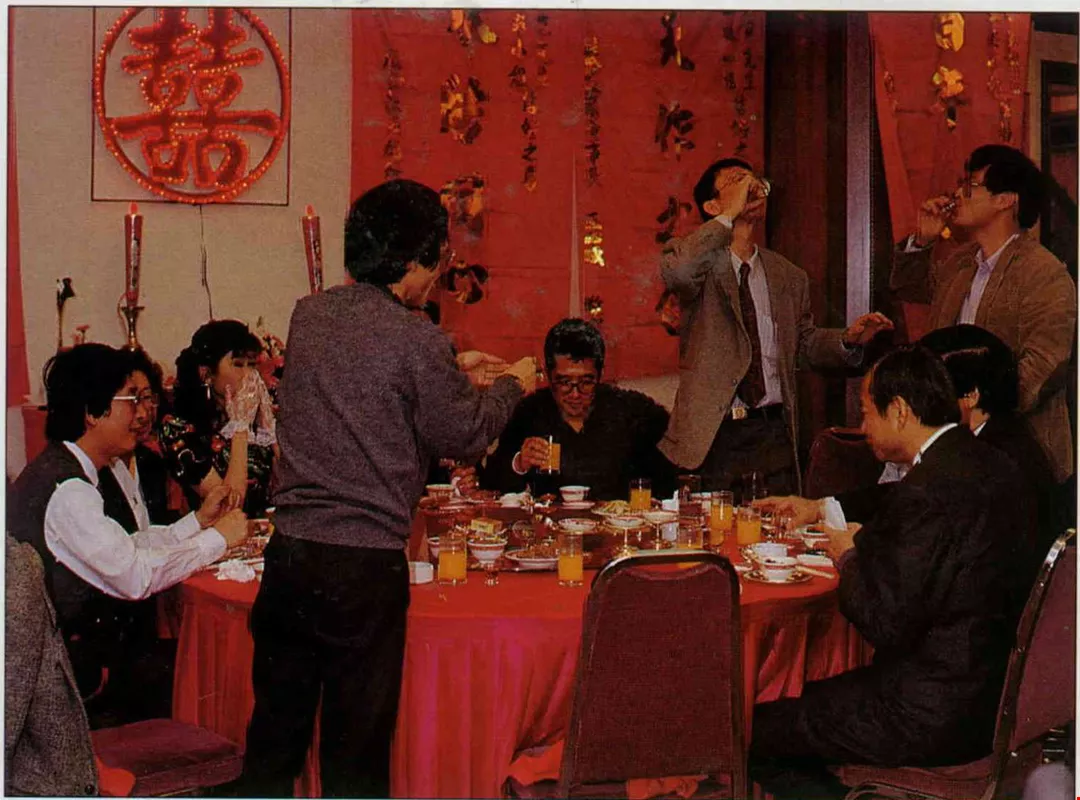
Chinese people like to eat at a round table, sharing various delicious dishes and enjoying the excitement of the noisy atmosphere.
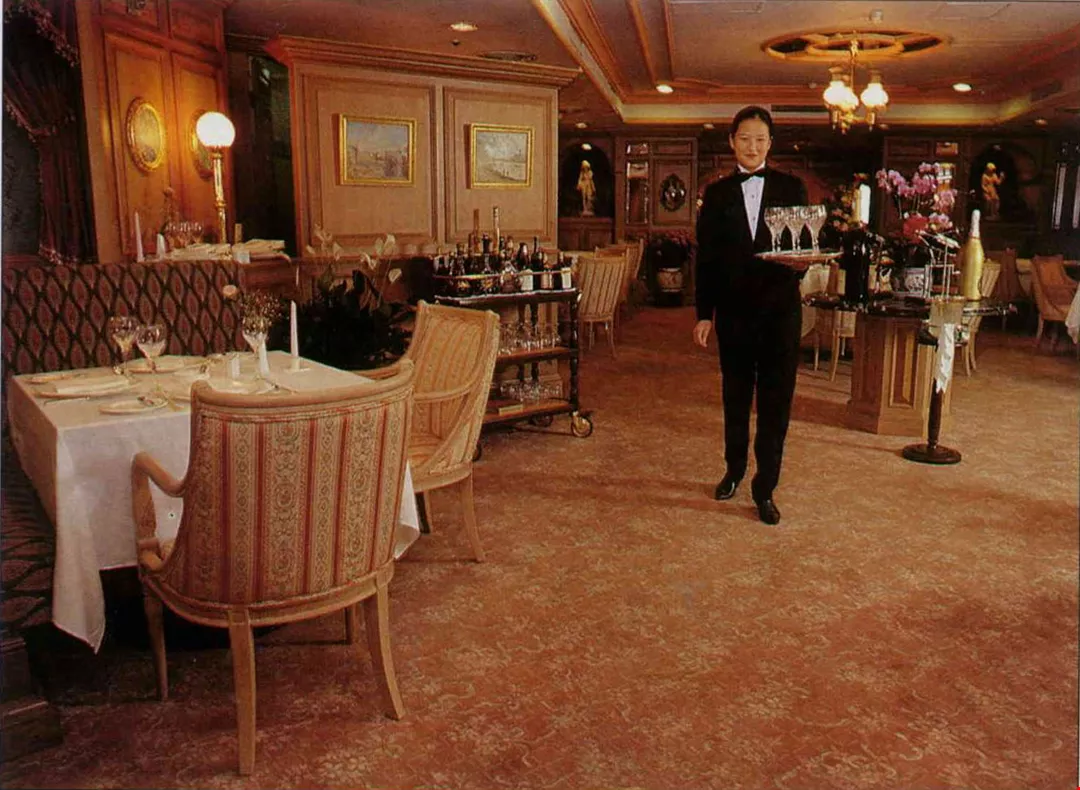
Western restaurants pay particular attention to mood and ambience; this special style allows each person to individually enjoy their own delicacy.


