Sightseeing at a Different Pace--Cycling Comes into Vogue
Kate Yang / photos Chi Kuo-chang / tr. by Geof Aberhart
October 2004


Until 1995, Taiwan had a reputation as the "Bicycle Kingdom," and even today Taiwan's bicycle industry is still recognized as a major international player. But in Taiwan itself, as the economy took off, cars and scooters started to become more prevalent on the roads, and Taiwanese seemed to have forgotten the simple pleasure of cycling.
In recent years, in the face of mounting environmental problems such as the greenhouse effect and the gradual exhaustion of fuel sources, many people have decided to change their priorities, giving away the old obsession with comfort and speed and once again breaking out the bicycles. Whether it's for the commute to work or just relaxing at the weekend, whether just taking it easy or going full throttle, people are switching to bikes and doing the Earth a favor.
Once derided as backward by a people caught in a whirl of materialism, bicycles have had a renaissance of late, becoming part of a trend toward caring more for the environment. No wonder people are saying that cycling, combined with public transportation, could be the main way of getting around in future.
October is the best season in Taiwan. Sitting astride a bike, one can really get a feeling of freedom and joy. This feeling, mixed with the pleasure of a cool breeze brushing your face, is normally nearly impossible to get in the hustle and bustle of the big city.
To the modern person, riding a bike is generally pretty firmly associated with mucking about with friends as a child, or rushing back and forth between home and school as a student. As people grow up and become more "sophisticated," their modes of transport evolve with them, and the faithful old bicycle gradually becomes little more than a memory.
In spite of this, driven by a growing desire to protect the environment and the need for a simple, frugal lifestyle, a small portion of society has started to go "back to nature." Totally disregarding the dirtiness of the air, these people have taken up using bicycles to get around the city, trying to find some healthy way through the madness of everyday traffic.
Hsueh Chi-kuang has been one of these cyclists for two years now. Working as a photographer, he would commute to work by bike all the way from Mucha to the bustle of central Taipei City to cover news stories. Cycling means something special to him: "Just riding a bike around brings back memories of my days as a carefree high-school student back in Chiayi-I can just about see the mass of fluffy white clouds that used to cling to the mountains back home." Having been part of the rat race for a few years now, those memories of home, Hsueh says, "really come back when I'm sitting on my bike...."
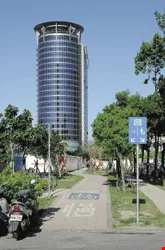
Taiwan's first inner-city cycling track, established in the Hsinyi District of Taipei City.
Riding's one for the young
Thirty-one year old Pei Fan-chiang has been another such bicycle commuter for a year and a half now. He already has a car, but finds driving around Taipei City too much of a hassle, and he doesn't want to fork out for a scooter. Waiting around for buses all the time gets frustrating, so eventually he decided to start using a bicycle for short-distance trips.
Pei has, however, run into a few problems common to all cycle commuters-thieves have had a go at his bike twice; once they left the frame behind but took off with the wheels, and the other time he carelessly didn't lock the bike up properly. But despite the seemingly endless difficulties and annoyances, as far as he's concerned, cycling still hasn't lost its attraction.
"Safety has to be a major consideration if you're looking at a bike as a means of commuting," says Pei. The buses that crisscross Taipei City are driven with amazing disregard, charging toward stops in slow lanes without slowing down. The pace in the city is hectic, cyclists are few, and there's a pitiful number of dedicated cycle lanes. With drivers in motor vehicles unwilling to show any sort of respect for cyclists, riding a bike around town is definitely more suited to young people, because at least they've got quick enough reactions should things go pear-shaped.
What makes this bearable for cycle-lovers is the uniting of conservationism, exercise, and relaxation that biking brings. At the end of last year, the country's first urban cycle-lane network was opened, in Taipei's "golden mile," Hsinyi District.
The man responsible for this is Liang Kuo-kuo, head of the Planning Department of the Taipei City Traffic Bureau's Traffic Engineering Office. Hsinyi District is fairly big, says Liang, and the cycle lanes head along the "green belt" planned for each side of the district. The lanes pass along Sungkao Rd., Sungchi Rd., Sungjen Rd. and Sungteh Rd., covering a total of 10.5 kilometers, and allow the public to ride along a shaded area and enjoy a bit of fresh air. On top of this, there are plans to make cycle lanes along parts of the broad footpaths around the Hsinyi area, so that people can safely ride to Shin Kong Mitsukoshi department store, Warner Village mall, and Taipei City Hall.
Because of the safety issues that would arise from having pedestrians and cyclists sharing the same pathways, the cycle lanes in Hsinyi will be paved with special paving, like that down sections of Sungchi Rd.: a rough kind of stonework, designed to provide increased traction. This special paving should prevent cyclists speeding and crashing into pedestrians, and thanks to the more effective drainage provided by this stone, there will be less chance of cyclists hitting wet paths, losing traction, and skidding out; or of them splashing water around the place.
The cycle lanes, which were completed at the start of this year, have worked nicely with another cycle-friendly policy: that of the MRT subway system allowing people to bring their bicycles into the first carriage of the trains during weekends. This new policy makes going out on the weekend a lot more convenient for those who just cycle for fun. As far as the creation of a comprehensive network for those who use their bikes to commute, Liang is optimistic; he knows that it's nearly impossible to find a space in the cycle racks near MRT stations, which indicates that the number of people riding is rising, as is the frequency with which they ride.
In the past few years the Giant Sports Foundation, created by famous bicycle manufacturer Giant, has changed direction and become the New Cycling Culture Foundation (NCCF), working to promote cycling by holding a range of related activities. Additionally, cycling tracks are planned for more riverside parks around Taipei City and Taipei County. The tracks that are in place now, along with the NCCF's events, have been giving people the chance to get into cycling through leisure activities. Once they get into that, they'll gradually move on to cycling in the city proper, taking cycling from being just a hobby to their main way of getting to and from work.
The executive director of the NCCF, Chien Chin-hsun, has spent years in the promotion of cycling. His biggest wish is to see the cycling population of Taiwan continue to grow until they can outnumber the scooters that chaotically pack the city streets at the moment.
As Chien explains, Japan and many European countries have very high levels of cycle use; even the Japanese police force use bikes on occasion. Cycling is a growing global trend. Thanks to funding from the Air Pollution Prevention Fund, established by the Environmental Protection Administration in 1997, cycle lanes have been constructed in cities around Taiwan to improve the traffic situation, and the National Sports Administration has allocated funds to support recreational cycling facilities. The cycling population in Taiwan is quite clearly picking up; looking at the monthly total of people using the cycle paths in the riverside parks around Taipei City and Taipei County-currently about 50,000-one can see that cycling in Taiwan is building up momentum.
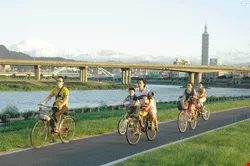
As well as being convenient, environmentally friendly, and having health benefits, ycling can give you a new perspective on the world around you.
Meanwhile, on the continent...
Although Taiwan was once known as the "Bicycle Kingdom" and Taiwanese cycle manufacturing was and still is top class, much of Europe has become a "bicycle paradise" of a sort modern Taiwanese cyclists can only dream of. Driven by rising consciousness of environmental issues, Europe is undergoing a transportation revolution of sorts, with cycling picking up dramatically. The cycling facilities in European countries are exceptional; so much so that even Germany, so renowned for its cars, has a huge population of cyclists. Photographer Chi Kuo-chang, who has traveled around much of the world in his job, says that the fact that over half of the roads in Germany are equipped with cycle lanes still amazes him.
Cycling is also a part of everyday life in the neighboring Netherlands. In fact, demand is so great there that it's not uncommon for a person to have two or more cycles, each for a different purpose.
Europeans have made cycling part of everyday life, alleviating the burden on the environment and enjoying the health benefits cycling can bring. According to a report published by Danish scientists in 2000, a person who rides to work every day is 50% less likely to suffer from serious illnesses than the average, and will live longer. This research was carried out over 30 years, and the results are clear: the more you hit the pedals, the healthier you'll be, and all it takes is as little as 15 minutes of riding a day to start getting results.
In the Netherlands, a country covering about 41,000 square kilometers, they have a huge population of cyclists, and their basic traffic facilities and signposts are excellent. Cycle lanes crisscross cities and towns like spiderwebs, totaling over 17,000 kilometers. Compared to this, Taiwan's cycling facilities are quite obviously lacking.
As an example, Chien tells how cyclists overseas are accustomed to just rolling out a map, picking out their route, heading out from home and going off to find some beautiful location to enjoy. But in Taiwan, while a lot of community facilities are called "complete" and "sumptuous" they still lack any sort of cycle path, which is a tremendous shame. On top of that, you're not even allowed to take bikes into Ta-an Forest Park. There are even some elementary schools which ban bikes on school grounds. And for the sake of "student safety," several junior high schools around Taipei have banned students from riding bikes to school, to the bemusement of Chien.
Chou Meng-kuei, leader of a well-known recreational cycling club, the Formosan Serow Biking Club, says that if the government truly wants to encourage cycling as a genuine option for commuters, they should set aside dedicated bicycle lanes throughout the city, as they have with bus lanes, and make a comprehensive network of them.
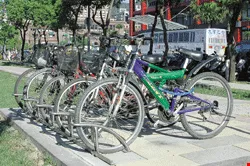
It's important to protect your bike, so that it doesn't get stolen or stripped.
Recreational cycling catches on
Ho Li-ching, a lover of speeding around and enjoying the outdoors herself, worked as a promotional designer for Giant at the height of their popularity, and developed a deep love for cycles and cycling.
Now working as the secretary for the Taiwan Cyclist Federation, Ho has ridden cycle tracks the length and breadth of Taiwan. In her opinion, there is no better track than the first tourist cycle track to open in Taiwan, the Kuanshan track in Taitung County. The track there has a unique geography, and Kuanshan Village seems almost fantastical in its beauty, surrounded by the mountains, making the track all the more wonderful.
She remembers in 1993, when Giant were planning to set up a store and bike hire outlet in Kuanshan, they were incredibly hesitant to go ahead with it-they were afraid that people there would be too few and too far between, and that the track would be empty. As it turned out, at first they were right.
From a small start, just having 40 bikes to rent out to tourists and visitors, the store has grown to its present size, with over 3000 bikes available. The market picked up on this demand, and Kuanshan soon became Taiwan's most health-conscious village.
In northern Taiwan this summer, cyclists will hit the roads of the township of Pinglin in Taipei County. The cycle path running around the outskirts of the industrial area has just been completed, and they're preparing to link it up with paths through the area's characteristic tea producing area, linking the whole thing into one "living natural museum," taking the eco-tourism route to attracting people to the area.
Ho took part in the planning of the Pinglin event, and she appeals to all her fellow cyclists, "If you're sick and tired of riding the same old flat tracks around the riverside parks of Taipei, why not see if you can inject a bit of excitement back into things. The Pinglin track is two and a half kilometers of gorgeous scenery-hills on one side, and valleys on the other, with Mt. Pichia off in the distance. It's a smooth track with only a bit of slope, and from that track you can also head off onto another one out into the forest. I guarantee that by the end of the ride, you'll be hooked."
She remembers once when she and a friend rode toward Wulai from Hsintien; they had planned a route to take them up to Fushan, and on the way they spotted a man driving an SUV with a bike strapped to the back. Unexpectedly, when Ho and her friend arrived in Wulai, they spotted that same man getting his bike down off the SUV. When he spotted the two fit young lasses riding past, he gave them a great big thumbs up. Even today this story brings a massive smile to Ho's face.
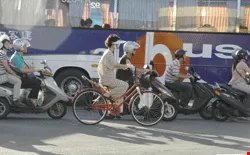
A small number of people, motivated by the desire to protect the environment and save a bit of money, take to their bikes amidst the throngs of traffic, despite the pollution around them.
Modern adventuring
As cycling slowly catches on around Taiwan, cycling clubs are popping up one after another nationwide. And not only is there a great feeling of camaraderie within the clubs, each club shares news and information with the others. They don't even really compete with one another.
The Formosan Serow Biking Club, founded in Kaohsiung over five years ago, is one of the most famous such clubs in Taiwan. These clubs provide an excellent place for lovers of cycling throughout Taiwan to get together.
Most of the people who've joined the club have been cyclists who've met each other in cycle shops. There are over 100 such clubs throughout Taiwan, says club leader Chou Meng-kuei. The membership of the Formosan Serow Biking Club is entirely male, and covers all levels of skill, from newcomers just out for a ride through to hardcore mountain bikers and extreme sports fanatics. Cycling has become a major part of their lives.
When he leads the club out on rides, Chou places a premium on safety. The Formosan Serow Biking Club is the only such club in Taiwan to absolutely require all members to wear a helmet, Chou says with obvious pride. As well as his rides with the club, Chou also rides to work from Fengshan to Kaohsiung every day; it's a ten-kilometer ride, but Chou completes it a mere 30 minutes.
As far as places to ride, Chou is of the opinion that there are none better than Tainan's old city, with its old lanes and alleys full of historical richness. As well as this, Chou heartily recommends riding solo down to Paiho to enjoy the lotus blossoms, at the biggest, most beautiful fields of lotuses in Taiwan. Also on the list of great rides are the "green tunnels" of Chichi, Nantou, where you can relax surrounded by the beauty of nature.
As Chou says, "If they're willing to put in a bit of effort, I honestly believe everyone will be able to find the good points of cycling-like the convenience, the non-polluting nature of bikes, and the health benefits-and be willing to give cycling a chance as a valid form of inner-city transport. And bikes can do more-the can give us a different perspective and a different speed at which to view the world."
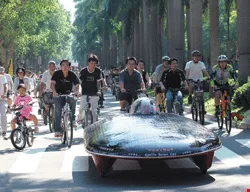
September 19th, 2004 was International Car Free Day, and on that day a Taiwan-created solar powered car (below) took to the streets. The solar car led a parade of 4000 bicycles from Taipei City Hall Plaza to Hsimenting, giving the cyclists a relaxing, trouble-free ride through the city.
Five Questions about Cycle Commuting
Dangers of city riding
Q: Isn't it dangerous to ride a bicycle in rush hour traffic?
A: If you are concerned about traffic, take a map of the city and work out a route between home and work that has minimal traffic. Try taking smaller, quieter streets rather than main roads; it may be a longer trip, but it will be safer. If you have to share roads with cars and scooters, ride calmly and confidently, and make sure other road users can easily determine where you are going at all times. When turning left at intersections, turn in two stages: first cross to the right-hand opposite corner of the intersection, then wait for the green light on the road you are turning into.
Bike theft
Q: Are there any safe places to put your bike?
A: Most large buildings and office complexes have several corners in which you can lock your bicycle. Find an immovable object there-or somewhere else in walking distance-and lock your bicycle to it with a horseshoe lock.
Losing sleep
Q: Isn't it a pain to have to get up early so you can bike to work?
A: Bicycles may be slow, but if you're taking your car to work you have to put up with traffic jams and the problem of finding a parking spot, so in the end traveling time is more or less the same. And as any experienced cycle commuter will attest to, if you're still feeling a bit sleepy, a good ride on your bicycle can do wonders for perking you up, as it gets the blood pumping, feeding more oxygen to your body. This in turn will make you more effective at work. Then when it comes time to head home, riding gives you a chance to give your brain a rest and helps you unwind, so you'll get a better quality sleep.
Weather conditions
Q: What if I don't like riding when it's pouring with rain, or when it's freezing cold outside?
A: Try looking at this from a different perspective; there's a good half of every year with warm, fine weather, and if you ride to work on those days you'll be able to save money on gas and on your car in general, and you'll be doing good things for your health. And when it does rain, you'll still be missing out on all the hassle of traffic jams. If you've got the determination to do that, you'll find that the weather never really seems as bad anymore when you look out your windows at home or work.
Too far to go
Q: What if my commute is too long?
A: If your trip is further than you want to ride, you could take another form of transport-like a bus or the MRT-part of the way, while riding the remainder. Source: New Cycling Culture Foundation
(compiled by Kate Yang/tr. by Geof Aberhart)
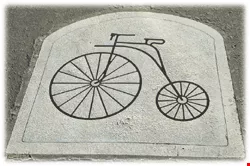
Taiwan's first inner-city cycling track, established in the Hsinyi District of Taipei City.
Cycling Safety Tips
• Always wear a helmet to protect your head. If you don't want to wear a helmet, at the very least attach a taillight to your bicycle. And don't forget, there's no harm in using pedestrian crossings should you come across one.
When riding, stay hard to the right of the road as much as possible. Stay in one lane as much as possible, and don't weave around. Remember to take care when changing lanes.
• Attach a white headlight to your bicycle, and a blinking red taillight or reflector to the back, so that you'll be more visible to cars coming up from behind.
• Watch out for cars pulling out from the curb and for people stepping out from between cars.
• Bicycles are generally designed for one rider, so for safety's sake, don't carry passengers and don't carry anything on your bicycle that could block your field of vision or that of others.
• If the traffic or road surface is bad, get off your bike and walk it down the sidewalk.
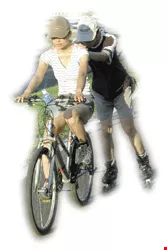
As well as being convenient, environmentally friendly, and having health benefits, ycling can give you a new perspective on the world around you.
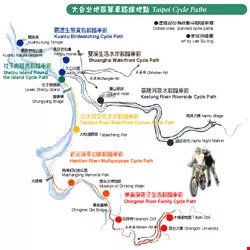
Taipei Cycle Paths
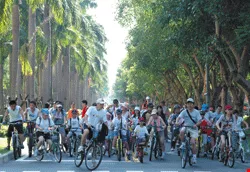
September 19th, 2004 was International Car Free Day, and on that day a Taiwan-created solar powered car (below) took to the streets. The solar car led a parade of 4000 bicycles from Taipei City Hall Plaza to Hsimenting, giving the cyclists a relaxing, trouble-free ride through the city.
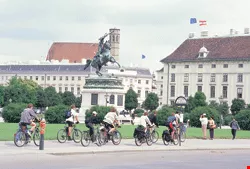
Germany may be renowned for its cars, but their true love is bicycles-more than 50% of the roads there are equipped with a cycle path or cycle lane.
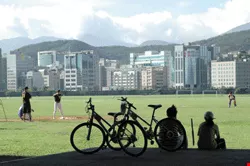
Riding a bike instead of taking the car when you go out on trips can make you feel even closer to the people and places around you.
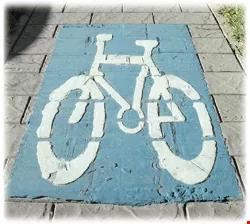
Taiwan's first inner-city cycling track, established in the Hsinyi District of Taipei City.
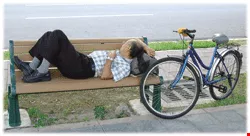
Riding a bike instead of taking the car when you go out on trips can make you feel even closer to the people and places around you.
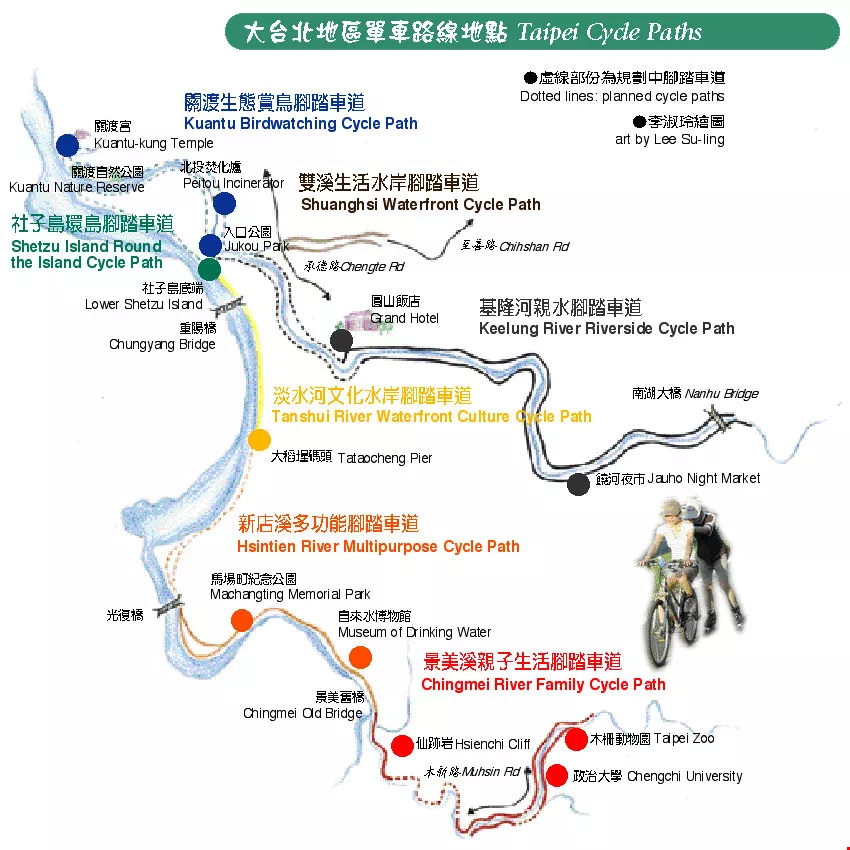
Taipei Cycle Paths
Taipei Cycle Paths

@List.jpg?w=522&h=410&mode=crop&format=webp&quality=80)


@List.jpg?w=522&h=410&mode=crop&format=webp&quality=80)
@List.jpg?w=522&h=410&mode=crop&format=webp&quality=80)
