Island of Carnivals--The Birth of the Festival Industry
Tsai Wen-ting / photos Jimmy Lin / tr. by Scott Gregory
July 2005


Over a few warm April nights in southern Taiwan's Kenting, more than 200 local and foreign rock bands play for more than 100,000 young fans during the Spring Scream music festival. The festival, which was founded by members of the public and became massive by chance, is now in its eleventh year.
In July, the height of summer, the Ilan International Children's Folklore and Folkgame Festival offers up fun and games in a water park as well as performances by more than 20 international troupes. This year, posters for this king of Taiwan's "new festivals" feature the slogan "Viva children!"
Over the last decade, these new festivals have been popping up all around Taiwan, and no city or township wants to be left behind in the race to build up local businesses and be put on the map. Some capitalize on their cultural heritage, others on local farming or fishing industries, and still others just invent a festival out of whole cloth. It seems not a week goes by without some such event being held. With interest in the "culture industry" at a fever pitch and event management courses seeing high enrollment at universities, Taiwan has become an island of festivals.
"Alone in a foreign land / On holidays I am twice as homesick," wrote Wang Wei. Chinese poetry is full of works which refer to holidays, a vital part of folk culture and a portal to tradition.
With the advent of the industrialized society, festivals which over the millennia marked the changing seasons in agricultural society are losing their color. At the same time, commercialized Western imports such as New Year's Eve, Christmas, and Valentine's Day are all the rage, overshadowing the traditional festivals.
Today, new events are sprouting up all over. Taiwan now has not only the traditional festivals of the lunar calendar and the holidays of the Western calendar, but also the events listed in the new "Cultural Calendar."
What sort of attractions do these new creations offer visitors? With the busy pace of modern living, are they just another bother, or will they become part of people's memories over the years and become "new traditions"?
Every February, tourists from all over the world descend on Italy's most romantic city, Venice, to ride the gondolas, don masks and costumes, feast and enjoy the festive atmosphere of Carnival. This world-renowned festival probably has its origins in the commemoration in St. Mark's Square of the victory of the Venetian doge over Ulrico, patriarch of Aquileia, some 840 years ago. The nobility wore masks to avoid being identified, and celebrated among the commoners, thereby creating an event which transcended class.
The word "carnival" is said to have come from the Latin for "to go without meat," referring to the festivals celebrated before giving up meat for Lent. Days of revelry preceded the fasting, and during that time taboos were broken and authorities were mocked.
"In the history of festivals, there is a strong populism, even an irreverent rebelliousness," says Ho Tung-hung, an assistant professor at Fo Guang University's Department of Sociology.
To the agricultural Chinese, festivals were part of the rhythm of nature. To nature's beat, by certain themes, customs have been handed down through countless generations.
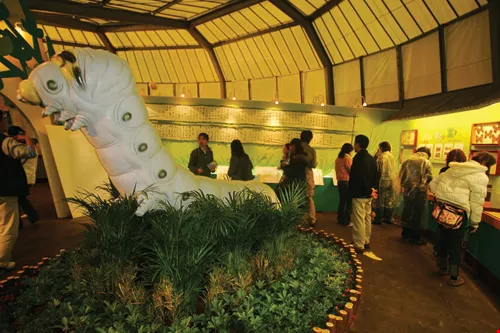
Visitors to Ilan's Green Expo can learn about silkworms inside a giant silkworm. The Expo's design by the local Bureau of Agriculture wins kudos.
New festivals sprouting
Festivals' histories stretch far back, tied closely to a people's culture and environment. Art and culture festivals arose mainly in the mid-20th century, including three of the world's most important arts festivals-France's Avignon Festival, Scotland's Edin-burgh Festival, and Australia's Adelaide Festival of Arts. England's Shakespeare Festival, which is based in rich cultural heritage, and festivals rooted in local enterprises such as Munich's Oktoberfest beer festival and Sapporo, Japan's ramen festival, are also gaining global attention.
"There are a lot of benefits to making new festivals. The British are funny-there's even an event for the fictional Robin Hood," says cultural critic Nanfang Shuo. More and more countries are using festivals as a way to preserve their traditional arts and cultures, or to attract more tourists.
In Taiwan, most new festivals have come about with official backing.
In 1994, the Council for Cultural Affairs began to focus on the concepts of community development and "culturizing industry, industrializing culture," and many townships set about creating events based on local themes.
Then in 1996, the CCA began to encourage cities and counties to hold small-scale international arts festivals to ensure that cultural exchanges were not limited to the big cities. At first three or four localities held festivals each year. In 2004, that number was up to 20.
Then the Council of Agriculture began to promote local specialties, and the Tourism Bureau started its policy of "A Festival Every Month" in 2001. With the support of the community development policy and the push to build tourism, local governments and communities began to develop a series of culturally themed tourist attractions. These festivals are now the main way for Taiwanese to experience different local cultures.
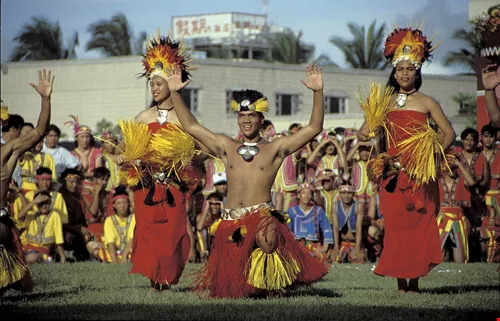
The Festival of Austronesian Cultures brings Taiwanese Aboriginal peoples together with other Austronesian peoples. From left to right are members of Taiwan's Amis tribe, Hawaiians, and members of a Southwestern Chinese minority group performing. (photo by Hsu Ming-cheng)
Festival goldmine
Over the past few years, a notion of creative commercialization of culture has arisen, and the economic benefits these newly styled festivals bring are seen as a goldmine.
In 2004, the Ilan International Children's Folklore and Folkgame Festival, Pingtung's Bluefin Tuna Cultural Festival, and the Taiwan Flower Expo in Changhua each saw around one million visitors, and brought in more than NT$1 billion. It's not only the Big Three that are making money, though-tiny Pinghsi in Taipei County sold more than 300,000 lanterns during its eight-day Sky Lantern Festival, earning more than NT$50 million. Residents said sales from the eight days would see them through the entire winter.
In addition to the obvious monetary ones, there are also less tangible benefits for these localities from holding these events. They can turn a place's image around.
Tungkang Township in Taiwan's southernmost Pingtung County was known for years as a hotbed of underworld activity. Now, through the Bluefin Tuna Cultural Festival, it has become one of Taiwan's most renowned towns and a must-see summer tourist site.
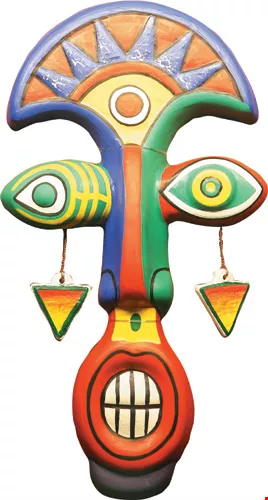
Wood-carving center Miaoli presents more than 400 masks from Taiwan and abroad in its Mask Festival.
All together now
The new festivals can also inspire cultural awareness, raise issues for discussion, and create new networks for people.
Ten years ago, Tainan County began its Baihe Lotus Carnival as part of the National Festival of Culture and Arts. It was an immediate success. Residents of the Lientan neighborhood formed an association which put together information on the cultural import of the lotus flower, the history and environment of Baihe, and a hand-drawn map of flower-growing areas, and also recruited guides to provide in-depth explanations to visitors and give them a deeper understanding. This emphasis on local culture gave residents a sense of their community's individuality. "The sudden realization that 'I too am important' naturally brings about a sense of identity," says Nanfang Shuo.
The festivals also present an opportunity for people to re-represent their histories and cultures in a different age. For example, the mango festival in Yuching, Tainan County and the Yellow Butterfly Festival in Meinung, Kaohsiung County were originally created to protect their namesakes, and represent an interaction between the communities and nature. The Taipei County Religious Art Festival, which is held during the Ghost Festival in the seventh lunar month, features art themed around social issues such as elderly shut-ins, domestic violence, and the rash of illegal gun ownership. The festival was originally to give offerings to wandering spirits, but was expanded to express concern for all disadvantaged members of society. "Traditions" are actually in constant flux.
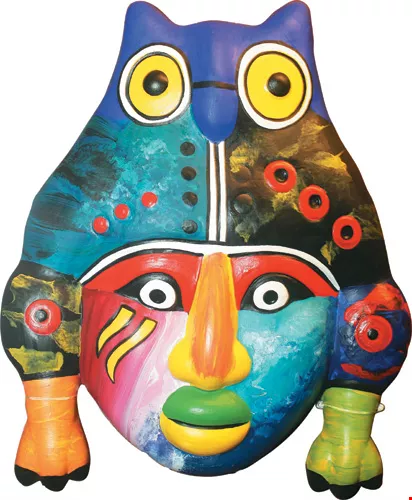
Wood-carving center Miaoli presents more than 400 masks from Taiwan and abroad in its Mask Festival.
Local flavor
To local governments, the new festivals are testing grounds for their departments' creativity. For the past two years the Green Expo, held at Wulaokeng in Ilan's Suao, has taken third place in Global Views magazine's survey of top festivals, with 95% of visitors expressing satisfaction with it.
Inside the expo's silkworm museum, which is made with a wood frame wrapped in white to look like a silkworm, you can see every type of cocoon, and learn that while the worms can eat any type of leaf, it is only when they eat mulberry leaves that they can produce silk. Virtually everything in this interactive exhibit-from the theme to the organizing to the design and even the staffing-is the work of Ilan County's Bureau of Agriculture.
Sun Yat-sen University Institute of Public Affairs professor and former Tainan deputy county commissioner Kuo Jui-kun gives the Ilan Bureau of Agriculture officials the thumbs up for the quality and depth of the Green Expo.
"Just let them pool their resources-don't underestimate the creativity of local communities," Kuo says.
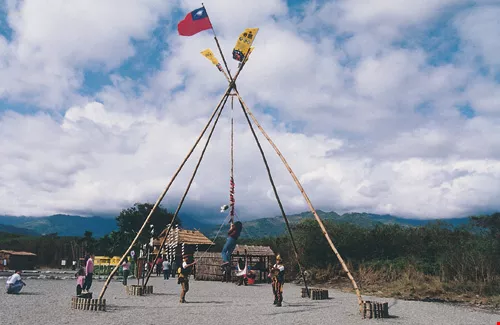
Every year, Taitung's Festival of Austronesian Cultures shows off the cultures of the six Aboriginal tribes living within the county. It's a great introduction to their cultural world. (courtesy of Taitung County Government)
Festival burnout
With the festivals scheduled densely together, there's something to do every weekend. Just flip through the Cultural Calendar published by Taipei County, and you'll see that in one year there are more than 20 events, such as the Pinghsi Sky Lantern Festival, the Wulai Cherry Blossom Festival, Jueifang's Gold Legend event, and the Shihmen International Kite Festival. Popular tourist destination Ilan County has a major event for each of the four seasons-the Green Expo in spring, the Folklore and Folkgame Festival in summer, the Chiaohsi Hot Spring Festival in fall, and the Happy New Year in Ilan event in winter-which are spread out among all of its 12 townships. Add to those its melon and fruit festival, cold spring festival, mackerel festival, and others, and there's always something going on.
However, when every event is called a "festival," there's the risk that people will no longer look forward to them.
"A festival is something that people look forward to at a certain time and place," says Lin Ku-fang, chair of Fo Guang University's Graduate Institute of Art Studies. A flood of them will mean people will look forward to them less.
In addition to being overly frequent, the new festivals are too short, according to Kuo Jui-kun, and run the danger of burning out into average "events." That's especially the case with the festivals geared toward promoting local industries-most of the activities take place on the opening weekend, and after that there is only selling of goods. Not only are events like this overly consumeristic, but they also are of no help in creating lasting, high-quality moneymakers. The investment is wasted on a temporary superficiality.
Furthermore, as the festivals are mostly publicly run, their lifespans are tied to the careers of politicians, and lack the stability of traditional festivals.
"It's one thing to create a festival, but you have to keep it up," says Kuo. Only if a festival becomes regular will it be anticipated and become a "tradition" that holds the public's emotions and memories.
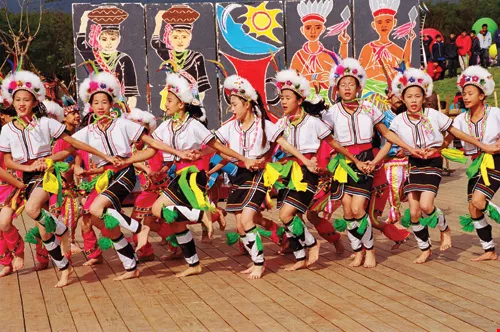
The Festival of Austronesian Cultures brings Taiwanese Aboriginal peoples together with other Austronesian peoples. From left to right are members of Taiwan's Amis tribe, Hawaiians, and members of a Southwestern Chinese minority group performing. (photo by Hsu Ming-cheng)
Stick to the roots
An in-depth analysis shows that although the festival industry's surprising moneymaking potential is enviable, commercialism is winning out over culture. "The authenticity becomes diluted," laments Li Ming-tsung of Taipei City's parks administration, who wrote a PhD dissertation on modern Taiwanese festivals. It's like young people celebrating a romantic Valentine's Day without knowing what a valentine is, or eating Thanksgiving turkey but not knowing to whom to give thanks. Even Taiwan's own Lantern Festival is becoming less and less of a folk event and more commercialized.
Actually, no matter whether it's "industrializing culture" or "culturizing industry," only if it's kept authentic will it be of top commercial value and hold a true festival atmosphere. Scholars point to cultural and local character as the key concepts.
Hung Wan-lung says the idea of an arts festival, for example, can only become a success if it keeps high artistic standards such as the European and American ones which attract the world's greatest talents, or if it is deeply rooted in specialized, local traditions. The latter suits Taiwan.
The Hualien International Stone Sculptural Festival is good example. It uses local stone and so ties in with Hualien's scenery. If the festival could get local and international artists to create works on the stone cliffs on the eastern shore, that would make the ties permanent.
"Think about it, wouldn't special carvings like that attract people throughout the years?" asks Hung. Most of Taiwan's arts festivals call themselves "international" but only become stages for foreign groups. No local characteristics stand out.
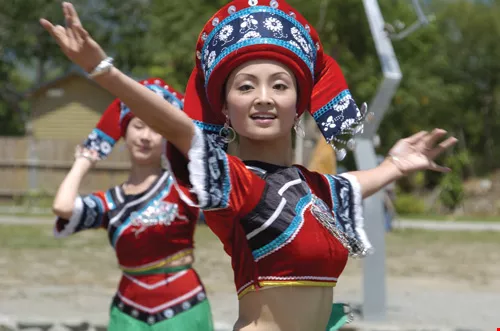
The Festival of Austronesian Cultures brings Taiwanese Aboriginal peoples together with other Austronesian peoples. From left to right are members of Taiwan's Amis tribe, Hawaiians, and members of a Southwestern Chinese minority group performing. (photo by Hsu Ming-cheng)
Festivals as a spectator sport?
Due to insufficient manpower, most local governments hire PR firms to help them put together their festivals, giving them a cookie-cutter style that makes it hard for the local flavor to show through.
To grab attention, these PR firms often bring in foreign artists and pay top dollar to get stars. A goose-meat festival, for example, hired a celebrity to put on a fancy costume and ride a big motorcycle around the grounds. The Flower Expo had mechanical rides. The tranquil Sky Lantern Festival had famous singers perform on a stage with a huge sound system. Attractions unrelated to a festival's theme create an exciting atmosphere, but obscure its cultural value and unique local sensibility.
"On top of that, a festival which is a collection of onstage performances becomes a kind of exhibition, and loses its authenticity," Li Ming-tsung says. In the past, festivals brought people together. The audience was just as much part of the festival as the performers-everyone was involved. Now the festivals are held for tourists and are high on spectacle, so they lack a sense of shared experience and history. That means they never make a deep impression, and their spirit is lost.
"Many of the new festivals are like department store anniversary sales. It's just spending in a different place," says Ho Tung-hung.
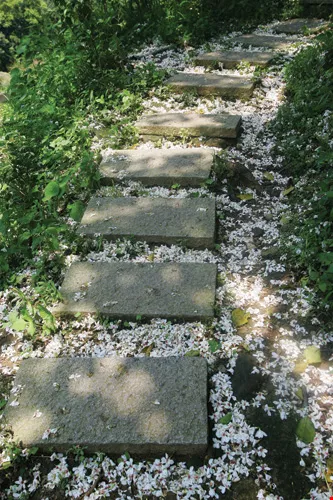
Many festivals coincide with the seasonal blooming of local flowers. Wulai in Taipei County has its hot springs festival during the winter cherry blossom season, reviving local businesses. (right:) Snow in May-the white tung blossoms have bloomed. The mountain flowers are symbolic of Hakka culture, and add a sense of tranquility to the festival.
Out of time
Returning to the subject of the roots of festivals, Lee Fong-mao, a researcher at Academia Sinica's Institute of Chinese Literature and Philosophy, presents an Asian-style explanation of the "culture of revelry" during festivals in his work on temple festivals. He says in traditional festivals, people use "extraordinary time" to enter an "extraordinary space," wearing "extraordinary clothing," and taking part in "extraordinary games." After it's over, they return to their normal lives. The space between the normal and the extraordinary is representative of a Chinese philosophy of tension and release.
Life in agrarian societies is slow, so festivals present an opportunity for revelry, but do people in modern times, facing hectic work schedules and tiring commutes, need the stimulation of a festival? After fighting traffic to get there and squeezing through the crowds, it's no wonder that festivals just wear some people out rather than giving them a sense of relaxation.
In an era of cultural consumerism where new festivals are an important type of leisure activity, it seems that now people must make an effort to learn to enjoy them.
In recent years, Ho Tung-hung has been taking his family and friends to Kenting for three or four days to go camping and attend the Spring Scream music festival.
During the day, he takes the kids to the beach and plays volleyball with friends, and at night grabs a beer and rocks out to the music. "That kind of atmosphere really gets you to let go," Ho says.
Over the last 11 years, Spring Scream has developed its own style. Over 200 rock bands from around the world come to take their turns onstage, while others play to smaller audiences off in corners. There's no big commercial sponsor or powerful backer. It retains an anarchic and untamed spirit befitting rock's rebellious image. "That's completely different from a hurried two-hour pop-idol concert," Ho says.
A festival culture is forming on the island of carnivals. In the thick of the excitement, there are layers of commercial, cultural, and social phenomena to be explored. Hopefully, when the crowds have gone, the festivals have not only brought in money, but given the nation cultural enrichment and a sense of identity.
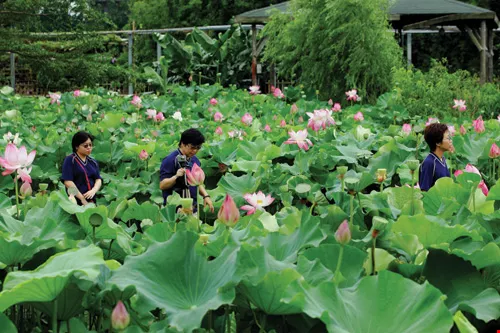
Growing from the mud yet remaining pure-lotus blossoms are the attraction in Taoyuan's Kuanyin Township.
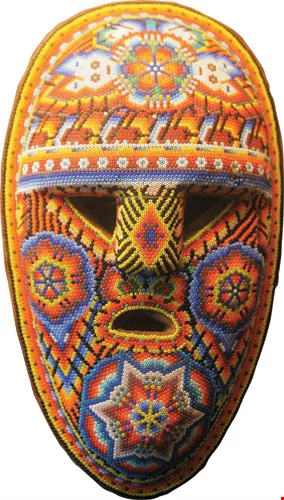
Wood-carving center Miaoli presents more than 400 masks from Taiwan and abroad in its Mask Festival.
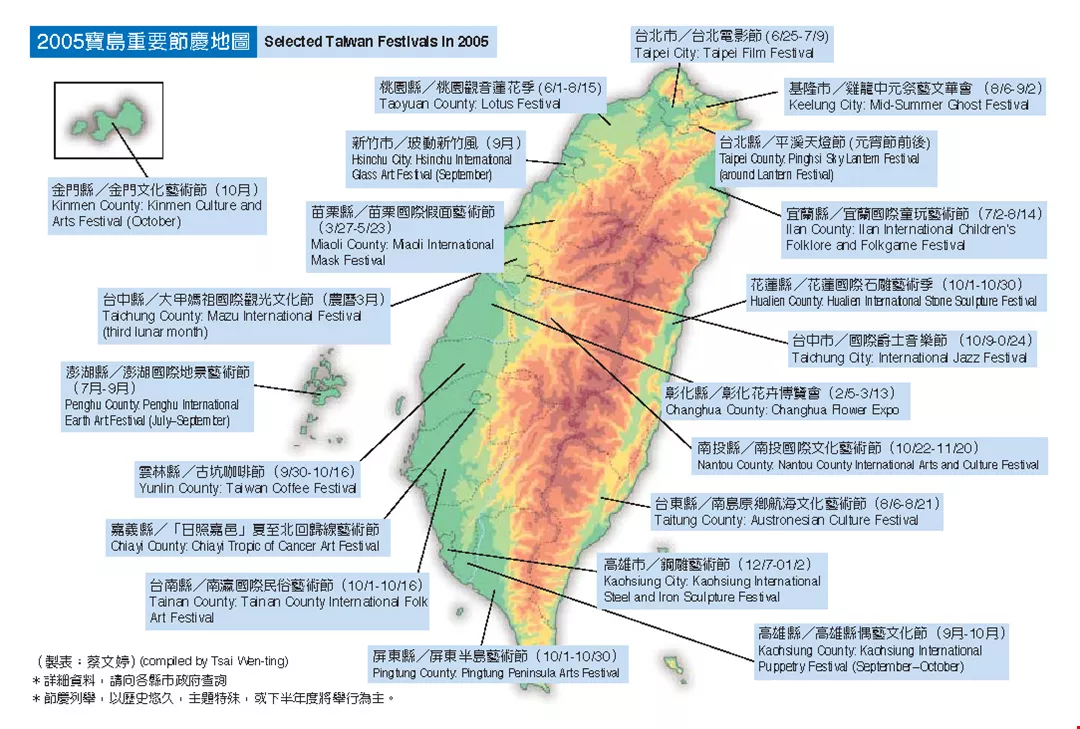
Selected Taiwan Festivals in 2005 (compiled by Tsai Wen-ting)
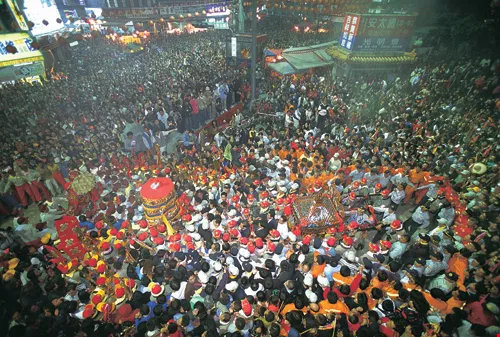
New festivals are gaining in popularity, and traditional ones are changing with the times. Taiwan's largest religious event, Tachia's Mazu festival, now attracts not only pilgrims but tourists as well as it becomes a world-class attraction.
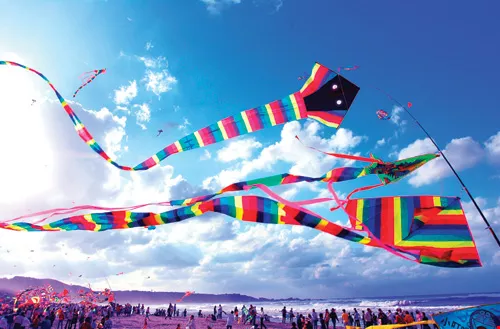
Kites take flight in the ocean breeze in Taipei County's Shihmen, during its unique end-of-summer Kite Festival. (photo by Chi Kuo-chang)
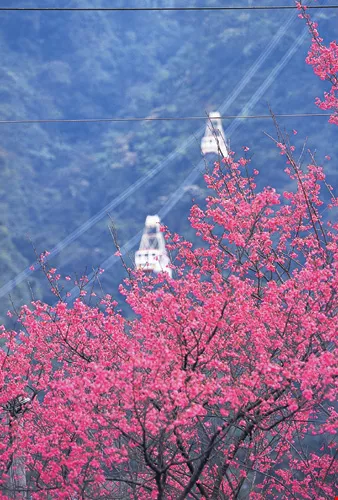
Many festivals coincide with the seasonal blooming of local flowers. Wulai in Taipei County has its hot springs festival during the winter cherry blossom season, reviving local businesses. (right:) Snow in May-the white tung blossoms have bloomed. The mountain flowers are symbolic of Hakka culture, and add a sense of tranquility to the festival.
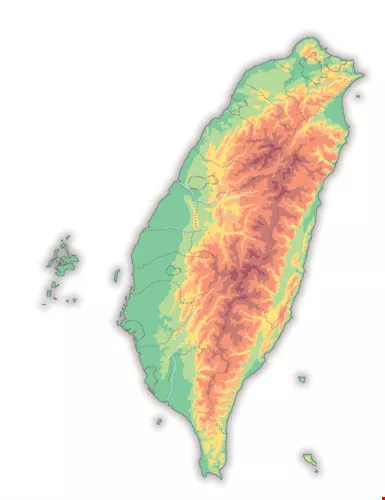
2005 Map of Taiwan Festivals
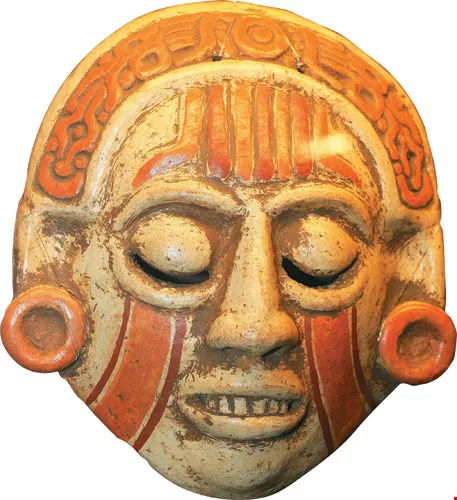
Wood-carving center Miaoli presents more than 400 masks from Taiwan and abroad in its Mask Festival.

@List.jpg?w=522&h=410&mode=crop&format=webp&quality=80)


