

The Chingshui dikes have been washed away year after year. Chang Yi-hsiung (right), the people's representative from Chohsi, sighs in exasperation about the missing corner of a dike. (photo by Diago Chiu)
"Money in Taiwan flows east!" says Yuli township secretary Chen Ching-chi of the dikes that are destroyed by flooding every year.
On the downstream portion of the Chingshui River, the main town in that area--Yuli--is threatened with flooding. But besides Yuli, the 100 household Bunun aboriginal village of Chingshui, in Chuohsi Rural Township, the location where the Chingshui River emerges from the mountains, also frequently has been endangered by the Chingshui River because of problems which have periodically cropped up with the Chingshui Dike in recent years.
An Ocean of Money: According to the water conservancy regulations of the Taiwan Provincial Water Conservancy Bureau, which is in charge of all the main and secondary rivers and streams in Taiwan, the cost of dike engineering along a river-bank is NT$70-80,000 per meter. The Chingshui River is a class-three ordinary river, for which the Hualien County government is responsible. Because local finances are limited, the expenditure for dike construction cannot, according to local regulations, exceed NT$20,000 per meter. Given the consideration that "the volume of water in the main rivers is greater, and the population along the banks is larger," stress is placed on the main waters while the tributaries are given less attention. However, as a result of this there is often less work or inferior products put into dikes with such a low standard price, with less than rigorous engineering structures, meaning that there are often flooding problems.
In particular, the Chingshui River overflows day upon day, virtually to the point that if only a typhoon or heavy rain comes along, the Chingshui River dikes just "hoist the white flag." For three consecutive years, 1989, 1990, and 1991, the dikes were severely damaged by rushing water. Last year the dike was cut into three parts by heavy waters, and today it still sits like three little hills in the riverbed.
Originally, outside of the dikes there were 17 acres of protected aboriginal land. In 1976 this had been eradicated by flowing soil and rocks carried from upstream. Although the county government agreed to compensate the residents NT$143,800 per acre, the aborigines no longer had enough to invest in recovering the land, since "after another year it would just be washed out again!" says Chuoshui Rural Township elected official Chang Yi-hsiung unhappily. Having lost the land of their roots, and not being permitted to open up other mountain land, some of those who stood to inherit the land can only leave their homes and go off to find work.
In the past two years, because the road connecting them to the outside world which went past the dike has been entirely washed away, and communications are cut off, they could only cross the mountains to supplement their diets. "When they [the miners] wildly dig upstream, we suffer severely downstream," says Chang Yi-hsiung, noting that those who mine upstream are all outsiders, and have no concern whatsoever for the lives of the downstream residents.
If You Want to Get to the Bottom of Things, Go to the Top: Like the fate of the Chingshui aborigines, the 900-meter-long Chingshui dike is also in a vicious circle of being smashed by powerful waters, being rebuilt, being smashed, being rebuilt. . . . Annual engineering costs of almost NT$10 million have produced not the slightest effect. "It's like throwing it in the water, and it follows the river and flows right into the Pacific," says Chen Ching-chi wryly, at a loss for what to do about it. "Taiwan's money just flows east, making the Pacific a very rich ocean indeed!"
In order to improve the quality of the water barriers, a provincial assemblyman has suggested that the construction fee for ordinary dikes be raised to NT$30,000, but that's a temporary measure; it is also not possible to get any more money out of the local residents. Because Chuohsi is an aboriginal district, it is exempt from most taxes: "The tax revenues of the whole rural township don't reach NT$500,000 per year," notes Chang Yi-hsiung. They have no capacity to invest a large sum themselves to build dikes, but it is also impossible not to do something. "We can only rely on the provincial government and the county government to subsidize the budget and put it to use every year."
But "horizontal contacts" take a great deal of time. Each year it is necessary to once again apply to construct dikes, and wait for the water conservancy and fiscal authorities of the provincial and county governments to get together and decide, and then wait for the money to be appropriated and the bidding . . . the procedure is very complex. There was not enough time last year to inspect the dike after it was finished, and it was lost to heavy rains. The county government is still tied up in a court proceeding against the contractor, which has yet to be adjudicated. "This year there will be no way to make repairs before the rainy season, and they probably won't get finished in time to get washed away again," says one Chuoshui Villager, clearly frustrated.
What makes the Chingshui tribal residents even unhappier is that land management and flood prevention are inseparable. Today flood prevention engineering is the post-natal illness, and upstream is the pre-natal problem--not only is there no management of the mountains, given the lack of any land management policy, mining continues unabated. It seems obvious that even if the expenditures for dikes could be increased, without work to get to the root of the problem, the people of the Chingshui aboriginal community will continue to watch the money flow east.
[Picture Caption]
The Chingshui dikes have been washed away year after year. Chang Yi-hsiung (right), the people's representative from Chohsi, sighs in exasperation about the missing corner of a dike. (photo by Diago Chiu)
With the loss of the rice paddies, the Chingshui's native sons have to leave home to make a living. (photo by Diago Chiu)
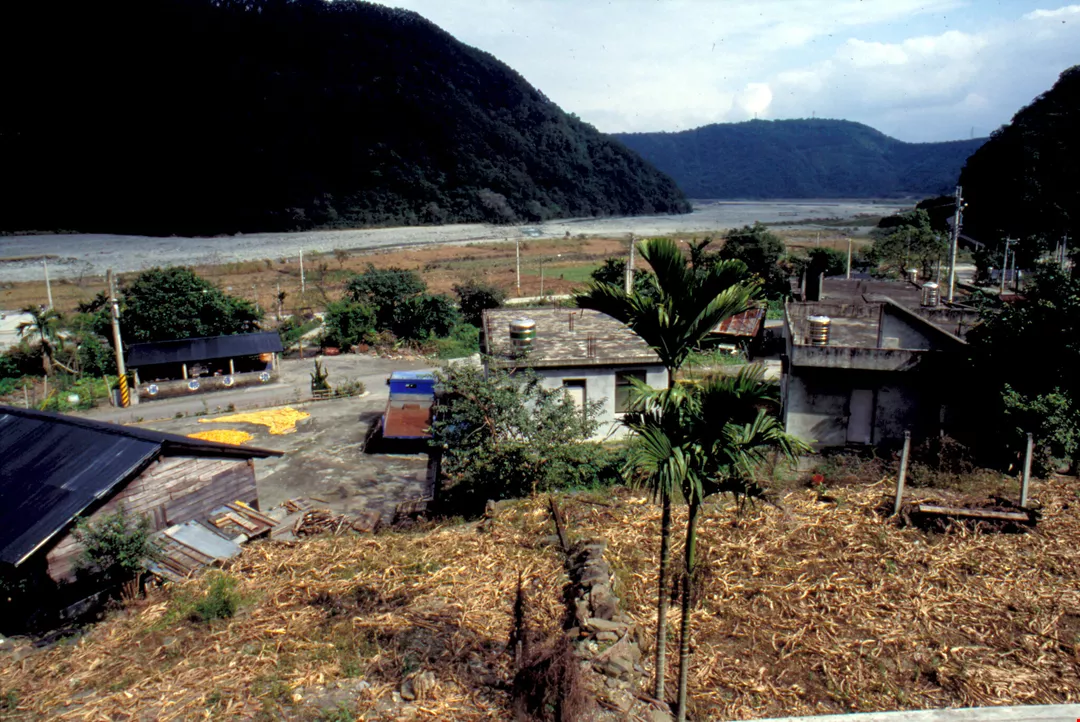
With the loss of the rice paddies, the Chingshui's native sons have to leave home to make a living. (photo by Diago Chiu)

_DSC2938@List.jpg?w=522&h=410&mode=crop&format=webp&quality=80)


