Launching the Global Gray Revolution!
Chen Hsin-yi / photos Chuang Kung-ju / tr. by Jonathan Barnard
August 2011


Zhan Lucui, 81, has been the leader of the Hondao Senior Citizens' Welfare Foundation's volunteer station in Chiayi for many years. The volunteers she leads, who are also in their seventies and eighties, care for other seniors who live alone or who have become unable to care for themselves. "Often, when the clients are younger than our caregivers, the patients feel embarrassed. We urge them to focus on getting healthy, so they can become volunteers themselves!"
Zhao Muhe, who lives in Kao-hsiung, turned 100 this year. Two years ago he earned an MA in philosophy from Nanhua University, becoming the oldest person ever to receive a graduate degree in Taiwan. He would rise at 5 a.m. five days a week to take the train to Chiayi, where he'd board a campus-bound bus to make his first-period class. During the two-year program he had a perfect attendance record. "Once I've decided to do something," he says, "I go all out!"
Similar heart-warming examples of seniors who are young at heart aren't hard to find. Look around you or peruse the newspapers: More and more seniors are working hard and playing hard as they enjoy an active, youthful old age.
There's no way to turn back the aging of Taiwan's population. Instead, we should be keeping abreast of changing conceptions of aging and making continual adjustments to our approach. Eventually, we're all going to be living examples of this gray revolution, when we'll have ample opportunity to rewrite for ourselves what it means to be old.
An unprecedented tide of aging is rising globally. It will affect all of us.
The UN estimates that global population will exceed 7 billion this year and rise over the next 40 years to 9.1 billion. The world is getting more and more crowded. And yet the birth rate isn't the main reason for this growth. Rather, the cause is largely an explosion in the elderly population. With the baby boomers born after World War II becoming senior citizens, the population of those over 60 has been rising by one person every seven seconds since 2006. It's predicted that by 2050 the total number of people over the age of 65 will total 2 billion, or one-fourth of the world population.

Elderly farmers in Taiwan know the land and the local cultural traditions, and can be considered fountains of knowledge in these respects. The photo shows Huang Kunbin, featured in the documentary film Let It Be.
Let's come back to Taiwan, which formally became an "aging" society in 1993. In 2010 the share of the population over 65 reached 10.7%, surpassing 2.48 million. The Council for Economic Planning and Development estimates that by 2025 the proportion of the population that is elderly will reach 20%, attaining the level of a "super aged" society. (See the chart lower left.)
In comparison to long-developed nations, such as those of Europe and North America plus Japan, Taiwan may have been late in becoming an aging society, but in terms of the rate at which it is aging, it ranks among the very fastest. (See the chart on page 9.)
The reasons behind these trends aren't hard to understand: Medical technology has improved, so people are living longer. When you add that people are marrying later or choosing not to marry at all, delaying childbirth, and giving birth to fewer and fewer children, the population structure of Taiwan has turned from a "pyramid" of years past, to a "lantern shape" today, with a bulge of young adults but fewer children and elderly. In the future, it will become an upside-down pyramid, with the elderly predominating.
If schooling can be considered Act I in life, and career Act II, then post-retirement life is Act III. This increasingly long act could be about grasping another opportunity to explore life, both internally and externally. When all is said and done, this stage of life can be a time for personal productivity and also for helping others.
Whether you're an elder member of the ranks of the old, a relatively young senior citizen, or one of the "new elderly" of the future, at some point you might as well start to prepare to take this journey of mental adjustment and adapt yourself to the coming global gray revolution.

The first salient feature about future elderly life is that almost everyone will have a chance to live to 90.
Recently, a British gerontologist has boldly predicted that in step with medical and technological advances (such as use of immunostimulants and stem-cell therapies), by 2030 there will be people alive who will live to 150. The share of the population over the age of 100 will be double what it is today.
Scientists emphasize that the main point of gerontology and geriatrics is to prevent common elderly diseases, so as to allow people to grow old in good health. The point isn't to keep extremely ill seniors off death's doorstep.
Medical scientists describe three stages of old age. Stage-one elderly can live independently and take care of themselves; it's just that their senses and reactions aren't as sharp as they used to be, and their immune systems have weakened a bit. Stage-two elderly are facing obstacles to independent living and need some help. Stage-three elderly have lost significant abilities: they no longer can live on their own and need long-term care.
Stage-one elderly, who are mostly 65-75, comprise 87% of Taiwan's elderly population. Consequently, extending the good health of these elderly is Taiwan's most pressing task and biggest challenge with respect to handling its elderly population.
Experience overseas shows that if you divert a little money from what is spent on the medical care of incapacitated seniors to improving the quality of life for healthy elderly, then you'll not only make seniors happier, but you'll allow them to continue to contribute to society. In the long run it will reduce the costs of senior care.
In 2006, at the forefront of geriatric trends, Taipei Veterans General Hospital was the first hospital in Taiwan to establish a Center of Geriatrics and Gerontology in 2006. The center obviates the need for seniors to run around the hospital to register for appointments at different departments, and it prevents duplicate prescriptions of medicines. Even more importantly, it provides elderly people with the most advanced geriatric methods, such as comprehensive geriatric assessments and intermediate care.
Peng Li-ning, the director of the center, explains that the complex mix of symptoms and conditions displayed by the elderly makes caring for them extremely difficult. For instance, frequent falls could be caused by any of a number of problems, including low blood pressure, arrhythmia, poor vision, weak muscles, and diabetes. Comprehensive assessments attempt to find the root causes, prescribe the correct medicine, and also allow seniors to improve their state of mind, nutrition, cognitive faculties and even their domestic environment. Only by so doing can you effectively prevent degeneration.
"Intermediate care," on the other hand, tries to fill in the gaps between acute care and long-term care, so as to prevent repeated visits to the hospital or reduce the risk of a decline in health that makes long-term care necessary.

Giant corporation chairman King Liu challenges himself by cycling, testifying to the continued vigor in the founding generation of Taiwan industrialists. At left is former Chunghua Telecom chairman Ho-chen Tan.
There's a humorous story about a four-star general who has spent his life reviewing and passing judgment on documents submitted by his underlings. When he retires, there are no documents for him to review, so he feels out of sorts. Every day, for lack of a better option, the general's considerate wife gives him her grocery list to inspect. Then she takes the list, now marked "approved," and goes off to the market to buy the family's food.
"Psychological research has revealed that the higher someone's original occupational status, the more potential there is for psychological collapse and early death," explains Wu Jing-jyi, a forever-young 72-year-old honorary professor at National Chengchi University, who is still enthusiastically teaching.
"Consequently, before you retire, you've got to plan your future life, so as to make the transition to retired life clearer and smoother."
Sun Chen used to be vice chair of the Council for Economic Planning and Development and president of National Taiwan University. When he was 66, he announced that he was stepping down from his duties as chair of the Industrial Technology Research Institute and formally retiring. The first thing he did the next day was to apply for an "EasyCard" for seniors, which allowed him to ride buses and the subway at a discount like any other senior citizen. His was a smooth transition.
What should you do after retiring?
Wu points out that travel and art have long been two marvelous ways for the retired to regain vitality.
Wu Jing-jyi's theatrical dreams were ignited by Ellen Stewart, the founder of La MaMa Experimental Theater Club in the USA. In the 1970s the club was at the forefront of the avant-garde, opposing the Vietnam War and demonstrating concern for the black power and women's and gay rights movements. Up until the very last moments of her life, Stewart never retired. In her eighties, she was twice invited to Taiwan to direct a play. "When she came the first time, her heart needed a stent to keep it going. The second time she was confined to a wheelchair. Yet she would completely forget about her age-because art was a fount of life for her."

The Center for Geriatrics and Gerontology at Taipei Veterans General Hospital has a comfortable and warmly decorated waiting room and offers integrated team care. The center strongly promotes the concept of "aging healthily."
According to Ministry of the Interior statistics, in 2009 about 75,000 of Taiwan's volunteers were over 50 years of age. Rising in number by about 3.03% that year, they were the largest cohort by far, accounting for nearly half (49.3%) of all volunteers.
Lin Yi-ying, director of the Hondao Senior Citizens' Welfare Foundation, observes that 16 years ago, when Hondao began to introduce in-home services for the elderly, they "discovered that when senior volunteers spent time with other elders, there were always unanticipated benefits."
In recent years Hondao has begun to promote the concept of "time dollars," aiming to make use of the resource of old people. Participants contribute services or knowledge, and then can use their accumulated points to swap for services they need from others. This can rebuild the value of seniors' lives via the model of reciprocal services.
The concept of time dollars originated in the United States in the 1980s. It was not originally intended to be limited to elderly persons, and anyone could deposit or withdraw time dollars at any time in their lives. Services include things like shopping for someone, looking after their kids, or taking their blood pressure. Today there are more than 1000 "time banks" run by non-profit organizations around the world, becoming an important hub around which elderly society connects.
Kuo Tsu-ann, an assistant professor of elder care at Central Taiwan University of Science and Technology, points out that Taiwan must face up to the need for developing and training the human resource of the "healthy elderly." Furthermore, people should start planning for their retirements when they hit 50, long before they actually retire. In this regard the American Association of Retired Persons in the US has implemented model programs.
The AARP has established a database for volunteers that covers the entire nation. Meanwhile, it is cooperating with industry to encourage workers who are nearing retirement age to first try out volunteering at non-profit organizations and talk to experts so that they can plan a suitable "retirement career" as soon as possible.
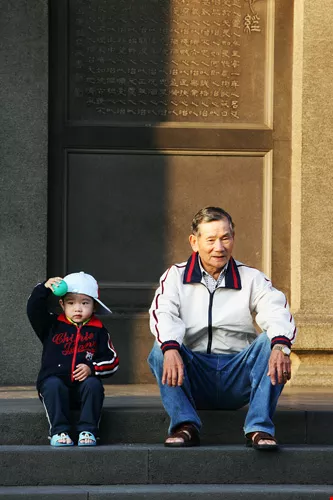
Life begins at 70! It's a reality, not a fantasy. Seniors shouldn't be given the single choice of "keeping an eye on the grandchildren." Only by planning ahead can one enjoy sunset years of boundless brilliance.
If you retire without concerns about economic security, and you're willing to throw yourself into public service, that is naturally very admirable. Otherwise, if you are self-motivated to continue to work, you can write books until you are 95 like the American business consultant Peter Drucker, or run a business empire like Formosa Plastics' Wang Yung-chin.
Yet most elderly who continue to work do so out of economic necessity. Can society support a system of silver-haired workers?
With the pace of aging of Taiwan society, in 10 years four workers will be supporting one senior citizen. In 20 years that ratio will drop to 2.7:1. In other words, Taiwan is going to have to face up to a shortage of young workers, and it will have to plan for the possibility of people having second or third careers.
The Japanese government has foreseen the coming structural changes in its labor force and planned accordingly. Under Japan's Elderly Employment Stabilization Law, employers must choose one of three options: (1) raising the firm's retirement age; (2) eliminating the retirement system; or (3) maintaining the current retirement system but continuing to employ or extend the contracts of older workers who prefer to continue to work.
Out of fears that a shrinking labor force will affect economic growth, the Organization for Economic Cooperation and Development is calling for all nations to reassess their employment systems, including taking measures to encourage seniors to work, making them more employable through training, and removing other obstacles to their employment.
Huang Fu-shun, a professor in the Department of Adult Education and Human Resource Development at Hsuan Chuang University, points out that the coming wave of elderly will put to rest the notion of a retirement age. Aside from the people at the extremes of income, who either can't retire because they wouldn't be able to make ends meet or won't retire because they are at the top of their fields, even the vast majority of middle-income people may not be able to rely on their savings to support themselves. And they will even less likely be able to rely on the younger generation for support, so they will have to continue to work.
What's certain is that in the future people will be facing a more fluid employment market and will stagger their retirements by first choosing to work part time. Otherwise, they may seek training for second or third careers.
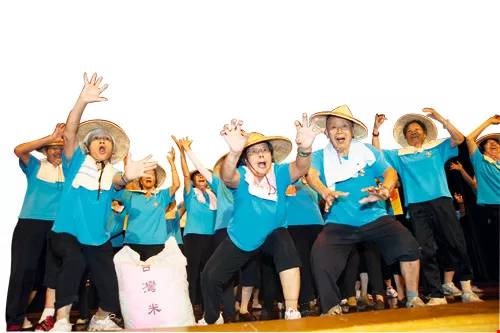
Our parents once spared no effort to raise us. With our help, they now hope to become youthful seniors who are free to explore their own self-potential. The photo shows the team from Kaohsiung's Daliao at the National Grandma and Grandpa Health Show, a seniors' competition sponsored by the Department of Health's Bureau of Health Promotion.
Taiwan's Council for Economic Planning and Development estimates that in another 20 years, the number of university enrollees will drop to 183,000, representing a decline of 43%. At the other extreme, there will be more and more demand for education among the elderly. Consequently, there will be new mechanisms for senior education.
Beginning in 2008, under policies to encourage universities to use existing resources, various universities have been offering senior education programs that reflect the special characteristics of the campus where they are offered. These elderly students have been put in classes together with younger students. With subsidies provided by the Ministry of Education, those who have reached 55 years of age-no matter how old they are or what their level of previous educational attainment-only have to spend NT$1500-3000 in tuition to experience one term of university life. Last year, some 56 schools participated, including Shih Chien University and Kaoshiung Normal University.
Fo Guang University's Department of Life and Cultural Studies on LOHAS has a seniors' curriculum that focuses on health maintenance and life philosophy. A typical offering is "healthy herbal cooking." Elders who take it exclaim, "I'll be able to cook for my daughter-in-law during her postpartum month." Then, there's the "Taiwan Folk Beliefs" class, which teaches people how to read bamboo divination sticks or perform Taoist exorcisms of spirits when children suffer ill health. Seniors will be able to make prompt use of the knowledge they've gained. There's even a course for making "essential life plans." It gets people to talk openly about life and death, explaining progressive conceptions about writing wills and living wills.
Apart from formal study, activities exclusively for seniors that combine travel and education are also very popular. Elderhostel is America's first and the world's largest organization for educational travel. Itineraries include exploring hot-air balloon travel with your grandchildren, participating in student orchestras, and researching topics in marine biology and oceanography. These kinds of courses satisfy seniors' thirst for "peak experiences" that involve risk-taking, sharing and creativity.
Concept 6: Family DeconstructionAccording to a survey on elderly living situations by the Ministry of the Interior, the number of seniors living with their children has been steadily declining, dropping from 70% in 1986 to 57% in 2005. On the other hand, elderly married couples living on their own and elders living alone rose from 25.5% of all elderly in 1986 to 35.8% in 2005.
In the face of growing numbers of seniors living alone or with elderly spouses, Wu Jing-jyi argues that seniors must find meaning in their own lives. They can't continue to put their children at the center of their own existences. And whether or not an elderly person is single, having a group of close friends is very important.
"Relationships between friends, like those between spouses, have elements of intimacy, reciprocity and trust. But sometimes platonic relationships are superior because they are less complicated and less prone to jealousy. Friends may be better able to leverage emotion for mutual support."
Lin Wan-I, a professor of social work at National Taiwan University, points out that job-market trends are moving in step with urbanization and globalization. Admittedly, this means that children often can't be at their parents' side, but there are also more and more healthy seniors-physically capable of living on their own and economically independent-who would rather live on their own than move in with their married children.
When seniors do live with their children, there is often an unspoken "contract": First the grandparent will help raise the grandchildren, and then the children will take care of them in their last years. "Unfortunately, when the time comes that they do need care, their children won't necessarily be willing or financially able to provide it." Lin believes that the pragmatic way to handle this issue is to merge family support systems with the national pension system and community support systems. Only then will it be possible to foster a caring environment for all seniors until the ends of their lives.
In step with this aging society, family trees are turning into "bamboo staffs." With the declining birth rate, younger generations are contributing progressively fewer branches to the family tree. Moreover, people are living longer. As a consequence, having four generations alive in one family is becoming more common.
Lin points out that these bamboo families have some negative impacts on society. Children are more likely to grow up spoiled and lack social skills. Education, Lin says, needs to step up to ameliorate these trends. And with fewer or no siblings to share the burden of caring for parents, young people are going to carry greater individual burdens. Consequently, it is going to become more and more common for seniors to care for themselves or be cared for by the community. Traditional extended family networks (such as those connecting aunts and uncles with nieces and nephews) are shrinking, and with one-child families they will disappear altogether, meaning that families will no longer serve as "informal support networks." Consequently, people will have to look more often outside the family for formal support networks (such as by participating in churches or volunteer groups). Otherwise, they will become very isolated.
Stopping age discriminationChiu Tian-juh, a professor of social psychology at Shih Hsin University, points out that Taiwan is a society that severely lacks "consciousness of seniors' rights." Prejudice against the elderly is manifested in a multitude of small ways.
For instance, Shen Fu-hsiung, a former legislator and doctor, says that when he reached 70 last year his gym declined to renew his membership, claiming that "those over the age of 70 are a high-risk group." Shen, who had used the gym daily and was so fit he could run four kilometers in 20 minutes, couldn't help but feel bullied.
"Most people still hold to the belief that 'old people equal a social problem,' viewing the increase of the elderly population as a huge social burden," says Chiu. "Very few people see longer life spans as a great opportunity, and take time to consider the positive effects that old people can have on society."
The curtain is already being slowly lifted on life's resplendent third act. In that new realm, everyone will have a fresh start and have to relearn how to be the main characters in their own lives, exploring inner needs and finding opportunities to gain more satisfaction from intimate relationships, social participation and leisure activities.
The curtain has been pulled back, the drama has begun, and the leading actor is ascending to the stage.
@List.JPG?w=522&h=410&mode=crop&format=webp&quality=80)


