Yungle:An Old Community in the Prime of Life
Eric Lin / photos Jimmy Lin / tr. by Phil Newell
July 2003


Yungle Community has long been seen as the model for community revitalization in Changhua County. Since the formation of its Community Development Association in 1997, Yungle has been invited to participate in a number of national community revitalization conferences so that others can learn from its approach, and has won numerous awards for environmental protection, its community website, improvement of local cultural sites, achievements of individual citizens, and more. Yungle has also been designated by the Council for Cultural Affairs as a "partner community" to assist reconstruction in the zone that was severely hit by the September 21, 1999 earthquake.
Yungle is located in Puyen Rural Township in Changhua County. The problem of population exodus goes way back for this town, where there remain less than 1100 persons registered as residents, and only about 600-700 folks who really make the place their permanent home. About 60% of these are senior citizens. But thanks to the determined efforts of these people, this aged community is suffused with youthful vigor. In particular, a group of core 65-and-over volunteers, known locally as the "Ageless Heroes," have put into practice the "mutual help" ideal of the traditional Taiwanese-speaking village, and rejuvenated themselves in the process.
When the subject of community revitalization in central Taiwan comes up, Yungle is invariably the first place that gets mentioned. There is particular admiration for Yungle's overall approach to community revitalization and for its successful integration of the new with the traditional in terms of the overall appearance of the community. But what really makes Yungle special is the love its people have for this land.
By ten o'clock on a late May morning, the sun on the broad coastal plain of Taiwan is already hot enough to melt a body. This is no worry to Yungle's Ageless Heroes, who have by this time finished their task of giving the community a once over, and a truck has carried away the weeds pulled from the park. The Ageless Heroes mill around in a nearby flower garden, doing a little of this and a little of that, talking about who has just spread fertilizer on their crops, and when they can be harvested. It seems that these people who have lived here all their lives, rolling the same soil over and over through their fingers, have grown to love this land more than ever.
After considerable effort someone finally succeeds in getting their attention with a shout, and the group heads to the "Grass Academy" to wait for other volunteers to bring their lunch. But first they munch on a few freshly plucked tomatoes to quench their thirst, telling the youngsters in an instructional tone that bright red tomatoes are from withered vines and will taste bad. "They've got to be plump and full, with the footstalk bright green, then they'll be sweet and juicy," say the elders.
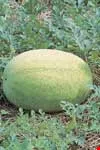
Goose meat, garlic, watermelon, cauliflower.... Rural communities are largely self-sufficient, and filled with the joy of sharing.
"The Ageless Heroes are highly flexible," says Yungle Community Development Association director Chen Ching-hsi, squinting under the glaring sun. "Every month there is a fixed 'beautification and environmental protection day,' and if people are coming to visit we will do a quick cleanup, which happens five or six times a month." He explains that all activities here follow the rhythms of rural life. It's already light out by 6:00 a.m., so they get right to work, and knock off at about 10:00 a.m. when it really gets hot. In the evening when things cool off again, other community activities-like seminars, folk dancing, croquet, or traditional music-get underway.
Most of the elderly people here have personally been witness to the rise and decline of Taiwan's farm communities. Now in their autumn years, they have joined the community revitalization movement to attempt to turn things around.
Ageless Heroes headman Chen Wan-fa, 67, is the youngest cub among these "old folks." He previously served in the post of arbiter during the weighing of grain for market, where he earned the nickname "Uncle Fair." Everyone in his household is a community volunteer: his son, the proprietor of a small grocery store, is the bookkeeper, and his wife leads the women volunteers who do the cooking. As a young man, he went to Taipei to make his fortune, but now that he is back home, he feels a greater sense of attachment and pride in his hometown than he has ever known before.
"There are almost no immigrants in Yungle," sighs Uncle Fair. "Virtually everyone who lives here now was born and raised here. Before land reform [in the 1950s], people left because there was not enough land to go around. But now young people leave because the land isn't worth anything," It thus turns out to be a good thing that most of the older folks here were in the prime of their farming careers before the widespread introduction of labor-saving machinery, because they had to do all the physical labor themselves, so that now, even if they are semi-retired, they are still in good enough shape to join in community activities after tending their fields.
At present the Ageless Heroes group has nearly 40 members, and all they need to do is ask and a lot more people will come to help out. "I've lived in Yungle all my life, and it's never been as beautiful or as comfortable to live in as it is now," says Uncle Fair. As community revitalization work has progressed, Yungle's fame has spread, and now that the older residents feel a sense of pride in their community, willingness to participate is higher than ever.
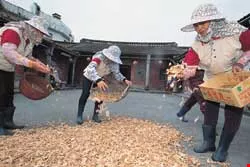
"One bag of dried vegetables, one helping of love." The people of Yungle Community have established noteworthy models for mutual assistance and sustainable operations.
Interestingly, however, while the elders of Yungle are its greatest asset, it was an outsider who married into a Yungle family that really got the community revitalization ball rolling.
Just over ten years ago, Chang Mei-chiao, who is now 45, left Taipei and accompanied her husband back to his hometown so they could look after his parents. Used to life in the big city, she found the quiet elderly community of Yungle nearly unbearable, so she organized a group of local women and started a folk-dancing club at the Yungle Primary School. Since most of the children of those participating were already in middle school or high school, the moms had plenty of free time, so their mothers-in-law had no grounds on which they could criticize them for "goofing off."
The more involved the women became, the more they enjoyed it, and soon the group was expanded into a "Happy Family Workshop," offering instruction in such subjects as parenting, relations between mothers-in-law and daughters-in-law, and handicrafts. After a couple of years of this the community was really energized, and Chen Ching-hsi, who was at the time the chairman of the Yungle Primary School parents' association, became director of the recently formed Community Development Association. Neighboring Chaoyuan University got involved with Yungle's neighborhood planning and the design of its website, and the community took embryonic form.
"Yungle has always been just a small village, and the people who joined the Happy Family Workshop all had mothers-in-law, daughters-in-law, sisters-in-law, and other relatives in town. They all came to class and did things together, which improved the atmosphere back at home," says Chang Mei-chiao. The impact has been so fundamental that entire families now join in community activities. Thus Chang's sister-in-law is the head of the Happy Family Workshop association, her husband and child are volunteers, her father-in-law (Shih Tsan) is the director of the sales department in the community association, and her mother-in-law is a member of the Ageless Heroes.
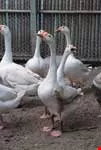
Goose meat, garlic, watermelon, cauliflower.... Rural communities are largely self-sufficient, and filled with the joy of sharing.
Once the younger folk had set the example, the senior citizens got interested and soon their contributions had outstripped those of their juniors.
The Shih clan is one of the most important in Yungle. When the community association got started they needed an activities center, so Shih Tsan donated the old Shih family compound, which was no longer being used. Volunteers worked to clean up and renovate the building, turning this traditional three-sided residential compound into a community workshop. The rooms in the main residence became a classroom, briefing room, office, and kitchen; the right-hand wing was turned into a women's study center, a music room, and an office for marketing craftwork and agricultural products; and the left-hand wing housed a children's reading room, a workshop, and a tea house/lecture space. The activities center was formally opened in 2000, and with an infrastructure of community activities in place, the next step-improving the appearance of the community and creating attractive public spaces-began to unfold.
Entering the old Shih family compound, one is struck by the plaques over the door lintels that express the ambitions and hopes of the home's owners. The four-character plaque over the door to the main hall reads, "Heirs of Qianjiang" (in Fujian, China). The doors leading to the two wings have plaques reading "outstanding people and magical soil" and "a family of high reputation." The clan ancestors who immigrated here from Quanzhou built up the residence brick by brick, tile by tile, and made their way in life through sheer effort and determination; they never could have imagined that this old structure would have such new life breathed into it after so many years. What was a shelter to the ancestors has, in the hands of their descendants, become a venue where the aspirations for "outstanding people and magical soil" and "a family of high reputation" are played out.
As volunteers deftly brought one community project after another to fruition, it was not long before the "Grass Academy," which can hold more people, took over the functions that the Shih residence had handled for the transitional period. But the Ageless Heroes still regularly clean the Shih family compound, and there are still signs of life in the outer and inner courtyards. It looks as if the master of the house has just stepped out for a stroll, and casual passers-by are likely to think that this is the home of some farmer with a fondness for flower beds.
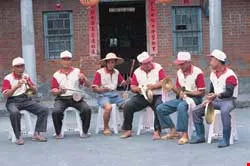
While most rural communities are withering away, Yungle has managed to organize a small beiguan musical company, carrying on their musical traditions into the 21st century.
The principles governing the beautification of public space in Yungle are "revitalization of old residences, remaking of the landscape, and creative use of space." Just as the Shih family compound was lent out without asking any compensation, so the other public spaces in Yungle-the Puhsintsai Pavilion of which local people are so proud, Chutsaichiao Park, the Octagon (another pavilion), Triangle Park, the Grass Academy, the Agronomy Trail, the Cultivation Corridor, the Cultural Assets Garden, and so on-are all lent by residents free of charge, and have all been constructed by volunteers.
Take the Grass Academy, the main site for community activities, as an example. Originally it was an abandoned chicken farm. Volunteers adopted an ingenious plan to wrap the main structure of the chicken coops in bamboo, and with a dozen or so volunteers going at it for 20 working days, the chicken shack took on a whole new look.
"The bamboo was provided for free by my younger sister's husband, who lives on Mt. Lala, and all we had to do was pay for transport," says Ageless Heroes deputy head Liu Ching-lin. Nobody had ever studied architecture or construction, so they worked without blueprints, and just did whatever came to mind. They improvised and created as they progressed, though they modestly refuse to claim any great brilliance about the whole thing: "It's just the basic instinct for working with your hands that most people who grow up on the farm have."
But there is something special about the work of these hardy rural folk. In comparison with the trite, commonplace nature of bamboo facades that you can see all over the place, there is a touching rustic charm to the Grass Academy. Volunteers also brought over some desks and chairs discarded by the primary school, and put up the decades-old school bell in the front yard. When the bell rings, it seems that the echoes of students reciting their lessons in the Chinese classics a century ago-"Human nature is basically good" (Mencius)-still drift on the cool breeze. "It's a lot more pleasant being here than sitting in an air-conditioned classroom," says Liu.
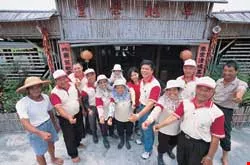
Let's hear it for Yungle! Yungle residents give a big thumbs up, expressing their high expectations for, and confidence in, their community.
Employing the same practical skill with their hands used in planting the fields, the elders have constructed a "Cultivation Corridor," in which every detail reveals their attachment to this land and their understanding of its importance.
This exhibition space, which is still being constructed, is for displaying aspects of agricultural production. Alongside an extended wall forming the edge of the primary school's grounds are an irrigation ditch, a place for drawing water, and century-old trees. There, volunteers are using plants and woven bamboo to create a corridor hundreds of meters long, and are also building a delightful little lotus pond using nothing but human labor.
Most noteworthy is that the wall of the irrigation ditch eschews that most favored of Taiwanese construction materials-concrete-and instead holds back the surrounding earth with bamboo frames. This means that the ditch is not cut off from the ecology of the surrounding soil. "When tadpoles become frogs, it is easy for them to climb out, and insects can live a complete life cycle alongside the water," says Chen Ching-hsi.
The long gray concrete wall behind the Yungle Primary School is the site of an even more impressive display of the artistic taste of the Ageless Heroes. First they covered the dreary gray with bamboo. But feeling that this was also too monotonous, they have erected a bamboo fence on which are hung explanatory plaques about nature and farming. At the bottom, greenery gently slopes upward against the wall, creating a layered effect. "This is all stuff we've made up as we go along," says Liu Ching-lin. Little did he realize that his instincts are so modernist!
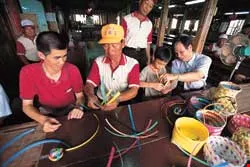
In the "Grass Academy," an old gent teaches young and old people from the village how to weave bamboo baskets.
When people get their act together, and the environment is made attractive, the roots and buds of culture can grow in the soil with ease.
Mothers from the Happy Family Workshop put their heads together to come up with a three-act play entitled "Springtime at the Back-Wall Ditch," which was awarded top prize for "creative environmental theater" in 2001 by the Environmental Protection Administration. Venerable local musical forms like beiguan and nanguan, long moribund, are coming back to life, too. Musicians have been scrounged up here and there in the village, and now the elders have organized a miniature beiguan orchestra, and they have invited an outside teacher to instruct young people in nanguan, which is easier to pick up. Meanwhile, octogenarian Shih Fen regularly conducts storytelling under a big tree, while Ruan Yung-liang, director of academic affairs at the primary school, is transcribing local oral histories.
Also in the vein of reviving traditions, the people of Yungle have creatively adapted "bamboo-tube firecrackers" to replace ceremonial firecrackers for welcoming prestigious visitors.
In days of old, bamboo-tube firecrackers were used in the fields to frighten off birds tempted to steal the grain. The firecrackers are made by taking sections of hollow bamboo, digging out a small hole in the bottom, stuffing in gunpowder, and adding some clean water. When you apply a flame to the small hole, the tube gives off an extremely loud bang.
The Ageless Heroes proudly relate that when President Chen Shui-bian came to visit Yungle, he said with admiration that their bamboo firecrackers were louder than the artillery salutes fired off on diplomatic occasions. Asked whether or not the president knew that these bamboo bangers were originally for scaring off small birds, they burst into laughter and say, "He had no idea at all."
After cleaning up the used bamboo firecrackers, the Ageless Heroes set one aside, polish it up, and tie a red ribbon around it. The reason, it turns out, is that once when representatives of another community came on an inspection visit, they were so impressed with Yungle's creativity that they asked to buy a commemorative bamboo firecracker. "At NT$400 each, at least it's a little income for the community,"says Chen Ching-hsi.
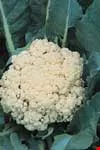
Goose meat, garlic, watermelon, cauliflower.... Rural communities are largely self-sufficient, and filled with the joy of sharing.
Chen's comment touches on a key point. Although all of the work in the community is done by the residents themselves, the ability to find financial resources has been critical in keeping activities going. When the Shih family agreed to have their old family compound turned into an activity center, the community raised funds by selling packages of dried vegetables. Since that time, vegetable drying has become an important regular form of mutual aid in the community.
It used to be that Yungle grew mainly rice, and farmers planted some garlic, cabbage, cauliflower, leeks, or tomatoes along the edges of their paddies. In recent years the acreage devoted to vegetables has increased, but the price of vegetables is unstable, and when there is excess production, farmers have to sell off huge batches at a loss. The Community Development Association began to purchase excess cabbage and cauliflower, thereby relieving some of the distress of farmers and at the same time making for a unique revenue source for the association.
"The community buys 12,000 kilos at a time," says production and sales department director Shih Tsan. The vegetables are dried in the sun in the forecourts of people's homes, and gathered up by volunteers.
Chen Ching-hsi says that they dry vegetables two or three times a year, and from this can earn NT$50,000-60,000, accounting for about 20% of the community budget. They also get subsidies from the Council for Cultural Affairs on a case-by-case basis, and fees from representatives of other communities who come to Yungle to learn. Altogether, the revenues have been enough to ensure continuity in community work.
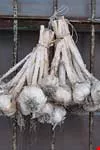
Goose meat, garlic, watermelon, cauliflower.... Rural communities are largely self-sufficient, and filled with the joy of sharing.
Relying on the enthusiasm of middle-aged moms and ageless heroes, Yungle has transformed itself from an insignificant farming village into a renowned model for other rural communities in Changhua County. There are now community revitalization movements underway in 20 of the 22 villages in Puyen Rural Township, a number of which are working out very well.
Yang Tsu-chiu, a secretary in the township government, relates that planners from the rural township government and the county government have worked together to select unique features that each village can focus on. For example, while the heart of Yungle is in its people and their activities, the Punan Community has been turned into an environmental protection area. A number of butterfly species have been successfully propagated for its Butterfly Park, and it has been listed as one of the country's top ten environmental protection zones. Nanxing Community, to take another example, is still largely untouched by development, and several hundred species of indigenous vegetation have been transplanted into the local park. Hsinshui Community, still in the planning stages, will be a center of vegetable production, and become the central transshipment node for vegetables for the surrounding region.
Besides providing inspiration for a wave of community activism, Yungle has given concrete aid to the two Changhua County communities of Wangkung and Shihpai. Moreover, since the September 21, 1999 earthquake, it has been common to see members of the Ageless Heroes in Nantou County's Changching Community, helping its mostly elderly residents escape from the shadow of the disaster.
As it so often happens, those who are active in self-help or who help others reap unexpected rewards of their own. Whereas Yungle's population was previously shrinking, the revitalization of the community has attracted many young people to come back. This in turn has saved Yungle Primary School from its likely fate of being closed.
"Schools are always very important to community life in small towns," says Shih Jung-hsin, director of administrative affairs at the elementary school. He is not a Yungle native himself, but as a result of the community's increased interaction with the school, and the school's realization that it could play a greater role in the community, he also feels a part of Yungle. The primary school has been playing a quite supportive role ever since the earliest days of revitalization in Yungle, and it is currently responsible for the community website. If the school needs help with anything, on the other hand, the principal needs only make a single call and dozens of Ageless Heroes will be available to lend a hand. The school is never short of teaching materials for classes in local culture, either, because the arts-and-crafts heritage revived by the elders-bamboo-tube firecrackers, traditional music, bamboo weaving-are all priceless cultural assets.
The Changhua County Bureau of Education now closes any elementary school with less than 50 students, and three years from now will close those with less than 100. Yungle Primary School, which formerly saw steadily declining enrollment, has since the beginning of the revitalization of the community stabilized at around 140 pupils. Keeping the school open could be considered one of the major accomplishments of the movement, thereby also keeping the memories of childhood school days alive for elderly residents as well.
Ending a stroll around the community, the sun has begun to set, and kids from the primary school pass by on their way home. The croquet club has already gotten the action rolling on an open lawn, while steam from kitchens where the evening meal is being prepared floats out of the farmhouses, and elders who have finished looking over their fields gather in an open-air pavilion to chat about crops. Uncle Fair points to a dog that sits in the center of the pavilion, waving its tail at everyone around, and says: "It followed my son home from who-knows-where last month, and now won't go away. I guess it must like the way Yungle looks."
A sense of contentment floats on the cooling breeze.
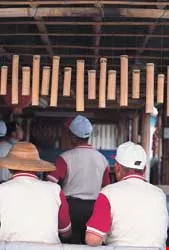
The group of elderly volunteers known as the Ageless Heroes made the Grass Academy out of bamboo. Slices of bamboo, hung on the pillars, make a pleasant click-clack in the breeze.
@List.JPG?w=522&h=410&mode=crop&format=webp&quality=80)


