Record Year for Fish--Mullet Over!
Jackie Chen / photos Vincent Chang / tr. by Phil Newell
February 1993


The great grey mullet haul! In winter of this year, startling news repeatedly came out of Wuhsi fishing harbor in Taichung. But don't the grey mullet come to Taiwan every winter? Aren't they always caught in the south? Is it such big deal to catch more than a million, earning tens of millions of dollars? What's so important about this year's catch? Why is it so miraculous?
Last Christmas, when the fishing boat "Chin Kung Jung," based in Chiating harbor, came triumphantly sailing into the docks at Hsingta flying four national flags, firecrackers and cheers resounded from the seaside. One flag represents 10,000 grey mullet. One boat with four flags, say the people of the Hsingta Fishermen's Association, is something that hasn't been seen for a long time. Chin Kung Jung captain Chen Min-hsiung says, "We were lucky. This year things have really paid off for the crew." The grey mullet from this ship were later sold at NT$265 apiece, earning more than NT$10 million in all.

The grey mullet is one of the most important economic sources for fishermen. A good mullet catch can get one through the winter, so it can mean from the year's work.
Something fishy going on around here:
"When winter comes, then the only thing to earn money on is these fish," says Chen Min-hsiung. Today, with coastal fishing resources nearly exhausted, and fishermen unable to catch much of anything, the annual grey mullet season is one of their main sources of income. This year, for instance, if their luck with the grey mullet is good, then income from that could account for more than half their earnings for the whole year.
You could say that this year was the most exciting for fishermen in the past several. According to statistics of the Taiwan Fisheries Research Institute (TFRI), by January 15 of 1993, the grey mullet catch for the whole province was 1.2 million, more than 700,000 more than last year, and the highest number in the last six years. And for the sea off of Taichung Harbor, where the grey mullet have concentrated this year, the catch has been a startling 780,000, the highest in history.
Huang Chao-sheng, an associate researcher at the Kaohsiung branch of the TFRI, says that the grey mullet come but once a year, and that according to records, any year where the catch exceeds one million can be considered a "bumper crop." In 1979, the catch reached its highest at more than 2.5 million. By 1986 it had bottomed out at just 80,000. It remained low for the next six years, then suddenly skyrocketed this year (see chart). Even specialists find this sudden rise and fall indecipherable; what's going on here?
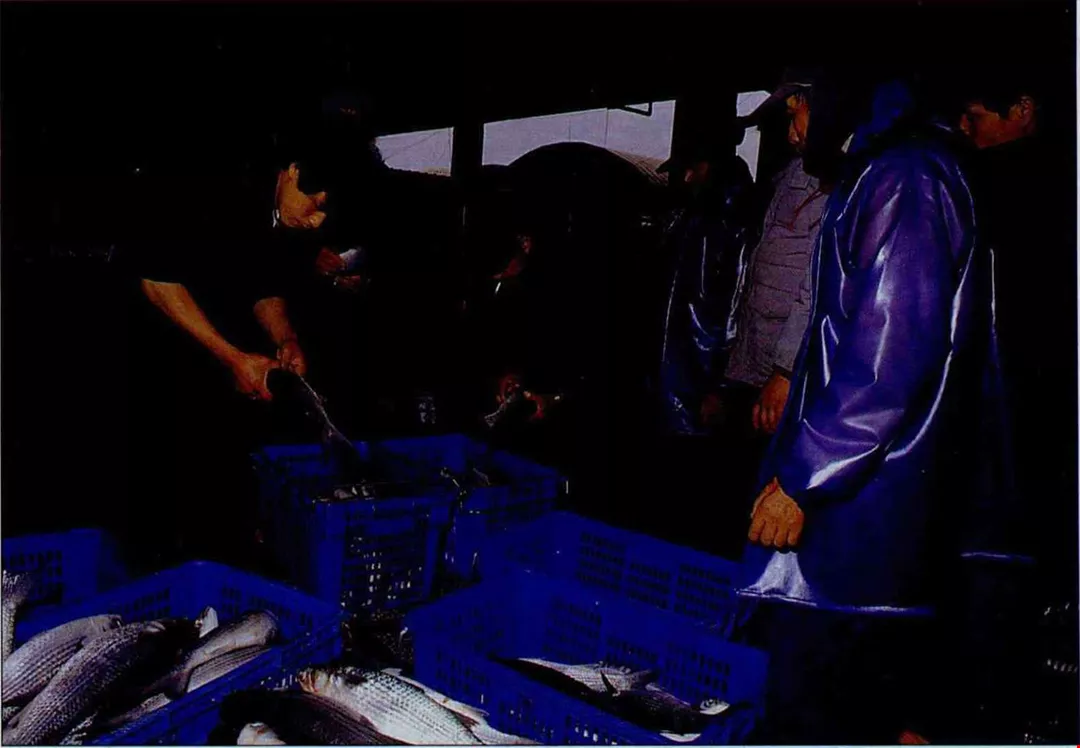
The value of the grey mullet lies in its roe. At the fish market, insiders know that a squeeze of the belly shows the telltale yellow egg juice for a female; otherwise it's a male.
Coming to Taiwan to spawn:
The scientific name for the grey mullet is Mugil cephalus Linnaeus. It is spread across tropical and temperate climatic zones, and its trails can be followed everywhere from Canada to Australia to Brazil. Like a reliable migratory bird, the grey mullet reports in at Taiwan once a year, in winter, from about the last third of November to the last part of January.
Where does the grey mullet come from? Why does it come to Taiwan? Some mysteries still aren't very clear. As for where they grow up, some say its the mouth of the Yangtse, others the seacoast off of Fukien. Some even surmise, based on a misapprehension of the name, that they come from Heilungkiang in mainland China (the first syllable of whose name is similar to the sound for "fish").
As for why they come to Taiwan, "Taiwan is the 'beautiful isle,'" laughs Liao I-chiu, director general at TFRI. Taiwan is like a second home for the grey mullet. Adult fish always pass through the Taiwan Straits when they go for a place to spawn; that's why they are always rich in eggs and why they are so strong and healthy.
Kuo Chin-lau, chief of the Institute's Fishery Biology Department, points out that, besides this innate biological habit, physical factors also force them south. When the cold fronts come off the continent in winter, growing grey mullet cannot tolerate the bitter chill, and come south to the warmer climes of the Taiwan Strait.
And where do they go after they spawn? Most grey mullet just go with the flow, following the tide back to their place of origin after laying their eggs. Some females will hang around hiding in rocks or caves to rest, waiting for the seawater temperature to rise before going home. These grey mullet, that appear only after an interval of time has passed, "have eaten so much they can barely move, so they have large heads and plump bodies," describes Chiating fisherman Cheng Fu-nan. This type of fish is then called the "Taiwan mullet" or the "late-returning" mullet.
The water temperature is a key factor in determining whether the fish form schools. This is a satellite photo taken in the winter of 1992-1993. The places in the photo where the water is from 20-23 degrees celsius is where the mullet gather, and the fishermen can figure out from this where the schools will be. (photo courtesy of the Taiwan Fisheries Research Institute)
Fishing for a lucky break:
The history of pisciculture among residents of Taiwan is long indeed. There are records of fishing from at least 1650, at the tail end of the Ming dynasty. Yang Hung-chia of the Kaohsiung branch of the TFRI says that for fishermen coming from mainland China to Taiwan to operate at that time, the grey mullet was the most numerous and most important catch. It is recorded in the daily log of Zeelandia (Anping in Tainan County) that from 1657-l658, the average annual catch of grey mullet was 300,000 plus 30,000 catties of eggs, a very rich harvest.
At that time, Takou and Yaokang in the south, and the lower Tamsui in the north, were the main centers of the fishing industry. Piscators coming to Taiwan had to register with the Dutch authorities then occupying the island. There were regulations covering fishing zones, target areas, and fishing season, and they had to pay taxes after finishing their work. The huts set up temporarily near the fishing grounds by those who came to Taiwan were the origins of early fishing villages.
The mullet catching season is very brief. Fishermen often say that the grey mullet only appears between ten days before and ten days after the beginning of winter. In fact, the "harvest season" when they are forming schools and are easiest to catch is only about ten-plus days per annum. Thus in hunting the grey mullet, luck plays an important part. "You have to have 'fish fortune,'" says one angler from Taichung. And no one can know beforehand whether or not they have the Midas touch.
In Chiating harbor in Kaohsiung, which has been famous for many years for its catches of grey mullet, every year when grey mullet season arrives the temples are filled with burning incense. Before going out to sea, fishermen will always go to the temple to pray, hoping the fish will keep their promise and come back, so that the fishing boats can return home stuffed to the gills. Some even tell the gods that if they can come home with a full boat, they will come back to the temple to repay the deity's beneficence. They might for instance offer the "three sacrifices," the "four fruits," or even sponsor a performance or film. This bumper-harvest year, it is said that the performance schedule for the temple in Chiating dedicated to Matsu, goddess of the sea, is already booked through the 19th day of the 2nd month after the Lunar New Year.
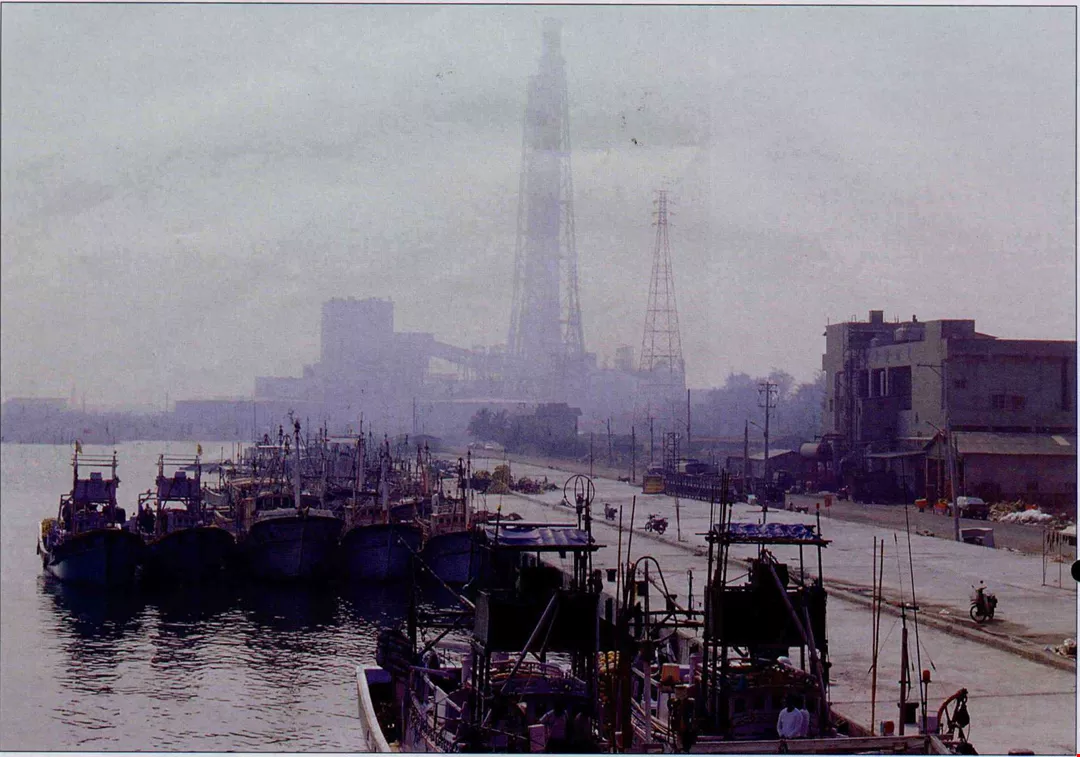
The electrical generating plant at Hsingta has been built right next to the Chiating to the fishing port. In 1992, fishermen whose catch was adversely affected gathered before the plant to demand compensation, making for a media event.
When winter's warm, the mullet disappear!
Fishing folk also have a variety of taboos. For example, it is necessary to choose an auspicious day for the catch; women and those who have just been to funerals are not allowed on board the boats; when eating, you can't eat "till you see the bottom of the bowl" (which would be like a ship with an empty hold), but have to "add rice" (which suggests a bountiful haul); when the boat is full and the fish are being counted, they should be counted in even numbers, not in odd numbers. Some skiffs mount an amulet at the bow, while others paint auspicious pictures on the boats, all to appease the fickle fates.
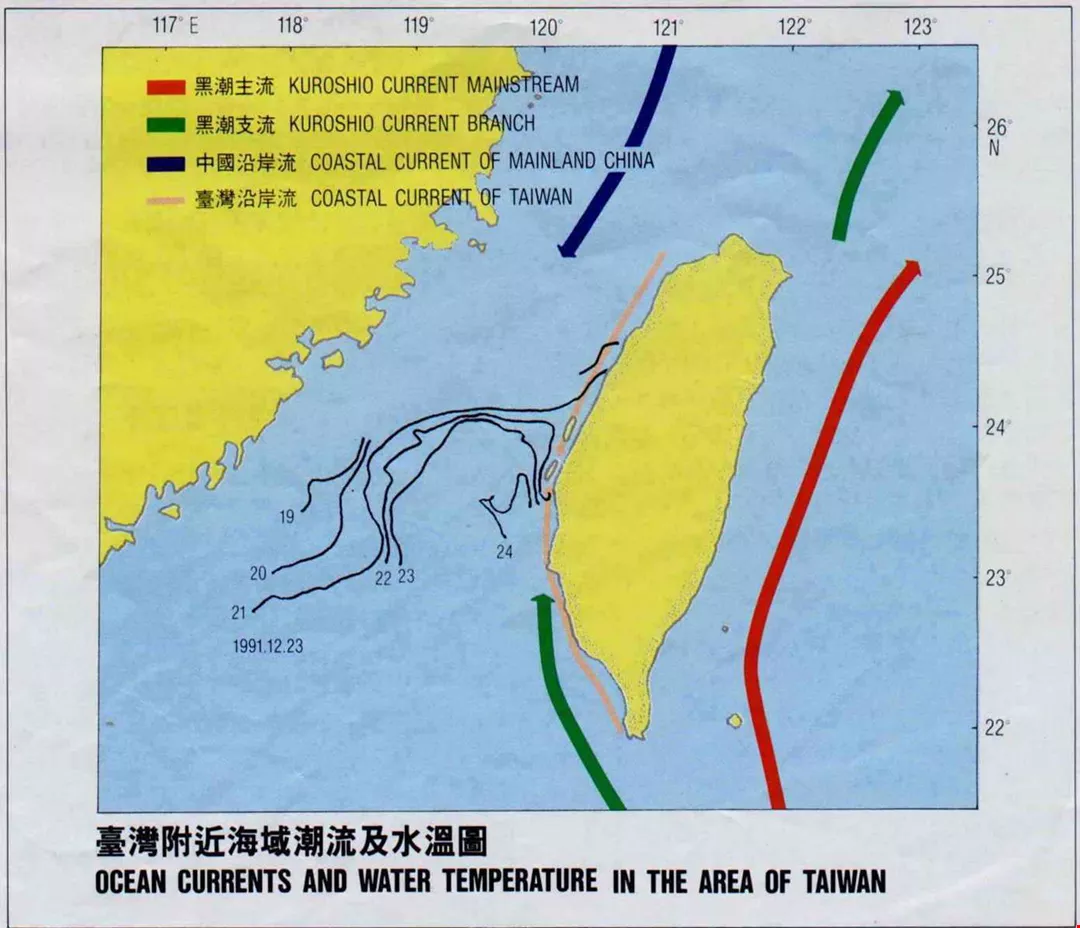
As in previous years, before the official start of winter on December 21 of 1992, many fishing boats had already congregated off the southwest coast of Taiwan, with everyone anxiously hoping the cold weather would soon arrive. "The grey mullet live on the cold," says sailor Lin Wang. The TFRI has discovered that the most suitable temperature for grey mullet is 21-23 degrees celsius, and the schools will not open if the temperature is too cold or too warm.
Why do the swirling mullet form schools? The subtle influence comes from the currents. Lin Ya-min of the TFRI's sea conditions research lab, points out that when the cold water comes down from the mainland, the Kuroshio Current which circles around the northeast part of the island brings warm water that intersects with it. The cold and warm currents push and pull against one another, becoming almost like two walls. This traps the fish in groups, creating an excellent fishing ground. This is what oceanographers describe as the "barricading effect."
Why don't the fish schools swim on? The main speculation is that the water temperature suddenly changes, and the fish are startled, so they stay in one place and don't go forward.
Researchers have endeavored to find the reasons why grey mullet production has been unstable in recent years. One important discovery is that although the cold water mass from the mainland heads south to Taiwan, if it isn't sustained, which is to say if it doesn't come far enough south, then it won't be strong enough to get into that push-pull dynamic with the Kuroshio Current, so that the fish will not form into schools.
"That is to say, the grey mullet have by no means failed to show up; its just that they are scattered around or swirling about in deep water," says Lin Ya-min. So the fishermen cannot snare their prey.
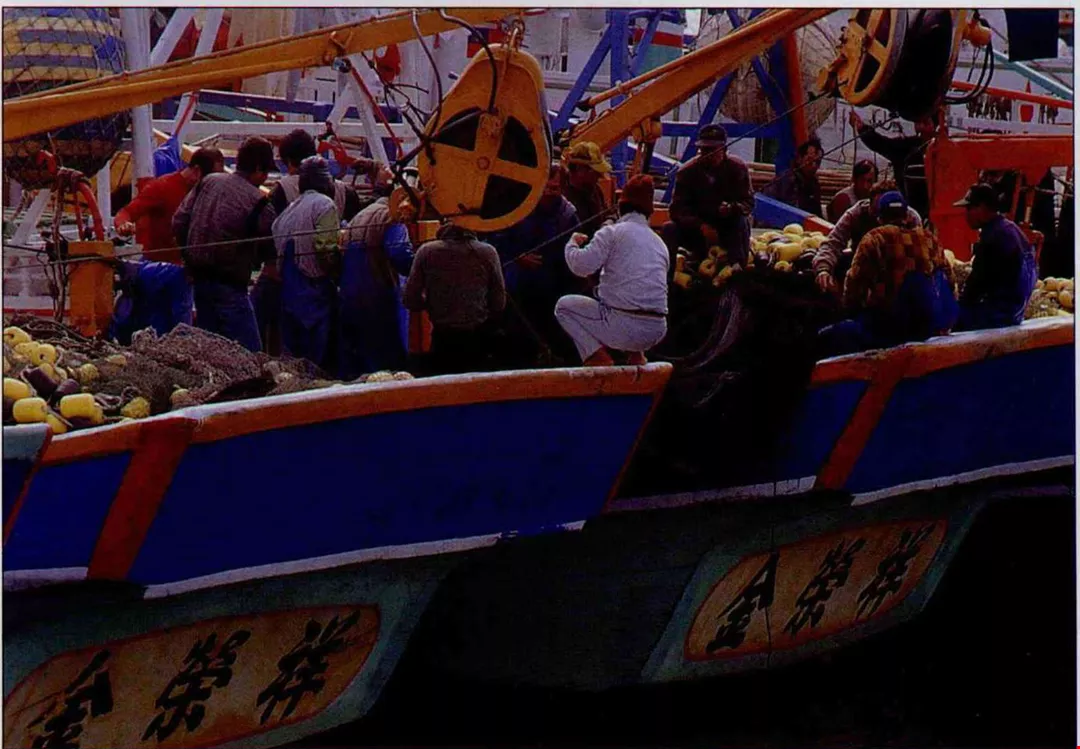
The more orthodox boats use purse seines, with two boats working together, to create a huge trap. This is most effective for catching fish.
But don't the mullet like coming here anymore?
This is connected to recent global warming. Lin states that, according to the work of Japanese scholars, because of the greenhouse effect, the average global temperature has increased two degrees over the past ten years. The occurrence of warm winters has not only affected the mainland cold fronts, it has also made the main warm current in the Pacific, the Kuroshio, abnormal, severely affecting the ocean ecology.
As for this year, although it has also been a warm winter, because the cold fronts from the mainland have repeatedly persisted in coming down south, this has fit in perfectly with the warm water of the Kuroshio. "When the warm stream is concentrated, then the schools of fish have found the temperatures they are looking for," explains Lin, so that this winter has witnessed a haul rarely seen in recent years.
Besides changes in the condition of the sea, some people believe that the instability in grey mullet production is due to the fact that the environment off the southwest coast of Taiwan has already been altered, so that the grey mullet are no longer willing to come.
The TFRI's Yang Hung-chia notes that as you go southward along the west coast of Taiwan, things like the Taichung electrical generating plant and the Hsingta electrical station in Chiating have been built right on fishing grounds. And even people aren't willing to venture near the mouths of rivers with the polluted waste water they spew out, so why should fish?
The experience of many anglers also attests that the schools of grey mullet have been moving farther and farther off the coast.
But meticulous studies have not been able to confirm any link between pollution and grey mullet behavior, and have even discovered completely contradictory numbers. For instance, at Wuhsi harbor, where the Taichung electrical plant is located, the volume of fish nabbed has not only not gone down, it has increased. This year it is eight times the level of a year ago, which has simply knocked specialists right out. Huang Chao-sheng speculates that this extraordinary development may be because the grey mullet is more resistant to pollution than most other fish.
Further, the unusual situation in Taichung port is also a market response to another abnormal fish situation of the past several years: The fishing grounds for the grey mullet have been moving northward.
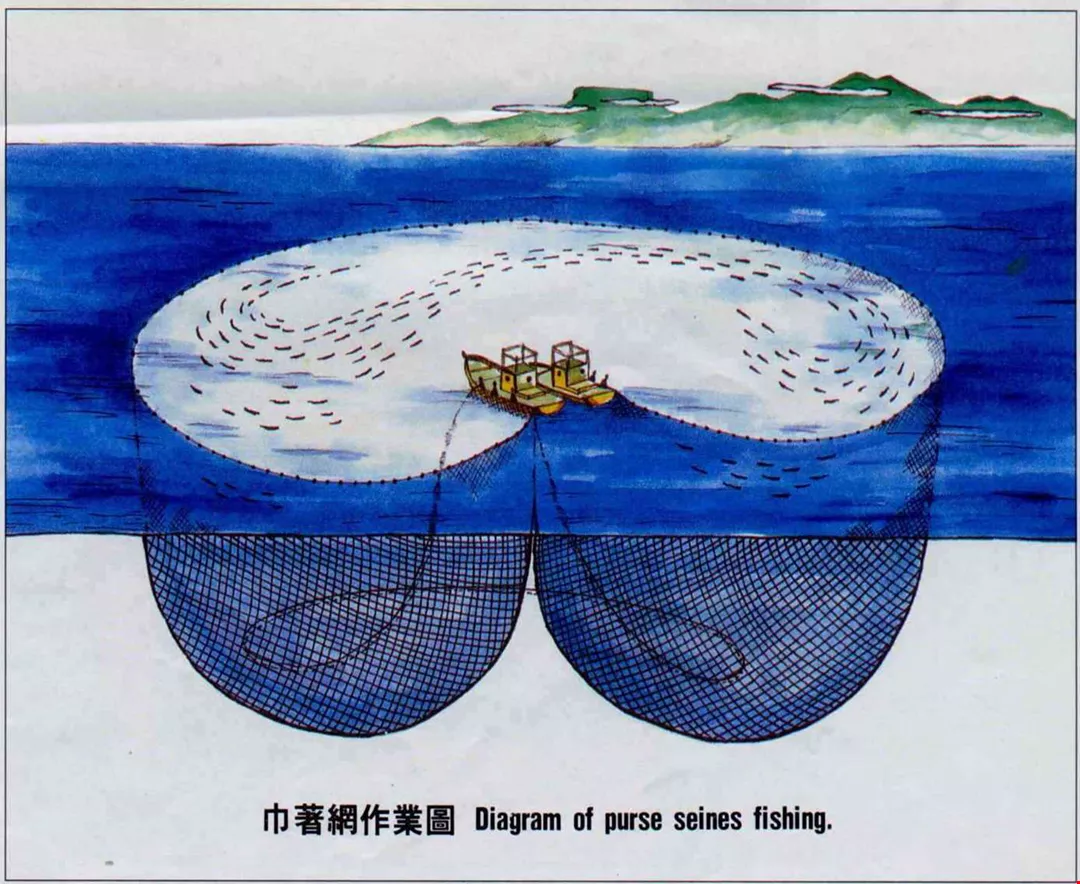
(sketched by Tsai Chih-pen)
The grey mullet head north, the great grey mullet harbors change location:
In the past the grey mullet would move south with the cold water, from Hsinchu to Wuhsi, Wangkung, Taihsi, Anping, Chiating, and Tungkang, swimming right on down to the tip of Taiwan at Hengchun. If they hadn't yet been intercepted, they would spawn at the Chihsing seaside near Hengchun and then depart. It is said that finnicky eaters most love the fish off Chiating, when they are nearly full with eggs and the fish is plump and beautiful to behold. Thus piscators in the past usually preferred to do their work off the southern coast, and then sell in Chiating, so that Hsingta harbor, located in Chiating, got the reputation as being the "great grey mullet harbor."
But in the last decade, notes Lin Ya-min, unless it is the absolute peak of the season, the main grounds have all been north of Anping in Tainan County. Moreover, there has been a northward trend.
In the last six years, while the fishermen on the rest of the island have been unable to make any net gains, Taichung harbor has been in a league of its own, setting records year after year. "Last year and this year, more than two-thirds of the total grey mullet catch for the province has been caught in the seas off of Taichung," says Wang Tsuo-yuan, a staff member responsible for grey mullet at the Taichung Area Fishermen's Association. It seems that Taichung has now become the "great grey mullet harbor."
This is also related to the fact that the cold fronts have not been able to come further southward. Improvements in fishing gear over the past few years, such as two boats cooperating to create a single large trap, increasing the horsepower of fishing boat motors, and improvements in two-way radios, have enabled the work of catching the fish in winter, unattainable in recent years, to go along swimmingly in the warmer weather.
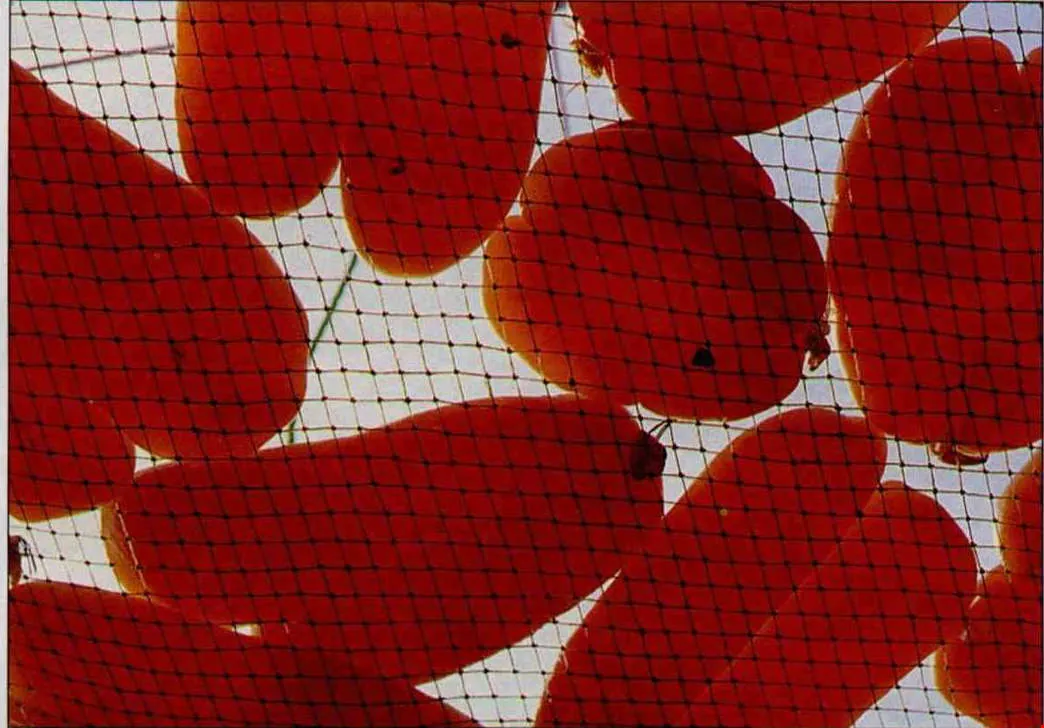
High class mullet eggs are yellow in the middle and transparent white outside, with a thick exterior. They don't have that "fishy" aroma when sniffed.
Water out of fish:
This is something that's hard for many older fishermen to imagine. Chien Wan-tsai, a 74-year-old from Suao, says that winters in the Taiwan Strait have always been famous for their risks and dangers. "Ten years ago, it was taking your life into your hands to try to catch fish north of Taichung in winter," is how he puts it. The wind and waves were high, and often pilothouses were destroyed by incoming water. In the past, on boats with low-horsepower diesel engines, it wasn't even possible to keep your footing.
But technical progress has brought disaster for our finned friends. Amidst all the discussion of the variations in grey mullet production, whether or not overall grey mullet resources are declining is an important topic.
Some contend that grey mullet are being intercepted by others even before they get to Taiwan. Mainland Chinese fishermen are the prime suspects. As proof, fishermen point to instance after instance of sightings of mainlanders using explosives to catch fish off of Fukien Province. "Those are still small fry just growing up, and if they're blown up they won't be swimming any farther," says fisherman Cheng Fu-nan.
A more persuasive theory is that because of improvements in fishing equipment over the past few years, the boats have already overfished the area.
Su Wei-cheng, director of the Kaohsiung branch of the TFRI, has estimated a "grey mullet continuous growth volume" based on the rate of maturation of the mullet, its annual catch, and so on. Any annual haul over 1.4 million should be considered overfishing. When you figure it out, before 1985, there were definitely five or six years of over-doing it.
There has also been a trend whereby the age of the grey mullet netted has been going downward.
Kuo Chin-lau notes that between 1977 and 1978, "elderly" fish of seven or eight were still being caught (the life expectancy of a grey mullet is about eight years). By 1985, they were all less than four. The research of Huang Chao-sheng has also found that the worse the year in terms of overall catch, the more young fish are caught.

Sun-drying flattened ova is an important way to process grey mullet. The mullet have to be turned over two or three times in order to be properly dried.
Don't catch tired or late-returning fish:
An old Taiwanese saying has it: If there are no fish, then shrimp will be fine! So, if there are no big fish, then is it OK to catch ones in their prime? But if there are no more youngsters, what then?
"Don't be in such a rush to wipe them out," says fisherman Chien Wan-tsai. In the past fishermen weren't willing to catch fish that had swum south of Chiating, because these were all adults that were ready to lay their eggs, and the prices for the fish or the eggs were not so good. "Late-returning" fish were also not caught very often, because they were all "tuckered out" after laying their eggs, and the meat was all soaked and not very tasty. This kind of consensus in fact sustained the fish generation after generation.
But now it's different. Coastal aquatic life has been adversely affected by pollution, and the resources there have withered. Long-range fishing has been hampered by the two hundred mile maritime economic zones set out by other nations, so it is less and less prosperous. Today fishermen catch anything they can get their hooks into: "no pain, no gain!"
Liao I-chiu, who spends a lot of time in face-to-face contact with fishing folk, sometimes appeals to them not to exhaust the fish, and to leave a few for the next generation. But the fishermen reply, "It's already unlucky enough to be doing this job this generation-will there still be a next generation doing it?!" He believes that though not every fisherman necessarily feels this way, it's worth keeping an eye on.
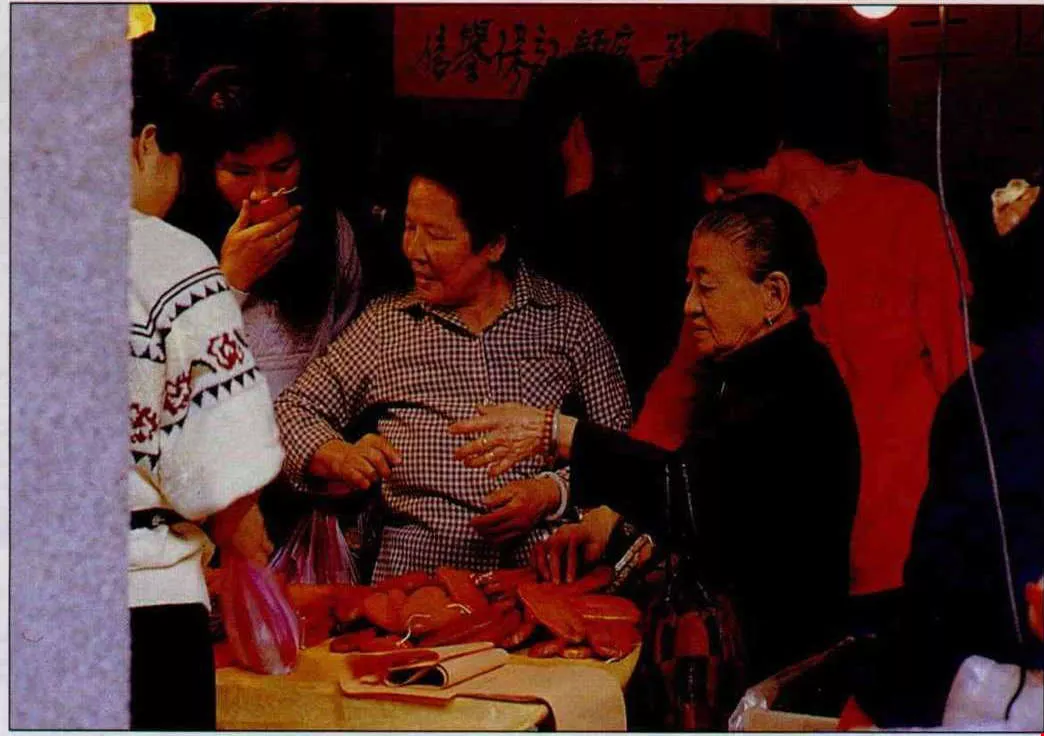
Mullet eggs are a great New Year's gift, and are also very popular with Japanese tourists. (photo by Diago Chiu)
Grey mullet an auspicious sign for the new year:
Huang Chao-sheng suggests that perhaps a few methods could be adopted, such as not permitting fishermen to catch "late-returning" fish, or limiting activity south of Chiating. These could be implemented in-house by the fishing self-regulatory bodies. Liao I-chiu hopes that deliberate conservation of grey mullet can be undertaken in a large scale soon.
Director Liao says, "Since the grey mullet have chosen this land of ours and come a long way to be our guests, and have been with us for such a long time, we have the urgent responsibility to protect them."
He suggests that the example of the protection accorded to the salmon, which lives at sea but swims upstream to spawn, can be provided to the fishermen for reference.
In order to protect the salmon, the governments of the United States, Canada, and Japan have all agreed to a treaty whereby each would leave untouched a certain amount, and catch only a certain amount. In the past few years there have already been signs of a resurgence of this resource.
Is this year's bumper crop of grey mullet an auspicious sign of things to come? In the past people had the saying that for the grey mullet "a good run lasts four years." Is this year the start of a positive period?
No matter whether it be fishermen, researchers of the grey mullet, or even connoisseurs, all hope that this traditional Chinese cycle can continue uninterrupted. Every year when the fish come to report, you can know: "Isn't New Year's coming soon? Look-it's another huge haul of grey mullet!"
[Picture Caption]
p.14
Annual variation of catches for grey mullet from 1966 to 1992
These fish all produce their own versions of "Chinese caviar," but if the eggs aren't tasty, the prices plummet.
p.16
The grey mullet is one of the most important economic sources for fishermen. A good mullet catch can get one through the winter, so it can mean from the year's work.
p.17
The value of the grey mullet lies in its roe. At the fish market, insiders know that a squeeze of the belly shows the telltale yellow egg juice for a female; otherwise it's a male.
p.17
The water temperature is a key factor in determining whether the fish form schools. This is a satellite photo taken in the winter of 1992-1993. The places in the photo where the water is from 20-23 degrees celsius is where the mullet gather, and the fishermen can figure out from this where the schools will be. (photo courtesy of the Taiwan Fisheries Research Institute)
p.18
The electrical generating plant at Hsingta has been built right next to the Chiating to the fishing port. In 1992, fishermen whose catch was adversely affected gathered before the plant to demand compensation, making for a media event.
p.19
The more orthodox boats use purse seines, with two boats working together, to create a huge trap. This is most effective for catching fish.
p.19
(sketched by Tsai Chih-pen)
p.20
High class mullet eggs are yellow in the middle and transparent white outside, with a thick exterior. They don't have that "fishy" aroma when sniffed.
p.20
Sun-drying flattened ova is an important way to process grey mullet. The mullet have to be turned over two or three times in order to be properly dried.
p.20
Mullet eggs are a great New Year's gift, and are also very popular with Japanese tourists. (photo by Diago Chiu)
p.21
There's a religious festival in Paishalun in Chiehting Rural Township that coincides with the mullet season. Mullet eggs dry in the sun in front of the ceremonial arch. After being processed, fresh mullet ova that sold for NT$300 can go for three times as much.
p.22
The prime location for catching mullet is now from Tamsui to Hsinchu. This boat from Miaoli, after the end of the trail, has caught only ten fish despite working all right. The captain says that in the past you just had to wait by the mouth of the river to catch a big pile, and his record, set more than ten years ago, was 20,000.
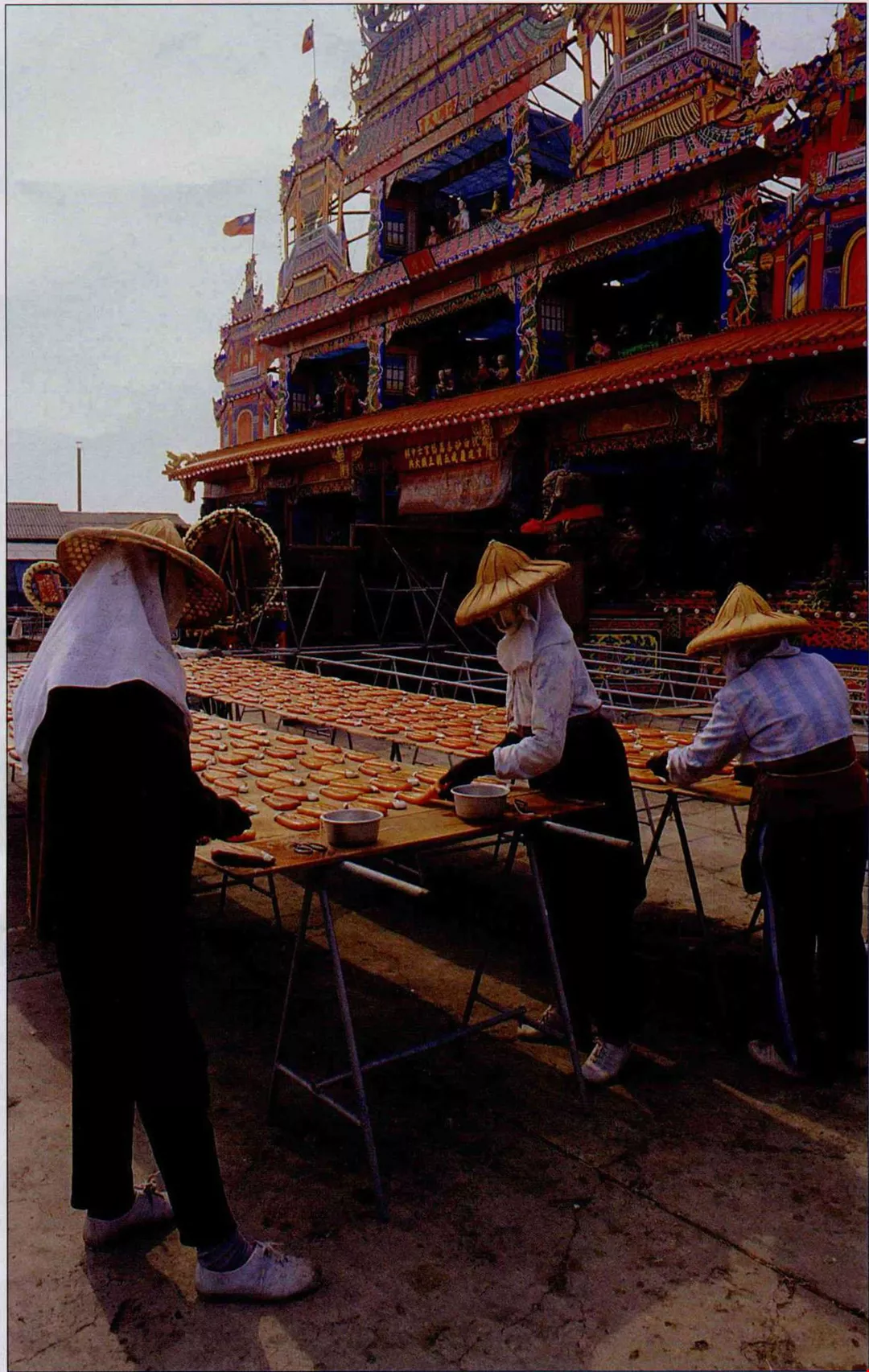
There's a religious festival in Paishalun in Chiehting Rural Township that coincides with the mullet season. Mullet eggs dry in the sun in front of the ceremonial arch. After being processed, fresh mullet ova that s old for NT$300 can go for three times as much.

The prime location for catching mullet is now from Tamsui to Hsinchu. This boat from Miaoli, after the end of the trail, has caught only ten fish despite working all right. The captain says that in the past you just had to wait by the mouth of the river to catch a big pile, and his record, set more than ten years ago, was 20,000.

@List.jpg?w=522&h=410&mode=crop&format=webp&quality=80)


@List.jpg?w=522&h=410&mode=crop&format=webp&quality=80)
@List.jpg?w=522&h=410&mode=crop&format=webp&quality=80)
