Tainan’s Bib Gourmand Catch:
Chang Ying Seafood House
Lynn Su / photos by Lin Min-hsuan / tr. by Phil Newell
April 2026
Beimen District in Tainan City is a remote rural area. But determined folks have long sought to make a living here in the saline wetlands of the old Daofeng Lagoon by raising the “three treasures” of Beimen: milkfish, tilapia, and clams.
Among Beimen’s many temples, the clan-based Fa’an Temple at Sanliaowan has been quietly watching over the Huang family’s aquaculture business for four generations.
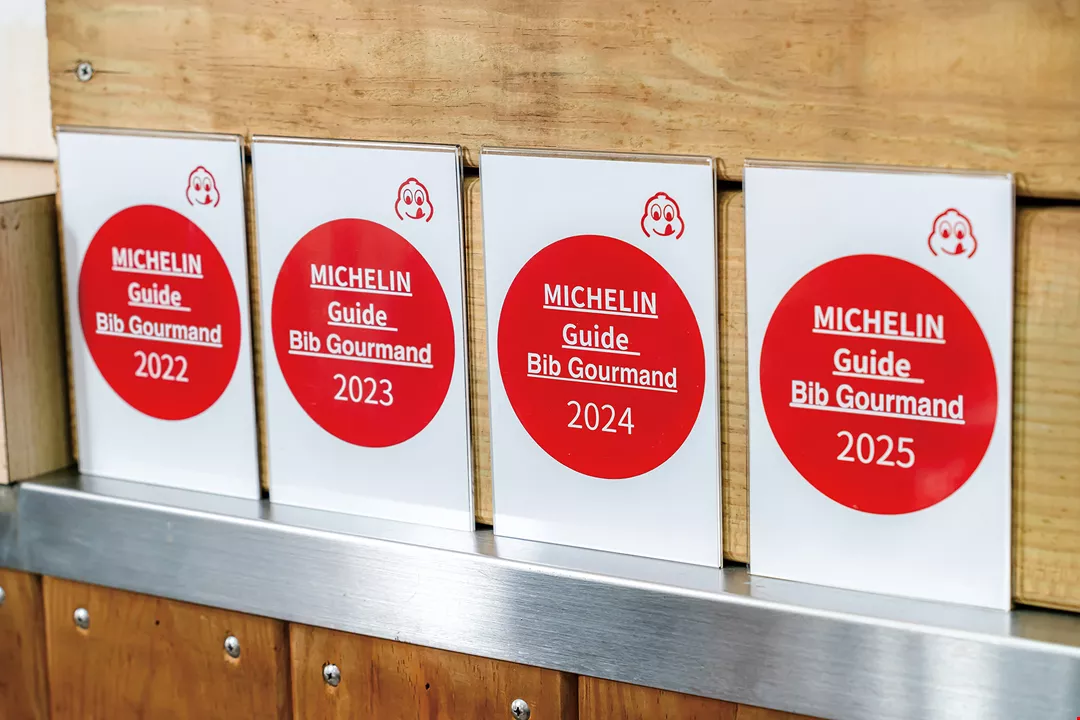
Great-grandfather Huang Lu got the ball rolling. His son Huang Bitian began to invest in seafood processing, and gained Traceable Agricultural Products certification. Then Huang Bitian’s son Huang Guoliang took over, and in only 13 years has established the Apollo Aquatic Product company and won a Haiyan Premium Seafood Award, a Top Ten Most Appealing Products listing, a Traceable Agricultural Products Master title, and a Shennong Award as one of Taiwan’s top farmers. Finally, in the fourth generation, Huang Guoliang’s niece Xie Jiaxin, together with her mother Huang Yunqing (Huang Guoliang’s sister) operates a restaurant called Chang Ying Seafood House that is not only certified by Tian Mama, but has been one of Michelin’s Bib Gourmand recommended eateries for four straight years since 2022.

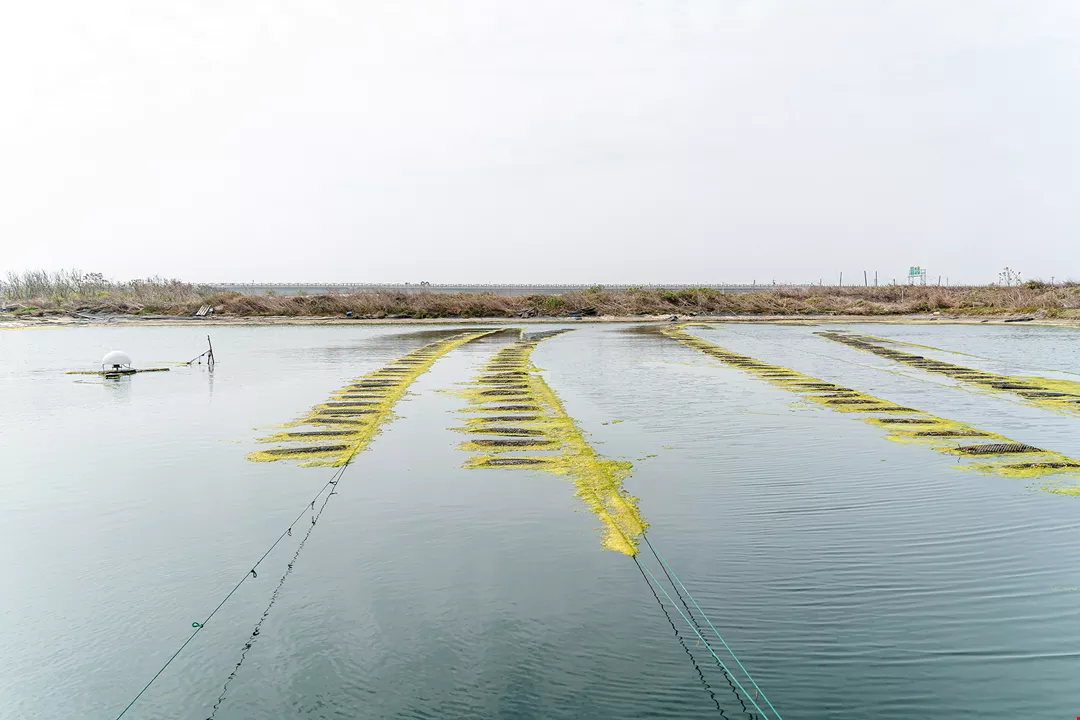
The blue-green water in the fish ponds is cleaned by filter feeders such as cultchless oysters. This enables thread algae to flourish, in turn providing food for milkfish.
Raising delicious fish
In Beimen, pretty much every household engages in aquaculture, so in this regard there is nothing unusual about the Huangs. Huang Guoliang, who left home at 13, was considered an “aquaculture deserter” until serious illness forced him to quit his job in the tech industry and return home. However, precisely because he had no preconceived notions, this ambitious figure emphasized quality and food safety. “Everybody wanted to raise fish, but I wanted to raise delicious fish.”
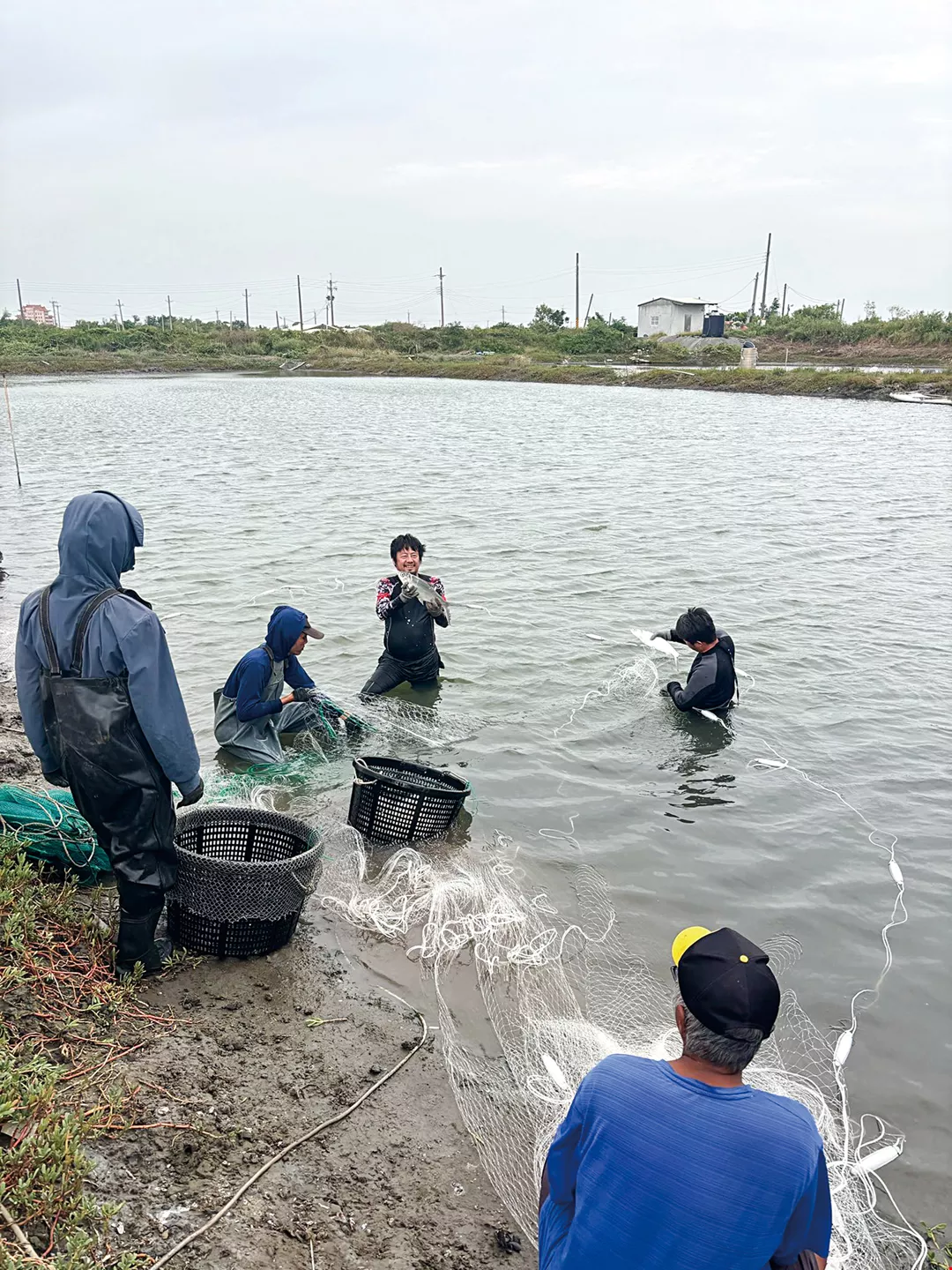
Earnestly seeking solutions to ensure that his fish are tasty, he insisted on using only seawater in his ponds, forcing the fish to deal with the osmotic pressure of salt water. Although they grow more slowly than in fresh water, the texture and flavor are better. He also reduced fish density in his ponds to one-tenth the traditional level and adopted a cycle in each pond of raising fish for six months and letting the pond rest for six months. At the same time, he developed his own polyculture method to imitate the natural ecosystem, and harvests his fish with gillnets.
Though production costs are high, Huang Guoliang uses wind and solar power as well as energy-efficient wave-making aerators, reducing electricity bills by 90%.
Because of his high standards, his fish farm has been able to win not only Traceable Agricultural Products certification but also rigorous European Union certification. The operation is energy self-sufficient, being not only “net-zero” but even “carbon-negative,” and thus earning a 2024 National Sustainable Development Award.
Mimicking Nature
Huang Guoliang has invented his own method of aquaculture, which mimics a natural ecosystem. He raises dozens of different species in the same pond, including filter feeders such as cultchless (single-seed) oysters and Babylonia snails; milkfish, which feed on thread algae; shrimp, which can control the growth of parasites like sea lice; and predators such as sea bass and giant grouper. Taking advantage of microalgal communities and the prey preferences of predators, he enables different species to support and control one another, naturally eliminating unhealthy individuals. Thus he is able to operate sustainably without using medications and chemicals.
The water in his ponds is a deep blue-green with a soft luster, and is clear down to a depth of 3.5 meters. The abundance of food attracts many terns.

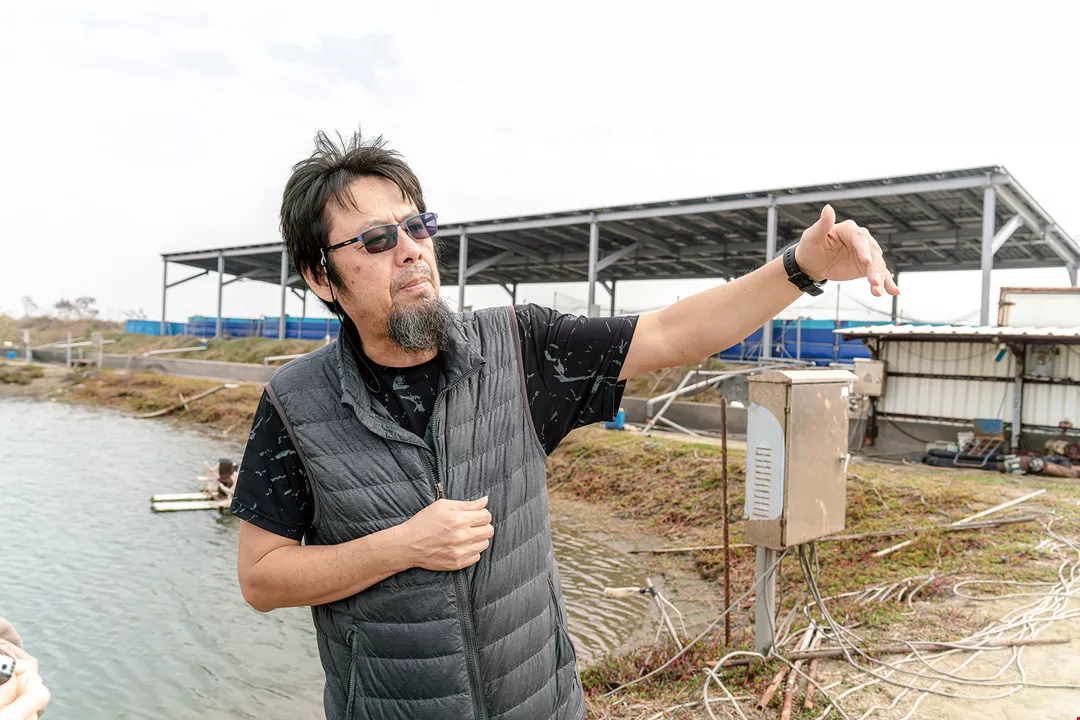
Huang Guoliang has gone from turning his back on aquaculture to winning a Shennong Award as one of Taiwan’s top farmers.

In this photo, milkfish are being harvested from a polyculture pond. Because they are raised in a complete ecosystem, they are naturally active, giving their meat a robust and firm texture. (courtesy of Chang Ying Seafood House)
Minimum food miles
Nowadays Huang Guoliang’s premium seafood products can be eaten right nearby, at Chang Ying Seafood House. This small restaurant was originally founded by his father, Huang Bitian, to serve retail consumers, but today is run by Huang Guoliang’s sister Huang Yunqing and her daughter Xie Jiaxin. Long before winning its Michelin Bib Gourmand recommendation, it had many regular customers from far and wide and was a trusted local eatery.
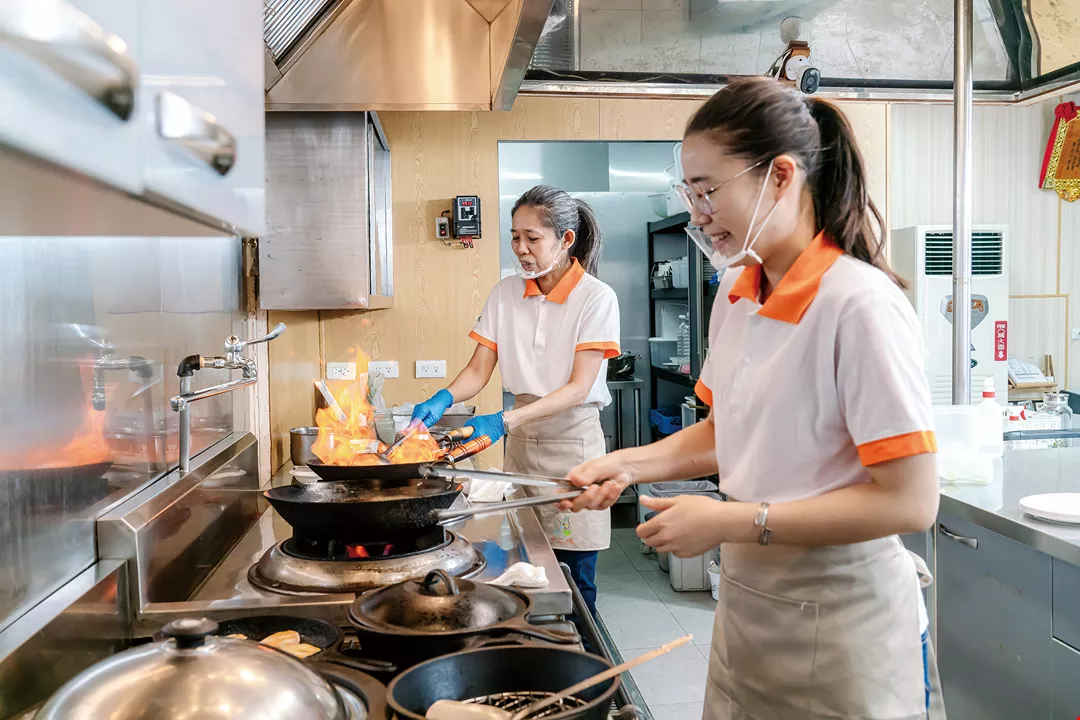
Xie Jiaxin, who can always be found doing the cooking with her mom, explains the farm’s approach to fish quality. Freshly harvested and processed fish are placed in a -50℃ cold chain storage facility to avoid the formation of ice crystals. For fish intended for raw consumption, they use the laborious ikejime method (paralyzing and bleeding) to maintain the fresh, sweet taste of the meat. Alternatively, fish are processed using a low-temperature dry aging technique that removes moisture from the oil on the surface, preventing oil splatters during pan-frying. Moreover, fishbones are turned into valuable fish essence, while fish heads, scales, and intestines, which most people discard, are processed into liquid fertilizer to avoid waste, thereby achieving the goal of “using the entire fish.”

Huang Yunqing (left) and her daughter Xie Jiaxin (right) together run Chang Ying Seafood House. Building on fine ingredients and high-level culinary skills, they have earned an international reputation.

Chang Ying Seafood House has earned a Michelin Bib Gourmand recommendation for four straight years, attracting a stream of new customers. However, what most delights Huang Yunqing and Xie Jiaxin is that many become regular patrons.

The Tastes of Home
Chang Ying Seafood House adheres to the principles of “low oil, low salt, low sugar, and high fiber” extolled by the Tian Mama brand, and incorporates lifestyles and cultural memories unique to the Beimen fish farming community.
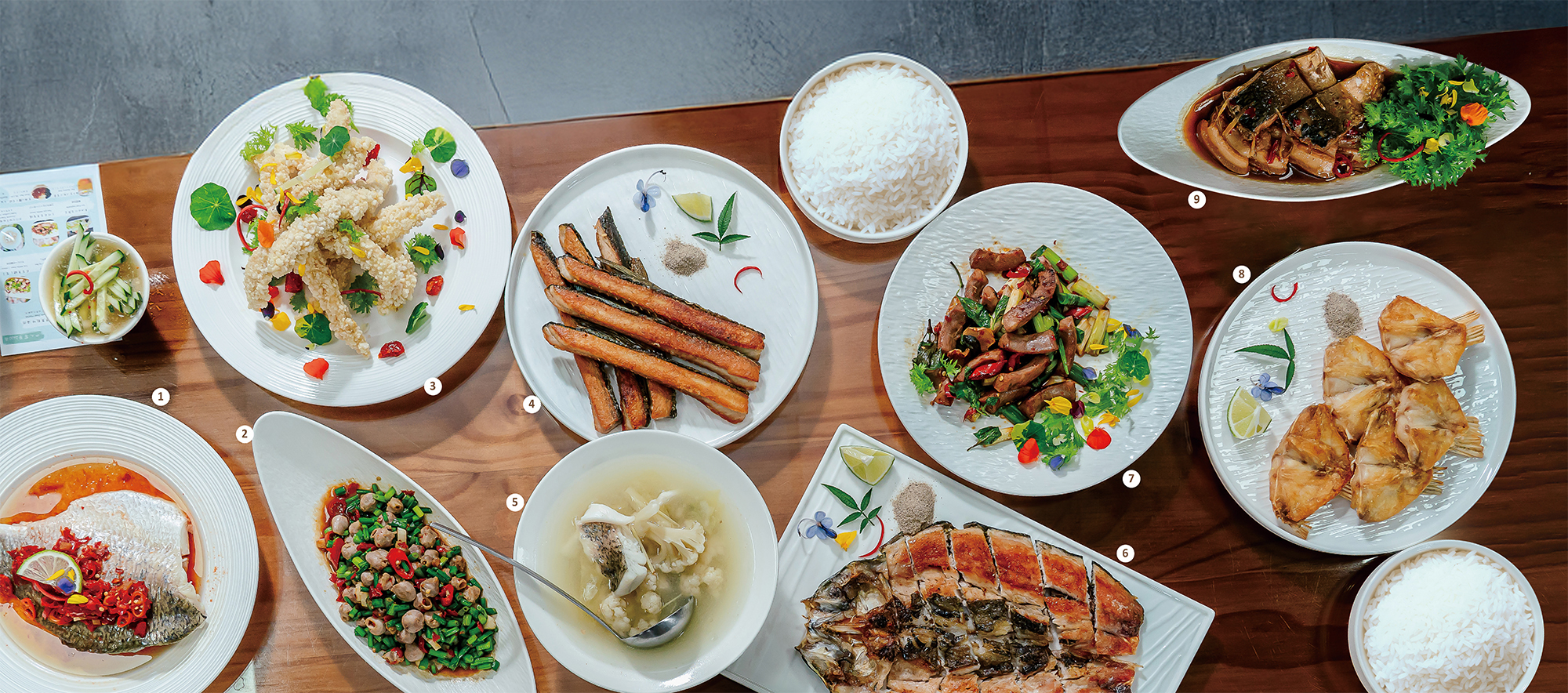
1 Steamed sea bass with chopped chili peppers
Large, not-so-spicy chili peppers are fermented and chopped, then served with thick cuts of fish. This dish is aromatic without being overly spicy and goes well with rice.
2 Stir-fried milkfish gizzards
Milkfish gizzards have a robust, chewy texture; for this dish they are stir-fried with flavorful Chinese chive flowers or celery.
3 Thai-style deep-fried fish strips
Low-fat fish strips are fried in oil and paired with sweet-and-sour Thai-style sauce. Served with Chang Ying’s homegrown herbs, this dish has a refreshing, non-greasy mouthfeel.
4 Pan-fried milkfish fillets
Cut from the highly active muscle beneath the dorsal fin, the meat is evenly marbled, tender and succulent, fragrant yet light and refreshing.
5 Fermented cauliflower and sea bass soup
Made with preserved seasonal ingredients like pickled baby watermelon and fermented cauliflower, this fish soup is rich in rustic charm.
6 Pan-fried milkfish belly
The fleshy belly of the milkfish is dry-fried to produce crispy skin and a robust texture while emitting this fish’s unique sesame aroma.
7 Three-cup milkfish sausage
Developed by Huang Bitian, this dish consists of low-fat fish-meat sausages cut into strips and cooked by the “three-cup” method (with rice wine, soy sauce, and sesame oil) to enhance the oily texture; drizzled with sesame oil, the sausage is fragrant without producing “dry heat” (a Traditional Chinese Medicine concept).
8 Pan-fried sea bass jaw
The lower jaw of mature sea bass is oil-fried to give it a fine filamentous texture similar to crabmeat.
9 Braised pork with dried fish
Before the advent of refrigerators, fishers and farmers often preserved foods with salt. However, salted fish was not suited to being eaten alone, so it was cooked with meat to balance the flavor, producing a surf-and-turf delicacy. This dish is still often served by families in fishing villages along the Tainan coast, and is also a classic “must-serve” food at temple festival banquets. Chang Ying Seafood House’s version replaces traditional salted dried fish with milkfish belly and adds fish essence as a broth base, enriching the flavor.