Flavor, Bite, Life: Making Vinegar with Love
Chen Chun-fang / photos Lin Min-hsuan / tr. by Scott Williams
November 2016


Taiwan’s growing interest in healthy living has had an intriguing offshoot: the use of vinegar as a health supplement. Vinegars can be broadly typed by method of manufacture: fermented, synthetic, or flavored. Meanwhile, consumer demand for traditionally manufactured products remains high in the wake of Taiwan’s recent food safety crises. Within the Taiwanese vinegar market, consumer preference for vinegars fermented from organic crops using traditional methods is bringing outstanding local vinegars to us all.
Tang Po Vinegar, based in Toufen Township, Miaoli County, has been making vinegar for more than a decade. Company founder Gao Qingyu was originally looking for ways to relieve her husband’s long-term heartburn and gastrointestinal discomfort. A graduate of Fu Jen Catholic University who had studied microbial genetic engineering in the school’s Department of Life Sciences, Gao began experimenting with fermenting vinegar at home.
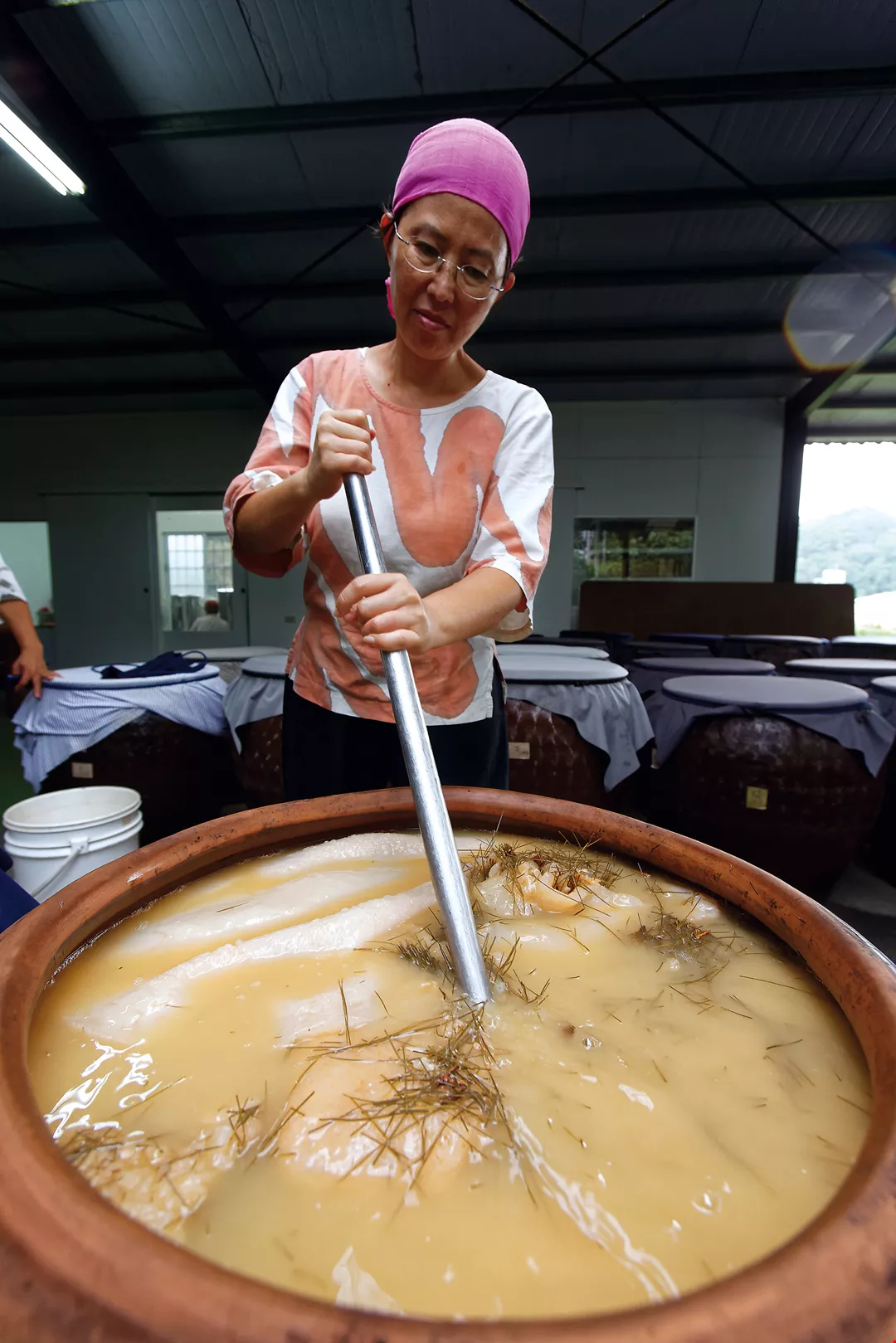
Gao Qingyu, founder of Tang Po Vinegar, cares for her vinegars as carefully as for her own children. She ferments them from local produce, and even produces a carbonated variety, sweetened with honey, for people reluctant to drink plain vinegar.
One year, two fermentations
The traditional process for making vinegar involves adding yeast to a sugary liquid, then allowing the mixture to ferment for three to six months in a process known as alcoholic fermentation. At the end of that time, the liquid is transferred to an earthenware vat to which acetobacters—bacteria that produce acetic acid—are added. During this second six-month fermentation, known as acetic fermentation, the bacteria convert the alcohol in the liquid into acetic acid.
Each batch of Tang Po vinegar gestates for nearly a year. Gao cares for them as conscientiously as for her own children, “birthing” each with love. She makes the rounds of her vats daily to check on their progress, and stirs them at regular intervals to prevent the film produced by the acetobacters from covering the surface and suffocating the bacteria.
Gao handles the “nursing” of her vinegar babies, while her husband, artist Lai Tangya, clothes them. He provides the handwriting printed on their labels, and cuts the bits of fabric tied over the bottle caps from sheets inscribed with his own calligraphy.
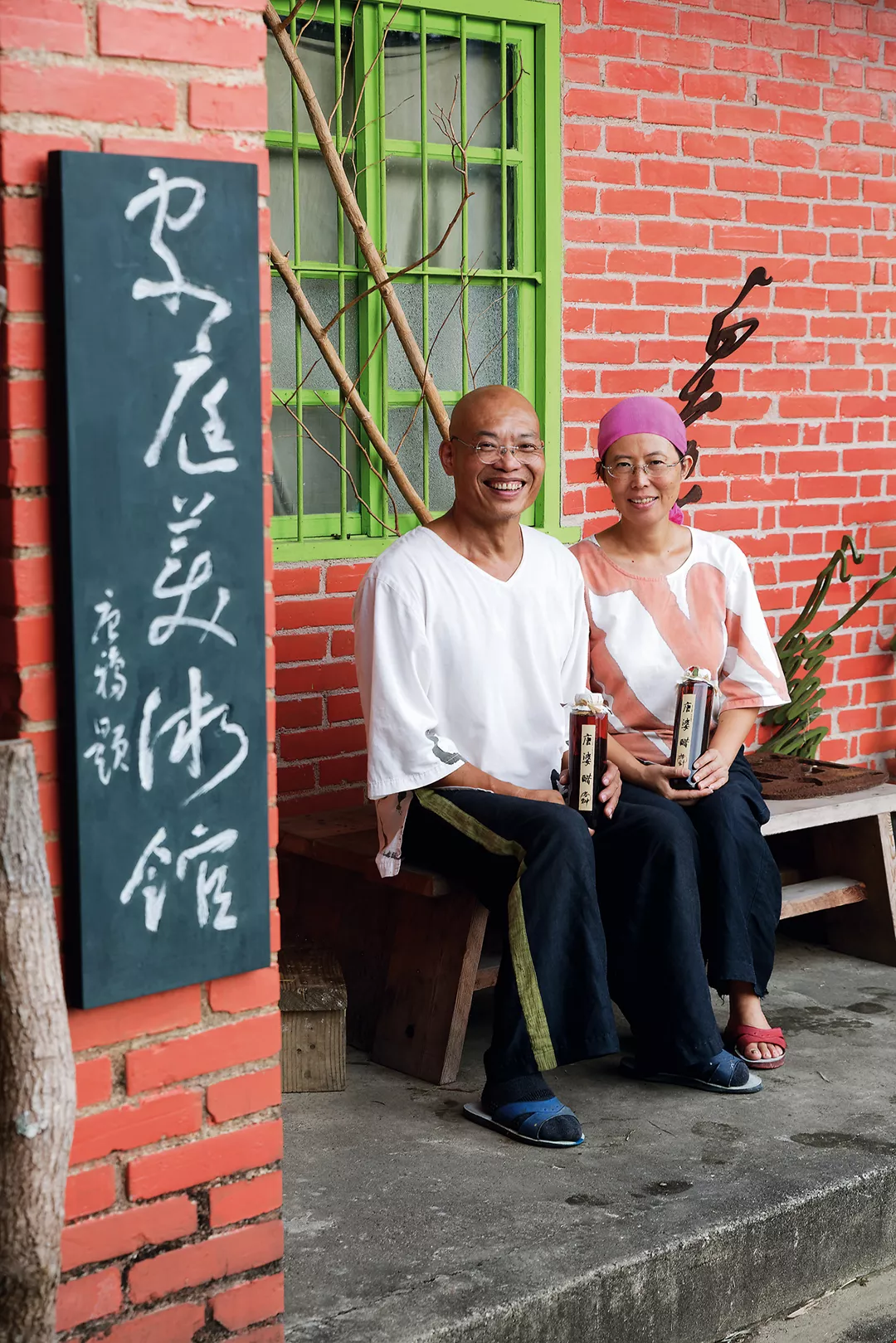
Gao Qingyu and her artist husband Lai Tangya make vinegar, grow crops without pesticides, sculpt with clay from a reservoir, hand-dye their own shirts, and have even opened their home to the public to share their life aesthetic with others.
A graceful dance
Gao began fermenting her own vinegars out of love, so it is no surprise the ingredients she uses reveal a concern for the land around her. When the couple set up housekeeping in Sanxia, New Taipei City, she not only made vinegar from Taiwan white pine needles and citrus tankan grown in their hometown of Toufen, but also from crops grown without pesticides by small farmers in other areas, including grapes from Changhua County and pineapples from Hualien and Taitung Counties. Gao has fermented vinegar from even more unusual ingredients, including burdock, medicinal herbs, and ashitaba.
When they moved back to their hometown of Toufen to take over the family orchard, Gao and Lai began cultivating citrus tankan, roselle, and olives without pesticides or chemical fertilizers. They also grow a number of plants intended to attract milkweed butterflies. They hope that the mood-boosting qualities of this vibrant natural setting will encourage neighboring farmers to modify their own growing practices.
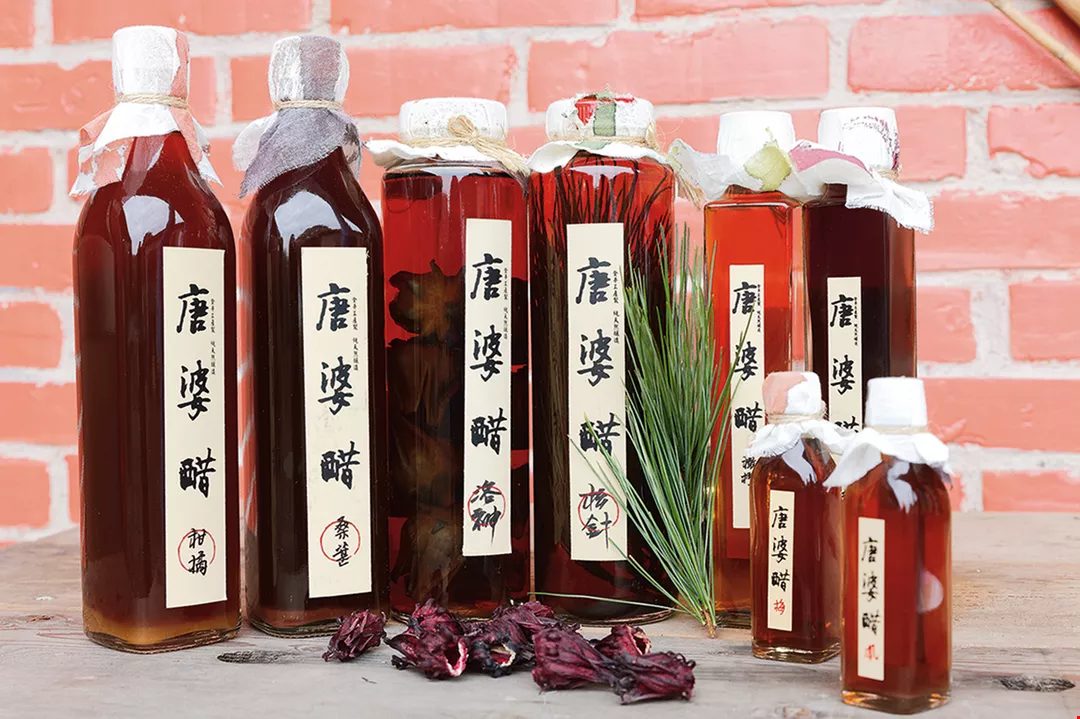
Gao not only made vinegar from Taiwan white pine needles and citrus tankan grown in their hometown of Toufen, but also from crops grown without pesticides by small farmers in other areas, including grapes from Changhua County and pineapples from Hualien and Taitung Counties. Gao has fermented vinegar from even more unusual ingredients, including burdock, medicinal herbs, and ashitaba.
Market life
In addition to being sour, traditionally fermented vinegar has hints of saltiness that add extra dimensions to the flavor. They derive from minerals excreted by the microorganisms that produce it.
Gao has been making vinegar for more than a decade. At first, she just sold it to friends and family, and those they told about it. Then, five years ago, she connected with Yang Ju-men, the founder of the 248 Farmers’ Market and an ideological compatriot. Gao and her husband subsequently set up a stall in the market and began their life as weekend vendors. Their sales are up and down, but Gao and Lai continue to brew their pure fermented vinegars nonetheless. They are committed to their patient effort to change neighboring farmers’ practices and to inform the public about the benefits of consuming vinegar, which include improving the body’s pH balance and helping reestablish Nature’s equilibrium.
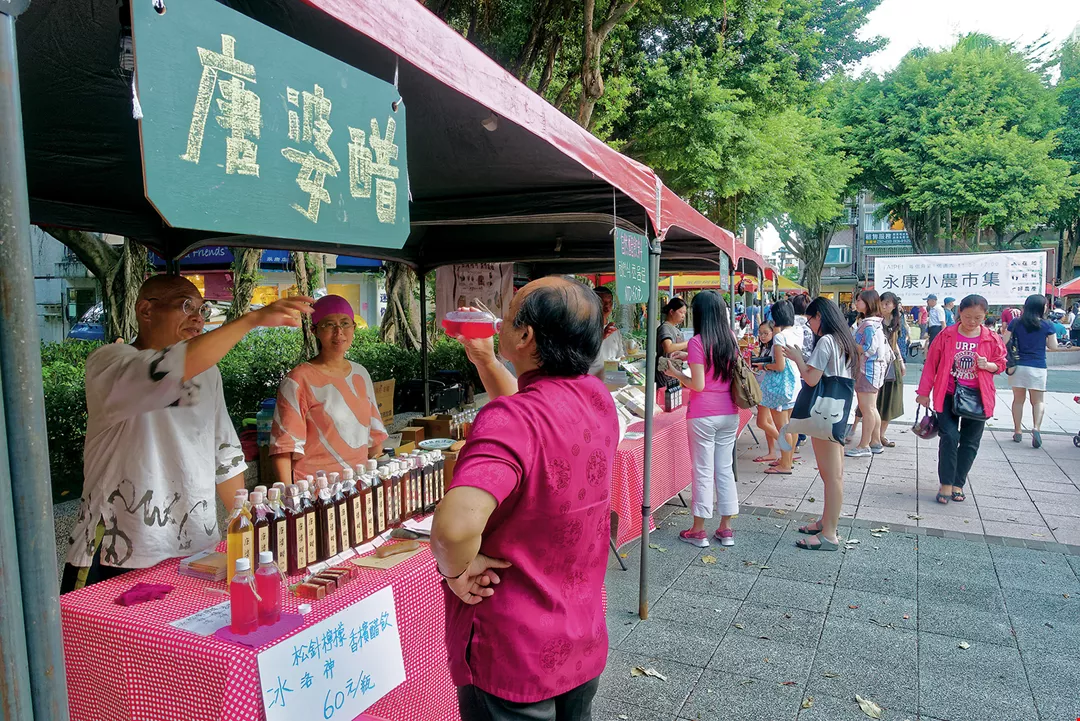
Gao and Lai are selling Tang Po Vinegar to help people balance the pH of their bodies and to bring greater balance to the environment.
Fermenting for love
Tsai Fu Liang, the founder of Fu Niang Fang, was similarly inspired by love to make vinegar. An alumnus of the graduate program in food sciences at National Pingtung University of Science and Technology, Tsai used to earn roughly NT$1 million per year overseeing hundreds of employees at a Taiwanese food factory in mainland China. Everything seemed to be going well until his eight-month-old son contracted the very rare Kawasaki disease. The boy had to take aspirin daily to control the disease, but was sickly nonetheless. At an age when most children are full of life and energy, he was instead a frequent visitor to the hospital. Tsai eventually decided to quit his job to spend more time with his son in Taiwan.
He also began thinking about alternative treatments. He settled on a dietary regimen to improve his son’s condition, and developed a vinegar beverage for the boy to drink. He soon discovered that most of the vinegars on the market were made from chemically synthesized acetic acid with additional sugar and flavorings. When drunk, these vinegars sting the nose and burn the throat. Since they also lack virtually all of the organic acids and nutrients of naturally fermented vinegars, Tsai decided to brew his own “real” vinegars.

Tsai Fu Liang, founder of Fu Niang Fang, and wife Rena Chang have drawn on traditional vinegar-making techniques and their own food-science expertise to produce outstanding naturally fermented vinegars rich in organic acids.
Making it a business
Seeking the best yeast for making vinegar, Tsai first collected a variety of wild strains by exposing several ingredients to outdoor air. He cultured these yeasts, then made adjustments to the acidity of his culturing environment to find strains that could survive a pH of 2. His next step was using these yeasts to make vinegar, testing each with his base ingredients to find the best combinations.
Tsai then made vinegar using the traditional method, mixing yeast with his base ingredients and allowing the resultant liquid to undergo alcoholic fermentation for three months. He next added acetobacters and allowed his mixture to undergo six to ten months of acetic fermentation and maturation.
Tsai studied food manufacturing equipment in graduate school, and has applied that knowledge to his fermentation processes to ensure consistent results. He uses stainless steel fermentation tanks, regulates fermentation temperatures, and monitors alcohol, sugar and acid levels. Once fermentation is complete, he filters out the leftover microorganisms and sediments. His approach has begun moving traditional vinegar manufacturing in the direction of modern, technologically driven business enterprises.
Tsai is also very conscientious about the ingredients he uses as the base for his vinegars, sticking to toxin-free and environmentally friendly agricultural produce such as roselle and red quinoa from Aboriginal villages, and pineapples and jujubes from Pingtung.
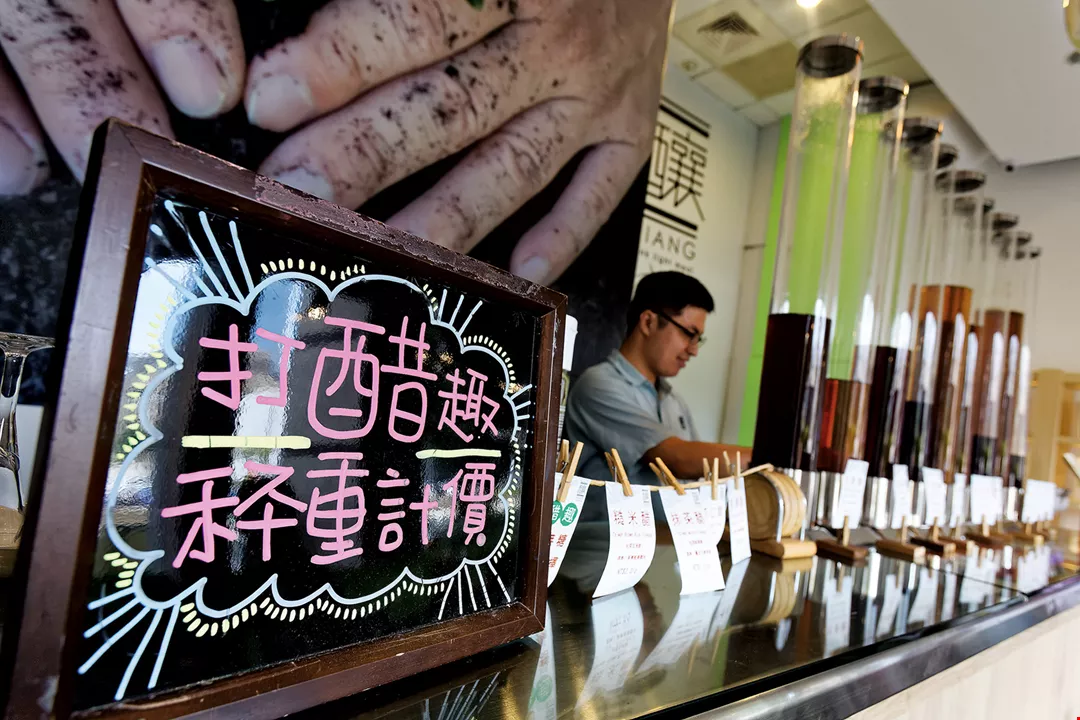
Tsai Fu Liang, founder of Fu Niang Fang, and wife Rena Chang have drawn on traditional vinegar-making techniques and their own food-science expertise to produce outstanding naturally fermented vinegars rich in organic acids.
Market-stall beginnings
Tsai began researching vinegar making in 2010 and formally established his Fu Niang Fang brand two years later. He put his savings into equipment and ingredients, and devoted every day to research. “I was certain I was doing the right thing, but didn’t know what the future would bring,” says Tsai, who wasn’t making any money at the time. Fortunately his wife, Rena Chang, also has a background in food science and was able to support the family.
Once he had a product, he set up a stall in a Pingtung market to sell it. At a few hundred NT dollars per bottle, his fermented vinegar was far more expensive than the synthetic vinegar on store shelves and few people showed interest. He therefore switched to selling flavored vinegar drinks. He was surprised by the positive response, and not only had mothers and grandmothers visiting him daily, but they even helped him sell his drinks.
After getting a friend to design packaging for this brand, Tsai began entering his products in international tastings, where they went on to win Germany’s Red Dot design award and two stars from Belgium’s International Taste & Quality Institute. He was also invited to sell his products in Singapore and mainland China. Tsai’s first Taiwanese shop opened in Taichung in 2014. In addition to providing him with a retail outlet, it functions as a venue for distributing samples and a forum for communicating with his customers.
Tsai is in a good place these days. Fu Niang Fang is gaining a more solid footing in the domestic and international markets, and his son’s condition has stabilized to the point that he only needs to visit the hospital every other year for checkups. Seeing the children growing up active and healthy drinking his vinegar beverages has only strengthened Tsai’s commitment to his “sour” life.
The slow passage of time tempers Taiwanese agricultural products, turning them into micronutrient-rich pure fermented vinegar. Our artisanal producers’ dedication to old-school vinegar-making techniques is ensuring this Taiwanese tradition will be passed on.
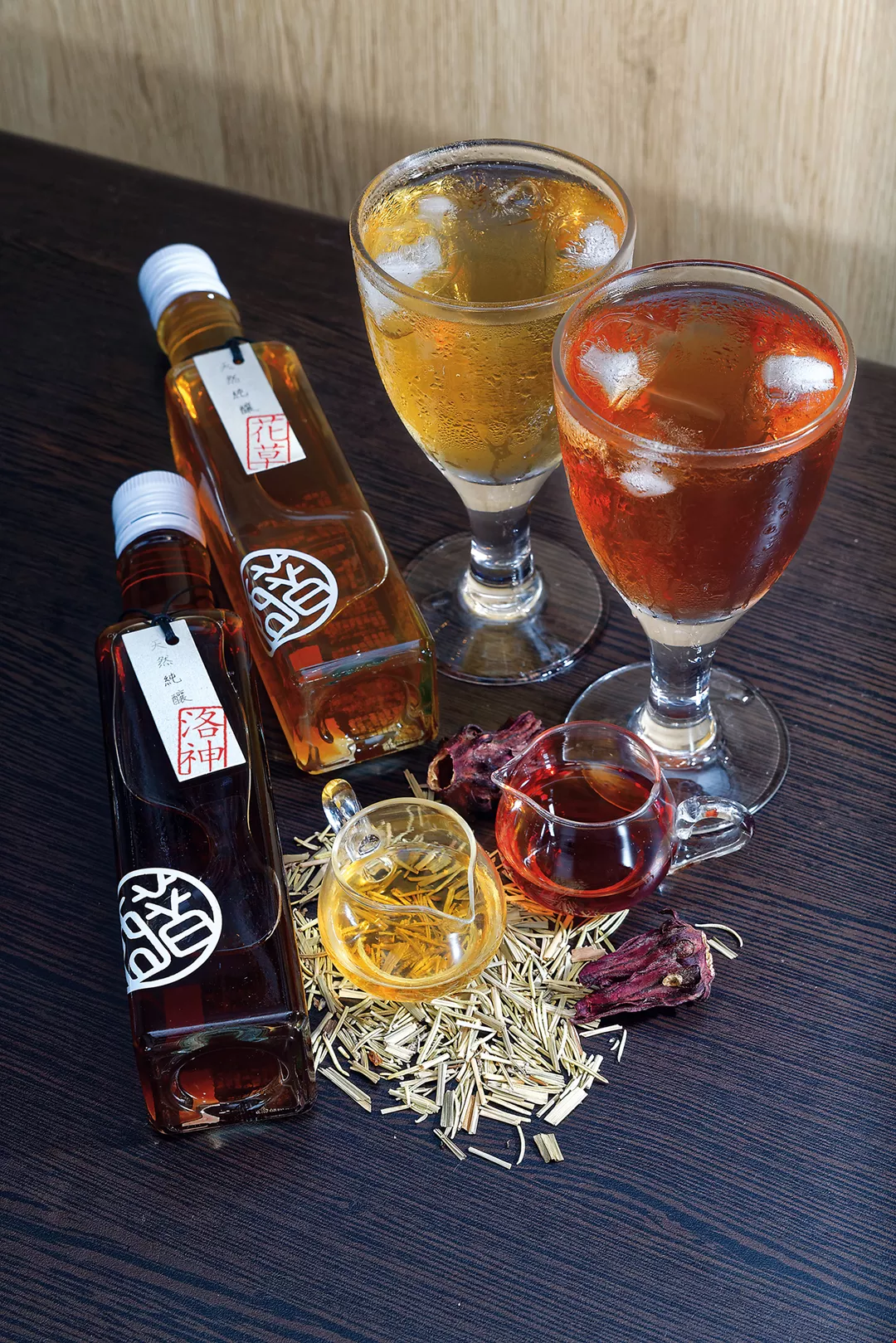
Tsai Fu Liang, founder of Fu Niang Fang, and wife Rena Chang have drawn on traditional vinegar-making techniques and their own food-science expertise to produce outstanding naturally fermented vinegars rich in organic acids.

Tsai feels blessed and has become still more committed to his “vinegary” way of life since seeing his son grow up healthy and strong drinking his vinegar. (courtesy of Fu Niang Fang)

Fu Niang Fang has brought traditional vinegar making into the modern era by fermenting its vinegars in stainless steel tanks and closely monitoring their acidity and alcohol levels. (courtesy of Fu Niang Fang)

Fu Niang Fang has brought traditional vinegar making into the modern era by fermenting its vinegars in stainless steel tanks and closely monitoring their acidity and alcohol levels. (courtesy of Fu Niang Fang)

Fu Niang Fang has brought traditional vinegar making into the modern era by fermenting its vinegars in stainless steel tanks and closely monitoring their acidity and alcohol levels. (courtesy of Fu Niang Fang)


