Closer than Sisters: The Women of Taipei First Girls High School
Chen Hsin-yi / photos Chuang Kung-ju / tr. by Phil Newell
February 2012

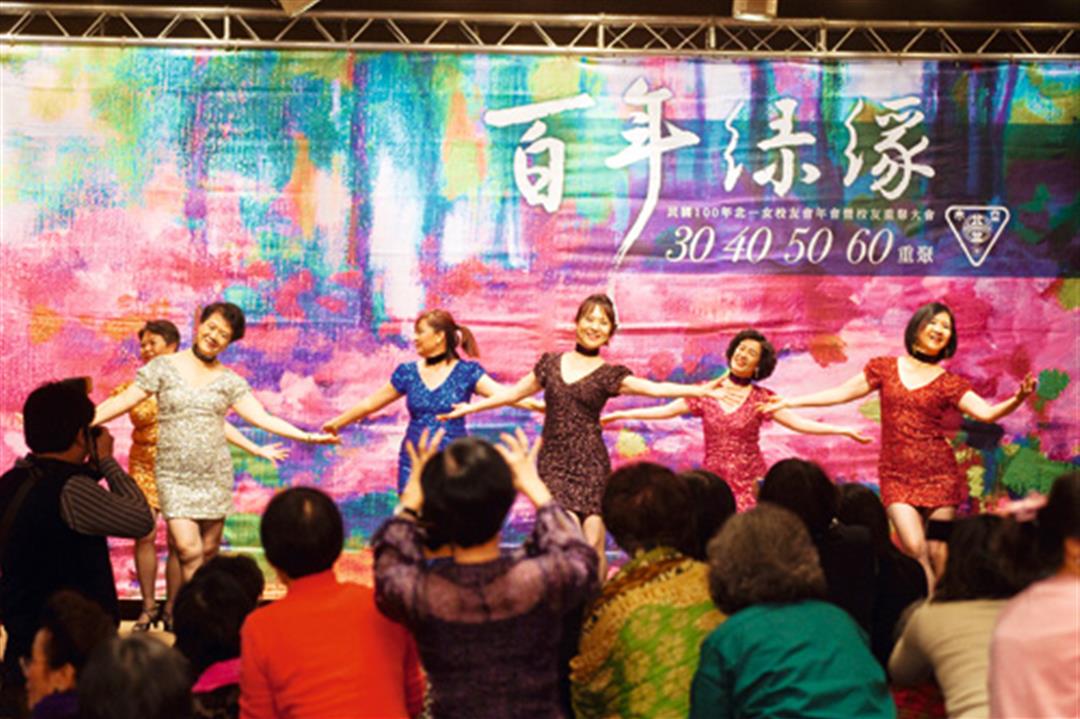
The 30-Year Reunion for Taipei First Girls High School (TFGHS) is a huge gathering that brings together former classmates from all over the world. The tradition, which goes back to 1990, got started by some TFGHS grads in southern California, and the event has since been held annually in both Taipei and the US.
The ideal behind the 30-Year Reunion is rather romantic: “Invest a year in finding old classmates, spend the rest of your life getting back together.” The tradition has not only been passed along from one generation of TFGHS grads to the next, but has contributed to a strengthening of a more general trend toward reunions all over Taiwan.
The 2011 30-Year Reunion was held in resplendent fashion on December 11 at the Ambassador Hotel in Taipei, with the guests of honor naturally being the women who graduated in 1981. Over the nine months of preparation, the organizers successfully got in touch with 98.2% of the 1192 members of the Class of 1981, the highest contact rate ever, and the event itself brought together 854 guests, including 284 representatives of the classes of 1971, 1961, and 1951.
From the start of the event at 10 a.m. through to its close at 4 p.m., the more than 500 members of the Class of 1981 in attendance looked radiant and the mood was one of uninterrupted high spirits. Here, some old friends embraced with laughter and squeals of joy; over there, a group seated around a banquet table swapped stories of the good old days; on stage, alumnae from different years took turns putting on performances of one kind or another: The “Green Grandmas”—the name comes from the distinctive dark green uniforms that have always marked TFGHS students out from the crowd—whose total age exceeded a thousand years, did a parade drill routine with wooden rifles, their bearing as striking as it must have looked when they were teens. The “Hot Mamas,” dressed in tight, sexy skirts, brought the crowd to fever pitch with their racy song and dance routine. For the big finish, folk songstress Wang Hailing, a member of the Class of 1981, led a choir in singing a few popular tunes, and the heartwarming sound of so many voices raised as one recalled the unaffected simplicity of the lives they shared all those years ago.
As the end of the event approached, a lot of people started running around organizing post-reunion mini-gatherings for “classroom-mates” (girls who shared the same classroom day in and day out). There were also non-TFGHS people who were hitching a ride on the TFGHS train by organizing smaller-scale events—junior-high-school, university, or extra-curricular-club reunions—that included some TFGHS women as well. There was even a reunion of people who, as high-school students, shared the same train to Taipei every day.
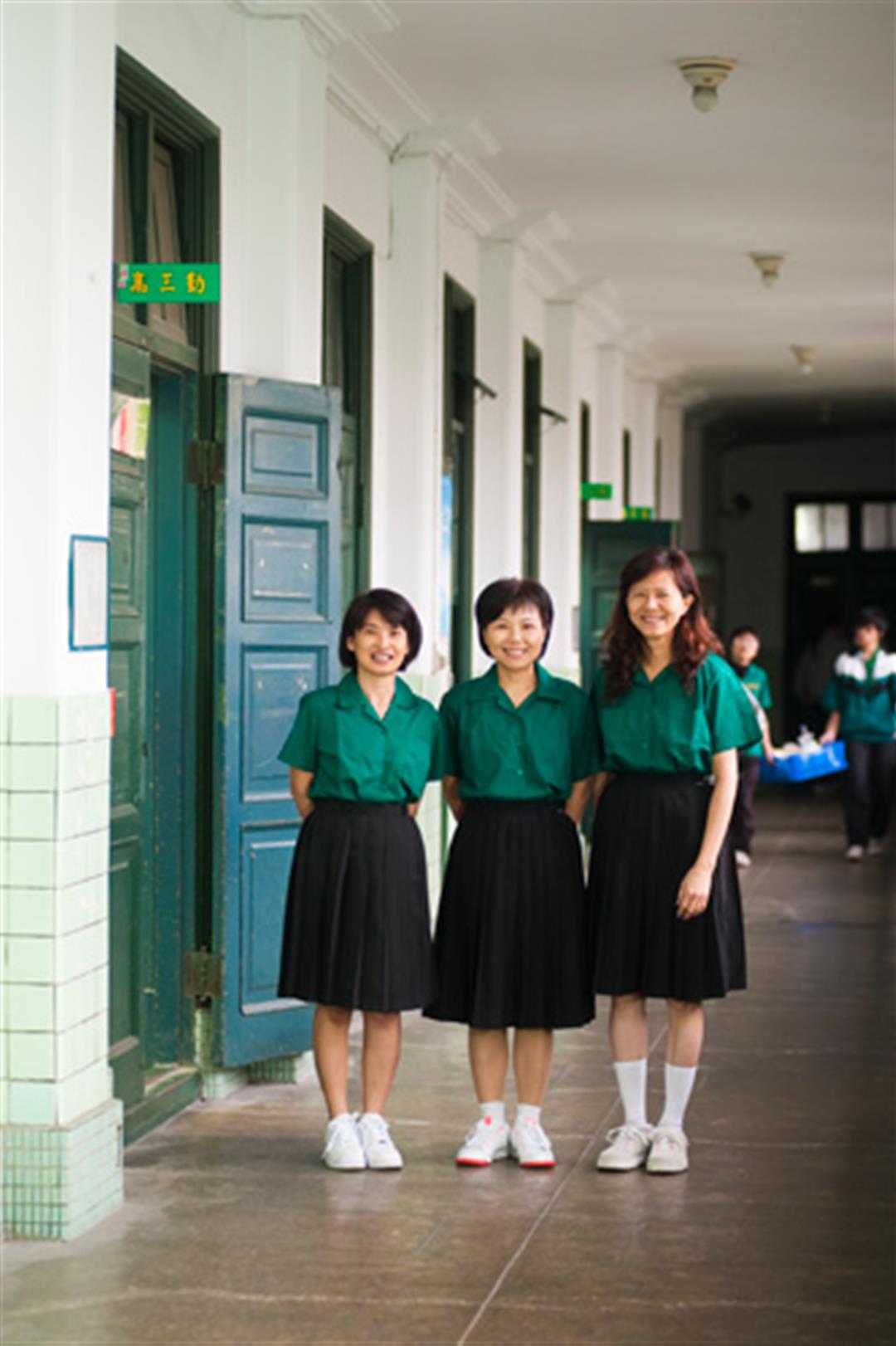
From “Little Greenies” to “Big Greenies,” these women have grown up, but they will always remain sisters-in-arms.
Over the past few years, the TFGHS 30-Year Reunion has gotten periodic attention from the media because of its global scope, and now has a certain level of renown. But it’s likely that people who are not “insiders” find it hard to understand why these mature women get so excited about finding classmates who have been scattered to the four winds for so many years. Where does the motive power come from to hold such an enormous event?
Hong Shu-ling, TFGHS Class of 1980 and now chairwoman of the Graduate Institute of Taiwan Literature at National Taiwan University, has shared her feelings in her recent book Who Will Pamper Me Like When I Was 17? In it she relates that’s it’s all about the process.
Like all alumnae who have gone through the 30-Year Reunion, Hong Shu-ling and her classroom-mates arranged a series of mini-reunions in the months leading up to the main event. “The whole reunion process brought back all the memories of high-school life and the feelings we had then. In contrast to all these years when I’ve been busy earning a living, relating to my husband, and raising my kids, it suddenly felt like rediscovering a simpler, more innocent self separate from my identities as working woman, wife, and mother.” It was for this reason that Hong got the “irresistible” impulse to write up the event. “I felt the need to record all those sentiments and memories; that’s the only way I could digest the whole enormous experience, while also creating something that could be enjoyed by those people who, like me, still feel nostalgic longing for our days as high-school students.”
Hong’s recollections of youth include impressions unique to her era (such as the first cafeteria-style restaurants to open, the songs and movies that were big hits back then, and the shy glances cast back and forth on the buses between the students from the all-girls schools and the all-boys schools), as well as “grand traditions” unique to TFGHS: For the school’s founding day celebration each year, each classroom would go all out to win the team relays; after school, students would stroll through the bookstores on nearby Chongqing South Road; during summer and winter vacations there was intense practicing for the marching bands and honor guard, though pride was the only reward; and no one would slack off in classes like home economics, music, and art, despite the fact that these were no help for college admissions.
For Hong, “looking backwards” is not a negative thing. Indeed, by revisiting the energy and enthusiasm of youth, then comparing it with how everyone has settled down and is doing well today, “You feel very satisfied all over, and filled with energy, and you sense that you are well grounded for the future.”
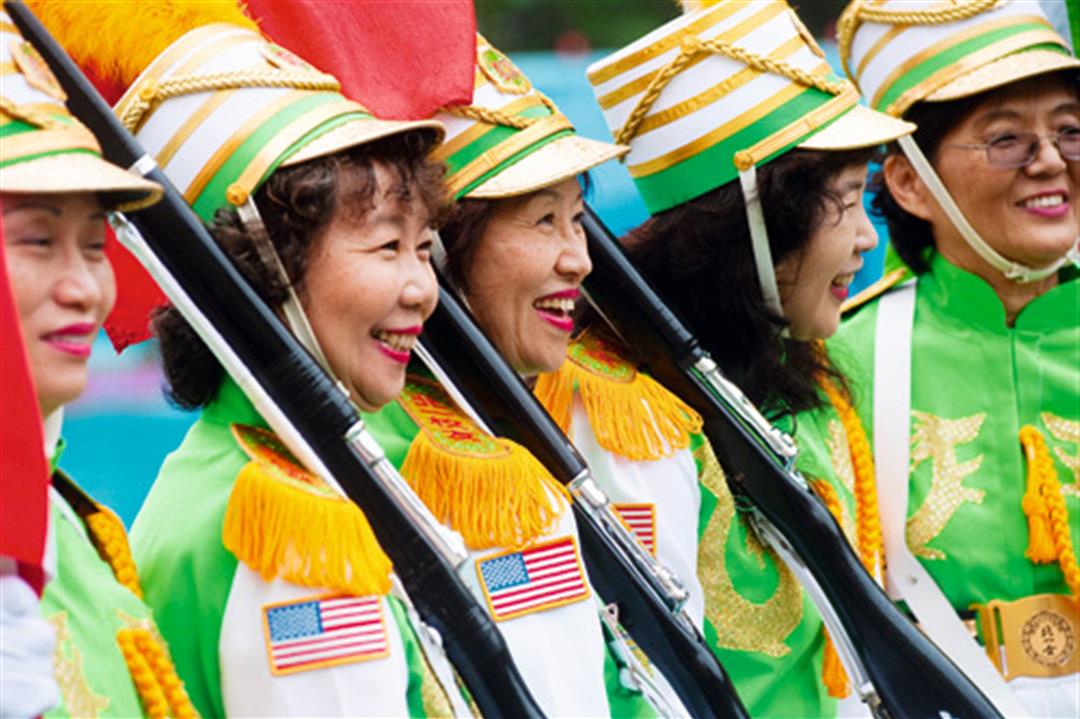
Thirty years after graduation, these TFGHS women stil get a special thrill hearing the school song.
But the appeal of reunions is not merely in warming over old dreams and chatting about the good old days. There’s also a lot of fun to be had in seeing how different everything and everyone is now.
Helen Wu, a graduate of the Class of 1981 and a member of the activities committee for the big reunion, says that while there is no doubt that the “affective foundations” have weakened after being out of touch with classmates for so long, “Instead of emphasizing reconnecting with the old, the reunion might better be seen as starting connections with the present.” And the advantage of everyone now being near 50 years old is that while they are all still “exceptional,” they are wiser and more mature, so hanging out together is easy and fun.
Anabelle Chang, also of the Class of 1981 and currently deputy editor-in-chief at the Commercial Times, tells us that her mini-reunions included not only indoor events, but also outdoor excursions to the mountains or beach, or even shared hobbies. However, no matter what the format, the mood was always one of mutual encouragement to live the remainder of life to the fullest.
Women from her classroom arranged mountain hikes and cycling trips over the year preceding the main event, personally putting to the test the philosophy of life that says that people should keep themselves vital and active as they approach middle age. The most fun time was when a classmate who had returned from overseas suddenly proposed, halfway through a hike, “Before leaving Taiwan, I really want to go out to a nightclub and party!” Her classmates enthusiastically fell in with the scheme, and someone who knew the scene immediately called up a club owner she knew. Though the club owner happened to be in an airport in another country when he took the call, he still got very fired up and immediately arranged to reserve a table for these wives and moms. After they came back from their hike, some hurried home to make their excuses to their husbands and children (and fix dinner!) while others stopped at classmates’ homes to wash up and change, after which they regathered to trip the light fantastic.
“When you make the effort to go out and find people, you find that every classmate is a treasure!” So declares Janice Lo of the law firm Lee and Li, who traveled with four other alumnae to the States last September to see how the arrangements were being made for the 30-Year Reunion there, as reference for planning Taiwan’s December fête. She discovered that the process not only allowed her to reconnect with old classmates, sports teammates, and extracurricular club mates, but girls she didn’t even know in high school, now living an ocean away, also turned out to be enthusiastically welcoming. “The classmate in North America whose job was to be my guide not only took a day off from work to take me sightseeing, she insisted on paying for our meals, and even provided a mobile phone for me to use while I was there. I realized how apropos was that old chestnut, ‘How sorry I am that we met so late in life.’”
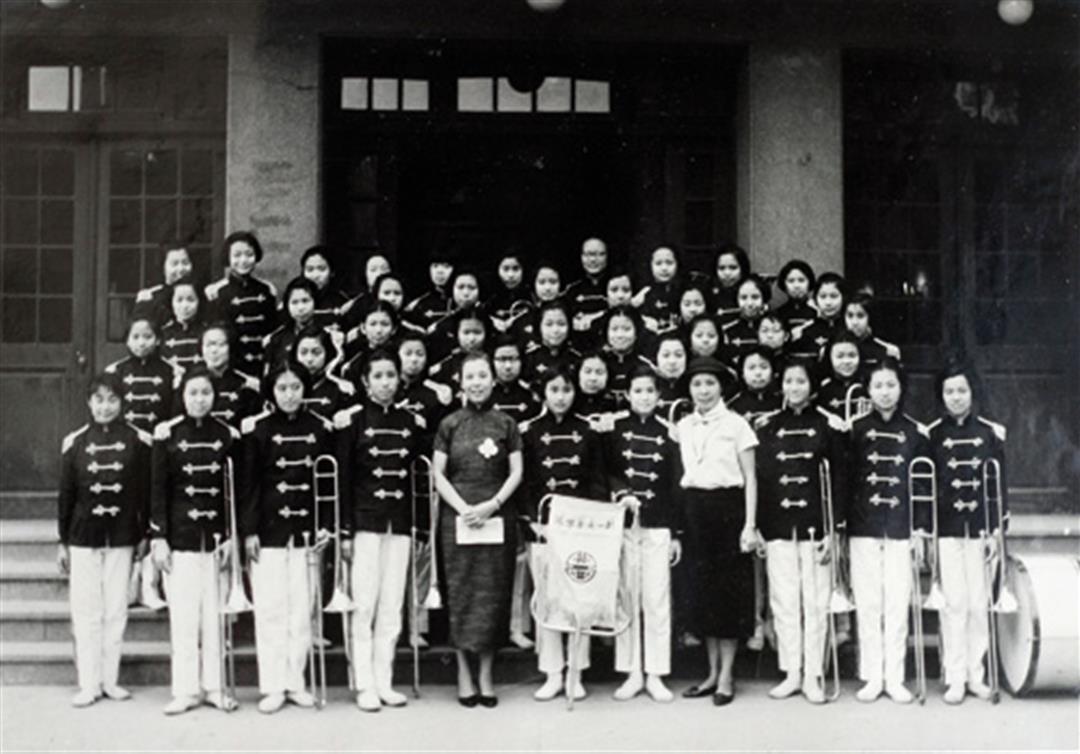
Membership in the drill team and band has always been considered an honor.
One thing you can’t help wondering about is whether or not these women, all elite students in their teens and many now leaders in their respective fields, felt any sense of competitive pressure about their individual accomplishments in life.
Lo, a senior figure in her law firm, mentions that whereas most people equate “housewife” with “dependent and unaccomplished,” right from the beginning of the earliest preparatory meetings, if anyone introduced themselves as being “a housewife” or “retired,” there was a tacit agreement that they should get the greatest applause. “Now that we have reached the age we are, there is a common understanding that what really matters is to live well, and everything else is secondary. For those women who have been able to retire early or become housewives, how could we feel anything but envy!”
The stimulus of the 30-Year Reunion can prompt even those forced to withdraw from society to re-emerge. Lin Ying, Class of 1980, was struck by systemic lupus erythematosus (SLE). In a letter to classmates she wrote, “I have no job, and I don’t make any contribution to society or my family. My health just keeps getting worse, which is worrying to my family and to my old classmates who still try to do what they can to help me. I will never know what it is like to love someone, because I can’t even leave the house, even though this is the thing I would most like to do in the world.”
She felt especially touched, therefore, that her classmates stayed in touch and sent her e-mails and videos to keep her spirits up, and they even gave her a surprise birthday party. Surrounded by affection, she was ultimately able to participate joyfully in her 30-Year Reunion in 2010. She stayed in contact with classmates via notebook computer even from her sickbed right up until she passed away last year.
Moving as such stories are, Helen Wu, now a high-ranking manager at IBM Taiwan, says that the organizers recognized from the start that although the term “classmates” might appear to suggest familiarity, the lives of these middle-aged women have diverged far apart. This is why, when they started searching out old classmates, they stressed that they were “only trying to set up a contact network,” did not want to inquire into people’s personal lives, and would “leave it up to fate” to decide whether there would be any follow-up interactions. She also observed that when they got together the women generally avoided mentioning their job titles. By middle age, the course of life has been set for most people, so there’s not much point in worrying about professional rivalry or advantage; on the contrary, it’s all the more possible to have pure friendship.
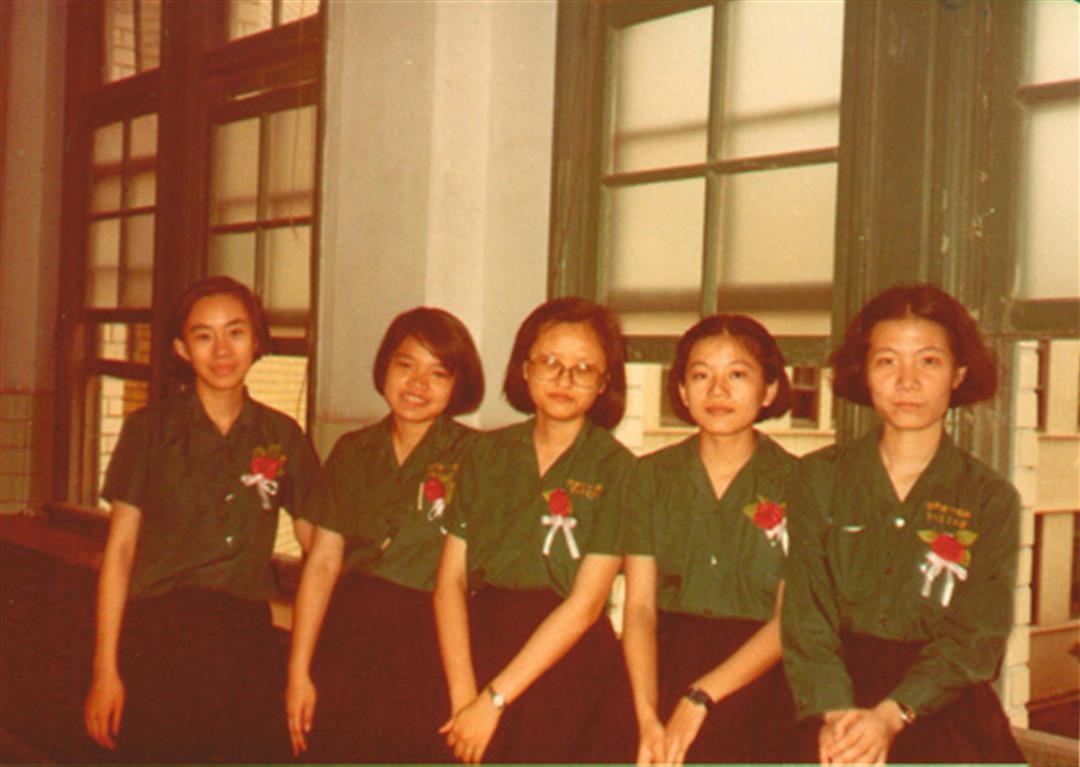
Back in high school, students had not yet been introduced to the complexities of social relations in the adult world, and they treated each other with artlessness and innocence.
Fortunately, “the great majority of people felt delighted and grateful to have been ‘tracked down,’” says Yvonne Li, Class of 1981 and now president of Far EasTone Telecommunications. Li, who was in overall charge of organizing the event, says that this is why the 40-plus volunteers who did the actual contact work pressed on in finding old classmates without complaint regardless of how many twists and turns there were along the way. Their determination was also due in part to the leadership skills of the duo who were the “heart and soul” of the event behind the scenes: Li and Pamela Wu.
“During the whole process we brought into play that exceptional spirit of pride and ‘never give in’ that characterizes TFGHS, and swore that we would find everyone,” says Wu, currently CFO of Cosmos Bank. Her and Li’s role was to set targets, to pass along tips on how to find people that they had picked up from women who had organized other reunions before theirs, and to be “cheerleaders” to provide inspiration and encouragement when needed.
“There was a meeting every month in which the organizers for each classroom reported their progress, and we also drafted an overall progress report at the six-month mark. Any classroom that hit the 100% contact rate would immediately announce this, and the constant attention to how things were going created positive competition.”
The way we areWu, who is brash and full of humor, did not miss the opportunity to inject some laughs into the process. For example, she put her own high-school diary up on the event website. “Everyone was amazed to see how I had changed from being a sentimental kind of girl to a lively and straightforward style! Even more amazing was that I wrote some of my diary entries in classical Chinese, and now I don’t even know how to pronounce a lot of those characters or what they mean!”
Yvonne Li emphasizes that their “corporate-style management” was only a technical means enabling them to successfully pull off their 30-Year Reunion; the real keys were the “commitment” and “willingness to give without asking anything in return” of the organizing team. “There was a coalescence of the willpower and aspirations of everyone involved, and the result was an enormous amount of positive energy, which really gives us confidence that our lives in the future will become even richer. This was really a beautiful and rare moment, this chance to connect with all these people.”
These women are now imbibing the wine they have spent a lifetime brewing, and it tastes like… contentment.


@List.jpg?w=522&h=410&mode=crop&format=webp&quality=80)
