Protecting the Mountain Forests
Yushan and Shei-Pa National Parks
Rina Liu / photos Kent Chuang / tr. by Phil Newell
December 2021

00:00

Mountains cover 70% of Taiwan’s land area, giving it the greatest concentration of high mountains of any island in the world. There are 268 peaks above 3000 meters, 26 times more than in Japan and 13 times more than in New Zealand. Of these, the tallest—Yushan (Mt. Jade), at 3952 meters—is located in Yushan National Park. The second highest peak, the 5-million-year-old, 3886-meter-high Xueshan (Mt. Snow) lies within Shei-Pa National Park.
These two high-mountain national parks carry the heavy responsibility of preserving Taiwan’s unique forest ecology and historical sites, while providing citizens with leisure and sightseeing opportunities. Park rangers serve as a bridge between these two missions.
Yushan National Park
Yushan National Park (YSNP) was established in 1985. Covering more than 100,000 hectares at elevations from 300 to 3952 meters, it includes one-third of Taiwan’s “100 Peaks” (a list of the best peaks over 3000 meters for hikers and climbers). The forests are primeval and diverse and there is abundant water, making the park a treasure house of Taiwan’s forest ecologies. Especially noteworthy is the Formosan black bear (Ursus thibetanus formosanus), for which conservation efforts are showing some success. More than half the bear population lives in YSNP. It is a subspecies of the Asian black bear (U. thibetanus), the world’s only non-hibernating bear species to build temporary nests.
YSNP’s park rangers patrol and protect an area composed mainly of precipitous mountains. Their duties include managing Paiyun Lodge, the nearest hostel to Yushan’s main peak. “This is because 99% of the people who come to YSNP are aiming to climb to the peak,” says Fang You-shuei, who has been a ranger for 36 years. When asked who the other 1% are, he says: “Of course they are rangers, and staff from YSNP Headquarters.” The 60-year-old Fang is a member of the Bunun indigenous people. When YSNP was founded, they recruited young indigenous people native to the area to protect the land, and Fang was among the first group hired.
“My cousin went along, and persuaded me to go with him. Over 20 people signed up, and we started with mountain cleanups.” Seeing the Yushan area from a new perspective, Fang realized how severe the depletion of the mountain forests was, the result of decades of logging that began in the Japanese era. “We picked up trash for a few months, bringing back sackfuls every day. But on many mountains, large swathes of primeval forest were gone and there were no animals to be seen.” In his third year several colleagues quit and he thought of doing so too, but was talked out of it by his cousin. “Since then, I’ve never left Yushan.” And now? “Now I love it.” Fang is a man of few words, but his expression when he looks at the mountains speaks for itself.
Nowadays park rangers work stints of eight days and then get six days off. “When we’re on duty we’re on call 24 hours a day. We divide up the work, with some rangers handling things at Paiyun Lodge and others going out on patrol.” The 56-year-old Siao Yu-shan, who is also a Bunun, is a chatty and hearty man well known for his easygoing temperament and patience.
“The area we patrol goes from the main peak down into the river valleys, from the ‘front four peaks’ to the ‘rear four peaks,’ and includes all the forest roads, trails, and boardwalks.” Siao has never felt that patrolling is arduous, and he calls it his “time alone with the mountains.” Rangers on patrol set off each day from Paiyun Lodge and radiate outwards on foot. The longest single-day patrol lasts 11 hours. And what is in their jurisdiction? Siao answers humorously, “Everything with four legs [animals], everything with two legs [people], and everything with no legs [plants].”
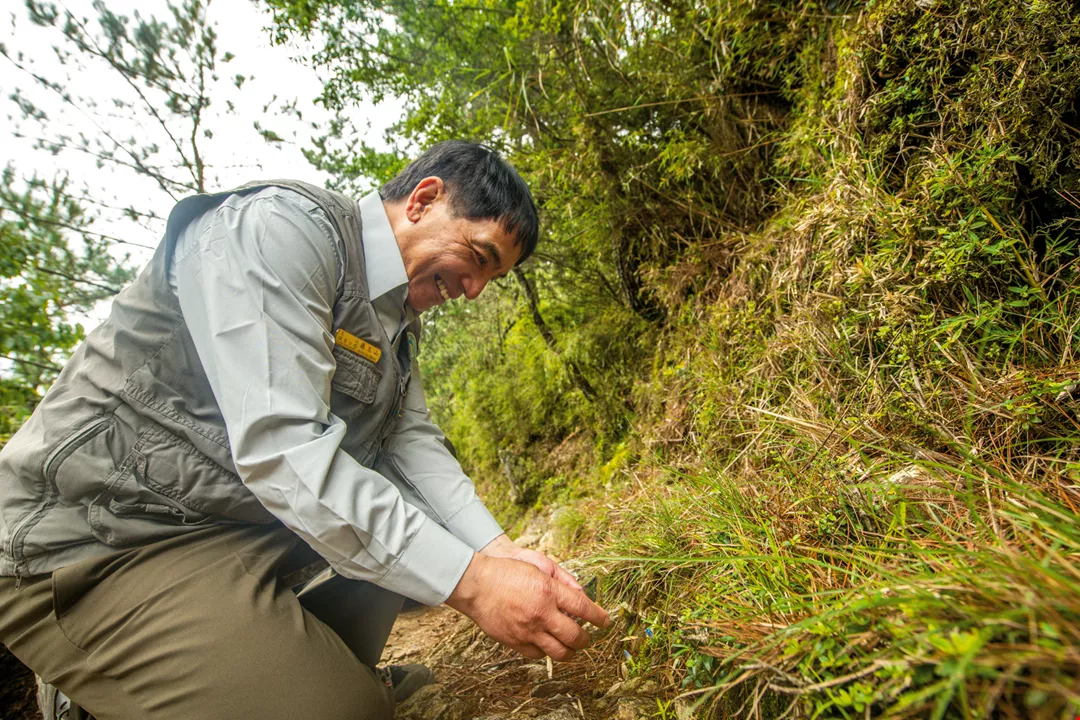
Siao Yu-shan, who was a guide at YSNP for 26 years before becoming a ranger, not only knows the terrain well but also the plants and animals.
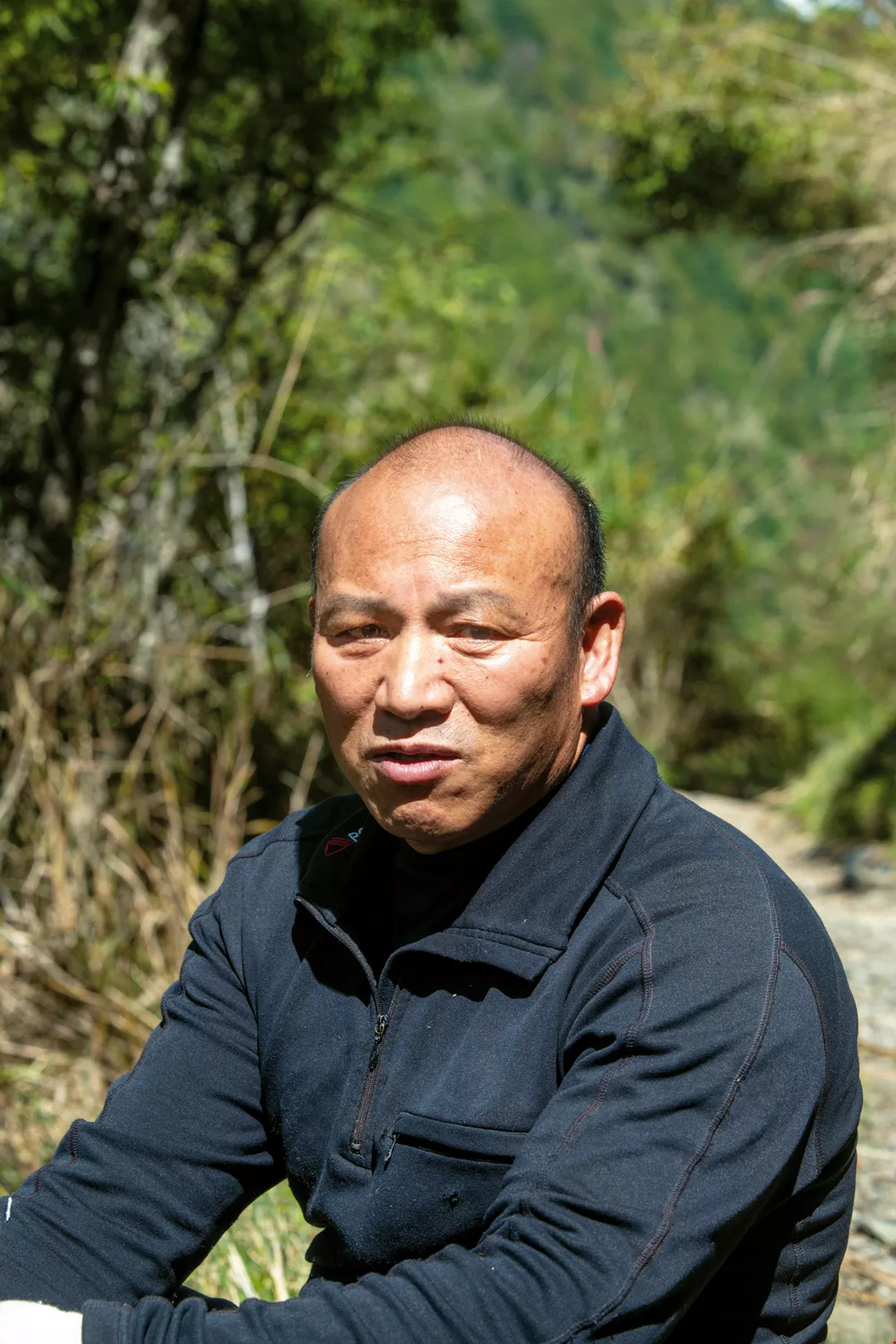
Fang You-shuei, whose career as a ranger began when Yushan National Park was established, started his job with mountain cleanups. His life path has been bound up with the restoration of the park’s natural environment and ecosystems.
Living in harmony with the mountains
At the time when some of the first group of recruits quit, around ten decided to stay on and protect the YSNP. “At that time the first park superintendent, taking account of the altitude and the danger of working there, hired domestic and foreign experts to give us training, so that the frontline rangers working in high mountain areas would have the skills they need to protect both the forest ecology and the safety of visitors.”
Fang has been involved in the rescues of hundreds of people. The most difficult was when someone running in a marathon in the park fell off a cliff and got caught in a Taiwan hemlock tree growing out of the sheer cliff face. Fang’s only option was to climb across alone from one side to get close, then tie the victim to himself with rope. Meanwhile two other rangers climbed down the rock face, then clung fast to it while Fang, with the injured runner tied to him, climbed upward to safety by stepping on their arms and shoulders.
Siao, who became a ranger two years ago after previously being a guide, once single-handedly recovered the body of a hiker who had died after losing their way. Relying solely on a head lamp to light his way, Hsiao carried the hiker’s body on his back up a cliff face along a track used by Formosan sambar deer, climbing from late at night until early morning to reach the appointed spot to meet the rescue helicopter.
Park rangers, who understand the high mountains better than anyone, hope that visitors will be able to experience the majesty and ecological richness of YSNP, enjoy the impressive “sea of clouds” and the sunrise, and leave with beautiful memories. But as beautiful as the mountains are, they are equally dangerous. Those who want to take on the challenge of Yushan should not only learn the necessary skills, they also need dependable companions. “You must make sure you are in good enough physical condition, and that conditions on the mountain are suitable. Yushan will still be there another day,” says Fang earnestly.
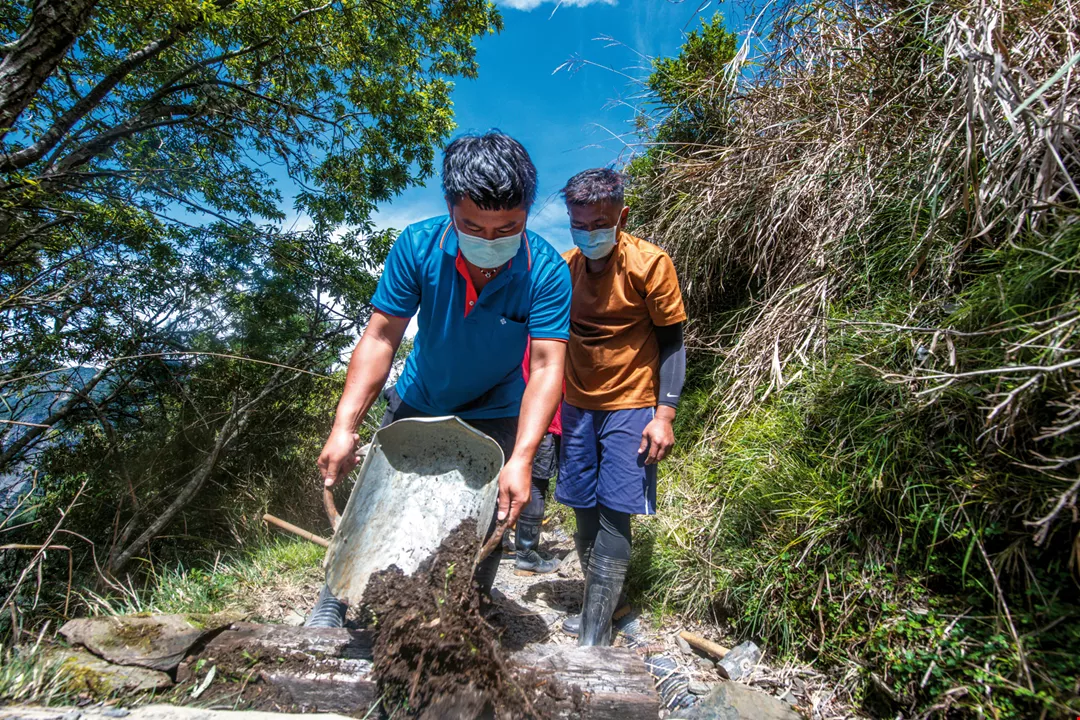
Rangers carefully check whether trails are intact. To protect the park’s pristine environment and maintain safety, Yushan National Park uses wooden railroad ties and compacted soil to build and repair trails.
One of the tasks of park rangers is to ensure that trail facilities are in good condition. The photo shows Fang You-shuei leading a group of young Bunun indigenous people on a trail repair project.
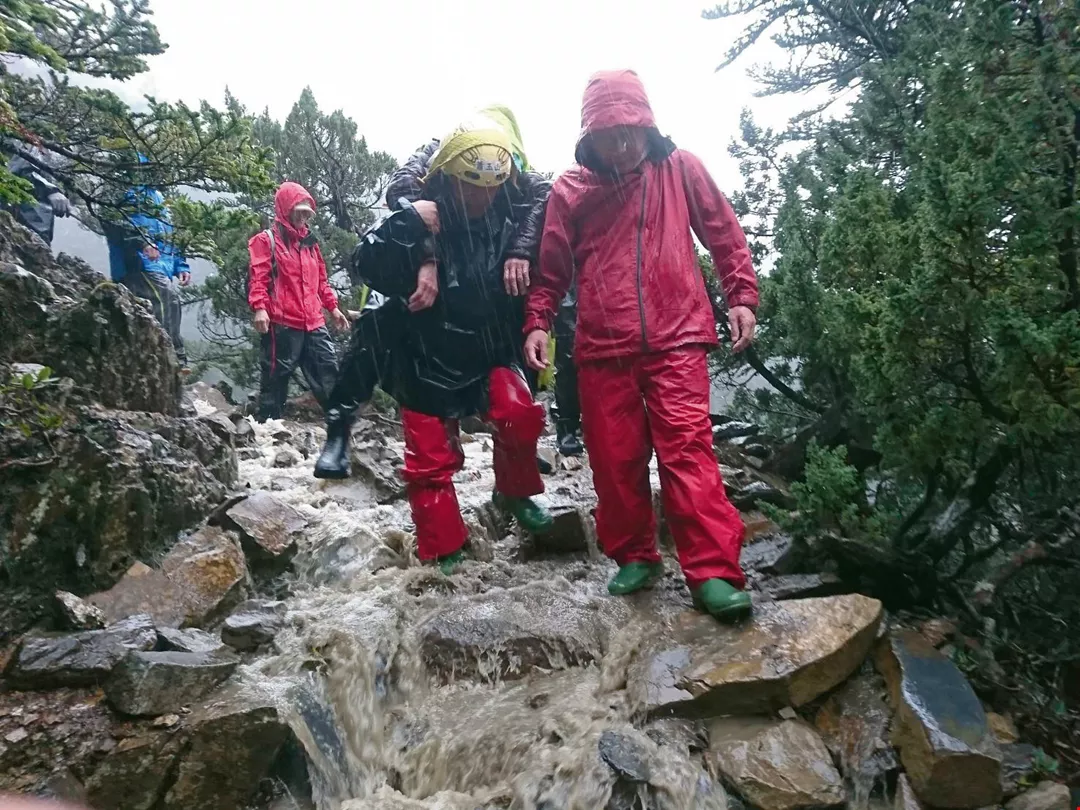
Rangers are on the front line in rescue operations. This photo from 2019 shows Siao Yu-shan helping a woman hiker who had been struck by lightning. He and a team of firefighters took turns to carry her down the mountain amid torrential rain and bitter cold. (courtesy of Siao Yu-shan)
Shei-Pa National Park
Xueshan, the tallest peak in Shei-Pa National Park (SPNP), is only some 105 kilometers away from Yushan as the crow flies, but the two parks have markedly different landscapes and historic sites.
Unlike Yushan National Park, which has relatively uniform terrain, with major valleys running north to south, the terrain in SPNP is far more varied. Although more than 20,000 hectares smaller than YSNP, it has 51 peaks that surpass 3000 meters, and complex topography that includes glacial cirques, cliffs, fold mountains, and caves with stalactites. The vegetation types range from broadleaf woodland at low altitudes to alpine tundra at the highest elevations. The park is home to rare plants and animals that are relict species from the ice ages, including the Taiwan sassafras tree and the Formosan landlocked salmon. SPNP also boasts other rare and protected plants and animals including Draba sekiyana (a species of whitlow-grass, in the mustard family), over ten endemic bird species, the broad-tailed swallowtail butterfly, and the Taiwan lesser salamander.
The park rangers at SPNP are all Atayal indigenous people who live in the local area. They were born and grew up in the mountains, and respect them. “The Atayal people seem to have a mysterious and close relationship with Shei-Pa,” says Hu Ching-cheng, a specialist in the Recreation Service Section of SPNP Headquarters. “They have a kind of intuition, as if they are part of the mountains.”
For the Atayal, the mountains are a place where sacred ancestral spirits dwell, and before setting off among the crags rangers will intone a prayer in the Atayal language. “Basically the meaning of the prayer is to ask the ancestral spirits for their protection to ensure the safety of the journey,” says ranger Tumas.
SPNP, which was established in 1992, currently has only three recreational areas open to the public, each with its own special character: Guanwu in the northwest, Wuling in the northeast, and Xuejian in the west. Most of the rest of the park is made up of protected ecological reserves, with continuous successions of hard-to-reach peaks. Aside from designated routes open to hikers, there is virtually no human activity here. This is why rangers always patrol in pairs so they can look after each other.
The Atayal people live in piedmont benchland and river terraces on the periphery of SPNP, at elevations from 1000 to 1500 meters. They include a group of young people, such as Isa Baunay, Tumas, and Wu Ren-jie, who have chosen to return to the mountains and search for their roots through gaga (the ancestral teachings and traditional social norms of the Atayal people).
Relying on their experience and the traditional wisdom of the indigenous peoples, they have become frontline defenders of SPNP. They prevent rare trees from being illegally felled, track wildlife movements using infrared cameras, observe the health of wild animals, gather data on plants and animals for research purposes, remove illegal traps and snares, assist with the release of Formosan landlocked salmon fry, patrol waterways and riverbeds, and help visitors who get into trouble in the mountains.
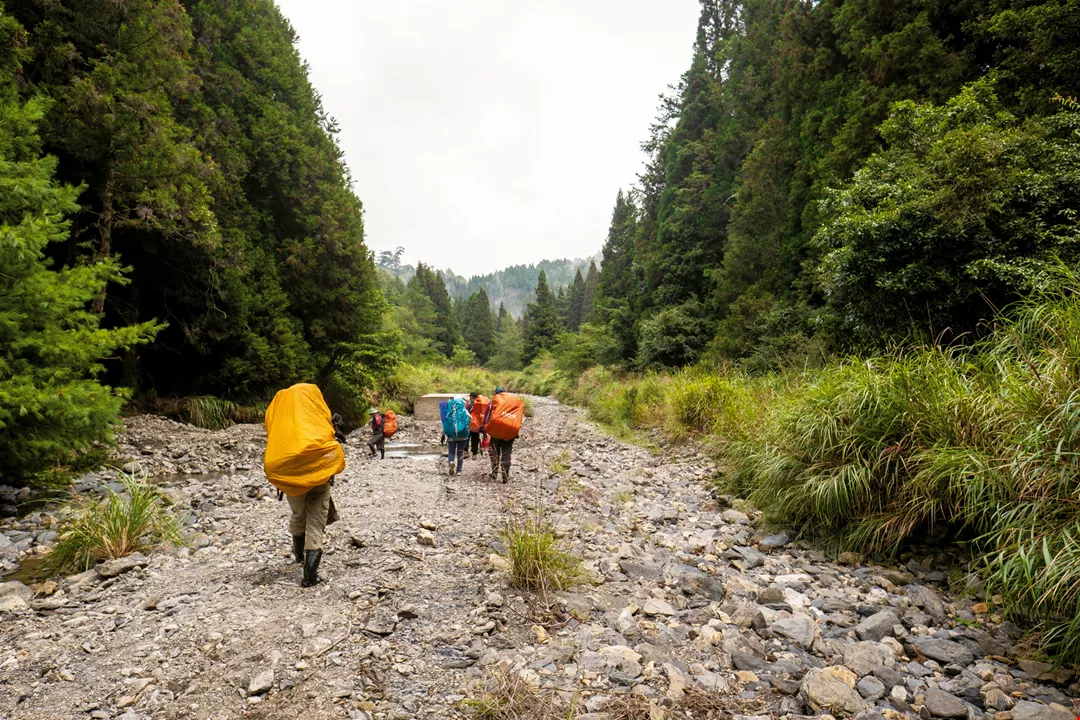
When patrolling the two-thirds of Shei-Pa National Park that are protected ecological reserves, rangers often have to camp out overnight. They carry full gear and always travel in teams of two to look out for each other.
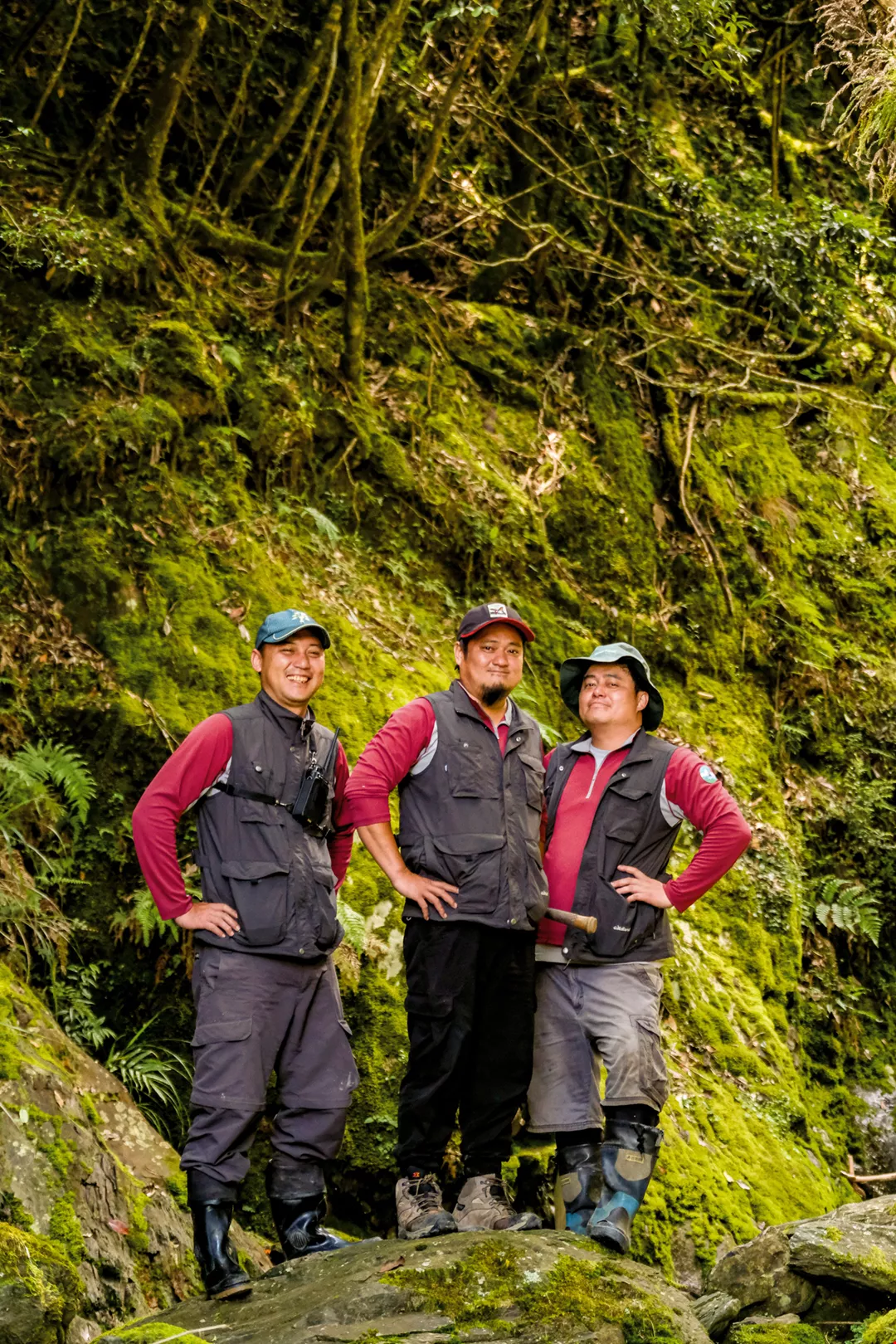
Besides knowing the topography and environment, Shei-Pa rangers also need to understand the local ecosystems. From left to right: Wu Ren-jie, Tumas, and Isa Baunay.
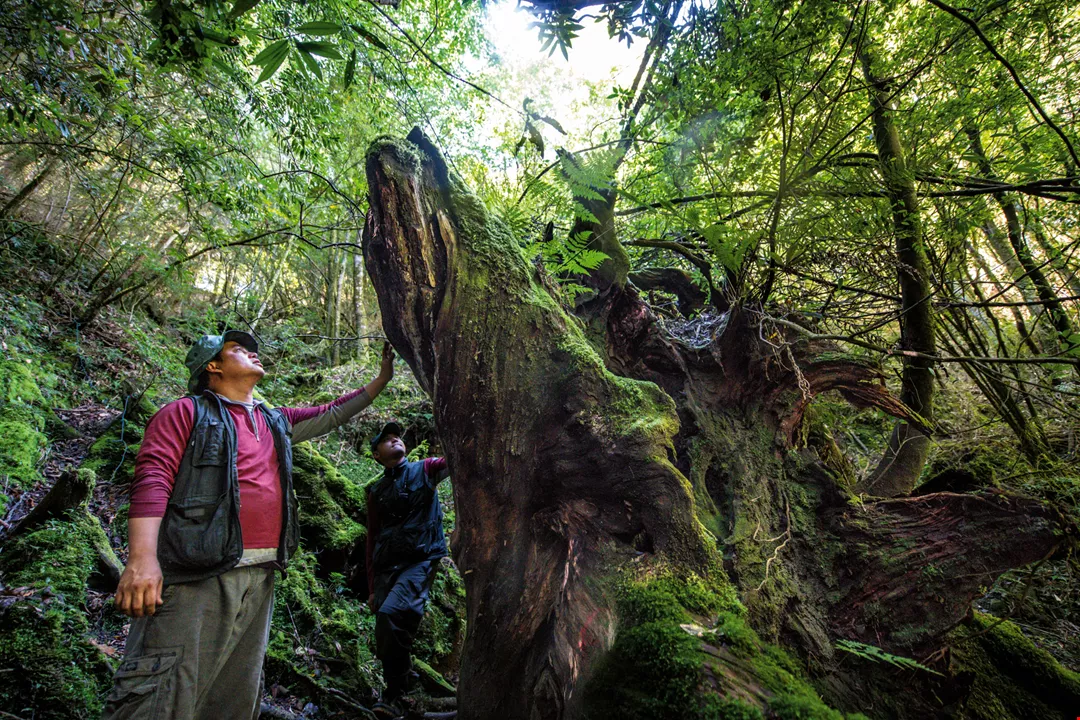
Part of the root plate of a Taiwan red cypress, left exposed when the tree was cut down long ago. From it you can see how enormous the old tree was.
Reconnecting with nature
“One of the most important things about the policy of opening the mountain forests to visitors is that it returns responsibility for personal safety to individuals. This includes understanding risks, making careful plans, and preparing properly,” says Hu Ching-cheng.
SPNP has a complex environment of different landscapes and microclimates. Different cirques may be home to groves of Yushan juniper or of Taiwan fir, and here you will also find the Taiwan red cypress, an endemic tree species whose legendary lumber is worth its weight in gold.
The boundaries between the primeval forest and the wooded areas replanted after the original trees were felled in the Japanese era are becoming increasingly blurred. Deep in the mountains we find ourselves at a shallow square pit that marks the site of a police station built under Japanese rule.
“If you follow the road off in both directions, you will find a chain of other police stations. This road was built by the Japanese military to transport wood down the mountains, but it also served to partition and manage the local residents.” Family members of Tumas’ grandparents’ generation can still tell the history of those times.
SPNP rangers are very familiar with the attraction and potential dangers of the complex tangle of mountains and rivers here. “Sometimes we ourselves get lost in the mountains. That’s why appropriately routed and safe recreational trails have been laid out, which are regularly maintained, and fallen trees or rocks cleared away, to enable the public to safely enjoy the beauty of the park.”
“Absolute freedom comes from absolute self-discipline.” Hu Ching-cheng, who is himself a protector of the mountains as well as a hiker, believes that “only with responsible behavior can people sustainably coexist with the environment.”
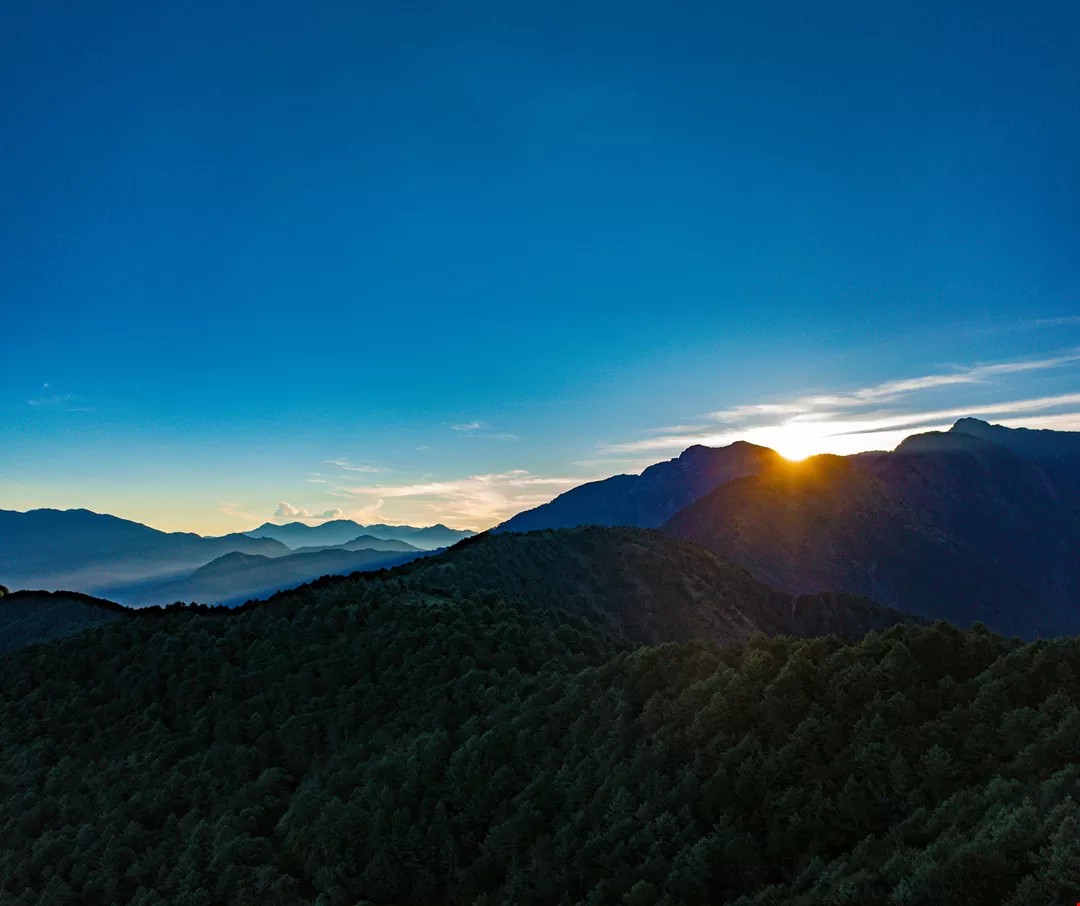
Sunrise over Yushan, which attracts many visitors to climb the peak in the early hours to greet the dawn.
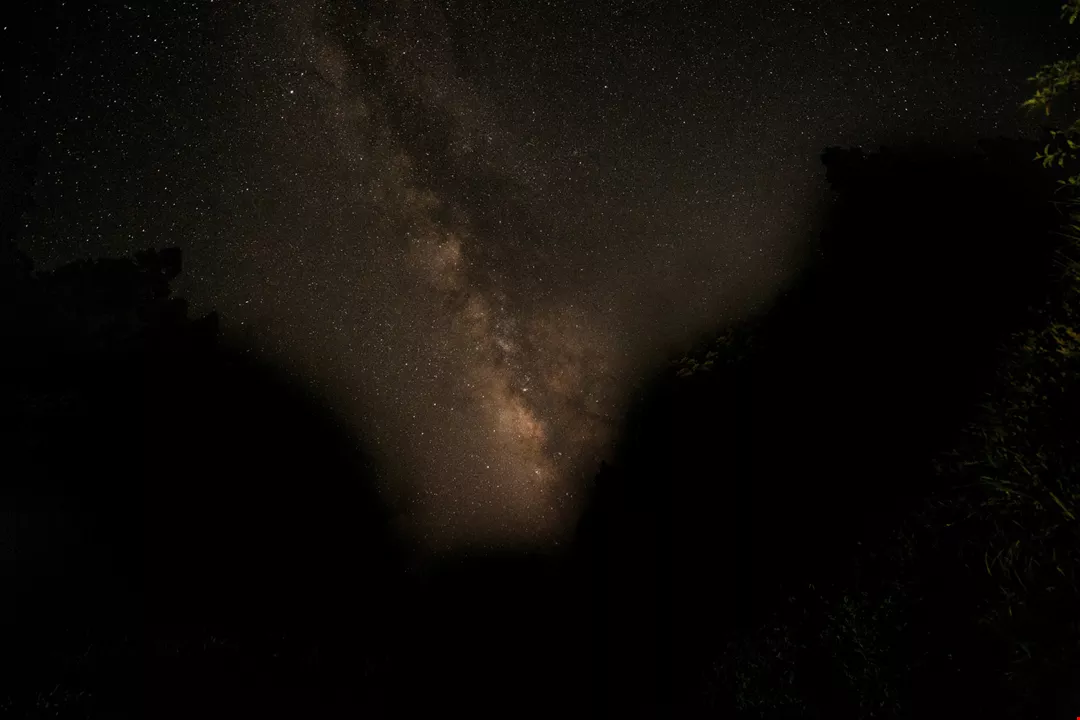
When night falls in the protected ecological reserves of Shei-Pa National Park, which are free from light pollution, you can look up and see a sky filled with countless stars.


@List.jpg?w=522&h=410&mode=crop&format=webp&quality=80)


