Producing century eggs
From 1990 to 1995, when the business was at its peak, Su’s duck farm processed some 20,000 eggs per day, making them into salted eggs and century eggs. Su explains that the process of making century eggs entails coating or immersing eggs in a mixture of alkaline ingredients, including rice ash, sodium carbonate, and lime. In Turkey, France, and Southeast Asia, foods are also preserved with lime mixed with water, which transforms their textures.
Because of certain chemicals used to prevent cracks in the shells, century eggs were once criticized for containing heavy metals, and the government introduced regulations to curb the use of these chemicals. To further reassure his customers, Su teamed up with his friend Lin Fanlun, a chemistry graduate of Soochow University, to develop lead-free century eggs. Su generously shares the recipe with us: 100 grams of rice ash, 600 grams of quicklime, 150 grams of sodium carbonate, and 20 grams of salt, blended into a paste with 150 grams of oolong tea liquor. The mixture is spread all over the eggs, which are then left to stand for at least one month.
Su has also invented herbal century eggs. His son tells us that the recipe is secret, but Su can’t resist revealing that it is derived from his grandfather’s herbal tea formula, which includes sweet acacia, banyan roots, shell ginger leaves, Taiwan wild grapes, and Indian abutilon. Su combines the herbal tea with red laterite soil and slathers the paste onto century eggs that have already been cured. Two weeks’ time will turn these into herbal century eggs.
In 2007, Su began to introduce an element of agritourism to his farm. “Many foreign tourists visit us. They are open to local ways of life and are all fine with century eggs,” he says. Why not try century eggs with congee or noodles, or have them with stir-fried vegetables? These glistening, crystal-like eggs will make your meals all the more appetizing.
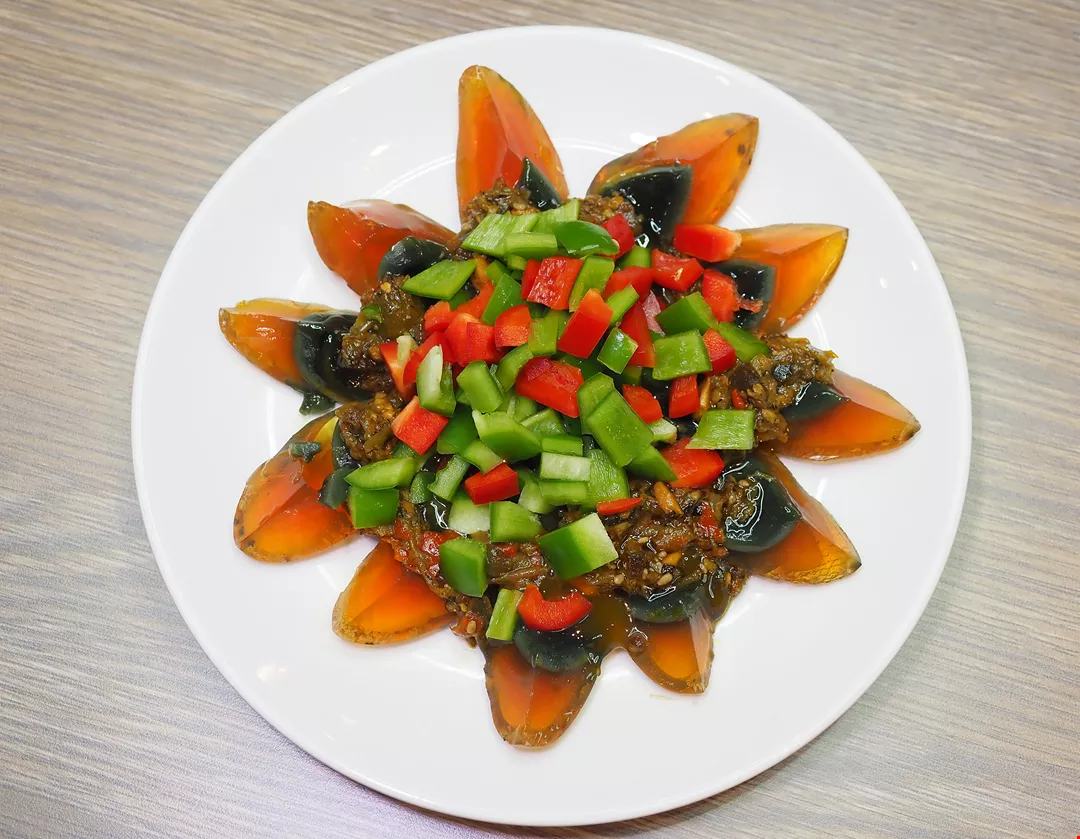
In days gone by, cold century eggs were often served at streetside banquets and wedding feasts.
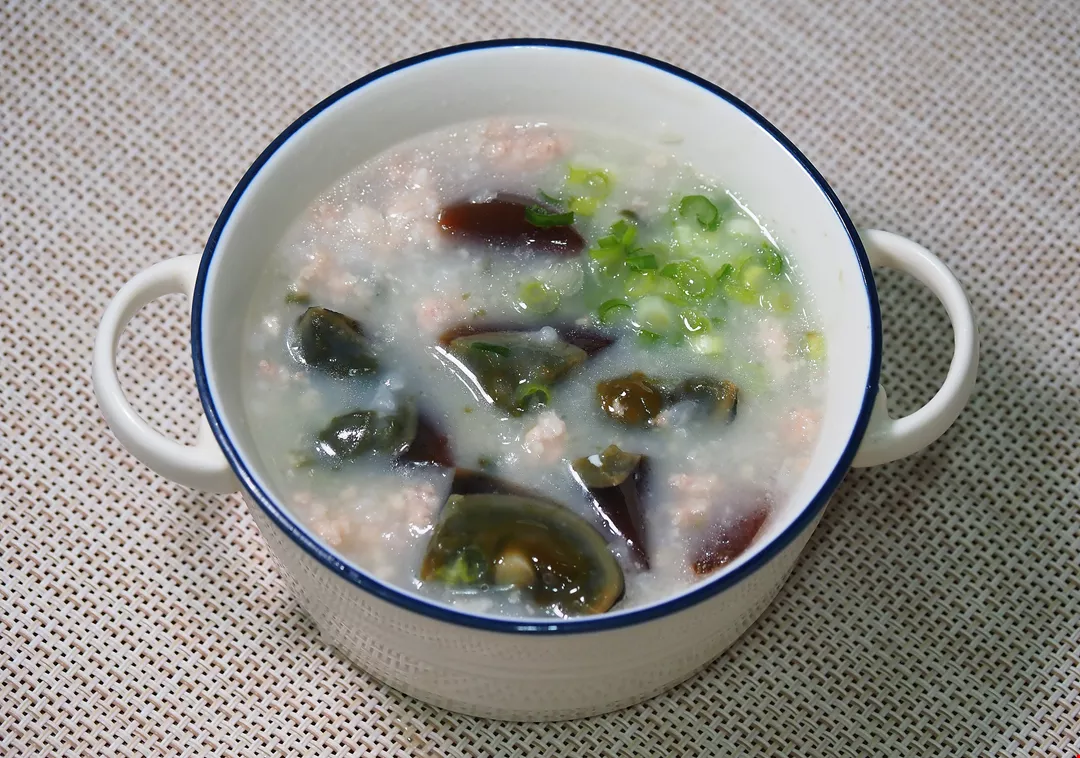
Congee with pork and century egg is common in Taiwan.




@List.jpg?w=522&h=410&mode=crop&format=webp&quality=80)


@List.jpg?w=522&h=410&mode=crop&format=webp&quality=80)
@List.jpg?w=522&h=410&mode=crop&format=webp&quality=80)