No addresses at sea
Next to millions of years of geological activity, humans seem minuscule. However, one cannot but feel respect on hearing how local people coexist with the ocean. During our voyage, guide Double Pon points to coral reefs ahead and calls them “Reef 200,” “Reef 300,” and “Reef 400.” These mysterious designations actually refer to the price of being transported out to these places by local residents. That’s a fun fact!
On the ocean, with no signage to tell you where you are, locals making a living along the rugged coastline have developed a naming system for coral reefs based on their uses, appearance, and the species active around them, with designations such Foot Bath Basin and Sparrow Rock. In this way the coast is labeled and remembered.
The coast from the bay near Hemei Elementary School to Longdong Cape is a popular spot for rock fishing and rock climbing, giving rise to numerous informal place names. For example, in the rock fishing area there are a number of fingers of rock that project out into the sea, known as “Branch One,” “Branch Two,” “Branch Three” and so on. Meanwhile, rock climbers talk about places such as “School Gate,” “Clock Tower,” “Concert Hall,” “Auditorium,” and “Back Gate,” with the abundance of school-related names being due to the fact that this place is seen as a natural classroom for the sport.
When one looks at this land from the sea, these names appear natural and reflect the local energy. For locals, the marine coast has never been a “tourist landscape,” but a part of their everyday experiences.
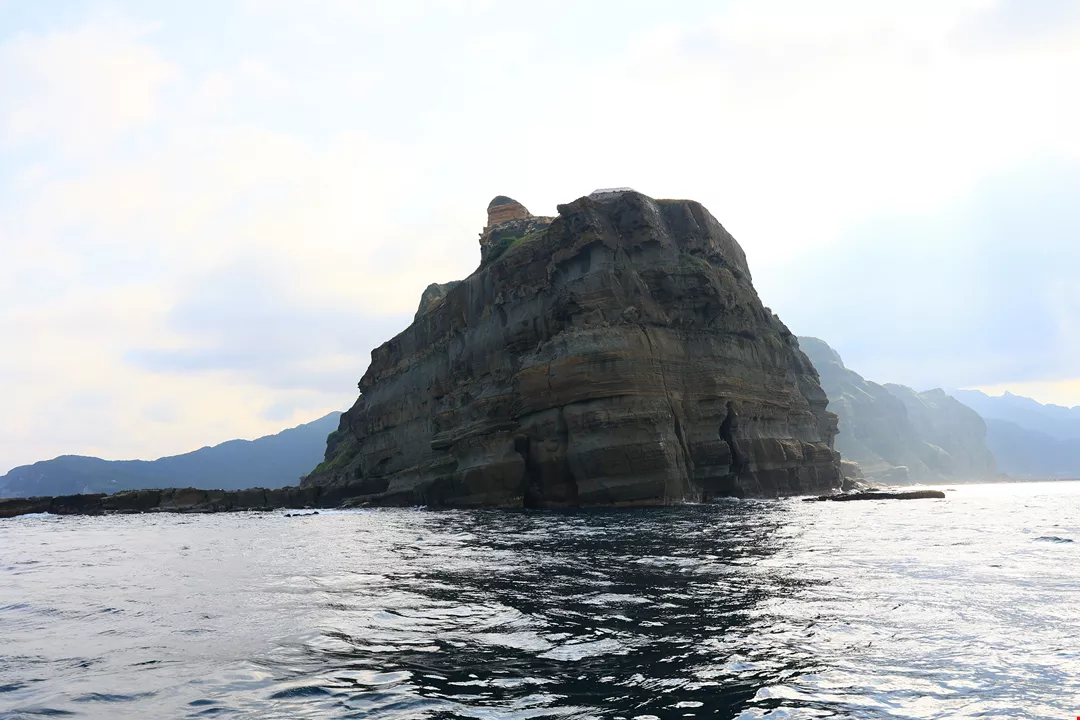
From a boat at sea one gets a panoramic view of the geology and signs of human activity on the shore, while enjoying spectacular views of bright sky and shimmering water.

Looking at the Northeast Coast from the ocean, one can see various rock strata in formations that look like layered pastry.




@List.JPG?w=522&h=410&mode=crop&format=webp&quality=80)
@List.jpg?w=522&h=410&mode=crop&format=webp&quality=80)


