Tropical Bounty
—Exploring Southeast-Asian Food at ASEAN Square
Lynn Su / photos Lin Min-hsuan / tr. by Jonathan Barnard
November 2019

.jpg?w=1080&mode=crop&format=webp&quality=80)
Simultaneously sour and hot, salty and sweet, Southeast Asian food enraptures. At once both familiar and strange, the cuisine offers many layers of flavors—however unclear their origins to most diners in Taiwan.
Wang Jui-min, known as “Fat Tree” online, is a lover of tropical plants. A fount of knowledge, experience and anecdotes about plants, he invites us to learn about fruits, herbs, and spices as we become better acquainted with what goes into Southeast-Asian dishes and explore the many connections between Southeast-Asian and Taiwanese cuisine.
It’s not hard to spot Wang Jui-min in a crowd of people: Tall and typically dressed in a colorful shirt and leather shoes, he attracts attention even in a bustling vegetable market.
There he is, striding through the crowds on his long legs, or stopping to dig through heaps of produce. For years, market visits have been a part of his daily life. He became interested in plants at a young age, and ended up devoting himself to tropical varieties after earning undergraduate and graduate degrees in forestry at National Taiwan University. To build the wealth needed to realize his dream of a botanical garden, he first switched to a profession that had nothing to do with what he had studied: real estate. He toiled long hours to earn a high income, and then used that money to purchase one valuable plant after another.
His tireless botanical quest has given him his own secret garden of 800 plant species. As well as buying plants with abandon, he has also conducted fieldwork and dug into historical records about the plants, becoming quite knowledgeable about all of them. In his view, plants represent history. The plants of Taiwan have been affected by a variety of ethnic groups: the island’s Aborigines, the Dutch, immigrants from southern China, missionaries, Chinese Nationalist troops that were cut off in Thailand and Myanmar after the Chinese Civil War, an early wave of other ethnic Chinese immigrants from Myanmar, and finally more recent immigrants from Southeast Asia. Although arriving in different eras, these groups have alike put down roots to live alongside the other residents of the island.
.jpg?w=1080&mode=crop&format=webp&quality=80)
At markets, Wang Jui-min is a plant hunter. He single-mindedly seeks out plants of all kinds, both strange and familiar.
Hunter of market plants
It was a quest to find the stink bean (Parkia speciosa) in 2013 that tied Wang’s fate to Southeast Asia. To investigate the plant, which is rarely found in Taiwan, he stepped into the markets of ASEAN Square in Taichung, where formerly forlorn and dilapidated buildings had been transformed into a gathering spot for migrant workers and immigrants from Southeast Asia. The visit was eye opening and introduced him to many strange plants. Just as ethnic Chinese living overseas can’t do without Chinatowns or Asian markets where they go for their favorite soy sauce or dried foods, Southeast Asians living in Taiwan go to their own ethnic markets to find obscure foods to replicate the flavors of home.
Starting with ASEAN Square, he has focused on places where these immigrants gather, from Taipei’s Gongguan neighborhood and Little Manila on Zhongshan North Road, all the way down south to the Xinguo community of Pingtung’s Ligang Township. In his spare time he has explored their fresh markets, surveying their myriad varieties of fruits, vegetables and herbs. “I want to be able to recognize them in all their different forms,” he says.

Pandan (Pandanus amaryllifolius).
The botany of vegetable stalls
ASEAN Square, which is closest to home, is where Wang goes most often. Sometimes he comes here as often as five days a week. Over the past few years, he’s probably paid it more than 500 visits.
The largest market for Southeast-Asian products in Taiwan, ASEAN Square attracts customers mainly from among the nearly 200,000 Southeast-Asian immigrants and migrant workers in Taichung and neighboring Miaoli, Changhua and Nantou. According to Taichung’s Economic Development Bureau, their collective expenditure here amounts to NT$120 million per month.
We start with the produce stalls on Chenggong Road, at the side of ASEAN Square.
The owner of the largest vegetable stall here is Taiwanese born and bred, whereas his wife is Cambodian and the stall’s other workers are likewise from Southeast Asia. It’s the same situation at many of the other businesses hereabouts. Most days the stall’s customers are mainly immigrants, along with a few buyers from Southeast-Asian restaurants. Although the prices aren’t cheap at NT$30‡50 per bunch of herbs, the stall is still mobbed.
Stepping up close, one finds an expanse of green. Yet apart from the water spinach and Thai basil, the varieties would be unrecognizable to most Taiwanese natives. Even after a typhoon recently brought damaging rains to central and southern Taiwan, resulting in poor-quality produce at traditional Taiwanese markets, these vegetables native to tropical climes are unafraid of water and look as healthy and unblemished as ever.
With Wang’s guidance, we move slowly from near complete ignorance toward a better understanding of the Southeast-Asian fruits and vegetables on offer: Apart from lemongrass, pandan leaves, mint, perilla, and galangal, there are also elephant ear stalks, the sewer vine Paederia lanuginosa, ambarella, banana flowers, rambutan, and gac. The herbs that Southeast-Asian cuisines rely on heavily—such as fish mint, Vietnamese coriander, lemon leaves, and rice paddy herb—are also plentiful.
It’s at this point that we realize that the water spinach that is produced in large quantities in the summer in Taiwan is in fact originally from Southeast Asia, and that many foods associated with the tropics here, such as curry, laksa, and krapow, are actually named after plants.
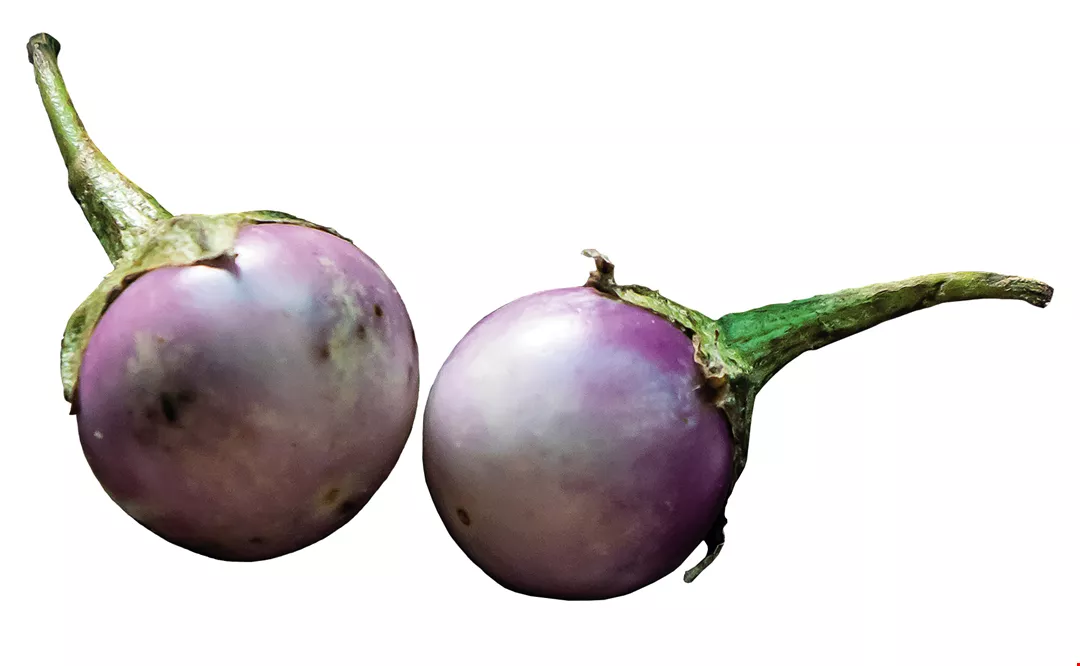
Small round eggplants.
Exploring Southeast Asia through food
Though relatively empty during the week, ASEAN Square draws crowds at the weekend, when additional shops open. Some of the immigrants call it “the Pyramid”—after the metal and glass pyramid in the plaza.
Even if one can’t distinguish between the sounds of Thai, Indonesian, Vietnamese and Tagalog, one can enter these cultures through their cuisines. When Wang was a real estate agent, he learned that the best way to start to bridge a culture gap is with food or discussions of food.
Snack stalls are most numerous here, and they provide a great variety of choices. CLC Mart is filled with Vietnamese and Thai restaurants, along with a smaller number of restaurants offering Filipino cuisine. They are found mostly on the first and third floors. Because most Indonesians are Muslims, their restaurants strictly observe Halal principles, so most have located themselves in individual retail spaces on nearby streets, to prevent their food from being tainted.
“I don’t just like plants; I also like to eat them,” says Wang. “I’ve tried all these restaurants, sat down for a full meal in each of them.” He guides us to an understanding of them beyond the usual Indonesian satay, Vietnamese pho, and Thai tom yum soup and krapow meat dishes.
Getting to know Southeast-Asian food step by step through plants is indeed a good approach. The color of the black broth in Indonesian rawon beef soup comes from the fruit of the buah keluak tree. The green-and-white-speckled klepon glutinous rice balls get their color from pandan leaves and the freshly grated coconut sprinkled on their surface. The balls are filled with coconut milk. Vibrant halo-halo ice gets its colors from purple yam, nipa palm fruits (attap chee), banana and nata de coco. Then there is krapow pork stir-fried with holy basil, as well as the vibrant Vietnamese fried cake banh xeo, which is given its bright color by turmeric. Apart from bean sprouts, there are also unfamiliar herbs such as perilla and rice paddy herb….
But don’t get the idea that Taiwanese visitors are encountering the fruits and vegetables of Southeast Asia for the first time here. Water spinach, for instance, is an authentically Southeast-Asian plant that has become a mainstay in Taiwan after being transplanted here long ago. Many cash crops that Taiwanese farmers take pride in growing come from the tropics. Take mangoes, which are native to India and were brought here by the Dutch, or rose apples, which came from Malaysia and Indonesia and have a Taiwanese name that comes from the Malaysian jambu.
The more one learns, the more one should want to broaden one’s horizons. Long before the ROC government made the call to “go south,” Taiwan and Southeast Asia were quietly engaging in cultural fusions. Let’s all step beyond the familiar, embrace diversity, and expose our palates to the culinary adventure of a meal at ASEAN Square!
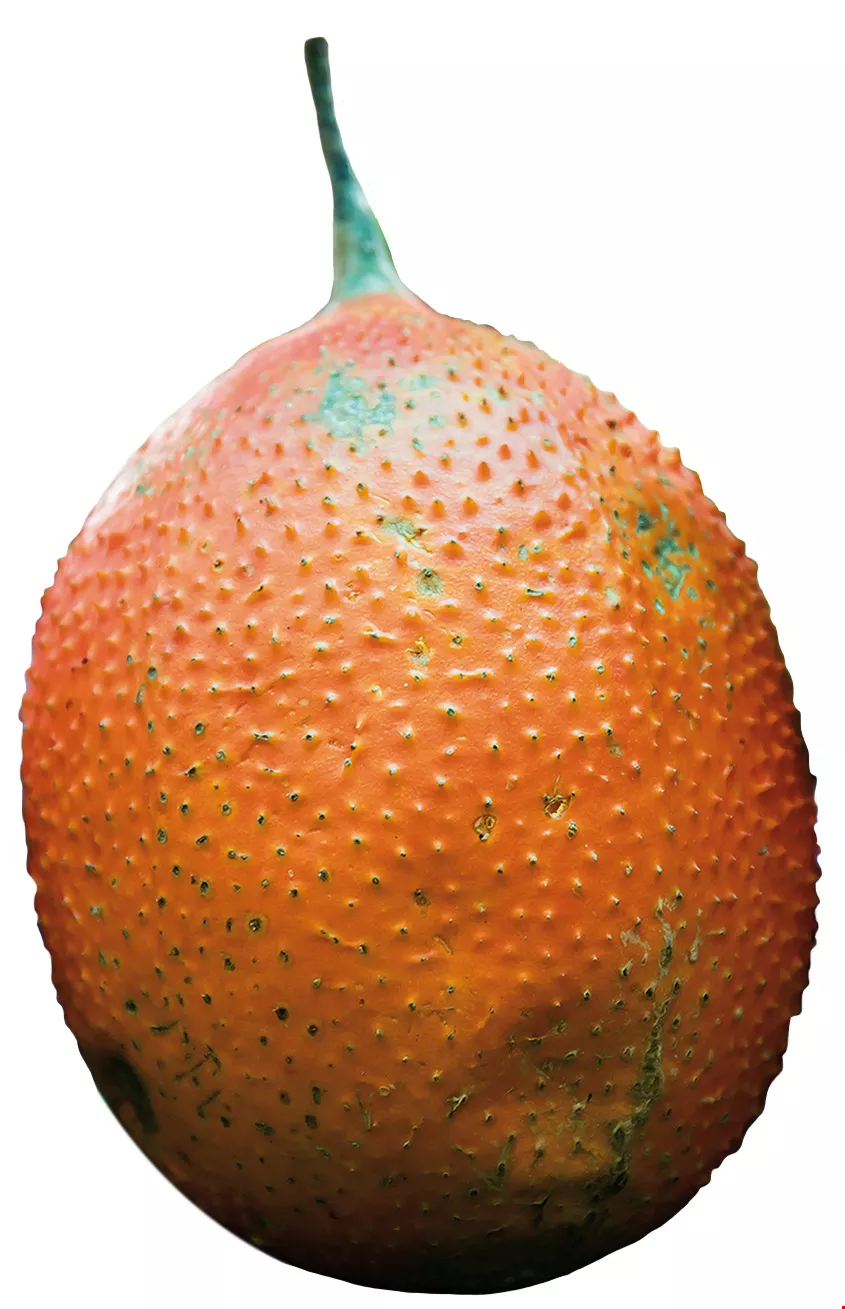
Gac fruit.
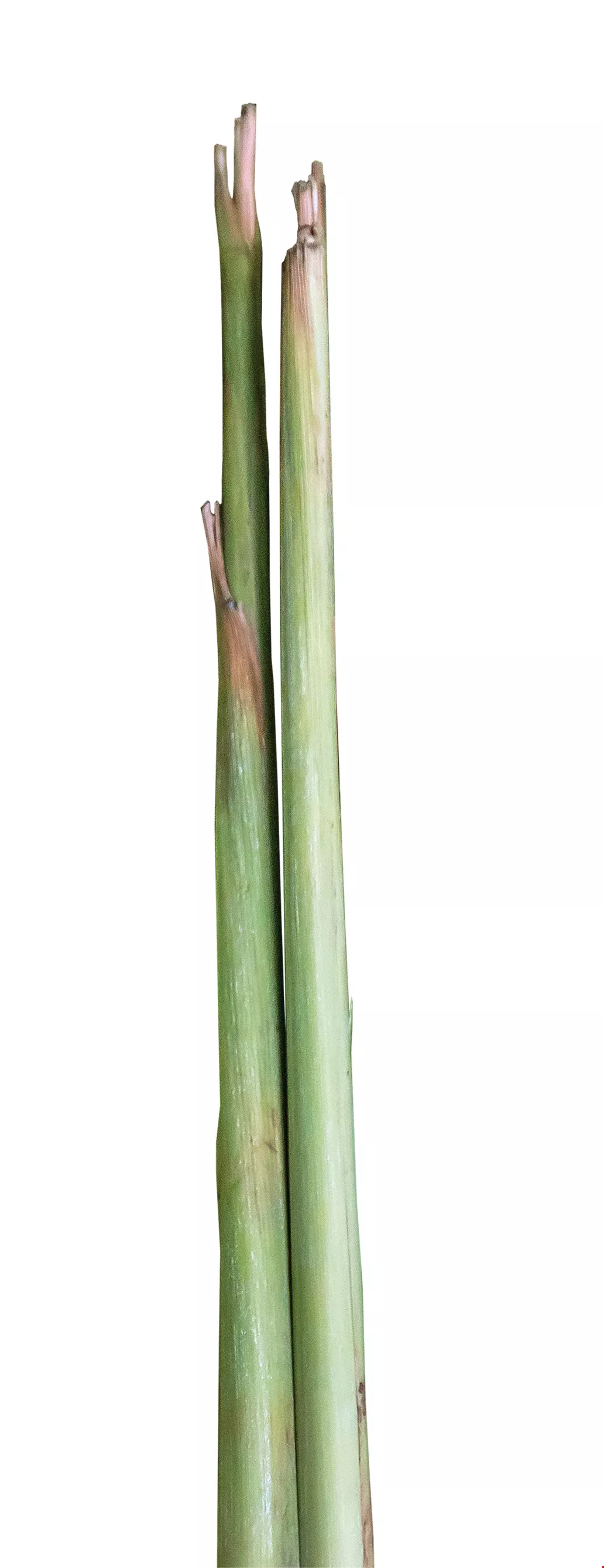
Lemongrass (Cymbopogon citratus).
.jpg?w=1080&mode=crop&format=webp&quality=80)
In addition to the fresh produce available at fruit and vegetable stands, department stores also stock many ingredients of Southeast-Asian dishes. Stink beans feature an unusual flavor and scent.
.JPG?w=1080&mode=crop&format=webp&quality=80)
In addition to the fresh produce available at fruit and vegetable stands, department stores also stock many ingredients of Southeast-Asian dishes. Annatto is commonly used as a natural dye.
.jpg?w=1080&mode=crop&format=webp&quality=80)
.jpg?w=1080&mode=crop&format=webp&quality=80)
ASEAN Square has experienced changing commercial fortunes. Once on the downswing, the complex has been revived thanks to the immigrants and migrant workers who now make up most of its customers.
.jpg?w=1080&mode=crop&format=webp&quality=80)
Open throughout the year, vegetable stalls like this one help immigrants keep in touch with the tastes of home.
.jpg?w=1080&mode=crop&format=webp&quality=80)
This snack shop at ASEAN Square is packed on the weekend. Apart from the snacks they make, they often also offer karaoke, giving immigrants and expats a chance to belt out their favorite songs from home.
s.jpg?w=1080&mode=crop&format=webp&quality=80)
You can try real Southeast-Asian food at ASEAN Square. The photo shows krapow pork with Thai holy basil, an authentic Thai dish.
s.jpg?w=1080&mode=crop&format=webp&quality=80)
You can try real Southeast-Asian food at ASEAN Square. The photo shows stir-fried pork kway teow with coconut sugar, an authentic Thai dish.
.jpg?w=1080&mode=crop&format=webp&quality=80)
On a stage set up in ASEAN Square’s plaza on a holiday, Indonesian performers sing and dance.
.jpg?w=1080&mode=crop&format=webp&quality=80)
Sweet and colorful halo-halo ice is a great way to beat the summer heat.
.jpg?w=1080&mode=crop&format=webp&quality=80)
Interspersed amid traditional Taiwanese herb dealers, shops selling produce from Southeast Asia have enlivened this street.
@List.jpg?w=522&h=410&mode=crop&format=webp&quality=80)
@List.jpg?w=522&h=410&mode=crop&format=webp&quality=80)
@List.jpg?w=522&h=410&mode=crop&format=webp&quality=80)


