Construction and culture
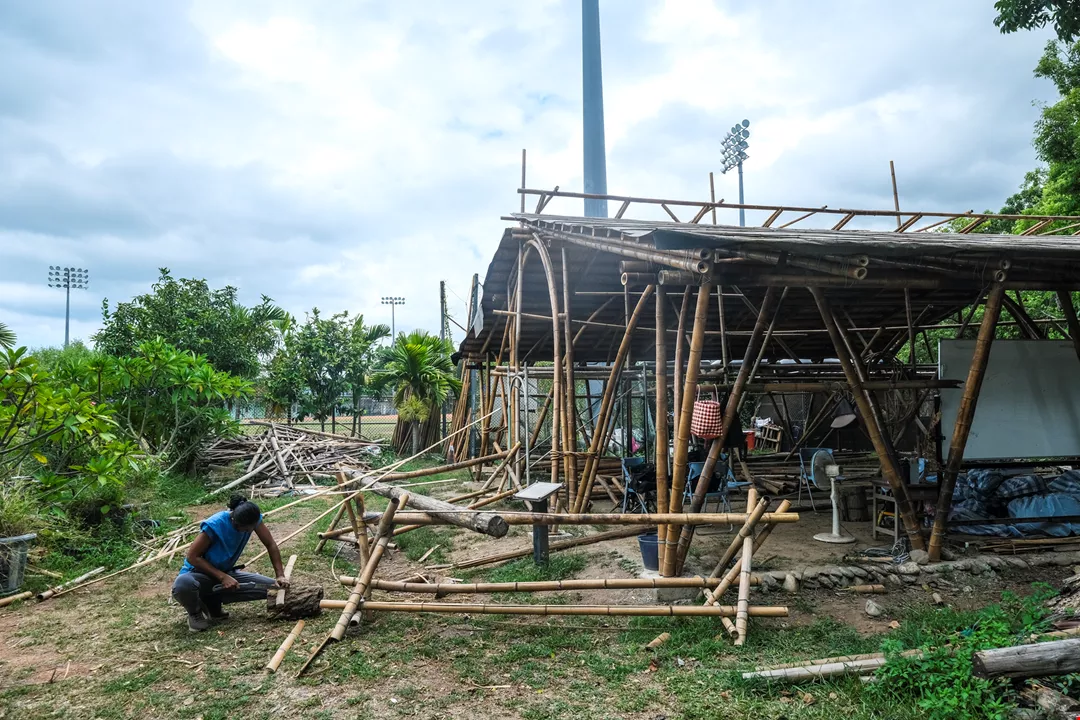
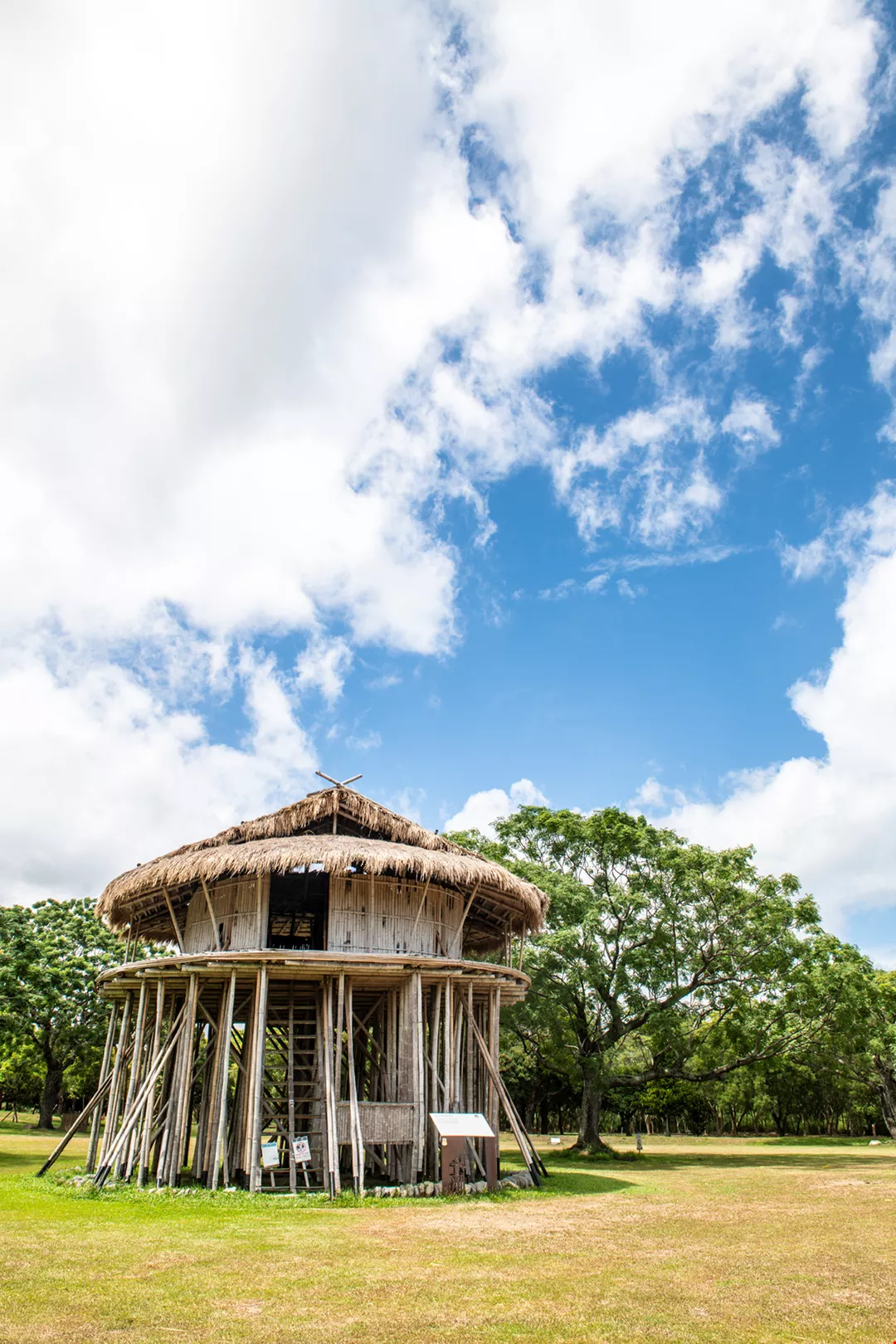
Architect Lin Yayin says that the Puyuma Village ttakuban has a number of unique structural features. For example, the libattubattu is a core load-bearing structure located at the center of the building’s base, and the panubayun are angled supports that radiate from the roof beam to the ground in eight directions.
Lin says that buildings reflect an ethnic group’s spirit and philosophy. The word panubayun connotes “uniting,” and the actual angled supports come from all directions to gather at a point and provide stability.
Lin adds, “The ttakuban is a light structure that is resistant to earthquakes but vulnerable to wind.” Builders increase the ttakuban’s stability by filling the conical libattubattu, which sits on the ground at the center of the structure, with stones that weigh the building down and lower its center of gravity. In fact, research by Taiwanese scholars has shown that the libattubattu functions similarly to Taipei 101’s tuned mass damper, causing one scholar to exclaim: “Taiwan’s Aborigines are natural-born scientists!”
This design enabled the flimsy-looking bamboo building to remain standing through 2016’s Typhoon Nepartak, which had windspeeds of more than 200 kilometers per hour. Lin laughs, “It’s because our ancestors understood so much more about natural materials than we do.”
She laments that Taiwan’s traditional construction techniques were not passed down to younger generations, and knowledge of natural construction materials gradually slipped away once reinforced concrete became the default choice. “We’re Taiwanese. We should learn Taiwan’s traditional construction methods, culture and handicrafts.”
Traditional construction methods were largely passed down from master to apprentice, and rarely written down. Designs and construction methods also tended to vary based on the builder’s understanding of techniques and view of the project. “I spent 20-some years learning from various elderly craftspeople. When each one passed away, the accumulated knowledge of generations passed away with them.”
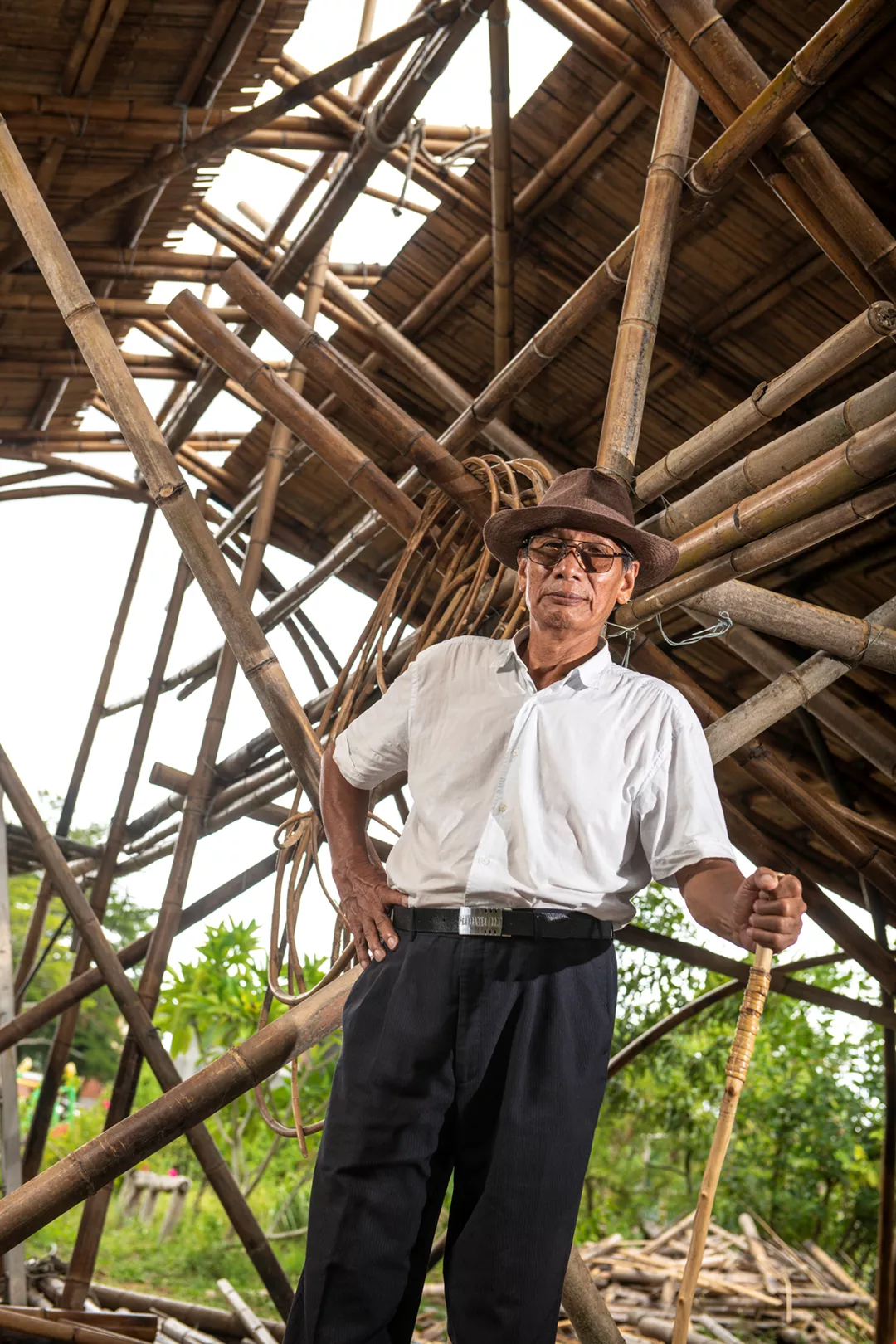
Lin and Ahung Masikadd offer classes in the Lizen Education Foundation’s bamboo construction program. Their goal is to address the problem of the transmission of knowledge by systematically teaching ttakuban construction methods to students from all walks of life. They are also working together to document these methods.
In their as-yet-unpublished Puyuma Ttakuban: Traditional Bamboo Construction in Taiwan’s Puyuma Village, Ahung Masikadd relates the history, cultural significance and process of constructing a ttakuban, describing the latter in detail and illustrating it with photographs.
Lin says, “If I don’t write it down, the knowledge will be lost when this generation passes.”
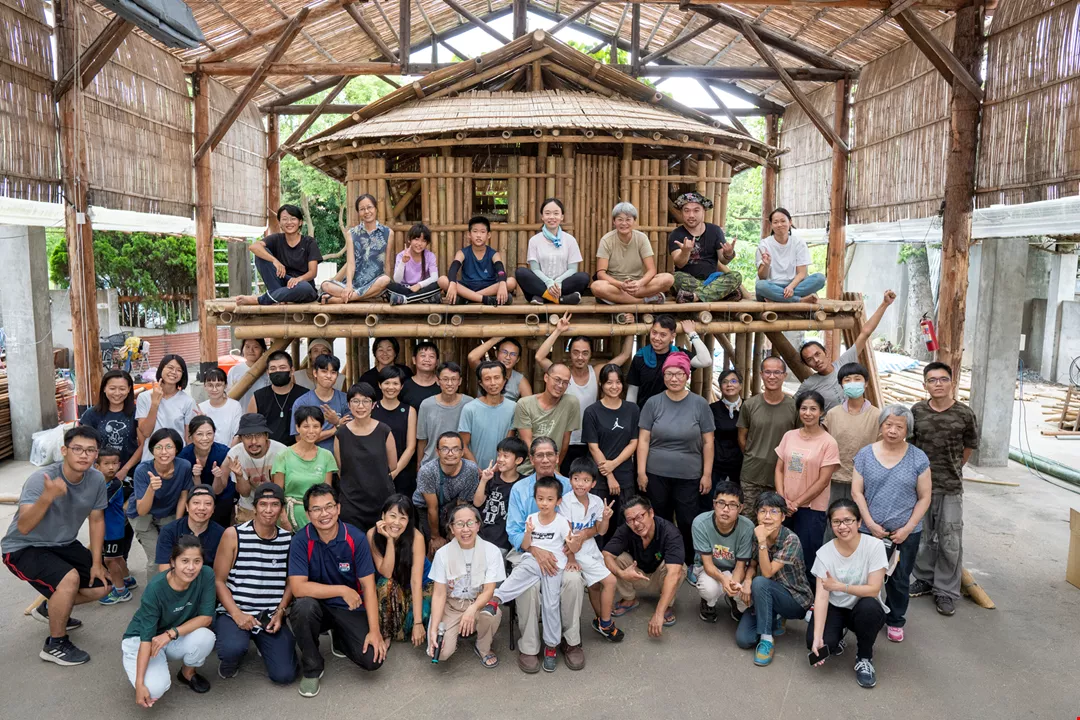
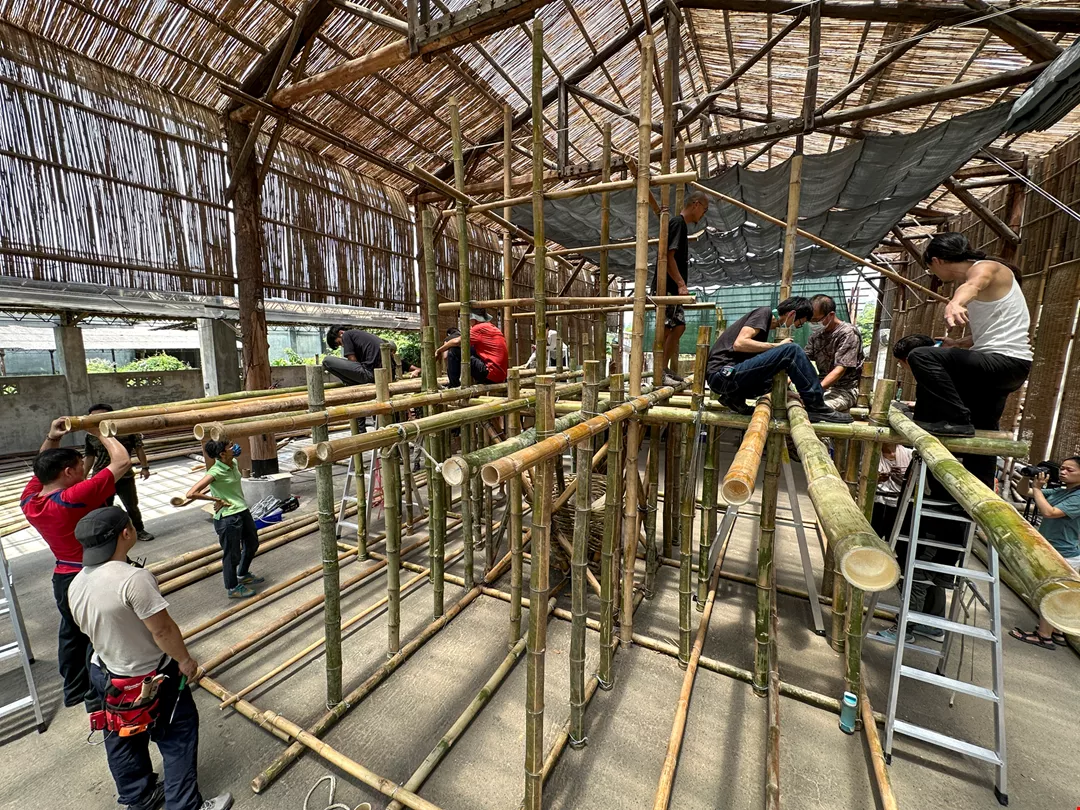
Lin Yayin and Ahung Masikadd teach a Puyuma bamboo construction course through the Lizen Education Foundation. (photo by Wu Jiayou, courtesy of Lizen Education Foundation)
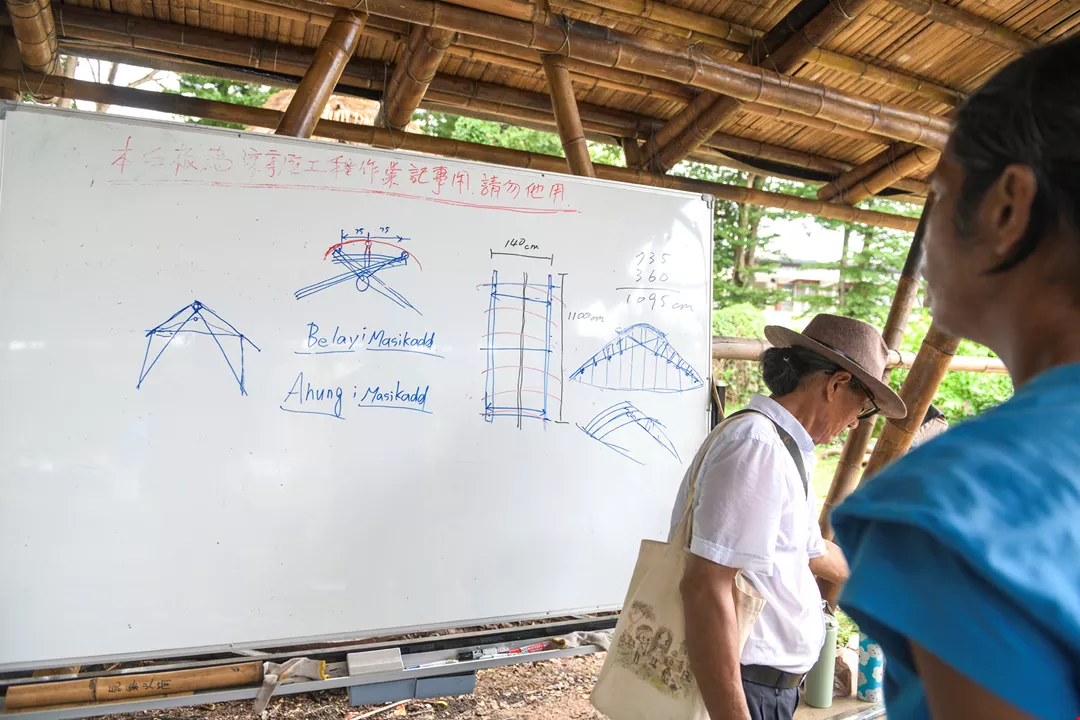
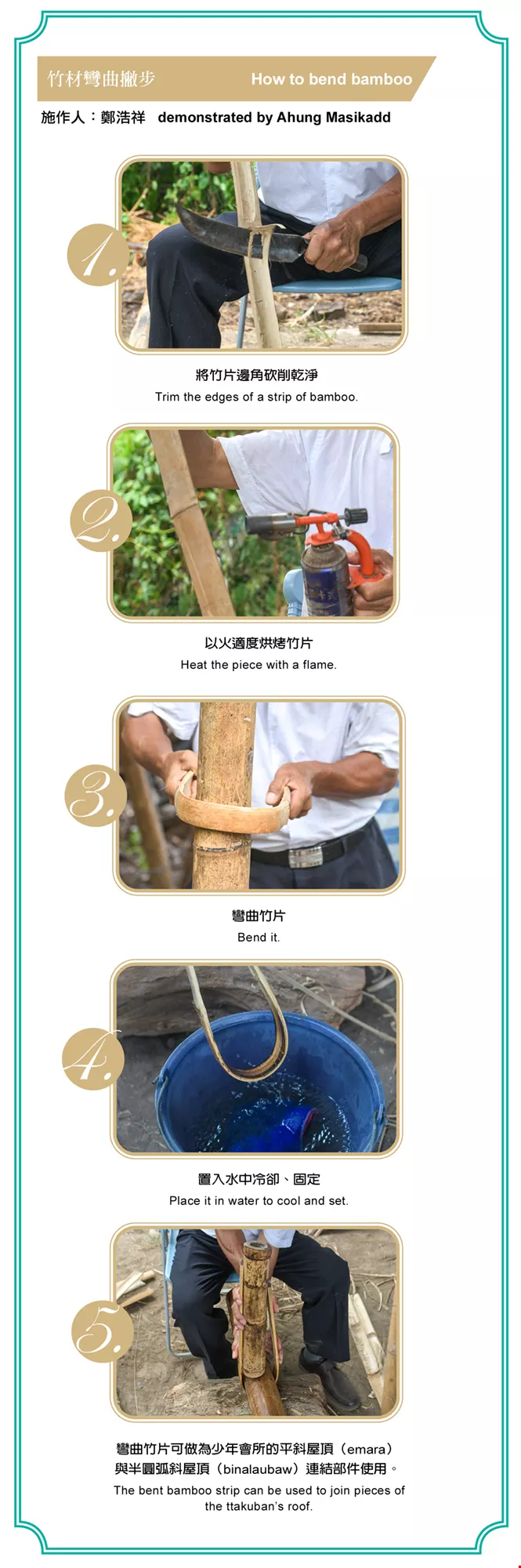
Lacking a background in architectural drawing, Ahung Masikadd teaches his bamboo construction methods using simple illustrations.
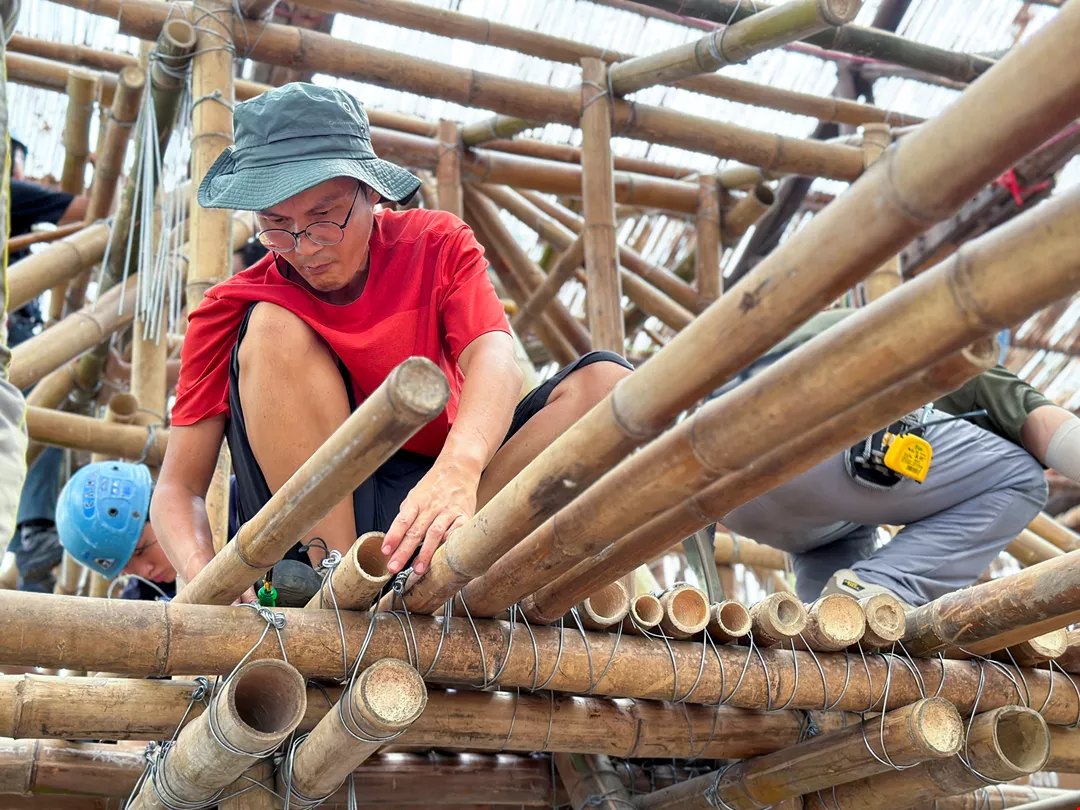
When teaching ttakuban construction, Lin Yayin asks students to use indigenous names for building techniques and features. (photo by Yang Xiaohong and Cai Zhuolin, courtesy of Lizen Education Foundation)
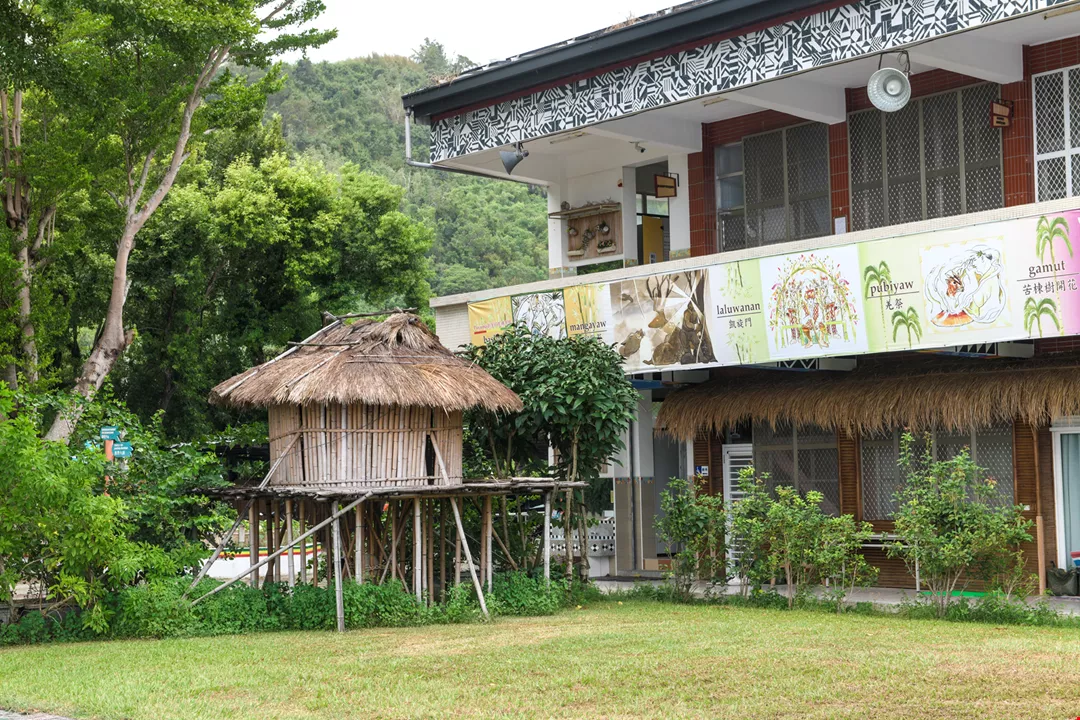
Ahung Masikadd’s efforts to revitalize Puyuma Village’s culture led to the addition of a ttakuban and painted tribal motifs on the school’s eaves.



-14.jpg?w=1080&mode=crop&format=webp&quality=80)
印-P28-35-竹家‧築鄉:台灣原住民的竹與竹構.jpg?w=1080&mode=crop&format=webp&quality=80)
泰-P28-35-竹家‧築鄉:台灣原住民的竹與竹構.jpg?w=1080&mode=crop&format=webp&quality=80)
越-P28-35-竹家‧築鄉:台灣原住民的竹與竹構.jpg?w=1080&mode=crop&format=webp&quality=80)


@List.jpg?w=522&h=410&mode=crop&format=webp&quality=80)
@List.jpg?w=522&h=410&mode=crop&format=webp&quality=80)