

In the past, this place was little more than a brief interlude for tourists traveling to Hsitou Forest Recreation Area and Shanlin River. In their haste to get to their destinations, people have also often overlooked the beauty of Luku. But now, Luku Rural Township is hoping to take center stage by building upon its world famous product: Tungting oolong tea.
The poet Lin Yu has described his hometown of Luku as "heartrendingly beautiful." Lin, who during his student days opened his eyes each morning to find himself embraced by the emerald mountain forests, had to continually struggle against the call of the dorbeetle deep in the bamboo forest, and against the lure of the Peishih River and Lake Chinglung, if he wanted to concentrate on his studies.
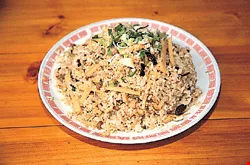
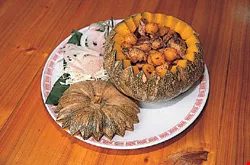
The Taiwan Art of Tea exhibition, opening in late April and organized by Luku Rural Township, greets guests with delicious tea and low-fat meals made using local delicacies like bamboo and mountain celery.
Here in the early 21st century, Luku Rural Township still has an old-fashioned air, but there is much more to it than that. In the early morning, bathed in the colors of the rising sun, the mountains and valleys of this tea growing area seem friendly and welcoming. You can see multiple layers of greenery on Mt. Tungting and Mt. Fenghuang, the two main peaks. At night, people living along the banks of Lake Chilin have all their lights on; colorful dots of light reflect off the water, creating an alluring, dream-like scene. Aihsiang Road, meanwhile, is covered by a thin mist, in which the shadows of the bamboo twist and turn and lightning bugs dance through the air all around.
The little rural township of Luku, located in Nantou County, has a population of only 20,000 or so. Fifty-nine percent of the people are tea farmers. It is estimated that Nantou County accounts for one-third of the 18,000 hectares of land in Taiwan devoted to tea plantations, with Luku accounting for one half of Nantou's total. Whether measured by cultivated area or production volume, Luku is the largest single tea-producing township in Taiwan.
The ambience of Luku is just like its most famous product, Tungting oolong tea: rich and fragrant. On Chungcheng Road, the main drag running through the town, every few households you see signboards announcing that this or that abode is a tea manufacturer or tea merchant, and that they are happy to offer visitors a cup of local tea. A visitor to this area cannot help but feel spiritually cleansed amidst the delicate aroma that comes with each passing breeze.
Mt. Tungting, the main tea growing area in Luku, is a spur of Mt. Fenghuang. It is 740 meters tall, and is typically shrouded in mist in all seasons. The temperature varies sharply from day to night, and the slopes are very wet because of all the rain and fog. Because the only way to get to the top is on foot, and you are sure to freeze your toes along the way, the peak has long been known as Tungting, which means "frozen peak."
Tradition has it that during the Dao-guang reign period of the Qing dynasty, a man named Lin Fengchi from the earliest village in the Luku area went to mainland China to take the imperial examinations. Returning home after having passed the provincial level exams, along the way he brought back 36 seedlings of Chinghsin oolong tea plants from Mt. Wuyi in Fujian Province, and 12 were successfully transplanted on Mt. Tungting by a local resident named Lin Sanxian. The plants were thereafter propagated to produce enough for entire plantations. Thanks to the cool and fresh climate, the plentiful rain, the fertile soil, and the warm sunshine during the day, the Tungting area offers ideal conditions for growing tea bushes.
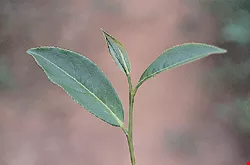
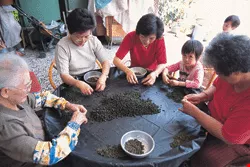
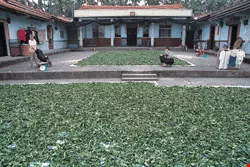
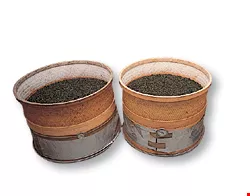
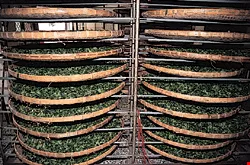
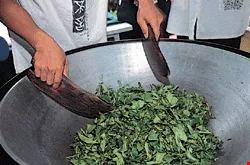
Late April is the best time to pick Spring tea. Early in the morning farm women go up the mountains, baskets on their backs, to pick the soft and plump leaves. These have to be processed through more than ten complex steps to make superior grade product, including indoor and outdoor withering, shaping, controlling the fermentation by heating, curing, and inspection.
"The highest quality and highest priced tea in the world comes from Luku," proudly declares Chen Ming-chih, director-general of the Luku Tourism Promotion Association. Telling the story of the tea industry there, Chen says that over the last four decades, the excellent natural conditions have brought glory to this tea town, and prices have escalated from about NT$10 per Taiwanese catty (600 grams) in the early days to a peak in the late 1990s, when the highest grade tea could demand as much as NT$50,000 a catty.
Chen recalls that before 1961, the fields in Luku were still planted with a variety of crops, and in the middle of a tea plantation you might also find bananas or corn. In those days, you could get good money exporting bananas to Japan. When Lin Yangkang (later provincial governor) was the chief secretary in Nantou County, he warned tea farmers not to cut down all their tea trees just because banana prices were so high, because "Tungting oolong tea is the genuine core product of Luku." When the banana boom faded, farmers turned to tea on a large scale.
In 1976, the provincial agricultural authorities began holding competitions for tea quality, and Luku, with its years of experience growing and processing tea, became an overnight sensation, becoming the new darling of the Taiwan tea market. It also helped that then-premier Chiang Ching-kuo and provincial governor Hsieh Tung-min both frequently visited Luku to have an impromptu cup of tea with local folk, and a fad for the Luku leaf swept Taiwan; this marked the beginning of the nationwide fame of the Tungting tea of Luku.
Kuo Kuan-fu, director of the Tungting work station of the Tea Improvement Station of the Council of Agriculture says that the soil around Mt. Tungting is categorized as red-yellow podzolic soil, of which there is a rich and deep layer. The most suitable place for growing oolong tea (more formally known as paochong tea) is about 700 meters above sea level or higher. Beginning in the 1990s, tea growers in Luku began to feel the effects of competition from other kinds of tea, and also faced problems of rising production costs and natural withering of tea trees, so they began following the path of "quality, not quantity."
Kuo Kuan-fu says that tea drinking can be considered two ways. One way is to relieve thirst, for which ordinary tealeaves are perfectly acceptable. But imbibing tea that goes for NT$6,000-7,000 per catty is part of creating a higher quality of life. As a well-known Ming dynasty literati wrote: "Sitting at night in a mountain pavilion, drawing spring water to boil tea / As the water and fire battle it out, the scent of the pines billows through the trees as I pour a cup, bathed in light from the clouds / The profound pleasure of this moment is hard to convey in words to those of common tastes."
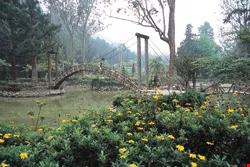
Hsitou is the best-known tourist attraction in Luku. The forest recreation area includes Tahsueh Lake, giant trees, a seedling garden, and Peacock Park; the former two are Hsitou's most widely recognized symbols.
Top-quality Tungting oolong tea has long been synonymous with elegance and quality. Tea farmer Lin Ching-liang, who won the top prize for special grade spring tea from Luku in 2000, says: "In order to produce special grade tea, every step in the process must be flawless. If your technique is even a little off, you will lose the fragrance and flavor. The thing about special grade tea is that even after the leaves have been brewed, they still retain a natural floral fragrance."
Generally speaking, there are more than ten complicated steps in the process of making tea. First leaves are picked (also called "plucking") and then they are "withered" or "wilted," (spread out to dry, either outdoors under the sun or indoors). These steps are followed by shajing, shaping (by kneading), preliminary drying, heat shaping, redrying... and even after all that you've only completed the crude tea. Thereafter it must be inspected, graded, cured, and packaged in order to be ready for supplying the market.
Shajing-the term in Chinese means "to kill the flowering"-is the most critical step. After being sun-dried and moved onto large bamboo frames indoors, the tealeaves then begin to ferment. When they have reached the intensely flavorful stage, it is necessary to quickly heat them (such as by pan-drying) to stop the fermentation process and keep the flavor from escaping. (It is this partial fermentation that distinguishes oolong tea from green tea, which is unfermented, and black tea, which is fully fermented.)
"As the tealeaves are fermenting, the flavor is constantly changing," explains Lin Ching-liang. At this time everything depends on the nose and experience of the tea farmer in order to control the aroma of the tea. Tealeaves that have completed the shajing step are then placed into the shaping machine and pressed, and then are re-shaped. This process must be repeated more than 40 times, and is vital to producing superior tea. In order to keep his olfactory sense in peak form, six years ago Lin Ching-liang began taking a morning swim every day in order to whip his cardio-pulmonary system into shape.
Kuo Kuan-fu, who has served as presiding judge in numerous tea competitions, says that the degree of fermentation of Tungting oolong tea is between 15 and 25%. The manufacturing process is similar to that of Wenshan paochong tea. However, in making Wenshan paochong the emphasis is placed on a clear light fragrance, and the tealeaves are long and rough in appearance. For Tungting tea, on the other hand, as a result of different techniques used during the shaping and curing, the tea leaves are rolled up, curved, and neat-looking, the tea has a very clear golden-yellow color, and the brewed tea is richer in fragrance and color then Wenshan paochong. Tungting holds its flavor longer through brewing, keeps longer in storage, is more mouth-watering to the palate, is fuller in flavor, and leaves a stronger and more long-lasting sensation as it passes down the throat.
Tea aficionados compare Wenshan paochong to "a graceful orchid." Tungting oolong, on the other hand, because the tea sprouts are soft and plump, and the brewed tea has a more robust dark green color, a richer fragrance, and a more full-bodied flavor, is likened to a newly married woman, mature yet tender and delicate.
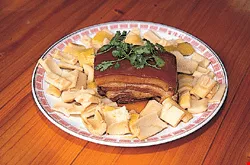
The Taiwan Art of Tea exhibition, opening in late April and organized by Luku Rural Township, greets guests with delicious tea and low-fat meals made using local delicacies like bamboo and mountain celery.
Tungting tea is produced year-round, with five harvests per year. Tea experts especially love spring tea for its particular fragrance and winter tea for its fruity and light, pure flavor.
Rarity naturally brings high prices. In years gone by, exhibitions and sales of spring and winter tea brought astonishing results. According to Chen Ming-chih, when things were at their best, tea merchants from all over came cash in hand, and income could reach as high as NT$100 million in a single day. Every household had its lights lit up and exploded firecrackers, while prizewinners would hold celebratory banquets.
Tea also brought tourists. When you added in the dream-like beauty of the Hsitou Forest Recreation Area, the Luku area could attract more than a million tourists a year. On holidays, there would be car races on Chungcheng Road, and hotel reservations had to be booked two months in advance.
But natural disasters brought Luku down to earth. First came the September 21, 1999 earthquake. Though after two years of reconstruction tourism had returned to about 70-80% of its original level, then last July Typhoon Toraji hit, with landslides blocking the way to Hsitou. Tea plantations have only begun reopening with this year's lunar new year (in February).
Moreover, so far this year rain has been in short supply, and it is estimated that the production volume of spring tea will be down 40% from last year.
Yet, despite the many blows handed out by Mother Nature, Kuo Kuan-fu is upbeat about the quality of the spring tea; although there was not much rain, so that the buds on the tea trees are not so regular in form and timing, if appropriate adjustments are made during the "withering" stage, the result should still be good quality tea.
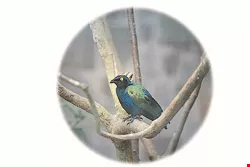
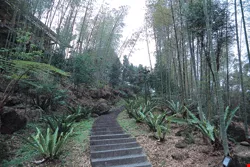
Deep into a mountain trail, all you can hear are frogs croaking and birds calling; what a great place to stroll, sit and think, and breathe in some fresh air.
In order to promote sales of Luku Tungting oolong tea, the Bureau of Tourism of the Ministry of Transportation and Communications is working with the Nantou County government to sponsor a special exhibition on "The Taiwan Art of Tea 2002," which will run from April 20 to May 12. This timing fits right in with the ancient wisdom of the Tang dynasty Classic of Tea, which advises: "The guyu ['grain rain'] Solar Term [late April] is the time to pick tea. The qingming period [early April] is too soon, while lixia ['beginning of summer,' the first week in May] is too late; the most appropriate time is just around guyu."
The main site of the tea exhibition will be on the shore of Lake Chilin. The exhibition will bring together top-quality teas from Taiwan's seven largest tea producing areas: Wenshan paochong, tiekuanyin, and lungching green teas from Ilan County, Taipei County, Taipei City, and Taoyuan County; as well as baihao ("white") oolong tea from Hsinchu and Miaoli counties; and kaoshan ("high mountain") tea from Chiayi and Yunlin counties. In addition, the organizers have also mapped out tea plantation tours, special meals featuring local specialties, and a special "lightning bug tea-tasting ecological tour," hoping to draw people out for a journey in the spring sunshine.
"Nantou is at the geographic center of Taiwan, which places it far from the main population concentrations on the coast, so not many businesses are willing to invest here. But crisis is also opportunity, and Nantou has a chance to show itself off as a pristine place unaffected by modern pollution," says Wang Shao-cheng, director of the Nantou County Bureau of Tourism. In the past Luku depended on Hsitou and the Shanlin River to draw tourists. But Taiwan has long been a tea great power, and Luku's Tunting oolong tea is famous home and abroad, so the sponsors hope to create new commercial opportunities through this event. The county government is also actively working to draft regulations governing "homestays" (private residences which accept paying guests), and is working along the two tracks of licensing and evaluations to promote special features in each rural township that will appeal to tourists.
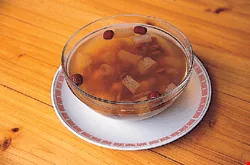
The Taiwan Art of Tea exhibition, opening in late April and organized by Luku Rural Township, greets guests with delicious tea and low-fat meals made using local delicacies like bamboo and mountain celery.
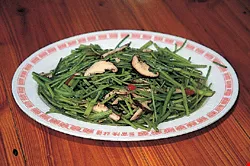
Besides its tea, another feature of Luku is its specially designed "tea meal" menus. These meals are light and refreshing, and leave a great aftertaste. The main ingredients are Luku's two most important veggies: bamboo shoots and mountain celery.
From Luku heading in the direction of Hsitou, all along the route your eyes are dazzled by the reflection of light off the green bamboo that is everywhere, creating a fascinating "bambience" irresistible to visitors. Bamboo shoots are another of Luku's famous products: there are winter shoots and spring shoots, depending upon the harvest season. The winter shoots grow underground, and must be dug up with a spade. The spring shoots sprout up from the ground, with the most productive season for the especially tasty "treasure bamboo" being from March to May every year.
The beautiful jade-green mountain celery is produced in colder areas of Luku at 800 meters altitude or higher. It was originally a wild vegetable, but in recent years has been artificially cultivated. It is rich in fiber, iron, calories, and vitamins A and C; it also aids digestion, dissolves fat, and prevents anemia and high blood pressure.
To provide visitors with something memorable, the Luku Rural Township Tourism Promotion Association has brought together tens of restaurateurs, and created special winter bamboo shoot and tea multiple-course meals for groups, at NT$2500 per table. Because tealeaves help remove cholesterol and dissolve fat, these low-fat and healthy bamboo-and-tea meals, which are colorful, fragrant, and flavorful, are just the thing for weight-watching modern folk.
The basic principle of the tea meal is to match types of tea to types of food, depending on their characteristics. In general, meat goes with mature tea, because it dissolves fat; seafoods and are relatively tangy, so these are best offset by green tea, to take away that seafood aftertaste. The meal is topped off with a refreshing and tasty tea gelatin. Every course is a genuine novelty.
Right now is the time when Luku spring tea is being processed, and Luku welcomes visitors to come and share a cup of their local brew. How refreshing it is to wander along the little pathways of the plantations, hidden in the mist that wraps the area! You too will find yourself enjoying a sensation of leisured elegance that is indeed "hard to convey in words to those of common tastes."
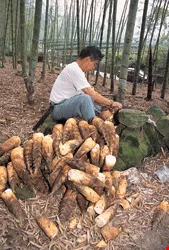
The Taiwan Art of Tea exhibition, opening in late April and organized by Luku Rural Township, greets guests with delicious tea and low-fat meals made using local delicacies like bamboo and mountain celery.
Well-known attractions
Lake Chilin
Located below Mt. Tungting in Luku Rural Township, Lake Chilin is a manmade lake formed mainly by accumulated rainwater; however, it is also fed by springs, of which there are a large number in the mountains, so the lake has not dried up for many years. It is about 30 hectares in surface area. Initially it provided water for farm irrigation; now that tree teas have been planted along the edge, it is a beautiful scenic place that draws many visitors.
Fenghuang Waterfall
Located on the Fenghuang Plateau, the waterfall is accessible by following the Fenghuang Bird Park to its end. The fall is fed by a branch of the Chingshuikou River, which tumbles over a sheer rock face, making for an impressive sight. The waterfall has created a deep pool at its base, known as "Shadow Pool," surrounded by plants and rocks of unusual shapes.
Fenghuang Valley Bird Park
This is a broad natural forest, with a dozen or so large and small bird gardens. The layout winds about following the terrain, with the gardens connected by trails or stone staircases; the total length is about two kilometers.
Hsitou Forest Recreation Area
Located at the foot of Mt. Fenghuang in Luku Rural Township, at an elevation of 1130 meters, covering an area of 2500 hectares, Hsitou Forest offers a cool, comfortable climate and easy access from main transportation lines; it is the most famous tourist attraction in Luku. Besides natural broad-leaved forest, there are also transplanted conifers, bamboo, and other plants. Here you can try fresh bamboo shoots (a different flavor each season of the year), or buy bamboo handicrafts. When there is no fog or rain, this is a great place for a walk deep in the woods, for some profound thinking under a tree, or for listening to birdsong; a nighttime walk under the stars is especially romantic.
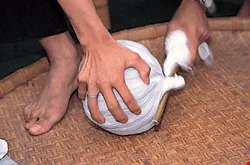
Late April is the best time to pick Spring tea. Early in the morning farm women go up the mountains, baskets on their backs, to pick the soft and plump leaves. These have to be processed through more than ten complex steps to make superior grade product, including indoor and outdoor withering, shaping, controlling the fermentation by heating, curing, and inspection.
By car
1.Sun Yat-sen Memorial Freeway south from Taipei-get off at the Wangtien interchange-Fenyuan (Provincial Highway 14), Tsaotun-Nantou (Provincial Highway 3)-Mingchien, Chushan-Luku
2.Sun Yat-sen Memorial Freeway north from Kaohsiung-get off at the Tounan interchange-Touliu (Provincial Highway 3)-Chushan-Luku
3.National Highway 3 from Kaohsiung-get off at Touliu interchange-Chushan (Provincial Highway 3)-Luku
By bus
Go to Taichung, and find a bus at the Kancheng Bus Station or the old Taiwan Bus Company terminal behind the train station. Take the Lienying ("jointly operated") Taichung-Hsitou line to Luku. One bus every hour. Taichung Bus Company: (04) 2225-5539; Changhua Bus Company (04) 722-5111; Yuanlin Bus Company (04) 832-1141.
By train
There are no trains directly to Luku. Go to Taichung Station; then follow the directions for getting a bus from either Kancheng Bus Station or the old Taiwan Bus Company terminal (see "By bus" above).
Hsitou is the best-known tourist attraction in Luku. The forest recreation area includes Tahsueh Lake, giant trees, a seedling garden, and Peacock Park; the former two are Hsitou's most widely recognized symbols.
Fly into the Shuinan Airport in Taichung; take a bus or taxi to Taichung's Kancheng Bus Station and take the Lienying bus (Taichung-Hsitou line) to Luku (see "By bus," above).
Late April is the best time to pick Spring tea. Early in the morning farm women go up the mountains, baskets on their backs, to pick the soft and plump leaves. These have to be processed through more than ten complex steps to make superior grade product, including indoor and outdoor withering, shaping, controlling the fermentation by heating, curing, and inspection.
Hsitou Citizens Hotel (049) 2612-111, or call the Hsitou Forest Recreation Area, (049) 2612-110
New Ming Mountain Cabin Resort (049) 2754-906
Ming Mountain Hotel (049) 2612-376
There are also well-appointed homestays (in private residences) along the route; contact the Rural Tourism and Travel Board of the Luku Farmers Association at (049) 2751-962
The Taiwan Art of Tea exhibition, opening in late April and organized by Luku Rural Township, greets guests with delicious tea and low-fat meals made using local delicacies like bamboo and mountain celery.
One day itinerary
Nantou City (Chunghsing New Village-Nantou Brewery-Houtan Well) to Mingchien Rural Township (Sungpo Peak) to Chushan Township (Sheliao Tsunan Temple) to Luku Rural Township (Mt. Tungting-Lake Chilin-Kaishan Temple-Mt. Fenghuang Monastery-Fenghuang Bird Park-National Taiwan University Fenghuang tea plantation-Hsitou-Hsiaopantien)
Two day itinerary
First day: Mingchien Rural Township (Sungpo Peak) to Chushan Township (Sheliao Tsunan Temple) to Luku Rural Township (Luku New Image Commercial Circle-"The Taiwan Art of Tea" event-Tea Leaf Culture Museum-Mt. Tungting-Lake Chilin, Chahsiang ("tea aroma") Park-Mt. Fenghuang Monastery-Fenghuang Bird Park-National Taiwan University Fenghuang tea plantation-Hsitou) to Shuili Rural Township to Hsinyi Rural Township (Fengkuitou-Tungpu hot springs)
Second day: Hsinyi Rural Township to Shuili Rural Township (Snake Kiln-Art River Park) to Yuchi Rural Township (Lalu Island-Tehua Community-Wenwu Temple-swimming pool) to Puli Township (marker of the geographic center of Taiwan-Jenchih Gate) to Jen-ai Rural Township (Wushe-Lake Pi-Aowanta-Mt. Lu hot springs-Chingching Farm-Wuling Peak-Mt. Hehuan)
(Teng Sue-feng/tr. by Phil Newell)
Late April is the best time to pick Spring tea. Early in the morning farm women go up the mountains, baskets on their backs, to pick the soft and plump leaves. These have to be processed through more than ten complex steps to make superior grade product, including indoor and outdoor withering, shaping, controlling the fermentation by heating, curing, and inspection.
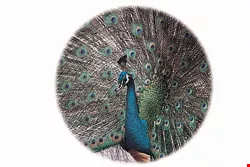
The Fenghuang Bird Park, located in Luku, has more than 300 unusual domestic and foreign species, and thousands of birds in all. Birdlovers need not go far to admire these ornithological beauty queens.
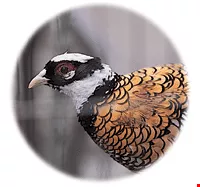
Deep into a mountain trail, all you can hear are frogs croaking and birds calling; what a great place to stroll, sit and think, and breathe in some fresh air.
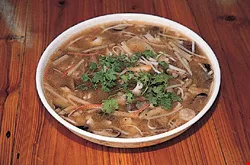
The Taiwan Art of Tea exhibition, opening in late April and organized by Luku Rural Township, greets guests with delicious tea and low-fat meals made using local delicacies like bamboo and mountain celery.
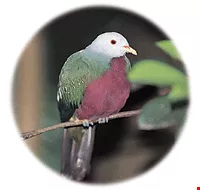
Hsitou is the best-known tourist attraction in Luku. The forest recreation area includes Tahsueh Lake, giant trees, a seedling garden, and Peacock Park; the former two are Hsitou's most widely recognized symbols.
Late April is the best time to pick Spring tea. Early in the morning farm women go up the mountains, baskets on their backs, to pick the soft and plump leaves. These have to be processed through more than ten complex steps to make superior grade product, including indoor and outdoor withering, shaping, controlling the fermentation by heating, curing, and inspection.
Late April is the best time to pick Spring tea. Early in the morning farm women go up the mountains, baskets on their backs, to pick the soft and plump leaves. These have to be processed through more than ten complex steps to make superior grade product, including indoor and outdoor withering, shaping, controlling the fermentation by heating, curing, and inspection.
Late April is the best time to pick Spring tea. Early in the morning farm women go up the mountains, baskets on their backs, to pick the soft and plump leaves. These have to be processed through more than ten complex steps to make superior grade product, including indoor and outdoor withering, shaping, controlling the fermentation by heating, curing, and inspection.
The Taiwan Art of Tea exhibition, opening in late April and organized by Luku Rural Township, greets guests with delicious tea and low-fat meals made using local delicacies like bamboo and mountain celery.


@List.jpg?w=522&h=410&mode=crop&format=webp&quality=80)


