Where God Left His Footprint
Tsou Life and Mythology
Cathy Teng / photos by Kent Chuang / tr. by Phil Newell
March 2026
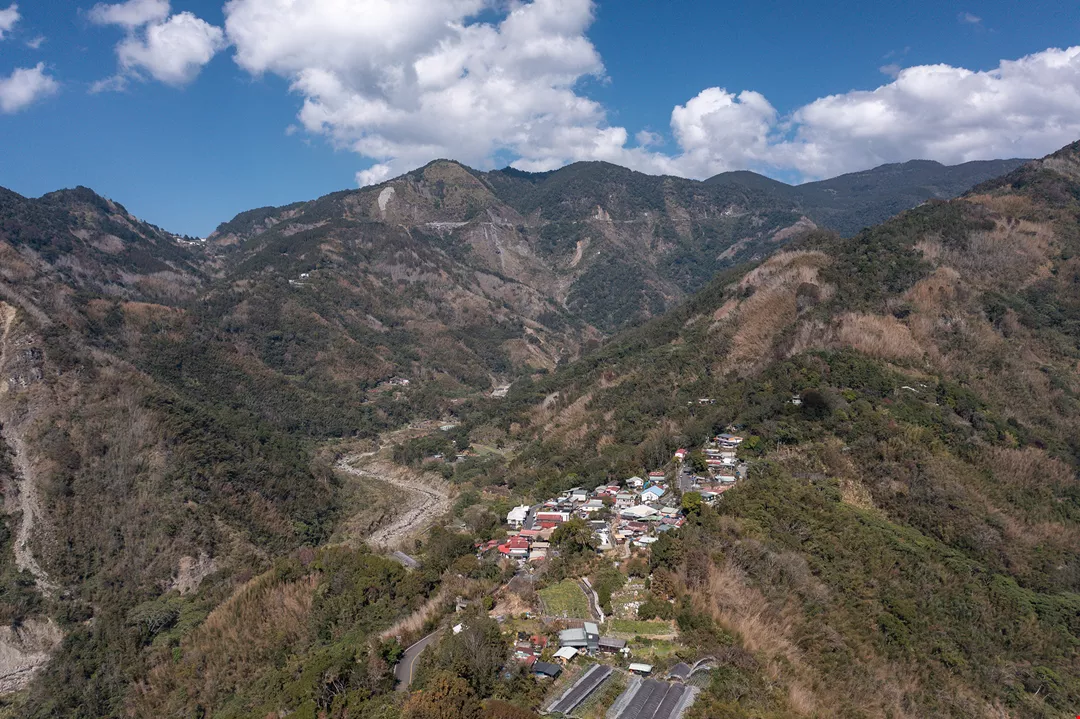
In the foothills of Yushan, Taiwan’s tallest peak, lies the home of the Tsou Indigenous people. In their mythology, the Tsou were created by their deity Hamo. Later the world was flooded and they fled to Yushan, waiting for the waters to recede. The deity then left his footprints in the mountain forests, and the Tsou followed them to take up residence there, with the first footprint becoming Tfuya.


The foothills of Yushan are part of the homeland of the Tsou Indigenous people.
The kuba: Soul of the community
To reach Tfuya, we follow Provincial Highway 18 into the mountains of Chiayi County, turn right at Shizhuo onto County Road 169, and continue many kilometers along a winding road. Entering this Tsou Indigenous community, the most eye-catching structure is the male gathering hall, the kuba.
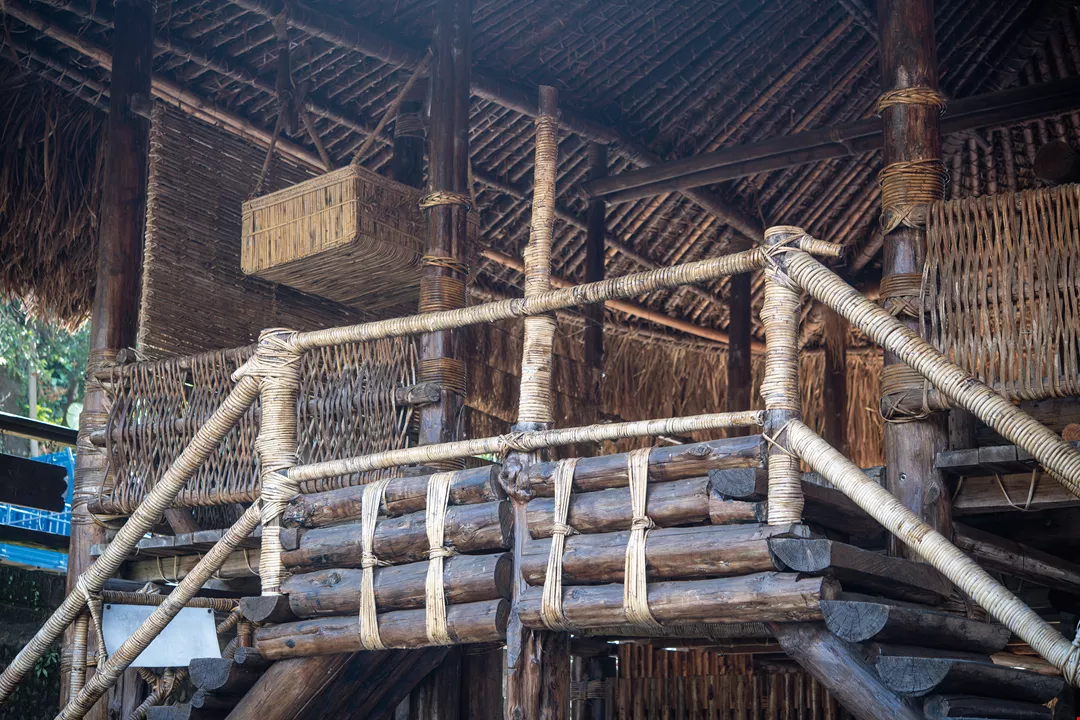
The kuba is a stilt house without walls, of a type common in Southeast Asia. It is the community’s religious, economic, and political center, as well as a classroom for skills and historical narratives. It is where village decisions are reached and important rituals are held.
Tribal elder Mo’o ’e ’Akuyaeana recalls that in days gone by there were always people in the kuba, and the fire pit in the center was never allowed to go out. Men gathered there to do things such as train in fighting, learn to tan leather, and make hunting equipment. As society has evolved, there are no longer voices in the kuba round the clock, but it remains a place where the men of the tribe gather and discuss public affairs.

The kuba (men’s gathering place), a stilt structure of a type often seen in Southeast Asia, is the religious, economic, and political center of Tsou communities.

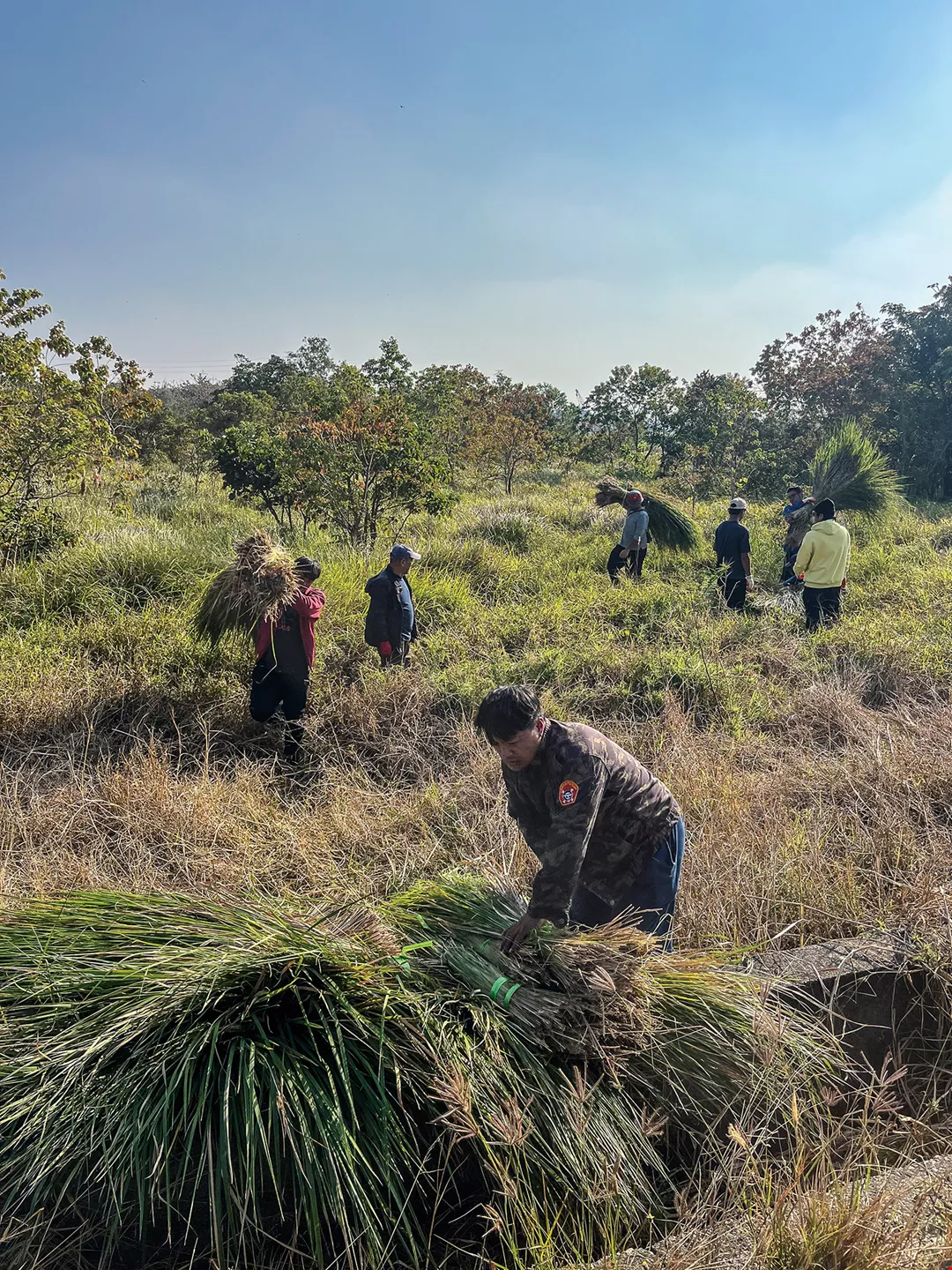
The straw used to thatch the roof of the kuba is gathered by collective effort. (courtesy of Tfuya Community Development Association)
Landscapes on people’s bodies
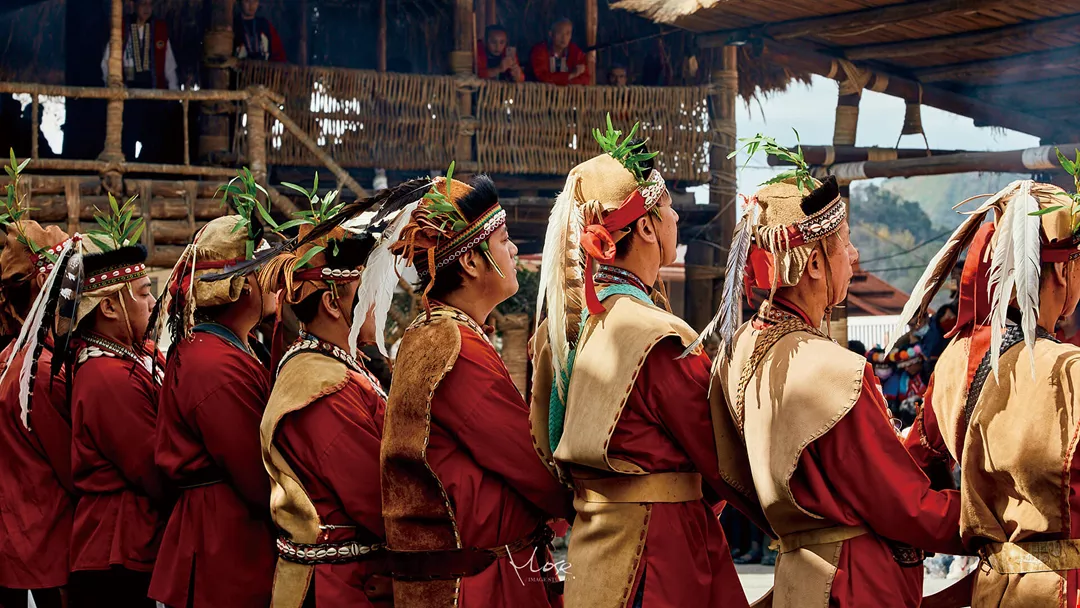
On the day of our visit, Mo’o ’e ’Akuyaeana is wearing traditional Tsou attire, which is donned only on important occasions. Everything from his hat and upper garment to ornamentation is powerfully linked to the local landscape. In former times the residents used natural leather acquired by hunting to make clothes. The community’s mother-tongue teacher, Inguyu ’e Yasiungu, explains that the main color used is red because in the past when hunters returned home with prey on their backs, their shoulders would be red with blood.
For significant events, feathers—symbolizing male skills and heroic bearing—are inserted into the leather hat. In the past, source birds included the crested serpent eagle, mountain hawk-eagle, Swinhoe’s pheasant, and Mikado pheasant, but the Tsou can no longer hunt these birds as they are now protected. At the back of the hat is a piece that can hang down to cover the neck. Mo’o ’e ’Akuyaeana says: “Putting it down means one is going into battle against enemies. It’s not polite to wear it down normally, so it is usually tied up.”
Since the Tsou have long lived in the mountains, it seems a little odd to see seashell ornamentation on their apparel. “It’s not odd at all,” says Mo’o ’e ’Akuyaeana. “In the past there were Tsou people living all the way down to Anping [on the coast] in Tainan.” Mo’o ’e Mhozana, of the middle generation, adds: “In Anping District there is a Cha-Ha-Mu Aboriginal Park [Cha-Ha-Mu being the old Tsou name for Tainan]. This was validated by the Tainan City Government, which shows that the Tsou once lived in Anping.”
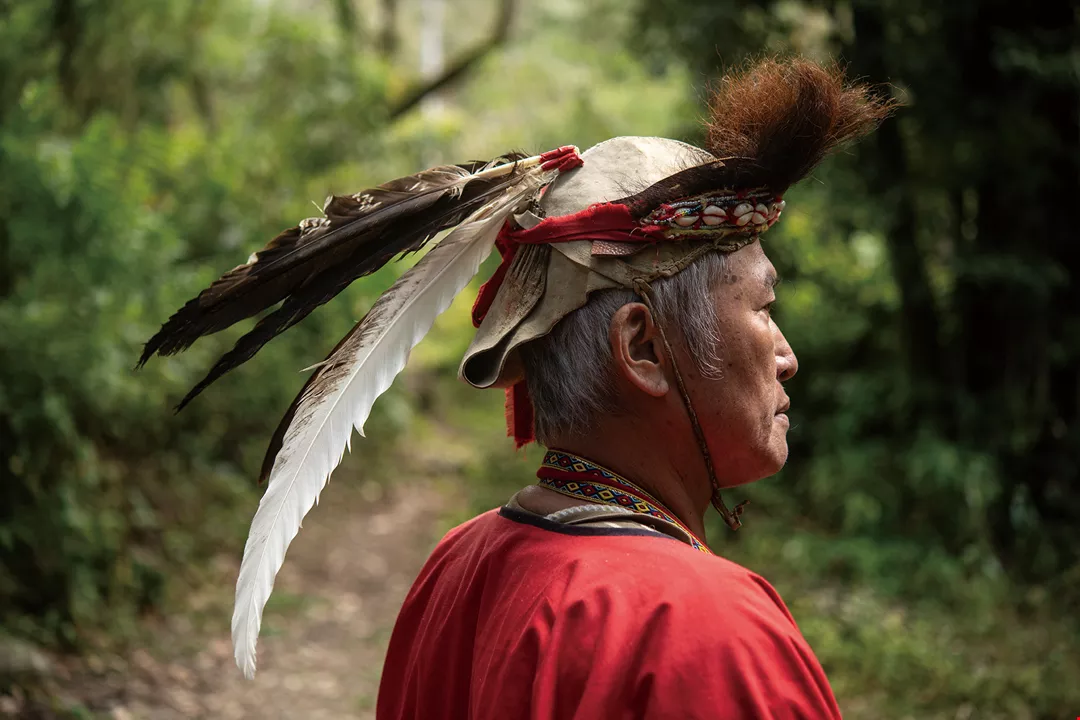
There are strong links between traditional Tsou apparel and the landscapes in which the Tsou people live. The main material is natural leather acquired by hunting. Feathers on headwear symbolize hunters’ mastery over their hunting grounds. Seashells adorning the garments are a reminder that the Tsou once lived close by the sea.

Collective effort, collective good
Although tribal life has changed dramatically with modernization, these stories are still narrated and remembered. And young people have been returning to the community to learn and continue their elders’ culture.
Voyu ’e Mʉknana, general secretary of the Tfuya Community Development Association, grew up in the village. He left for study and work, but later returned. He is deeply impressed by the tradition of voluntary labor that still exists in the community. “This refers to unpaid time and work provided by residents to undertake collective actions that benefit everyone, such as cleaning up the environment, connecting the village to water sources in the mountains, and helping with the complex preparations for ceremonies.” He has rarely seen anything like this in other Indigenous communities.
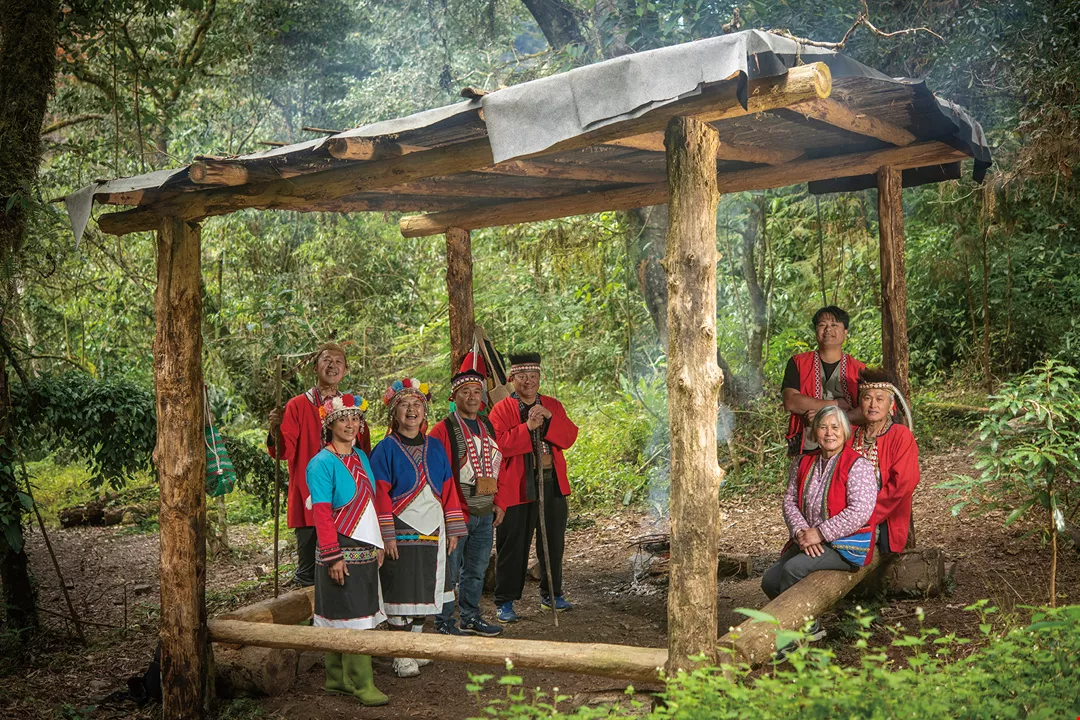
This spirit of the collective good is also manifested in the guide services and ecotourism promoted in recent years. Residents have adopted a selfless division of labor, with people in the prime of life—including Voyu ’e Mʉknana, Mo’o ’e Mhozana, and Mo’o ’e Yapsuyongana—taking visitors to experience the cypress forest, male elders sharing their hunting wisdom from days gone by, and female elder Sayungu ’e Niahosa preparing food for people who come on ecotours of the giant tree groves. In Tfuya, we see that culture is no longer outdated legends, but a path to rejuvenation through a collective effort to stand watch over the land.

Mayasvi (Triumph Festival, a.k.a. War Ritual or Unity Ritual), a traditional ritual still observed today, is a major annual event for the community. (courtesy of Tfuya Community Development Association)

Tribal elders Mo’o ’e ’Akuyaeana (right rear, seated) and Mo’o ’e Vavaiyana (left front, fourth left) share the hunting wisdom of days gone by. Younger men including Voyu ’e Mʉknana (left rear), Mo’o ’e Yapsuyongana (left front, third left), and Mo’o ’e Mhozana (right rear, standing) guide visitors into the mountain forests of the Tsou. Meanwhile, Sayungu ’e Niahosa (right front) prepares tasty food for tour participants, Inguyu ’e Yasiungu (left front, second left) works to teach and preserve the Tsou language, and Yangui ’e Kulatana (left front, first left) strives to pass on her skills in making traditional attire. Through a selfless division of labor, these Indigenous people are working to revitalize their tribal culture.