

(from right to left) Huang Mei-li (39), Lin Shu-yu (1), Su Ya-chun (22), Lin Shih-chieh (22), Lin Chin-lung (43) Lin Ching-lung, who is in the betel nut business, had originally planned to hold a wedding banquet at the end of last year for his son Shih-chieh and his daughter-in-law Ya-chun. Seeing as how his friends and neighbors had not yet recovered from the quake, he postponed the banquet, only holding it recently. "The repair work has just been finished on my house, the family has a new daughter-in-law, and my granddaughter is healthy and lively. It's a case of 'good things come in threes,'" says Lin. He happily says to me, as he greets arriving guests: "This is the happiest day for me since the earthquake. There's a long road ahead, so I want to make the feeling of happiness I have today last. You tell me, isn't that right?"
In July of 2000,ten months after the September 21 earthquake, I returned to Chungliao Rural Township to visit people I had tried to help at the time of the quake. I wanted to see how they were doing today, having survived a disaster of that magnitude. Meeting with these friends moved me in a way that I haven't felt in a long time. When the earthquake struck, while non-governmental financial and manpower resources poured into the earthquake zone, I asked myself: What can I, as a member of the greater community sharing a common fate, do to help?
After many days of consideration, my wife and I decided to hearken back to the initial motivation for the invention of photography, and take free ID photos for people who lost all their personal documents in the quake, thereby doing what I could as a photographer. In Chungliao Rural Township, where most of the people are farmers, 90% of the homes were destroyed and more than 170 people were killed. I arrived the 12th day after the disaster, and saw earthmovers and cranes relentlessly shovelling away the shattered ruins of truncated dreams.
In two days of taking photos, I saw many faces which showed lingering fear and deep sadness. People tried, hard though it was, to squeeze out a feeble smile for the camera. Occasionally we exchanged a few remarks, such as this request from a young girl: "Could you make it so that the injury on my forehead doesn't show?" Or, from an old man who insisted on changing into a clean shirt: "This might be the last picture taken of me in my life..." Every face was burned not only onto the film, but into my heart.
Ten months later, I returned, carrying negatives of the photos with me. With the help of a policeman, I tried to find local residents. Near the Chungliao Primary School, outside of a home there hung a sign reading "family haircuts." In the house, when I showed my ID, Li Chung-shun, the owner of the establishment, suddenly realized who I was. Nodding his head and pointing at the top picture, he said: "These are the ones! We all have been using them. Back then we were so confused, and couldn't keep track of everything. I really want to thank you for helping take care of this for us."
Compared to huge monetary contributions and long-term care provided by others, taking a few photographs was not much of a task. In the face of such gratitude, I was at a loss. But seeing as how these photos were of some help, I not only felt gratified and moved, but felt tears welling up in my eyes.
An introduction to the photographer
Shen Chao-liang was born in 1968 in Tainan. He graduated from the Department of Cinema at the World College of Journalism (now Shih Hsin University). He went to Japan to study photographic visual arts, and worked as the Japan correspondent for an advertising magazine. He is now a photo-journalist for the Liberty Times. His work has appeared in the Liberty Times, Sinorama, The Earth, Dynasty (the magazine of China Airlines), and New Idea. He held a one-man show at the Taipei FNAC in October of 1999, and won a 2000 Golden Ting for magazine photography. He is the author of Brand 9-An Analysis of Creativity at the World's Nine-Bestselling Brand Names.
p.101
(from right to left) Huang Mei-li (39), Lin Shu-yu (1), Su Ya-chun (22), Lin Shih-chieh (22), Lin Chin-lung (43)
Lin Ching-lung, who is in the betel nut business, had originally planned to hold a wedding banquet at the end of last year for his son Shih-chieh and his daughter-in-law Ya-chun. Seeing as how his friends and neighbors had not yet recovered from the quake, he postponed the banquet, only holding it recently. "The repair work has just been finished on my house, the family has a new daughter-in-law, and my granddaughter is healthy and lively. It's a case of 'good things come in threes,'" says Lin. He happily says to me, as he greets arriving guests: "This is the happiest day for me since the earthquake. There's a long road ahead, so I want to make the feeling of happiness I have today last. You tell me, isn't that right?"
Chungliao, July 2000
p.102
Piao Chin-kuei (70)
Auntie Ah Kuei, a Christian, escaped from the second floor by sliding down a bamboo pole. After living in a tent for two months, she often felt despondent, and thought of ending her life with pesticide. Thanks to help and encouragement from her brothers and sisters in the faith, she regained hope. Today Ah Kuei's life is returning to the way it was before. Early in the morning she drives her little farm truck between the orchard and her pre-fabricated housing unit, works as a volunteer making dinner at the church, and at night visits the families of earthquake victims. Auntie Ah Kuei has a rare free moment as she is about to set off to deliver some bananas she has picked to a dealer. As she starts up the truck she says: "Though the earthquake caused a lot of harm, people have learned how to care about one another, and that's fortunate."
Chungliao, July 2000
p.103
(from left to right) Chen Mei-hui (22), Li Shu-chin (45), Chen Tung-li (48)
Chen Tung-li's family had a bakery on Yungping Road. All the family's equipment and possessions were destroyed in the quake. Now, besides their farming income, the bakery business is slowly returning to normal in a temporary corrugated-metal structure. Li Shu-chin says: "We have had a wooden sign up since not long after the earthquake with our shop name and contact number, so that our family and friends will know we are still alive. Though the future will be hard going, we will certainly work hard to get the shop sign back up and get back on our feet."
Chungliao, August 2000
p.104
(from left to right) Li Chien-ho (24), Chen Pi-chu (54), Li Chung-shun (56)
During the quake, Li Chung-shun and his wife Chen Pi-chu were trapped by collapsing roof tiles. Li was rescued after five-and-a-half hours, but his wife remained pinned for 24 hours before she was pulled out by a Korean rescue unit. The day after the quake, while watching TV, their son Li Chien-ho saw the familiar sign from the family hair-stylist shop collapsed on the road side, and rushed off to get a temporary leave from his military unit to go home. Returning to Chungliao after a five-hour motorcycle journey through the night, face-to-face with his devastated home and uncertain whether his mother was alive or dead, he burst into tears. A year later, nothing has been settled about rebuilding their home because of obstacles posed by urban planning rules. Unable to rebuild, Li and his family have had to rent a first floor apartment where they also have their hair-styling business. Standing on a once-bustling street and gazing at scenes of destruction that still await repair, Li says: "I believe that Heaven allowed us to survive this disaster to give us a chance to rebuild our home and return this place to the way it was before."
July 2000, Chungliao
p.104
(from left to right) Chuang Su-oh (43), Liao Tsai-miao (23), Hsiao I-shan (1), Hsiao Yi-hsuan (3)
Chuang Su-oh spends most days setting up altars to deities, praying for protection of the local people from disaster. After the earthquake, more than ten statues of deities that had gone missing miraculously were found. She placed the statues in a pre-fab temporary housing unit where local residents, still in shock from the quake, could come and light incense and pray. "Since the earthquake, people have not been worrying about what's mine and what's yours, or about who comes from where. The people coming in from all over to help are like a hot cup of tea on a cold winter's day, and I'll never forget what they have done," says Chuang with gratitude.
Chungliao, August 2000
p.105
(from left to right) Cheng Huei-wen (12), Cheng Huei-yun (11), Cheng Kung (70), Chang Mei-lan (37), Cheng Wang-fu (70)
At the time of the earthquake, Cheng Kung's whole family took refuge in the betel nut plantation behind their house, hiding behind shaking tree trunks. Even today, he doesn't dare lock their burglar-proof outer door when going to sleep. In their wrecked home, when taking a break from farming he can often be seen quietly looking over the land where he was once safe and settled. Seeing the dust flying from digging at his neighbors, Cheng Kung says: "I never thought my house would collapse. But as long as I still have a breath in my body, the house can be rebuilt."
Chungliao, August 2000
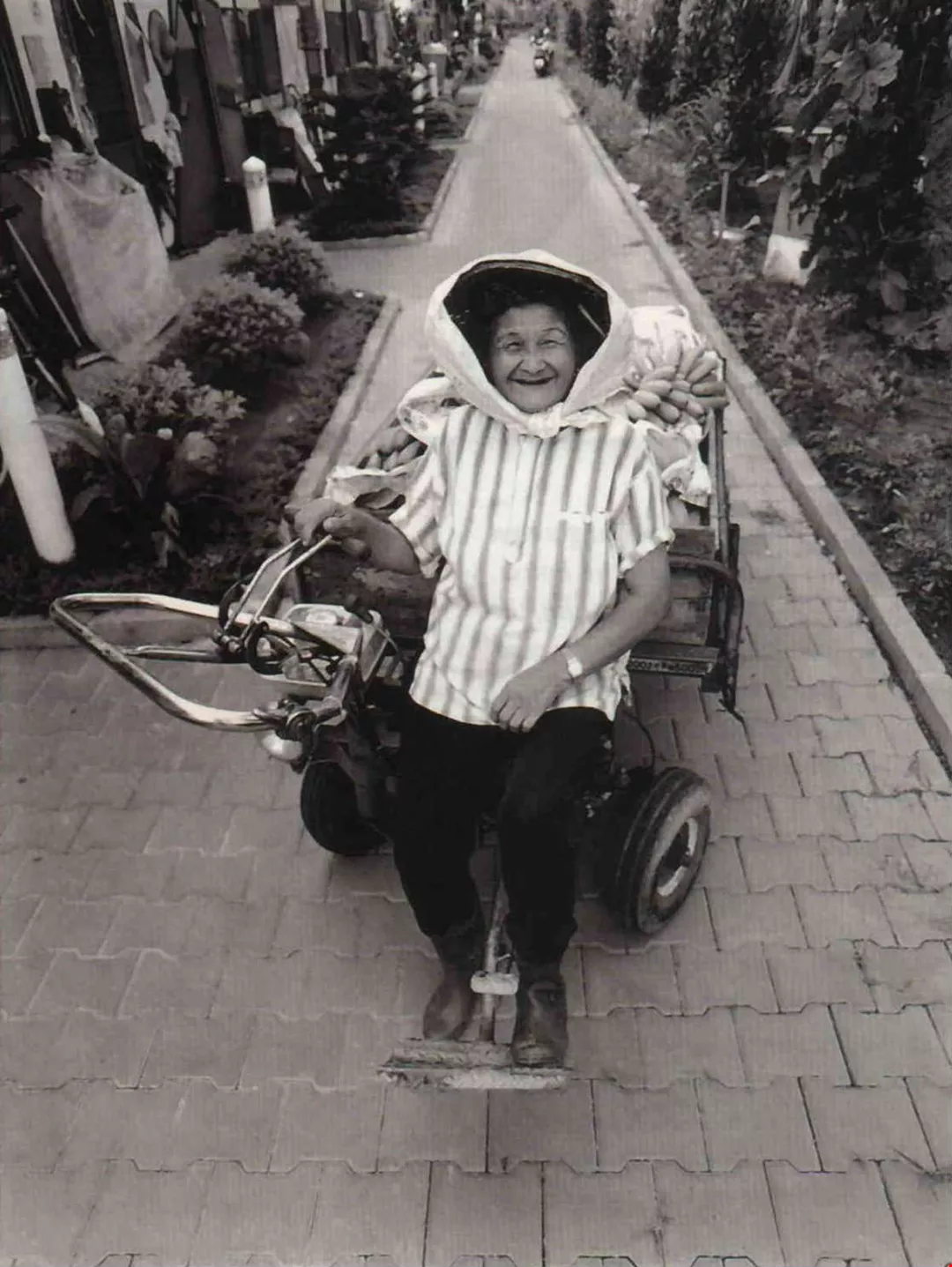
Piao Chin-kuei (70) Auntie Ah Kuei, a Christian, escaped from the second floor by sliding down a bamboo pole. After living in a tent for two months, she often felt despondent, and thought of ending her life with pesticide. Thanks to help and encouragement from her brothers and sisters in the faith, she regained hope. Today Ah Kuei's life is returning to the way it was before. Early in the morning she drives her little farm truck between the orchard and her pre-fabricated housing unit, works as a volunteer making dinner at the church, and at night visits the families of earthquake victims. Auntie Ah Kuei has a rare free moment as she is about to set off to deliver some bananas she has picked to a dealer. As she starts up the truck she says: "Though the earthquake caused a lot of harm, people have learned how to care about one another, and that's fortunate."
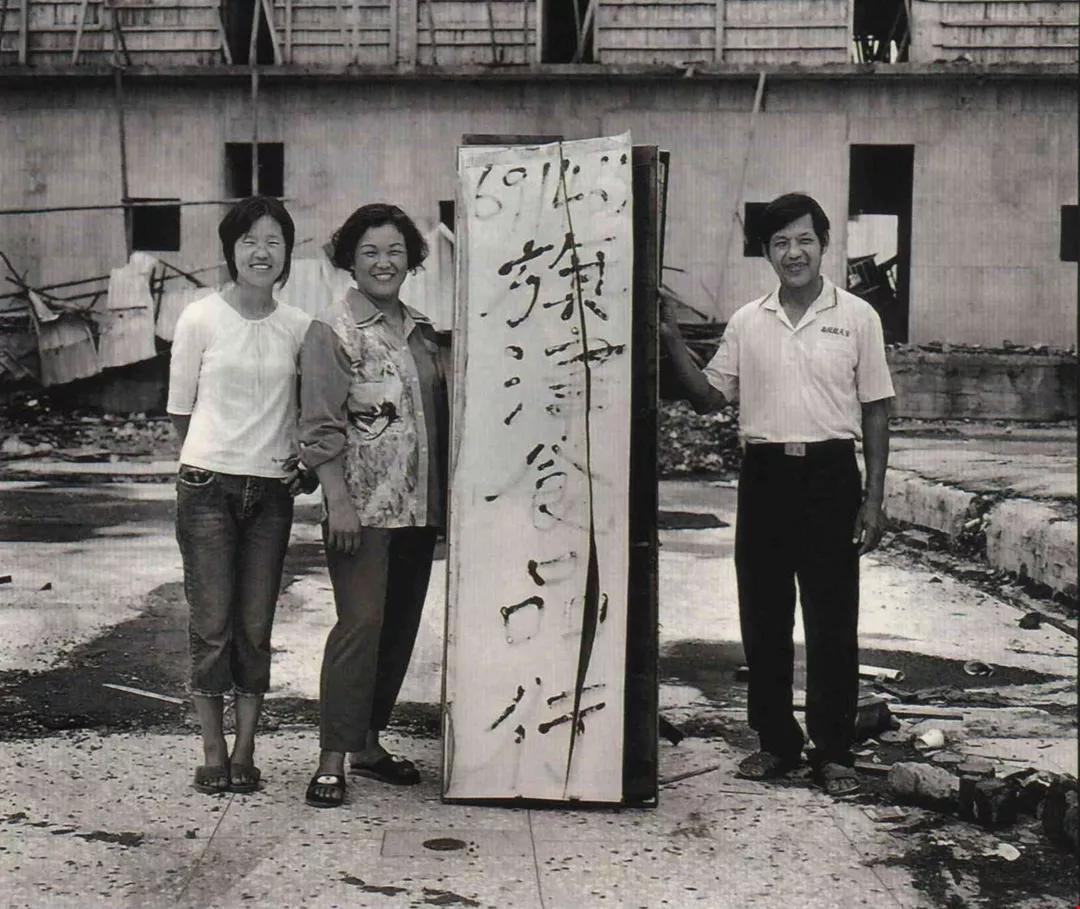
(from left to right) Chen Mei-hui (22), Li Shu-chin (45), Chen Tung-li (48) Chen Tung-li's family had a bakery on Yungping Road. All the family's equipment and possessions were destroyed in the quake. Now, besides their farming income, the bakery business is slowly returning to normal in a temporary corrugated-metal structure. Li Shu-chin says: "We have had a wooden sign up since not long after the earthquake with our shop name and contact number, so that our family and friends will know we are still alive. Though the future will be hard going, we will certainly work hard to get the shop sign back up and get back on our feet."
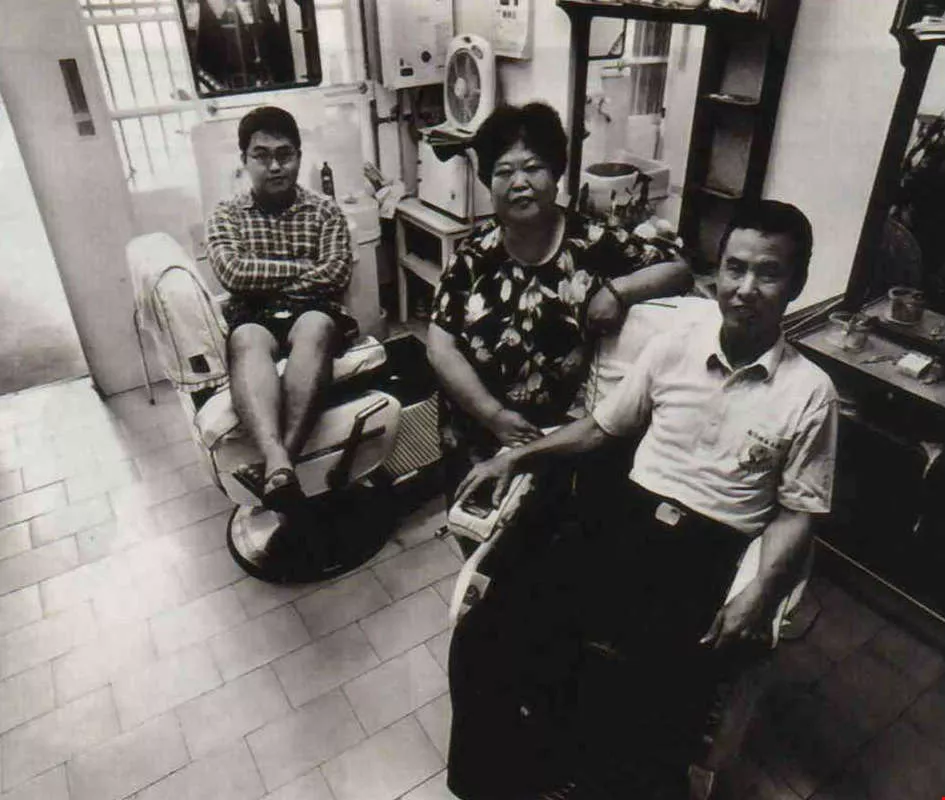
(from left to right) Li Chien-ho (24), Chen Pi-chu (54), Li Chung-shun (56) During the quake, Li Chung-shun and his wife Chen Pi-chu were trapped by collapsing roof tiles. Li was rescued after five-and-a-half hours, but his wife remained pinned for 24 hours before she was pulled out by a Korean rescue unit. The day after the quake, while watching TV, their son Li Chien-ho saw the familiar sign from the family hair-stylist shop collapsed on the road side, and rushed off to get a temporary leave from his military unit to go home. Returning to Chungliao after a five-hour motorcycle journey through the night, face-to-face with his devastated home and uncertain whether his mother was alive or dead, he burst into tears. A year later, nothing has been settled about rebuilding their home because of obstacles posed by urban planning rules. Unable to rebuild, Li and his family have had to rent a first floor apartment where they also have their hair-styling business. Standing on a once-bustling street and gazing at scenes of destruction that still await repair, Li says: "I believe that Heaven allowed us to survive this disaster to give us a chance to rebuild our home and return this place to the way it was before."
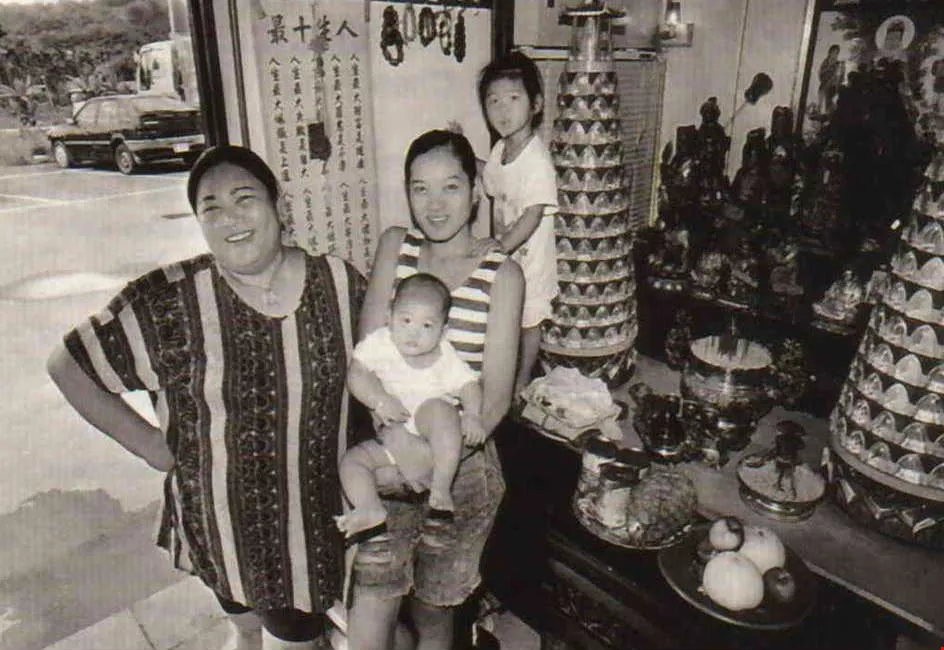
(from left to right) Chuang Su-oh (43), Liao Tsai-miao (23), Hsiao I-shan (1), Hsiao Yi-hsuan (3) Chuang Su-oh spends most days setting up altars to deities, praying for protection of the local people from disaster. After the earthquake, more than ten statues of deities that had gone missing miraculously were found. She placed the statues in a pre-fab temporary housing unit where local residents, still in shock from the quake, could come and light incense and pray. "Since the earthquake, people have not been worrying about what's mine and what's yours, or about who comes from where. The people coming in from all over to help are like a hot cup of tea on a cold winter's day, and I'll never forget what they have done," says Chuang with gratitude.
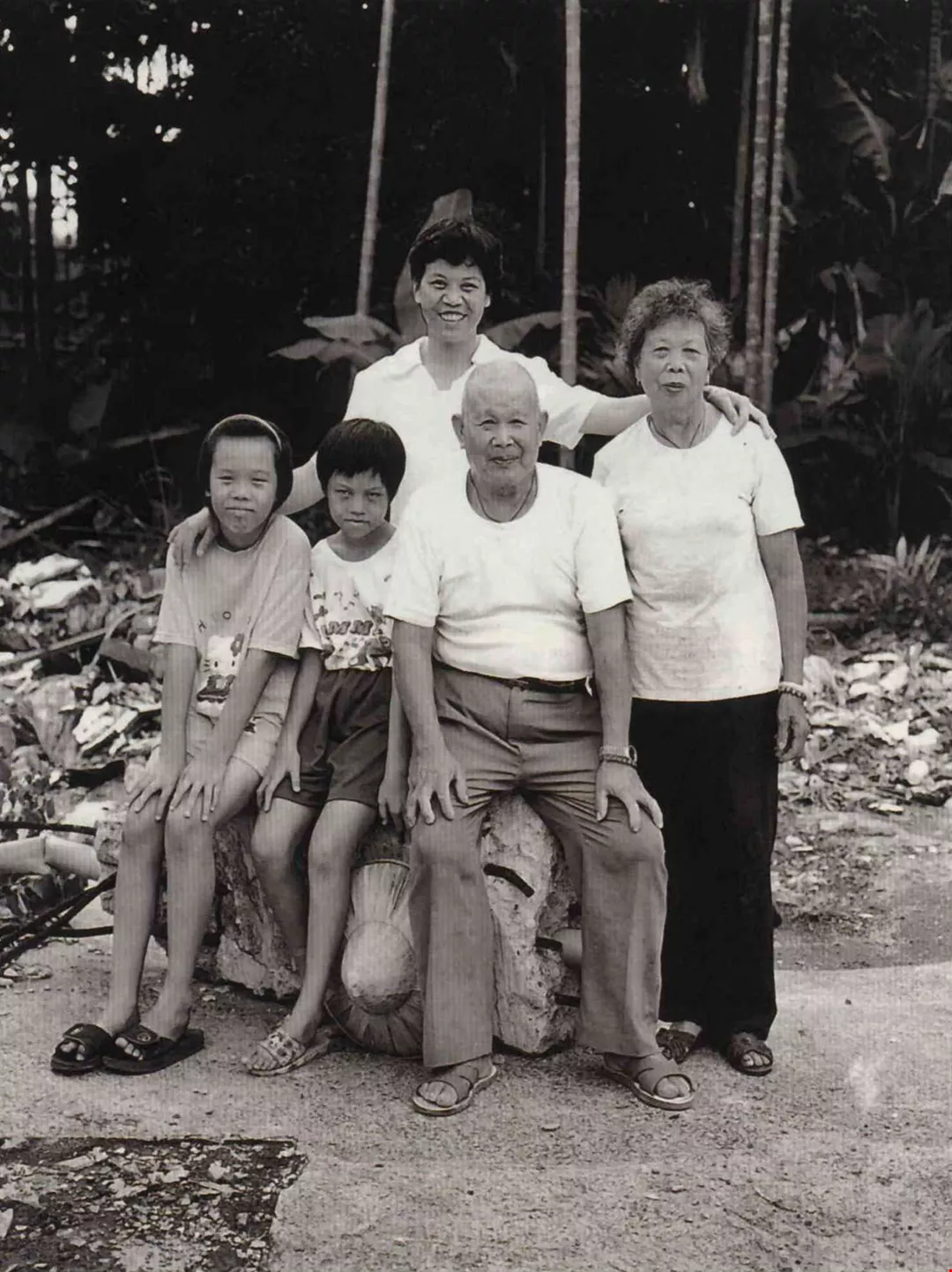
(from left to right) Cheng Huei-wen (12), Cheng Huei-yun (11), Cheng Kung (70), Chang Mei-lan (37), Cheng Wang-fu (70) At the time of the earthquake, Cheng Kung's whole family took refuge in the betel nut plantation behind their house, hiding behind shaking tree trunks. Even today, he doesn't dare lock their burglar-proof outer door when going to sleep. In their wrecked home, when taking a break from farming he can often be seen quietly looking over the land where he was once safe and settled. Seeing the dust flying from digging at his neighbors, Cheng Kung says: "I never thought my house would collapse. But as long as I still have a breath in my body, the house can be rebuilt."

@List.jpg?w=522&h=410&mode=crop&format=webp&quality=80)


@List.jpg?w=522&h=410&mode=crop&format=webp&quality=80)
@List.jpg?w=522&h=410&mode=crop&format=webp&quality=80)
