The Tantalizing Tastes of Taiwan
Chang Chiung-fang / photos Jimmy Lin / tr. by Scott Williams
December 2011


Diet is a product of the engagement of culture with environment: people in different locations have different ideas about what constitutes food and how it should be prepared. Take fish, for example. Where the Japanese enjoy eating it raw, Taiwanese prefer to steam it, and Zhe-jiang-ese like to braise it.
Fine food is similarly subjective. Dishes that are delicacies to one person may seem very strange to someone else.
In 2009, website VirtualTourist.com of the UK published a list of the world's 10 strangest foods, and placed Taiwanese zhuxie gao (豬血糕/pig blood cake) at the top. Taiwanese were flabbergasted by the news. How on Earth could pig blood cake be considered strange in comparison to the live octopus consumed in Korea (second on the list), the grasshoppers in Uganda, the caterpillars in Australia, or the snake wine in Vietnam? Glutinous rice and pig's blood steamed into a solid form, dipped in chilli and soy sauces and sprinkled with peanut powder and cilantro seems positively "normal" in comparison.
In May of this year, a CNN feature on travel to Asia's seven most "sinful" cities named Taipei the capital of gluttony for its numerous delicious night market foods, encompassing everything from snacks to full meals. Some gourmets argue that the low cost and omnipresence of delicious food in Taipei trigger feeding frenzies and that CNN's gluttony comment was a compliment of sorts.
The many questions we've received about Taiwanese food and beverages got us thinking: Which Taiwanese foods are worth promoting internationally? Which dishes are most representative of Taiwan? What defines "Taiwanese cuisine"?
What constitutes a "Taiwanese" flavor? It's a tough question that has stumped many a food lover.
It seems that most of the world's nations have a signature dish or flavor, whether sushi and sashimi for Japan, kimchi for Korea, pizza for Italy, or pig knuckles for Germany. In Taiwan, people might suggest fo tiao qiang (佛跳牆/Buddha jumps over the wall-a stew with a variety of ingredients), bai zhan ji (白斬雞/white chopped chicken), tsai-bo-neng (菜脯蛋/dried radish and egg frit-tata), or lo-ba-bung (滷肉飯/rice with braised pork). But which dishes really epitomize "Taiwanese flavor"?
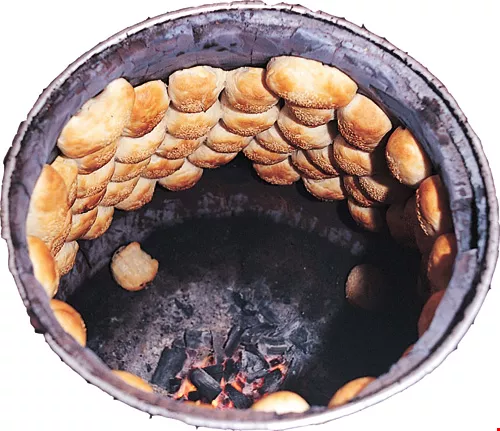
For many who grew up in military dependents' communities, the sight of meat hanging up to cure, or the smell of wheat cakes roasting in a clay oven, evokes powerful childhood memories.
Taiwanese cuisine is many things: pan fried, stir fried, deep fried and steamed, sweet, sour, spicy and bitter. It's a jumble, a hybrid containing enough foreign influences that only a few people are really clear on which parts of it are "authentically Taiwanese."
For example, the common wedding banquet dishes Buddha jumps over the wall and ang-jim-bi-go (紅蟳米糕/serrated swimming crab and glutinous rice cake) are from Fu-zhou, our famous o-a-zen (蚵仔煎/oyster omelet) originated in Chao-zhou, the much beloved spicy chitterlings-and-tofu stew hails from Si-chuan, and even the "Taiwanese" three-cups chicken is actually a -Jiangxi dish.
In her travels around the world, the question that foodie Yeh Yi-lan hears most often is, "What is Taiwanese cuisine?"
While exploring the cuisines of many nations, Yeh began to reflect on the nature of Taiwanese food. "Like the 'new world' nations of Australia, New Zealand, and the US, Taiwan was populated by immigrants and has a relatively short history," says Yeh. "Its cuisine is consequently very diverse." As a result of our proximity to and historical entanglements with mainland China, our fare is deeply rooted in traditional Chinese cuisine.
In the hands of author Jiao Tong, Taiwanese food becomes a beautiful bit of serendipity that blends Chinese, Western, and Japanese elements into a delicious composite, the hybrid offspring of numerous cultural collisions.
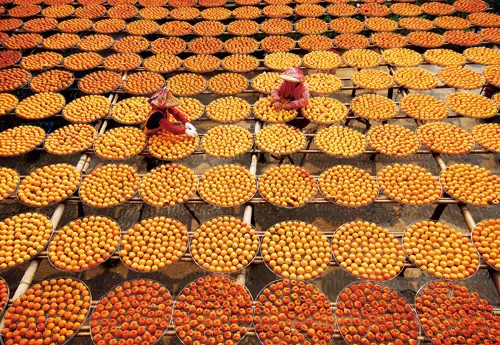
Hakka cuisine has its own unique style, shaped by the ethnic group's migrations and the topology of their current home. At left, persimmons drying in the sun in Xinpu, Hsinchu County (photo by Chi Kuo-chang).Beipu-style Hakka lei cha ("pounded tea").
There are historical reasons for the hybrid nature of Taiwanese cuisine. Over the last 400 years, Taiwan has been ruled by the Dutch, the Spanish, and the Japanese, and all of these diverse cultural influences are baked into our diet.
Taiwan's earliest residents were its indigenes. Prior to the arrival of the Han, each of these tribes had its own style of cookery. In "Taiwan's Food and Beverage Culture and Political Transitions-A View of State Banquets," Zhou Wen-qian, an associate professor in the Department of Hospitality Management at the Hsing Wu Institute of Technology, writes that millet (supplemented by sweet potatoes and taro) was the staple of the Taiwanese indigenes' diet. The Bu-nun and Ata-yal peoples frequently supplemented this with game, while the Amis filled it out with more than 100 varieties of wild vegetables. Cooking techniques were limited, consisting only of boiling, steaming and roasting.
When Han Chinese immigrants from Fu-jian and Guang-dong arrived and began to clear more land for agriculture during the Qing Dynasty, a "Taiwanese cuisine" started to develop out of the homestyle cooking of these Southern Min farmers. Zhou describes Min cooking as lightly seasoned, unpretentious, and not greasy. In years when harvests were good, they preserved their surplus by drying or pickling it. Such preserved foods have been a characteristic feature of Taiwanese cuisine ever since.
Hakka immigrants fleeing the vagaries and hardships of war arrived in Taiwan with little money and relatively late in the settlement process. As such, they had little choice but to establish themselves in the rougher terrain of the hills and mountains. To preserve their food and make it more palatable, they seasoned it with salt, spices, and fat. Hakka cuisine is therefore characterized by its use of dry pickled mustard greens, pickled cabbage, and red rice-wine lees.
Hominess aside, Taiwanese food and beverage culture is also known for its simple, inexpensive night market foods.
Early settlers spent a good deal of time engaged in the grueling work of clearing land. Vendors used to sell them a variety of foods carried out to the fields and mountainsides on poles. The early immigrants also built temples and gave banquets in honor of the gods to pray for their own well being. These gatherings under a large tree or in front of a temple naturally attracted vendors of food and other goods. Kee-lung's Miao-kou Night Market is a case in point, having taken shape after the founding of the -Dianji Temple in 1875. Tai-nan, Taiwan's oldest city, has long been a hotbed for night-market xiao-chi: the areas around its Grand Ma-tsu and Martial Temples are packed with xiao-chi shops that have existed for 100 years or more.
Da-a-mi (擔仔麵/danzai noodles)-steamed oil noodles garnished with pork sauce-originated in Tainan. The dish was reportedly created by fisherman Hong Yu-tou, who used to sell -noodles when the typhoon season kept him landlocked. He called his dish "getting through typhoon season hawking food from a pole noodles," and never imagined it would become so popular. His family is now in its fourth generation of selling the noodles.
Yu Shuenn-der, an associate research fellow with the Acad-emia Sin-ica's Institute of Ethnology, studies Taiwanese night-market snack culture. He explains that in the night-market context, xiao-chi has a very broad meaning that encompasses everything from tiny snacks to substantial dishes.
Much of Min cuisine consists of soups. Cao Ming-zong, a student of Kee-lung's culture and history, says that many xiao-chi evolved from Min dishes such as its meat and fish stews. But others were invented here, including favorites such as "coffin board." The dish, a thick slab of toast hollowed out in the center and filled with seafood soup, blends Chinese and Western flavors in a local original.
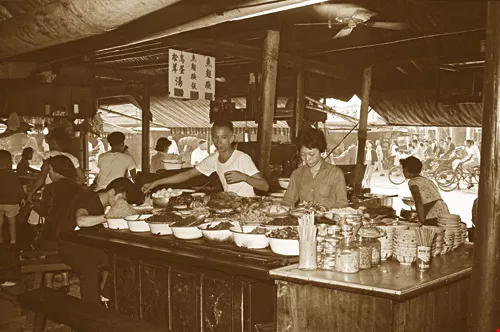
Xiaochi (night market foods) is the multifaceted fare of the common folk in Taiwan. From its origins with vendors hawking snacks from baskets to establishments in front of temples to whole streets devoted to its many varieties, xiaochi has only grown in popularity over the years.
During the period of Japanese rule, Taiwanese food was strongly influenced by Japanese cuisine, elements of which it internalized.
Yeh says that many contemporary Taiwanese culinary techniques, such as our way of preparing sashimi, our use of soy sauce for simmering and our habit of adding a little sugar while cooking, were originally Japanese.
Modern-day banquets also trace their lineage to the dishes served to officials and businesspeople entertaining bosses, colleagues and clients in jiu-jia (upscale restaurant-bars that employ young hostesses to accompany diners) during the Japanese era. A series of influential jiu-jia in Tai-pei's Da-dao-cheng area-including Tong-hui-fang (1915), Jiang-shan-lou (1921), Peng-laige (1927), and Hei-mei-ren (1930)-turned jiu-jia cuisine into the finest banqueting fare. In fact, when Crown Prince Hi-ro-hito visited Taiwan in 1923, Tong-hui-fang and Jiang-shan-lou are reported to have jointly catered a banquet.
This early jiu-jia fare consisted primarily of Min dishes. Dubbed "Chinese cuisine" by the Japanese, it consisted of intricate dishes made with high-quality ingredients. Food critic Louis Liang says that in those days Peng-laige featured a menu dominated by pricey comestibles such as abalone, ginseng, swallow's nest, shark fin, frog, and fish lips prepared in a variety of fashions, and simmered in snake, pork, or chicken stock.
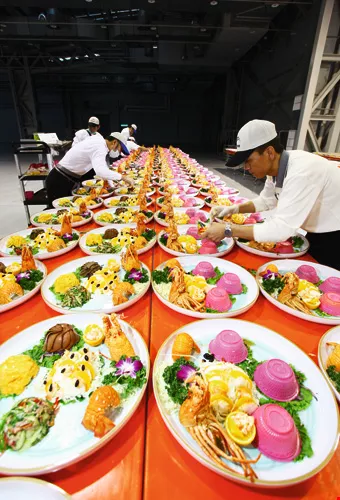
Outdoor banquets are exuberant affairs, their dishes and interpersonal exchanges an integral part of Taiwan's folk food scene.
Following China's civil war, some 2 million mainland Chinese soldiers and civilians retreated to Taiwan, establishing myriad beachheads in the local fare.
"Taiwanese cuisine is a treasure trove both for its variety and refinement," says Zhu Zhen-fan, who studies food and beverage culture. Zhu says that the ROC government's relocation to Taiwan brought with it China's eight major regional cuisines, those of Shan-dong, Si-chuan, Guang-dong, Fu-jian, -Jiangsu, Zhe-jiang, Hu-nan, and An-hui. In the early years thereafter, Peng-laige's Chen Tian-lai became a strong proponent of "cuisines from other provinces." His restaurant even hired Sun Yat-sen's former chef, Du Zi-zhao, and began offering Fu-jian-ese, Cantonese, and Si-chuan-ese banquet foods.
"The times created Taipei," says Liang. Never before in Chinese history had the top chefs from all its provinces been gathered together in one location. That is why some culinary traditions now lost in mainland China are still maintained in Taiwan.
"Zu'an tofu" is a case in point. Zu'an was the courtesy name of Tan Yan-kai, the ROC's first premier. Three generations of the Tan family have been in government service and the family has made a close study of food. Tan's diary contains numerous descriptions of fine foods, Tan himself was the creator of both Zu'an tofu and Zu-an pigeon, and Peng Chang-gui, founder of the renowned Hu-nan-ese restaurant Peng-yuan, got his start as an apprentice to a former chef of the Tan family, recounts Liang.
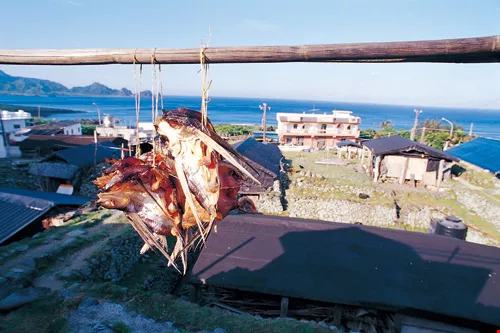
Exemplifying how much diet is intertwined with locality, flying fish and taro are the staples of Orchid Island's Yami people.
Fine foods always have ties to memory and homesickness. All those new chefs arriving in Taiwan not only introduced new flavors to the banquet hall, but also influenced everyday fare.
Liang says that with the arrival in Taiwan of so many government officials with their dependents, servants, and chefs, dealing with homesickness was a real issue. Food helped relieve it.
Meanwhile, many individuals without any other means of supporting themselves, people such as down-and-out gentry, discharged soldiers, and displaced servants and chefs, were opening restaurants. This helped "immigrant food" take hold, and added entirely new chapters to Taiwan's recipe book.
Taiwan's very popular beef noodle soup is a case in point. The dish emerged at just this moment in time, its history steeped in "old soldiers" and "dog meat."
Liang says that in the old days, everyone knew that local dogs would begin to disappear whenever a military unit was stationed in a given area, victims of Cantonese chefs skilled at stewing dog. The Si-chuan-ese in these units didn't eat dog, but learned the Cantonese chefs' stewing techniques, and used them to stew beef, which Taiwanese didn't eat in those days. Tai-nan's famous Old Lee's Beef Noodle Soup King actually started off in this way.
The late Lu Yao-dong, a history professor at National Taiwan University, found evidence that Si-chuan-style beef noodle soup first got its foothold in the Gang-shan District of Kao-hsiung City, where old soldiers pining for their hometowns simmered beef in a stock made with the local chili-and-broadbean paste.
But Louis Liang argues that while Gang-shan did indeed produce chili-and-broadbean paste, beef noodle soup did not originate there, but in Tai-nan, then Taiwan's cultural capital.
Be that as it may, what no-one disputes is that within a few decades, the dish had migrated north to the streets of Taipei where the present generation have come to regard it as synonymous with down-home Taiwanese cooking.
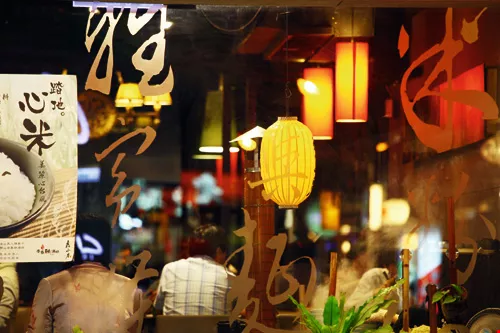
Taipei's Yongkang Street encompasses virtually all of the diversity of Taiwanese food. Restaurants here serve up everything from Northern-style noodles, Taiwanese cuisine, and Hakka dishes to Western food.
In the 1960s, the opening of restaurants such as Bai-yu-lou, Xing-huage, Wu-yue-hua, and Cui-yue-lou reinvigorated the jiu-jia and dancehalls. With the early "mixed province fare" having fallen out of fashion, jiu-jia seeking a new way to attract customers began developing a new style of jiu-jia fare.
This was a very creative period for Taiwanese cuisine. Dishes developed during the boom of the "second-generation jiu-jia" include: braised soft shell turtle with chicken and pork stomach, a dish that requires steaming a pig's stomach stuffed with a deboned chicken that is itself stuffed with soft-shell turtle meat; golden shrimp cakes, which consist of pockets of fatty pork stuffed with shrimp, ground pork and water chestnuts and deep fried; and the humorous "deep-fried ice cube."
Jiao Tong says that many of these jiu--jia imported enormous quantities of abalone and snail meat, in addition to their consumption of dried mushrooms and squid. The still-popular you-yu luo-rou suan (魷魚螺肉蒜/squid, turban snail and leek soup) is a potent jiu-jia hot-pot classic. Crispy fried shrimp and deep-fried pork ribs also date to this era.
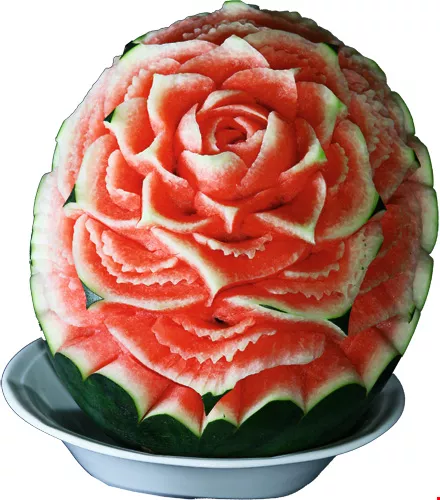
The jiu-jia spread from Yan-ping North Road into New Bei-tou, but their growing connection to the sex industry sparked government cleanup efforts that slowly pushed them into decline.
The jiu-jia's fall from favor, the difficulty of obtaining high-end ingredients, and the failure to pass on culinary traditions together led to greater simplicity and greater "hominess" in Taiwanese cuisine. A new series of standout restaurants, including -AoBa (1964), -Umeko, Ji-jia-chuang, and Shin Yeh, soon began to open, building on the foundations laid by the jiujia.
Lee Hung-chun, executive director of the Shin Yeh Resturant Group, says that his 35-year-old restaurant was the first to blend xiao-chi with banquet fare as a means of ensuring that it kept busy year round. "Banquet season begins in September and is filled with celebrations, end-of-year parties, and new year's banquets," he explains. "Banquets are much less frequent in the May to August period, but that's the high season for xiaochi."
Originally delicacies of the common people, Taiwan's xiao-chi won a place at the state banquet table through their fine ingredients and unique local character. The 2004 inauguration banquet of President Chen Shui-bian included a cold plate that featured Yi-lan-style smoked duck, Kao-hsiung-style dried, cured mullet roe, Dong-gang-style cherry shrimp, and Tai-nan-style tea-smoked goose, as well as a soup course of Tai-nan-style milkfish fishball soup, and a dessert of Da-jia-style taro cakes and Aboriginal millet mochi.
Taiwan's xiao-chi are remarkably varied and complex. Jiao Tong believes that the diversity and complexity of Taiwanese food is a reflection of our creativity. As small as our island is, the north and south are nonetheless quite different. For example, in the north, stewed pork over rice is known as lurou fan (lo-ba-bung) and uses cubed meat. In the south, it is rou-zao fan and uses chunks. In Tao-yuan, the meat is sliced into strips.
Jiao Tong loves a bowl of white rice topped with a layer of diced pork belly. "The fattiness of stewed pork broth is a necessary evil; it's what gives it flavor." Saute shallots, shitake mushrooms, garlic and scallions until fragrant, add pork stewed in soy sauce and rice wine, then serve the result over a piping-hot helping of white rice for a bowl of oily, tender deliciousness.
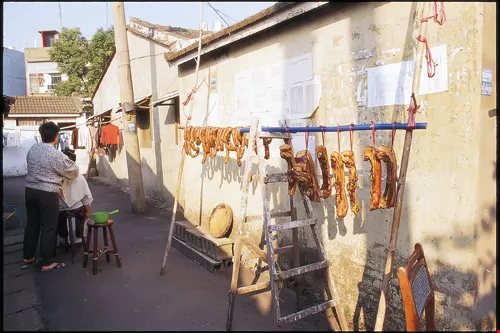
For many who grew up in military dependents' communities, the sight of meat hanging up to cure, or the smell of wheat cakes roasting in a clay oven, evokes powerful childhood memories.
"Food is just like everything else: things that have been separated for a long time tend to come back together, and vice versa," says Zhu Zhen-fan. He explains that the various cuisines in the mainland are very distinct, each having its own specialties. But circumstances brought them together in Taiwan. Perhaps because ingredients were hard to come by, or because the economic incentives pointed in a different direction, or just because restaurants were looking for something new, regional differences began to disappear and flavors began to merge.
All of which is just to say that although the vast majority of these dishes didn't originate in Taiwan, they have evolved and taken on their own character here.
As United Daily News food reporter Sarah Chen wrote in her book Taiwan Flavor: "Food circulates. Flavors circulate. They alternate over time and exist in different versions."
For all that Taiwanese cuisine represents a fusion of different ethnic fares, the fact that we live on an island has ensured that it has a maritime character. Jiao Tong says that five-flavors octopus (blanched octopus sliced and dipped in five-flavors sauce) is emblematic of Taiwanese cookery.
Taiwan's close commercial ties with Southeast Asia have also led to the import of numerous food items from that region. Cabbage, snow peas, tomatoes, mangos, chili peppers, and sugarcane were all brought to Taiwan from Indonesia by the Dutch.
Taiwan's location straddling the tropics and the subtropics, together with its many mountains, provide it with numerous microclimates capable of cultivating a wide variety of produce. Moreover, these various locales impart their own unique terroir to produce. All of this, coupled with Taiwanese farmers and aquaculturalists' dedication to improving varieties, has resulted in top-tier fruit, vegetables, and seafood.
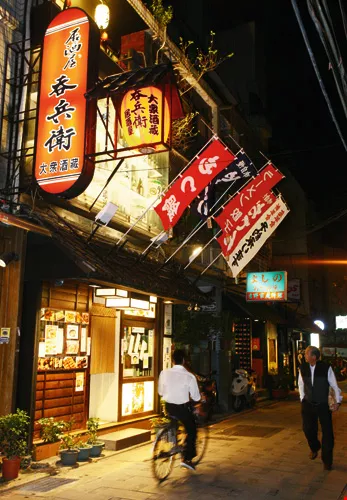
You can see traces of Japan's culinary influence all over Taiwan. The photo shows an izakaya in a lane off Taipei's Linsen North Road.
A mainland Chinese writer once very aptly described Taiwanese cuisine as "light, fresh, and flash fried."
Abundant, fresh ingredients, and the immigrant population's sense that it was only transient and didn't have time to develop a complex cuisine, have helped make "natural flavors" a hallmark of Taiwanese cooking.
Many Taiwanese don't realize how lightly seasoned our cuisine is relative to that of other ethnically Chinese fare. But after traveling the length and breadth of mainland China, Hong Kong, Macao, and Singapore, Chen was surprised to discover that Taiwanese food was the least heavily flavored of the Chinese cuisines.
Take salt consumption, for example. In 1960, Taiwan's annual per-capita consumption of salt was roughly 12 kilograms. That number fell to 7.3 kg in 1988 and dropped still farther to 3.6 kg in 2009. No wonder mainlanders say "Taiwanese food has no flavor!" and advise visitors to pack soy sauce and chilis.
Yeh once showed a food reporter from the UK magazine Wallpaper around Taiwan. "Si-chuan food is super spicy. Thai is hot and sour," noted the puzzled reporter. "But what characterizes Taiwanese food?"
After thinking for a minute, Yeh replied, "Natural flavors." Taiwanese cuisine has always kept it simple, reflecting our tendency to avoid ostentation.
"Simplicity can be a difficult thing to pull off," says Yeh. You need high quality ingredients and your cooking technique has to be spot on. "Getting it just right is very, very hard." In the case of steamed fish, the fish must be perfectly fresh because the lack of seasonings makes any problems all too readily apparent.
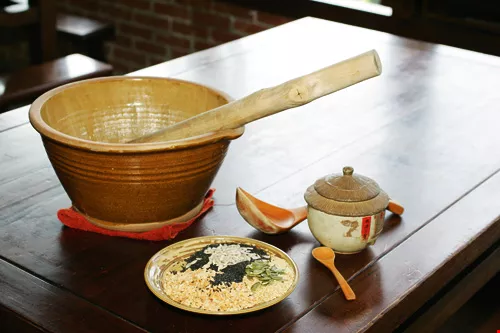
Hakka cuisine has its own unique style, shaped by the ethnic group's migrations and the topology of their current home. At left, persimmons drying in the sun in Xinpu, Hsinchu County (photo by Chi Kuo-chang).Beipu-style Hakka lei cha ("pounded tea").
Food writer Hsieh Chung-tao says: "Nowadays, fine foods are more than just embodiments of local ways of life. Instead, they are one of the foundations on which a national culture is constructed, as well as an important cultural export."
Like a stirring symphony, the current iteration of Taiwanese cuisine is an innovative fusion that encompasses both surf and turf.
Liang argues that good food incorporates narrative, culture, and artistry. When these are lost, the only thing that remains is an uninteresting physiological process.
Tracing the roots of Taiwan's food culture can spark a love affair with the five fundamental flavors. Gourmets, chefs and consumers have already opened their eyes to the melting pot of Taiwanese cuisine. With an inexhaustible array of techniques feeding its further development, Taiwanese cuisine is certain to someday be recognized as one of the world's greatest.
@List.JPG?w=522&h=410&mode=crop&format=webp&quality=80)

@List.jpg?w=522&h=410&mode=crop&format=webp&quality=80)


