

How in the world does one cover in a few short pages the eventful career of Annette Lu, the first elected woman vice-president in Chinese history? The most one can do is throw out some disconnected vignettes and hope that the reader can somehow manage to synthesize the whole from the parts.
She first entered public life as a women's rights advocate, and her book The New Feminism is virtually required reading for anyone studying the women's movement in Taiwan. It was 30 years ago that she first put forward the slogan of "a partnership between men and women." Who would have imagined that she would one day be partnered with a man in leading the nation?
Although her life hasn't been made into a prime-time television series (as has been done with Chen Shui-bian and his wife), Lu has seen more than her share of drama. While most young women dream about love and romance, Lu turned her back on the subject in her early 20s and spent the prime of her youth in service of the women of Taiwan. She locked horns with an authoritarian state and ended up in prison, where a bout with cancer almost ended her life. And the incarceration sent Lu's mother to an early grave-dead of a broken heart. Lu was wasting away in prison as her mother breathed her last.
As an opponent of society's deeply ingrained tendency to downgrade the status of women, she has butted heads with harsh critics all her life. But what have her reasoned pronouncements earned her? The authorities in Beijing have labeled her "scum of the earth" while many Taiwanese call her an "IBM" ("international bigmouth"). Yet she has never lost the faith or grown bitter in 30 years of struggle; instead, she patiently explains misunderstandings and rises enthusiastically to every challenge. These traits have been the making of an extraordinary life, and have helped her make her mark on the history of Taiwan.
Huang Hui-ying, who once worked side-by-side with Annette Lu in the women's rights movement, described Lu as follows: "Annette does four things in the time it takes most people to do just one. She doesn't sleep much, she's totally devoted to her work, and she often can't help expecting others to be as selfless as she is. These unrealistic expectations cause her disappointment quite frequently."
Born a Gemini, Lu is a hopeless optimist who doesn't know the meaning of the word "impossible." Says Huang, "She's a spark, a catalyst. Just having her around puts everyone around her on a higher energy level."
|
As far as the history of political deve-lopment in Taiwan is concerned, May 20 not only saw the peaceful transition of political power, it also marked the first step toward gender equality in politics. Besides the first woman vice president, we now also have nine female cabinet members. This is the highest ratio of women in the cabinet in ROC history. "Frailty, thy name is woman." These ten women warriors are smashing this cliche to smithereens. Not only have they all been through countless battles, they have stood out from all those around them in their various fields of endeavor. Yet, from another angle, all the male cabinet members have successful careers and also families. But of these ten women, four are unmarried. Does this suggest that in our society women must pay a higher price for success? In appointing nine women to the cabinet, President Chen Shui-bian was fulfilling a campaign promise. But why would these women, each highly successful already, be willing to accept more challenges? What is it about their family or educational backgrounds that has made them what they are today? 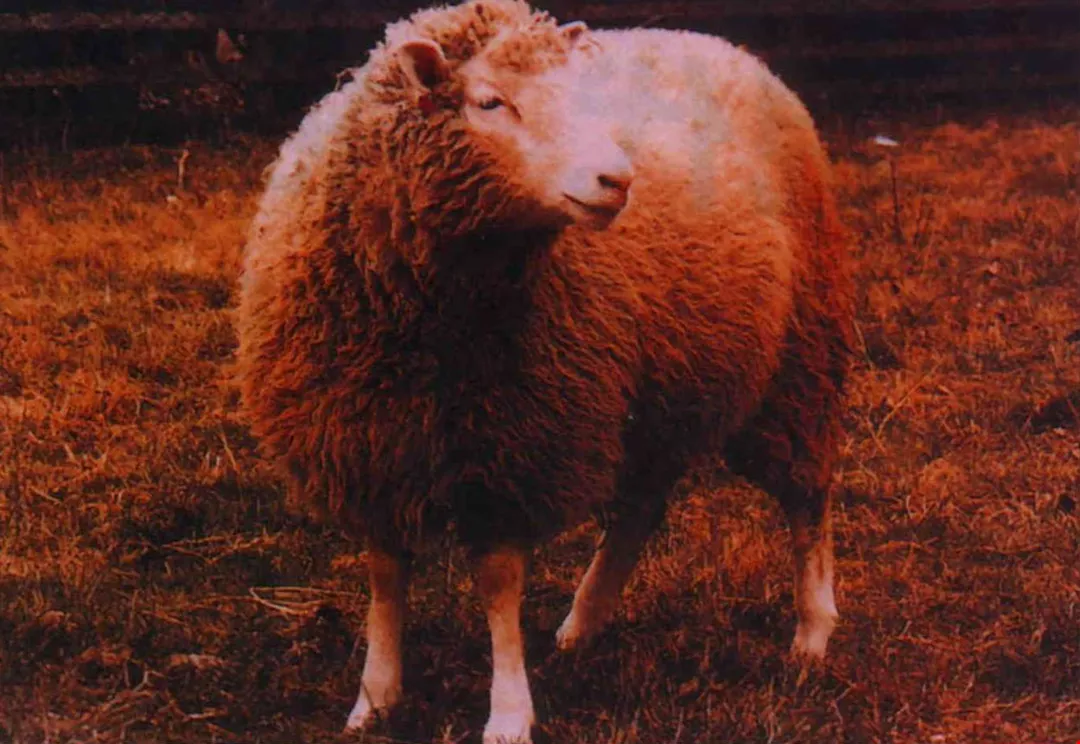 The cloning of Dolly the sheep was a huge breakthrough in the field of genetics, and it sparked a wave of controversy over the possibility of human cloning. The latest issue of Nature reports that scientists have transferred a number of disease-resistant genes to a sheep, which was subsequently cloned. (courtesy of Chiang Hoang-yung, Development Center for Biotechnology) (Teng Shu-fen/tr. Phil Newell) |
Ever since first grade she was always number one in her class, and was often chosen as class monitor. Toward the end of her time in elementary school, she was even handed the responsibility of passing out assignments and watching over her classmates for a week while her teacher was called away to Taipei. But for classmate Chang Hui-tzu, not to mention Lu herself, the most unforgettable episode of her elementary school years was more political in nature. As a star pupil and teacher's pet, Lu was often asked to help out with the teacher's administrative chores, but one time when she was helping to tally up average test scores and rank her classmates accordingly, the teacher played politics by switching the class ranks of the daughter of a street vendor (12th place) and the son of a bigwig politician (40th place). Incensed at her teacher's dishonesty, Lu led her classmates in a protest in which they refused to take part in their routine classroom cleanup chores. It was her first experience in politics, and a rough-and-tumble baptism it was, for her teacher slapped her across the face. Perhaps it was a dry run for her adult career.
She eventually tested into Taipei First Girls' High School (Taipei's most prestigious girls' school), and for three years she left home in Taoyuan early every morning and returned late in the evening. After graduating from high school, her parents wanted her to study medicine, but her hometown of Taoyuan already had a woman doctor, so Lu opted for law so she could become Taoyuan's first woman judge. Aiming high just came naturally to her.
Lu posted the highest score in the entrance exam for National Taiwan University s law school, and she remained the number one law student all the way through to graduation, at which time she was offered two scholarships to continue her studies abroad. She opted to study in America, a decision that put an end to a long correspondence with her boyfriend studying in Europe. She never had a serious romance again.
Nevertheless, there is a romantic streak to her character, but it goes beyond the usual male-female aspect. She has always been very devoted to her friends, family, country, and humanity in general. She wrote a novel in high school, and while in prison after the Kaohsiung Incident wrote two novels on toilet paper. According to the author Kang Lai-hsin, the second novel (These Three Women) is about "endurance in the face of hardship, perseverance in the face of adversity, and the goodness of humanity."
In September 1970, Lu was studying in the United States and witnessed the great fanfare marking the fiftieth anniversary of women's suffrage in that country. The event spurred reflections on the traditional status of Chinese women, and her dissatisfaction inspired her to become active in the women's rights movement. She finished up her studies and returned to Taiwan the next year just as the island was in the midst of a big public debate about the growing numbers of women taking the entrance exam for higher education. In response to calls in some quarters for a certain quota of admissions to be set aside for men only, Lu published an influential article in the United Daily News entitled "The Traditional Roles of Men and Women." Over the next six years she continued to write on gender equality under the name of "Tuo Huang Che" (the pioneer). She had a regular column in a supplement to the China Times, and she founded The Pioneer, her own publishing company.
Within just a few years after its publication, The New Feminism had stirred up intense debate in a previously complacent Taiwanese society and sparked an awakening on the part of women. Lu's feminist group organized a lot of creative activities that captured the public imagination and attracted a lot of press coverage. Any middle-aged woman today will remember the men's cooking contests that Lu's women's rights group organized, not to mention the news-making get-togethers where men were banished to the kitchen while their wives sat around discussing important issues and allowing themselves to be waited on. Lu also established "For Your Protection," the first hotline in Taiwan to provide assistance to women having problems with divorce or domestic violence. At that time Lu was employed at the Executive Yuan and teaching night classes at Ming Chuan Women's College, yet she remained an active writer and speaker in the feminist movement. All the overwork eventually got to her, however; she came down with thyroid cancer, and was forced to ease up a bit.
That wasn't the only complication in her life, either, for the impact of her writing had attracted the notice of domestic security organs. Sick and harassed, Lu withdrew from the front lines of the women's movement and in the late 1970s returned to the United States to study. While she was in the US, it became clear that the United States would soon sever official diplomatic relations with the Republic of China. This event was to have enormous impact upon Taiwanese politics, and Lu was spurred to get involved in politics herself in order to use political power to correct the ills of society. In order to struggle for women's rights and democracy, she cut her studies short and returned to Taiwan in 1978 to run for the National Assembly. As the most prominent women's rights advocate in Taiwan, and as the bearer of advance warning about the coming diplomatic rupture, candidate Lu made national news.
In December 1978 the US government officially announced its intention to sever relations with the ROC on January 1 1979, and the KMT canceled the election. The public's fear, anger, and longing for democracy fueled intense discontent. On December 10, 1979, Formosa magazine marked International Human Rights Day by organizing a big protest march in Kaohsiung, and the event unraveled into the infamous Kaohsiung Incident. Lu was one of the key speakers at the protest, calling on the people to fight for their rights. She was arrested and sentenced to 12 years in prison.
While in prison she kept herself occupied by studying philosophy, writing novels, and doing embroidery, but it was a very bleak time. She was still in jail when her mother died. The sadness of that occasion, along with worry about the future, triggered a relapse of her thyroid cancer. She received medical parole and soon thereafter applied to go abroad. She appeared quite worn and haggard after leaving prison, and her friends were very concerned for her. Fortunately, she was able to regain her bearings and start afresh.
The next item on the agenda was clear. The time had come for Taiwan to stand up, achieve democracy and freedom, and gain the support of the international community. Lu worked in her steady, moderate, and determined manner toward her goals, and society started becoming more liberal. The ruling party itself adopted her causes-democracy, freedom, and the ROC's return to the United Nations-as its own. She found herself in the mainstream, and became one of the most influential members of the opposition party. She served in the national legislature, was invited to serve as a national policy advisor to the president, and was elected to two consecutive terms as county commissioner in Taoyuan. Before her second term was half finished, Chen Shui-bian selected her as his vice-presidential running mate.
Lu got involved in politics to fight for her beliefs and goals. The vice-president of today is no different in this respect from the class monitor of over four decades ago who protested on behalf of her aggrieved classmate; no different from the university student of 30 years ago who issued the call for gender equality; no different from the warrior of 20 years ago at the human rights rally in Kaohsiung who urged the people of Taiwan to fight for democracy; and no different from the politician who throughout the 1990s traveled to the US, Japan, and Europe to drum up support for re-admission of the ROC to the United Nations. She couldn't keep her opinions to herself if she wanted to, for she's always been the first to see through to the crux of issues, and the first to boldly speak the truth. So why is it that her old elementary school classmate is the only one who has ever stood behind her 100 percent? Why has the applause always been accompanied by an undercurrent of boos and hisses? And why do the catcalls sometimes grow louder than the applause?
Perhaps the journalist Hsu Chia-shih expressed it best 30 years ago when writing about the reaction to The New Feminism: "Lu's voice is a clarion call. She is a moderate reformer asking for a slumbering society to wake up. But the thing is, you can't blow a trumpet in the middle of the night and expect everybody to come out and thank you for it."
Many people feel that as vice-president Lu no longer represents just herself, and that if she is to avoid bringing calamity down on the heads of Taiwan's 22 million people she must be circumspect in her public statements because the authorities in Beijing are watching her like a hawk, ready to pounce on any chance she gives them to ratchet up the propaganda. Interestingly, her views on women's rights and relations between the sexes have also put her on the outs with quite a few people in Taiwan. Even many who have shared in her fight for democracy do not agree with her feminist views. Indeed, she was criticized 30 years ago as a dangerous advocate of moral degeneracy, and publication of The New Feminism was banned on the grounds that it "called for free sex." But is that what she was calling for? Lu wrote, "We shouldn't think of sexual morality as a simple matter of controlling the sex drive; rather, it should be seen as an integral part of the whole person. It's a matter of self-respect and a sense of right and wrong that comes from within. This applies equally to both men and women." Moral degeneracy? Surely there was a misunderstanding!
It just goes to show that before you get caught up in groupthink, you have to take a close look at the issues and find out exactly what people have said and the context in which they said it before you go repeating accusations.
Linda Arrigo, former wife of DPP heavyweight Shih Ming-teh, once wrote that when she and Lu met again after Lu's release from prison, "Seeing her once more was like regaining a big part of my own life."
In fact, Annette Lu is a part of all of our lives. The difference between her and us is that most of us don't have what it takes to stick to our ideals the way she does. So why not give her a bit of support? After all, she's working for the same things we all want-a fairer society and a happier life for all.
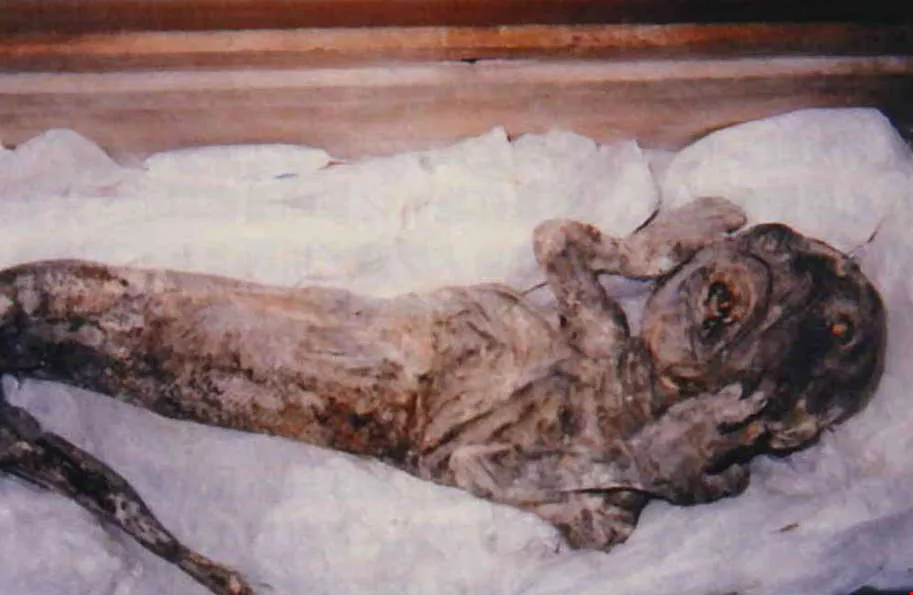
This fossil discovered in Japan seems to indicate the past existence of a fish with a humanoid face. Was it just a mutation? Or were there genetic scientists playing tricks on Mother Nature eons ago? (courtesy of Chiang Hoang-yung)

@List.jpg?w=522&h=410&mode=crop&format=webp&quality=80)


