Anping--Quaint Little Town of Lions
Chen Kwe-fang / photos Wang Wei-ch'ang / tr. by Peter Eberly
June 1988


Know where the name Taiwan comes from?
It's the Fukienese pronunciation of the word used by the local residents for Anping, a town in the south of the island that is now merely a district of the city of Tainan.
The etymology points to the importance of the town in the history of Taiwan's development. Anping was the first foreign settlement on the island, and it preserves many fascinating old buildings and customs even today.
"It's an experience filled with delightful surprises for the outsider," says Tseng Kuo-en, a lecturer in architecture at National Cheng Kung University, referring to a walk through the town's old section.
Many of the lanes and alleyways are so narrow that people are forced to walk single file and turn sideways to squeeze by those coming the other way. Walls and corners jut back and forth at all angles, creating a jumble of twists and turns: look up and you may suddenly find yourself facing a dead end or a person resting in a doorway.
The roofs of the old brick buildings flanking the alleys present a curious sight as well. Anping was originally an offshore island, and most of its inhabitants have made their living by fishing. Dependent on the whims of Nature for a livelihood, they have been more apt than most to put faith in supernatural assistance. To avert bad luck and ward off evil, many of the early inhabitants placed ceramic models, each about six or seven inches high, of a figure they call the Wind Lion Lord on the roofs of their buildings.
"The settlers brought the Wind Lion Lords with them all the way from Amoy on the mainland," locals say, "so the buildings that have them must have belonged to people who were relatively well off." Because the town dates back to the early eighteenth century, the weather-beaten figures have long become overgrown with moss and weeds.
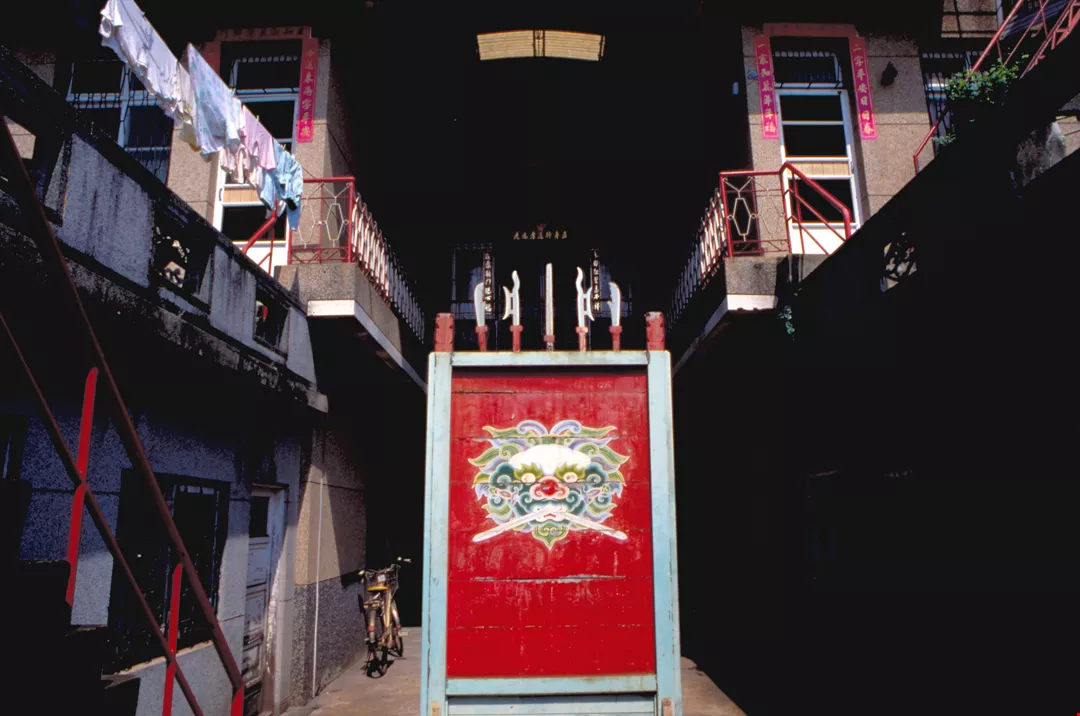
In addition to Wind Lion Lords on the roof, clay lion heads can be seen on many of the walls, glaring out in all directions. And if you peek into one of the houses through a half-opened door, you may glimpse inside a red standing screen with various ferocious-looking lion's heads painted on top, each holding a pair swords in their mouth. The lion heads are also intended to ward off evil.
Besides lions, Anping also has a lot of temples. The first settlers, having turned their backs on their homes on the mainland and wresting a living from the sea, required the strength and support of faith. They brought replicas of the gods they had worshiped on the mainland along with them to their new homes and built temples for them.
The temples remain in existence today and still attract many visitors. Each year on the god's birthday, operas are sung in front of the temple, lion and dragon dances are held, and drums and gongs ring out to the skies. People who have left town to work or study come back to take part in the fun.
On ordinary days life in the old section of Anping follows a regular routine. Quiet and listless during the day, the district comes alive only at sundown, when children are let out of school and play in groups of four or five in the wider areas of the streets, and when housewives take in the wash and exchange gossip with neighbors. The narrow alleyways rather facilitate this latter form of social intercourse. "Streets elsewhere separate households, but here they bring them together," Tseng says. "Here the streets are like an extended courtyard shared by the neighboring families. If an outsider comes by, they give him a suspicious look of surprise as though a stranger had come barging in the front door without knocking."
Also singular in Anping are its low walls and small doors, some of them only five feet three inches high. As to the reason why the doors are so low, local residents hold several theories: to save on building materials, because fishing is a poor and difficult way to make a living; to protect against windblown sand from the seashore; and to suit the habits of fishermen, who are used to low doors aboard ships. The real reason has been lost in the mists of time.
"The main reason why some of the old buildings could be preserved as long as they have is because Anping has fallen on hard times," Tseng says. "We can thank its ill stars for that, at any rate."
Anping is truly a far cry from what it once was. In a poll Tseng took of the local residents in 1978, he found that the only feature of the town that made a deep impression on them was Fort Anping.
Fort Anping seems like the town's sole reminder of its past glory. Anping today is only a part of Tainan City--the smallest of the city's seven districts--and the income and living standards of its 18,200 inhabitants are rather low. Few people realize that during Anping's heyday, Tainan was still a remote and isolated village, and Taipei and Kaohsiung weren't even on the map.
Before the Dutch invaded the island in the early seventeenth century, Taiwan was inhabited chiefly by aborigines. To serve as a base for trade with Mainland China and Japan, the Dutch built a fort at Anping in 1624, which they called Fort Zeelandia. The fort had an inner wall and an outer, between which, as the base expanded, were shops and dance halls, making it Taiwan's earliest commercial center.
Only a small section of the outer wall remains, overgrown by the spreading roots of banyan tree, to serve as an object of historical reverie for tourists.
"This is the only thing left from the time of the Dutch," a tour guide says in Japanese. "Take a look at how thick it is. It really would stop a bullet." An old resident looking on disagrees and comments in Fukienese, "That's not the only thing the Dutch left behind. That old lady who just passed away, the mother of the pork seller in the market, the one with the red in her hair, was another."
As soon as you mention the subject of Dutch-Chinese mixtures in Anping, old residents will vividly narrate the story of an unfortunate lass of several centuries back who ended her days in loneliness and grief after being abandoned by her Dutch lover from across the seas. Similar stories have provided creative grist for several popular songs and movies.
The Dutch controlled Taiwan for 38 years. They were driven out in 1662 by Koxinga, a Chinese general who used Taiwan as a base for his unsuccessful efforts to restore the Ming Dynasty in place of the Ch'ing. The battle between Koxinga and the Dutch was fought near the old fort on what are now the grounds of a public cemetery.
It was Koxinga who changed the name of the town from Taiwan to Anping. At that time the center of development gradually shifted east to what is now downtown Tainan, but Anping was still an important settlement. The temples and buildings that sprang up during that era still form the basis of the town's old quarter today.
When the Ch'ing court took over Taiwan, it made Tainan the island's administrative center, and Anping gradually sank in status to a mere satellite of its neighbor. Ch'ing troops are said to have torn down the fort's outer wall and used the stones to build another wall several miles away, a wall which became the site of a fierce battle against the Japanese in 1895.
In 1823 a dramatic shift in the earth's crust changed Anping from an offshore island into an integral part of the coast. And when the Treaty of Tientsin designated Anping as a commercial port open to foreign trade, the arrival of foreign merchants and missionaries restored to the town some of its past prosperity.
After the Sino-Japanese War of 1895, the Ch'ing court ceded Taiwan to Japan. When the first Japanese troops landed at Anping, the valiant general Liu Yung-fu resisted them at the wall built with stones from the old fort until he was overwhelmed by superior numbers. The Japanese tore down the inner wall of the fort and used the stones to build a rectangular platform on which they built Japanese-style residence quarters and Western-style offices, creating the present Fort Anping.
When the Japanese nationalized the town's chief commerce and opened Kao-hsiung harbor, Anping fell on hard times once again. The opening of Anpei and Anping roads, rather than bringing people and prosperity back into the town, served instead as a convenient channel out.
Since 1945, when Taiwan was retroceded to the Republic of China, the people of Anping, besides catching fish, have also engaged in raising fish in shallow ponds along the coast, and many younger residents have been working in nearby firms and factories. Many of them have used the money they have earned to move out of their homes in the old section and build new ones along the two main streets.
The surge in land values on Taiwan over the past one or two years has made Anping an attractive target for real estate developers. The mayor of Tainan, Lin Wen-hsiung, himself an Anping native, says that the city's plan to convert the district's fish hatcheries into a commercial zone holds out great promise.
Can the plan bring back prosperity to the district? Can it stop the outflow of population? Only time will tell. But one thing is certain: Anping natives remain Anping natives wherever they go. Even when they move into a big apartment building where they can't put a Wind Lion Lord on the roof, they still paste a lion's head over the door for good luck.
rebuilt wall (site of battle against Japanese)
[Picture]
Fifth Redistricting Zone
[Picture]
[Picture Caption]
Fort Anping is located on the site of Fort Zeelandia, which was built by the Dutch, but it was constructed during the Japanese occupation.
The narrow, winding alleys of the old section are full of surprises.
Wind Lion Lords, the local "guardian angels," were once seen on roofs all over the old section, but now some have been stolen, some are kept in the local museum, and some have been taken inside by their owners and placed on altars for worship.
What's a flower pot doing on the roof? Actually, it has the same purpose as a Wind Lion Lord--it's just a cheaper substitute.
Outsiders walking the streets of the old section at night get a scare running up against bas-reliefs of ferocious lions with swords in their mouths.
The old houses may be rebuilt into new buildings, but they still have a lion to protect them.
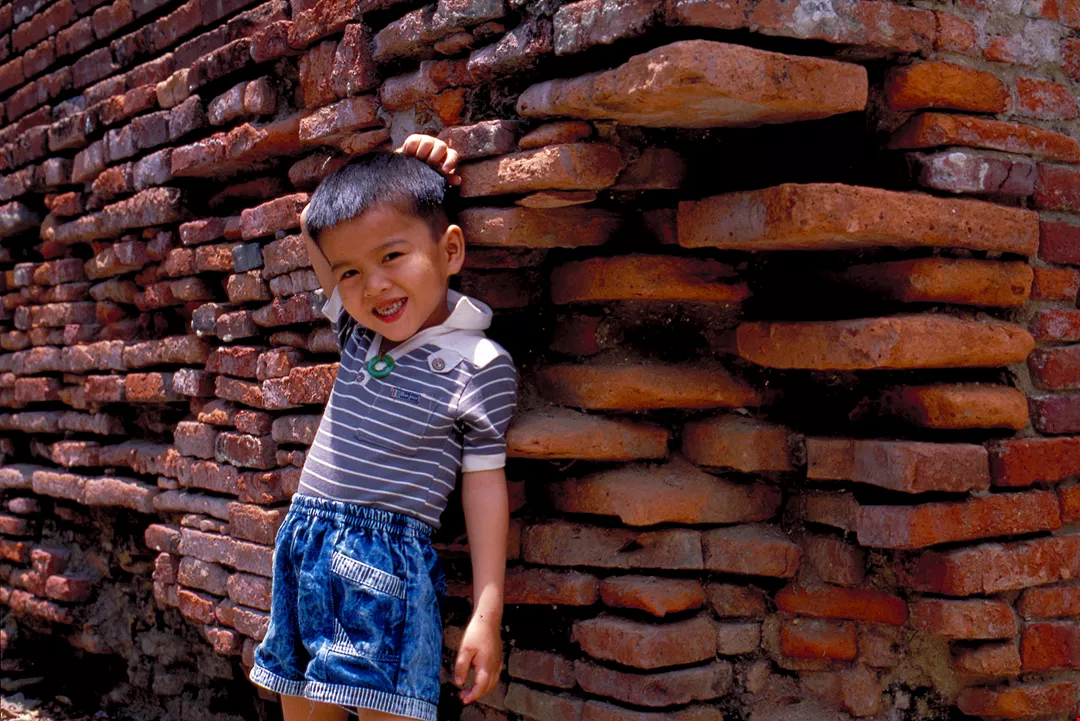
The best way to tell old and new buildings apart is to look at the materials: bricks from the 19th century were made from a mixture of glutinous rice, brown sugar, and lime, but they came out as tough as today's concrete.
This is the only part left of the old wall built by the Dutch.
Most of the young men from the district go into Tainan to work or study during the day, leaving the women and children behind to do a little piecework to supplement the family's income.
Two old women who claim never to have left the district in their lives give conflicting answers when asked the direction to Tainan.
Many people in Anping still make their living by fishing, and the local fish market is full of fresh catch.
Fishing boats take a rest in the channel before going out to sea.
A student from Hsin-chu on a school trip to Fort Anping stands on a replica of an old cannon and acts like a Taoist magician.
The Fifth Redistricting Zone, slated for residential and commercial use, offers a new hope for bringing people and prosperity back to the district.
Mumahuang trees can be seen all over Anping.
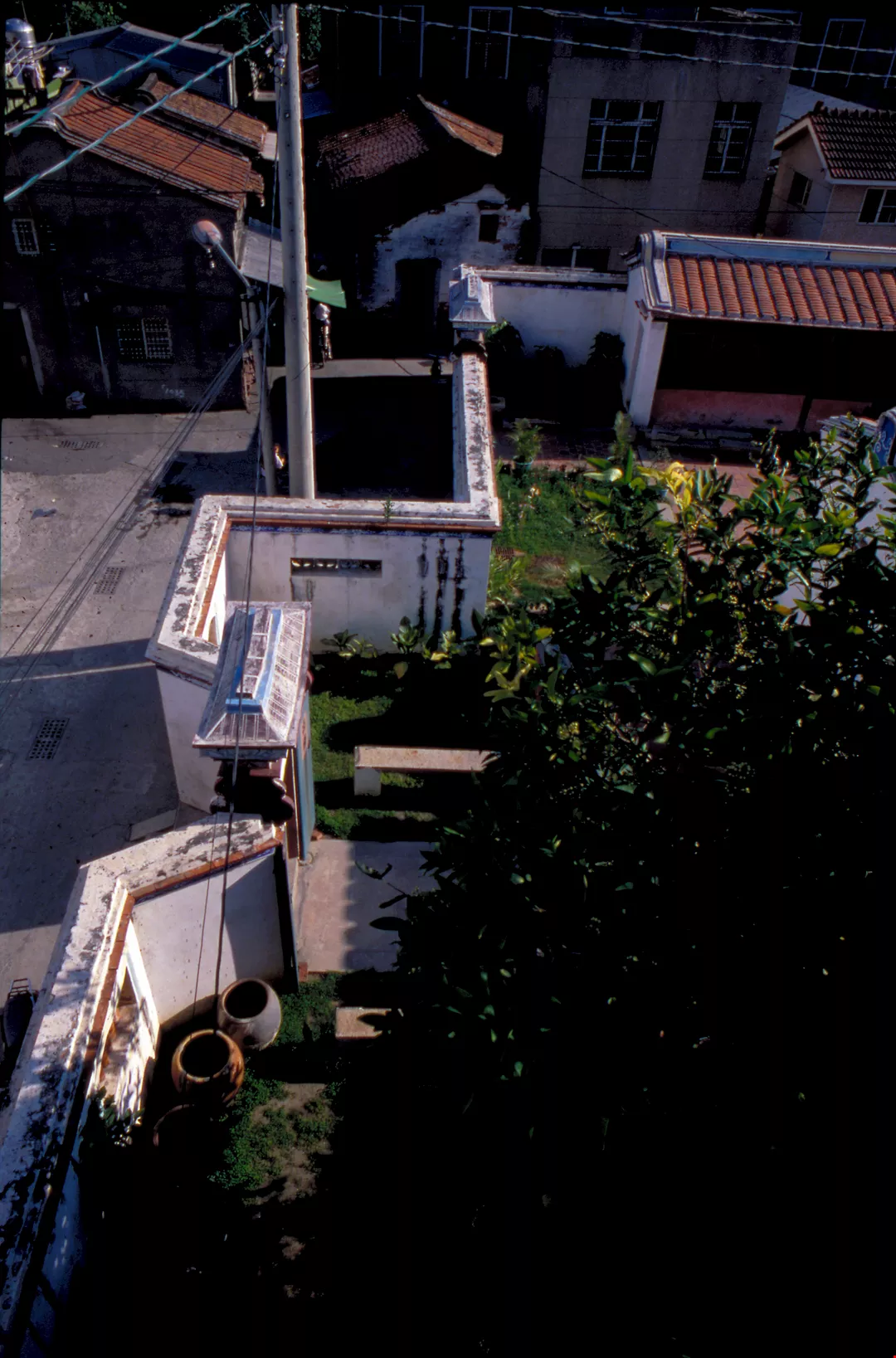
The narrow, winding alleys of the old section are full of surprises.
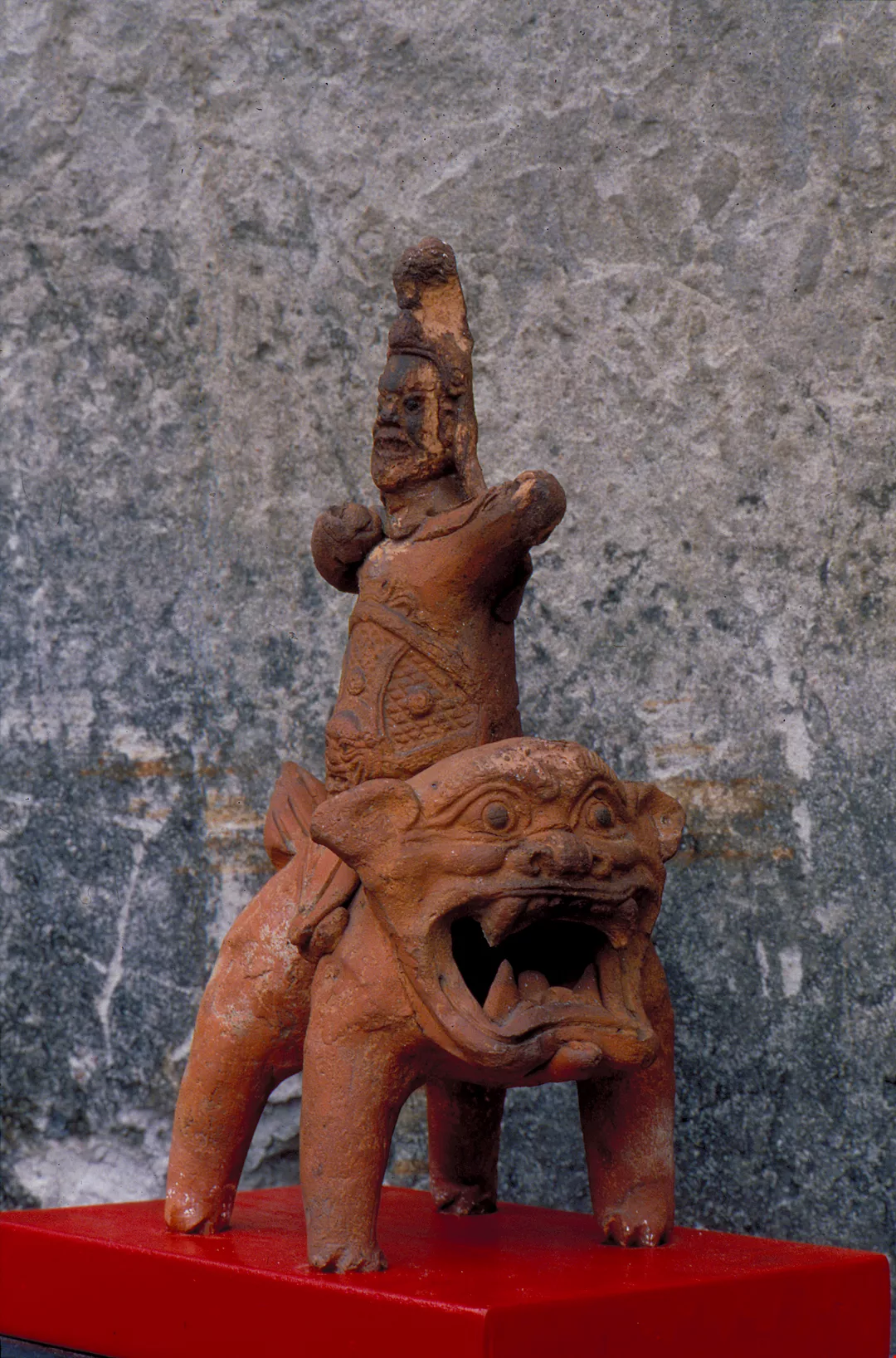
Wind Lion Lords, the local "guardian angels," were once seen on roofs all over the old section, but now some have been stolen, some are kept in the local museum, and some have been taken inside by their owners and placed on altars for worship.
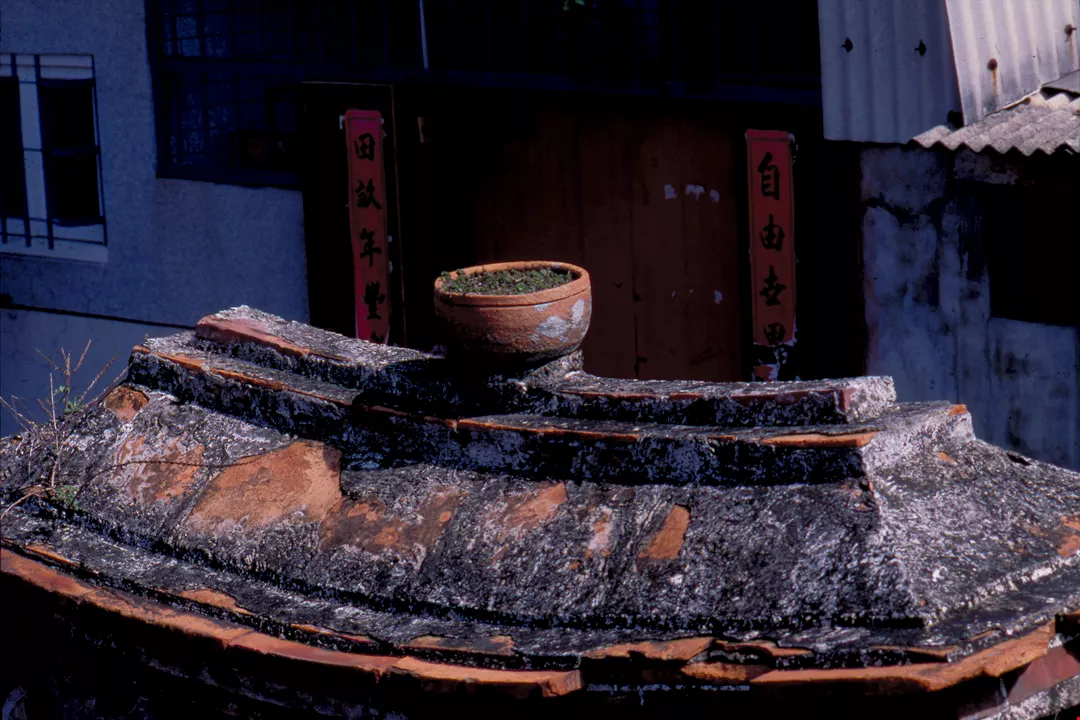
What's a flower pot doing on the roof? Actually, it has the same purpose as a Wind Lion Lord--it's just a cheaper substitute.
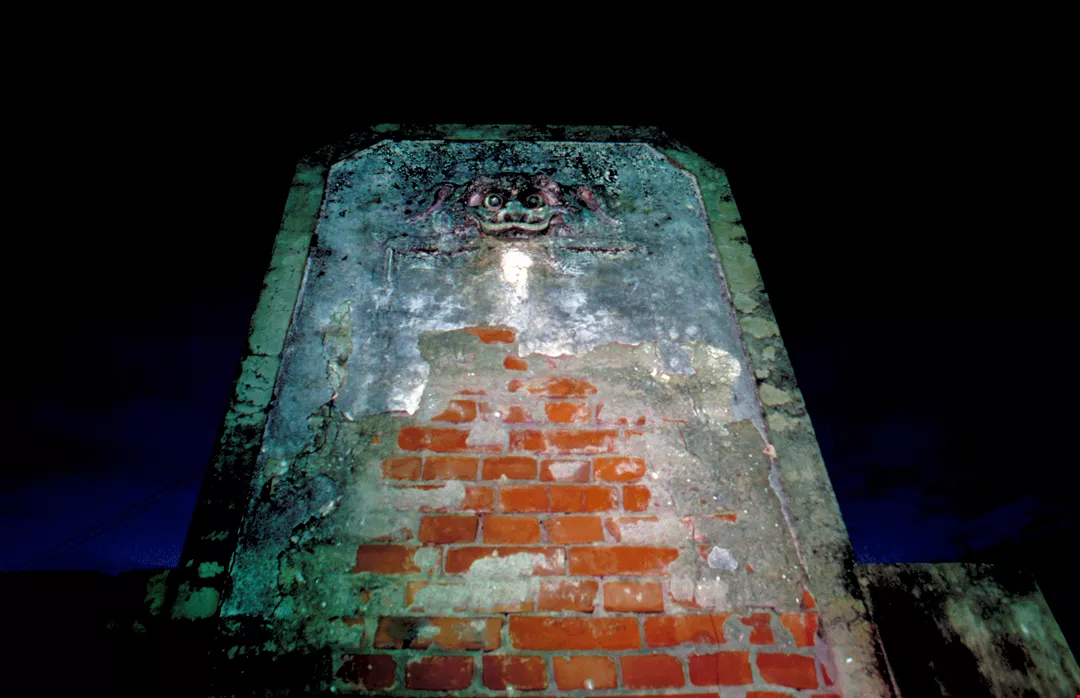
Outsiders walking the streets of the old section at night get a scare running up against bas-reliefs of ferocious lions with swords in their mouths.
The old houses may be rebuilt into new buildings, but they still have a lion to protect them.
The old houses may be rebuilt iThe best way to tell old and new buildings apart is to look at the materials: bricks from the 19th century were made from a mixture of glutinous rice, brown sugar, and lime, but they came out as tough as today's concrete.nto new buildings, but they still have a lion to protect them.
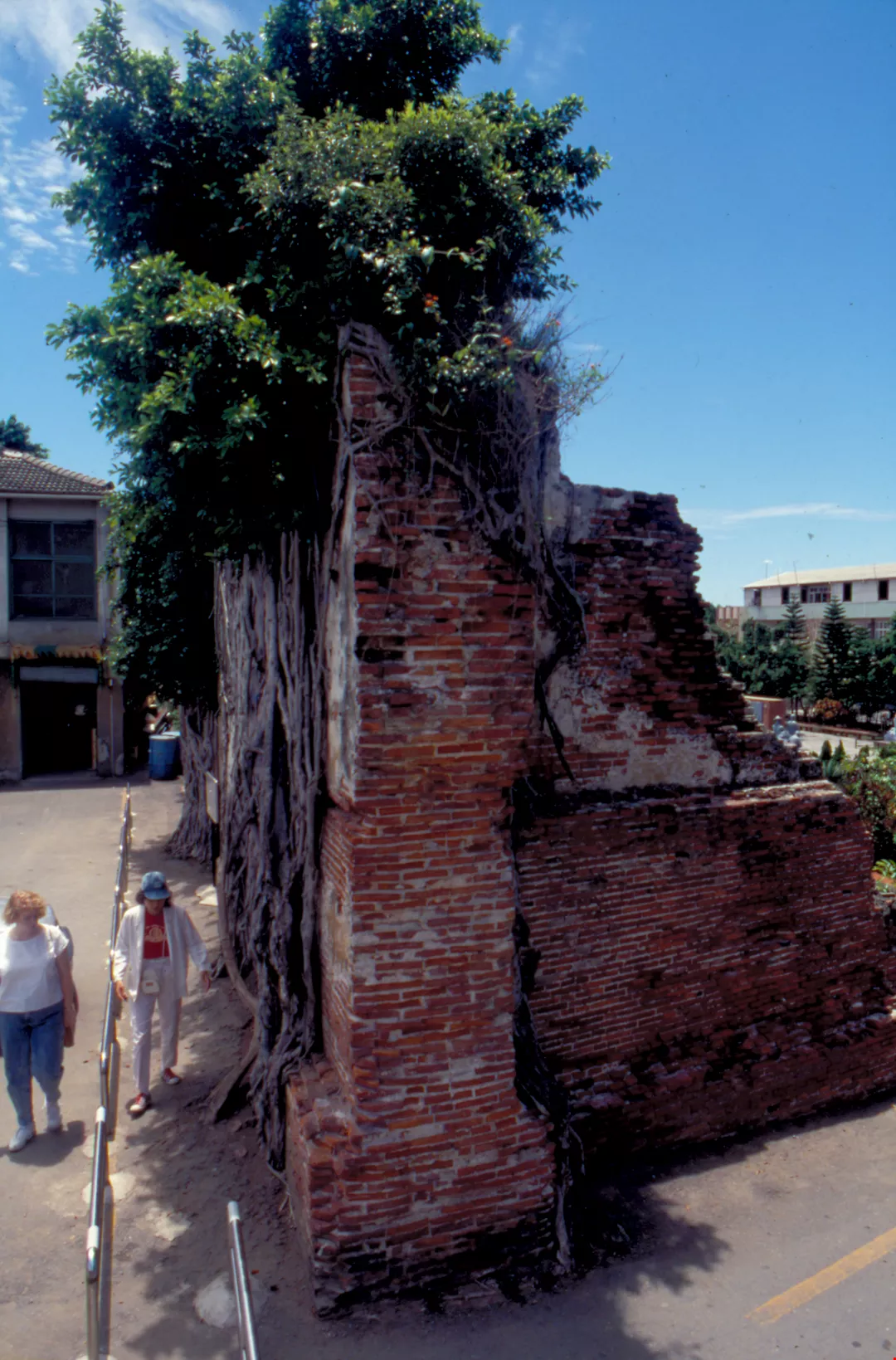
This is the only part left of the old wall built by the Dutch.
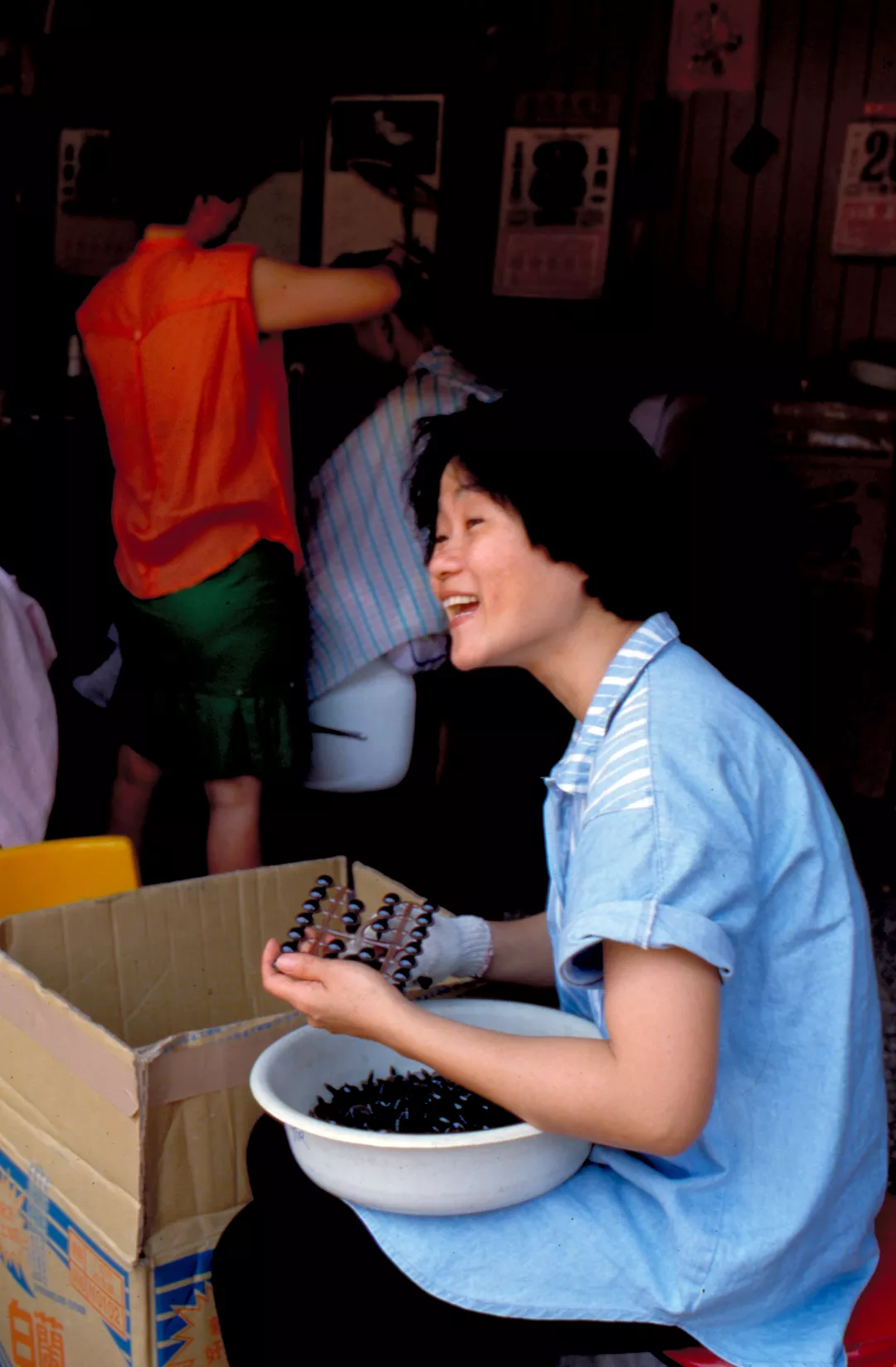
Most of the young men from the district go into Tainan to work or study during the day, leaving the women and children behind to do a little piecework to supplement the family's income.
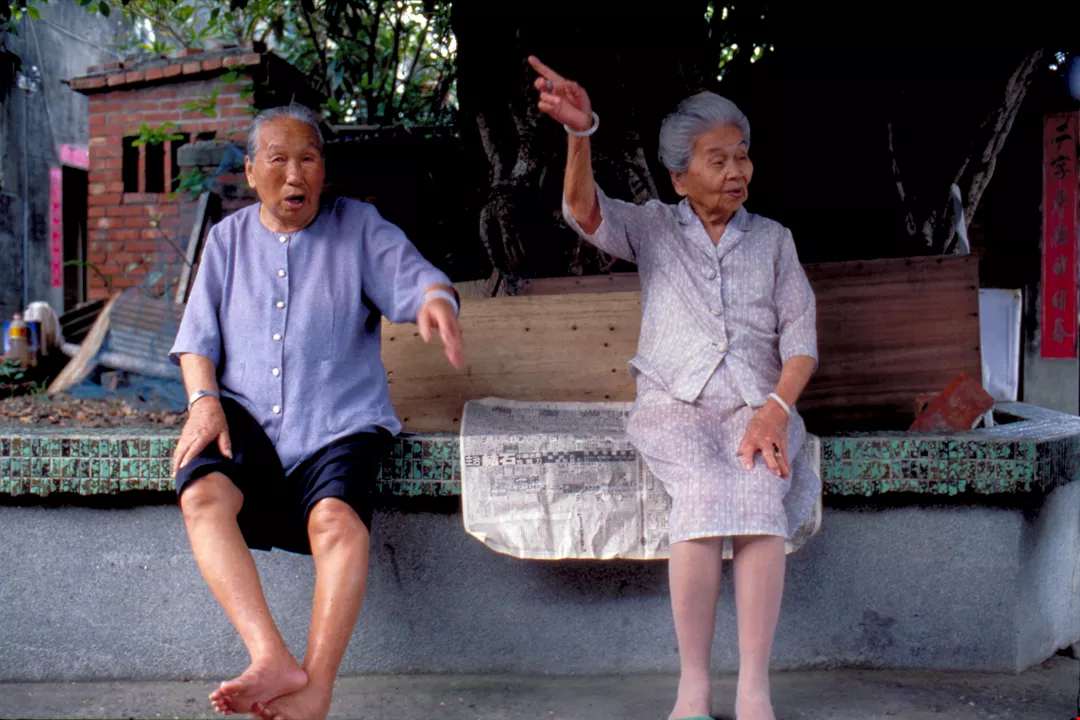
Two old women who claim never to have left the district in their lives give conflicting answers when asked the direction to Tainan.
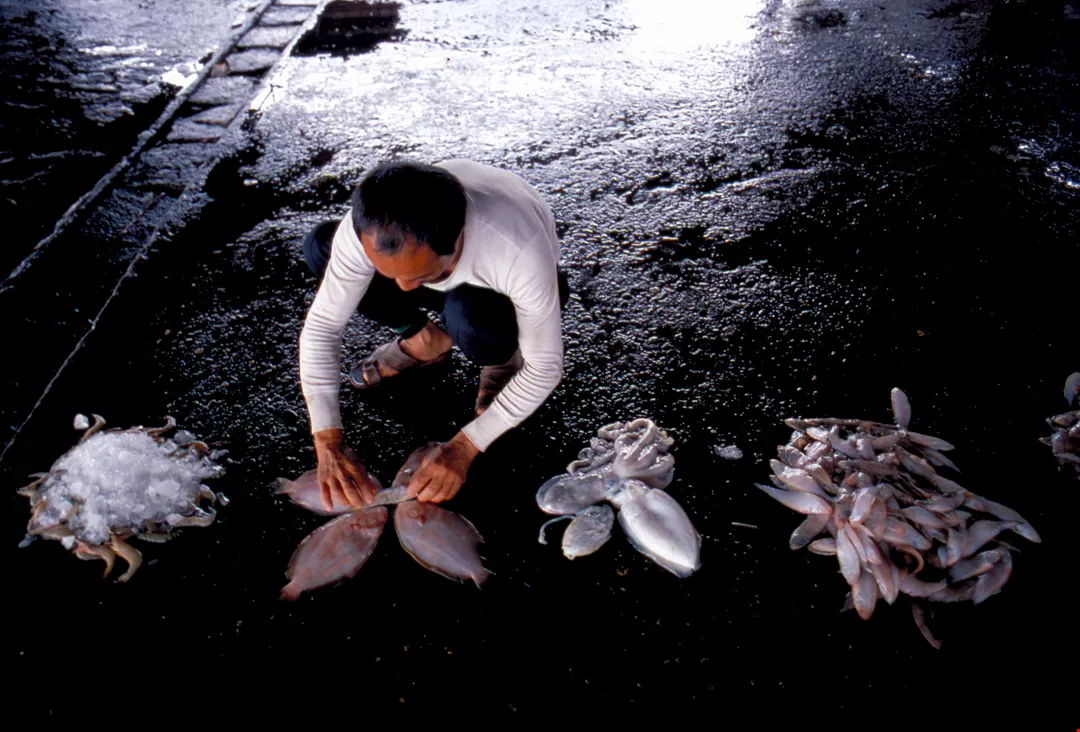
Many people in Anping still make their living by fishing, and the local fish market is full of fresh catch.
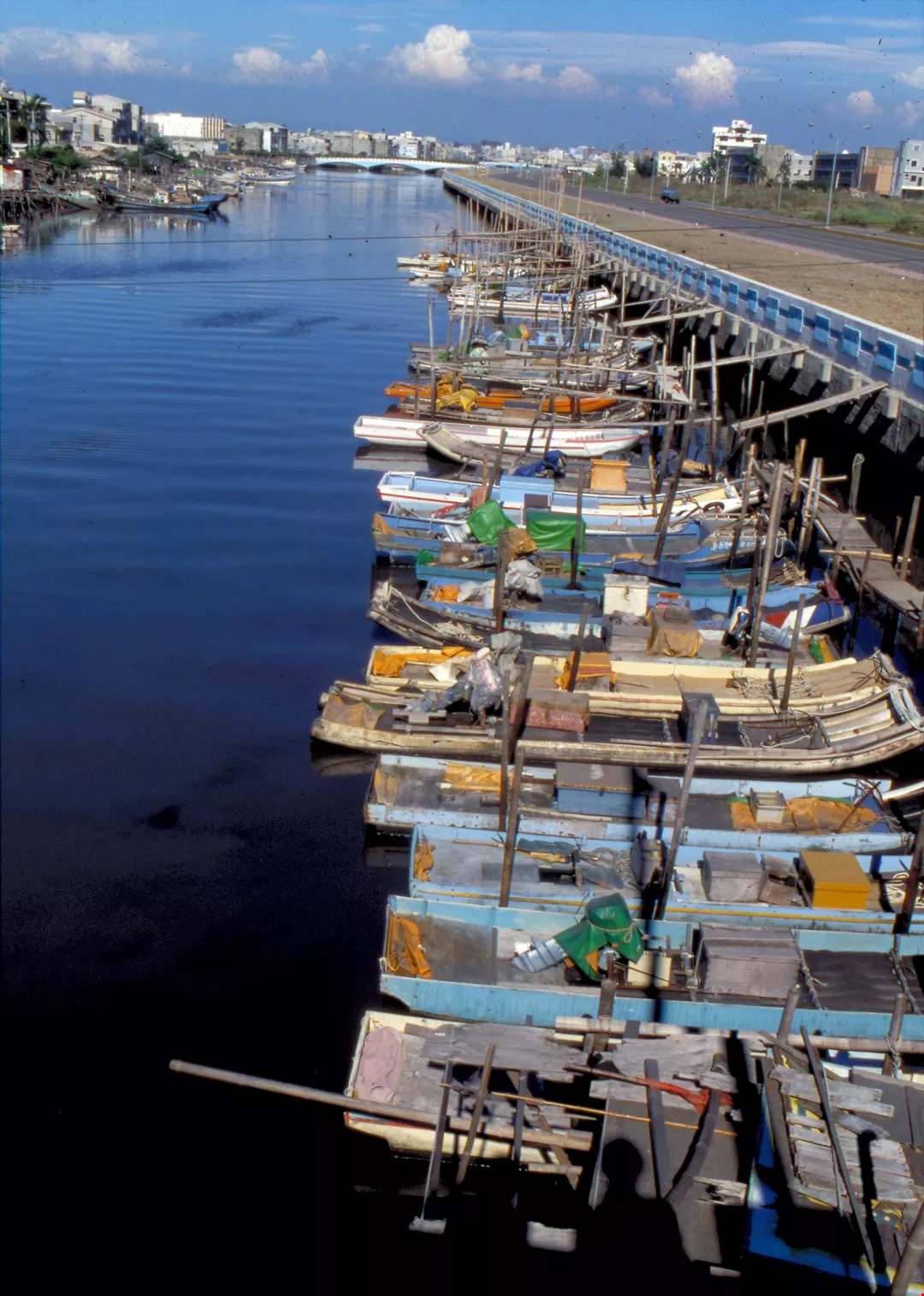
Fishing boats take a rest in the channel before going out to sea.

A student from Hsin-chu on a school trip to Fort Anping stands on a replica of an old cannon and acts like a Taoist magician.
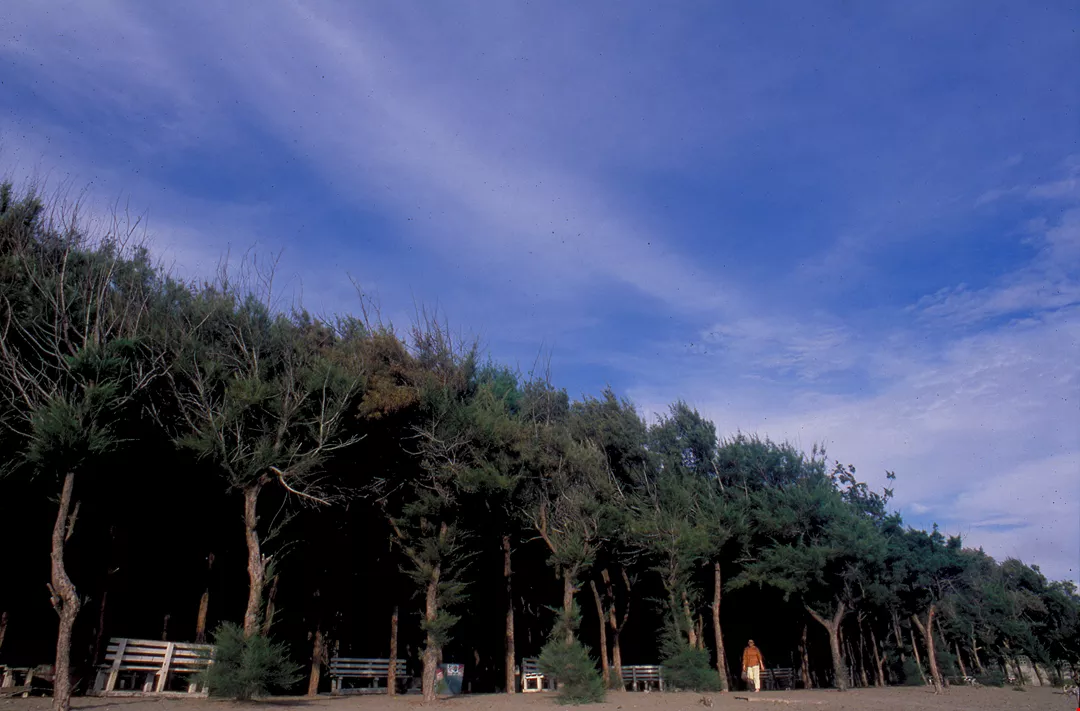
The Fifth Redistricting Zone, slated for residential and commercial use, offers a new hope for bringing people and prosperity back to the district.
Mumahuang trees can be seen all over Anping.

@List.jpg?w=522&h=410&mode=crop&format=webp&quality=80)


