A Date with DestinyPresidential Candidates woo the Voters
Teng Sue-feng / photos Sinorama / tr. by John Murphy
March 2000


Four years ago, amidst the tense atmo-sphere of the first-ever direct elections for the nation's leader in Chinese history, issues of ethnicity and ideology became focal points. The crisis sparked by PRC missile tests pushed the security of Taiwan to the top of the issue list, and the ticket of Lee Teng-hui and Lien Chan of the ruling Kuomintang, which promised stability, won the election with 54% of the vote.
In this year's presidential election, cross-strait policy is still an important subject. But none of the five candidates is advocating Taiwan independence, and, among the three main contenders, there is a race for the center. All three have proposed ideas to maintain peace and stability in the Taiwan Strait: Lien Chan has proposed a "Taiwan Strait zone of peace," James Soong has advocated the signing of a peace treaty with the mainland, and Chen Shui-bian has announced that if elected he will not declare Taiwan independent nor seek to have the "two states formula" inserted in the constitution.
In 1996, President Lee Teng-hui was far ahead of his rivals all the way, and the election was lopsided. This year, the most prominent feature of the campaign is exactly the opposite: The three main candidates are running neck-and-neck, and the election battle is fierce. It is impossible right now to say who might win, and will probably remain so right up to the finish. With all the candidates having largely similar views on cross-strait relations, what issues will be decisive? Candidates can play the stability card, the bull-market card, the serve-the-people card, the personal charisma card, and so on, but which one of these will prove to be the trump card?
Taking advantage of the Chinese New Year, many Taiwan businessmen working in the PRC returned to Taiwan to spend the holiday with their families. Just after the new year, the Mainland Affairs Council and several non-governmental groups co-sponsored a seminar on economic relations with mainland China. They invited a number of Taiwan businessmen who were among the earliest to invest in the PRC to come to the seminar and relate their experiences.
At this event, there was virtually no mention of the election. The participants were far more concerned about choosing investment sites, hiring mainland personnel, and understanding customs regulations. You could privately ask them: Is there likely to be any change in the cross-strait situation after the election of a new leader? Will the election affect willingness to invest in the PRC? But you would only get responses like: "Let's not talk politics," or "Everyone is seeking stability, and there won't be much of a change." Most of the businessmen expressed optimism that after the entry of the PRC and Taiwan into the World Trade Organization later this year, relations between the two sides would steadily improve.
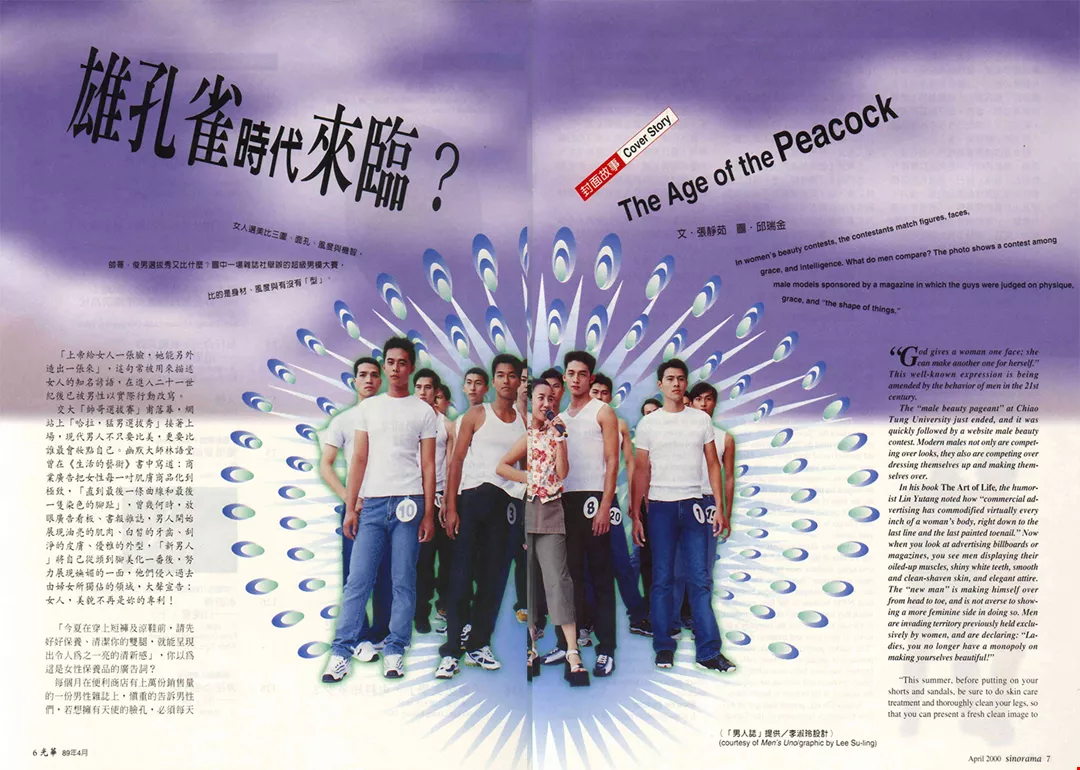
In women's beauty contests, the contestants match figures, faces, grace, and intelligence. What do men compare? The photo shows a contest among male models sponsored by a magazine in which the guys were judged on physique, grace, and "the shape of things.".
Maintaining peaceful relations across the Taiwan Strait is the common hope of the vast majority of the people of Taiwan. When you talk about 21st century leadership in Taiwan, cross-strait policy is the most serious subject that politicians must face, because it involves the very survival of Taiwan.
"However, because this subject touches on the question of the 'loyalty' of the candidates toward Taiwan, it has become a terrifying topic for them," says Wang Chien-chuang, president of The Journalist magazine and a longtime observer of political development in Taiwan. By looking at the carefully worded statements of the various candidates, he says, it is clear that they are all afraid of being accused of "selling out Taiwan."
The only exception is the fringe candidate Li Ao, who is well-known for shooting from the hip. Unafraid of criticism that he is "betraying Taiwan," he has publicly endorsed the PRC's policy of "one country, two systems." The other minor candidate, Hsu Hsin-liang, set the foundations for his mainland policy as early as ten years ago when he wrote a book on his theory of a "newly rising people." But neither of these views conform to mainstream values, and these candidates are getting little support.
What about the three main candidates? Chen Shui-bian of the Democratic Progressive Party, which advocates Taiwan independence, produced a long and detailed white paper on China policy, which offered some changes and reservations to the independence position. But, in an unguarded moment, Chen also declared "Long live Taiwan's independent sovereignty!" and this comment has left many people uncertain which is the real Chen.
Independent candidate James Soong has suggested defining Taiwan-PRC links as a "quasi-international relationship." This aims for a middle ground between the KMT's "two states formula" and the PRC's "one country, two systems" that will appeal to Taiwan, mainland China, and the international community. But this idea has been criticized for unilaterally reducing Taiwan to the status of a "quasi-country," thereby weakening Taiwan's status and bargaining power vis-a-vis the mainland.
Lien Chan, candidate of the ruling KMT, is somewhat bound to support the government's "two states formula." After much consideration, his mainland policy has been framed as working toward the middle stage of the National Reunification Guidelines-in other words, attempting to re-establish official channels of communication between the two sides of the strait.
"No one dares be different from the others on mainland policy," says Wang Chien-chuang. This is because over the past few years a consensus has taken shape in Taiwan society on policy toward mainland China: "Taiwan first." No one has the ability to alter this consensus. The candidates can merely haggle over details of policy, such as differences over the scope or timing of liberalization of the "three direct links" (direct trade, direct transport, and direct mail).
Alexander Lu, a professor of political science at National Taiwan University, agrees with the no-major-innovations approach of the three candidates. As he sees it, since currently there are three candidates with a roughly equal share of the vote, whoever wins will probably not get more than 50%. As a result, there will be a great deal of countervailing pressure against radical change. Concludes Lu: "Policy will tend to be centrist, and any steps taken will be small."
He adds, "Taiwan is a pluralistic society, and if you want to attract many types of voters, you can't be too outspoken about policy. This is because extreme clarity doesn't make much difference to those who already support you, but it could cost you undecided votes."
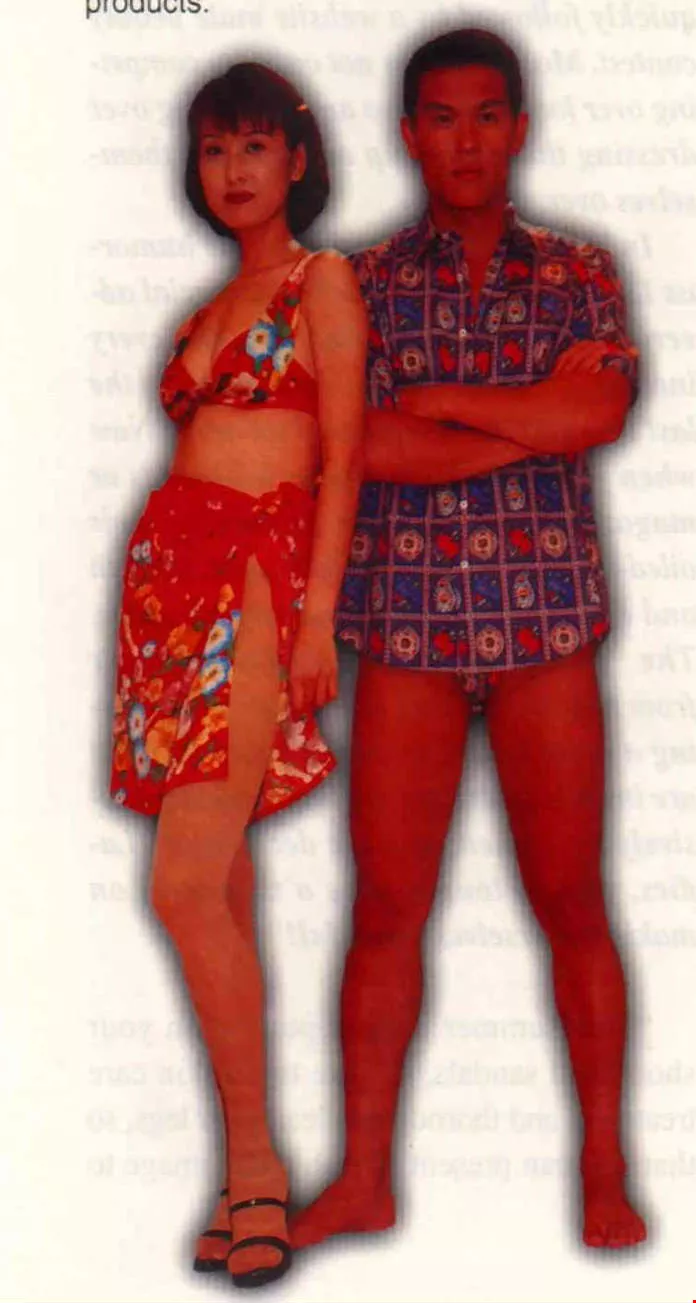
You're genteel, I'm handsome. Modern business has produced many new choices for men in terms of swimwear, underwear, and even cosmetics and skin care products.
Mainland policy is a minefield, but it is the foundation for all other policies, and no candidate can ignore it. However, this does not mean, say Wang and Lu, that it will be a decisive factor in the election.
"There is a very curious aspect to Taiwan's electoral culture," explains Wang. Taiwan is small, and voters do not clearly distinguish between the roles of the head of state, elected legislators, and government bureaucrats. No matter how high the office, for many voters, especially in traditional constituencies, "all politics is local." For them, what matters is whether a politician seems concerned about their hometown issues.
That is why when Chen Shui-bian went to Sanhsia in Taipei County, he talked about a pension for the elderly, and when Lien Chan went to Kaohsiung he talked about establishing a science-based industrial park there. These parochial issues are the real keys to the election.
Next in importance is the candidate's character, including charisma, leadership style, and attitude in dealing with incidents that come up during the campaign.
In this campaign, James Soong has been at the center of much controversy over the character issue. The issues that surround him can be traced back to his more than two decades near the top in Taiwan political life.
Kuo Shu-min of the China Times Express, a longtime observer of the KMT, says that controversy over James Soong goes back to the days when the KMT ruled over Taiwan and repressed all opposition. When Soong was KMT secretary-general, he was powerful and aloof; the only way to get an interview with him was to block his car as it left party headquarters. During the struggle in the KMT between the mainstream and the non-mainstream factions, Soong played a vital role in consolidating the position of President Lee Teng-hui. In clearing out many obstacles on behalf of Lee, he incurred the wrath of many party elders, who considered him to be Lee's "running dog."
Soong is especially good at timing. He knows what to say and when, in order to attract the most attention. Kuo recalls several such opportune moments when Soong was provincial governor. For example, he criticized the KMT center over the symbolic status assigned to the provincial governor at cabinet meetings, and also over unfairness in the division of government revenues. His media skills were such that "he only had to open his mouth and he would be the headline on page one or two."
Although opinions are divided about Soong, Kuo affirms one thing: He has had to be very determined in order to transform his image from that of a skilled party infighter from a high-ranking family to that of a populist who understands the people.
Says Kuo, "If Lee Teng-hui is a Taiwanese opera performer, then James Soong is a Peking opera actor-Soong's moves are refined down to the last detail." For example, when the KMT was trying to persuade elder National Assembly members to retire, Soong met with them all individually. During his five years as governor, he visited each of the 309 towns and rural townships in Taiwan. In this presidential election, at any event with a crowd, he wants to shake the hand of everyone there; he believes that he can tell from the handshake alone whether he has that person's vote.
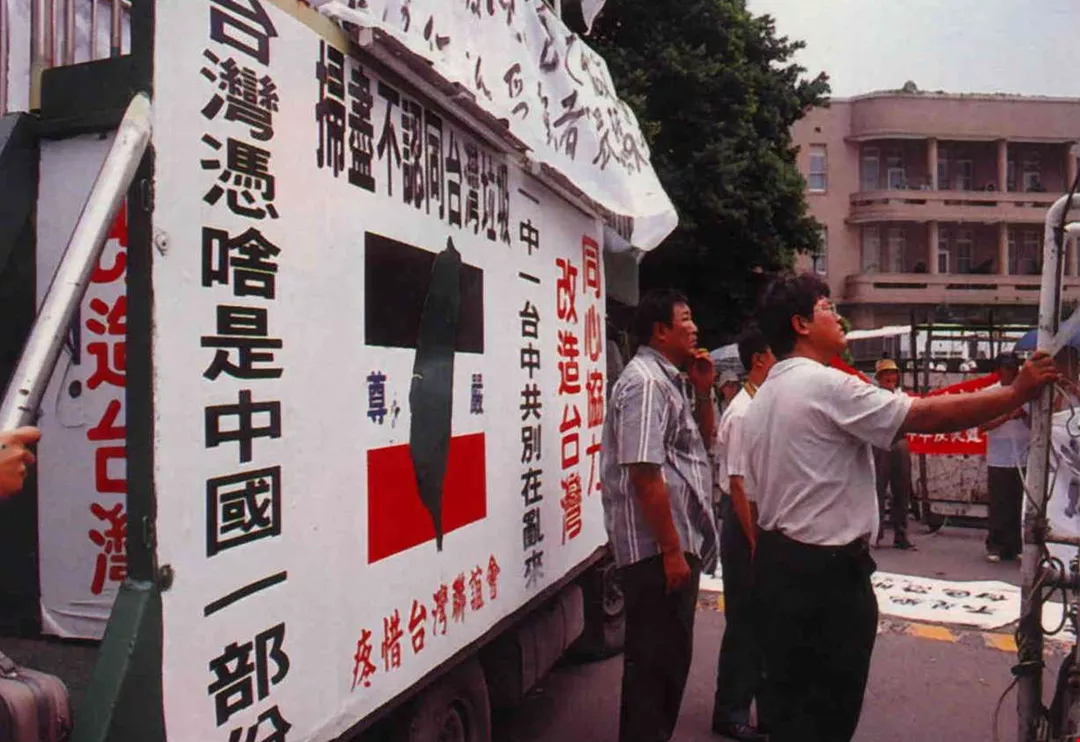
"On what grounds can you say that Taiwan is part of China?" Voters who emphasize "Taiwan first" reject mainland China's high-pressure efforts to force Taiwan to accept the status of a local government.
In contrast to Soong and Chen Shui-bian, who have been through previous election battles and have distinct public identities, "Lien Chan isn't really a man of the people. He doesn't like to have the spotlight on him, he doesn't think of himself as a star, and he doesn't want to put on a show." But, says Wang Chien-chuang, it is debatable whether a politician really needs to have the common touch.
Compare Taiwan to the US. Lee Teng-hui is similar to Bill Clinton, who has a personal charisma that moves people. Lien Chan, on the other hand, is more like Al Gore, and has always been somewhat aloof from average citizens.
Says Wang Chien-chuang, "Lien Chan is like plain water in a gold cup." He's been in government for more than 20 years, serving as minister of transportation and communications, foreign minister, Taiwan provincial governor, premier, and vice president. "Yet still most citizens do not have a very strong impression of him. This is really a strange situation."
Chen Feng-hsin, a reporter for the United Daily News, writes in the authorized biography 100% Lien Chan that a large part of the reason Lien appears to be unapproachable is because of the way he has come across on TV. Lien himself says that, after more than 20 years in appointive positions, he has developed a stern mien. Moreover, his appearances on television have often been at confrontational interpellation sessions in front of the legislature or the provincial assembly, so that his warmer side does not come across.
A little story in the book relates something of his sense of humor. Lien was born in Xi'an in mainland China, and his first primary school was called the Zuo Xiu school. Because of the war, he transferred out after only one year. The name of the school actually was an abbreviation for a term meaning "to educate and cultivate." But in contemporary Taiwan, coincidentally, the characters zuo xiu mean "to put on a show" or "market yourself." Lien often jests, "It's because I never graduated from 'Make a Show' primary school that I'm in the spot I'm in today."
Political writer Hsia Chen says that when Lien was foreign minister, he laid the foundations of pragmatic diplomacy, and allowed Kuo Wan-jung to attend the Asian Development Bank annual conference in Beijing. After Lee Teng-hui came to power, Lee went through a series of battles with successive premiers: Lien is the only one who has had a harmonious working relationship with the president. Hsia says that Lien's political character tends to be easy-going and generous, he can comfortably delegate authority, and he is calm under pressure.
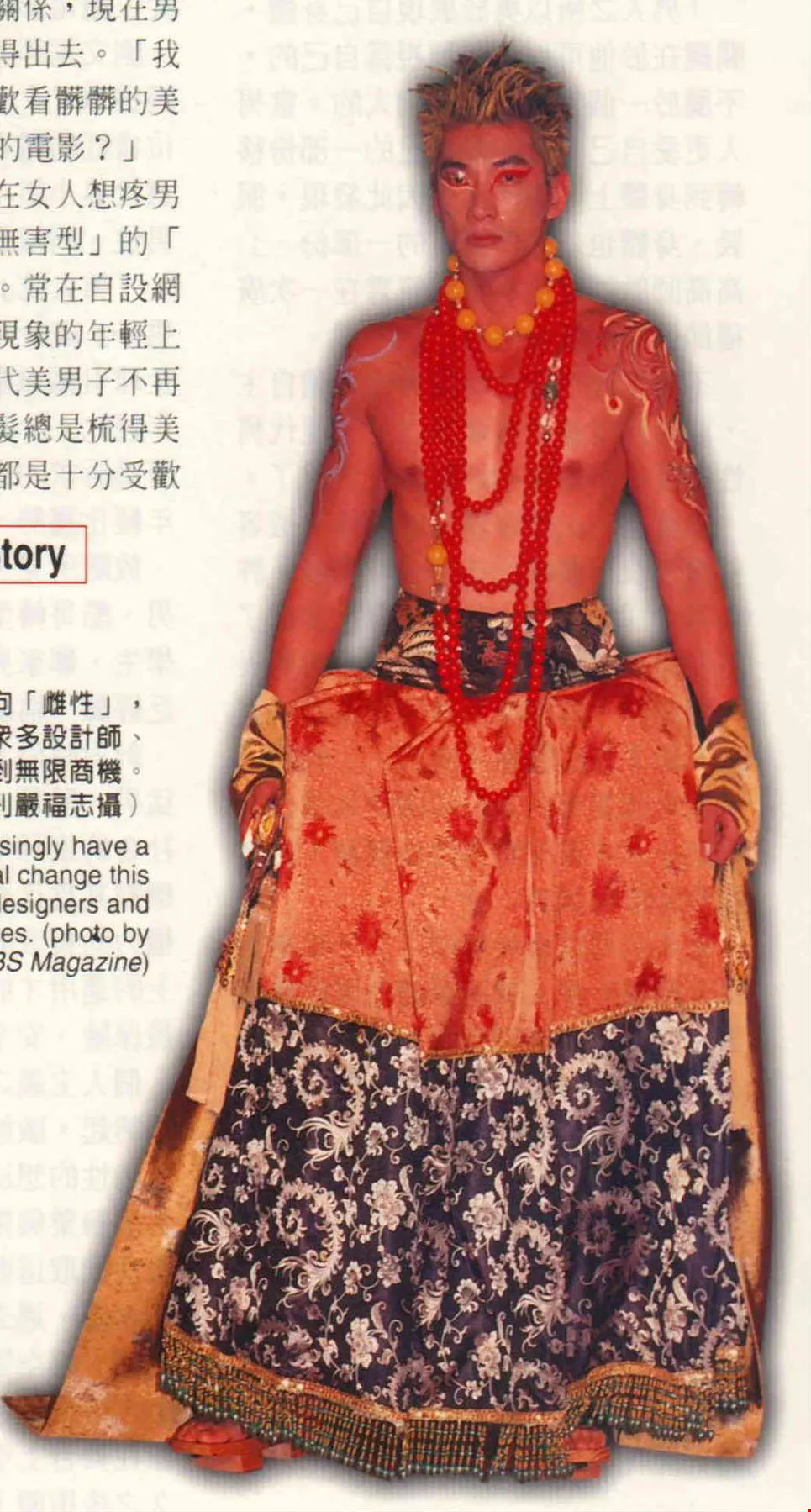
Male fashions increasingly have a feminine touch. The social change this reflects is offering many designers and merchants new opportunities. (photo by Yen Fu-chih, TVBS Magazine)
Compared to Lien Chan, who comes from a wealthy family, Chen Shui-bian, who is an entirely self-made man, makes a marked contrast.
After starting his career as a lawyer, Chen acted as defense counsel for arrested opposition leaders, and then served several terms as a legislator, making a name for himself as a standout leader of the opposition. He won the mayorship of the capital city of Taipei back in 1994, and, step by step, has become the most popular figure in the DPP.
As a legislator, Chen was a sharp questioner of government officials, but he had a little trouble adjusting to being an executive official himself. As Taipei mayori, his decisiveness won many plaudits, but his manner was often perceived as overbearing and this led to frozen relations with the city council.
"Chen fulfilled most of the promises he made in his campaign, but he didn't give much attention to procedural concerns," says Wang Chien-chuang. For example, he adopted a curfew for young people virtually unilaterally. As Wang puts it: "Perhaps Chen would say that many problems in Taipei had reached a point calling for decisive action, but whether efficiency is more important than consultation is an eternally debatable question."
A group of 33 education reform advocacy organizations rated the five candidates on their views on education reform. On the question, "Does the candidate have a grasp of the key problems in education reform in Taiwan?" Chen and Hsu Hsin-liang were given top marks.
"Chen dares to talk about the cost of reform," says Ting Chih-jen, director of one of these education reform groups. Everybody knows the education system must be reformed, but reform costs money. "Chen Shui-bian dares to talk about the problem of paying the bill."
However, though Chen says he will ask the legislature to guarantee the necessary financing, he does not, as Hsu Hsin-liang does, guarantee that he will spend 6% of GDP on education.
"He's not clear enough," says Ting, who opines that Chen thinks that he can wait until he's elected before he decides how much money to spend. Overall, "Chen is good at finding the weaknesses in others' policies, but not as good at facing up to questions when he is in power. It may be easy to become the emperor, but to win the people's hearts requires concrete action."
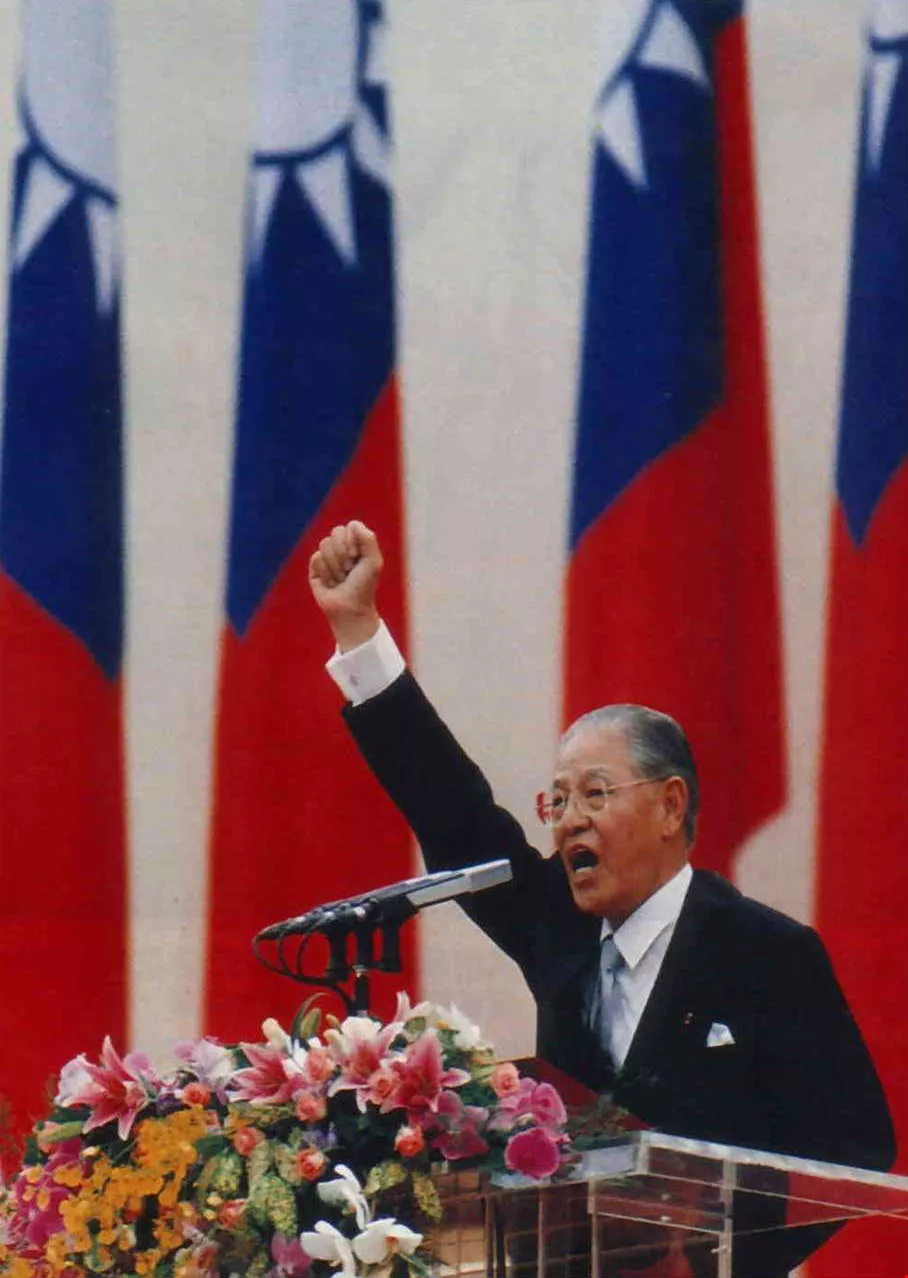
The 2000 election marks the beginning of the post-strongman era. Outgoing president Lee Teng-hui has left his mark on Taiwan history by guiding democratic reforms in his term of office. The photo shows Lee delivering his inaugural address four years ago. (Sinorama file photo)
As for James Soong, "His policies are more for helping the weak, and give more thought to the poor." Soong has taken into account the long-existing disparity between state-funded and private secondary schools in Taiwan (private schools are much more expensive, though they merely provide the same education as the state schools). His platform includes subsidies to assist the children of low-income families who attend private secondary schools.
Ting admits that in evaluating education platforms, the incumbent, Lien Chan, is at a relative disadvantage, because the policies currently being implemented are open to immediate scrutiny.
According to Ting, "Lien Chan has been at odds with the education community for a long time." Reformers are most disappointed that the education budget has been seriously squeezed these past few years, falling by as much as NT$40 billion in a single year.
"Lien is also the candidate who is most likely to believe that problems can be solved by throwing money at them," says Ting. Lien has stated that he wants to extend compulsory education from 9 to 12 years, and to offer vouchers for pre-school and private secondary education. These would all place tremendous strain on the already overstretched education budget. The governent debt is currently NT$2.6 trillion, ten times higher than a decade ago; if these promised education "checks" were actually cashed, the debt would pass NT$3 trillion.
Ting concludes: "He has lost his direction in terms of education policy, and he underestimates the education community. He thinks he just has to promise to throw money around and then he'll have people persuaded." Educators are not looking to be a burden on the country; all they want is that the government stop squeezing the existing budget smaller and smaller.
In fact, the "checks" candidates write are closely connected to their assumptions about the roles governments should play.
"Just as wool grows on a sheep, if the government role expands, it will require ever greater resources," says Wu Hui-lin, a researcher at the Chung Hua Institution for Economic Research. As an economist, Wu advocates the free market and thinks that the government's effectiveness should not be overrated. For example, large-scale government encouragement of high-tech industry has contributed to an imbalance in the industrial structure. The stock market is an even more obvious example: From the Securities and Exchange Commission to the Ministry of Finance to the proposed Stock Stabilization Fund, you can see the government's shadow everywhere.
"The government should go back to just playing a referee role, and do that well," Wu avers. This applies to economic relations with the PRC as well, because wherever there are controls there will be speculation. Laws can't cover everything, and always leave gray areas, so that "influential persons are positioned to undertake quasi-legal activities with impunity. The government should not be creating special opportunities for the private profit of certain individuals." Wu believes the market should be left to itself.
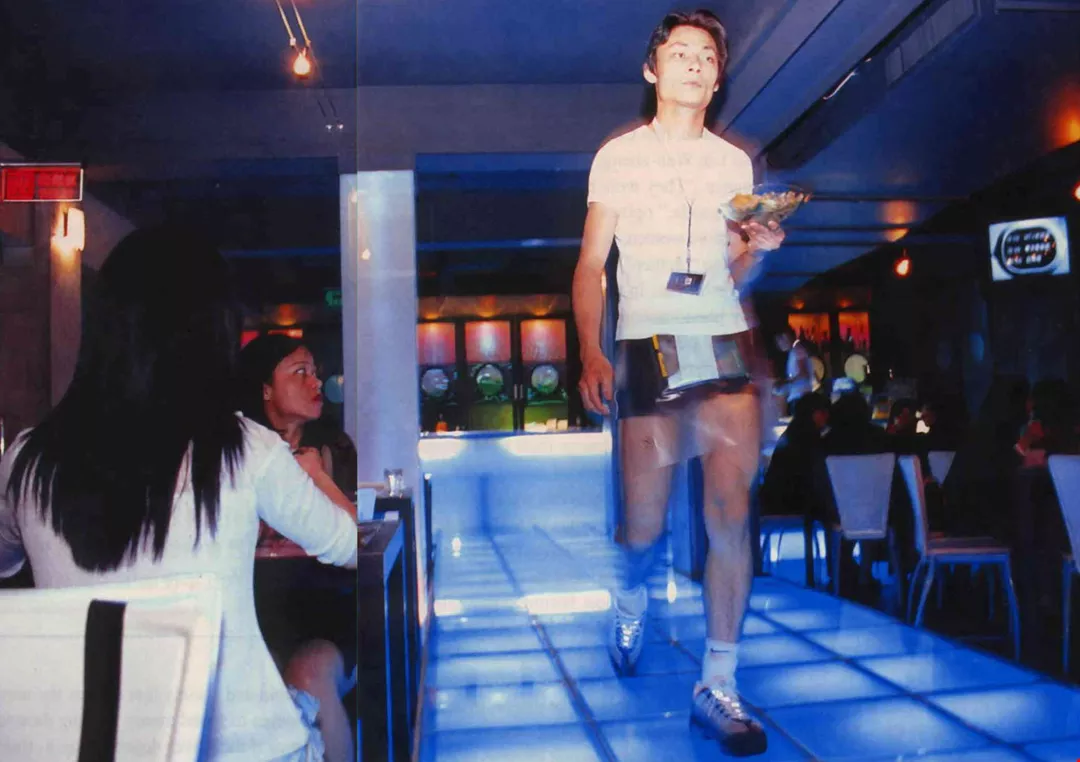
Recently a restaurant opened in Taipei's fashionable East District hoping to draw customers by employing "cool dude" waiters. Today men are also getting "checked out." Is this a step toward more equal gender relations?
However, others have the opposite view. Some believe that Taiwan's market is too affected by non-economic factors, so the government must play a protective role.
There has long been debate in Taiwan over the relative importance of the market and government intervention. But it cannot be overlooked that one major reason Taiwan is now the world's 12th largest trading nation is because government policy has fostered economic prosperity.
J.T. Day, chairman of the National Association of Small and Medium Enterprises of the ROC, avers, "Taiwan needs to improve, but does not need to change." Democratic reform in Taiwan in recent years has come about without the shedding of a single drop of blood; this is an amazing accomplishment. "Our house is already built. Perhaps it is not perfect, and needs some renovation, but is it really necessary to tear it down and start again?"
Ten years ago, the total annual value of Taiwan's imports and exports was NT$50 billion. Today that figure is NT$200 billion, a four-fold increase. Day asks: "If Taiwan were not a good business environment, why would big corporations bring their second generation back from abroad to take over? In this era of globalization, they could simply let their children stay overseas!"
He argues that Taiwan was the country least affected by the Asian financial crisis because the government handled the situation well. He gives the government's economic cabinet a grade of 98. He is worried that if someone other than the ruling party candidate wins the election, the new economic officials might not be as capable.
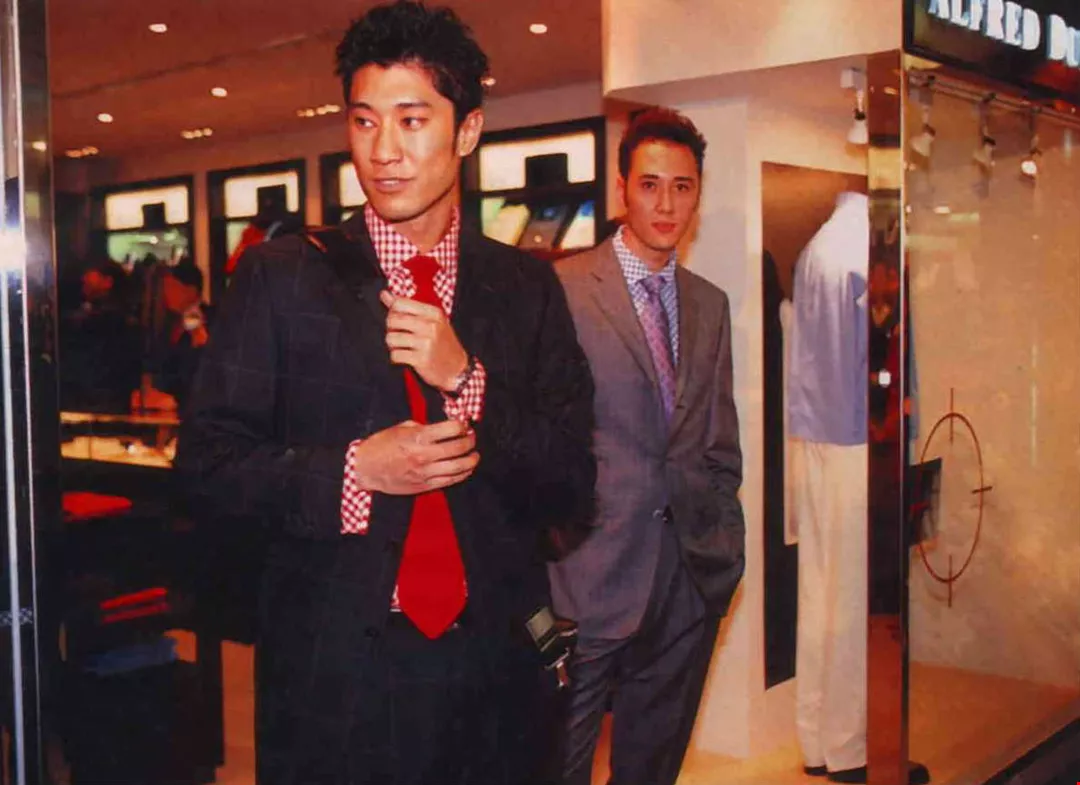
"Youth worship" is a special feature of the era of individualism. Many famous fashion brands are increasingly targeting the youth market.
Wang Chien-chuang states: "All candidates have beautiful-sounding platforms, because this is a presidential election, and they must have a blueprint for governing the nation. But running for office and running the country are two very different things." It has been said that "campaigning is like poetry, governing is like an essay." In writing a poem, one can create a coherent and highly refined work. But it is only actual governing that tests one's true staying power.
Scholars have stated that the 2000 election in Taiwan has three special characteristics: For one thing, this is the first time the opposition has a very real possibility of taking the reins of government. Secondly, the three leading candidates are so close it is impossible to tell who will win. And third, whatever the outcome, this is the beginning of Taiwan's post-strongman era.
In this new era, says Wang, new standards for leadership are needed. The national leader must be more than just a local politico writ large.
Wang gives his personal analysis of the pros and cons for the three candidates: Chen Shui-bian is the person who brings the most hope and vitality, because his policies would be clearly different from those of the KMT. But his biggest problem is "instability"-not personal instability, but policy instability. For example, sometimes he seems opposed to allowing PRC firms to invest in Taiwan, sometimes in favor; sometimes he seems against the opening of direct links with the mainland, sometimes not.
James Soong is very capable, but his very success may be his weak point. He is often very proud of himself because his provincial administration built a bridge or aqueduct to meet the needs of ordinary people. But, ancient Chinese governing wisdom criticizes those who "accomplish a small feat and think they can do anything, or discover a trivial idea and think they are brilliant."
Lien Chan offers stability above all. But he carries a heavy burden. Lien must face up to the fact that his party has been governing in Taiwan for 50 years, and people want change. Even if he wins, this may mean only that the people of Taiwan are willing to give Lien Chan a chance, and would not necessarily be an endorsement of the KMT itself.
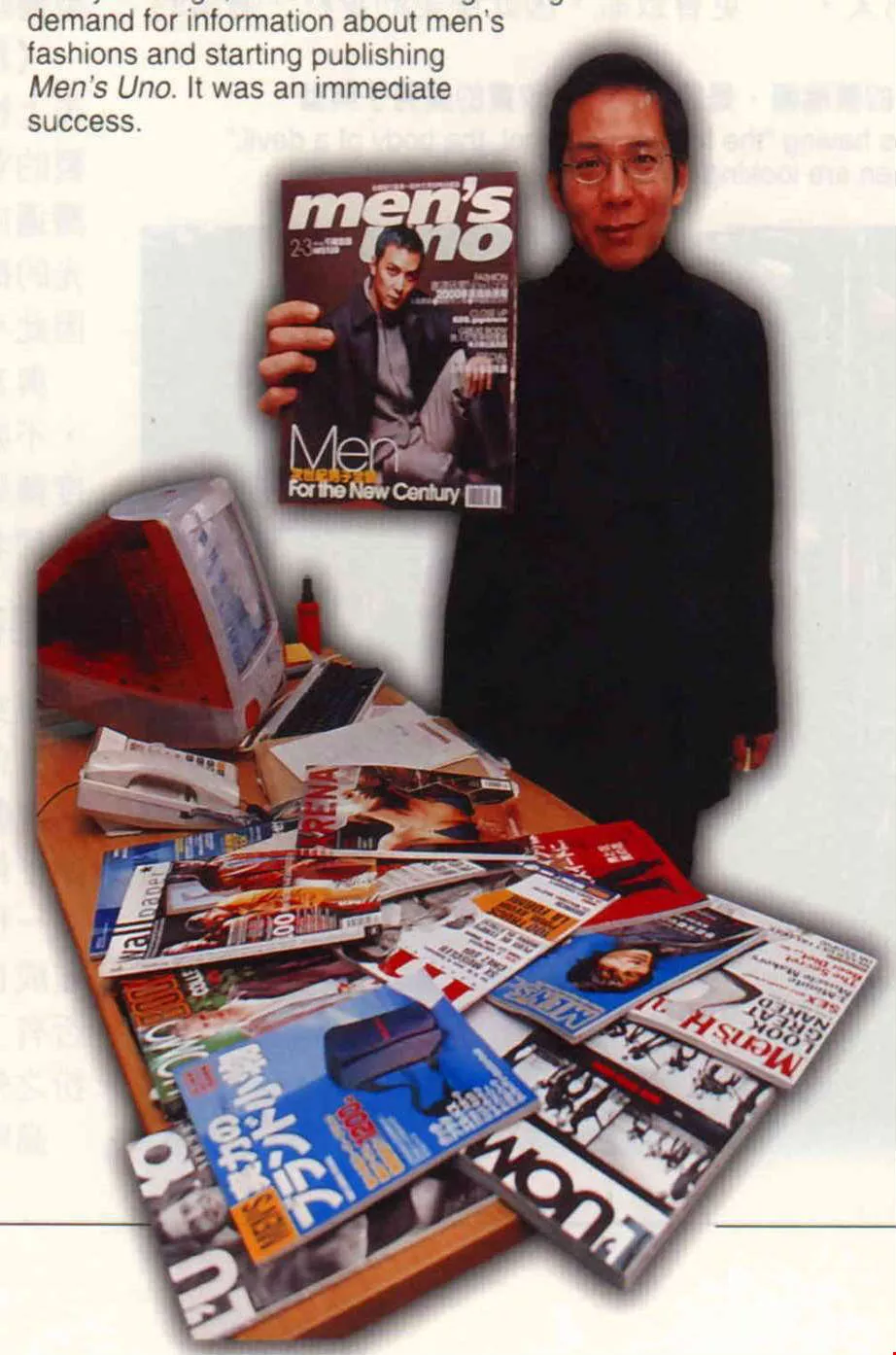
Two years ago, Julian Lin saw a growing demand for information about men's fashions and starting publishing Men's Uno. It was an immediate success.
What kind of challenges face the next leader of Taiwan?
Public opinion surveys show that voters are most concerned about crime and the economy. In a February survey conducted by the United Daily News, the number of citizens very concerned about crime was 31%, eleven percentage points higher than four years ago. Roughly the same percentage said they were most concerned about problems of finance and the economy. Early this year Commonwealth magazine asked citizens, "What do you think is the first thing the new president should do after taking office?" The results show that the people of Taiwan believe that the most urgent problems are crime, "black gold politics" (the confluence of organized crime, moneyed interests, and corrupt politicians), and raising economic competitiveness.
Senior journalist Chu Sung-chiu says that all three major candidates say they are opposed to black gold politics. But citizens want more than slogans, they want effective action. Political scientist Alexander Lu says that the crux of the issue is resoluteness. If the resolve is there, it would not be that difficult to reduce crime and corruption.
Ting Chih-jen says, "Crime is rising fastest among youth." He argues that education is in fact the best crime-fighting policy: "If students can enjoy a happy learning environment at school, then society will no longer be sitting on a powderkeg."
Ting says that, although education is not a panacea, it is certainly not irrelevant. Unfortunately, the effects of education policy are visible only in the long term, and it therefore has a relatively weak position in politics and is often neglected because policymakers probably will not see the fruits of their efforts in their terms of office. But the main industries of the 21st century, such as the information and telecommunications industries, are knowledge-based. If education is done well, the benefits will spread to many other areas.
The greatest variable for Taiwan society remains the other side of the Taiwan Strait.
"In the past two years, Taiwan has been continually testing where mainland China will draw the line in cross-strait relations," says social critic Nan Fang Shuo. But playing word games over how to define the relationship is simply a way of hiding from the problem, ostrich-like, as the situation deteriorates. Fortunately the three main candidates have committed themselves to a moderate path. Right now there's a choice between peace and war in cross-strait relations. The most important challenge for Taiwan now is to transcend the old mentalities of cold war anti-communism and Taiwan independence, and to build a new logic of peace.
Taiwan's future is now in the hands of its voters.
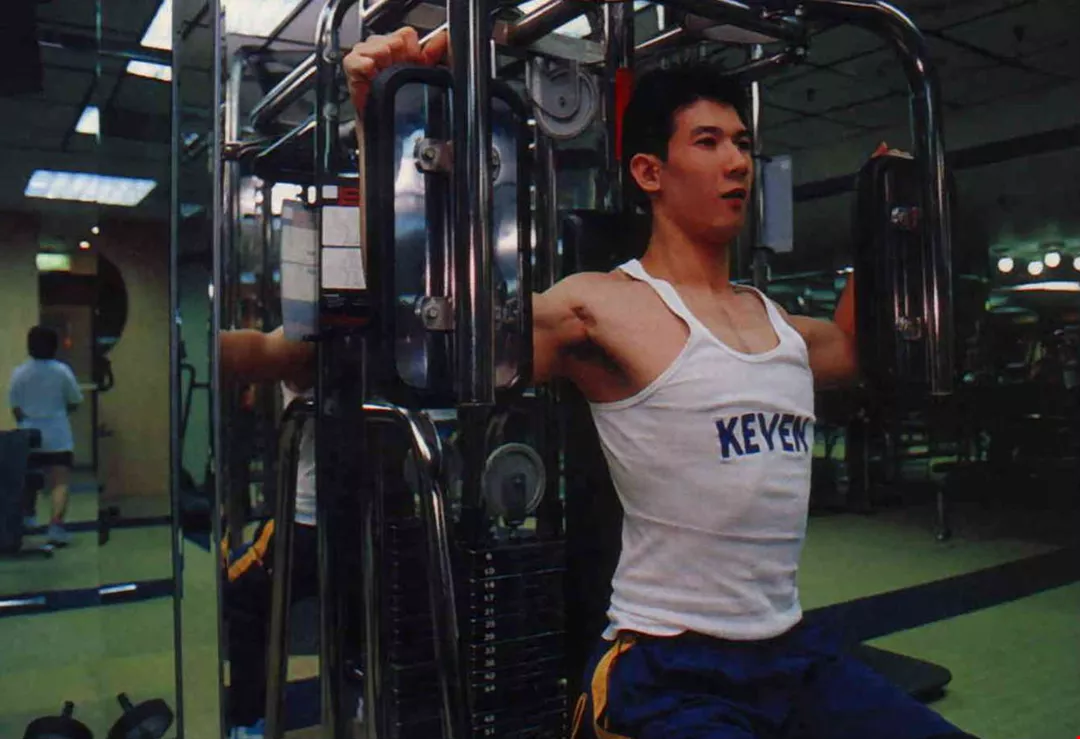
Guys used to describe their ideal girl as having "the face of an angel, the body of a devil." Turning the tables, many modern women are looking for a guy like Tsai Juei-fu.
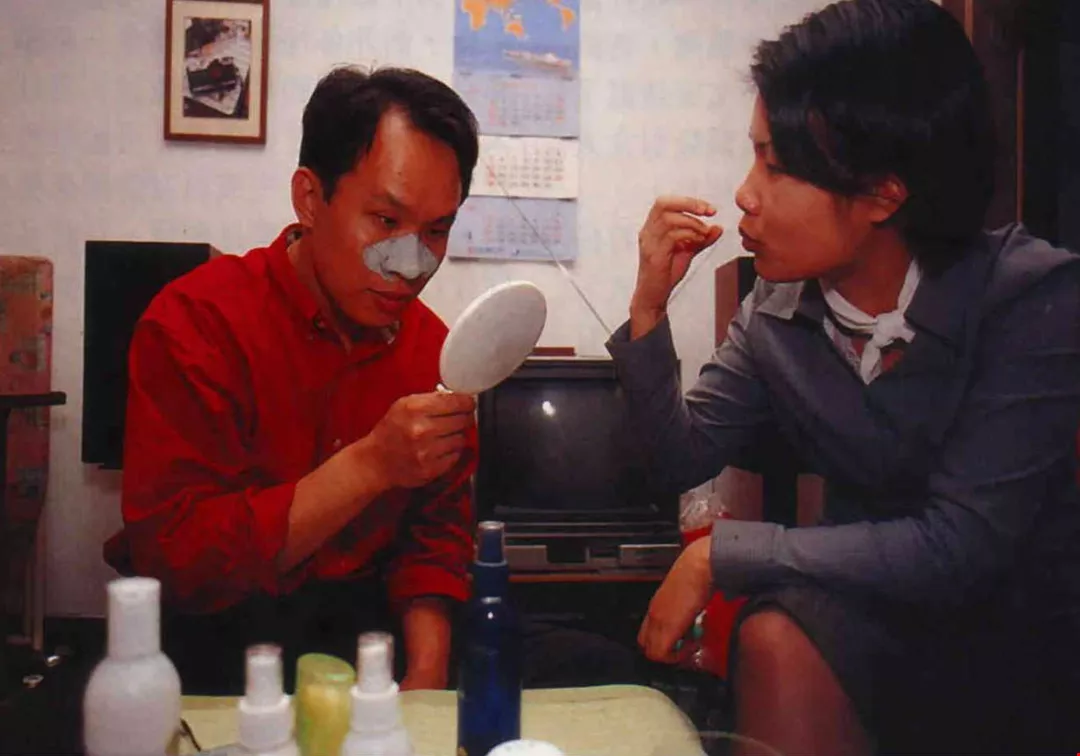
A good body takes working out, a good face takes care. Guys who are too shy to go to make-up counters in the department stores can get at-home service from direct marketing companies.


@List.jpg?w=522&h=410&mode=crop&format=webp&quality=80)


