For Love of Chinese Food:Yin Yih and Shin Yeh
Chen Hsin-yi / photos Hsueh Chi-kuang / tr. by Jonathan Barnard
April 2009


Gastronomic culture is an organism that is continually evolving. In Taiwan, Chinese and Japanese cuisine merged during the era of Japanese rule. And then in 1949, when the ROC government decamped to Taiwan from mainland China, the culinary seeds of every Chinese province came to take root, grow, and bloom in profusion.
In accordance with the recommendations of various gourmets and the Corporate Synergy Development Center, which has designed a plan for developing high-quality restaurants in Taipei, Taiwan Panorama is taking this opportunity to look at two of the city's most highly regarded restaurants. May these reports foster greater understanding about the secrets of these restaurants' success and offer a glimpse into the world of gourmet Chinese cuisine at a time when Michelin's agents have yet to ply their craft in Taiwan.
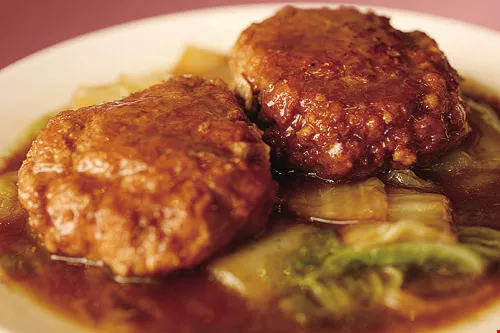
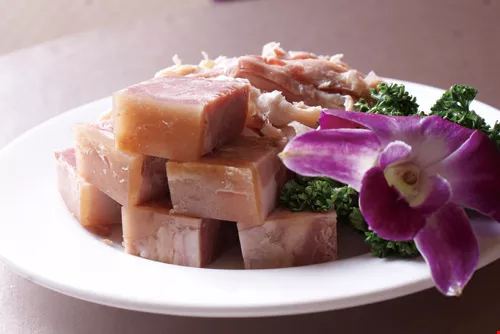
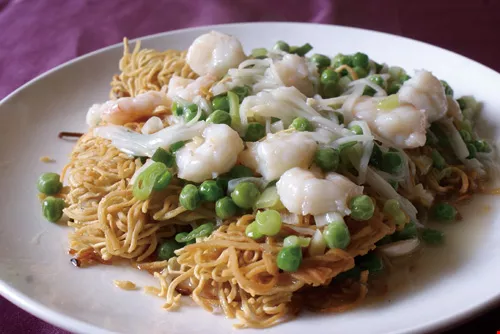
Hui'an-Yangzhou food, a form of Jiangsu-Zhejiang cuisine, blends the richness and color of northern food with the freshness, crispiness and sweetness of southern Chinese food. There's a hint of sweetness within its saltiness. Among the dishes Yin Yih serves are (from left to right) shrimp fried noodles, cold plate of pork trotter and air-dried chicken, braised "lion's head" meatballs, Chinese-style coleslaw with peanuts, and Wensi tofu.
Silver-winged keepers of the flame-Yin Yih
Entering Yin Yih, you step into an old-fashioned entry hall and are offered a traditional menu by elderly staff who unhurriedly greet long-time customers. Even its younger customers are likely to have long memories of the restaurant. Many of them "started coming here to eat their Chinese-style snacks and desserts just as soon as they were weaned off their mother's milk."
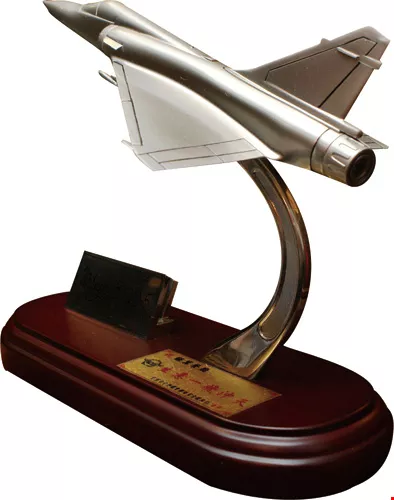
The name Yin Yih-which means silver wings-refers to the ROC air force insignia, which is worn on the breast of airmen's uniforms. The name was chosen to commemorate the restaurant's origins as an officers' club. When the ROC government was still on the mainland, the ROC's air force academy was located at Jianqiao near Hangzhou. After war broke out, the school moved to Chengdu. Consequently, the restaurant's cooking mixes the characteristics of Jiangsu-Zhejiang and Sichuan cuisines. When the government moved to Taiwan in 1949, the restaurant was privatized under a policy directive that the government shouldn't compete with the private sector. The cooks and the wait staff stayed on, and its clientele remained mostly mainlanders-particularly KMT party officials, bureaucrats and servicemen.
There are always sentimental bonds between an old restaurant and its customers that transcend mere food. Families have held wedding banquets here for three generations. Old groups of friends that regularly meet here have long treated it "like their own homes." Mr. Zhang, the restaurant's general manager, who still has a healthy, ruddy complexion although he is over 80, began manning the cash register here 60 years ago. He is still at the restaurant every day-now helping people order, now wrapping his arm around those leaving, now sitting down and having a drink with especially familiar customers.
In 2008 Gastronomy magazine gave Yin Yih four stars. It was cited for maintaining the essence of Hui'an-Yangzhou food: "On the one hand it has absorbed the richness and deep colors of northern Chinese food, but on the other it has integrated the freshness, crispiness and sweetness of southern Chinese cuisine to create a unique style of cooking that is largely salty but still hints at sweetness." Take, for instance, the stewed noodles that old customers invariably order. What makes the dish so special is that a hen has been stewed for the broth, and the noodles are then stewed over low heat. It ends up with a very rich flavor.
Moreover, Yin Yih has worked hard to recreate the traditional cooking methods of traditional Hui'an-Yangzhou cuisine. For instance, Wensi tofu, a dish with 300 years of history, was commoners' food that was invented by a monk named Wensi at the Yangzhou's Tianning Temple. This simple tofu soup stresses the chef's ability with a knife. For taking succulent tofu that could be blown apart and turning it into a noodle soup with snow-white shreds of tofu floating on top, the dish was selected by Emperor Qianlong to be presented at imperial feasts featuring the best of Manchurian and Han Chinese cooking during his rule in the Qing Dynasty. Wensi tofu employs the cooking method developed by Yuan Mei, a famous Qing-Dynasty writer, which uses a chicken broth to flavor vegetable dishes. Shredded chicken and bamboo shoots add flavor. The dish is tender and delicious.
Yin Yih's stir-fried shrimp over crispy rice, another of its signature dishes, is also the stuff of a historical legend: On one of the three occasions when Qianlong visited south of the Yangtze River, he ate at a small restaurant where the proprietor made a sauce of shrimp, chicken, and chicken broth that he poured over crackling rice. When Qianlong tried the dish, he was so impressed by the effect of its crackle and steam, as well as its wonderful smell and taste, that he praised it as the "best dish in the world."
Assistant manager Lan Longsheng, who has the relatively "limited" experience of only 14 years at the restaurant, minces no words when he says that it is very difficult for Chinese restaurants to cultivate personnel in this day and age since strict apprenticeships no longer work. To create another route for developing its cooks, Yin Yih began to offer year-long internships to four culinary students for the first time this year. But training them to maintain the traditional flavors is still a top concern. "Otherwise, as soon as the head chef takes some time off, regular customers will notice the difference and complain."
Yin Yih honors the old ways, but the plaudits of the critics have brought in a new clientele. Can they improve the eating environment and raise the quality of service accordingly? This will be key to their winning these new diners' hearts.
Hui'an-Yangzhou food, a form of Jiangsu-Zhejiang cuisine, blends the richness and color of northern food with the freshness, crispiness and sweetness of southern Chinese food. There's a hint of sweetness within its saltiness. Among the dishes Yin Yih serves are (from left to right) shrimp fried noodles, cold plate of pork trotter and air-dried chicken, braised "lion's head" meatballs, Chinese-style coleslaw with peanuts, and Wensi tofu.
The glory of Taiwanese food-Shin Yeh 101
In May of 2000, the inaugural banquet for former president Chen Shui-bian broke new ground in elevating street snacks to national banquet food. Yet the fashion for turning street snacks into banquet food didn't start with Chen Shui-bian. Shin Yeh, a standard bearer for "old-school" Taiwanese food, was opened in a space holding 11 tables on Taipei's Shuangcheng Street 32 years ago. It has made a lot of innovations in its approach to Taiwanese banquet food.
This creativity can be traced to the 1970s. Back then famous restaurants of a century ago on Dihua Street, such as Jiangshanlou and the Penglai Pagoda, had long since closed. Although what is regarded today as Taiwanese-style "girly bar restaurant food" had experienced a rebirth in the hot springs town of Beitou and in the food in wedding and funeral banquets in the countryside, it was far removed from what one would get at a formal restaurant.
Li Xiuying, who had enjoyed cooking since she was very young and had opened a restaurant with partners, decided to bring "Taiwanese cuisine" into the realm of banquet food. To that purpose, she recruited Chen Wei-nan, a master chef at a Beitou resident, and, Guan Maoyin, another senior chef, to create a menu of traditional Taiwanese-style banquet food.
Unfortunately, the menu didn't fit mainstream notions about banquet food, which at the time had a decidedly mainlander orientation. The early years were tough: some days they would have a grand total of two customers and their "own tears would moisten the food." Consequently, the restaurant changed its emphasis to light snacks, such as fried eggs with dried turnip, steamed pork petites topped with egg yolk, and wok-seared pork liver with coriander, which were the restaurant's signature dishes. When the economy took off in the 1980s, Shin Yeh's rice porridge and side dishes became all the rage. Its low-budget Taiwanese-style banquets also grew very popular, and the restaurant continually expanded.
Beginning in 2006, Shin Yeh brought Taiwanese food to Singapore, Beijing and Japan. From the selection of ingredients and the prep work, to the heat control and the temperature of the cooking oil, to the seasoning, they began to prepare every dish in a modern, standardized manner. General manager Lee Hung-chun, who inherited the family business, frequently brought the restaurant's cooks abroad to try new food and to observe-so as to research ways to create truly elegant food.
Located on Taipei 101's 85th floor, Shin Yeh 101 has a hip feel to it, with authentic Taiwanese food, Western pacing of the courses, and Japanese presentation.
Take its cold plate of four different regional appetizers: roast mullet roes, fresh abalone, salmon roes and mentaiko (marinated roe of pollock) rolls. The vibrant colors set off against a stark white ceramic plate give the dish a level of sophistication that compares to French cuisine. As for Shin Yeh 101's unique wok-seared pork liver, the thickness, color and softness of the liver have been carefully selected. The cooking method used is quite different from the traditional process, wherein the liver is first marinated, then steamed, and then sliced. Instead, the slices are quickly stir-fried at a high temperature, so that one can taste the true flavor. It has a very fresh taste and is not at all oily. It's best accompanied by red wine.
On the 30th anniversary of the restaurant's founding, CEO Li Xiuying, along with master chef Ah-Nan, created a recipe book titled Heart and Soul: Taiwanese Cuisine from the Shin Yeh Restaurant. The book includes 62 recipes in three categories: "classic dishes," "modern dishes," and "Shin Yeh exclusives." Remarkably, they elected to be totally forthcoming, revealing their secrets so as to spread the word on Taiwanese food.
- The Characteristics of Taiwanese Food
- Original flavors: In comparison to other Chinese cuisine, Taiwanese food, which was deeply influenced by Japanese cuisine, doesn't use a lot of heavy seasoning. It's light and fresh and makes light use of salt and oil.
- Abundance of seafood: It makes ample use of seafood, which may be served cold or raw.
- Stir frying and hot infusion of cooking oil: Infusing cooking oil with seasoning gives food cooked with it a strong fragrance, and rapid stir frying preserves the freshness and nutritional content of food.
- Extensive use of soups, sweet-and-sour dishes and pickled dishes: In the agrarian society of Taiwan's early Han Chinese pioneers, the common food was always soupy to some degree. It enabled them to eat and replenish their energy quickly. Sweet-and-sour food makes consuming a lot of plain rice more palatable, and pickling increases salt content and allows you to preserve food that otherwise might be wasted.
Hui'an-Yangzhou food, a form of Jiangsu-Zhejiang cuisine, blends the richness and color of northern food with the freshness, crispiness and sweetness of southern Chinese food. There's a hint of sweetness within its saltiness. Among the dishes Yin Yih serves are (from left to right) shrimp fried noodles, cold plate of pork trotter and air-dried chicken, braised "lion's head" meatballs, Chinese-style coleslaw with peanuts, and Wensi tofu.
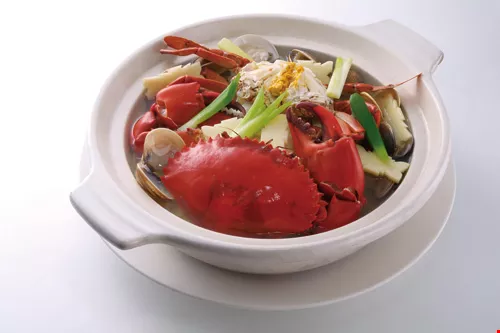
The guiding conception behind Shin Yeh is to take Taiwanese cuisine, put a more sophisticated spin on it, and serve it as if at a formal banquet. Among the offerings at Shin Yeh 101 are fried eggs with dried turnip, roast mullet roes, wok-seared pork liver with coriander, golden-fried squid balls, and boiled fresh green crab and clams with ginger served in a casserole.
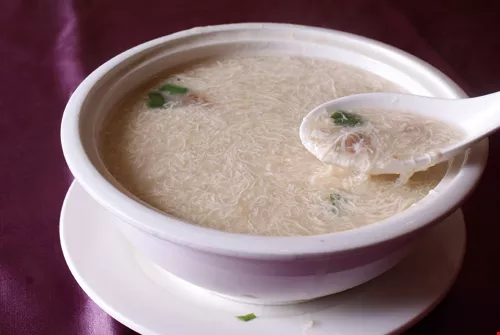
Hui'an-Yangzhou food, a form of Jiangsu-Zhejiang cuisine, blends the richness and color of northern food with the freshness, crispiness and sweetness of southern Chinese food. There's a hint of sweetness within its saltiness. Among the dishes Yin Yih serves are (from left to right) shrimp fried noodles, cold plate of pork trotter and air-dried chicken, braised "lion's head" meatballs, Chinese-style coleslaw with peanuts, and Wensi tofu.
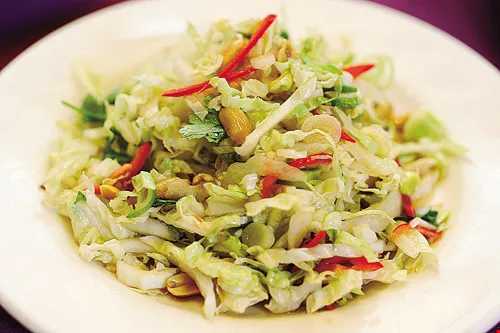
Hui'an-Yangzhou food, a form of Jiangsu-Zhejiang cuisine, blends the richness and color of northern food with the freshness, crispiness and sweetness of southern Chinese food. There's a hint of sweetness within its saltiness. Among the dishes Yin Yih serves are (from left to right) shrimp fried noodles, cold plate of pork trotter and air-dried chicken, braised "lion's head" meatballs, Chinese-style coleslaw with peanuts, and Wensi tofu.
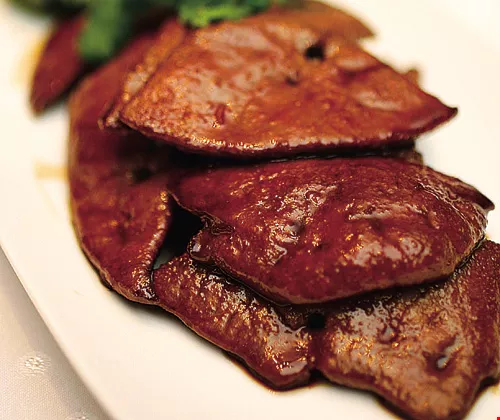
The guiding conception behind Shin Yeh is to take Taiwanese cuisine, put a more sophisticated spin on it, and serve it as if at a formal banquet. Among the offerings at Shin Yeh 101 are fried eggs with dried turnip, roast mullet roes, wok-seared pork liver with coriander, golden-fried squid balls, and boiled fresh green crab and clams with ginger served in a casserole.
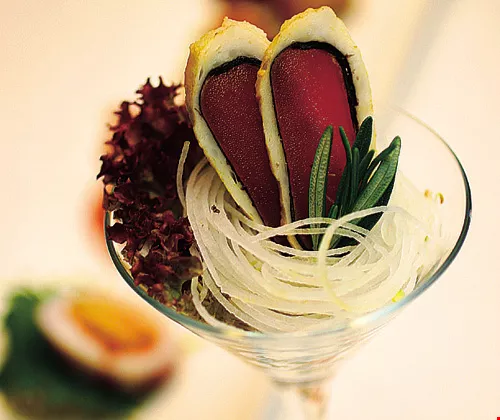
The guiding conception behind Shin Yeh is to take Taiwanese cuisine, put a more sophisticated spin on it, and serve it as if at a formal banquet. Among the offerings at Shin Yeh 101 are fried eggs with dried turnip, roast mullet roes, wok-seared pork liver with coriander, golden-fried squid balls, and boiled fresh green crab and clams with ginger served in a casserole.
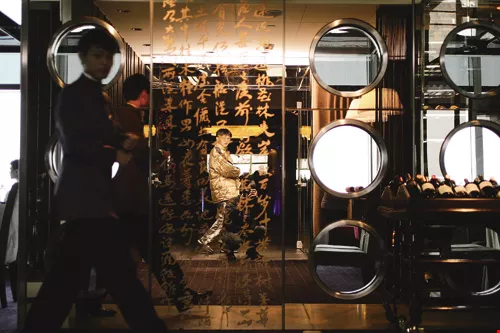
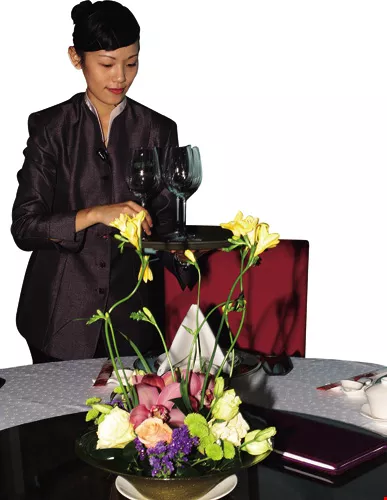
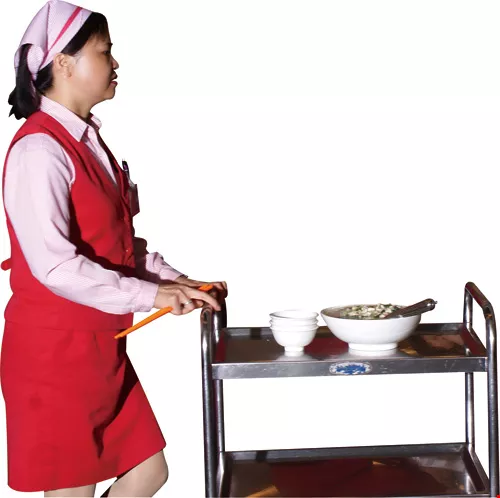
Located on the 85th floor of Taipei 101, Shin Yeh 101 has taken "finding paradise" as its guiding concept. It has worked hard to create a sense of remove from the dusty hustle and bustle of everyday city life. "If you want to seal a big business deal, or propose to you future bride, we can definitely lend a hand," says Shin Yeh 101's long-term manager Wang Xiulan.
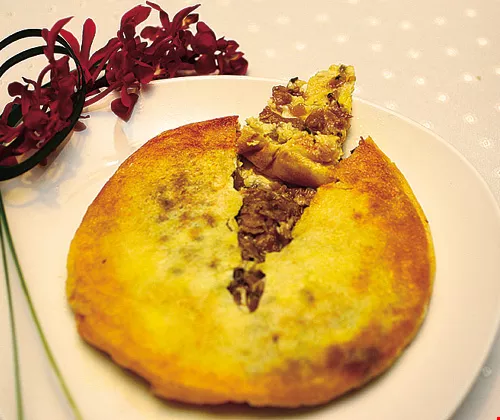
The guiding conception behind Shin Yeh is to take Taiwanese cuisine, put a more sophisticated spin on it, and serve it as if at a formal banquet. Among the offerings at Shin Yeh 101 are fried eggs with dried turnip, roast mullet roes, wok-seared pork liver with coriander, golden-fried squid balls, and boiled fresh green crab and clams with ginger served in a casserole.
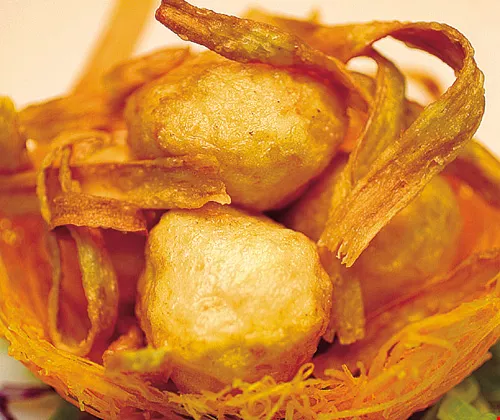
The guiding conception behind Shin Yeh is to take Taiwanese cuisine, put a more sophisticated spin on it, and serve it as if at a formal banquet. Among the offerings at Shin Yeh 101 are fried eggs with dried turnip, roast mullet roes, wok-seared pork liver with coriander, golden-fried squid balls, and boiled fresh green crab and clams with ginger served in a casserole.


@List.jpg?w=522&h=410&mode=crop&format=webp&quality=80)


