

The United States is one of Taiwan’s most important allies and trading partners. US-Taiwan relations have passed through several phases as times have changed. In the early days the two parties were military allies and diplomatic partners, and the US provided aid to the ROC. Later the US distanced itself from Taiwan and finally broke off formal diplomatic relations. Since then, the relationship has moved to the social and economic plane, becoming deeper despite the downgrading of formal diplomatic ties.
Looking back, there is much evidence to show the impact the US has had on Taiwan’s development track. Economically, the US poured in resources to help the transition from an agricultural to an industrial society. Culturally, the US has been the main source of foreign culture, providing Taiwan’s intellectuals with a window on the world. Politically, besides being the main guarantor of Taiwan’s security, the US has indirectly encouraged democratization. Today, that the ROC is able to participate in and contribute to international society, and that its society is more pluralistic and open, are closely related to its friendship with the US over half a century.
In November of 2012, the ROC passport became the 37th in the world to be awarded visa-free travel privileges from the US, the kind of significant good news that is all too rare here. Just as long-stagnant trade and economic negotiations are about to enter a “thaw,” tourism and business interactions will become even more frequent.
“When I entered Disneyland, just like when I went to places in other American cities—like the New York World’s Fair, Lincoln Center for the Performing Arts, the Los Angeles Music Center—the first impression could be summed up in a single word: ‘Money!’ I just realized how much could be done by intelligent people if only they had enough financial backing.”
“I’ve heard that every year during summer vacation, students from Taiwan studying all over the US flood toward the coasts, toward New York, San Francisco, Los Angeles…. The women are looking for husbands, the guys for dishwashing jobs.”
These remarks in 1964 by writer Lin Haiyin during a visit to the States testify to the economic gap that then existed between Taiwan and the US.

Many of the people Taiwan is most proud of came to prominence in the States, giving a great boost to Taiwan’s global visibility. At left is director Ang Lee, in Taiwan to promote his film Life of Pi. At right (courtesy of Top Photo Group) is Baltimore Orioles pitcher Chen Wei-yin.
Before the 1990s, people from Taiwan longed to go to the US to study for advanced degrees—a trend which had a major impact on society here in Taiwan—or even to emigrate to the US. These waves have since been replaced by new ones: non-degree travel-study programs that people can do at the drop of a hat, working holidays, and straight out travel for fun. What has not changed, perhaps, is that the people of Taiwan have always had a special friendship and affection for the United States.
Since November 1 of 2012, people from Taiwan have been able to visit the US for 90 days visa-free, which is very exciting news indeed. It is expected that there will be waves of tourists going to the US from Christmas of 2012 through Lunar New Year of 2013, and travel agents are promoting a variety of special itineraries.
One tour is built around the theme “Support Jeremy Lin.” Tour members will visit scenic spots in Texas during the day, while at night they will watch Lin’s Houston Rockets. Another tour, whose catch phrase may be loosely translated as “break the bank,” takes people to Las Vegas, where they enjoy luxury hotels, shopping, and the latest in entertainment. For the more introspective, there is a “maple tree” tour of the state of New Hampshire, and another through California’s Napa Valley wine region by train.
“Taiwan has crossed the 100-country threshold, including the US, for visa-free travel,” says Yung Chi-yeh, president of National Kaohsiung University of Hospitality and Tourism, prognosticating that “In the future, the trend in tourism will be toward ‘shorter and more relaxed’ trips, with people traveling more often but each time for fewer days, less extravagantly, and with simpler and more focused itineraries.”
Visa-free travel to the US is especially important for Taiwanese because of the complex and deep historical relationship between the two countries.
An editorial in the United Daily News pointed out that over the last 60 years, whenever there was any kind of internal or external crisis—such as the withdrawal from the UN in 1971, the break in diplomatic relations with the US in 1979, or the 1996 missile crisis—there would be a wave of emigration from Taiwan to the US, reflecting a sense among many that Taiwan’s situation was worrisome and that the States were the only place to go to feel really safe. Today, the US has opened its doors to Taiwan, proving that Taiwan is a safe and dependable society, and that citizens no longer need feel any sense of “insecurity.”
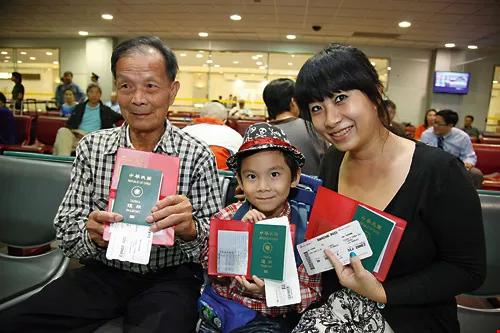
Happy tourists wait to board their plane. Taiwan is the 37th country whose citizens enjoy US visa waiver privileges, making US-bound travel a lot more pleasurable.
If you want to understand what has happened to Taiwan since WWII, Taiwan-US relations are an essential thread in the story. Key words include “US aid,” “overseas study,” and “American pop culture.”
When WWII ended, the US, the only major power that avoided any fighting on its own soil, was left standing as a world power with only one rival: the Soviet Union. The US government launched a series of large-scale, systematic, and long-term international aid programs. When the Korean War broke out in 1950, in an effort to “contain” the expansion of communism, the US reassessed the strategic importance of anti-communist alliances in Asia and redeployed effort to the Pacific. One part of this was the beginning of a military and economic aid program to Taiwan, ending only in 1963, under which the US provided US$3.6 billion (in current dollars, US$20–25 billion).
Food and agriculture policy during the era of US aid—including measures like rural electrification and improving rural healthcare and hygiene—guided the development of rural communities. Economically it was a period in which the construction of basic infrastructure, such as the Shihmen Reservoir, was promoted, and the foundations were laid for the development of light industry and processing industries through exports to the US market, creating the high degree of dependence on exports to the US that persists to this day.
Politically, US aid also brought with it consciousness of “democracy,” forcing the government to begin instituting local-level elections as early as 1951, one of the key factors in the nurturing of the democratic movement.
In a book about the era of US aid, Liu Zhiwei, an expert in the history of post-war agricultural development in Taiwan, wrote that as the Americans provided Taiwan with material support, spread pro-American propaganda, and introduced Taiwanese farmers to modern agricultural techniques, inevitably there was some cultural friction. Though Liu’s book focused on humorous incidents, the serious underlying point is that the daily lives of ordinary people in Taiwan were interwoven with US policies and ideas.
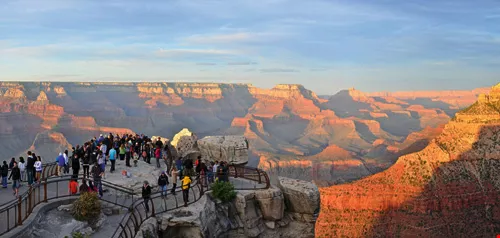
The USA has attracted an endless stream of people searching for the “American Dream.” The pluralized culture and rich natural scenery are also magnets for international tourists. The photo was taken at the Grand Canyon National Park.
The US aid program came to an end in 1963. It was replaced by a systematic effort by both governments to encourage students from Taiwan to study in the US, through either scholarships on the US side or open examinations to win state funding on the ROC side.
At that time, while martial law was still in force in Taiwan, the government imposed strict controls on thinking and politics. In addition, there were very few graduate programs in Taiwan. As a result, ambitious young people had almost no choice but to set their sights on study in America.
For a time, the magnetism of the US was such that there was serious discussion in Taiwan over the possibility of having the island’s most talented people leave, never to return. But those who went to the US to get advanced degrees, one and all elites in their various fields, made such outstanding achievements even if they remained in the US to work, to found businesses, or to do research, that they greatly raised Taiwan’s international profile. Later many returned to Taiwan, and many of these “returned scholars” were suitably rewarded with important jobs. They included Lee Teng-hui, who held numerous government and Kuomintang party posts before ultimately becoming ROC president (1992–2000); current president Ma Ying-jeou, with a similar resume; and Annette Lu, a prominent figure in the democracy movement and a former vice-president (2000–2008).
Indeed, overseas student groups played an important role in the democratization process, whether acting in support of the ruling Kuomintang (such as the nationalist activists behind the first “protect the Diaoyu Islands” movement in 1971) or the “non-party” politicians (i.e. those opposed to the authoritarian system). Representative figures include the writer Liu Da-jen and Science Monthly founder Lin Siao-sin.
In the 1990s, once the economy had taken off, many people could afford to pay their own way to the US. In 1993, at the peak, there were 37,000 Taiwanese studying in the States, and the number of returning scholars also sharply increased. Data shows that from 1990 through 1995, 30,000 overseas scholars, experts, and students returned to take jobs in Taiwan, of whom 87.7% had earned their degrees in the US.
In particular, people who returned to Taiwan with specialized technical knowledge were instrumental in the rapid transformation of the economy from a labor-intensive to a technology- and knowledge-intensive one. Perhaps the best-known figure in this respect is Morris Chang, the founder and current chairman of Taiwan Semiconductor Corporation.
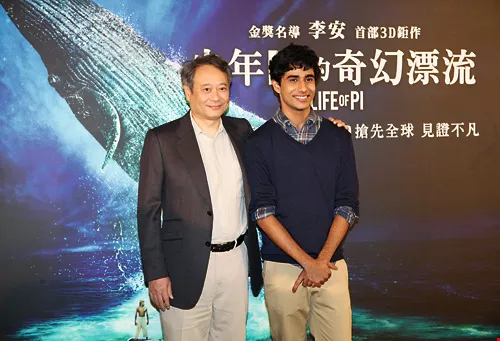
Many of the people Taiwan is most proud of came to prominence in the States, giving a great boost to Taiwan’s global visibility. At left is director Ang Lee, in Taiwan to promote his film Life of Pi. At right (courtesy of Top Photo Group) is Baltimore Orioles pitcher Chen Wei-yin.
Running parallel with the overseas study wave of the 1970s was a massive influx of US culture into Taiwan, conveyed via channels like Hollywood films, US Armed Forces Radio, and the US Information Service offices and library on Nanhai Road in Taipei. Social critic Yang Zhao says that for Taiwanese born in the 1950s and 1960s, the trendiest culture, ideas, literature, music, and films all came from the US. These included opposition to the war in Vietnam, civil rights, and hippie culture. Even European cultural phenomena like existentialism were first filtered through the US before getting to Taiwan. The only difference is that, because of government restrictions on freedom of information, there was a time lag of five to 10 years between the peak popularity of such ideas in the US and their spread into Taiwan.
Nonetheless, there was also a reaction against such overwhelming acceptance of American culture. In 1975, Li Shuangze, a leading figure in the “campus folk music” movement, was the first to stand up and ask why all of the hundreds of contestants in a folk music contest were singing English-language songs. “We should sing our own songs!” he famously declared.
The relationship with US culture took an even more interesting twist in the late 1980s, right around the time martial law was lifted (it formally ended on January 1, 1987). Yang Zhao recalls that in those years—for the first time ever in Taiwan’s history—intellectuals were embracing leftist ideas from both Europe and the US that were critical of American capitalism.
In 1984, when the US fast-food behemoth McDonald’s opened their first restaurant in Taiwan, the move was opposed not only by consumer groups who complained that the prices were unreasonable and that the fare was unhealthy for children, but also by many intellectuals who, building on “dependency theory” (which originated in Latin America before penetrating US universities) were critical of the monopolization of local markets by foreign corporations and the devastation of local firms faced with overwhelming foreign capital and technology.
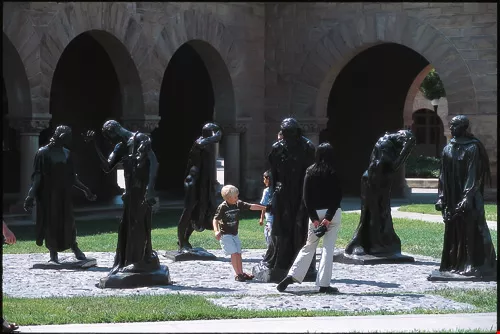
Students from Taiwan still aspire to go to the US for advanced degrees. The photo was taken at Stanford University’s thought-provoking sculpture garden.
Taiwan-US relations look even closer when expressed in terms of degree of economic interdependence.
Taiwan’s trade surplus with the US burgeoned in the 1980s, reaching a historic peak of over US$16 billion in 1987. The US then began pressuring Taiwan to open its domestic market to imports and to allow the NT dollar to appreciate.
In 2001, the US, mainland China, and Japan were the three top destinations for exports from Taiwan, with the US getting, by a small amount, the highest percentage. By 2009, however, with mainland China’s status as “workshop to the world” cemented, mainland China (including Hong Kong) was taking over 40% of Taiwan’s exports, with only 10% going to the States, putting the mainland in the number one ranking.
Statistics from 2011 list the US as Taiwan’s number three trading partner, while Taiwan is the US’ #10 trading partner. However, the US remained, as it has always been, the number one source country for foreign capital in Taiwan, with cumulative investment of US$22.4 billion. Most of that has gone into finance, insurance and the electronics industry.
From the point of view of American firms, doing business with Taiwanese is not merely a matter of profit, there is also a special friendship.
Sean Fogarty, director of the American State Offices Association in Taiwan (he is also head of Washington state’s Trade Development Office in Taiwan), says that Taiwanese speak American-accented English, which makes Americans feel right at home. In contrast, most English speakers in Singapore and Hong Kong studied in the UK.
Secondly, Fogarty continues, Taiwanese really understand American corporate culture because so many have studied or worked in the US, so it is easy to achieve mutual understanding. In particular, Taiwan is vital to American firms as a platform for moving into the mainland Chinese or other Asian markets.
Irene Tsai, managing director at the Pennsylvania Office of Trade and Investment, points by way of illustration to Air Products, a company from Pennsylvania which for more than 20 years has been engaged in a joint venture with Taiwan’s San Fu Group. The joint venture firm, Air Products San Fu Company Ltd., has been supplying specialized chemical gas products needed by Taiwan’s semiconductor industry and recently invested US$250 million to expand its facilities in the Southern Taiwan Science Park in an effort to meet rapidly growing demand in Asian markets for semiconductors and thin-film transistors. “The chief executive officer has always been a Taiwanese, with only the vice-CEO being an American, which shows the trust and respect American firms have for their Taiwanese partners,” she says.
Sean Fogarty feels that Taiwan’s entrepreneurs, who have built up their businesses from scratch, are not only transparent in their corporate governance, but are very receptive and flexible with regard to new concepts and new products. Their incredible adaptability makes them even more attractive to foreign capital.
Fogarty is also highly impressed with the purchasing power of Taiwan consumers. For example, the Neihu branch of Costco, a membership cash-and-carry warehouse chain based in Washington State, has the highest revenue per square meter of any branch in the world. However, Fogarty adds, “The goods and services that American states sell to Taiwan have to have tremendous value-added and sophistication, like medical instruments and biotechnology, because,” he says, “Taiwan’s own products are just too competitive!”
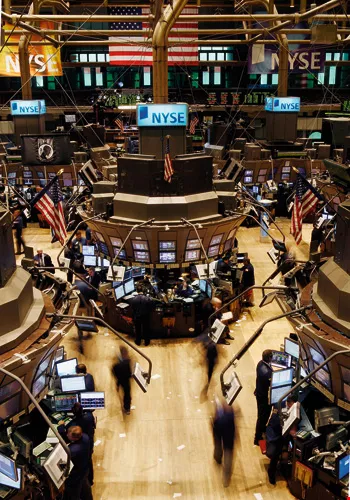
It’s said that when America sneezes, the whole world catches cold. Let’s hope they keep the New York Stock Exchange warmly dressed this winter!
Comparing the present to the past, Yang Zhao feels that Taiwan-US relations today are “equal and normalized.” This is especially manifest in the frequency and enthusiasm of travel and business interactions between the people of the two parties. Culturally, the influence and power of the US will never again return to the level of the 1970s.
Wu Jieh-min, of the Institute of Sociology at the Academic Sinica, has written that since the end of the Cold War, there has been a dramatic change in the global political and economic structure, placing Taiwan in a position of great uncertainty. On one hand, the US has continued to build a partnership with mainland China, which has paved the way for the mainland’s transition toward a capitalist market economy and at the same time has destabilized the balance of power in the Taiwan Strait. On the other hand, as cross-strait economic ties have deepened, lack of clarity about the definition of what Taiwan is has led to growing anxiety in our society.
Wu’s article added: “Taiwan is caught in the fissure between two empires—this is a fact that has been dictated by history. We need to comprehensively reassess the direction in which post-Cold-War society will go, and clarifying our country’s status and pursuing our proper position in international society is just one element in this.”
The economic, cultural, and human resource connections that have existed between the US and Taiwan remain an ineradicable page in our history. Looking to the future, it is to be hoped that in the face of global economic uncertainty the two parties will continue to work hand in hand and that Taiwan will be able to find a development path that provides stability, security, and well-being.
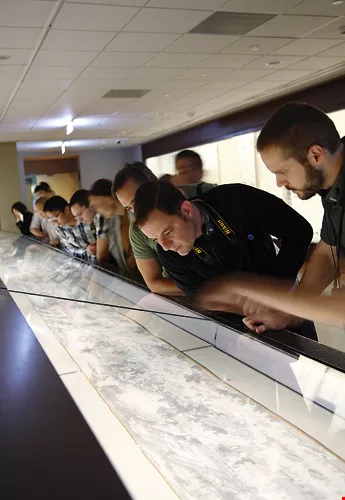
Now that the US has awarded visa waiver privileges to Taiwanese, the ROC will extend US tourist visas to 90 days. The National Palace Museum is one of Taiwan’s can’t-miss stops for foreign visitors.

@List.jpg?w=522&h=410&mode=crop&format=webp&quality=80)


@List.jpg?w=522&h=410&mode=crop&format=webp&quality=80)
@List.jpg?w=522&h=410&mode=crop&format=webp&quality=80)
