A World in Her Hands—Yek Sansan
Cathy Teng / photos Chuang Kung-ju / tr. by Geof Aberhart
August 2016
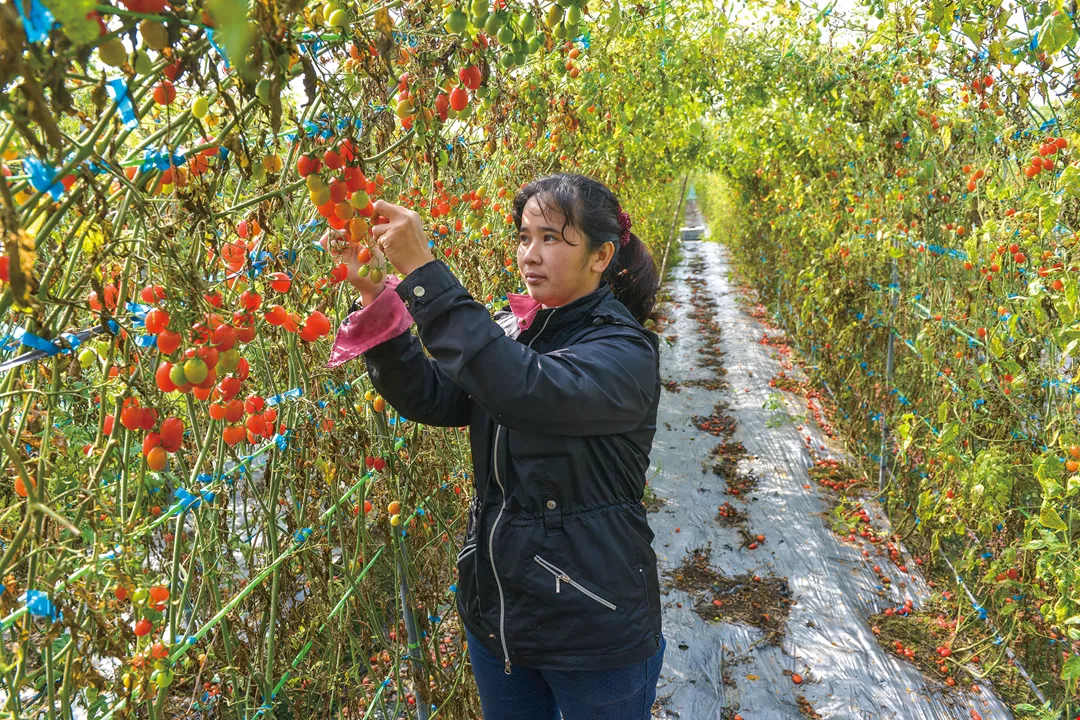
In the morning, she pulls on her gumboots and heads out to the orchard to pick tomatoes, and then to the paddies to tend to her rice seedlings.
In the afternoon, she and her husband drive to a temple in a neighboring village, set up their stage, and put on a po-te-hi Taiwanese glove puppet show. Her name is Yek Sansan, and she moved to Taiwan from Indonesia at the age of 19 after marrying a Taiwanese man. Fast forward 15 years and, to the amazement of many, she has become a trained professional po-te-hi puppeteer.
Po-te-hi—or budaixi in Mandarin—is one of Taiwan’s most important traditional performing arts. Not only has it served as a big source of entertainment for the ordinary people, it also has close ties with folk religion. Yek’s husband Chen Chih-neng runs a po-te-hi troupe, traveling to temples to perform during various festivals. Yek has become an invaluable partner to Chen, not only taking care of the household but also performing alongside him.

Yek Sansan and Chen Chih-neng are an inseparable couple, even running their own po-te-hi troupe together.
The puppet master from Indonesia
On the day Taiwan Panorama visited the couple, Chen had been invited to perform at the Bao Gong Temple in Dounan Township, Yunlin. The performance was to be part of a ceremony held by a local family to thank the gods for their protection over the past year. With everything in their truck, the couple drive to the venue, and within ten minutes of arriving, everything is ready to go. Like a Transformer, the truck changes as the couple lift up the roof and set out a wooden frame, and just like that the little truck has become a glittering stage.
Before the show starts, they light some incense and joss paper, praying for the stage to be “cleansed.” Feeling ill and running a fever of 39°C, Chen steels himself and finishes writing the playbill that lists the date, the gods being honored, and the donors. Then he says a few auspicious words and turns the performance over to Yek.
The show begins with the customary “pan-sian” (banxian) curtain-raiser, using wooden puppets to portray gods relaying the wishes of the people to the heavens.
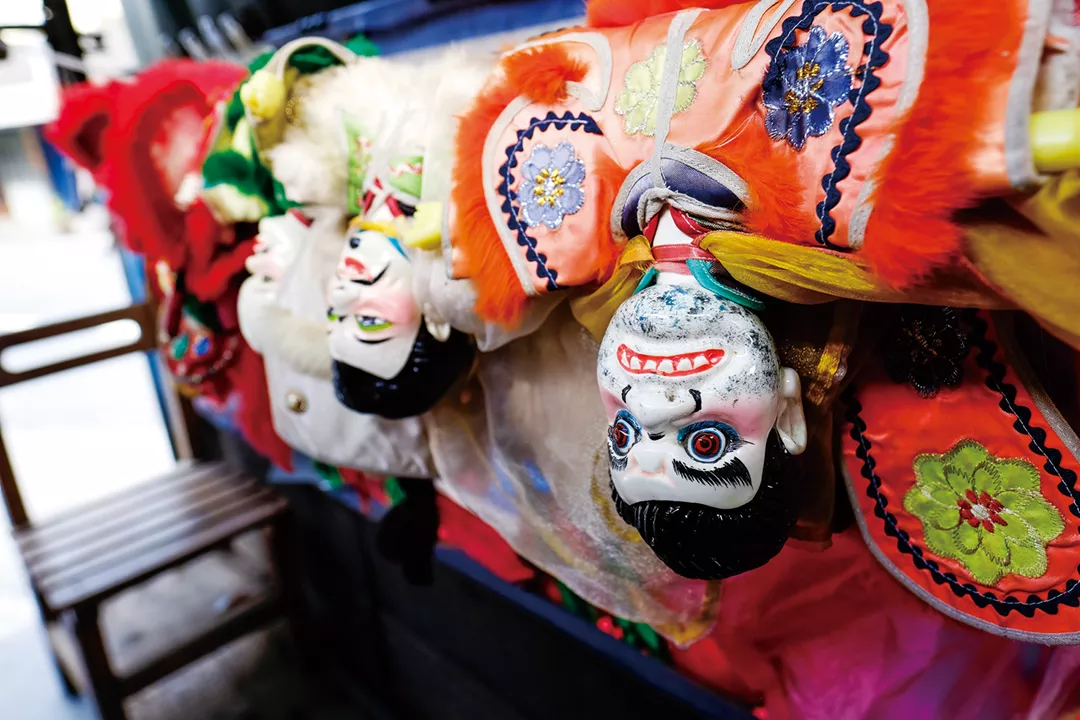
One by one, Yek introduces immortals representing wealth, fortune, and longevity, making sure they move with a majesty that befits their status as deities. All of the puppets she will be using are set up behind the stage, alongside script sheets with notes in Bahasa Indonesia to make sure she gets them out in the right order. Each puppet has its own distinctive music and rhythm, and so Yek can tell just from the music who should be coming out next. Explaining her process later, she demonstrates the different gaits of male and female puppets, with the females walking more sensually and the males more quickly and heroically.
Yek says she only found out that her new husband was the head of a puppet theater troupe after she arrived in Taiwan. Po-te-hi doesn’t really exist in Indonesia, so she found the puppets intriguing. She started learning the art from her husband and his uncle, with Chen taking her on as an apprentice and not letting their relationship soften his strict teaching style. Learning puppetry involves learning the special facial features and characters of each of the puppets, as well as when they take the stage and how they move. “At first I couldn’t keep the puppets’ faces straight in my head, and the language barrier made it even harder,” says Yek, embarrassed. “I would send them out at the wrong times, and had to rely on my husband to rescue the show.”
Her first performance was the story of the mad monk Ji Gong, and she still remembers how nervous and scared she was, afraid she’d screw up and ruin everything.
When asked what the hardest part of learning po-te-hi was, though, Yek responds that “as long as you really, really want to learn, there’s nothing too hard to figure out.” Getting hit in the head by puppets during practice is common, and as their heads are propped up by the fingers, swollen fingers are far from unusual. On top of that, when she first arrived Yek spoke no Taiwanese, and had to ask what every sentence meant. A believer in the idea of “no pain, no gain,” she stuck to it, and now she travels all over the island with her husband to perform, but even still she is always watching and learning—real-world experience is the easiest to remember, she says.
A hard worker by nature, Yek has invested years into her practice, and now can control three puppets with just two hands, enough to put on a full show solo.
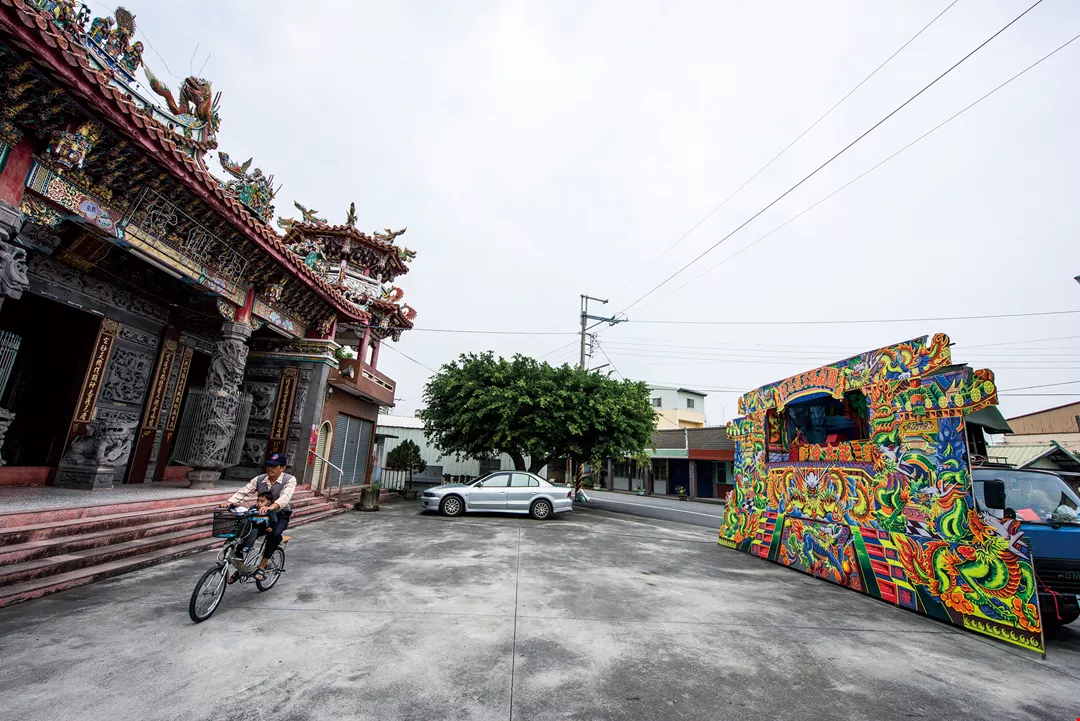
Performed in booths set up in front of temples, po-te-hi shows are usually intended to thank the gods for their protection and good grace.

Leaving home at 19
Yek is originally from the city of Singkawang in Indonesia’s West Kalimantan Province, and is of Hakka descent. After the 1998 anti-Chinese riots in Indonesia, Yek’s mother began worrying about her daughter’s future and contacted a matchmaker to marry her off to a Taiwanese man.
When she arrived in Taiwan, Yek recalls, she spoke neither Mandarin nor Taiwanese, and her husband’s puppet theater business was on rocky terrain as he was a bit of a drinker and not committing himself to his work. For a while, she even considered running away. After their daughter was born, for a while the family finances rested predominantly on Yek’s shoulders. Then her husband quit drinking and invested himself back into his puppetry, and the three of them began rebuilding their new family.
There isn’t call for po-te-hi shows all the time, though. February, March, August, and September are peak time for thanksgiving events, so Yek and her husband negotiated a few blocks of land from a local family to start a small-scale farm and complement their income.
Their little “Farmville” is half used for growing tomatoes, while the other half is dedicated to cauliflower. Yek inspects their plot carefully, looking for cauliflowers that are almost ready to harvest and folding their leaves over them to protect them from birds, keeping their salability up. Previously they had another plot dedicated to Chinese flowering cabbage, but right now that part is unused, with irrigation being set up to make it ready for planting later.
As we check out their plants, Yek explains which types of tomato grow better here and how they fertilize the soil in preparation for the next crop to go in their place. When asked how she knows so much about farming and whether she had worked on a farm back in Indonesia, Yek replies that she hadn’t, and that in fact she had worked as a nicely dressed sales assistant. Life in Taiwan has been hard work, she says, but has also taught her a lot.

Yek and her husband rent a few plots of land where they grow tomatoes and cauliflower to supplement their income.
Genius is 99% perspiration
From time to time, elderly folk from the village will stop by and have a chat with Yek, talking about when the cauliflower will be ready, how the tomatoes are about ripe enough to harvest, about turning the soil once the other plot is properly irrigated.... Throughout all of this, Yek chats along in smooth Taiwanese. These old villagers have nothing but praise for the hard-working, impressive woman that local boy Chen has married, with neighbors telling us: “Yek Sansan is a hard worker and a po-te-hi performer, she’s a real genius.” Such praise is hardly unfounded, given the diligence and hard work Yek has shown in her time here.
In the 15 years she has been in Taiwan, Yek has fully thrown herself into local life. In their home, the couple have a shrine to Lord Xiqin, who could be considered the “patron saint” of po-te-hi, and every morning and evening they light incense and pray to him to support their family and their business.
So which is the better money earner, tomatoes or po-te-hi? “They’re both alright,” Yek responds. “Either way we rely on the heavens to make enough to put food on the table.” A thanksgiving ceremony is essentially an appointment with the gods, so once the day is set, barring violent storms the show must go on. While few people watch po-te-hi shows today, Yek still takes every show seriously, considering them deals with both their clients and the gods, and as such she gives each performance her all.
Watching from backstage as this husband-and-wife team cram themselves into a tiny space and maneuver their puppets around, we get a glimpse of real happiness in this small corner of Taiwan.

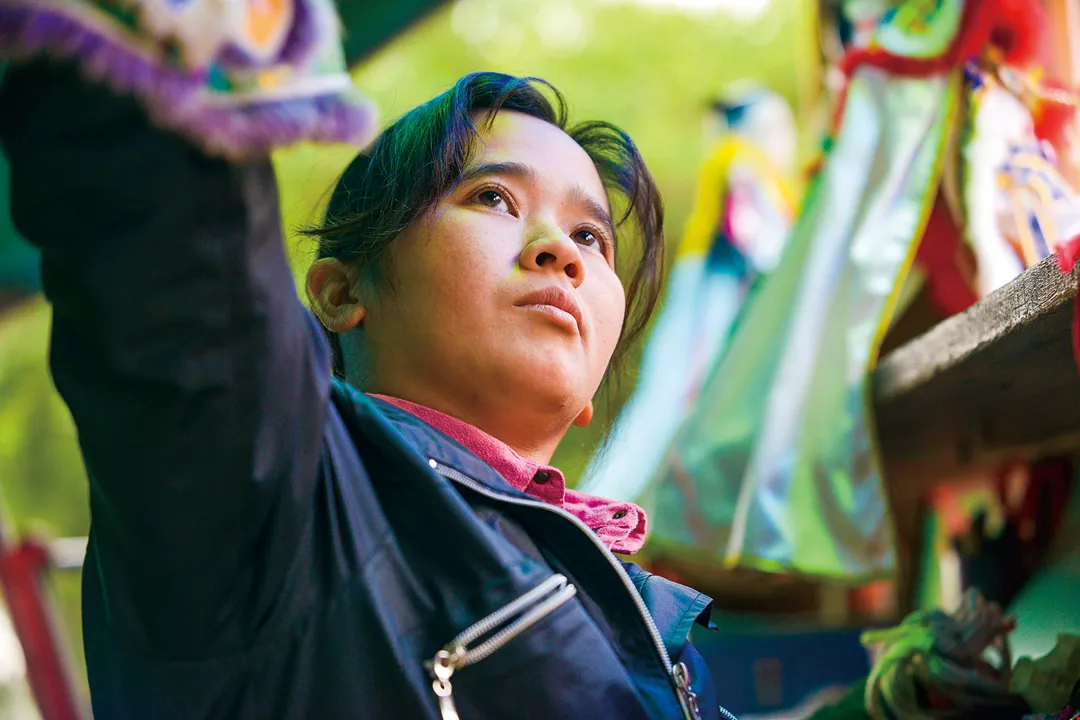
Yek gives her all to each and every performance, just as she does with everything else in life.

Yek gives her all to each and every performance, just as she does with everything else in life.

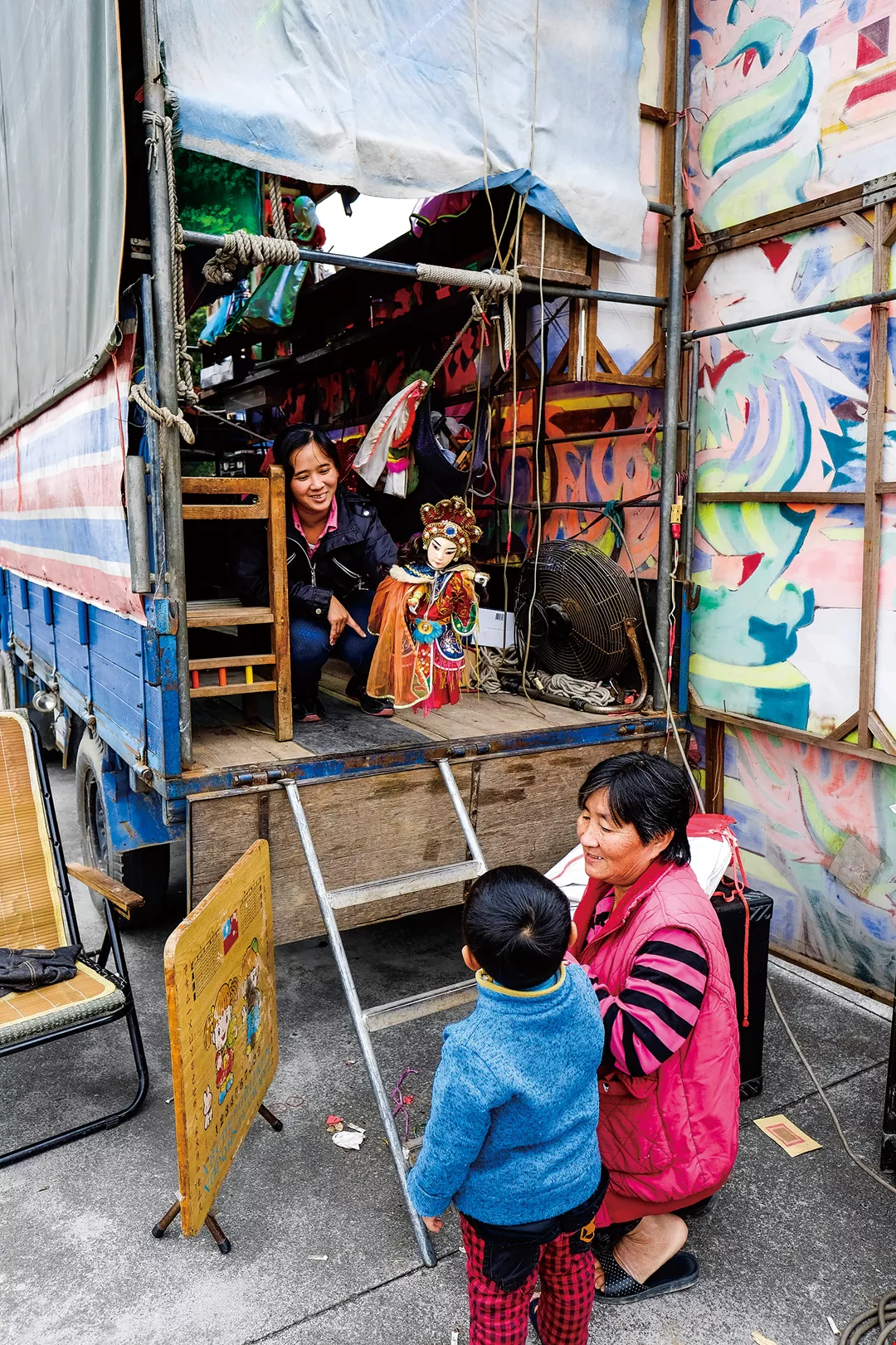
Yek Sansan entertaining a small child with one of her puppets, the child at once curious about and wary of the puppet in her hands.