1095 Beautiful Days
Cathy Teng / photos Chin Hung-hao / tr. by Geoff Hegarty and Sophia Chen
June 2016
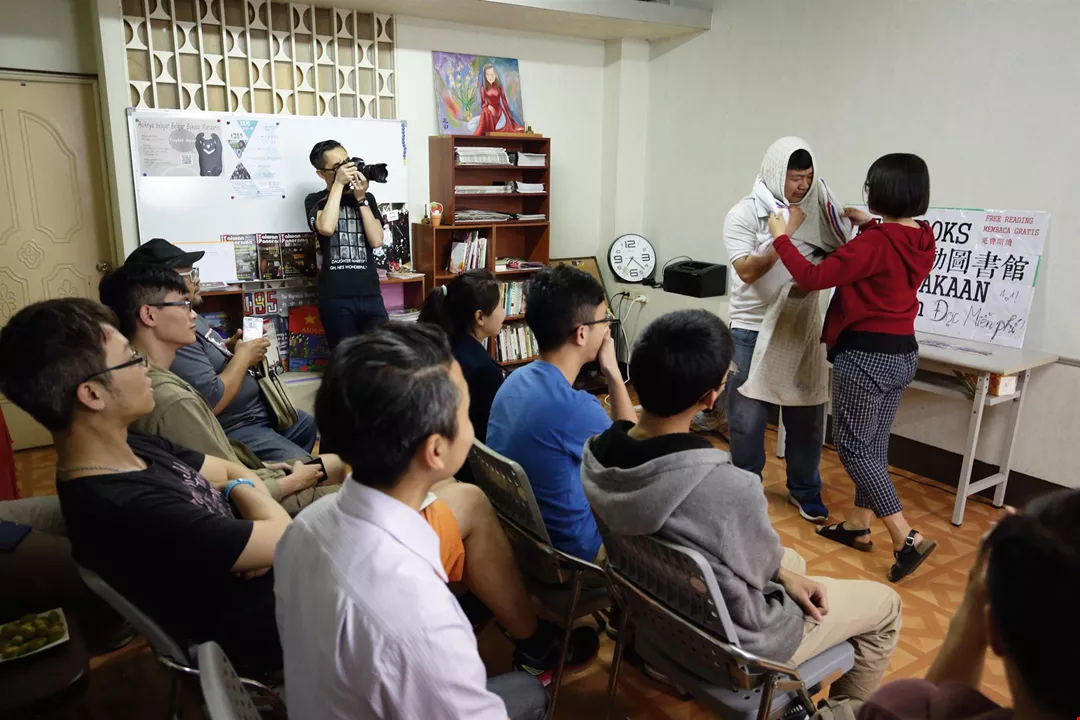
One Friday evening, a comedy skit was underway on the second floor of a Vietnamese café located on Guangfu Road in Taichung City’s Central District. The show was being run by the organization 1095, co-founded by Annie Guan and Jiang Yanjie, with both Guan and Jiang playing multiple roles. Inspiration for the show had come from field research conducted from December 2014 onwards into stories of migrant workers in Taichung, and from the activities of a mobile bookstall for Southeast-Asian books. The show’s aim was to raise awareness of 1095, which has developed into an assistance body for Southeast-Asian workers in Taiwan.
Taichung has the third largest migrant worker community in Taiwan, with up to 80,000 workers according to official statistics. The area around Taichung Station, including Qingcao Street and the neighboring First Square (now officially named ASEAN Square), is a popular place for overseas workers to gather on weekends and holidays.

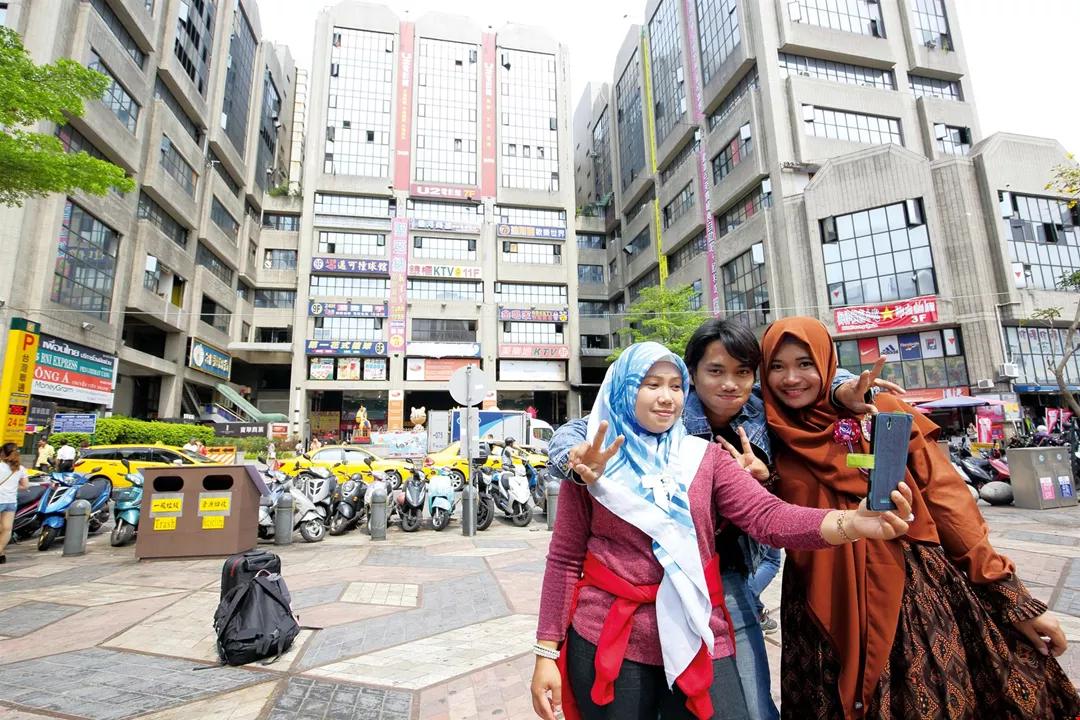
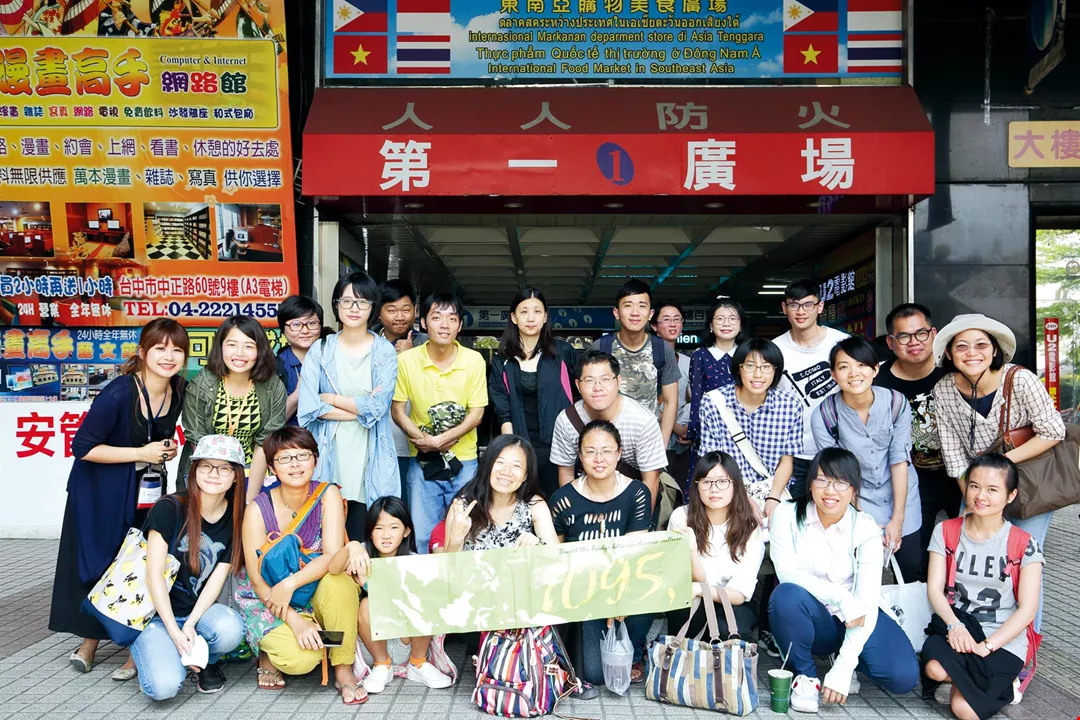
First Square has become a gathering place for Southeast-Asian migrant workers resident in central Taiwan.
Memories of Taichung
The site of First Square was originally the Taichung City First Public Retail Market, established in 1908. Unfortunately it was destroyed by fire in 1978, and became a residential and commercial site known as First Square. Surrounded by a number of fashionable department stores, the venue became a popular place for young people to gather. But in 1995 a nearby restaurant burnt to the ground, and after that disaster the venue lost much of its popularity.
From 2000, a number of stores began setting up in First Square to sell Southeast-Asian goods, so today it has again become a shopping and gathering venue for migrant workers from Southeast Asia, a small piece of paradise for migrant workers on weekends and holidays. Naturally, it became an important place for 1095 to collect stories of those who travel to Taiwan to work.

The popular “Piramid” is a walking tour organized by 1095, which guides people interested in Southeast-Asian culture to visit First Square.
1095 days
Where does the name 1095 come from? Taiwan implemented its Employment Service Law in 1992 in order to bring in laborers from Southeast-Asian countries to address a shortage of workers. The regulations allow foreign workers to work in Taiwan for a period of three years—1095 days.
Members of 1095 like Annie Guan and Jiang Yanjie, both born in the 1990s, were just kids when foreign workers were first introduced into Taiwan. “There were a large number of Southeast-Asian workers living around us when we were children,” says Jiang, “but because of the prejudices that were prevalent at the time, we missed the opportunity to get to know them.”
Guan is doing a master’s degree in the Department of Cultural Heritage Conservation at National Yunlin University of Science and Technology. Inspired by an internship program that she completed in Germany, she developed an interest in documenting the lives of workers and exploring their often very interesting stories. On returning home, she led a group of fellow students over a period of nearly nine months to conduct field research into Taichung’s migrant worker community. This research later resulted in an exhibition: “1095—Migration Stories in Taichung.”
Jiang is currently engaged in a history major at National Chung Hsing University. Because his mother is a Chinese woman born in Thailand, Jiang has a deeper connection than most with the people and cultures of Southeast Asia. At university, he’s a member of the journalism club and is interested in labor issues. After learning about Guan’s activities, he joined her group and began to make good use of his expertise by editing publications, making videos and training volunteers. “It’s quite normal for people to have some prejudices against foreigners because of a lack of understanding of the other. But it is important to learn to understand them and to be tolerant,” Jiang stresses.

Guan and Jiang act out the story of 1095 before an audience.
Creating pleasant experiences
In October last year, the 1095 team expanded their activities into First Square with a mobile bookstall set up at the front of the venue. Guan carries in suitcases full of books almost every weekend. The goal is to create a face-to-face networking platform in an area where many of the Southeast-Asian community regularly gather.
Although not many borrow or read the books, the team members are able to make face-to-face contact with Southeast Asians who visit the bookstall, so they can share stories and experiences, and develop friendships. First Square is a “crouching tiger, hidden dragon” sort of place where you are likely to meet all sorts of people, all of whom have their own interesting stories. Justto Lasoo, for example, is from Indonesia and spends two hours every day after work writing. He has even published a book at his own expense. Dodo is another Indonesian, and is studying at the Taichung branch of the Indonesian open university in his spare time. He loves to discuss international affairs with friends, and likes to share his feelings about Taichung with the local Taiwanese people. Another interesting character, a mother from Vietnam who is married to a Taiwanese man, sometimes cooks up a pot of rice porridge and brings it along to share with the homeless people who tend to gather there.
Jiang tries to help people understand Southeast-Asian culture through the food, as he realizes that it’s difficult to change people’s stereotypes just through rational persuasion. Through visiting many Southeast-Asian shops and restaurants, he has made a number of contacts and has even earned the nickname of “Chubby.” People in and around First Square and Qingcao Street know that Jiang (who has also been nicknamed the Indo JJ Lin) is an expert on the different cultures that inhabit the area.
Through their different perspectives, Guan and Jiang are trying to build bridges between locals and Southeast-Asian residents, and to create enriching life experiences for both. Through their volunteer work, which brings them into close contact with the various communities and individuals, they have found that many Taiwanese are curious and interested in learning more about their Southeast-Asian neighbors.
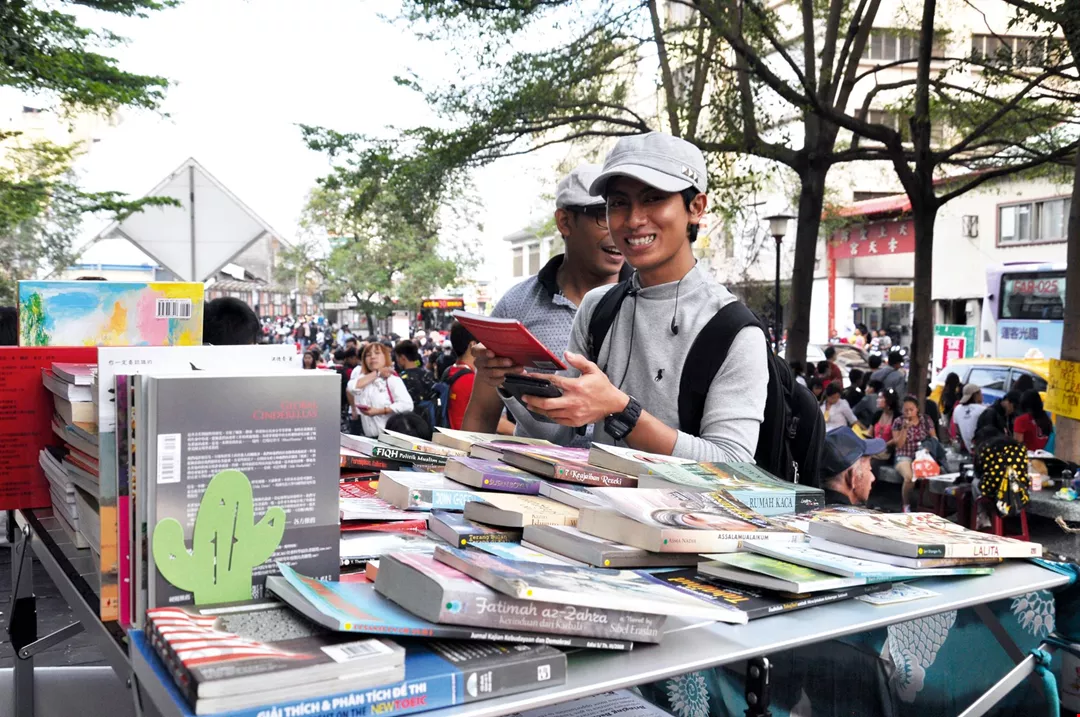
In the past, the organization’s mobile bookstall opened some weekends at First Square. Beginning this year, it has a permanent location. (courtesy of 1095)

Piramid adventure
Those interested can join a “Piramid” adventure tour organized by 1095 to visit First Square. The name Piramid is derived from the Indonesian word for “pyramid.” Taichung’s older generation all know that there was once a glass pyramid entrance to the lower level of the square which was demolished as part of the fire safety renovations. So now for many migrant workers, “Piramid” has stuck as a multilingual nickname for the area.
Initially the tour started as a personal guided outing among Jiang’s friends, but the reputation of the experience gradually spread and Jiang began receiving large numbers of inquiries. So today, 1095 runs weekend tours based on different themes from different countries. Tours also include interactive activities, and sometimes foreign exchange students or new immigrants are invited to introduce their own cultures to the public.
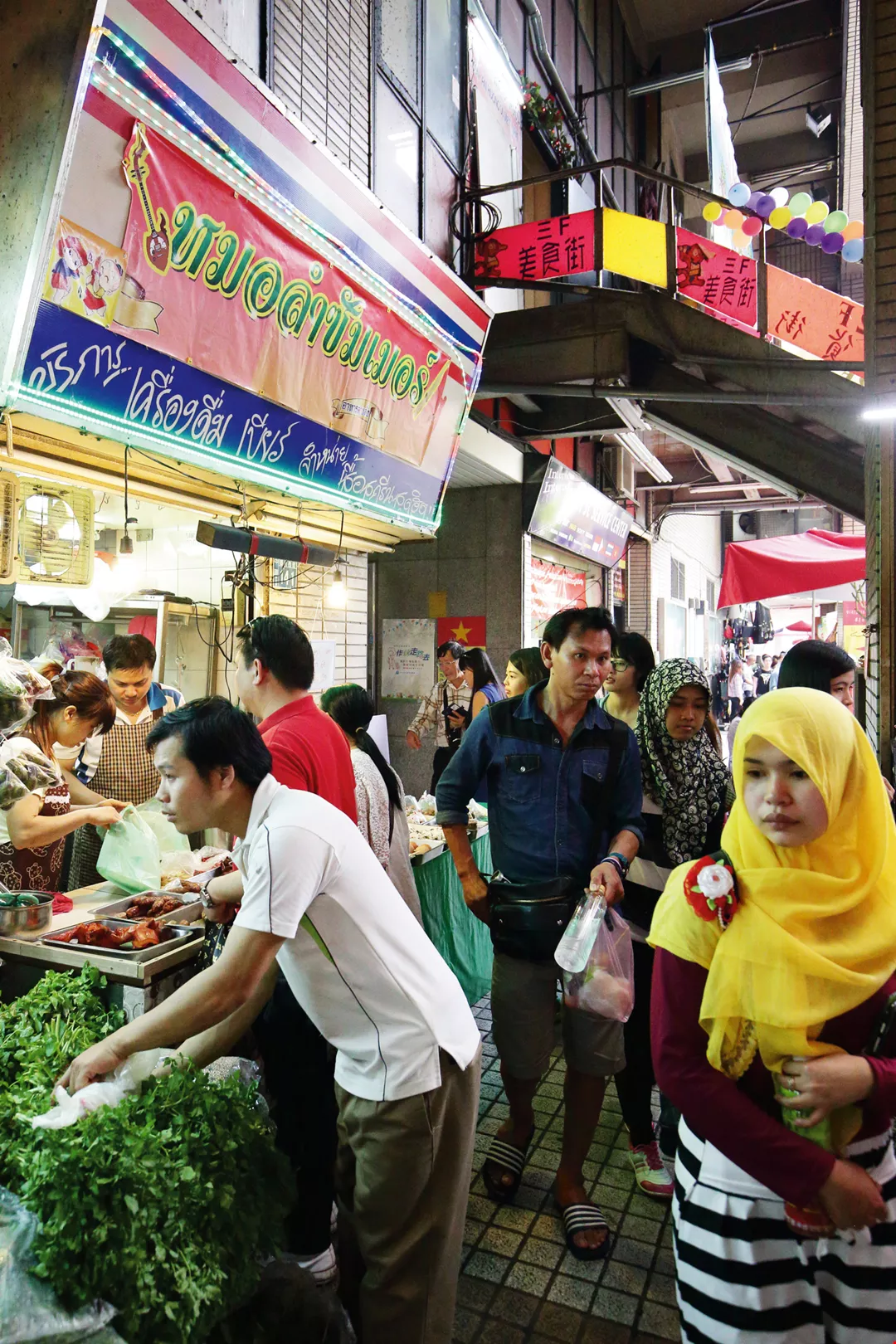
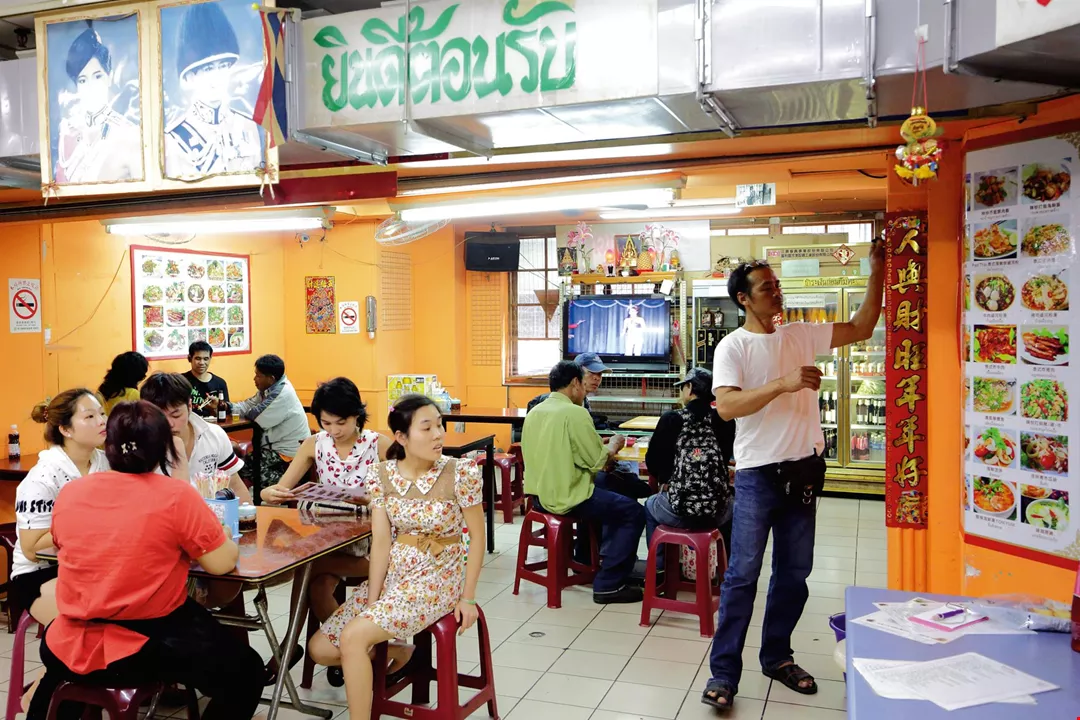
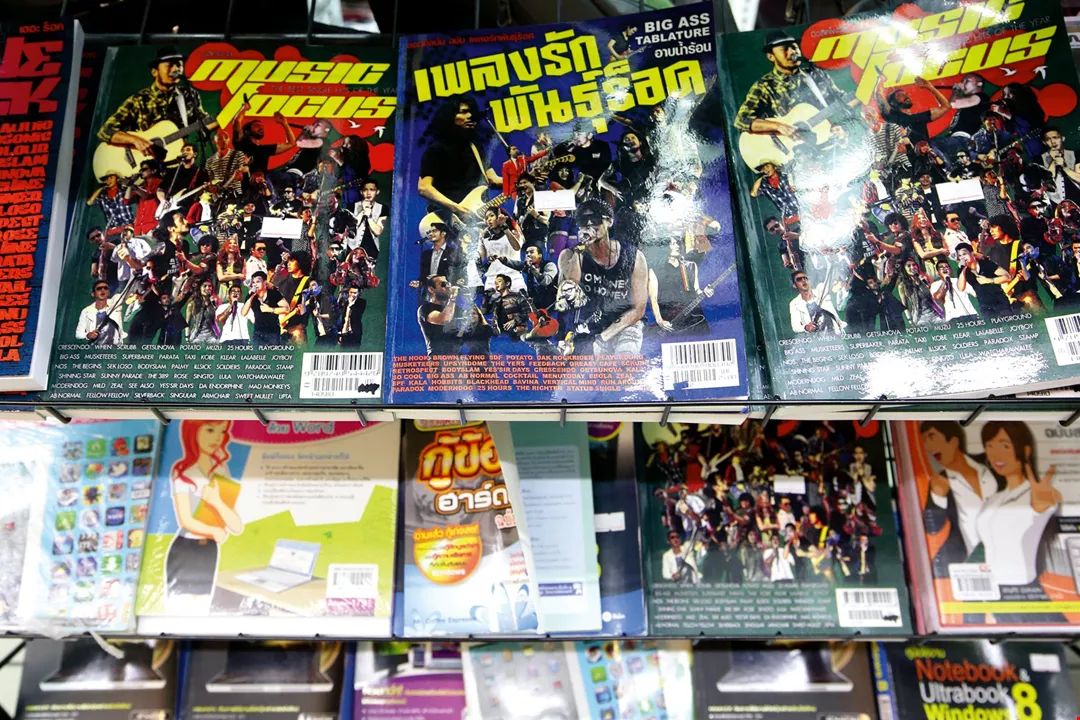
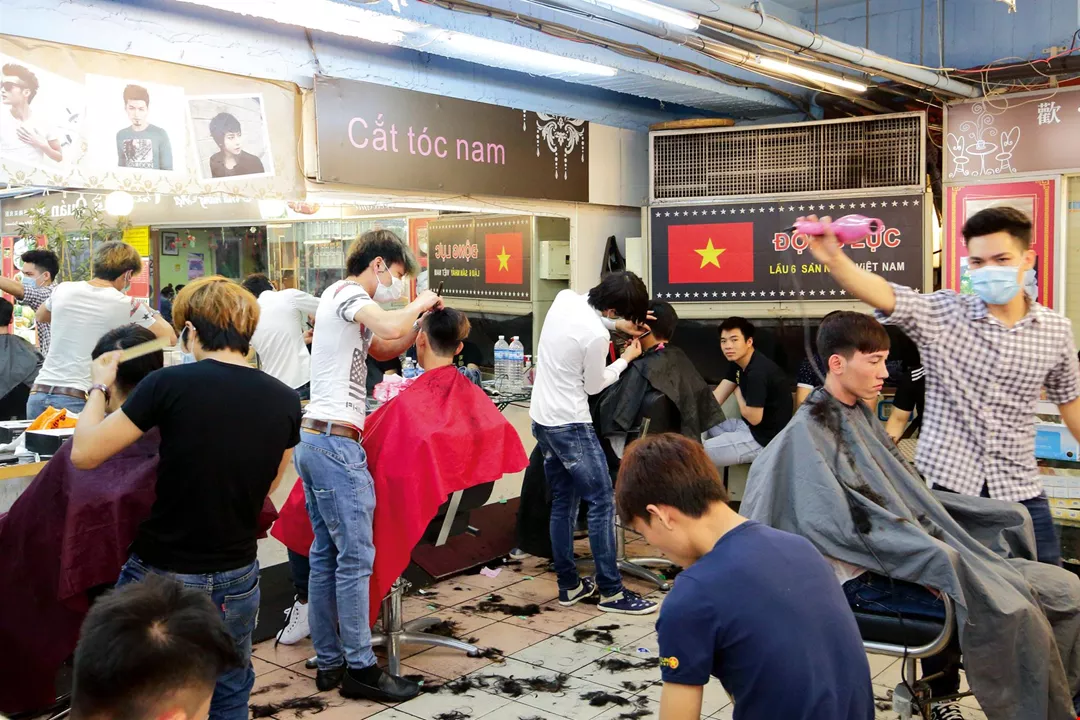
Walking through First Square with Jiang, we gain a better understanding of the song title from popular singer Jolin Tsai: “We’re All Different Yet the Same.” In the corridor, groups of people are gathering, eating melon seeds, chatting, or shopping for consumer electronics. There are also cuisines from different countries to sample, and barber shops. There’s even a Southeast-Asian supermarket on the third floor which stocks a range of goods from fresh vegetables to dry goods, providing some relief from homesickness.
The 1095 organization have also toyed with the idea of exchange tours, exchanging impressions of Taiwan with the local Southeast-Asian community. But communication was a huge obstacle, so undaunted they set up a Chinese language course, creating greater opportunities for the Southeast-Asian residents to learn some Chinese and thus create the potential for a degree of integration. Hong Jiali, a member of 1095 and a student in the Department of Business Administration at National Chung Hsing University, was responsible for designing the curriculum.

On payday (the 10th of every month), the stores of First Square are always crowded.
The meaning of 1095
The name 1095 represents the number of days that migrant workers can stay in Taiwan at one stretch, and in Chinese it’s written with a comma after the number. Why the comma? Guan explains: “We don’t want this interaction to end with a period. The comma represents the possibility for endurance, continuation.” These undergraduate students are already thinking about the sustainable development of this very special group.
In February this year 1095 found the perfect venue for an office, located on Qingcao Street in Taichung’s Central District, and are planning to register as a non-profit organization or a company. A number of projects are already underway. They have begun a “One Book One Friend” activity to collect a library of books in Southeast-Asian languages, and they are using QR codes to record the stories of book donors, developing links between donors and the local Southeast-Asian community. In addition, volunteers are being recruited to find friendly spaces for the Southeast-Asian residents, and they are establishing a fun project using Internet memes and focusing on Southeast-Asian culture in an attempt to subvert stereotypes. Plans for future activities include classes on photography, mother-tongue language courses for the children of immigrants, and a cooking course in Southeast-Asian cuisine. They are moving incrementally towards their goal: a friendly and mutually beneficial conversation between the local Southeast-Asian community and Taiwanese people.

On payday (the 10th of every month), the stores of First Square are always crowded.

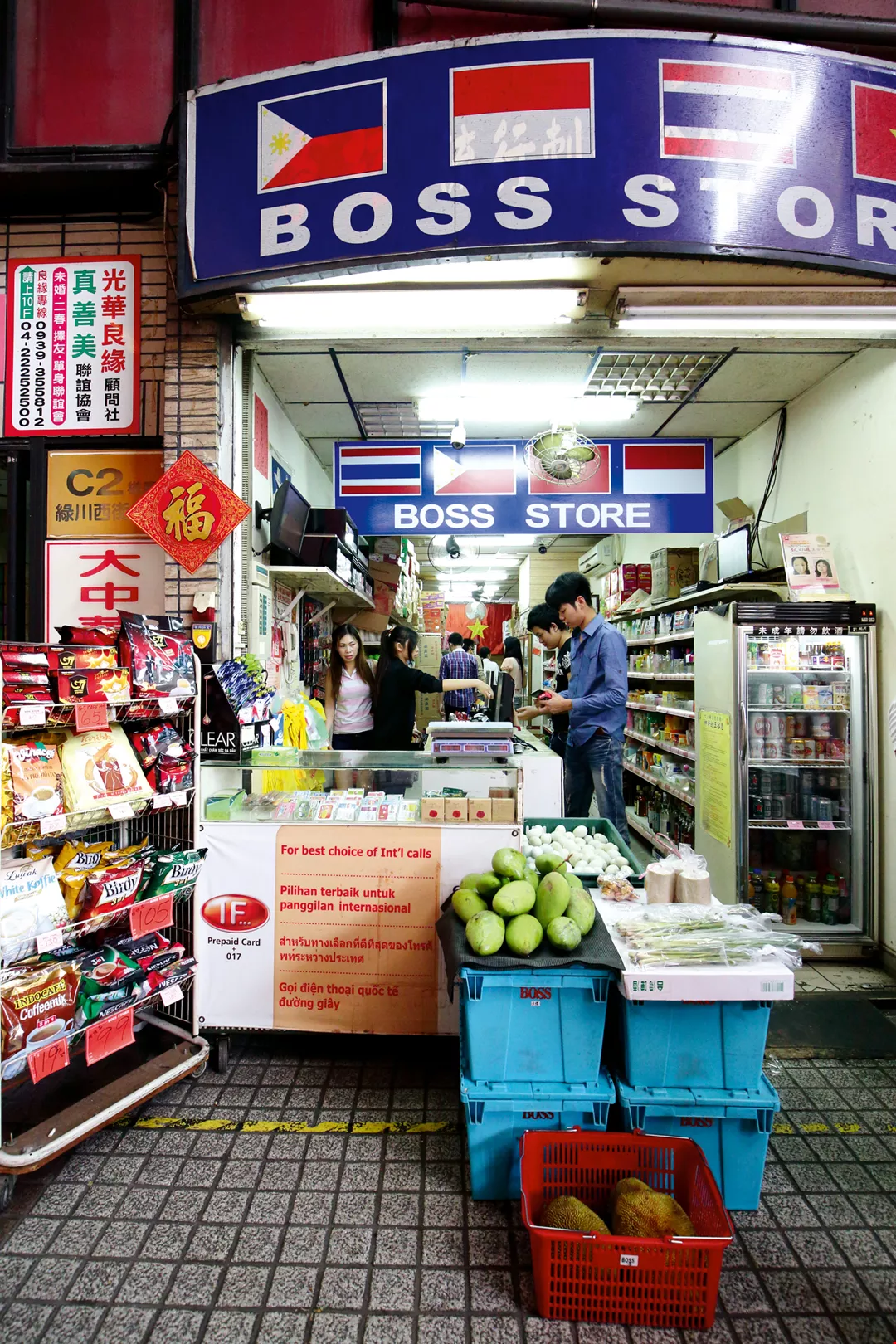
First Square has everything that the migrant workers need for daily life: hometown food, barbers and books.

First Square has everything that the migrant workers need for daily life: hometown food, barbers and books.

First Square has everything that the migrant workers need for daily life: hometown food, barbers and books.

On a weekend afternoon, the sight of migrant workers enjoying a picnic on the banks of the Green River has become a regular staple of Taichung’s urban landscape.