Half a Century of Human-Centric Healthcare
Chen Chun-fang / photos Jimmy Lin / tr. by David Mayer
December 2025
photo by Tang Keng-li
Taiwan ranked No. 1 globally for the second straight year in the 2025 Numbeo Health Care Index. This performance is not a simple reflection of Taiwan’s advanced medical equipment and technologies; more importantly, it also reflects the fact that for a half century Taiwanese society has consistently pursued “the right to health” and “human-centric care.” During its 50 years of reporting, Taiwan Panorama has been a conscientious witness to this process.

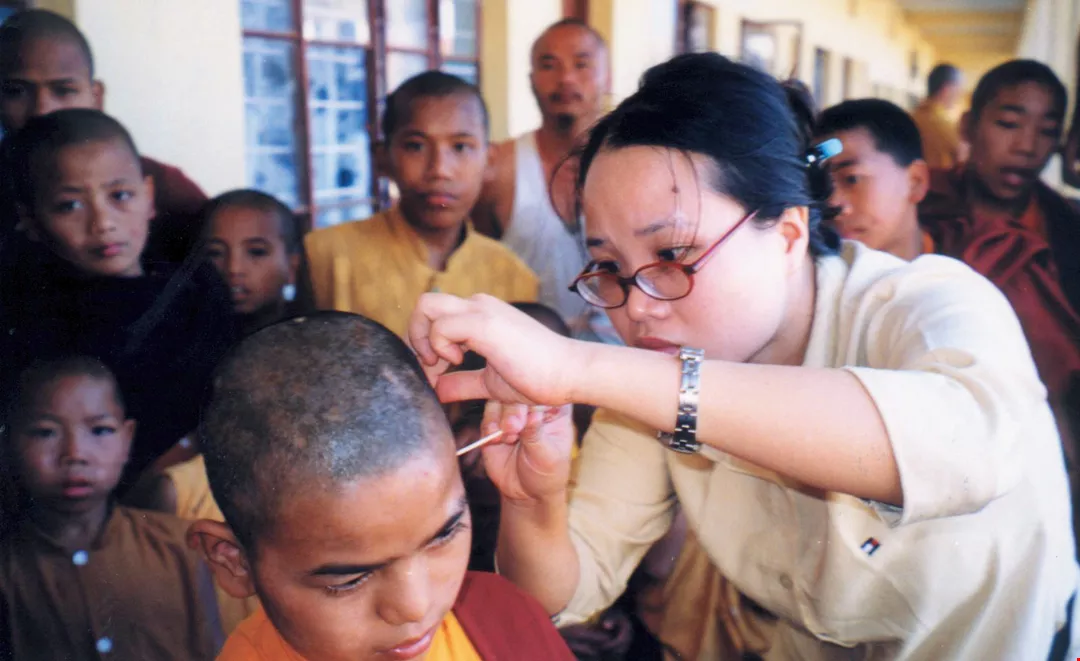
As people from Taiwan have traveled the world providing overseas medical assistance, Taiwan Panorama has tagged along to report on their stories. (courtesy of International Action and Cooperation Team)
Recording the progress
In the Taiwan of the 1970s, medical technology was not yet highly developed. A Taiwan Panorama article from 1979, titled “A Breakthrough in Taiwan’s Open-Heart Surgery,” reported on progress in the field of coronary surgery. In that same year, doctors in Taiwan completed the first separation of conjoined twins in Asia, and Taiwan Panorama later told the moving tale of the twin brothers, Chang Chung-jen and Chang Chung-i. In the past, when medical resources were not so widely available, the magazine recorded the effort to establish Farmers’ Insurance, described the state of medical services in remote locations, and told readers about doctors who volunteered to provide medical assistance in remote mountainous areas. That was when Taiwanese society began to think of health as a basic right.
The launch of National Health Insurance in 1995 ushered in a new era of “healthcare for all.” Taiwan Panorama has closely watched the government’s policy moves, reported on controversies and hopes connected with the reform process, and recorded a dialogue between the medical profession and the general public. Articles focusing on related topics have included the following: “An Unbearable Burden of Living—No Cure for Medical Disputes?”; “The Pitfalls of Home Care Assessment”; “The Debate on Decriminalizing Malpractice”; “The Rescue Plan for Medical Caregivers, Patients and the NHI: An Interview with DOH Minister Chiu Wen-ta”; and “Hospitals Grapple with Nurse Shortage.” For a long time now, we have trained a spotlight on the question of how to improve public health in Taiwan.

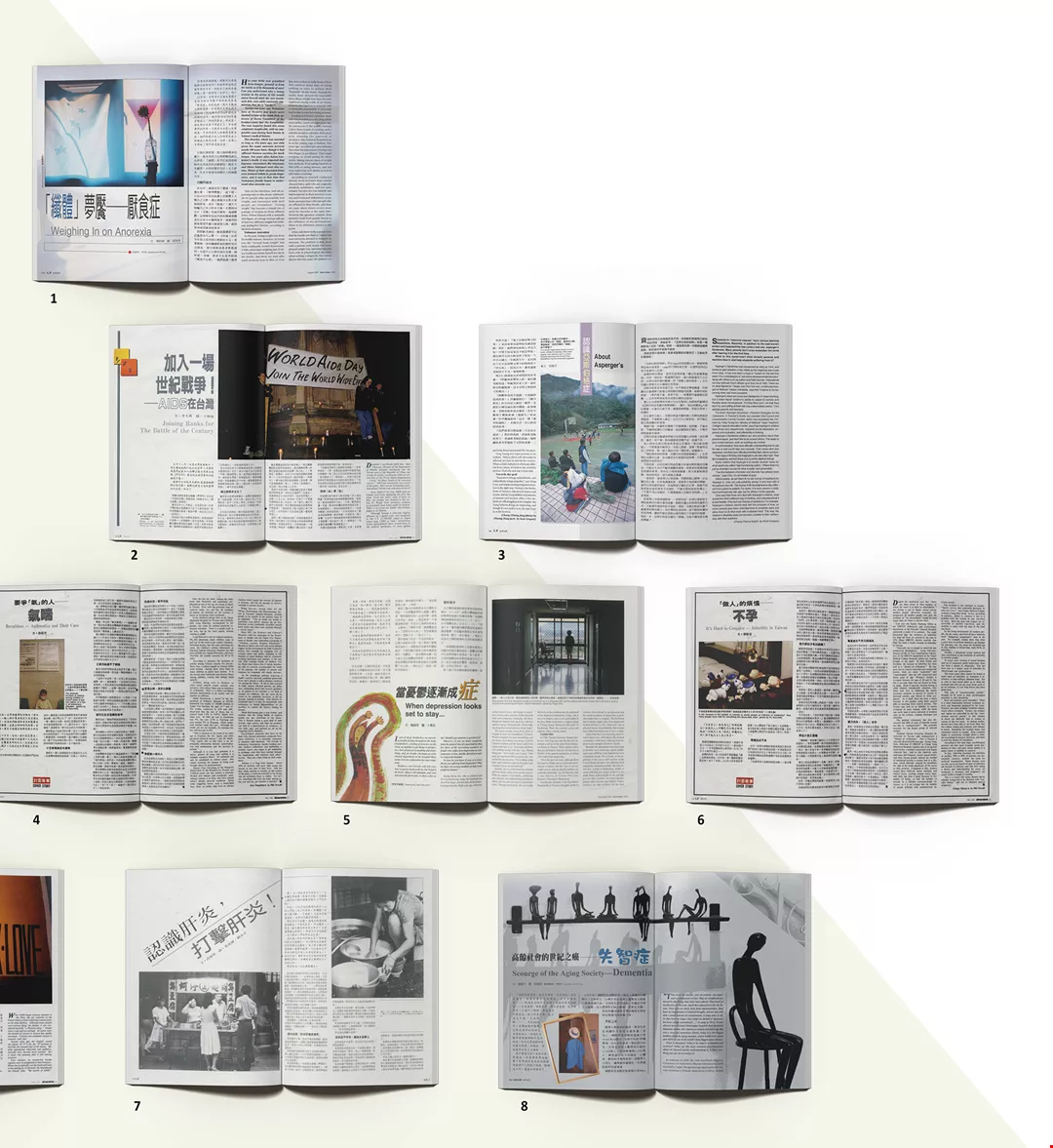
Taiwan Panorama writes about illness with a compassionate touch, like an ongoing mini medical encyclopedia. 1. “Cutting to the Bone: The World of Anorexia” (August 2005) 2. “Joining Ranks for the Battle of the Century” (January 1989) 3. “About Asperger’s” (April 2005) 4. “Breathless—Asthmatics and Their Care” (May 1991) 5. “When Depression Looks Set to Stay...” (September 1999) 6. “It’s Hard to Conceive—Infertility in Taiwan” (May 1991) 7. “Fighting Against Hepatitis” (October 1984) 8. “Scourge of the Aging Society—Dementia” (September 2008)
Medical mini-encyclopedia
Taiwan Panorama is not a medical journal, but our editors have provided in-depth yet easily understood explanations of illnesses and the latest health discoveries. You could describe us as a medical mini-encyclopedia published in serial format.
Back when much was misunderstood about depression and Asperger’s, Taiwan Panorama articles familiarized readers with these conditions, and told the stories of actual sufferers, describing their symptoms, their loneliness, and their courage. And when AIDS still carried tremendous stigma, Taiwan Panorama published in-depth articles, using understanding to overcome fear.
From hepatitis and Down’s syndrome to dementia, these articles did more than just describe the basic facts of diseases. They also presented how we came to the current state of medical treatments. By interviewing specialists and patients, Taiwan Panorama has communicated a caring attitude.

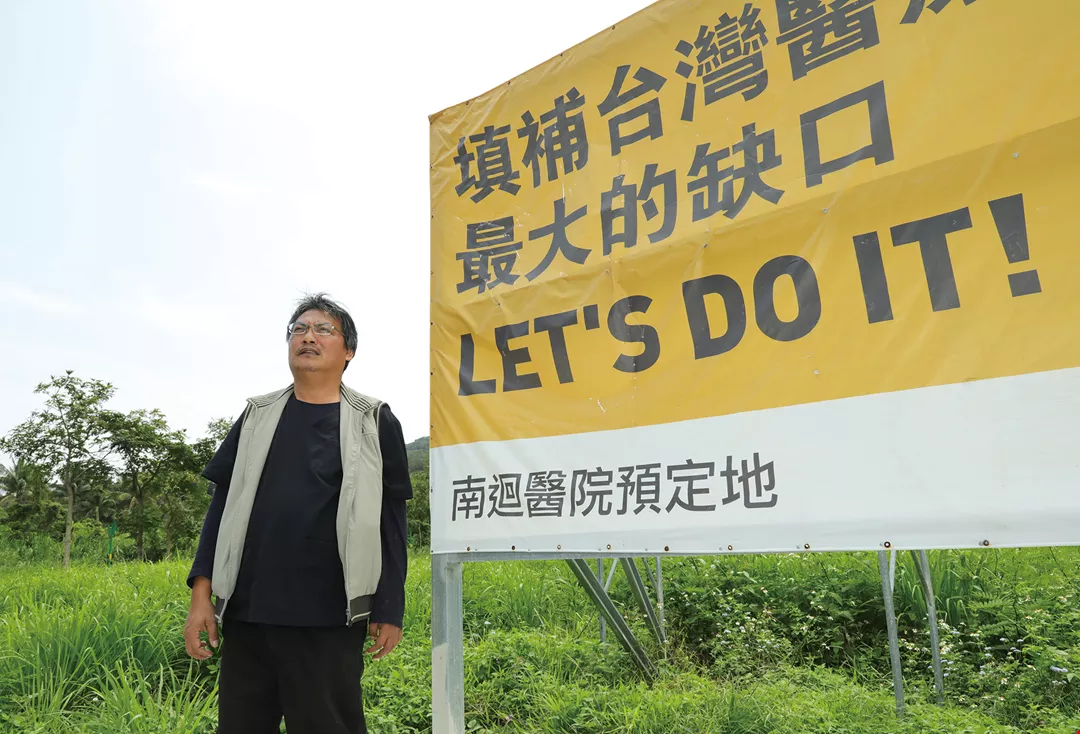
Dr. Hsu Chao-pin, who passed away in September 2025, said to Taiwan Panorama in 2019: “These patients were the ones who taught me how to be a good doctor; how could I not dedicate myself to repaying that?” (photo by Jimmy Lin)
Preserving lives
Interviews with frontline healthcare personnel and medical researchers have given us insights into their principles and ideals at different time periods. For example, we told readers about the reconstructive microsurgery innovations of the renowned plastic surgeon Dr. Wei Fu-chan, who was named by the American Society for Reconstructive Microsurgery as its Harry J. Buncke lecturer. And then there was former Academia Sinica President Dr. Wong Chi-huey, recipient of the prestigious Welch Award in Chemistry, who invented the technique of programmable one-pot synthesis of oligosaccharides.
We have also reported on “super-doctor” Hsu Chao-pin (Djaikung Luveljeng), who devoted his career to serving the needs of residents in southern Taitung County. The tremendous efforts of these and other hardworking individuals is why the quality of healthcare in Taiwan has come as far as it has. It has been an honor for Taiwan Panorama to have reported on this very moving saga.

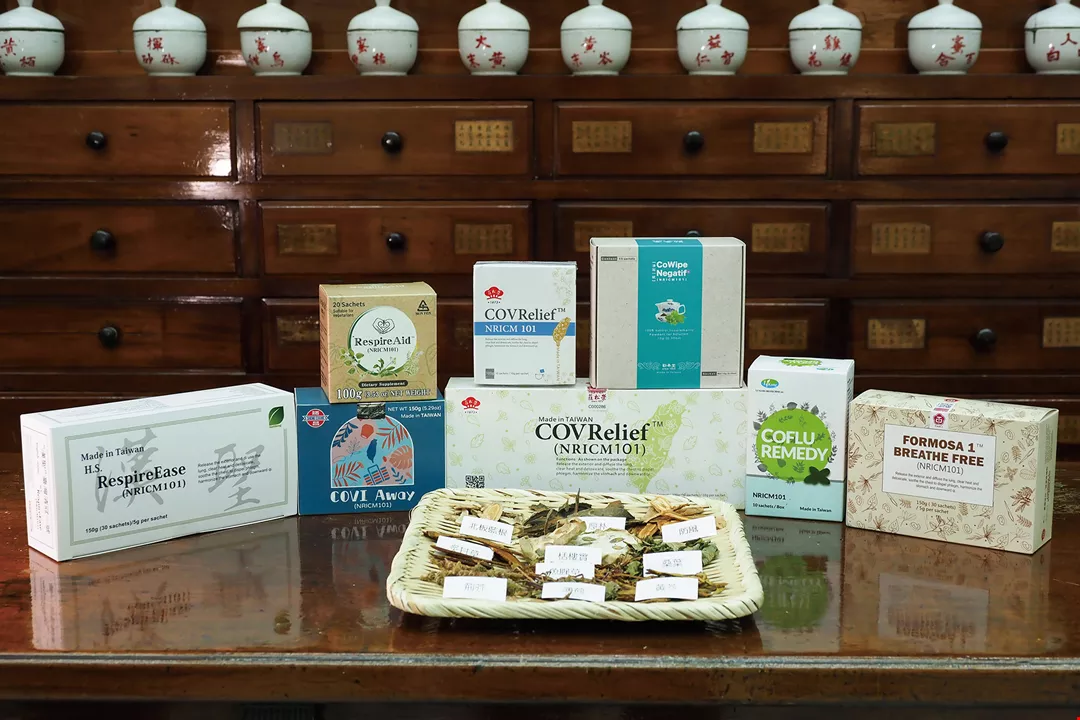
NRICM101, an herbal compound for treatment of Covid-19, was developed in Taiwan and showcases Taiwan’s outstanding R&D capabilities in the field of traditional Chinese medicine. (photo by Jimmy Lin)
Taiwan shares with the world
Once the level of healthcare in Taiwan reached a high level, Taiwan began to give back to the international community.
As early as 1978, Taipei Veterans General Hospital began dispatching medical professionals to Saudi Arabia to offer assistance, thus marking the beginning of a multi-year medical mission that deepened ties between Taiwan and Saudi Arabia. Taiwan Panorama reported on the budding relations in an article entitled “Building Roads to Friendship.”
Meanwhile, a 2003 article entitled “Taiwan’s Medical Aid Teams: Never Too Far Away to Help” reported on how the Taiwan International Cooperation and Development Fund (TaiwanICDF) had dispatched its first team of doctors, all from the armed forces, in 1962 to help Libya improve its public and military medical systems. Taiwan has had medical missions operating in Africa for more than 60 years. Moreover, the Taipei-based Noordhoff Craniofacial Foundation has long sent craniofacial surgery teams to other countries, and a young physician named Lien Chia-en opted to do overseas service in Burkina Faso as a substitute for military service. All these overseas aid activities set the stage for countless heartwarming interactions.
More recently, during the Covid-19 pandemic, Taiwan Panorama once again stood witness to Taiwan’s response, reporting on our donations of face masks to other countries and the National Research Institute of Chinese Medicine’s development of NRICM101, an herbal compound for treatment and prevention of Covid-19 that was manufactured under a non-exclusive license, thus demonstrating the “Taiwan can help” spirit. Taiwan continues doing its part to contribute to the international community, and Taiwan Panorama uses its reporting to shine a spotlight on the human-centered spirit of Taiwan.

When the Covid-19 pandemic broke out, Taiwan donated medical supplies, demonstrating the “Taiwan can help” spirit. (photo by Chen Mei-ling)
In 1979, doctors in Taiwan completed the first separation of conjoined twins in Asia. Taiwan Panorama told the tale. The photo on the facing page shows the twins, Chang Chung-jen and Chang Chung-i, just after surgery; the photo below shows them one year later; at right are the two brothers at age 19. photo by Yang Yung-shan
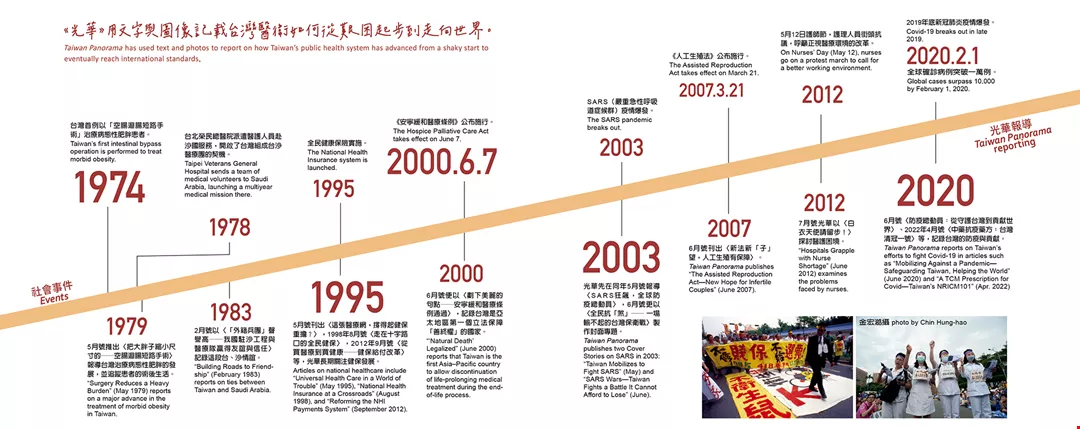
photo by Hsueh Chi-kuang

Taiwan Panorama has used text and photos to report on how Taiwan’s public health system has advanced from a shaky start to eventually reach international standards.