Taiwan Literature:The Next Export Success Story?
Chang Chiung-fang / photos Hsueh Chi-kuang / tr. by Phil Newell
December 2000


Chinese literature has gotten consid-erable attention in the past year. In October, Gao Xingjian, a Chinese writer living in France, was awarded the Nobel Prize for Literature. This not only ended a century-long prize drought for Chinese letters, it also made clear the importance of translation.
For many years, a small number of people have been quietly promoting the work of translating Taiwan literature into foreign tongues, in hopes of overcoming linguistic barriers to increase understanding of Taiwan in the world community. This small island nation, given its particular current predicament, needs to develop as many voices as possible with which to converse with the outside world. Translating Chinese literature into foreign languages-"exporting literature"-is one of the more viable ways to introduce Taiwan to outsiders and to help them understand the island.
Following on the success of writers like Maxine Hong Kingston and Amy Tan, who became well-known for their depictions in English-language novels of the Chinese emigrant experience, the novel Waiting by the writer Ha Jin (who left China to go to the US in 1985) won the National Book Award (awarded by the American National Book Association) in 1999, drawing considerable attention from literary circles in the West. In comparison, literature from Taiwan is much less known.
In fact, the problem is not that Taiwan lacks well-written tomes, but that few have been translated and published in the West. Recently, the Chiang Ching-kuo Foundation for International Scholarly Exchange and the ROC Council for Cultural Affairs have been active in subsidizing programs for the translation of Chinese books. The results thus far have been quite positive.
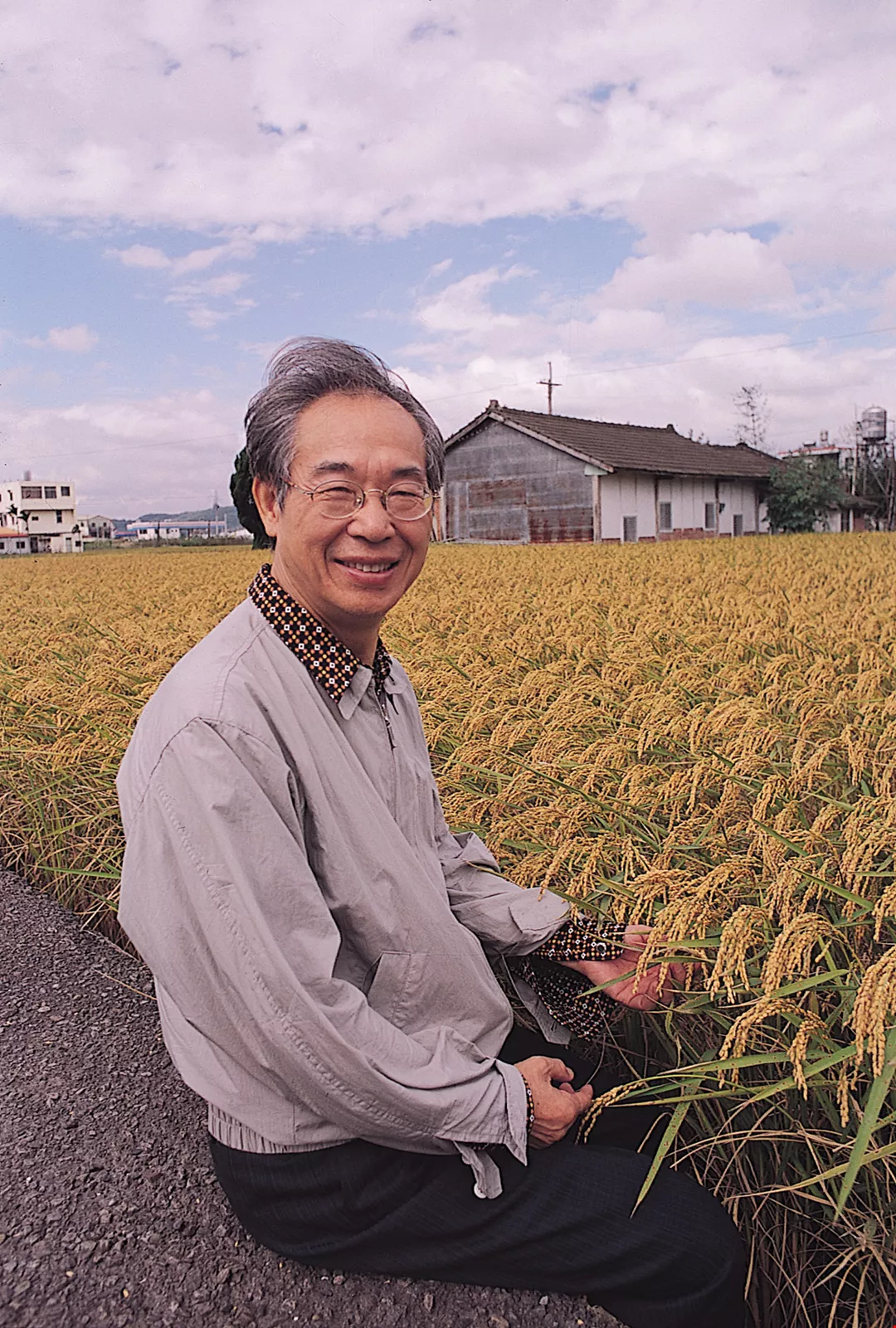
In Cold Night Trilogy, in which the mother is the personification of the earth, Lee Chiao wants to express the concept of a cycle which includes life, motherhood, and earth.
Telling Taiwan's story
Why should Taiwan literature be translated into foreign languages? Chi Pang-yuan, a former professor in the Department of Foreign Languages and Literature at National Taiwan University, has one answer. For many years now, says Chi, she has been participating in conferences and seminars of an academic or non-governmental nature, and at such gatherings she is always asked to "tell us about Taiwan."
Literary works, in all their diversity and richness, are one of the best tools for showing the many faces of Taiwan. In fact, for many years now Chi has been working to introduce the history, achievements, and culture of Taiwan to America and Europe through literature.
In the early 1970s, Chi, working together with a group of good friends (including Yu Kwang-chung, John Deeney, Ho Hsin, and Wu Hsi-chen) collectively produced two volumes of English translations under the heading An Anthology of Contemporary Chinese Literature: Taiwan, 1949-1974. Volume I covered poems and essays, while Volume II collected short stories. Even today, over 25 years later, this collection still carries considerable weight in scholarly circles.
Since retiring from NTU, Chi has devoted herself even more wholeheartedly to editorial work for the Taipei Chinese Center of International PEN. The Chinese Pen, a journal founded in 1972, has over the years translated a huge amount of Chinese literature. In fact, says Chi, "It has carried virtually every important literary work in Taiwan." Unfortunately, because funds are limited, The Chinese Pen is often only mailed out to PEN members and a few large libraries, so not many people know about it.
"If you want to successfully promote Taiwan literary works abroad, you have to come out with a number of books all at the same time. This is the only systematic, meaningful approach," says Chi. She notes that the Council for Cultural Affairs once proposed an NT$20 million (roughly US$600,000) program to translate Chinese books, but the prime mover behind the plan changed jobs, and in the end it was never implemented.
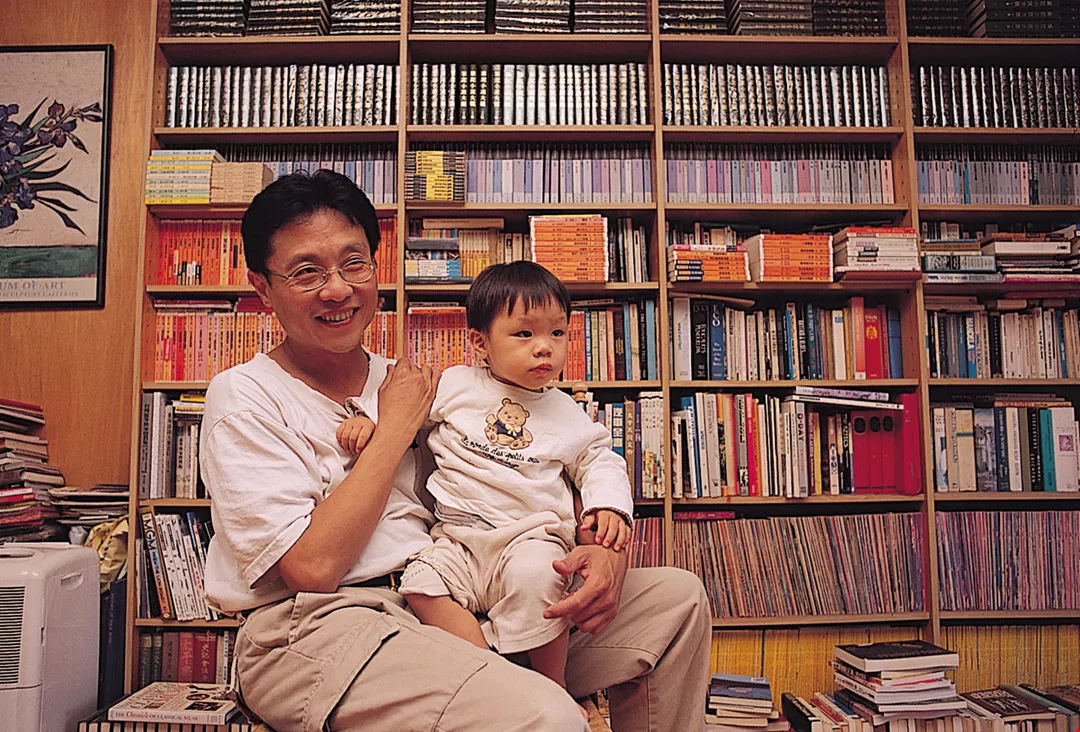
"Even if you need to sit for ten years on a cold stool, you cannot waste one word." Chang Ta-chun feels that an author's only responsibility is to his or her creation, and he or she should not consider the market. The photo shows Chang with his son Chang Jung.
A plan of action
Four years ago, the Chiang Ching-kuo Foundation for International Scholarly Exchange (CCKF), recognizing the importance of translating Chinese literary works, took the initiative to begin a translation project with David Der-wei Wang, chairman of the Department of East Asian Languages and Cultures at Columbia University. The project is called Modern Chinese Literature from Taiwan. Wang in turn recruited Chi Pang-yuan and Swedish Sinologist N.G.D. Malmqvist to co-edit the series with him, and will build on Chi's past efforts. "Over the years, The Chinese Pen has translated a huge amount of Taiwan literature, and this resource can be used to jump-start the series of translations," says Wang.
The CCKF is also subsidizing Columbia's forthcoming publication of Frontier Taiwan: An Anthology of Modern Chinese Poetry. N.G.D. Malmqvist and Michelle Mi-Hsi Yeh (a scholar at the University of California at Davis) are the editors, while Taiwan poet Xiang Yang (Lin Chi-yang, who also holds top posts in the Independence News media group) participated in the selection of the poetry to be included. Next spring, editions in English, complex Chinese characters, and simplified Chinese characters will be published simultaneously in the States, Taiwan, and Beijing, respectively.
Yu Shu-fen, chief secretary in the Taipei headquarters of the CCKF, says that the foundation has subsidized translations into a number of languages including English, Russian, Czech, and Polish, but that most previous translation projects involved the Chinese classics or reference books, such as the Analects of Confucius, Lao Tzu, Journey to the West, and the Dictionnaire Ricci de Caracteres Chinois.
Meanwhile, over at the Council for Cultural Affairs (CCA), there has been a long-standing Chinese Literature Translation. Besides funding for the "Modern Taiwan Fiction" series of Western language editions, money is now also being provided for translation into Japanese, and a three-year project under the rubric "Japanese Translations of Modern Taiwan Literature" is currently underway.
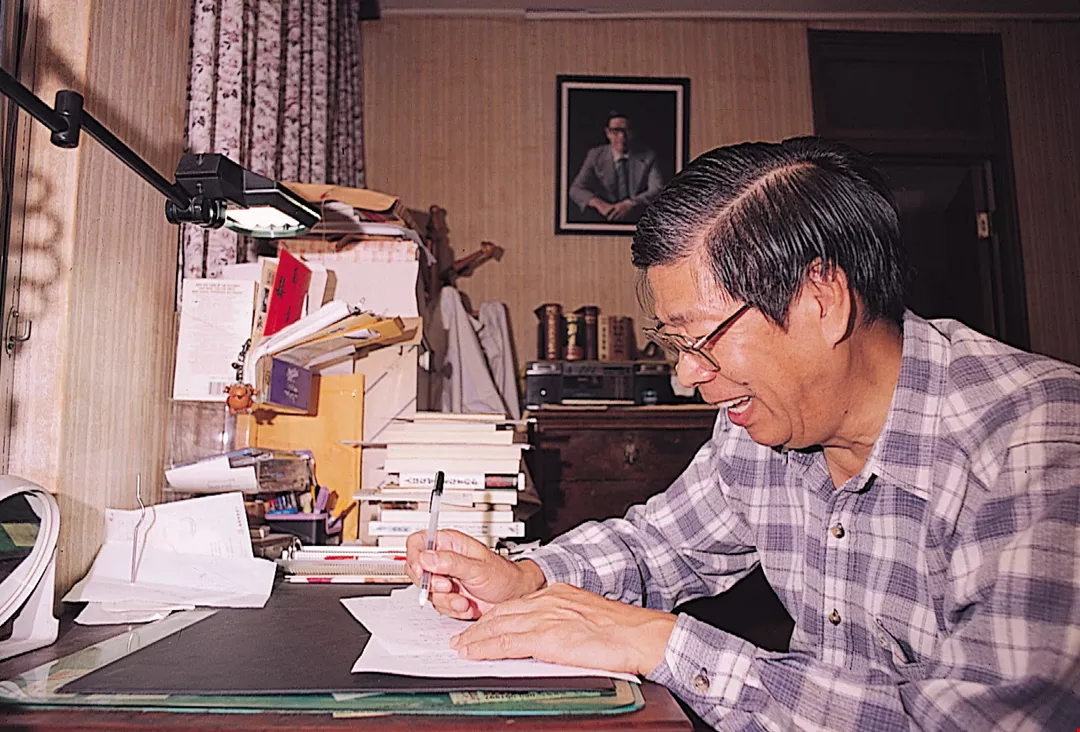
Cheng Ching-wen has been writing at this desk for over 40 years. For him, winning a prize is merely "a bouquet added to a lunch that's already on the table.".
Exporting literature
Among the many literary works available, which have been selected in the first wave as being most representative of Taiwan literature? Who makes these selections? What standards are used?
So far, the Modern Chinese Literature from Taiwan series (the CCKF-Columbia University collaboration) has produced five books: A Thousand Moons on a Thousand Rivers by Hsiao Li-hung, Rose, Rose, I Love You by Wang Chen-ho, Three-Legged Horse by Cheng Ching-wen, Notes of a Desolate Man by Chu Tien-wen, and Wild Kids by Chang Ta-chun. Future publications will include a collection of fiction by Huang Chun-ming (representing the "Nativist" school of writers), Cold Night Trilogy by the Hakka writer Lee Chiao, Wu Cho-liu's The Orphans of Asia, science fiction from Chang Shi-kuo, work by aboriginal author Sun Ta-chuan, and a book of "old veteran" writings (that is, stories about the old mainlander soldiers stranded in Taiwan since 1949 and their experiences returning home to visit relatives in the PRC after more than 40 years without any contacts).
In making selections, says David Wang, one consideration is that full-length novels are more likely to draw attention in the US. Another important consideration is to try to show Taiwan in all its diversity, to show how culture has evolved over the last 50 years, and to ensure that both traditional and modern styles are fairly represented.
The CCA-backed Japanese-language series Modern Taiwan Literature is being directed by Huang Ying-che, an assistant professor of modern Chinese studies at Aichi University, with Tokyo University professor Fujii Shozo and Nihon University professor Yamaguchi Moritomo serving on the editorial committee. Books published so far include Li Ang's The Strange Garden, a collection of short fiction by various authors called Taipei Stories, and Chu Tien-hsin's Koto (Ancient City). Later publications will include another collection of stories entitled The Men From Lukang (which will feature work by Huang Chun-ming, Wang Chen-ho and Wang To), and Pai Hsien-yung's Crystal Boys. Though plans for the third year have not been submitted as yet, it is anticipated that the series will add works by Hakka writers, Li Ang's Autobiography: A Novel, and longer fiction by Ping Lu.
Huang Ying-che says that inevitably there is subjectivity in any selection of literature. Nonetheless, in this series, besides considering the thematic depth of the works, a major goal is to give Japanese readers more insight into pluralization and social evolution in Taiwan.
Fujii Shozo acknowledges that the academic study of modern Taiwan literature really only got started in Japan in the 1990s. Thus there are few experts on the subject, meaning that the selection of works for translation depends to a great extent on individual interpretations of the field. And there are also market forces to cope with. It is hoped that the works selected for the CCA's Japanese translation series will be representative of contemporary letters in Taiwan, but, with the subsidy covering only 20% of costs, commercial appeal must also be taken into account.
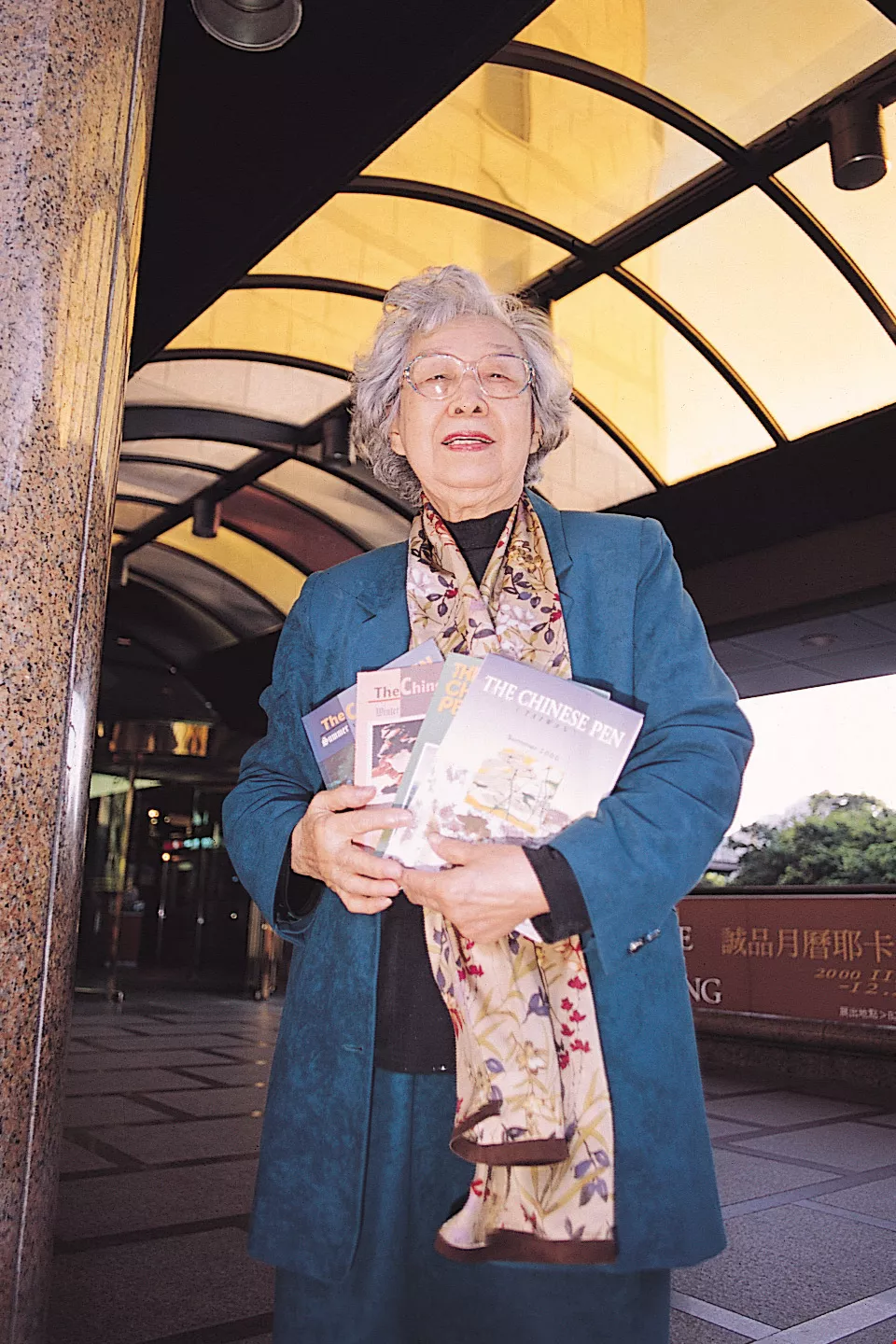
Chi Pang-yuan, who has been called a "guardian angel of Taiwan literature," is active in promoting the translation of Chinese-language literature. For many years she has been editor of The Chinese Pen, a journal of translations of fiction, essays, and poetry. She loves every publication "as if it were my own child.".
From the margins to the center
This island is called Taiwan,
Taiwan is a palette:
Differently shaped tongues
Spit out differently colored words,
And they blend into a colorful Beautiful Isle
-Chen Li, Island Song
The poetry collection Frontier Taiwan, selected by N.G.D. Malmqvist, Michelle Yeh, and Xiang Yang, also made its choices with an eye to allowing outsiders to see Taiwan through poetry. Xiang Yang explains that, besides meeting a certain literary standard and having a unique style, the most important criterion for poems was that they illustrate or express something special about contemporary Taiwan.
In her introduction, Michelle Yeh writes that the history of modern Taiwan poetry is the story of a transformation from the margins to the avant-garde. Yeh also points out that, while Taiwan poetry and post-1949 mainland Chinese poetry share linguistic and historical roots, they are in many other respects very dissimilar. She avers that the most important difference derives from the interplay of literature and politics. Poetry in the mainland is mired in political sloganeering, while Taiwan has a much more open society and culture.
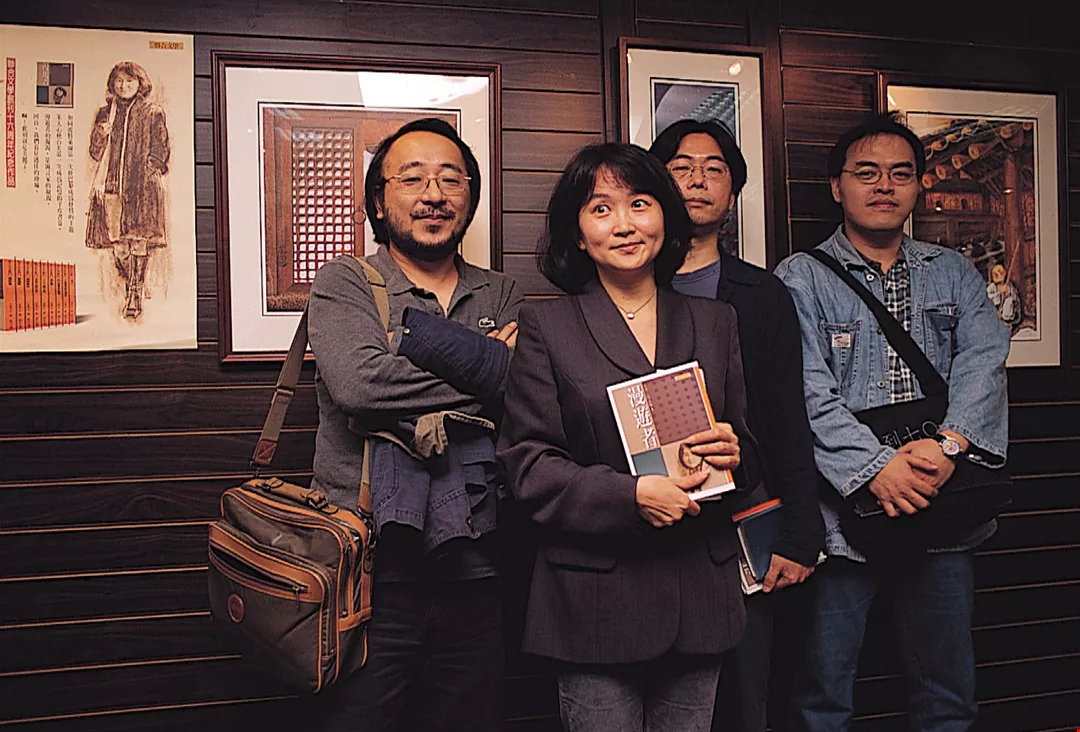
Chu Tien-hsin's novel Koto (Ancient City) attracted attention in Japan because its subject matter involved a comparison of China and Japan in the past and present. She has recently released a new novel, Manyouzhe (The Wanderer).
Taiwan literature in a foreign land
So how has the response been so far to Taiwan's literary exports?
"The reaction has been amazingly good," says David Wang. The novels so far published have gotten a great deal of attention, and three of them-Three-Legged Horse, Notes of a Desolate Man, and Wild Kids-have had the distinction of being reviewed by the New York Times and other influential media sources.
This is significant, explains Wang, because of the way the review system works in the US. There is much more cultural space in the US, and reviewers' attention is focused on the books rather than the personalities, so they carry considerable authority. In Taiwan, in contrast, literary circles are small, and personal relationships are much more important, so that books rarely are subjected to objective reviews. Wang notes that thousands of new books are published in the US each week, and competition is intense. Under these circumstances, a book review in a respected periodical is considered a key indicator of a book's importance, and any book that gets reviewed immediately gets widespread attention.
In the review of Notes of a Desolate Man that appeared in the New York Times Book Review, Peter Kurth wrote: "In the literature of the AIDS epidemic, only a few voices have so far emerged that can be called universal, rising above the particulars of the plague and the personal struggles of its victims. In America, especially, where AIDS was first experienced as a gay man's disease and trapped in a frame of political rage, AIDS fiction remains largely parochial, alternately confessional, sentimental, furious and hectoring, unable to break free of a specific grief..." But, says Kurth, Chu Tien-wen, with "marvelous skill," creates a different kind of story, one that is not meant to be a personal confession nor to arouse sympathy or sorrow.
Moreover, Kurth draws parallels between the main character in Notes and Taiwan's current situation in the world: "That Taiwan is under permanent siege, threatened by a larger mass, mainland China, is an obvious but essential metaphor in Chu's novel of gay men facing the truth about their mortality. Living on borrowed time and borrowed culture, caught between the ersatz pleasures of the West and the call of historical destiny...."
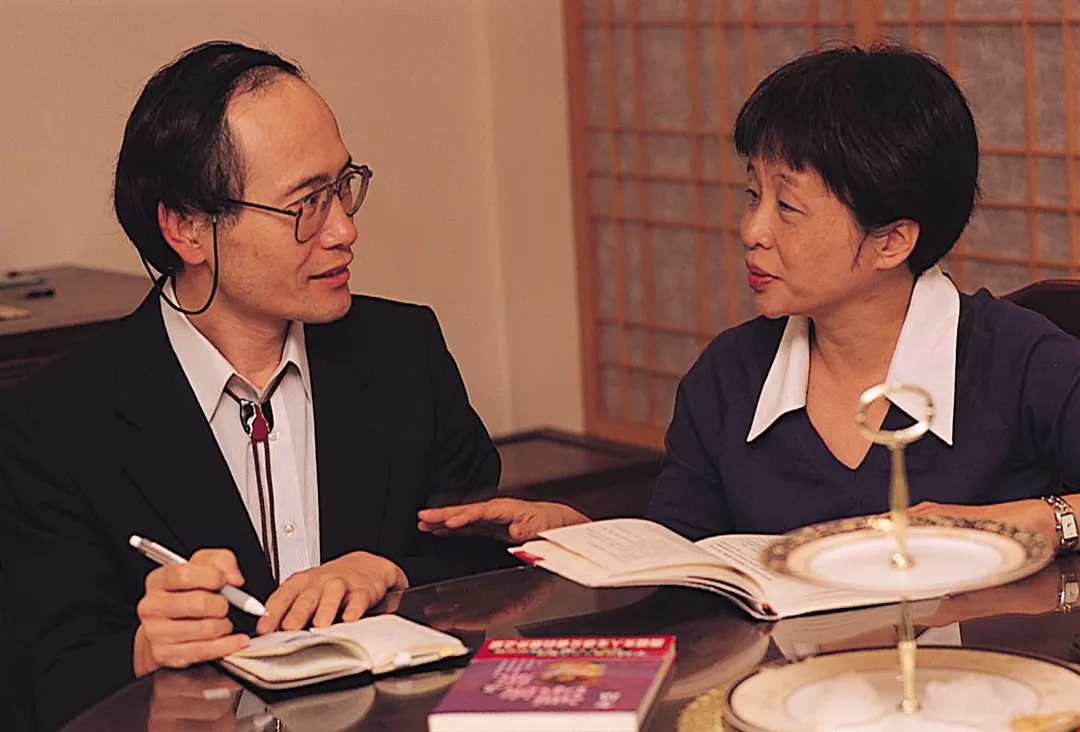
Li Ang's The Butcher's Wife has been translated into more foreign-language editions than any other work of Taiwan literature. Fujii Shozo rendered The Butcher's Wife and The Strange Garden into Japanese, and is preparing to translate Autobiography: a Novel. Li Ang considers these three works her "Taiwan trilogy.".
A page from a turbulent history
Cheng Ching-wen's Three-Legged Horse also earned favorable reviews, including ones from the New York Times and the San Diego Union-Tribune. The piece in the New York Times Book Review, penned by Cao Guanlong, a well-known Chinese author living in New York, states that Cheng, by calling attention to "mutations" and "abnormalities," depicts characters burdened by the history of an island that "inherited a 5,000-year-old feudal culture and, more recently, suffered under another 50 years of Japanese colonial occupation."
Last October, Three-Legged Horse, competing in a field of 120 works published in English, won the Kiriyama Pacific Rim Book Prize, the first time any Taiwan writer has won this international literary plum. The critical evaluation of the book concluded that it was a fine balance of local flavor and themes of common human interest, and would serve well to describe Taiwan to the English-language community.
The New York Times Book Review also discussed Chang Ta-chun's Wild Kids, which includes his novellas Wild Child and My Kid Sister. In the review Maureen McLane writes that Chang depicts "a global literary type" brought about by the global economy: "the wily, bruised, commodity-loving, prematurely sophisticated teenager, with hapless parents and teachers in tow."
Columbia University Press was thrilled that these three books caught the attention of major book reviews, and is now even more willing to invest effort in this direction. Of course, as David Wang cautions, compared to the long-term efforts devoted to Japanese literature in the US, Taiwan is just taking its first steps.
The situation is somewhat different in Japan, a close neighbor of Taiwan and its former colonial master for half a century, which has a more complex emotional relationship with the island. The Japanese academic community has long paid close attention to non-literary aspects of the Taiwan experience, and it is against this background that Taiwan literature is now getting more attention. Japanese translations of Koto (Ancient City) and The Strange Garden have gotten especially favorable reviews, including ones from such opinion-leading newspapers as the Asahi Shimbun and Sankei Shimbun. In particular, one review of The Strange Garden noted that the themes treated in contemporary Taiwan letters-gender, national identity, urban problems-are parallel to the themes treated in contemporary Western literature, thus enabling Taiwan literature to be a part of "world literature."
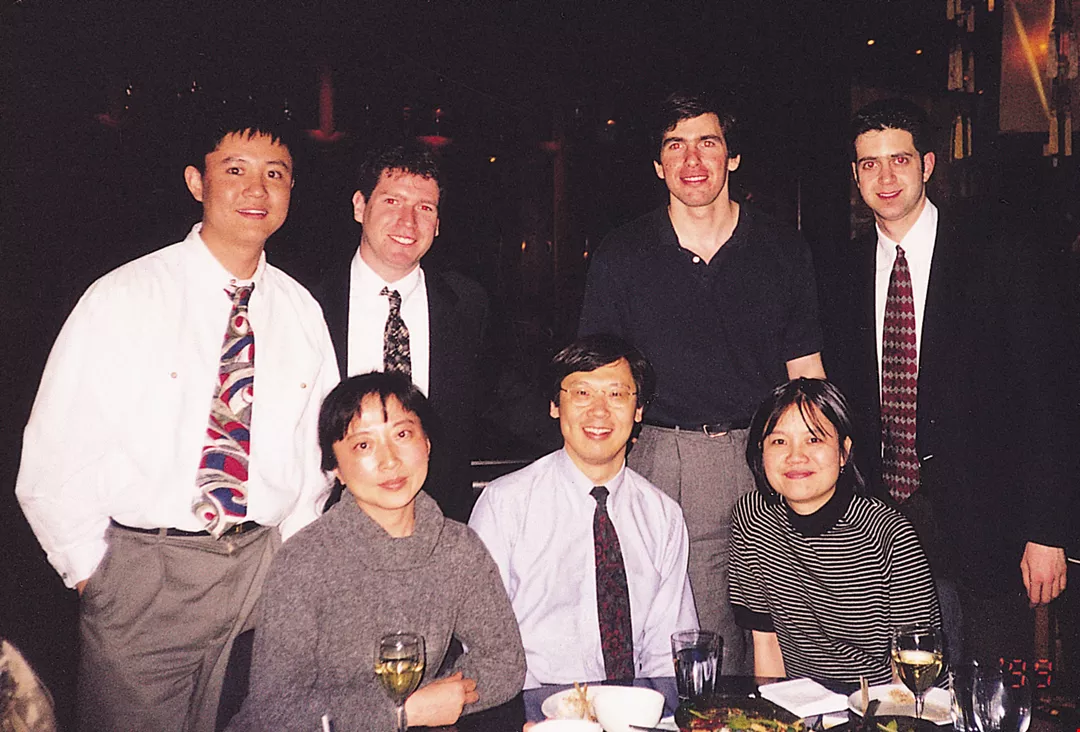
This April, after the publication of the English translation of Notes of a Desolate Man, author Chu Tien-wen (front left) visited the US, where she took this photo with some graduate students and David Der-wei Wang (front, center), chief editor of the "Modern Chinese Literature from Taiwan" series and chairman of the Department of East Asian Languages and Cultures at Columbia University. (courtesy of Chu Tien-wen)
The Butcher's Wife in Japan
Fujii Shozo relates that The Butcher's Wife by Li Ang had an enormous effect on the feminist movement in Japan, and it got the greatest response from women. Though the two environments (Taiwan and Japan) are different, the basic logic of marriage is the same in both places. "Many of the concrete descriptions of the lives of Taiwanese have a definite Taiwanese character to them, but also have universality."
Nevertheless, however much literature may be borderless, and have universality and a basic humanity that all share in common, there are always differences in outlook and thought between different literatures. These inevitably present obstacles to understanding and appreciation.
Chi Pang-yuan believes that people can only have a limited amount of concern for foreign literature. Except for products coming from the great cultural powers, few works of literature find it easy to get a foothold on the bestseller lists in foreign lands.
Bridging the culture gap
This consideration in turn affects which works are selected for translation. Those selected are not necessarily those most representative of the author. For example, Chang Ta-chun rejects the idea that My Kid Sister and Wild Child are representative of his oeuvre. These were selected for translation mainly because the themes were more comprehensible to a foreign audience. "My other works," he explains, "are about events or are set against backdrops peculiar to China or Taiwan, and wouldn't be easy to translate, much less be accessible to most American readers."
As a case in point, Chang points to one of his other books, Chengbang Baolituan (Gangsters in the City-State). It is typical of the Chinese story-telling tradition, and this flavor cannot be translated. "It's a book written for Chinese people."
Hsiao Li-hung had a bestseller 20 years ago with A Thousand Moons on a Thousand Rivers. Because the book is filled with references to the subtle rhythms of daily life in Taiwan, it is extremely difficult to translate. Indeed, cultural differences between East and West made it almost impossible to finally give birth to a translated version.
Chi Pang-yuan says that when Columbia University Press first got the book, they responded that they couldn't understand the worldview of the main female character, nor the form of pure love she shared with her male counterpart. The reader of the first draft asked: "If they have things they want to say, why don't they just come out and say them?" But Chi insisted on keeping this book in the series. "This book can communicate the virtue of extreme purity that is part of the way Chinese think and feel."
Chi also had some rough moments with Lee Chiao's Cold Night Trilogy. Until she saw the translation, she was very worried that it might not be able to convey the great power of the original. "If that power could not be conveyed, how could you expect to keep readers engaged?"
Even in neighboring Japan, there is not necessarily much understanding of Taiwan customs or popular beliefs. When he translated The Butcher's Wife, Fujii Shozo wrote a 10,000-word introduction to explain the Chinese attitude toward the hog-butchering profession and the concepts of karma and reincarnation.
Unexpected gains
"Cultural geography and cultural politics are facts that cannot be ignored," says David Wang. When the subject of "Chinese literature" comes up, people cannot help but look first at the PRC. The world of mainland letters has undeniably been exciting and rich in creativity since the 1980s. Therefore, "Taiwan will have to expend a lot of thought and energy to get people to notice its achievements. It's going to be a slow process." But based on his own faith in Taiwan literature, Wang is confident that it can be done.
Chang Ta-chun, meanwhile, says that neither fame nor fortune matter. The important thing is that Taiwan has writers who can rightfully stand on the world stage. He notes that, "besides Amy Tan and Maxine Hong Kingston, there are many other Chinese writers working in every corner of the globe," but that promotion is not the responsibility nor the duty of the author. Indeed, this would be beneath any true author. He concludes: "If foreigners don't see that we have good writing, that's their loss, and we shouldn't worry about it."
Good books should be shared
Chi Pang-yuan says that she is promoting translation of Chinese books from her perspective as an appreciative reader. "I was touched by these books, so I want to share them with even more people." She also believes that the books in the Modern Chinese Literature from Taiwan series will be required reading for any future research into Chinese-language literature.
Further, besides ordinary readers and scholars, Chi is giving thought to another audience: the offspring of emigrants from Taiwan. Many Chinese-Americans cannot read Chinese, and these books could be the basis for their understanding of Taiwan and of their own roots. "A lot of people have already told me they intend to buy them for their children."
Huang Ying-che puts it this way: "Translation is an important means of cultural exchange, exporting culture, and even propaganda. In Taiwan right now, there is a fad for the work of Murakami Haruki. I hope that in the future in Japan there will be a fad for Chu Tien-hsin, for Li Ang, or for Pai Hsien-yung."
As Lee Chiao has said: "Literature is the fruit of culture." Let us hope that Taiwan literature, transplanted to foreign soil, will continue to flower.


@List.jpg?w=522&h=410&mode=crop&format=webp&quality=80)


