Ssumakussu at the Crossroads
Text and photos by Chen Yue-kuei / tr. by Christopher MacDonald
March 1995


The mountain village of Ssumakussu has long needed its own road link with the outside world. Today, as the new road nears completion, there are concerns about the price that may have to be paid for closer contact with modern civilization.
The people of Ssumakussu are glad that the road is drawing closer, but they are worried too: what does the road ahead hold for them?
Deep in the mountains of northern Taiwan lies a little Shangri-la, a scenic village of honest folk living in virtual seclusion from the world. Its name is Ssumakussu.
The villagers rise with the dawn to begin their day's work, and turn in at sunset. As devout Christians, these people of the Atayal do not want for spiritual nourishment, but the practical reality is that theirs is the only village in Taiwan which cannot be reached by even a works road.
Ssumakussu is situated beneath the southwestern crest of Hsuehpai Mountain, at 1500m above sea level, and is the westernmost village in Chienshih Township, Hsinchu County. At present the village is home to thirty families, with a registered population of 130 people, around 80 of whom actually live in the village. The villagers are all Christians, and village affairs are handled by the three church elders, including community chief Tseng Chen-chuan. The village has electricity, but otherwise there are no public facilities such as a school or a clinic.
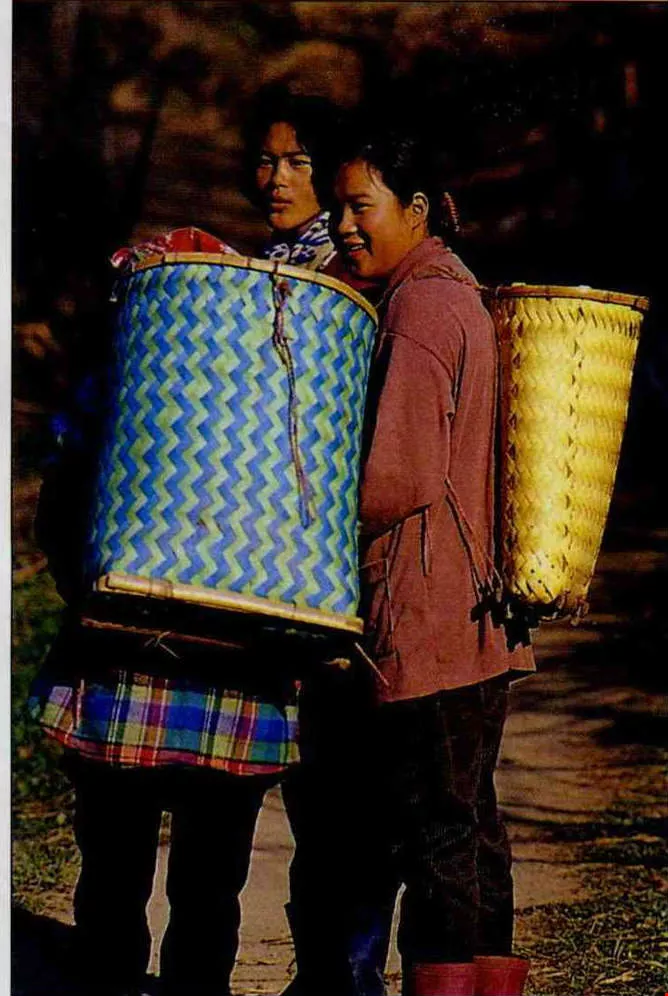
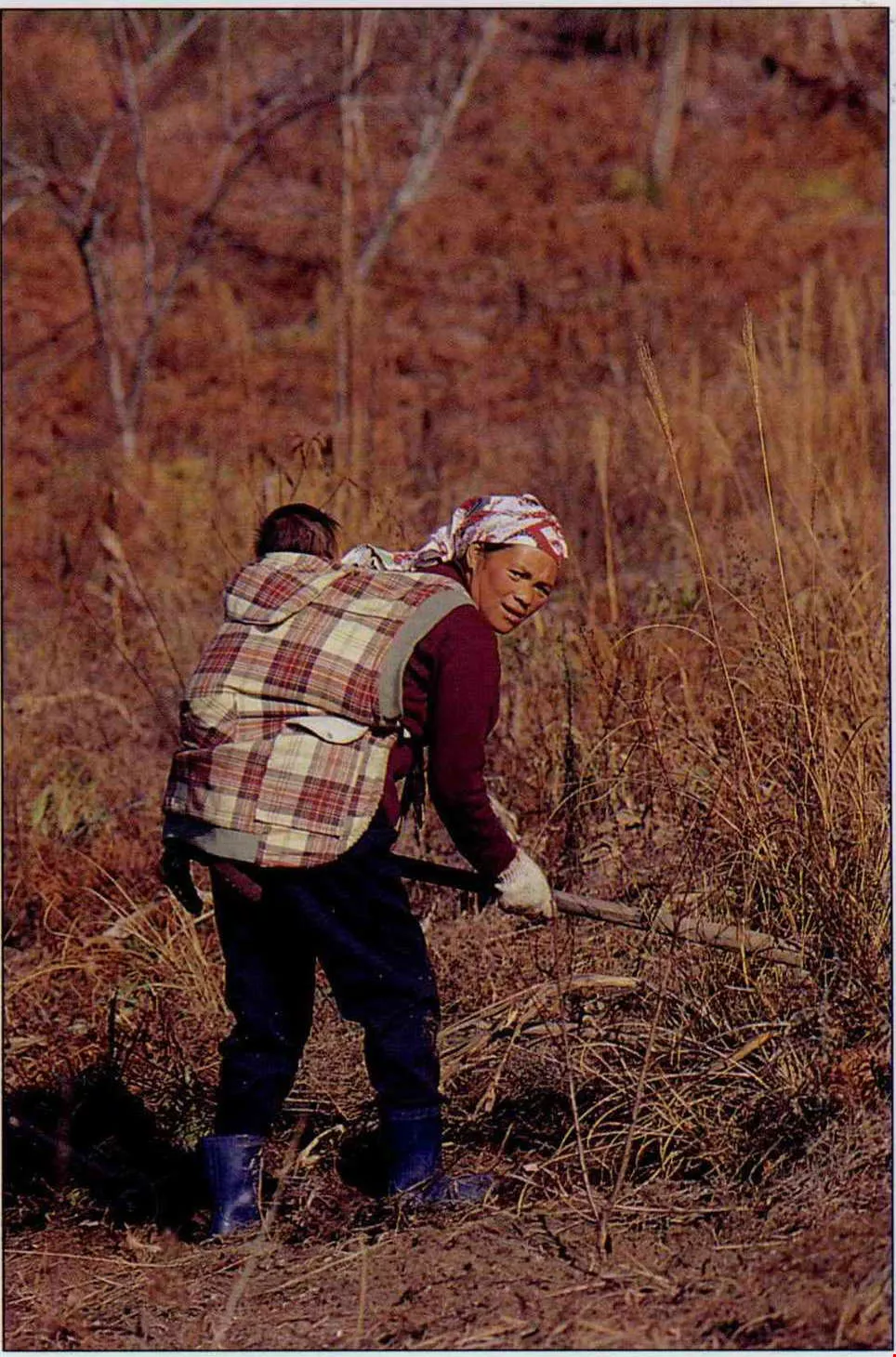
The villagers of Ssumakussu all live by farming. Bearing panniers, the women of the family head off to work in the orchards.
Village which no road reaches
There are only two ways of reaching Ssumakussu. One is along the "Old Ssumakussu Trail" from Ilan County. The trail, which takes at least two days to travel on foot, begins at Chilan on the North Cross-island Highway, and runs from Yuanyang Lake to Ssumakussu. The trail is rarely used, however, since Yuanyang Lake has been designated a conservation area, while the planking along many of the mountainside stretches of the path has fallen into disrepair.
The other main route follows the works road which runs from Chienshih Village in Chienshih Township, Hsinchu County, via the "front mountain" Atayal villages of Chinping, Tienpu and Hsiuluan, and ends a 40-minute walk away from Ssumakussu in the "back mountain."
Beyond the police substation at Yulao, the road is paved with broken rock, so although only about 60km long it takes about four hours to drive, and requires a four-wheel drive vehicle with a raised chassis.
At the end of the road the only choice is to get out and walk the last 40-minute stretch to Ssumakussu. In the old days, before there was even a works road, the journey from Chienshih took two days on foot.
Today, the road is drawing gradually closer to Ssumakussu, supported by the county government budget. Following this year's Chinese New Year break, the road contractors held a ceremony at the head of the road and then got on with the job. The backhoe resumed knocking down big trees and shoving aside boulders, and slowly the road continued its advance on Ssumakussu.
Although the road is coming from the direction of the "front mountain," with Ssumakussu as its destination, the village itself has long been an important way station in the outward migrations of the Atayal people.
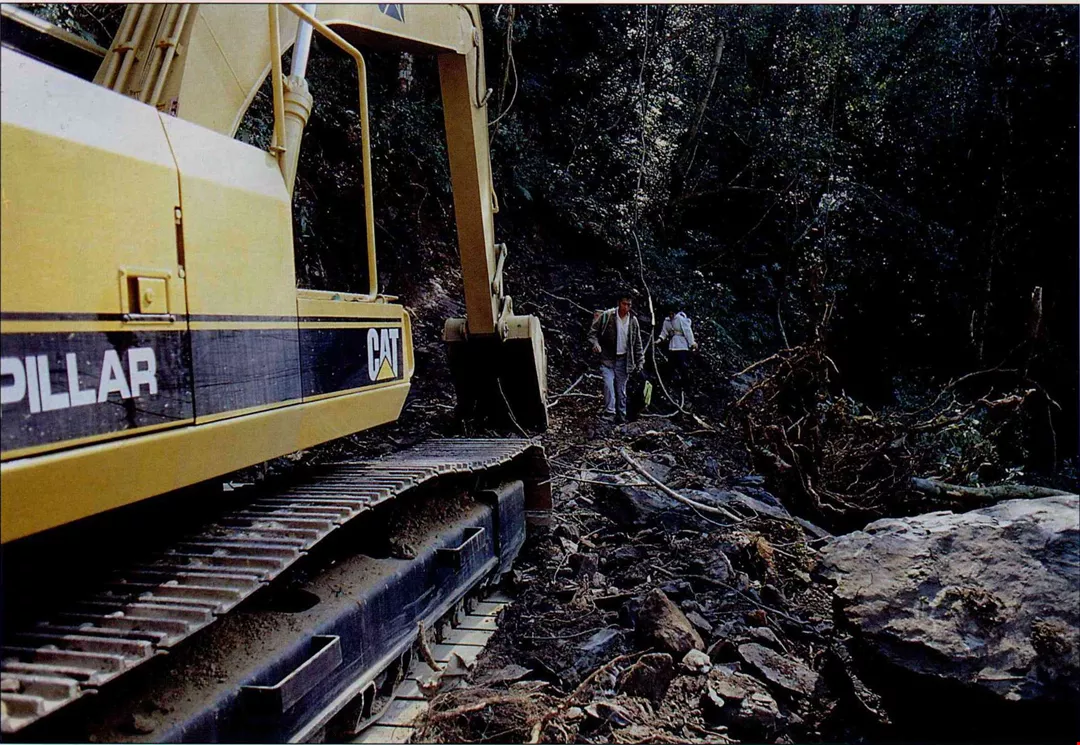
On their way down the mountain, two villagers encounter a backhoe at the head of the works road. What kind of future will the road bring the village?
Looking back on the road ahead
Atayal villages throughout the county, such as Chenhsipao, Hsinkuang, Hsiuluan and Tienpu, all started as branch settlements of the tribe in Ssumakussu. The village lies at the foot of Tapachien Mountain, where the terrain funnels outwards and downwards, forming a conduit through which the Atayal have dispersed throughout Chienshih Township. The forebears of national legislator Kao Tien-lai were among those who once migrated away from Ssumakussu.
The precipitous terrain and difficulty of transport links have restricted contacts between Ssumakussu and the outside world, and this has helped the village to retain elements of its native culture, including the tradition of oral literature.
Community chief Tseng Chen-chuan describes how in the past, when village elders were happily drunk, they would sing a traditional ballad recounting tribal history, the gist of which was: "Our ancestors were born from the rocks, and came here from their place of origin on the other side of Tapachien Mountain. Ssumakussu was the first place they made home on the north side of the mountain, and when the population of the tribe increased they branched out to Hsiuluan, Tienpu, Hsinkuang and elsewhere." This history of migration is one that has been transmitted orally from generation to generation.
"Ssumakussu has no writings of its own," explains Tseng Chen-chuan, "but these oral histories form the record of the past."
In mountain districts around Taiwan, elementary and middle schools are actively promoting the teaching of aboriginal languages, but for pupils from Ssumakussu there is no need, as they are already fluent in their mother tongue. "Only children from Ssumakussu can still speak their traditional language," says Tseng Chen-chuan with pride.
In the course of farming, building houses or taking care of one another, the villagers of Ssumakussu "share and share alike," acting together as a whole. When there's a job to be done, everyone lends a hand.
Although the village is lucky to retain a little of its traditional culture, it still wants to have a road, because life is too inconvenient without one, especially in terms of communication links, health care and education.
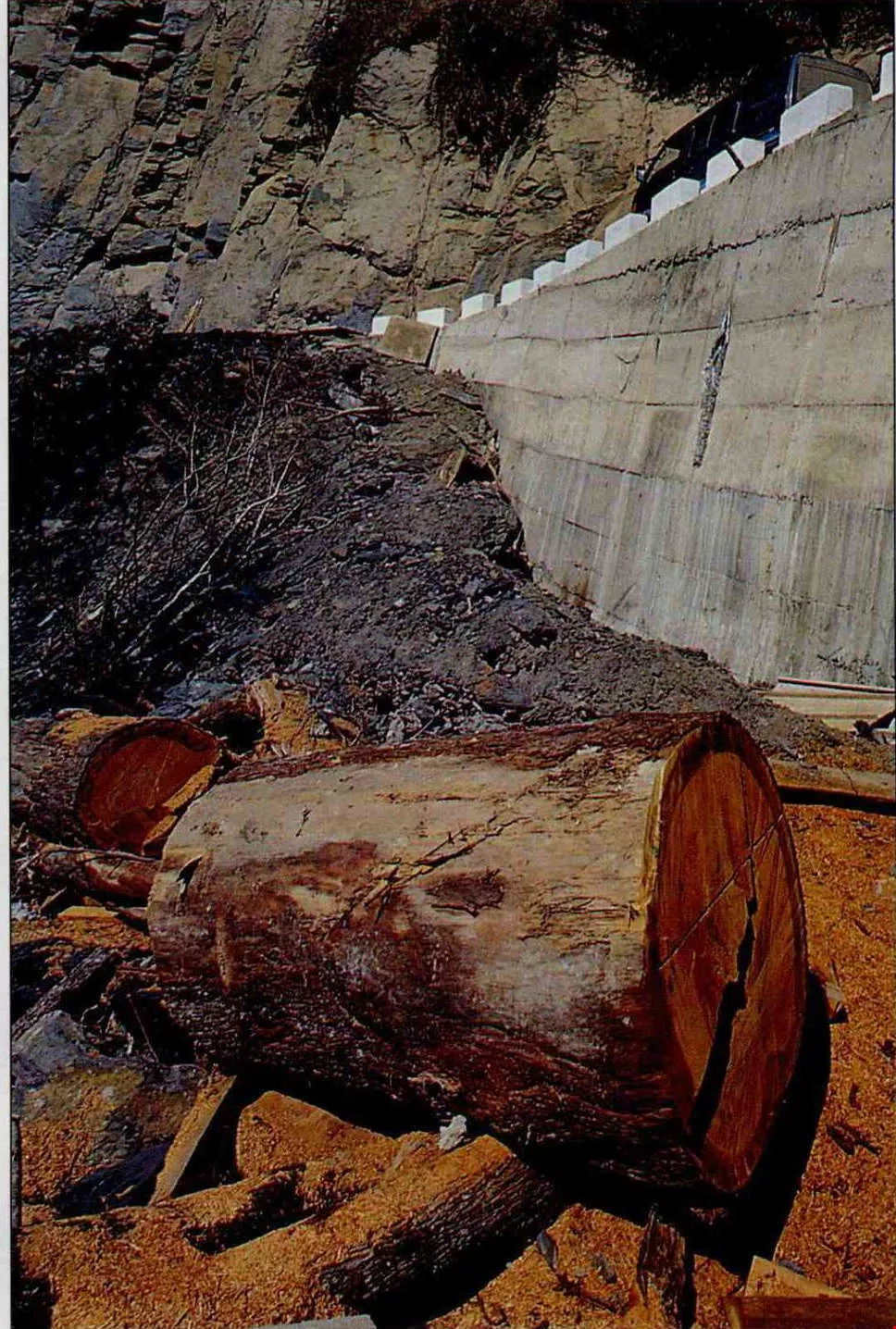
Will Ssumakussu forsake its natural environment for the sake of economic gain?
We'll climb that road, no matter how steep
In the past, the people of Ssumakussu lived by growing mushrooms, sweet potatoes and millet. Shipping produce out of the village was difficult and costly, so they kept what they grew largely for their own use. Occasionally, villagers would go down the mountain to work and earn money for their upkeep.
In 1979, Ssumakussu finally got its own power supply. Today, every family has electrical appliances, all of which, from TV sets and refrigerators to washing machines, along with household fittings such as aluminum door and window frames, have been hefted up the mountain on people's backs.
The prohibitive cost of erecting phone lines to the village means that there is still no regular telephone service. Three years ago the residents tackled the communication problem by installing a system for mobile phones, at around NT$30,000 per set, but with the main equipment across the ravine at Hsinkuang, the village can only receive incoming calls and cannot dial out, and is therefore still limited in its ability to contact the outside world.
What about when someone in the village falls sick? Because there are no medical facilities, "we go down the mountain for treatment, but only for a serious illness. With colds and other minor ailments we just wait until they get better," says Tseng Yu-chih, who is 35 years old and has a family of four children. You often see children in Ssumakussu with yellow mucus running from their noses on account of colds or infections of the upper respiratory tract. Medical personnel from the clinic in Chienshih township have only been called out to the village on two occasions since the beginning of work on the new road.
There is also no direct postal service to the village, since the mail carrier cannot make a one-day round trip for the sake of a single letter. Instead, the mail is dropped off at the primary school in Hsinkuang, and ferried to the village at the weekend, either by the pastor who comes to give a Sunday service, or by the children coming home after a week at elementary school. The kids can be naughty, however, and "the letters have often been opened and completely messed up," remarks Tseng Yu-chih.
As the road advances, trees are tossed aside like matchsticks, but deforestation leads to soil erosion.
The long road of education
There is no elementary school in Ssumakussu, so the children have to go to school in Hsinkuang. They set out early every Monday morning, the seven sixth-graders leading twelve younger kids, and all with a week's worth of belongings. Their route takes them down one side of deep Taikang ravine and up the other side to Hsinkuang, and although the two villages are only two kilometers apart as the crow flies, the journey takes at least three hours on foot.
"The teacher's rule is that we have to get to school before 10:30, or else we get punished by having to stand in the corner!" says Ho Cheng-hui. But the length of the trip doesn't deter these energetic kids: "We have fun along the way, so we get there quickly."
To save traveling time, all the kids from Ssumakussu spend the whole week in Hsinkuang, and return to the village after school ends at lunchtime on Saturday.
Generally their school grades are not very good, and this, combined with the fact that from middle school onwards they must study in Chienshih, which is a round trip of at least a day from Ssumakussu, means there is a high dropout rate once the children reach middle school. Tseng Yu-chih studied as far as the first year of a church-run middle school, but his schooling ended with the closure of the school due to lack of pupils.
Tseng Lung-ching, who is in his third year at Yihsueh Middle School in Taishan Township, Taipei County, is an exception. Two years ago, students from a group which provides educational support to children in mountain districts, came to Ssumakussu and were impressed with Tseng's grades and potential. Once he graduated from elementary school they took him to the city to further his studies, and arranged for him to lodge at Christian fellowship dormitories in Fujen Catholic University, so that he could be taken care of by students from the university and avoid being "contaminated" by the urban environment.
Although it is difficult for the children of Ssumakussu to obtain schooling, if a child wishes to study, his or her parents will give full support. With the opening of the road, the villagers are hoping that a branch school or class can be set up in the village, enabling parents who are interested to encourage their children to study well and to aspire towards higher reaches of learning.
Tseng Lung-ching is not the only youngster to have received help from the church, and in fact religion has served an educational purpose in Ssumakussu, more successfully than it has managed to in other aboriginal villages.
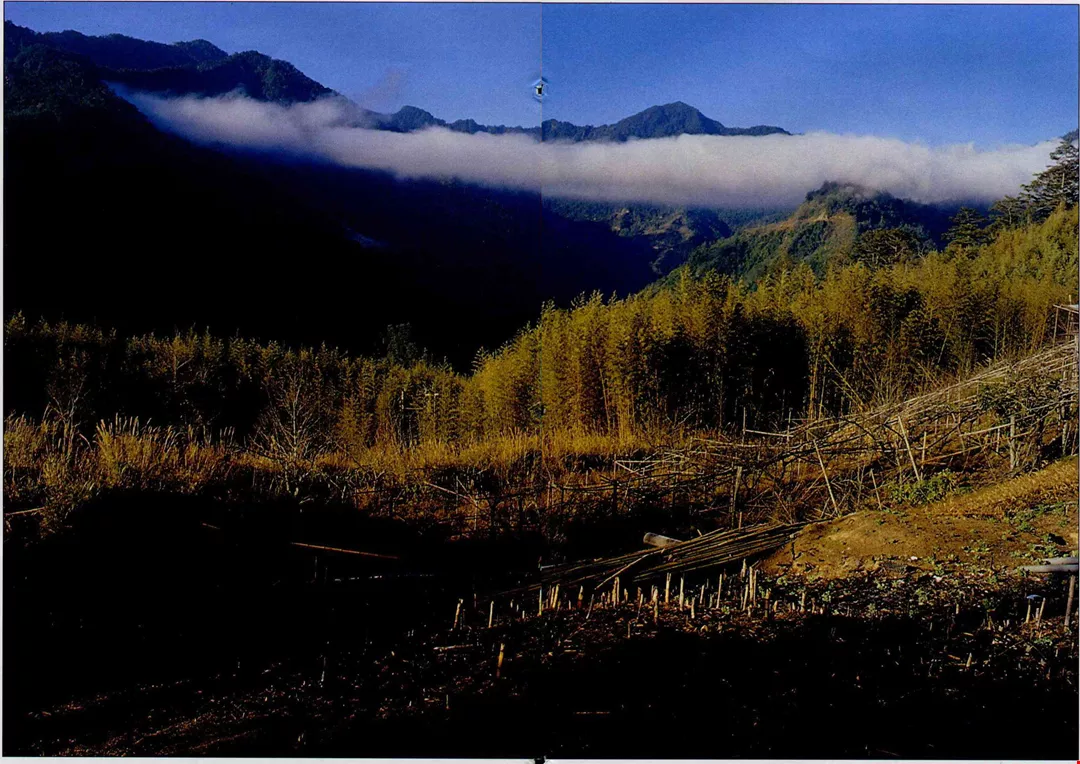
Bamboo used to be Ssumakussu's major crop, but fruit trees are taking over.
The broad road of the church
Every weekend the pastor comes to Ssumakussu from Hsinkuang and gives a Sunday service. The previous church was destroyed by fire three years ago, and services are currently held in a makeshift wooden structure. On Sundays the villagers put aside whatever they are doing and attend the weekly worship, when the sound of their hymns rings through the valleys.
Because of the religious devotion of the villagers, Ssumakussu has none of the problems, such as rampant alcoholism, that are common in other aboriginal villages. Few of the villagers even smoke. The village's little general store does not sell any alcohol, and the residents retire early every evening, to make an early start up the mountain for work the next morning.
Wu Jung-che and Chen Yi-ping, students at the Department of Philosophy at Fujen Catholic University, recently visited families in the village as volunteers with the Christian Rainbow Women's group, and found that the situation was far better than in the villages of the "front mountain."
Wu Jung-che says that although many of the youths drop out of school, they do not learn how to get into trouble. Most of them stay in the mountains to help grow mushrooms or farm fruit.
There are currently twelve boys and girls between the ages of 12 and 18 in Ssumakussu, and they all live in the village. None have gone "missing," which is an unusually good record for a village in the Chienshih district, which has been dubbed the "black tribe" district.
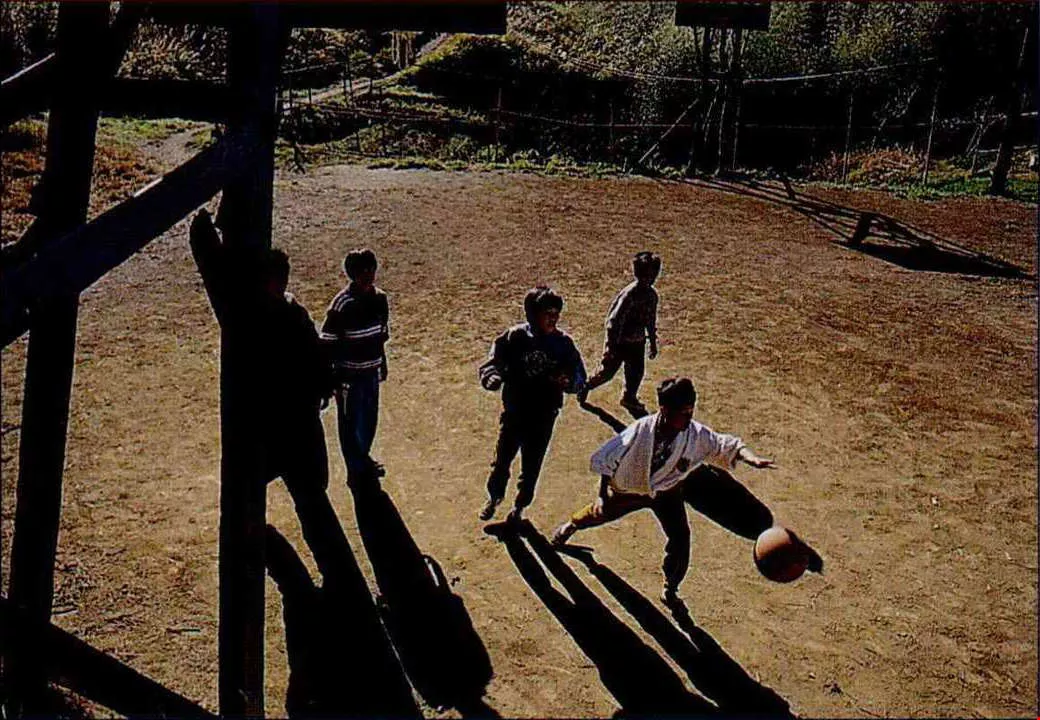
For recreation, village youths have set up a basketball hoop in an open space, and the lads get together to play one-on-one. Basketball is their only athletic sport.
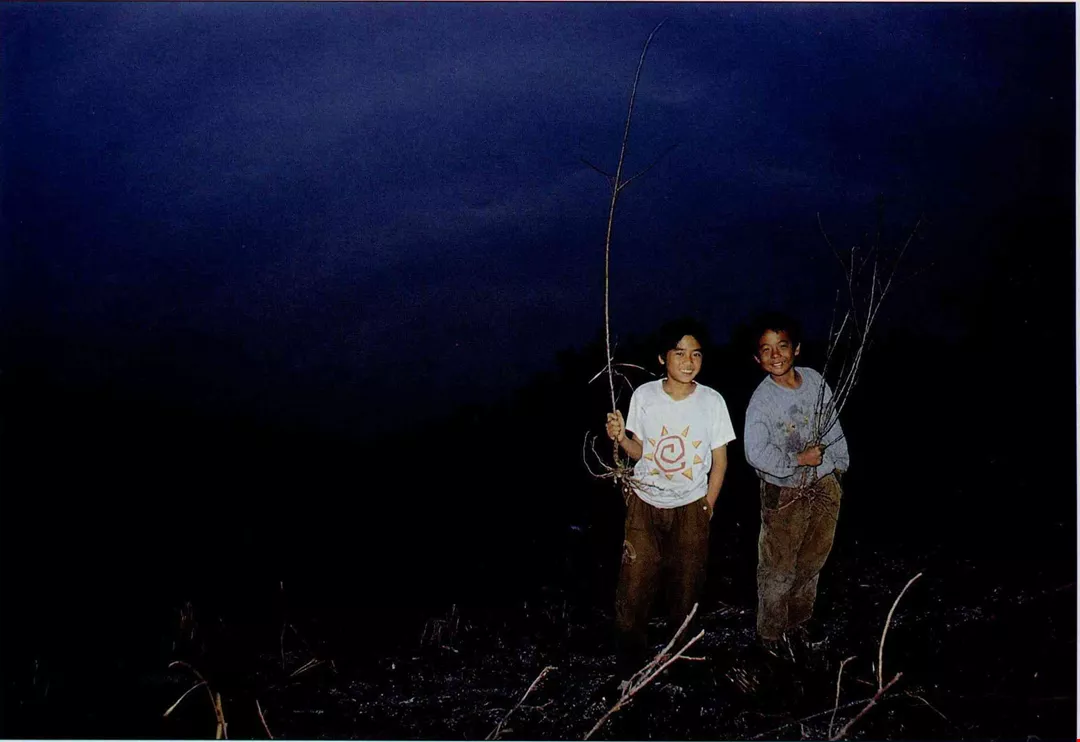
Dad is hurrying to plant peach before the road is completed, and the two kids help carry nursery stock.
The road home gets nearer
Five years ago, because of the many inconveniences of life up in the mountains, a group of five families, including that of Yu Kuo-hsing, decided to move down to Hsinchu to make a living and attend to the education of their children.
Younger villagers tell their seniors: "lt's too inconvenient living so far away from everything. We should move to Chutung." The older people reply: "Our ancestors originally came down from Tapachien Mountain, and here we are in the nearest place. Chutung is too far away!"
For the old people of Ssumakussu, distance should be measured in terms of the village, and not from the perspective of the city. Some of them say: "For a sun like me that is soon to set, what point is there in moving down the mountain?"
People continue to move down the mountain, but at the same time, some people have started moving back up.
Now that the road is nearly ready, there are three families thinking of moving back. Yu Kuo-hsing, who has two children and has been working in a foundry for the last five years, is one of those intending to return. He hopes to travel back and forth, growing fruit in the mountains while also working in the town. Returning during a vacation, he cleared away the scrub on a patch of reservation land and burnt off the cogongrass. In its place he has planted peach, which can be grafted after two years and harvested after three or four years.
Sixth-grader Ho Cheng-hui, who comes from a family of six children, also moved down the mountain five years ago. Three years ago, after his father died, he returned to the village to stay with his uncle. He says that his mother will soon bring his younger siblings back to live in the village. For him, the old home exerts a strong pull.
Dad is hurrying to plant peach before the road is completed, and the two kids help carry nursery stock.
Merging the land and the road
The residents of Ssumakussu still retain land that was handed down from their ancestors. They strongly believe in the notion that "land equals survival," and that the land is not there just to be exploited.
Although mountain reservation land is forbidden from being sold or leased, or having its ownership transferred, the last ten or twenty years have seen the emergence in mountain highway villages around Taiwan, such as Lalashan, Lishan and Wushe, of certain well-heeled businessmen who offer to buy or rent land from aborigines, in order to exploit the valuable market for mountain produce.
For aboriginal people, unfamiliar with the details of the law, it often seems more inviting to sign on the dotted line than to continue the arduous business of maintaining the land, especially when egged on by a few glasses of liquor and a fat wad of money. And so they hand over control of their reservation lands. In the worst incidents, in other regions, money made by aboriginal people from selling the land has been frittered away until they were left without even a roof over their heads.
Three years ago, when the villagers of Ssumakussu learnt that the road was coming, they began planting peach and pear, intended as high value cash crops. Last year the trees bore fruit for the first time, but the crop was decimated by a typhoon, which was a big blow to the villagers.
Tseng Chen-chuan and the village pastor are concerned that some residents may be unable to resist the temptation to sell the land, so they repeatedly emphasize the notion that ancestral lands cannot be sold off. The rest of the villagers seem to share that view. Tseng Chen-chuan relates how a businessman from Taichung had his eye on a hillside meadow in Ssumakussu, and was willing to pay a handsome sum, even offering to pay any price that the seller would name. The businessman failed to obtain the land, however, which indicates how serious the villagers are about their principles.
"If we sell the land, what do we have left to give the next generation?" asks Tseng Chen-chuan. Aborigines who have lost their land are like flowers without roots. Moreover, plans are now afoot in the government to lease back reservation land to its inhabitants at low rates, and in a few years time ownership will perhaps be returned to the indigenous peoples, which makes it especially necessary to handle the issue carefully at this time.
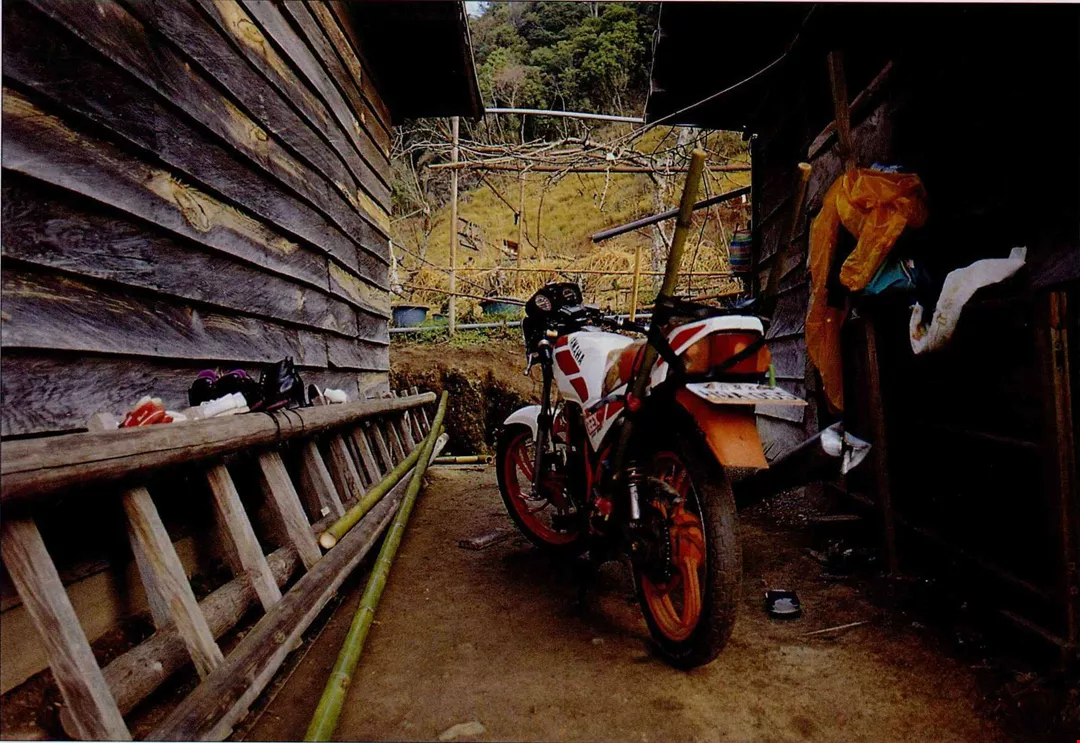
In spite of the village's isolation, it can't keep the modern world out completely. This motorcycle was lugged up to the village by hand.
Traveling their own road
Four years ago, news spread about a holy tree near Ssumakussu, attracting visitors and earning the village some tourism revenues. It did not amount to a lot of money, but it brought benefits to the villagers. On the other hand, the advent of tourists also brought habits of urban nightlife to Ssumakussu, with people staying up until the small hours, resulting in disruption to the village's timetable for the following day. "Though we need to earn money, Ssumakussu does not want to be contaminated by the city," says Tseng Chen-chuan.
More than ten years ago when the road to Hsinkuang was opened, the people of Ssumakussu were envious. Now, as the road to their own village approaches completion, and having seen the drawbacks for themselves, the villagers feel that there are many matters that first need to be considered.
The latest consensus is that the road should stop at the electricity pole, 500 meters outside the village. They don't want it any closer, to minimize the damage that it may do.
As this shows, the people of Ssumakussu are already weighing the pros and cons of the situation. On the one hand, there is the fact of the road's imminent arrival to within half a kilometer of the village. On the other hand, there are the various concerns about tourism, land, and way of life. Whether or not they can strike the balance they need depends entirely on the villagers themselves.
[Picture Caption]
p.74
At the start of another day, the mists disperse to reveal a crisp clear morning.
p.75
The villagers of Ssumakussu all live by farming. Bearing panniers, the women of the family head off to work in the orchards.
p.76
On their way down the mountain, two villagers encounter a backhoe at the head of the works road. What kind of future will the road bring the village?
p.77
As the road advances, trees are tossed aside like matchsticks, but deforestation leads to soil erosion.
Will Ssumakussu forsake its natural environment for the sake of economic gain?
p.78
Bamboo used to be Ssumakussu's major crop, but fruit trees are taking over.
p.80
Dad is hurrying to plant peach before the road is completed, and the two kids help carry nursery stock.
p.81
A common sight in Ssumakussu: children carried into the fields on their mothers' backs.
P.82
In spite of the village's isolation, it can't keep the modern world out completely. This motorcycle was lugged up to the village by hand.
p.83
Basketball is the only sport in Ssumakussu. Village youths have set up their own basketball hoop.
p.83
Taking advantage of free time before starting work to watch an NBA broadcast from the US.
p.84
The original church was destroyed by fire three years ago. Village services are now held in this temporary replacement.
p.85
Religion is the spiritual mainstay of Ssumakussu, and has also brought the village much material benefit.
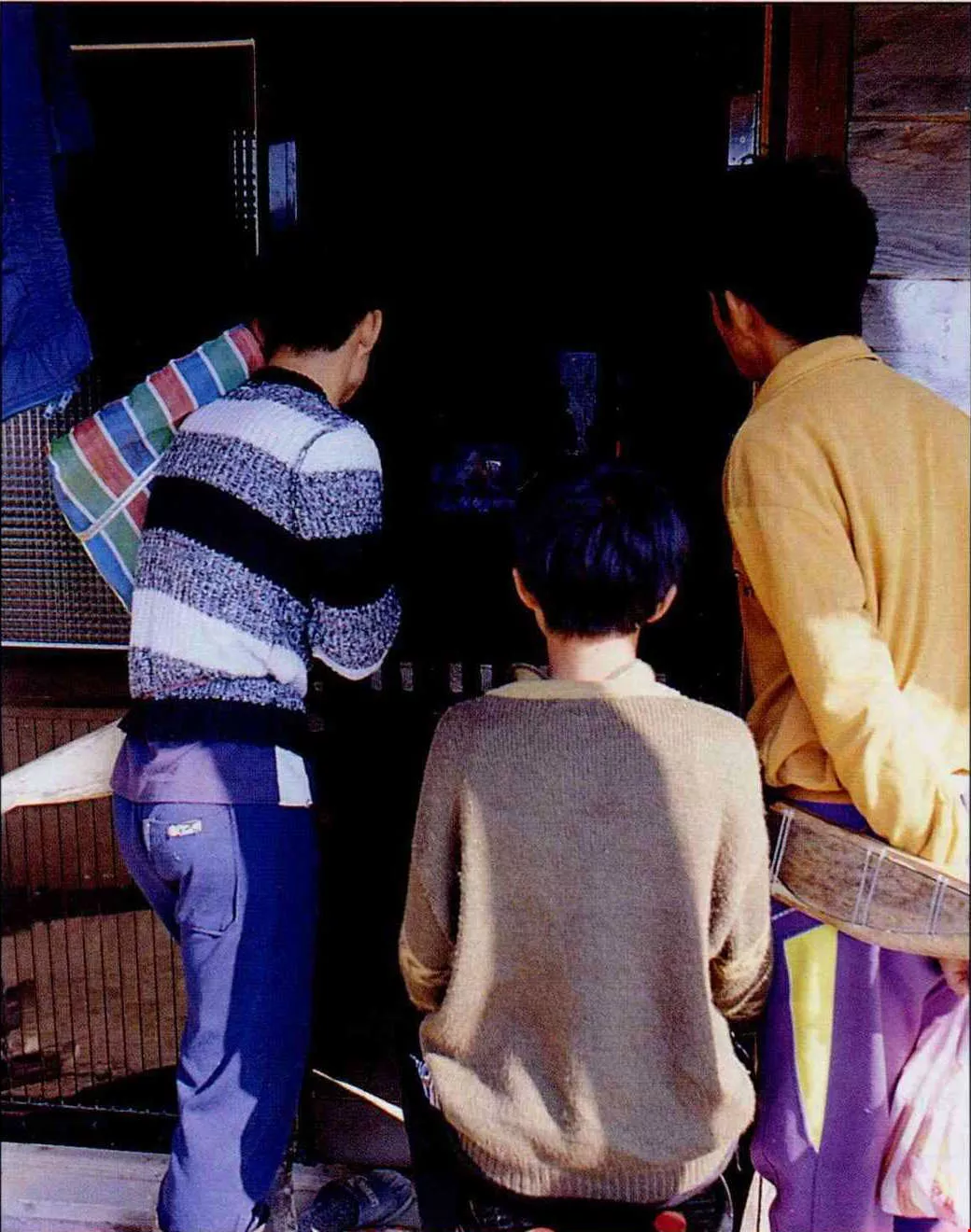
Basketball is the only sport in Ssumakussu. Village youths have set up their own basketball hoop.
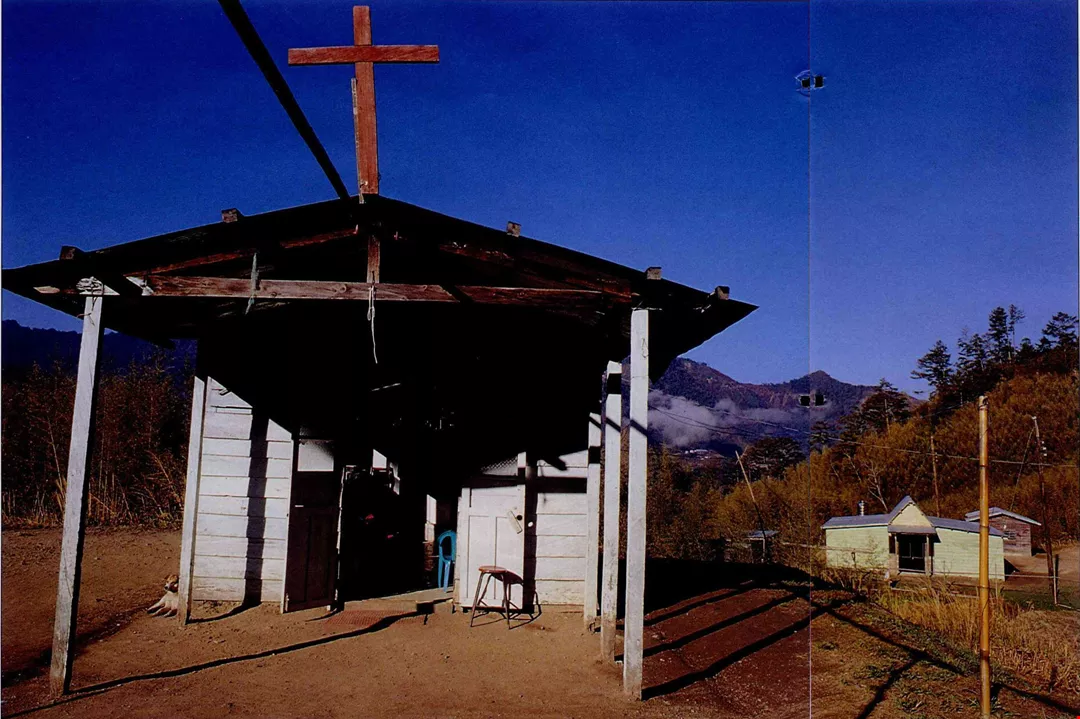
The original church was destroyed by fire three years ago. Village services are now held in this temporary replacement.
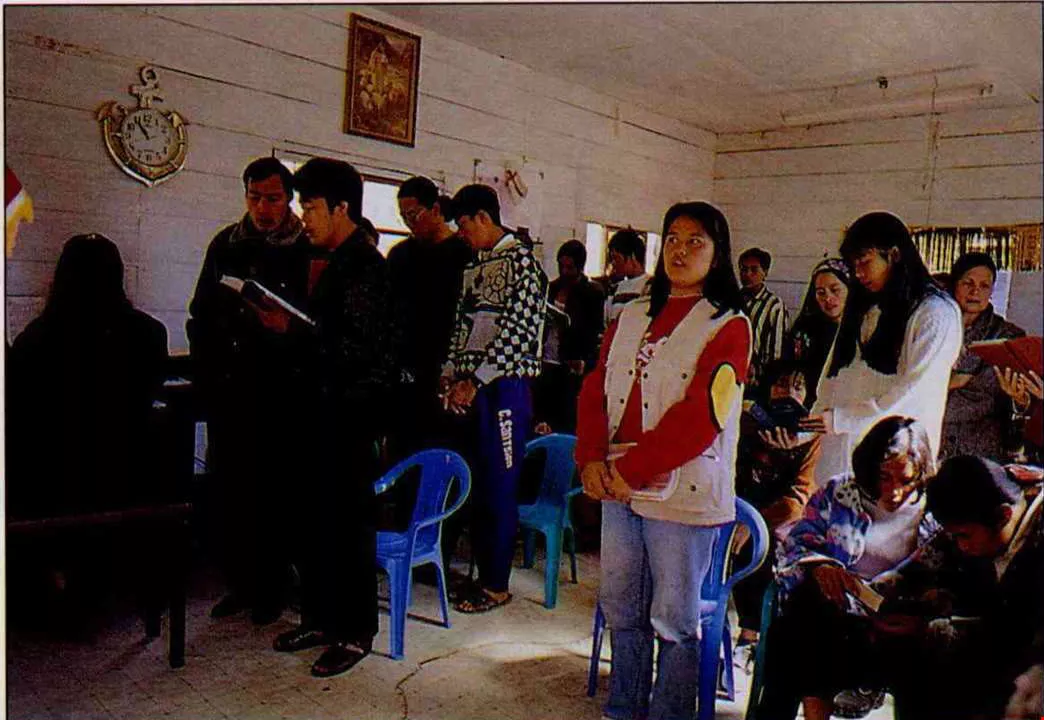
Religion is the spiritual mainstay of Ssumakussu, and has also brought the village much material benefit.
@List.JPG?w=522&h=410&mode=crop&format=webp&quality=80)


