Tzengtsu:A Community of Volunteers
by Eric Lin / photos Jimmy Lin / tr. by Jonathan Barnard
July 2003


Unlike most Taiwanese farm-ing villages, which suffer from severe shortages of manpower and attract only the elderly to participate in community activities, the Tzengtsu Community in Hsiushui, Changhua County, is full of life, and people of all ages contribute. Among Tzengtsu's many active performance groups, the most famous is the troupe that performs the dragon dance, an art form that requires young male performers and puts the stress on cooperation. Tzengtsu pulled together as a community only about three or four years ago, and now when people are needed for a community activity, one need just make the call and several hundred people will be ready to lend a hand. Whether it's for the neighborhood watch or the environmental clean-up crew, there are always plenty of volunteers. And for the annual folk dance competition, the number of women participating always totals more than 100!
The Tzengtsu Community expresses the energy of the land through hard work. The scope of local residents' volunteer efforts extends beyond Tzengtsu to all of Hsiushui Rural Township. This is an authentic "volunteer community."
Tzengtsu's streets are clean, and its roadsides bright with flowers. The thickets of weeds, dilapidated farmhouses and other manifestations of the decline that typify Taiwanese farming villages are nowhere to be seen here. Flowers are blooming under the bright May sun, and the rice paddies are lush and green, nearing the time of year when the grains emerge. Sounds emanating from the scattered small factories and auto repair shops seem to urge the crops on. This is a community that is always full of life.
In the community activity center, you see evidence of the residents' vitality everywhere. On a whiteboard listing May activities, for example, virtually every day is filled to the limit: dragon boat practice, dragon boat practice, and more dragon boat practice at the site of the competition.... At the end of the month, as the Dragon Boat Festival approaches, the schedule grows even busier.
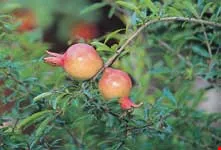
Mulberries, morning glories, pomegranates, and hanging sponge gourds...beyond its botanical largesse, the revived Tzengtsu also boasts a cornucopia of human sentiment and meaning.
Chang Hsiou-huo, director of the Tzengtsu Community Development Association, explains that over the past two years, Tzengtsu's dragon dancers have entered the spotlight after receiving special recognition from the Changhua County government. This year they have formed a team to participate in the Lukang boat races during this summer's Dragon Boat Festival. "This is the first time we've participated, so we're putting a lot of effort into practicing," says Chang. The rowers come from the dragon dancing troupe and the neighborhood watch, and during every practice they run 1400 meters and do 40 push-ups and sit-ups before they even get into the boats. Although there are only 30 official members of the squad, more than 40 locals show up for the runs.
And it's not just the men who are full of energy. There is a wide array of handicrafts created by mothers in the community classrooms on the second floor of the activity center. Even the folk dance troupe, which is mostly made up of women, practices six days a week! In this town the distaff concedes nothing to the spear. "No one can compare to us," proudly states Huang Shun-te, former director of the community association. "Here in Tzengtsu we define ourselves by our energy."
Population trends provide some evidence of Tzengtsu's vitality. Two years ago, Tzengtsu had about 1900 residents. In recent years, several large housing developments have attracted people from outside the community, so that the population has risen to more than 2000. Although agriculture is still the most important sector of the community's econ-omy, many now find work in the sewing machine, automobile, and electronics factories in the new nearby industrial park. It is easier to make a living here now, so that the exodus of young people so typical in Taiwan's countryside is not so severe here. The young even make up more than half the population. Although agriculture is beginning to take a back seat, there are few fields that lie fallow.
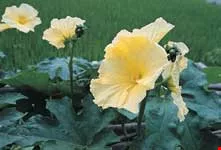
Mulberries, morning glories, pomegranates, and hanging sponge gourds...beyond its botanical largesse, the revived Tzengtsu also boasts a cornucopia of human sentiment and meaning.
The people of Tzengtsu believe that the scenery is their community's biggest draw. Locals boast that no other town in the Changhua area can combine architecture as beautiful as Tzengtsu's with scenery as beautiful as Tzengtsu's. It's a belief that amply displays the pride that the residents have for their hometown.
And just as many fertile places have famous legends associated with them, Tzengtsu has a fable describing the origin of its name that amply conveys the vicissitudes of fate for early Han Chinese immigrants in Taiwan.
Legend has it that all of the first settlers in this area were named Tzeng. (Tzengtsu means "Tzeng house.") In order to satisfy their desire for luxury they brought over a fengshui expert from mainland China to rearrange their ancestral graves. They told him that if they attained great wealth in the future, he would be amply rewarded. A few years later, the expert returned and the Tzengs concealed the fact that they had already struck it rich. Several years on, the fengshui expert sent his disciple to check on them, and latter generations of Tsengs responded once again that they had no money. The disciple told them that under the circumstances they should rearrange their graves, build a pool to the southeast of the tombs, enclose some jewels and gold in a container, and dig a water channel behind the tombs with a north-south axis. This, they were assured, would cause the silver and gold to flow in.
Little did the Tzengs expect that after they did as instructed a red spring would gush out from the pool for three days and three nights, and the sound of a tiger moaning would resonate. Because the Tzengs had broken their promise and not made a generous offering in repayment, the ground collapsed and the clan disappeared. And this explains why there are no Tzengs in Tzengtsu.
Perhaps this story, with its moral, has been kept alive by Tzengtsu elders wanting to scare their descendants into dealing with others fairly. In any case, the Lin, Chang, Chou and other traditional landowning clans hereabouts have experienced land reform, agricultural decline and other upheavals that weakened similar clans elsewhere, but here they remain prosperous.
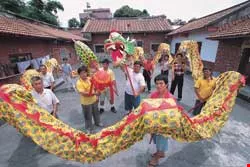
In Tzengtsu, dragons are not only be found frozen in position around temple pillars, but come to life in the hands of the community dragon dance troupe.
The Tzengtsu Community's activity center was completed in 1979, and the community development association was formed in 1993. But it wasn't until 2000, when the county government sent four young people to coordinate planning and operations here in lieu of military service, that the entire community really began to take off.
The development association once conducted a survey that showed that before the community sprang to life many residents had already been serving as volunteers. Huang Shun-te, the association's former chairman, established the most urgently needed neighborhood watch and environmental clean-up crews first in order to resolve serious public security and environmental problems. Next, the folk dance group began to hold regularly scheduled practices in the front courtyard of the home of Hsieh Chao-chih's, its leader. "At first, old folk had objections, saying that if a bunch of women with nothing to do started to get together to dance, it would end up badly, with some of them running off with men," says Liang Su-yen, a member of the group.
Chen Hsiu-chin, of the community development association, had a similar experience. She relates that when she would go out to do volunteer work her husband's parents would say, "If you have time to spare, why don't you do some weeding." Even her sister-in-law would say annoying comments of this ilk, but her husband and she would still sneak out. Now that the community is getting more and more beautiful, and social relations are increasingly harmonious, her in-laws are not only actively participating themselves, but are also donating money to the foundation.
"Maybe the enthusiasm was always there. Perhaps the ethos of helping neighbors is so deeply implanted in farming stock that once someone ignited it, the whole community got on track," says Chang Chao-kung, one of the clean-up crew leaders.
Currently, 50 people participate in the neighborhood watch. It includes three generations of the same family as well as people from the neighboring village. The main work of the group is to ensure public safety. In the winter they patrol every evening, but at most times of the year they patrol only on Saturday nights, keeping mischief-making teenagers from committing any crimes. Moreover, they take time to check on elderly people living alone, and they maintain order at weddings and funerals.
"In the countryside there are still some people who are superstitious about going to funerals. The community watch can soothe the pain of the families of the deceased by maintaining order," says team leader Lin Chuan. They are even asked to work funerals or celebrations in neighboring villages.
The clean-up crew comes out on the third Sunday of every month to clean the streets. This year, when the community falls in a zone that the Department of Health considers at particularly high risk for Dengue Fever, the focus has been on eliminating breeding grounds for mosquitoes. There is nary an empty can or discarded tire to be found anywhere in the community.
The folk dance group and education in the community center classroom rely on local instructors. Members of the community take turns teaching classes on ceramics, paper-woven baskets and other crafts. Sometimes members of the community go elsewhere to learn crafts, which they then teach upon their return.
Because the population of Tzengtsu includes a diversity of professions, local masons, carpenters, plumbers, electricians, metal workers and other tradesmen have been able to handle local restoration work without need of outside help. The community activity center was completed in 1979, but sat idle for a long time, eventually becoming a temporary shelter for the community's poor and falling into disrepair. In 2000, responding to a call from Huang Te-shun, there were immediate donations of paint and tiles, and within a few weeks it was cleaned up, with a new coat of paint and new tiles, ceilings and phone lines, as well as new brick in the courtyard.
The confidence and sense of accomplishment that were engendered by the trouble-free completion of the community center really unleashed the spirit of volunteerism in the community. It spurred along several other community rehabilitations, including Shatzaigou Park, Kantzaitien Park, Pocket Park, and the Pond Frond Bridge. The environmental volunteers first picked up the garbage, then planted and weeded, and finally got other volunteers to take responsibility for the sites. One by one these places grew lush and green.
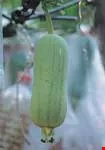
Mulberries, morning glories, pomegranates, and hanging sponge gourds...beyond its botanical largesse, the revived Tzengtsu also boasts a cornucopia of human sentiment and meaning.
After community construction got going, the volunteers began to feel that all their efforts were bound to succeed. The extremely successful dragon dance troupe was likewise the result of youngsters striving to realize their dreams.
"Young people like to be different," says Chang Hsiou-huo. "Last year when they were talking about forming a performance troupe, they all said that lion dance troupes were boring and all too common, but they noted that nearby villages didn't have any dragon dance troupes." Hence, he arranged for a dragon dance master from the Changshankung Temple in Changhua to come and provide instruction.
The dragon dancing troupe relies on young men in their twenties and thirties. A single dragon contains the dragon head, body and tail, the dragon pearl and the dragon banner. It requires 20 dancers to get moving. The dragon's body must always move in coordination with its head. Dancing in the dragon's tail is the hard part, because the dragon is continually moving and for every step taken by those in the head of the dragon, those in the tail have to take four. In order to ensure that they don't tire out, they need two or three different squads to spell each other. With an intuitive understanding of each other's energy levels, they are always ready to step in and take over.
People's interest in dance has grown with their experience, and the community development association was at one time planning to acquire funds to purchase a dragon costume. But because funds were limited, the mothers of the community made the dragon, attaching sequins to cloth as a DIY project. Thus the dragon represents the fathers' money, the mothers' craftsmanship, and the children's energy. It really got everybody involved, and the day that the dragon was completed there was a major celebration for the whole community.
But the dragon's impact didn't stop there. Through dragon dancing, Tzengtsu channels its young people's energy in a positive direction and away from fighting. It also gives them an intuitive understanding of the importance of group solidarity. Currently, there are more than 50 group members.
Although Tzengtsu is witnessing a growing sense of community empowerment, it is also facing some challenges. Chang Hsiu-huo says that currently the main source of funds for community development are membership fees and grants from the Council for Economic Planning and Development. These grants will not last forever. If the community wants to continue to grow, it will have to become more self-reliant.
Chang Hsiu-huo has wracked his brains over ways to market things produced in the community in order to raise funds, and finding a source of funds is always a principal topic of conversation among he and his neighbors. One idea is earning money by cooking for the elderly in Hsiushui Rural Township who are living alone. Apart from giving back to the local community, they could also earn a little money.
Chang Hsiu-huo says that as long as you come up with a good idea, people in Tzengtsu will do their best to make it work. But he does have a nagging concern: Generally speaking Tzengtsu people get along and work well together, but once every four years the election for village mayor tries their social harmony.
"At every election, the community gets split up into various camps, and afterwards some people always leave the group in anger. It takes a lot of pleading and cajoling to bring everyone back together, but once the elections come around again we have to face the same test all over again," says Chang Hsiu-huo.
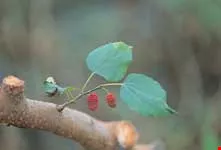
Mulberries, morning glories, pomegranates, and hanging sponge gourds...beyond its botanical largesse, the revived Tzengtsu also boasts a cornucopia of human sentiment and meaning.
Chang has long hoped to build a temple to the local earth god so as to use religion to bind the community together.
"Tzengtsu has never had a local earth god temple for the whole community, and so the icon of the deity has to be brought home by a different family every year, who are responsible for keeping his incense burning; it's like an elderly father taking turns between sons," says Chang. It's only once every year when Taoist divination blocks are cast to determine its guardian that the earth god is invited to the community activity center. "The sons and father are so rarely together that it seems that no one is in charge of the whole village," he says.
This year, with the economy being so weak, it's hard to raise funds. The land in the community, furthermore, is often collectively owned by several heirs and requires all of their signatures, which makes it difficult to find a site for the proposed temple. "It's a Catch-22," Chen Hsiu-chin explains. "If you can build up a sense of community spirit, there are financial resources and harmony, and it's easy to realize the dream of building the temple. But without a temple as a focal point, it is hard to create solidarity in the community."
Tzengtsu is filled with enthusiasm and energy, but it's also a conservative community. At the gateway to the village, we ran into Chen's great uncle, who in the cool breeze of twilight was crouched at the side of the road fixing the wall of an irrigation channel, his head turned to keep passersby from seeing his face.
"When he sees someone he knows, they'll often say something stupid like, 'Aren't you lucky to have so much spare time on your hands.' Consequently, my uncle doesn't like to let people see clearly that he's doing work for the community," Chen explains. Tzengtsu has just started taking its first steps as a reinvigorated community, and the activists and onlookers are testing each other out. Chen looks forward to a future of greater participation and harmony within the community.
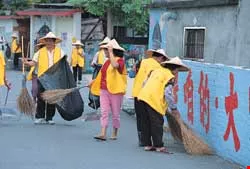
For the once-a-month "volunteers' day," Tzengtsu's environmental clean-up crew gets to work. They've kept their town spic and span and have also earned a designation from the Department of Health as a model of Dengue Fever prevention.
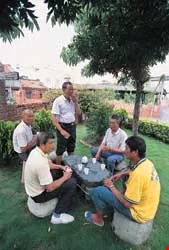
As a result of the diligent efforts of Tzengtsu residents, you can see greenery all over the community, as well as many places where residents can drink tea, chat and relax.
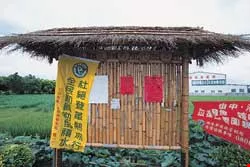
"Wheel granaries" in front of traditional farmhouses (above) are characteristic of Tzengtsu, and are reflected even in handicrafts (right).

@List.jpg?w=522&h=410&mode=crop&format=webp&quality=80)


@List.jpg?w=522&h=410&mode=crop&format=webp&quality=80)
@List.jpg?w=522&h=410&mode=crop&format=webp&quality=80)
