

This is an age when people take leisure very, very seriously.
The streets are lined with theme restaurants, and you find yourself bewitched and bewildered by all the stories about new recreational options that hit you whenever you open a newspaper. In every big city and small town, leisure facilities have sprung up like mushrooms. The government now gives high priority to encouraging recreational farms, sport fishing, and cultural festivals. And SUVs and tracksuits have become fashion statements in today's society.
But it's also an age when it seems very, very difficult to really live a life of leisure.
Who hasn't heard a colleague moan, "I haven't dared to ask for a day off in so long!" while others sigh, "Isn't there any way to have fun without spending a lot of money?" Either way--plenty of money but no time, or plenty of time but no money--all the fun seems to go out of "having fun," and it becomes impossible to enjoy a genuinely leisurely and satisfying lifestyle. Who'd have thought that people could get so stressed over rest?
For the past several decades, society in Taiwan has been work-oriented, with working hard and sacrificing for your job being the highest values. But times are changing. These days creativity is in the driver's seat, and the "creative economy" is rapidly overtaking the "manufacturing economy" as the engine of future wealth. And creativity grows best in soil that is enriched by lying fallow now and then; the creative mind works best when the pace of life is both soothing (to the nerves) and stimulating (to the senses).
"Down time" has been turned upside down to become the new cutting edge. But do people understand the real meaning of leisure? How can you make the best use of your requiescence and have a genuinely high-quality life?
Renowned futurologist Kenichi Ohmae recently went against the grain of his hard-nosed image--his writings are usually about trends in the global economy and management--to come out with a book on leisure called Off-ology. In it Ohmae calls on people to give equal attention from square one to both "on" (working) and "off" (leisure) modes, and to figure out ways to make the time, money, and mood to fully enjoy life. Many people tell themselves they will carry out various plans when they have the time, or after they retire, but, he argues, if you don't work at managing your recreational life when you are young, even when you retire with plenty of time and money, you won't be able to really enjoy life, but will simply end your days pointlessly killing time.
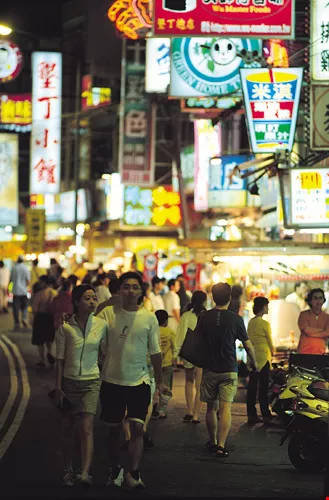
Every year after schools let out for summer, people flock to the coast around Kenting, turning the whole town into a night market. Taiwanese love to shop and consume, and vacations are no exception.
Play till you drop
Ohmae, now in his sixties, loves to take his dirt bike out into the great outdoors, and has resisted giving it up despite breaking a leg in a crash. In summer, he also loves deep-sea fishing, bringing his catch back at dusk to be cooked to order at a harborside seafood restaurant. In winter, he arranges snowmobile excursions, while spring and autumn find him writing away in suburban refuges. His trips often include friends and family, and he goes skiing in Canada with his wife every year
"I'm constantly traveling and having a good time," he says. His recreational pursuits have not only not been an obstacle to his writing, but have been an essential element in maintaining his vitality and enthusiasm for work. His success at arranging his "off" life has added to his creativity, and made his "on" life even more energized.
Off-ology has not been on the market for long in Taiwan, but has already sold 600,000 copies, and has been the top seller among economics and finance books for six weeks running at the three biggest bookstore chains. It is also being widely discussed in the media and on the Internet. A lot of people are surprised to learn there's a lot more to know about leisure than they ever imagined.
So what can we say about how Taiwanese spend their leisure time?
A typical weekend in the city.... The lights are blazing at the National Theater and National Concert Hall, and the 24/7 Eslite bookstore remains crowded through the night. In the extensive parks along the city's rivers, families ride bicycles for exercise and to enjoy some fresh air, while in the suburban mountains, people hike and do aerobics all year round. In the more remote countryside, people camp and barbecue by the rivers, oblivious to the crowds around them. And in recent years, more and more people have taken to volunteering for community service, putting into practice the ideal that "service to others is the foundation of happiness in life."
Obviously it would be a gross misstatement to claim that "there's nothing to do" for recreation in Taiwan. That being so, is there any point getting all philosophical and high-minded about leisure?
Let's take a look at a few snapshots.
Windchasers
Click: Every holiday and weekend, cars come flooding up to Chingching Recreational Farm in Nantou County, 1700 meters above sea level, and to the luxurious European-style homestays all along the road. But whenever typhoons or heavy rains hit this mountain region, there are landslides and rockslides.
Click: Tens of thousands of people crowd into Kenting for the Spring Scream rock music festival, turning the normally quiet resort town into a giant night market, with garbage everywhere, traffic in chaos, and sky-high homestay prices; it has become a real distortion of the original organizers' culture of music, beach, and chillin'.
Click: Giant, an internationally known manufacturer of bicycles, promotes cycling sports in the area around Lake Liyu in the magnificent mountains near Hualien City. Instruction is offered, but many people are taken aback by the fee of NT$500 for half a day's course: "What?! You have to pay? Come on, we'll just go for a ride ourselves."
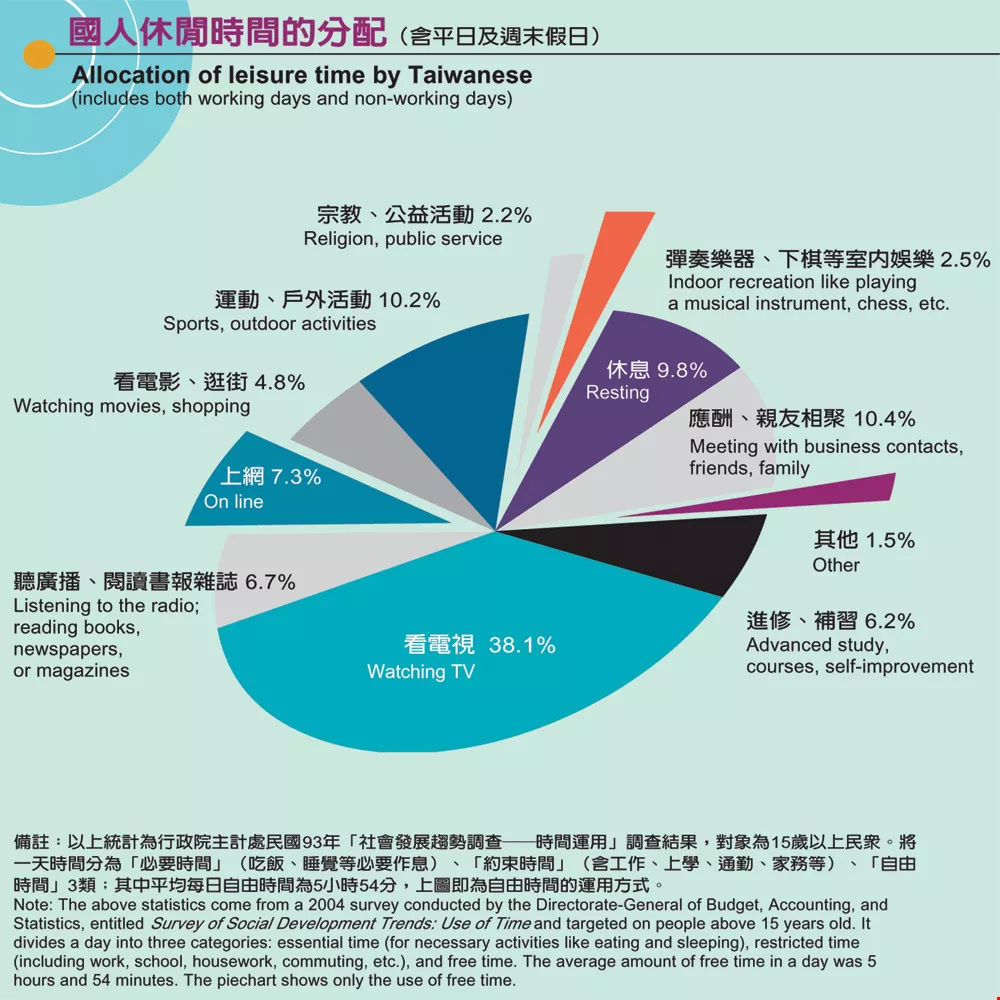
(includes both working days and non-working days)
Religion, public service 2.2%
Sports, outdoor activities 10.2%
Watching movies, shopping 4.8%
On line 7.3%
Listening to the radio; reading books, newspapers, or magazines 6.7%
Watching TV 38.1%
Advanced study, courses, self-improvement 6.2%
Other 1.5%
Meeting with business contacts, friends, family 10.4%
Resting 9.8%
Indoor recreation like playing a musical instrument, chess, etc. 2.5%
Note: The above statistics come from a 2004 survey conducted by the Directorate-General of Budget, Accounting, and Statistics, entitled Survey of Social Development Trends: Use of Time and targeted on people above 15 years old. It divides a day into three categories: essential time (for necessary activities like eating and sleeping), restricted time (including work, school, housework, commuting, etc.), and free time. The average amount of free time in a day was 5 hours and 54 minutes. The piechart shows only the use of free time.
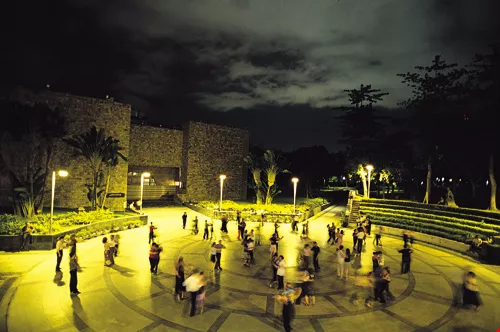
Dusk, and the atmosphere in the plaza of the National Taiwan Museum of Fine Arts in Taichung is laid back, with people dancing languidly to the music. Now that Taiwanese are quite well-off economically, they are beginning to put more thought into leisure.
Busy relaxing
"The importance of leisure has gradually come to be understood in Taiwanese society, but not many people have a really accurate understanding of the subject," says Professor Yeh Chih-kuei of the Department of Sports and Leisure Studies at National Dong Hwa University (NDHU). Taiwanese have long put a premium on efficiency in life, "doing the most possible stuff within the shortest possible time." Deeply internalized, this attitude has also percolated into leisure activities.
For example, so as not to waste vacation time many people fill their itineraries to the brim. Tours to Europe boast "Four countries in nine days!" and domestic trips are reduced to rushing from one tourist spot to another. On reaching the lovely destinations they have been rushing to get to, even if there are no crowds to spoil the mood people find it hard to actually sit quietly and enjoy the finer points of the site. In fact, most don't know what to look for or how to best appreciate it. Ultimately all they do is snap-snap-snap a few photographs, say "OK, we're done here," and the next day drag their tired bodies back to the office. The more of this kind of rest you get, the more exhausted you become!
When they don't go abroad, the main hobbies of Taiwanese are watching TV and shopping. TV's vulgar variety shows and absurd dramas do little more than provide temporary excitement, illusions, or emotional venting. Of course many viewers are well aware of the shows' low quality, and spend much of their time carping even as they watch; yet they punctually flick on the TV day after day, watching from dinner till bedtime. Not to mention the hazards of weight gain, bad posture, and anxiety associated with too much of the boob tube.
"Most people have never cultivated any outside interests or skills, and have few opportunities for contact with new recreational experiences. This is why they always go back to the TV to kill time, just out of routine," states Yeh Chih-kuei. TV is generally excluded from lists of the most desirable leisure activities because those watching are only exposed to one-way transmission of information; they become passive recipients, taking--rather than freely choosing--whatever is dished out. In so doing, they miss out on the core element in any genuine recreation: that the doer has autonomously chosen it for herself.
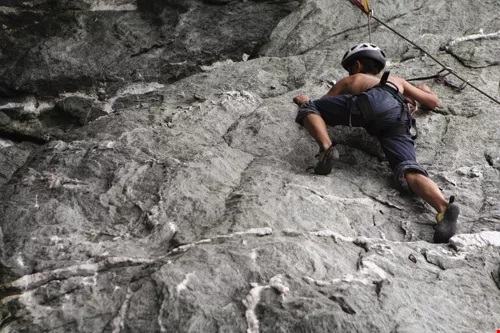
Scholars suggest that development of "leisure skills" can help in meeting challenges, and allow one to experience a sense of pleasure and accomplishment at the same time. From left to right: tree-climbing, rock-climbing, white-water canoeing.
Couch potatoes
Then what is genuine leisure? Many people would respond with answers like "vegging out," "letting off steam from work," and "taking some down time to gear up to work harder in future." Doesn't even Kenichi Ohmae, with all his expertise in the art of enjoying life, say "You can only succeed if you know how to play"? From this point of view recreation is in the service of work, and becomes a career tool or an economic activity. But this misses the greater value that leisure can have in life.
Yeh Chih-kuei points out that implied in the word "leisure" is a sense of the spirit being set free, of a mood of freedom and liberation. Aristotle held that recreation is not a practical activity to attain a particular end, but a noble end in itself, one that allows the individual to be a "free man." Meanwhile Zhuangzi, the most representative of ancient China's Daoist thinkers, suggested that the genuinely carefree individual is one who uses material phenomena as a vehicle for playfulness of the mind, and takes pleasure from the material world rather than being ruled by it.
Many contemporary scholars have added their own interpretations to the classics: "Leisure is not superficial entertainment, but the basic philosophical question of 'how mankind will continue to survive,'" says Japanese academic Hidetoshi Kato, while Associate Professor Lai Lai-hsin of NDHU's sports and leisure department opines, "The core nature of leisure is to raise the quality of life."
The philosophical view of leisure as the purpose of life--"the purpose of the purposeless" (in which what appears useless is in fact the most useful) is at a somewhat higher level of abstraction, but if leisure really must have a goal, then it actually ends up coming under a different framework.
An example is the recent work of Jamal Chih-mou Hsieh, a professor in the Department of Recreation and Leisure Industry Management at the National College of Physical Education and Sports. Hsieh has been actively promoting adventure sports training as a way for marginalized young people to recover their self-confidence, and as a way to develop leadership ability and strength of character in business managers. He has gotten quite a response, and many people have changed and benefited.
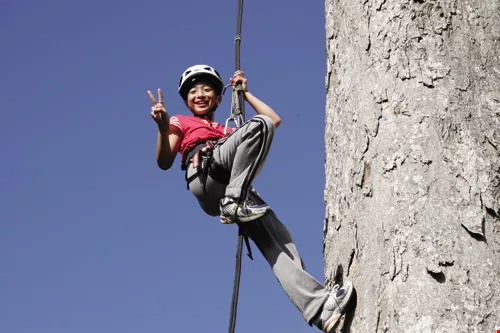
Scholars suggest that development of "leisure skills" can help in meeting challenges, and allow one to experience a sense of pleasure and accomplishment at the same time. From left to right: tree-climbing, rock-climbing, white-water canoeing.
Don't be led by the nose
Whether you incline toward "the purpose of the purposeless" or prefer "productive recreation," neither is contrary to the basic nature of leisure as healthy down time and self-realization. To reach these goals, leisure should be an internal feeling, not something outside oneself. From this perspective, the recreational lifestyles of people in Taiwan often end up being "passive" or "restrictive," and not self-aware.
For example, in choosing activities, people often follow the media. If the media seizes on someplace as being fun or having great food, the next thing you know a tide of visitors rolls in. It hardly seems important to people whether they actually wanted such an experience before or whether it is the kind of experience they know they will enjoy; the important thing is to keep up with the popular trends. "Everyone else has gone to stay in a cabin at Chingching Farm; I guess should give it a go." "SUVs are so popular; even though there's only me, my wife, and our daughter, maybe I should buy a new car soon."
"Consumers generally are told what they want, and are led to buy things as a result," says Lai Lai-hsin. Is it really likely that, as one vehicle advertisement claims, buying an SUV will lead to "a wonderful happy family life"? Given that in Taiwanese culture today, leisure is enmeshed with fashion and consumerism, if you want to raise the quality of leisure the first step is to help people reclaim their "autonomy."
"Our leisure lacks the core nature of freedom, and we have lost the ability to choose," says Lai, who points to his own experience as a case in point: While studying in the US he often played golf, because it was a healthy experience in beautiful surroundings at a reasonable price. But on returning to Taiwan he discovered he cannot afford to play golf here, and he couldn't find people to play squash or racquetball. But he didn't give up his autonomy. He joined a running club, cultivated an interest in jogging, and now finds joy in that. An attitude of being able to seek out and develop recreation suitable for oneself is the nature of freedom.
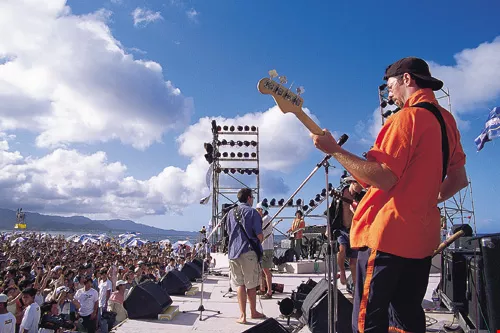
In recent years, many festivals have been organized across Taiwan. But when the noise dies down, have people really been able to find rest for mind and body? What have they gained, what have they learned? The photo was taken at the annual Hohaiyan Music Festival held at Fulung Beach.
Quality, not quantity
People from other countries often envy the frequency with which Taiwanese travel abroad. For example, the rate of foreign travel is much lower among Americans than among Taiwanese. However, "They have richness within," avers Professor Hsu Yi-chung of NDHU's Institute of Tourism and Recreation Management. When studying in North Carolina, he noticed that many people in small towns or rural areas had a good understanding of the local natural environment, and could talk knowledgeably about local culture and history. Although they had never been abroad, they lived full and rich lives. This was quite a shock to Hsu, who had often traveled abroad and thought he had seen quite a lot in life, yet could not name a single common Taiwanese animal!
So how can we have "quality" when it comes to leisure?
"Have you put your cares down?" asks Hsu Yi-chung. People often forget the importance of relaxing--especially office workers, with their ingrained habits of non-stop work and efficiency first. Like a turtle wearing a heavy shell of work and responsibility, they don't know how to set their worries aside. Even if they go to a concert or take the kids out cycling in the park, their minds are still agitated. Many a business executive, while "relaxing" at a resort at some famous beauty spot, spends his time doing e-mail by notebook computer. We can do without this kind of leisure!
Hsu argues that the "pause" button is very important in life, just as music needs silences ("rests") and paintings need empty space. The spirit can only soar free if humdrum activities are put on hold; only then can the senses be fully unblocked and can the mind reach out to experience this wonderful world.
In recent years, to encourage development of the tourism and leisure industry, some commentators have called for putting cable cars up to the highest mountains, and are proud of the fact that you can find a 7-Eleven or a Starbucks at nosebleed altitudes. Lots of young people find camping annoying because there are too many mosquitoes and the frogs are too loud; those who do go want wooden floorboards under their tents and roofs above to keep off sun and rain; some even pull their vehicles up next to their campsites and blast the car stereo system. Lai Lai-hsin quips with exasperation, "Maybe next time they should bring an air conditioner."
"If you devote all your effort to comfort, and can't adjust your mind to anything but a completely controlled environment, what's the point of going to the great outdoors?" he sighs. Recreation is a chance to "change tracks" and get out of the daily rut. But many people' attitudes are still tightly confined even when they come into the vast open spaces of nature, and they just can't connect to the ambience in front of them, nor can they "live for the moment."
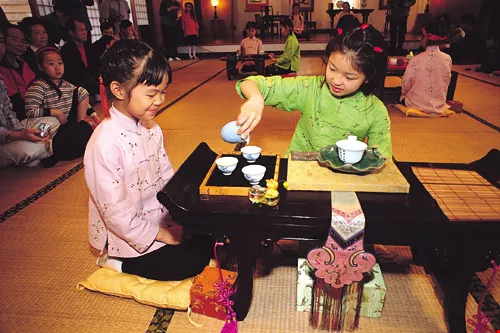
These children are learning the art of the tea ceremony, and they certainly look the part! If leisure education is integrated into life from an early age, then one will naturally have a greater appreciation for the finer things when one gets older.
Leisure skills
"Another reason the quality of leisure is poor in Taiwan is that we've never had leisure education," argues Lue Chi-chuan, chairman of the sports and leisure studies department at NDHU. Leisure education includes a correct attitude toward down time and the cultivation of leisure skills. With the right viewpoint and know-how, people will understand that recreation is not just about following advertising or the media, but can be planned based on one's own needs. Some people spend all day out making deals, some are in an office nine-to-six, and some sit in front of a computer at home and have little contact with other people... each individual's leisure needs are obviously markedly different.
American leisure scholar Geoffrey Godbey has said with respect to leisure education that recreation is not just something you do when you have time to spare, but an integral part of life. It determines whether you can have a full and happy stay on the planet. Thus leisure also requires planning, as well as learning certain skills.
If you only pursue those types of recreation that don't require you to learn anything new and don't encourage you to grow and mature, Godbey concludes, this won't make you happy.
Just look at Taiwan. Though it is surrounded by water, why are the favorite seaside activities just hanging about and eating at seafood restaurants? Why, despite strong government support, do rates of growth in participation in sports that allow a richer enjoyment of the pleasures of the sea--such as snorkeling, fishing, kayaking, and windsurfing--remain so low? A major reason is that most people lack the basic skill required for marine sports: the ability to swim. It also seems that most people lack the confidence that they can master swimming, or that it is worthwhile spending the money to learn how. To take another example, right now cycling is enjoying rapid growth, but how many people are really willing to go step-by-step to learn cycling skills or invest in the necessary equipment? And who will take on the challenge of a long cycle journey?
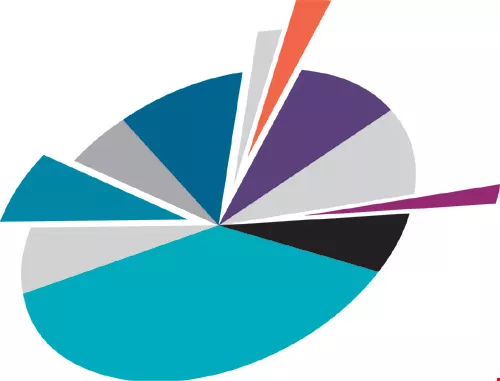
Note: The above statistics come from a 2004 survey conducted by the Directorate-General of Budget, Accounting, and Statistics, entitled Survey of Social Development Trends: Use of Time and targeted on people above 15 years old. It divides a day into three categories: essential time (for necessary activities like eating and sleeping), restricted time (including work, school, housework, commuting, etc.), and free time. The average amount of free time in a day was 5 hours and 54 minutes. The piechart shows only the use of free time.
Funny business
For people with heavy responsibilities, the Utopia of leisure scholars seems less than practical. If you are working overtime until eight or nine every night, and taking training or courses on the weekend, what good is all this highfalutin talk about leisure? For those stuck in this position, Hsu Yi-chung offers some intriguing thoughts.
"When we are unwilling to say 'no' to our boss or our coworkers, is this because we fear losing an opportunity to demonstrate our loyalty, or fear losing our future or our friends?" he queries. When a job makes you so busy that you miss out on normal life, shouldn't you be thinking of a change? When a job overloads you both physically and spiritually, and may even cause you to lose your family, maybe it's time to say sayonara to that situation.
Hsu reminds us that people often become habituated to one lifestyle or set of social values without even realizing it, and even force themselves into that mold with no regard to the cost. If you change jobs, maybe you will earn less money, but the point is that you have made the choice.
What about those who have no alternative but to hang on tight to their "rice bowl" (as a stable job is known in Chinese)?
"Find happiness in work!" is Hsu's advice. People can gain a sense of accomplishment and satisfaction from improving the workflow, making better relationships with co-workers, upgrading the work environment, or even reducing their own ambitions.
It is possible to find happiness on the job. When this reporter met with professors at National Dong Hwa University to discuss leisure, we did so beside a lovely campus pond on a warm September afternoon. If it had just been a brief intersection of people's lives, and I had rushed off after the interview, then it would have been like ships passing in the water, leaving no mark. But the academics reminded me to take a moment to put down my burdens and enjoy a little spontaneous relaxation. I lingered by the lovely little lake to mull over the ideas we had just discussed, trying to taste for myself the freedom and satisfaction of taking whatever joy you can from the time and place where you are, allowing mind and body to sink deeply into calm. Just as a duck passed over the surface of the water, a thought passed like a shadow through my mind: "So what if I lose vacation time just for this interviewing trip, what difference does it make?"
Change your thoughts, and you change your world. If you can integrate your "off" life with your "on" life, they will be mutually supportive, and it is perhaps in that sense of untrammelled freedom, of mental and physical tranquility, that you will find the real pleasure in both work and play!
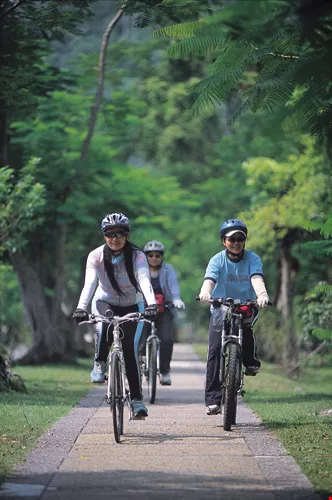
How can you find the time amid the bustle of daily life to let your heart chill and your senses soar, and really feel the beauty of nature? There is no shortcut, you just have to go out and do it . The photo shows a cycle path around Lake Liyu in Hualien.
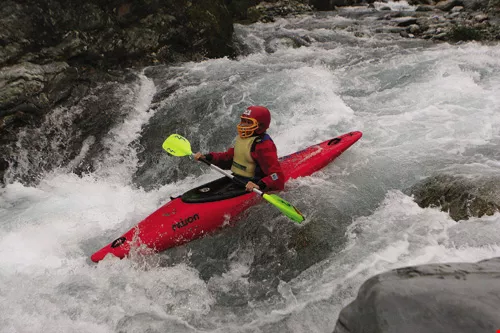
Scholars suggest that development of "leisure skills" can help in meeting challenges, and allow one to experience a sense of pleasure and accomplishment at the same time. From left to right: tree-climbing, rock-climbing, white-water canoeing.


@List.jpg?w=522&h=410&mode=crop&format=webp&quality=80)


