

When you are young, New Year’s means receiving red envelopes of cash and playing to your heart’s content. But once you marry, those times become faint memories.
I’m a second-generation Taiwanese mainlander (those who came to Taiwan in the late 1940s as mainland China fell to the Communists). My father came to Taiwan alone, and my mother only had a few female relatives—the closest being her sisters, my maternal aunts. Because I have so few relatives, in elementary school I feared tests of family vocabulary. Who is your guzhang (husband of paternal aunt) or your jiujiu (maternal uncle)? I bombed those tests.
Now I’m married to a Hakka. When we were planning the wedding, my parents asked my husband-to-be: “How many tables will we need for your relatives?” He responded, “There are loads of them. How many tables could you give us?” My parents just went ahead and invited all their officemates so the two sides of the wedding would have more balanced representation.
A daughter-in-law’s New Year’s burden
Consequently, New Year’s has been a busy time ever since I’ve been married! My husband isn’t the eldest son, but my mother-in-law is the clan’s matriarch. She always entertains a lot of relatives, and all her daughters-in-law are on call to help out. Consequently, every year my return home to my own family (as is traditional on the second day of the lunar year) is a much-needed break, a short chance to be pampered by my parents amid a series of exhausting commitments.
Time only seems to pass faster and faster. Suddenly, our youths have been squandered, and we begin to understand that much of life is beyond our control. We become less demanding and more understanding. But when it comes to our family members, concerns about their futures and about the hardships that may plague them for the rest of their lives start to keep us up at night.
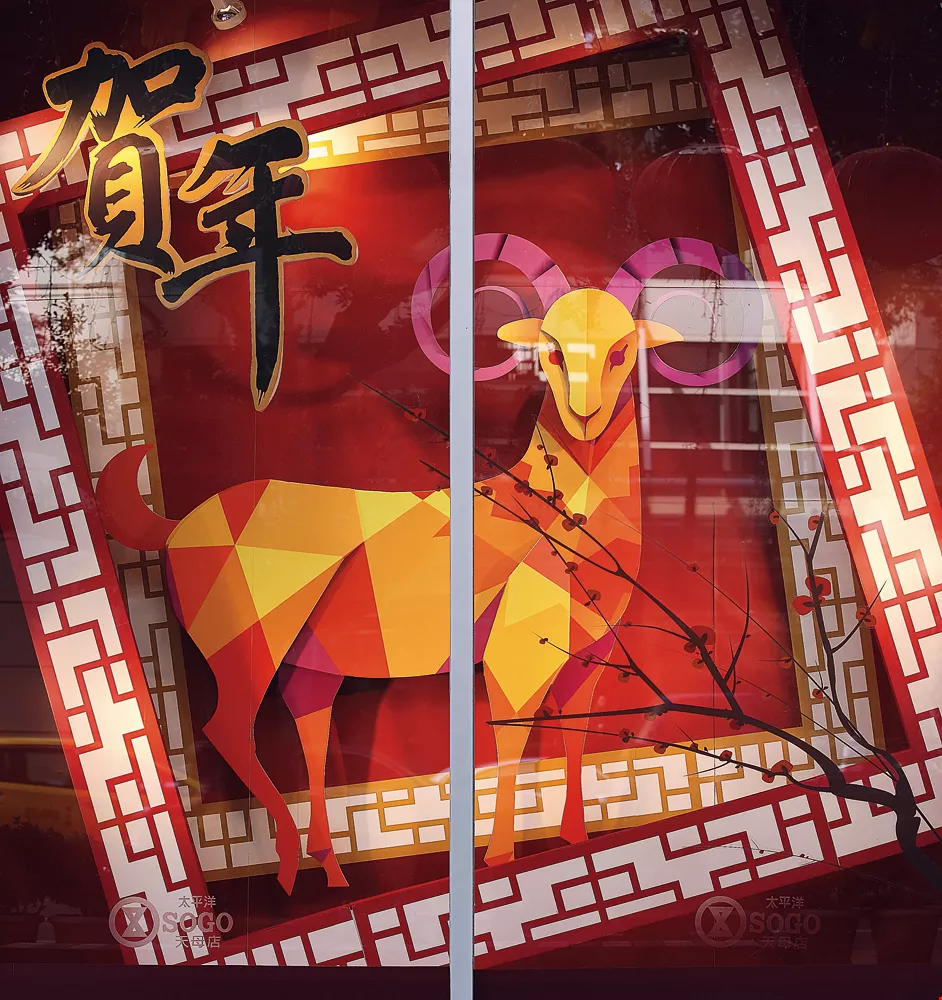
As the Year of the Ram approaches, apart from celebrating, do you have a plan for passing the holiday wisely?
These kinds of thoughts and feelings are hard to put into words, but as I take part in festive reunions at New Year’s, they only grow in prominence. In particular, my mind fills with them whenever we reminisce about the past.
Eventually, during the New Year’s holiday five years ago, I had to confront the thing that scared me most. When my younger brother and his wife were out for a walk in the park with my mother, she suddenly pointed at my brother’s two children and said: “Who are these kids?” Without our realizing it, my mother had become afflicted with dementia, and her condition was already quite severe. Because we children hadn’t been spending much time with her, we hadn’t noticed it until then.
Although we had long worried about our mother and dementia, when it became clear that she was suffering from it, we were caught unprepared. At the end of the holidays, my younger brother had to return to Kaohsiung to work, my older sister had to return to mainland China with her husband, and my older brother went back to the United States. Living in Hsinchu, I was the sibling closest to my mother. But even if I made the trip to Taipei two or three times a week, I wasn’t providing much consolation to my parents. Showing concern for his children, my father repeatedly told me to rest easy, he could handle it—and what’s more he had the help of a live-in caregiver. But I wasn’t sleeping well, and I’d wake up in the middle of the night concerned about my parents’ situation. It was truly giving me insomnia.
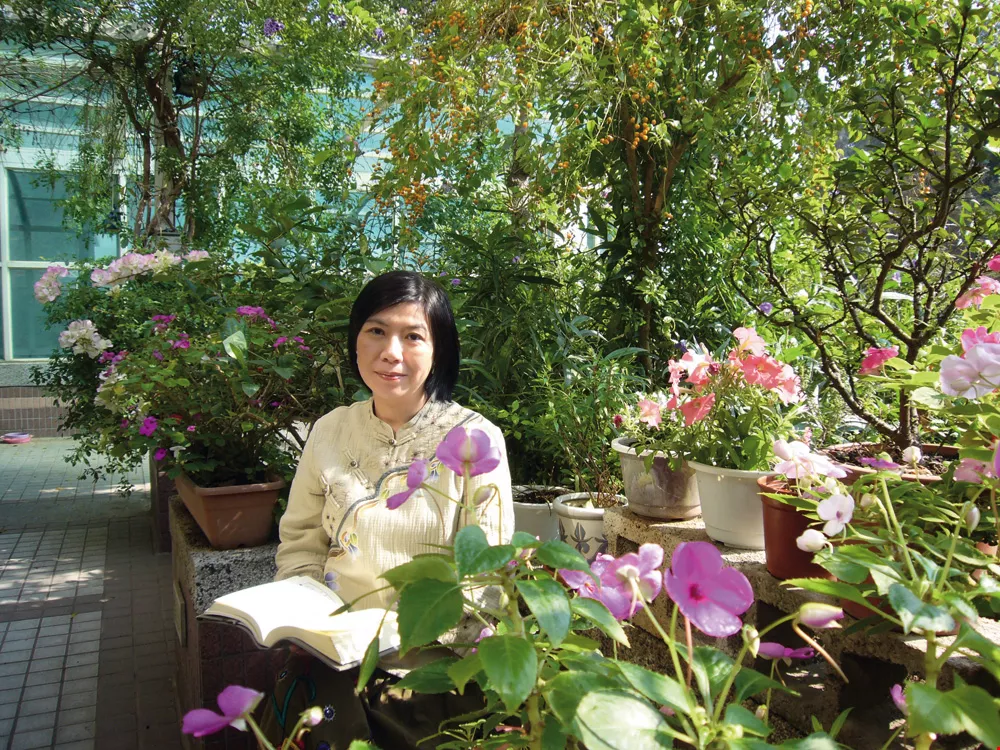
For Chen Yunlin, the Lunar New Year holiday is a time to collect her thoughts and calm her spirit.
Consequently, I made a phone call to my cousin. Now that I think of it, the choice might be described as an odd one since she is the oldest of all my maternal cousins. There is a huge difference in age between us, and we weren’t playmates growing up. What’s more, our life experiences were very different as adults. But I called her because she, like me, is a Christian. I told her that growing old was scaring me—because once you’re past your peak, it’s all downhill and you face inevitable decline.
As I expected, my cousin didn’t seem concerned by whether or not we had been close. She asked me, “We’re getting to that age ourselves. From now on, we should take advantage of everyone’s return for New Year’s and privately hold a small get-together, so we can help each other face the past and the future!”
And so in the years that have followed, in addition to celebrating with our in-laws and parents during the New Year holidays, the eight of us have also gotten together privately. The group includes my husband and me, my sister and her husband, my brother and his wife, and my cousin and her husband. This private little gathering is so important to me that I would deeply regret missing it. Our Christian faith is something that all eight of us have in common. We’ll share with each other what we ourselves and our families have gone through over the previous year. We’ll talk about matters important and trivial, and then we’ll end up in prayer together, sharing our joys and burdens and seeking the Lord’s blessings together.
The eight individuals in our group of four married couples are of different ages. Our situations have been different, and we’ve had little opportunity to really impact each other’s adult lives. We each became Christians on our own. Yet, miraculously, though we go busily about our own lives, the eight of us have grown spiritually more intimate, so that we feel much closer to one another than to our other relatives, even those who are near to us in age and were our playmates growing up.

New Year’s is a time for counting your blessings, and for praying for God’s protection and for a year full of love and hope.
“Let’s get together at New Year’s, share our joys and burdens, and pray together for the family.” It was my cousin’s suggestion, but the idea must have long been dwelling inside each of us, for we all immediately bonded. I still remember that feeling of unbounded intimacy the first time we met, that baring of souls, that unloading of burdens that we had been carrying in our hearts for years—whether concerns about our mothers or anxieties about our children, whether the deep sense of frustration we sometimes feel in middle age, or the worries we have about our parents’ health. These were all secrets that we wouldn’t dare to speak about with others, but we could talk about them with the group, weeping as we spoke, and feeling much the better for it and not ashamed in the least. Afterwards, we came together to pray about all the concerns we had just spoken of, finding a sense of shared burdens, community and blessings in prayer. The upshot is that I adore this New Year get-together. It has made a deep impact in my life that far exceeds the traditional festive reunions at New Year’s. And it has had an enduring effect, so that no matter what happens, deep in my soul I can find support and consolation in knowing that at New Year’s we will come together in prayer.
We’re family, but we’re closer than family. As always, we share in joy with our family and friends when we are reunited during the New Year holidays, but we bring the difficulties beneath the glittering surface of our lives to our small gatherings. There we find release in sharing and hope in praying together.
For me, Chinese New Year has taken on a whole new meaning these past few years. I’ve awaited it with greater anticipation than I have for decades. Life no longer seems such a lonely trek. Instead we can pick each other up and march forward. Loss no longer seems such a setback. Instead, through our mutual support, it has become part of a rich spiritual journey. Take these familiar passages: “So teach us to number our days, that we may apply our hearts unto wisdom” (Psalm 90:12); and “The lines have fallen unto me in pleasant places” (Psalm 16:6). Though long known to me, the words have come to take on new meaning. Is everything going as smoothly and as perfectly as I want in life? Of course not. But I have greater courage to face what the future brings.
If you asked me to define what New Year’s means to me now, I would say: New Year’s is a period of reunion when you give praise for what life brings. It is a time to offer good tidings and blessings to those whose lives are far from perfect. It is a time of hope, a time to enumerate wisdom gained, a time for prayer—because everything, every single thing, is in the hands of our loving God.

_DSC2938@List.jpg?w=522&h=410&mode=crop&format=webp&quality=80)

@List.jpg?w=522&h=410&mode=crop&format=webp&quality=80)


定稿-1@List.jpg?w=522&h=410&mode=crop&format=webp&quality=80)
